
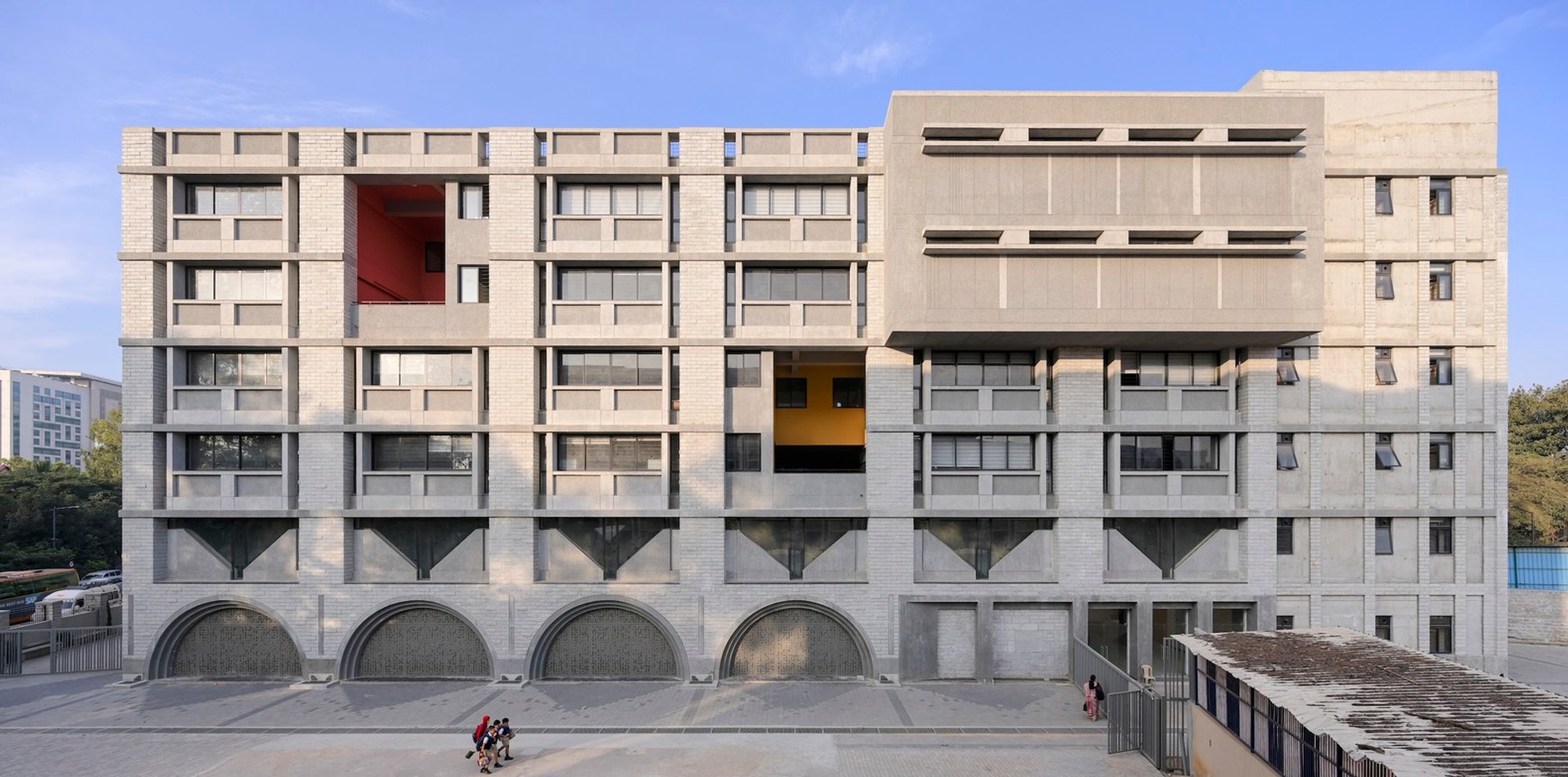
St. Joseph’s College of Law, Bengaluru by BetweenSpaces
St. Joseph’s College of Law, Bengaluru by BetweenSpaces blends heritage-inspired architecture with modern vertical design, column-free halls, and vibrant communal spaces.

St. Joseph’s College of Law is a distinguished part of St. Joseph’s University, Bengaluru, originally founded in 1882 by the Fathers of the French Foreign Mission. The college became part of the “Society of Jesus” in 1937, continuing a legacy of Catholic education emphasizing intellectual growth and community engagement.
Designed by BetweenSpaces, the new college building embodies a careful balance between heritage, urban constraints, and modern educational needs. The project was driven by four key factors: limited urban space, the historic campus context, a vibrant student body, and a complex academic program.
Site & Context
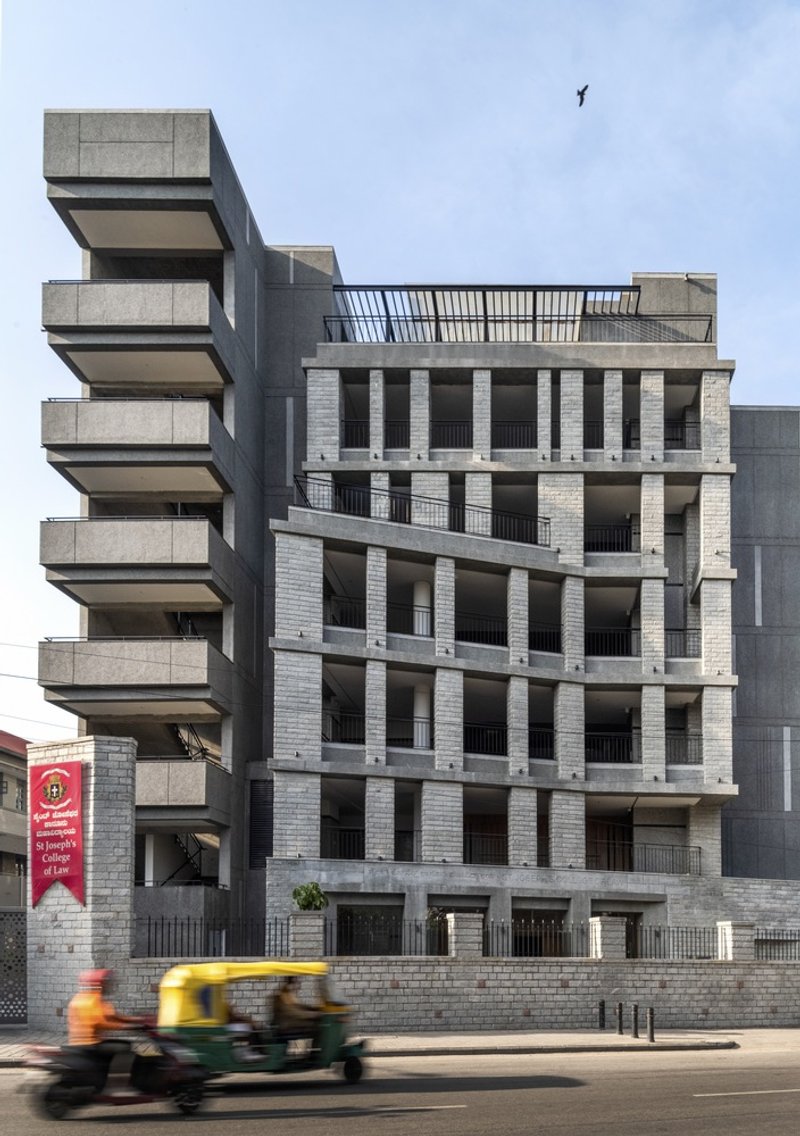
Situated on a compact site slightly over an acre, the building is located in one of Bengaluru’s oldest educational campuses. The southern side faces the main road, the west neighbors an older campus block, and the north opens onto a playground. A future development space was retained on the eastern side.
Given the restricted urban footprint, the design moves vertically rather than sprawling horizontally, marking a departure from traditional Catholic institutional buildings while maintaining a respectful dialogue with campus heritage.
Architectural Expression
While the oldest campus building dates back to 1910, the new structure avoids replicating the typical Greco-Roman style. Instead, it embraces the scale, structural rigor, and grandeur of classical architecture through modern interpretation.
Key features include:
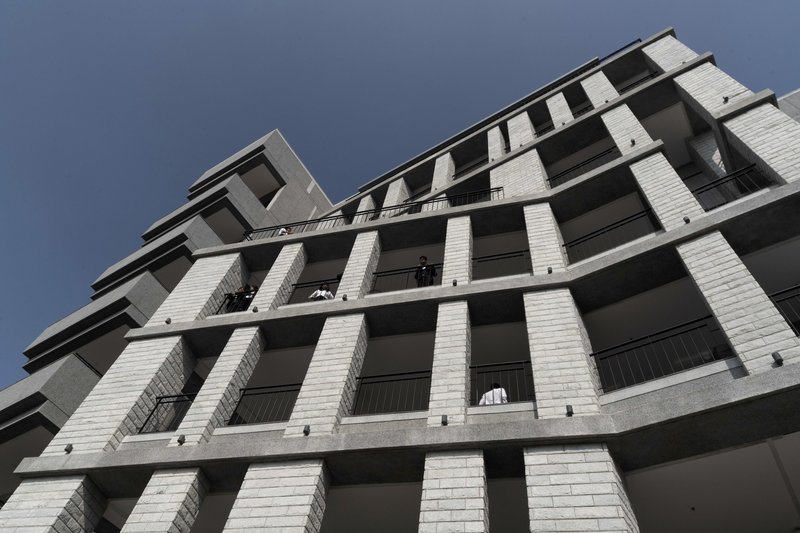
- Repetitive window fenestrations creating a robust, ordered facade
- Semi-circular corbelled arches and wedge-shaped fenestrations transferring visual mass to the ground
- Aggregate plaster and stone-clad walls establishing a heritage-inspired yet contemporary aesthetic
Interior Layout & Spatial Planning
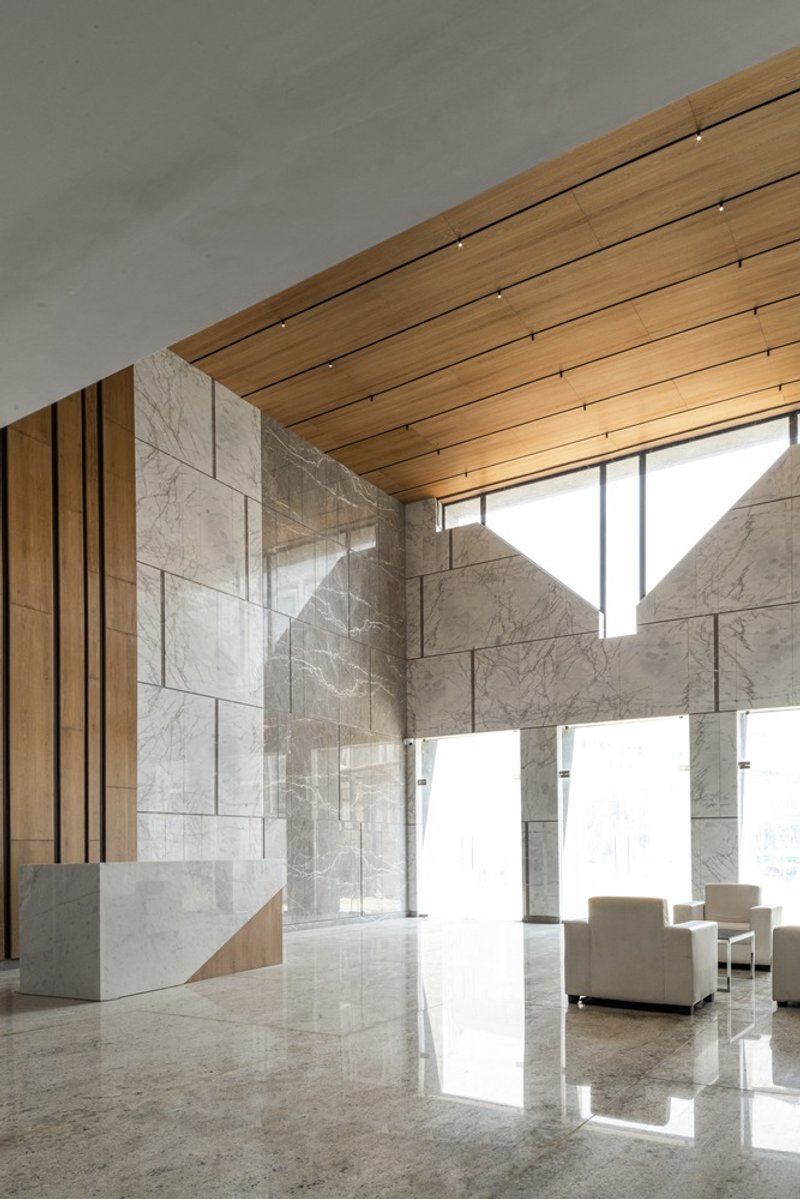
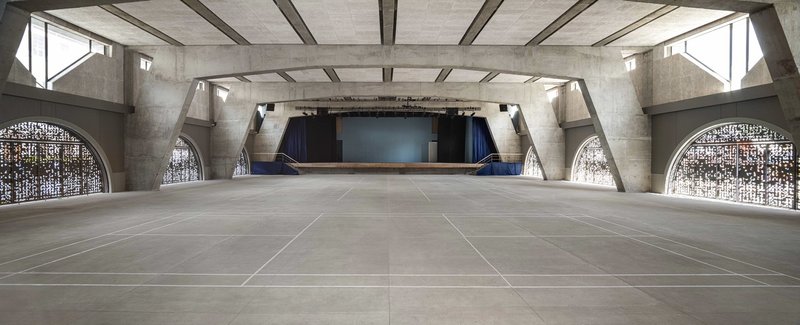
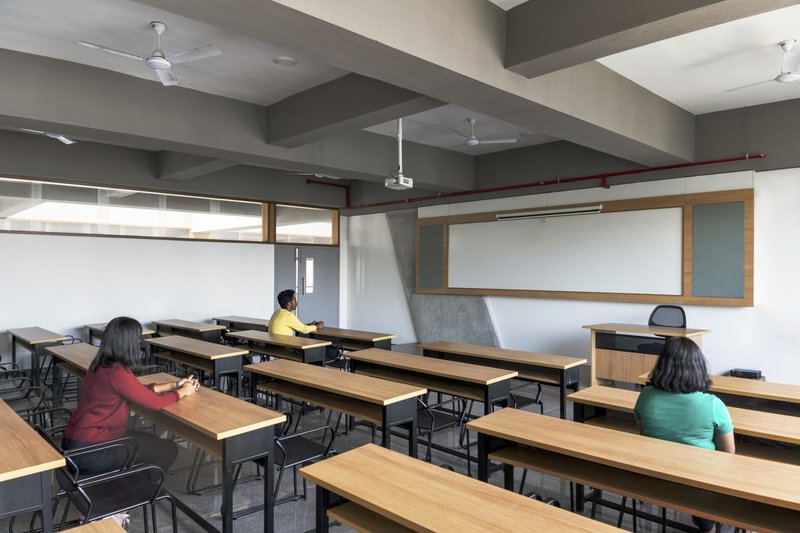
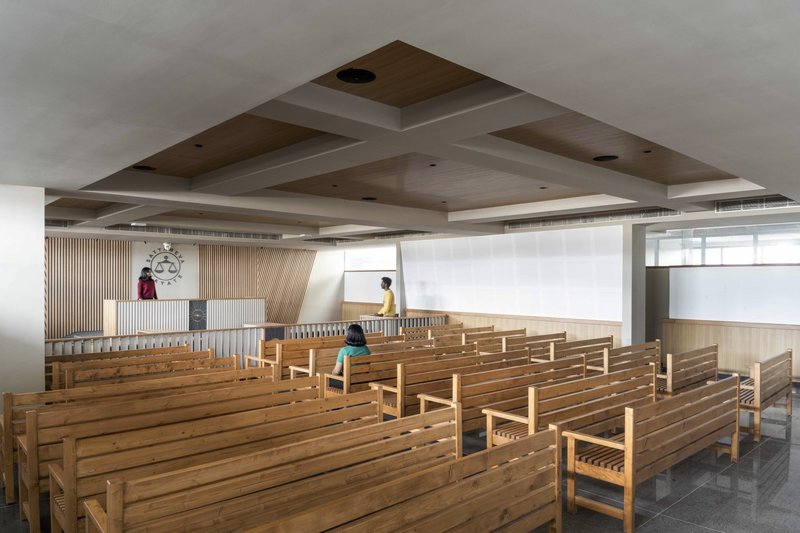
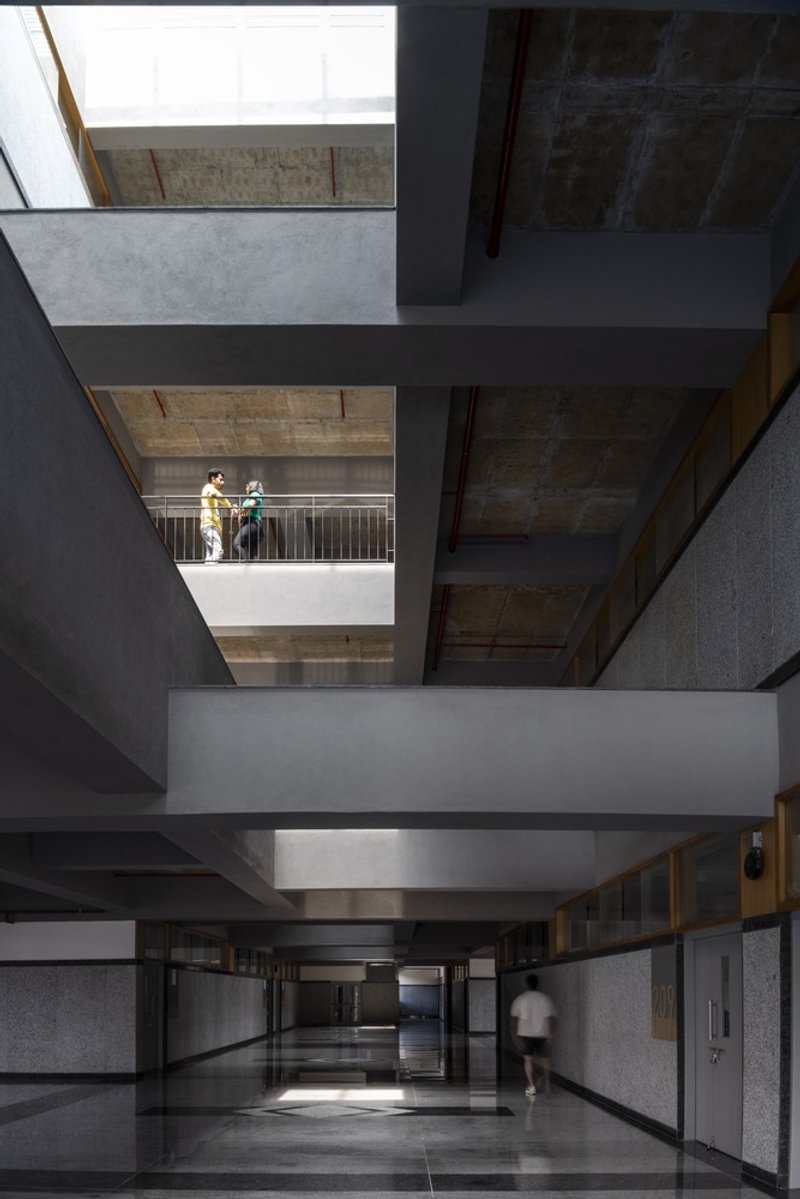
The ground and first floors house a 1000-seat multipurpose hall (MPH), dictating the upper-level layout. Classrooms are organized along a 25-foot-wide corridor, with staggered corridors on alternating floors for enhanced connectivity and interaction.
Design highlights include:
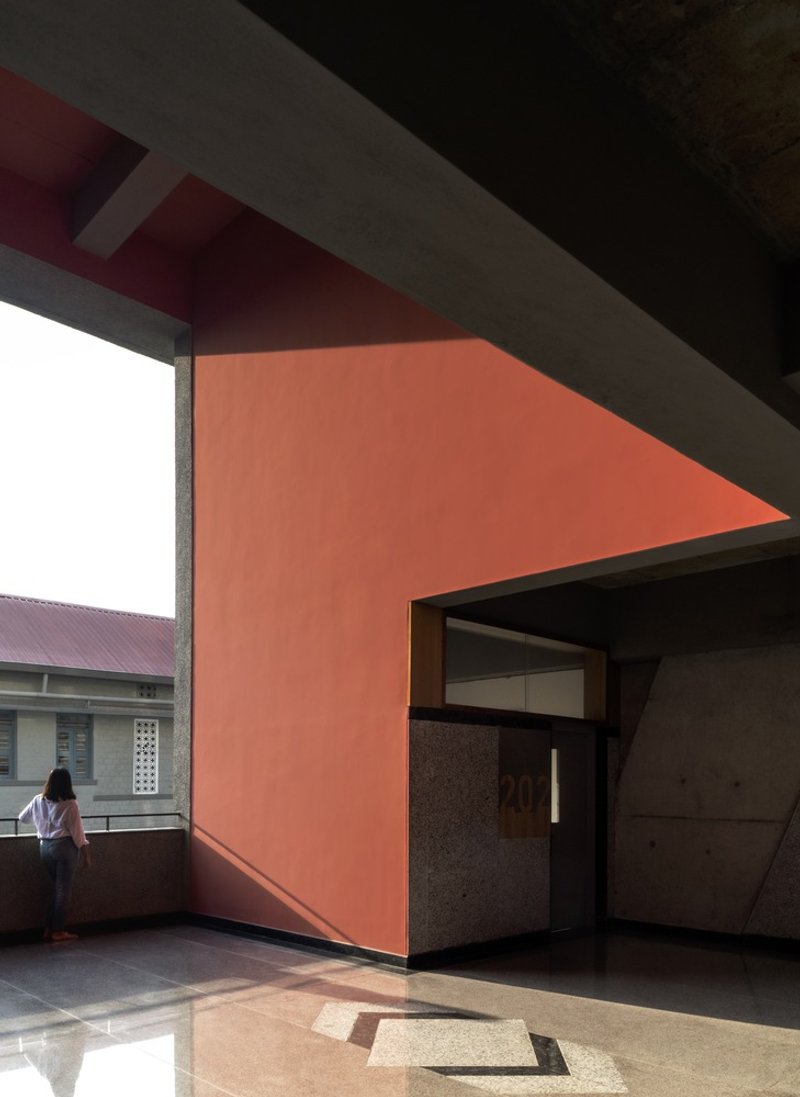
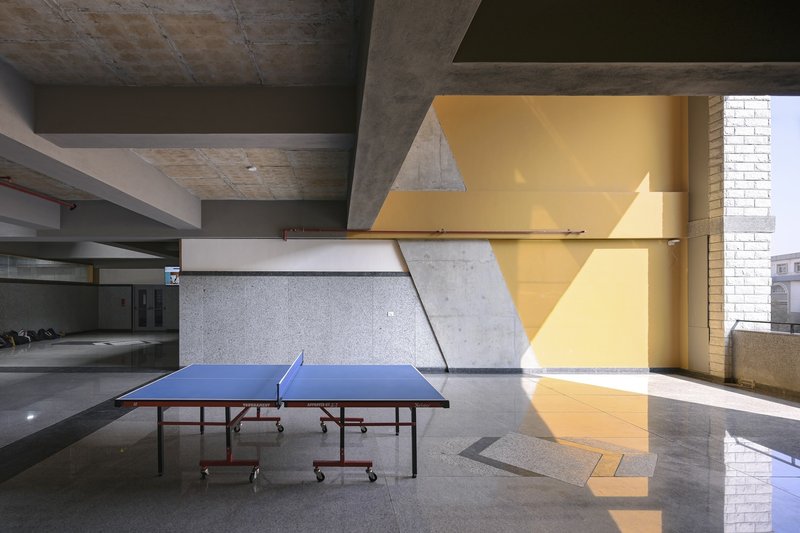
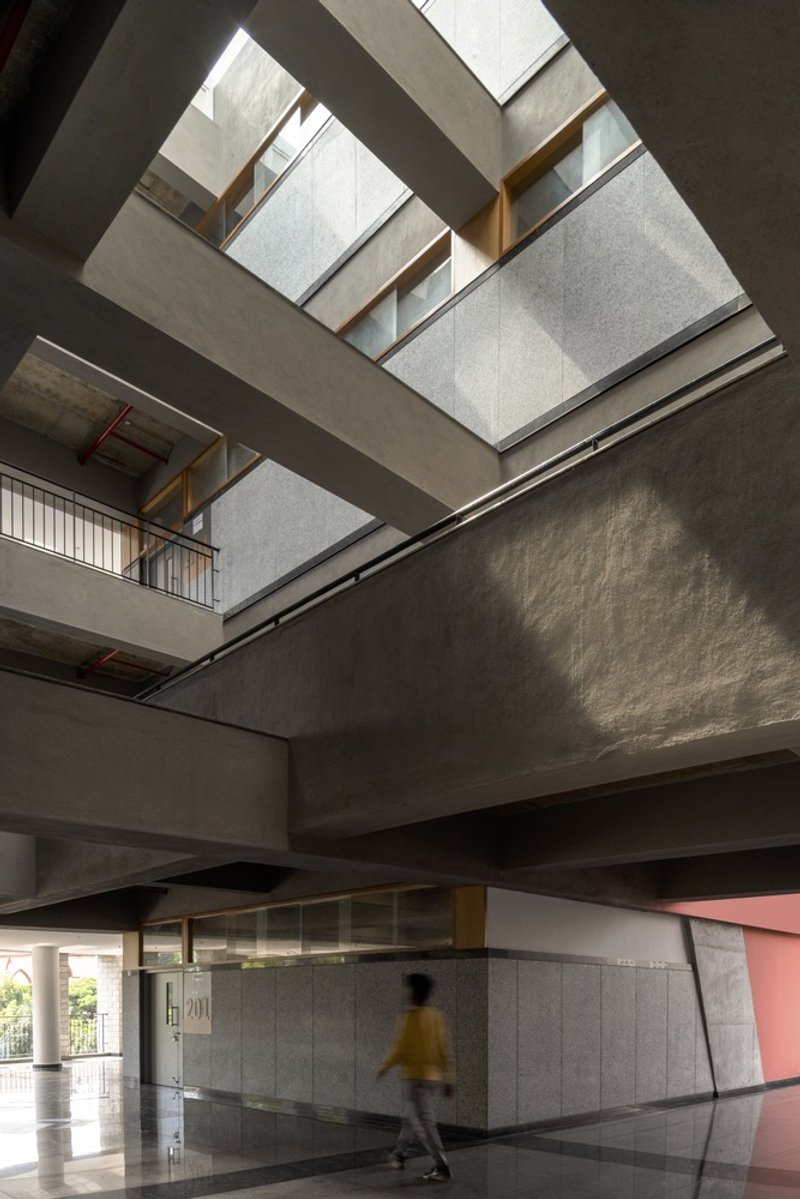
- Double-height cut-outs introducing natural light and ventilation
- Central spine fostering communal interactions
- Breakout spaces linking the building core to its surroundings
Structural Innovation
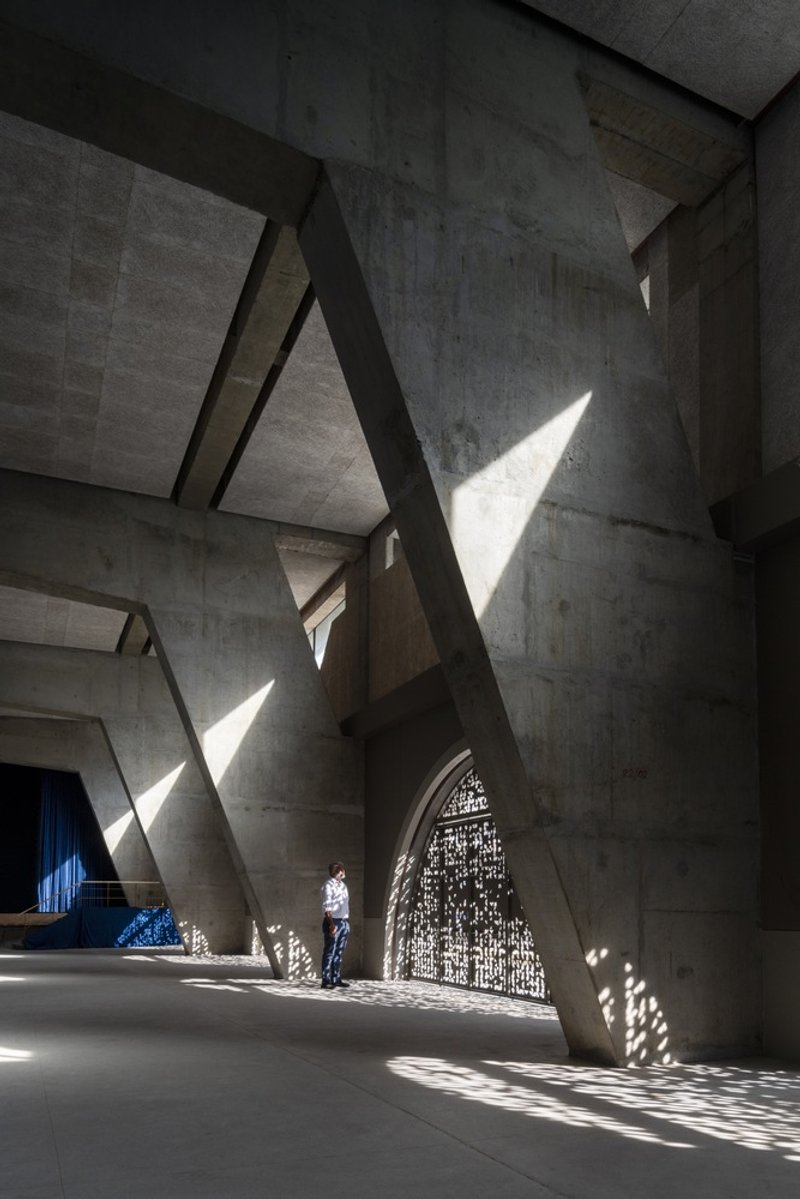
The column-free MPH spans 100’ in width and 150’ in length, acoustically optimized for cultural events and sports. Utilizing a Vierendeel system, vertical and diagonal members transfer loads to support the floors above, resulting in dramatic double-height spaces and tapering branching columns visible in upper-floor communal areas.
Design Philosophy
The building’s form-finished Vierendeel columns and heritage-inspired facade treatment convey strength and elegance. The design seeks to integrate seamlessly into Bengaluru’s historic campus while asserting a modern, timeless identity, reflecting both the legacy of St. Joseph’s College and the dynamic spirit of its students.
All Photographs are works of Vivek Eadara, Suryan // Dang




Popular Articles
Popular articles from the community

Inverted Architecture Installation by Studio Link-Arc: Exploring the Intersection of Architecture and Living Organisms
Inverted Architecture Installation by Studio Link-Arc blends mycelium, sustainability, inverted design, ecological cycles, and urban adaptive architecture in Shenzhen.
Fifth NRE Jazz Club – De Bever Architecten: Eindhoven’s Revitalized Cultural Hub
Historic gas factory transformed into Fifth NRE Jazz Club blending modern sustainability, jazz culture, dining, and heritage architecture seamlessly.


The Ken Roberts Memorial Delineation Competition (Krob)
As the most senior architectural drawing competition currently in operation anywhere in the world, it draws hundreds of entries each year, awarding the very best submissions in a series of medium-based categories.
Split House: A Compact Urban Home Blending Privacy, Light, and Flexible Living in Japan
Compact Japanese home featuring DOMA space, flexible café potential, passive lighting, privacy zoning, and sustainable urban living design.


Similar Reads
You might also enjoy these articles
The Ken Roberts Memorial Delineation Competition (Krob)
As the most senior architectural drawing competition currently in operation anywhere in the world, it draws hundreds of entries each year, awarding the very best submissions in a series of medium-based categories.

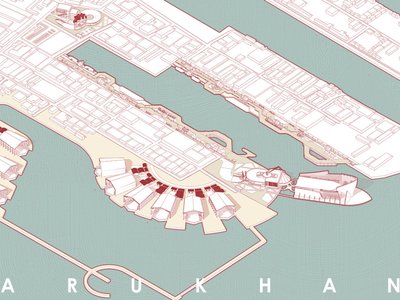
Waterfront Redevelopment and Urban Revitalization in Mumbai: Forging a New Dawn for Darukhana
A transformative waterfront redevelopment project reimagining Darukhana’s shipbreaking heritage into an inclusive urban future.

OUT-OF-MAP: A Call for Postcards on Feminist Narratives of Public Space
Rhizoma Design and Research Lab invites artists, designers, architects, researchers, and students to reflect on how feminist perspectives can reshape public space. Selected works will be exhibited in Barcelona, October 2026. Submissions open until 15 April 2026.


Documentation Work on Buddhist Wooden Temple
Architectural syncretism and cultural hybridity: A comparative study of the Buddhist temples in Chattogram Hill tracks


Explore Architecture Competitions
Discover active competitions in this discipline




The International Standard for Design Portfolios


The Global Benchmark for Architecture Dissertation Awards


The Global Benchmark for Graduation Excellence


Challenge to design public laboratory
Comments (0)
Please login or sign up to add comments
No comments yet. Be the first to comment!