
St Kilda Residence: A Rammed Earth Sanctuary Balancing Urban Presence, Privacy, and Sustainable Living
A rammed earth courtyard house in Melbourne, balancing urban presence, privacy, and sustainable living through refined materiality and passive design.

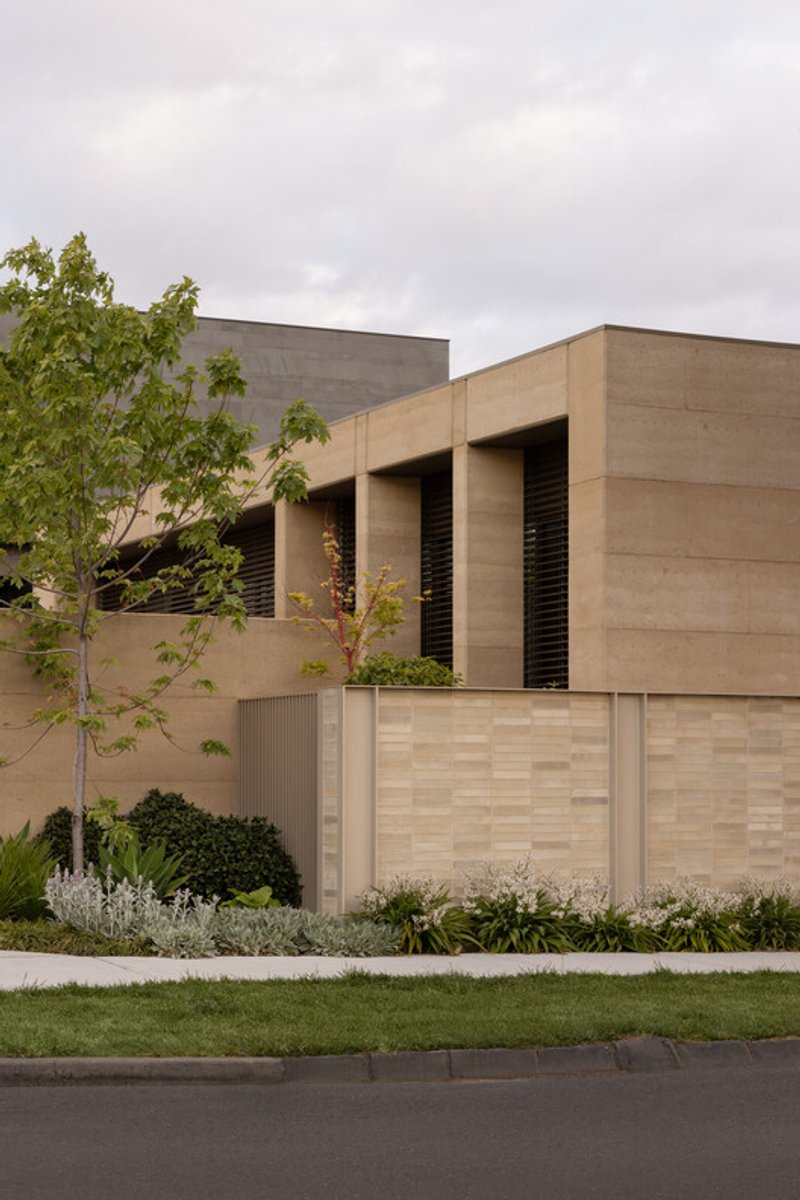
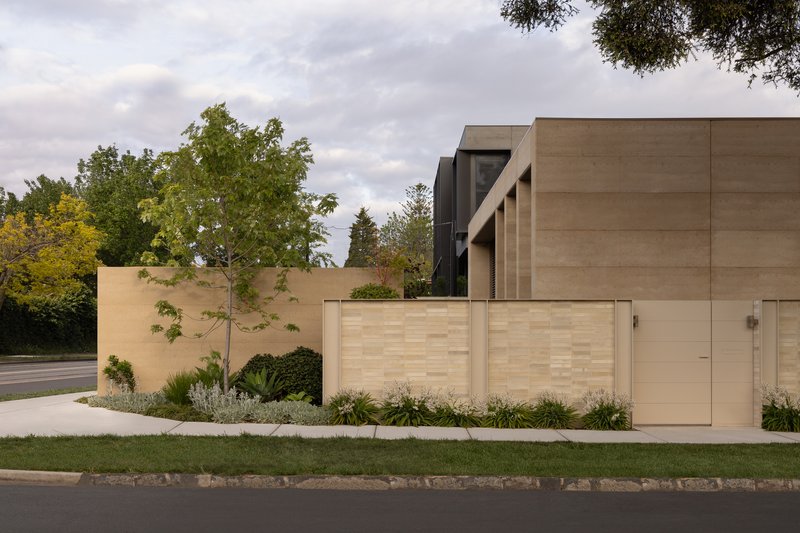
Set on a prominent north-facing corner allotment in Melbourne’s inner southeastern suburbs, St Kilda Residence by ADDARC is a carefully crafted family home that negotiates the tension between urban exposure and domestic retreat. Completed in 2024, the residence sits at the intersection of a primary road lined with tram tracks and a quiet cul-de-sac—an inherently complex context requiring both civic presence and deep privacy.
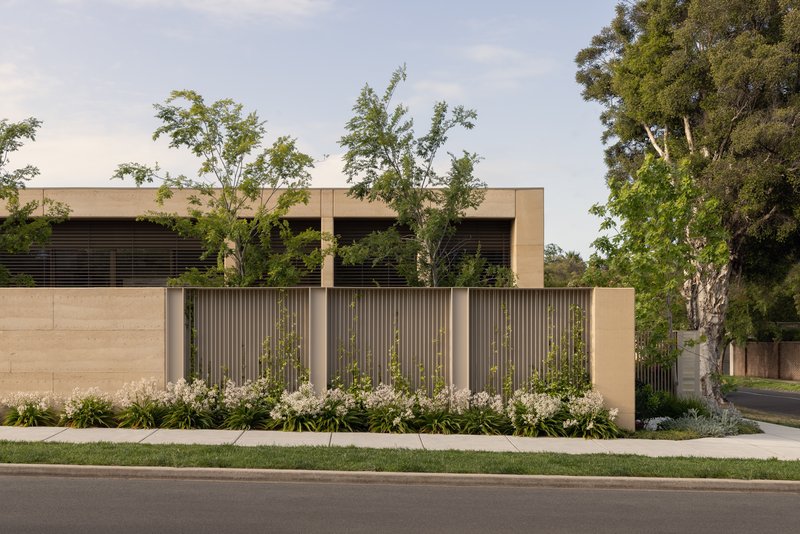
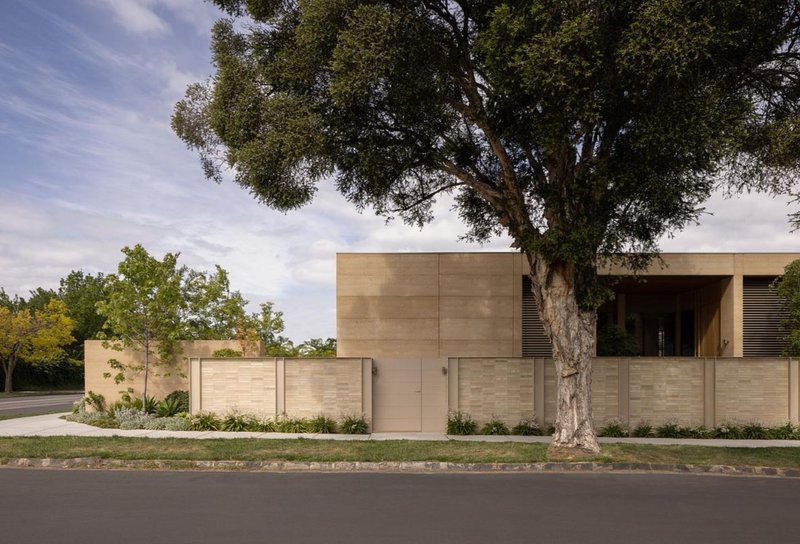
Through a robust palette of rammed earth, timber, stone, and concrete, the house establishes a calm, grounded presence within its urban surroundings. At the same time, its inward-focused spatial strategy creates a secluded oasis defined by light, texture, and framed relationships to landscape. The project exemplifies ADDARC’s commitment to architecture that is materially expressive, environmentally responsive, and designed for long-term inhabitation.
Responding to Context: Urban Exposure and Domestic Retreat
The site’s dual frontage presented a key challenge. One edge faces a busy thoroughfare with strong visual and acoustic exposure, while the other connects to a quieter residential street. ADDARC’s response was not to retreat entirely from the street, but to establish a measured architectural presence that acknowledges its urban role while protecting internal amenity.
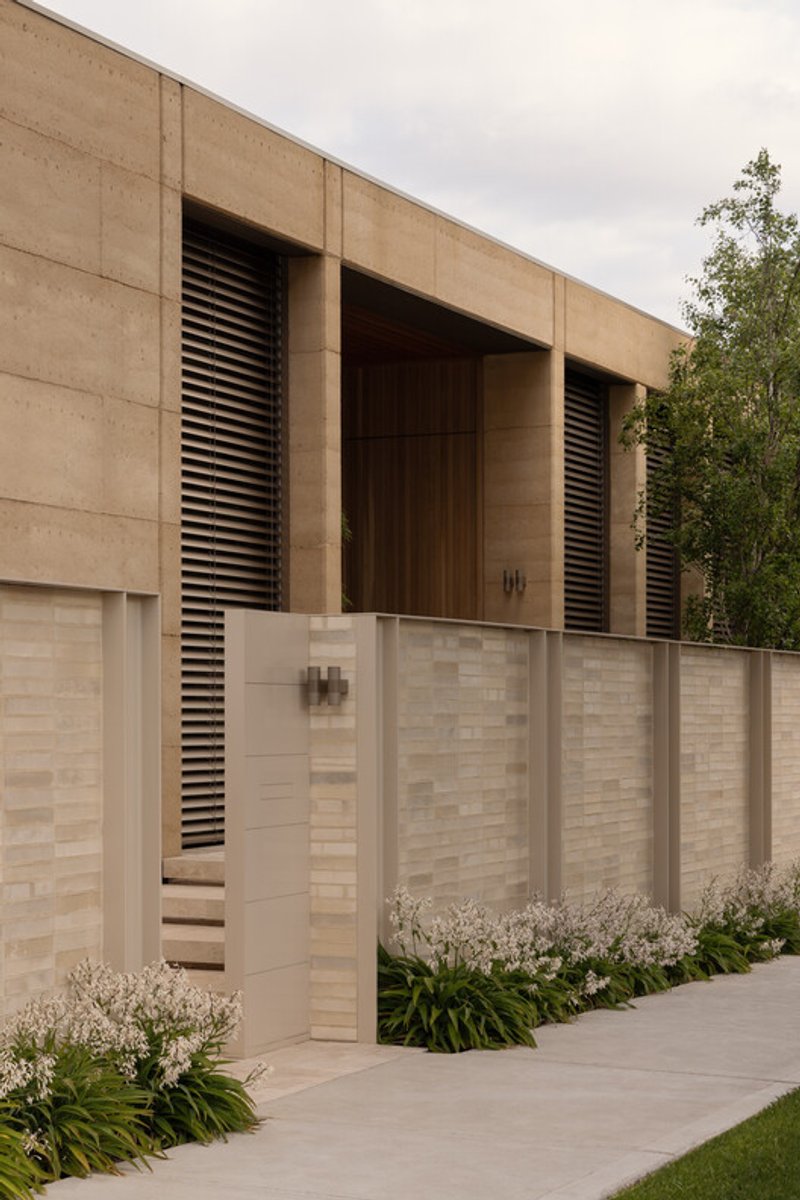
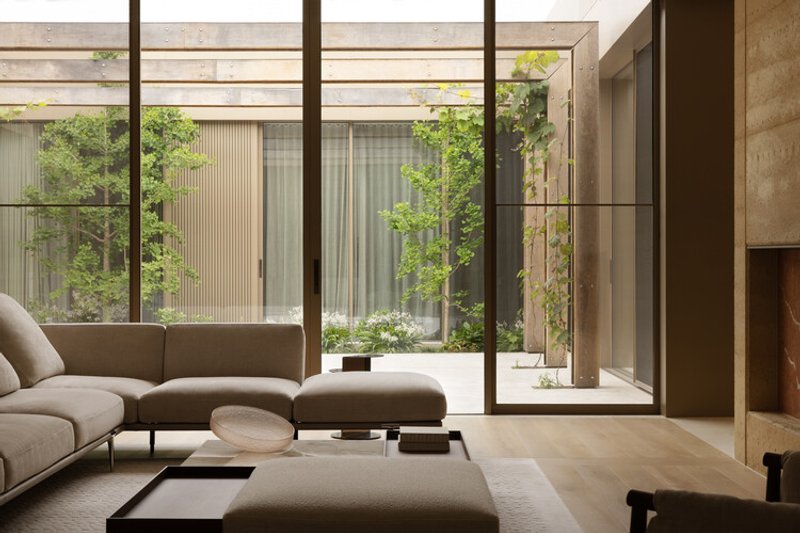
This balance is achieved through carefully scaled massing and a clear hierarchy of spaces. The exterior presents a sense of solidity and permanence, while the interior unfolds as a sequence of enclosed and framed courtyards that buffer the house from its surroundings. These courtyards become the organizing devices of the plan, mediating light, privacy, and outlook throughout the home.
Courtyards as Spatial and Social Anchors
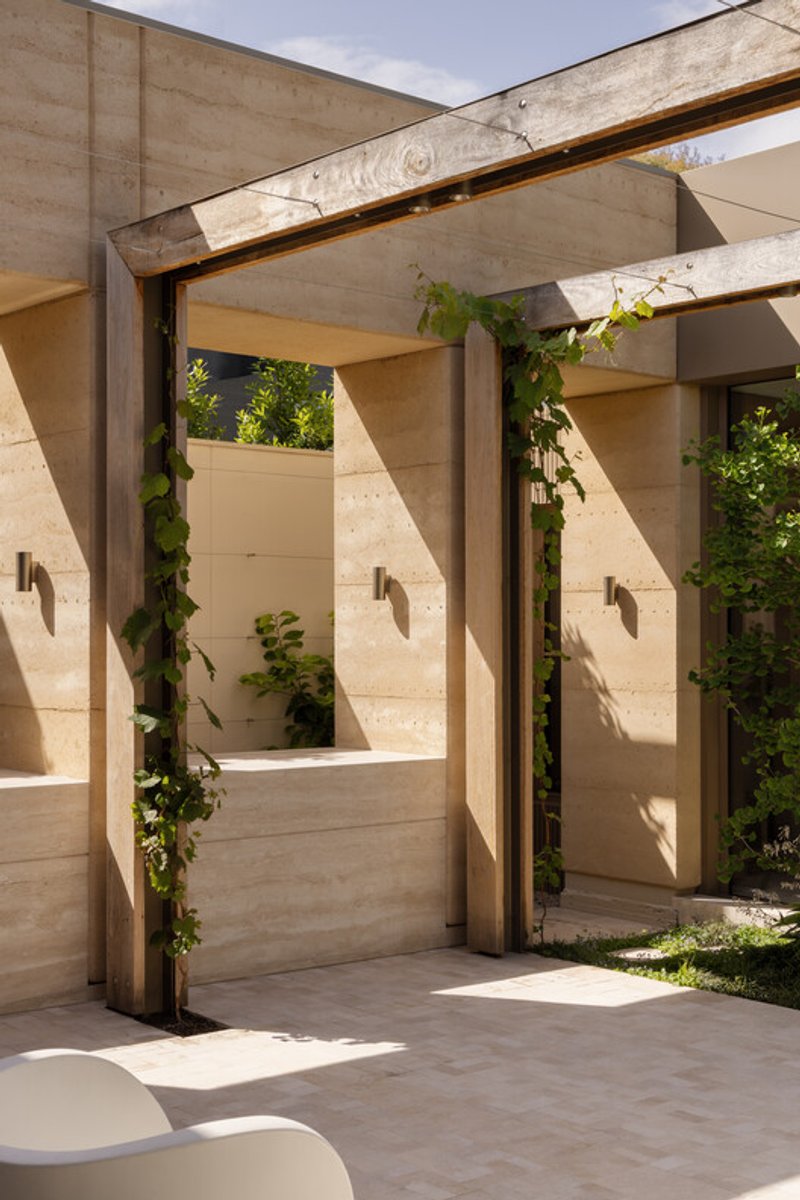
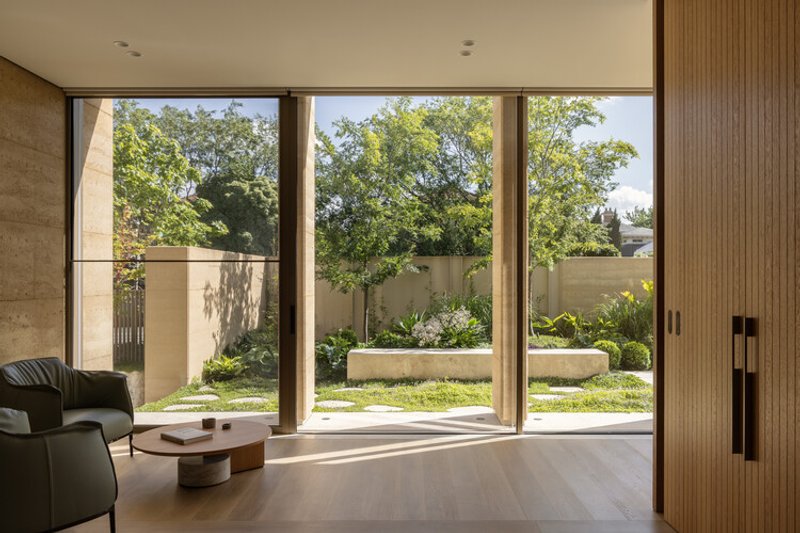
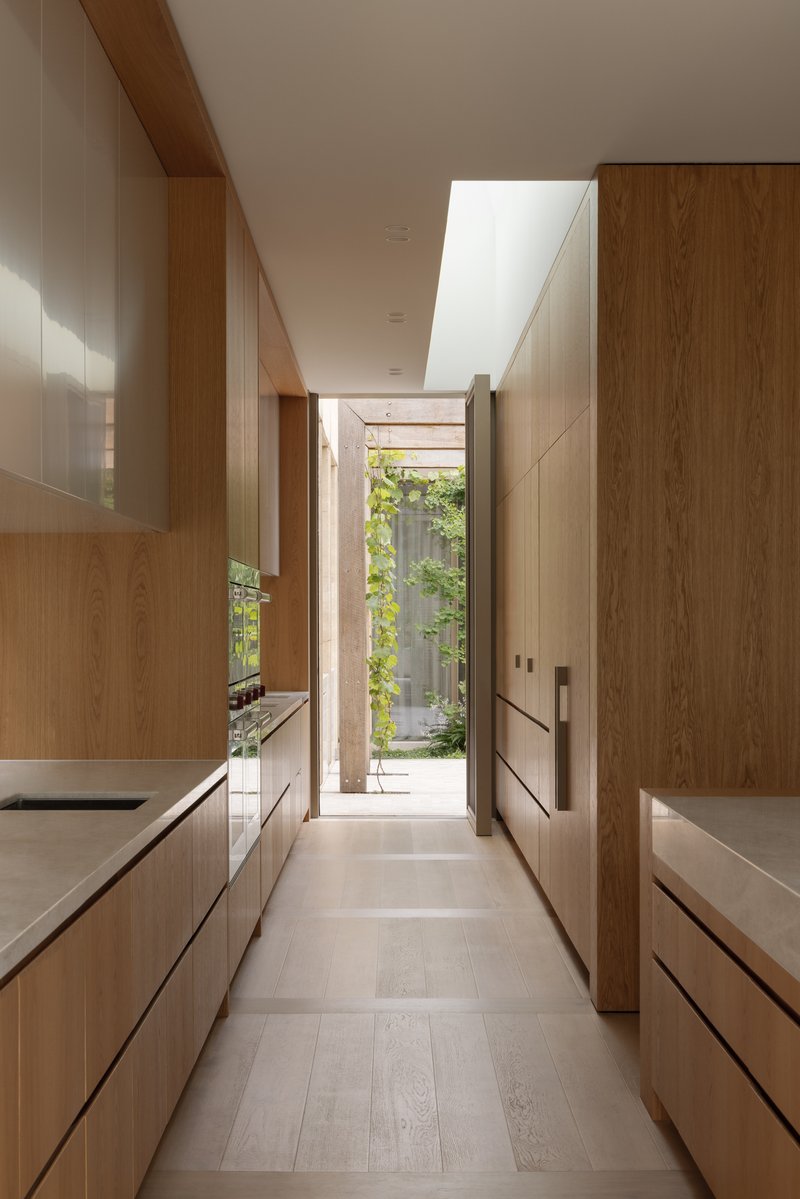
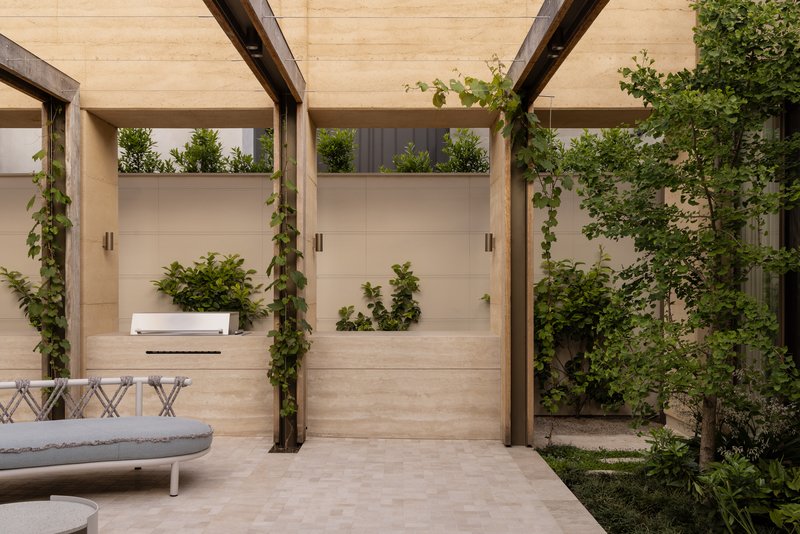
Conceptually, the house is ordered around a series of courtyards—some fully enclosed, others partially framed—each offering a distinct relationship to light, air, and landscape. Rather than relying on expansive glazing to the street, the design draws the focus inward, allowing daily life to unfold around protected outdoor spaces.
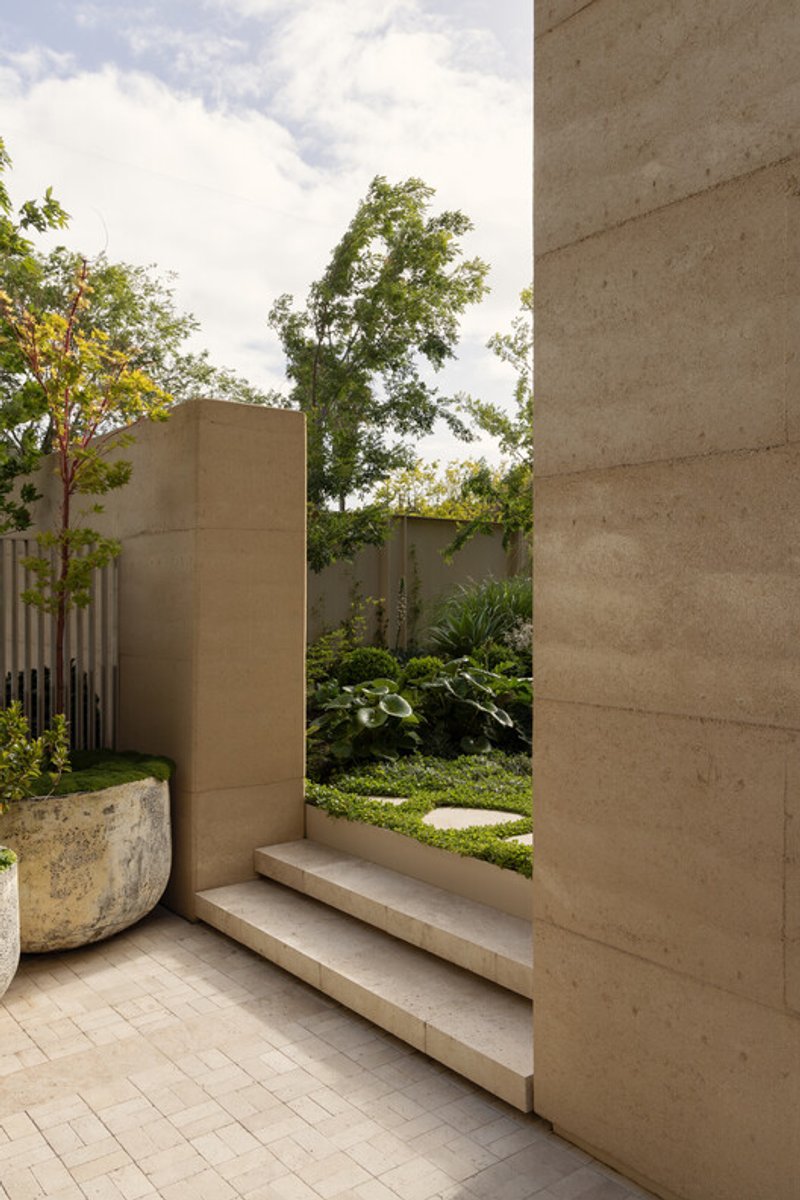
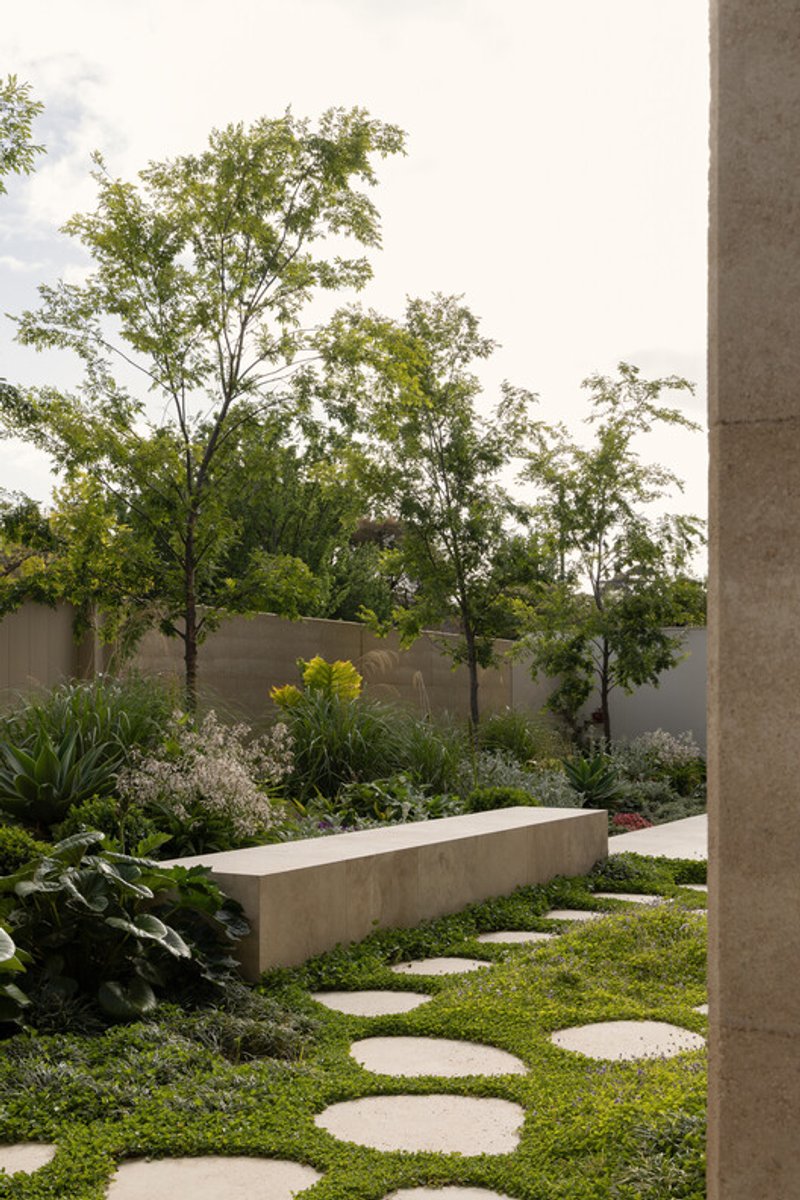
At the heart of the plan lies a central courtyard, which provides secluded private open space and establishes controlled view lines from all internal vantage points. From living areas, bedrooms, and circulation spaces, occupants experience carefully curated glimpses of greenery, sky, and light.
Strategically placed built-form gestures and landscape insertions limit unwanted views while enhancing the feeling of refuge. The result is a home that feels deeply private despite its exposed urban setting—a true inner-city sanctuary.
A Home Designed for Living, Entertaining, and Aging in Place
The brief called for a residence designed primarily for two occupants, yet capable of accommodating extended family gatherings, weekly dinners, and celebrations. Flexibility was essential—not only for entertaining, but also to support aging in place and potential future reconfiguration.
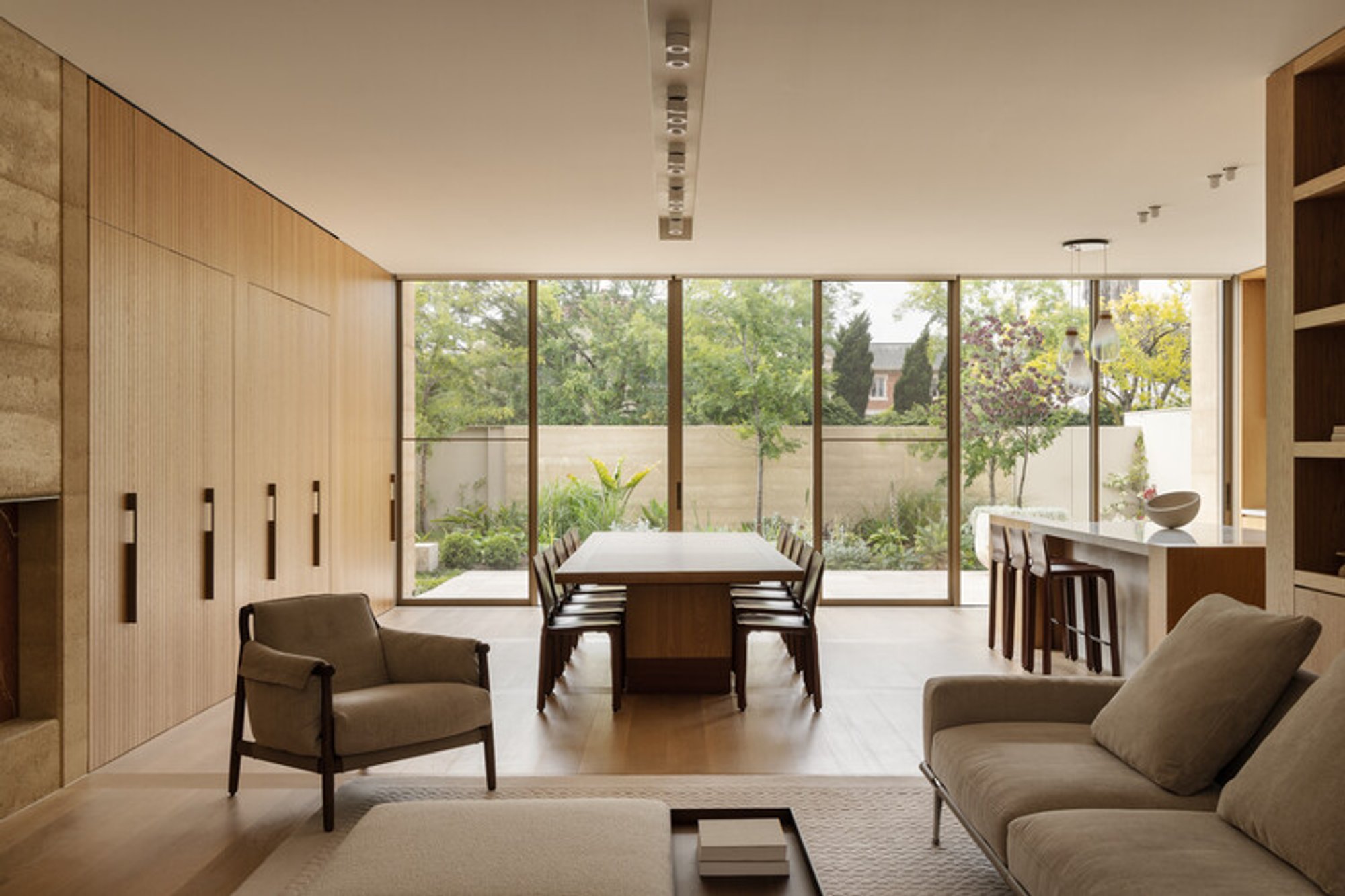
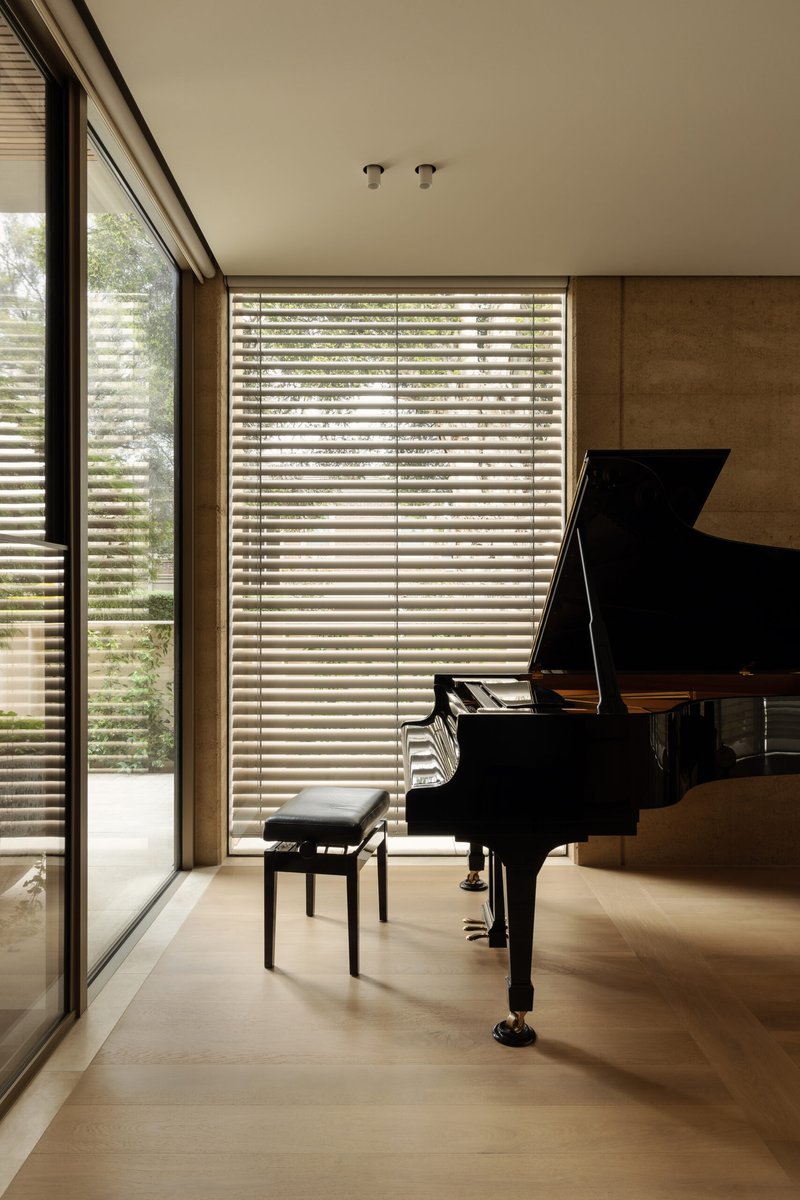
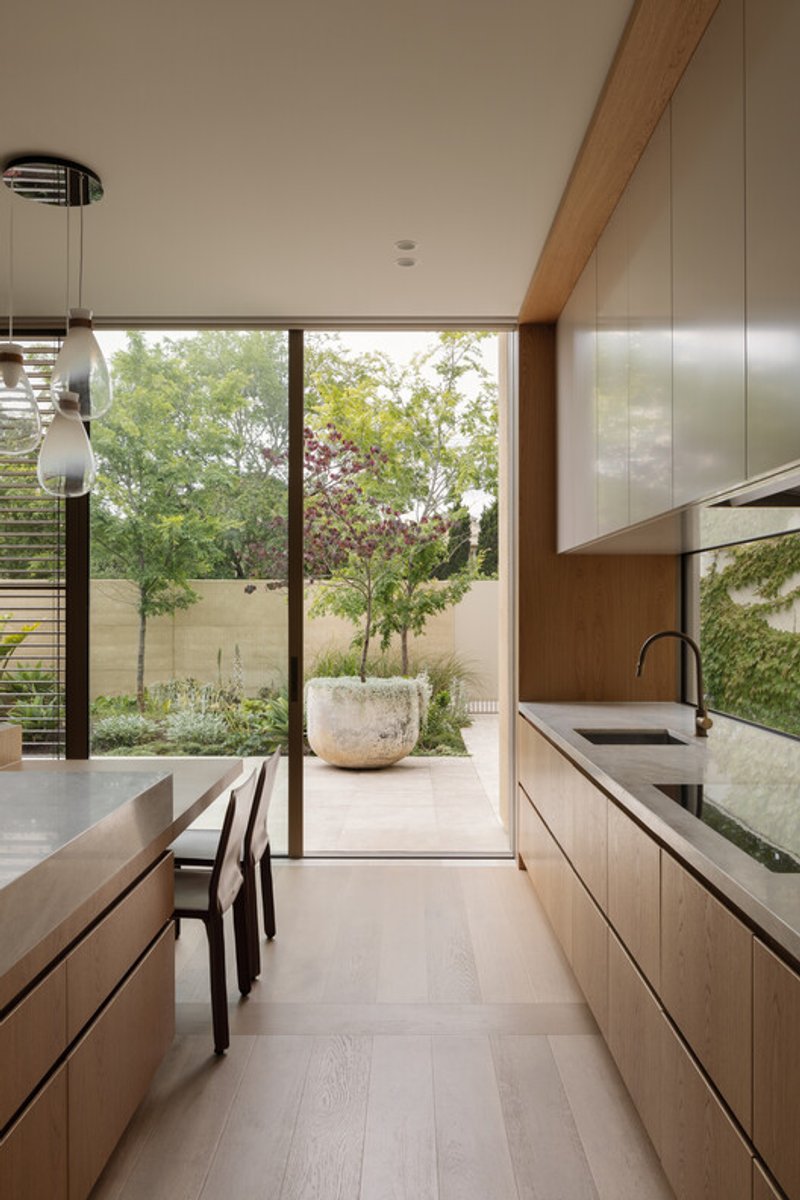
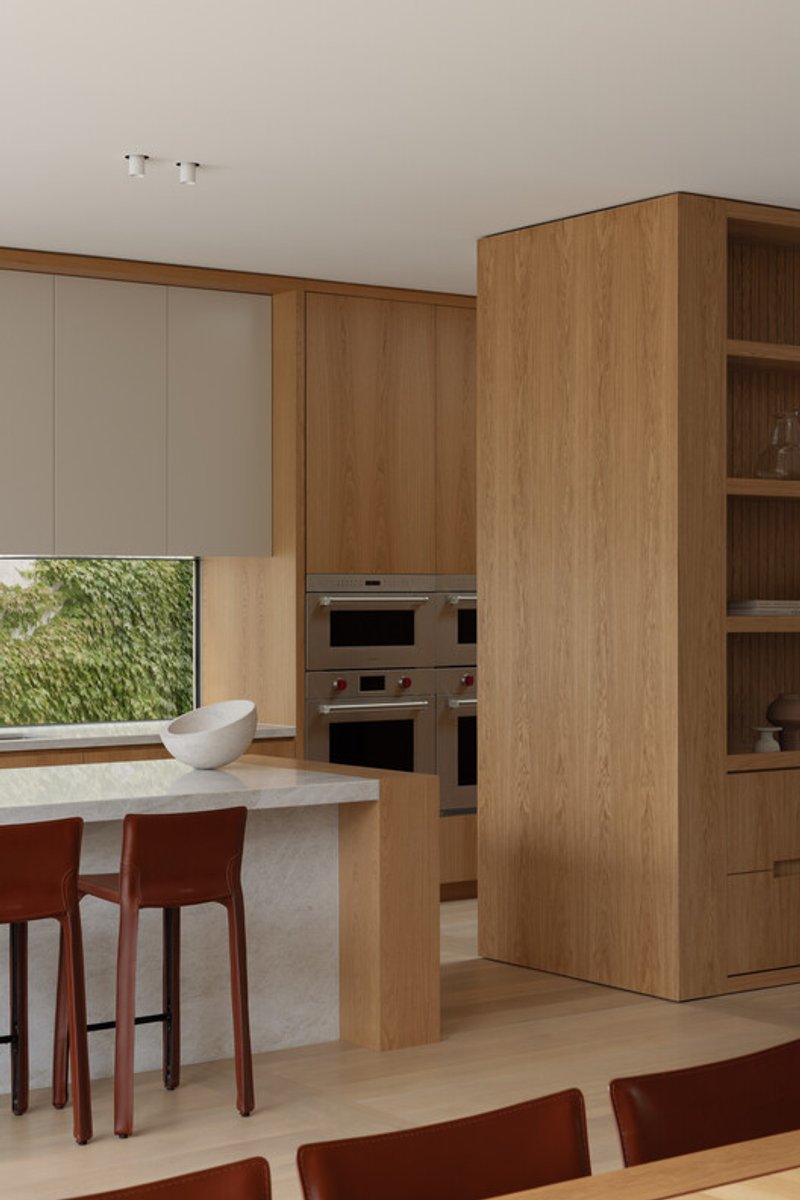
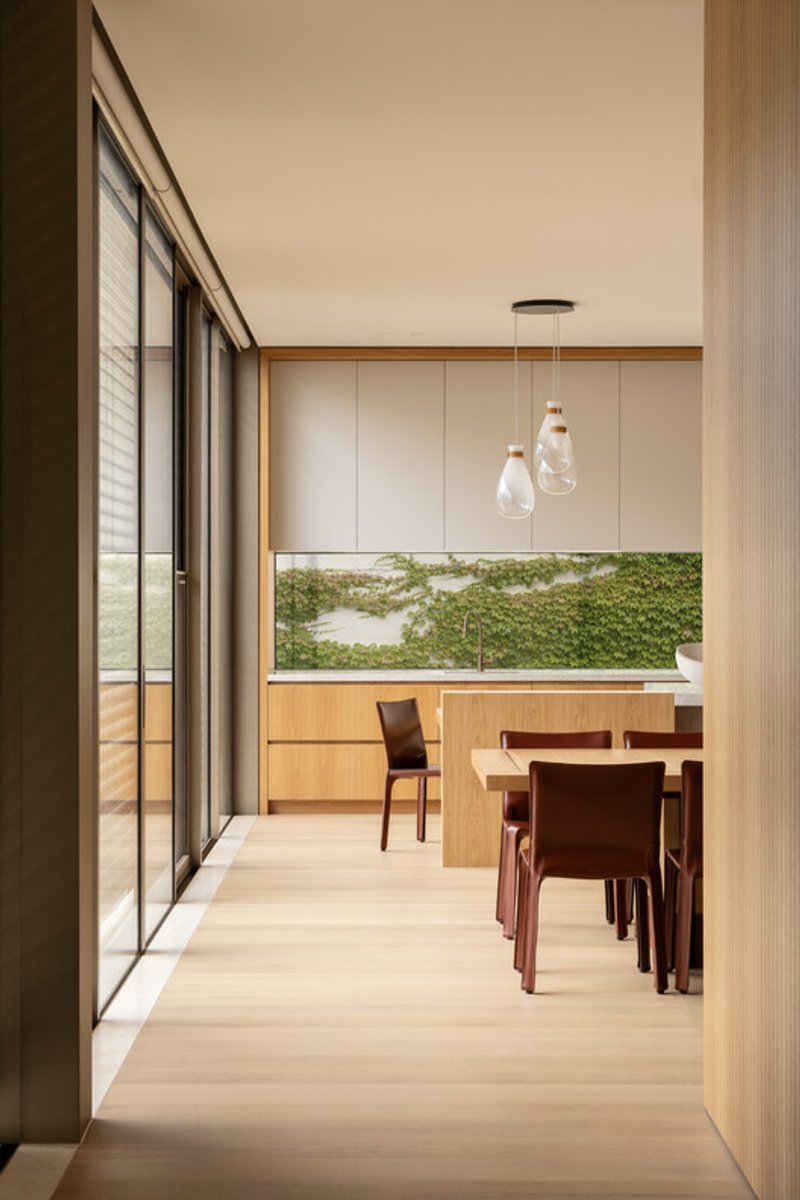
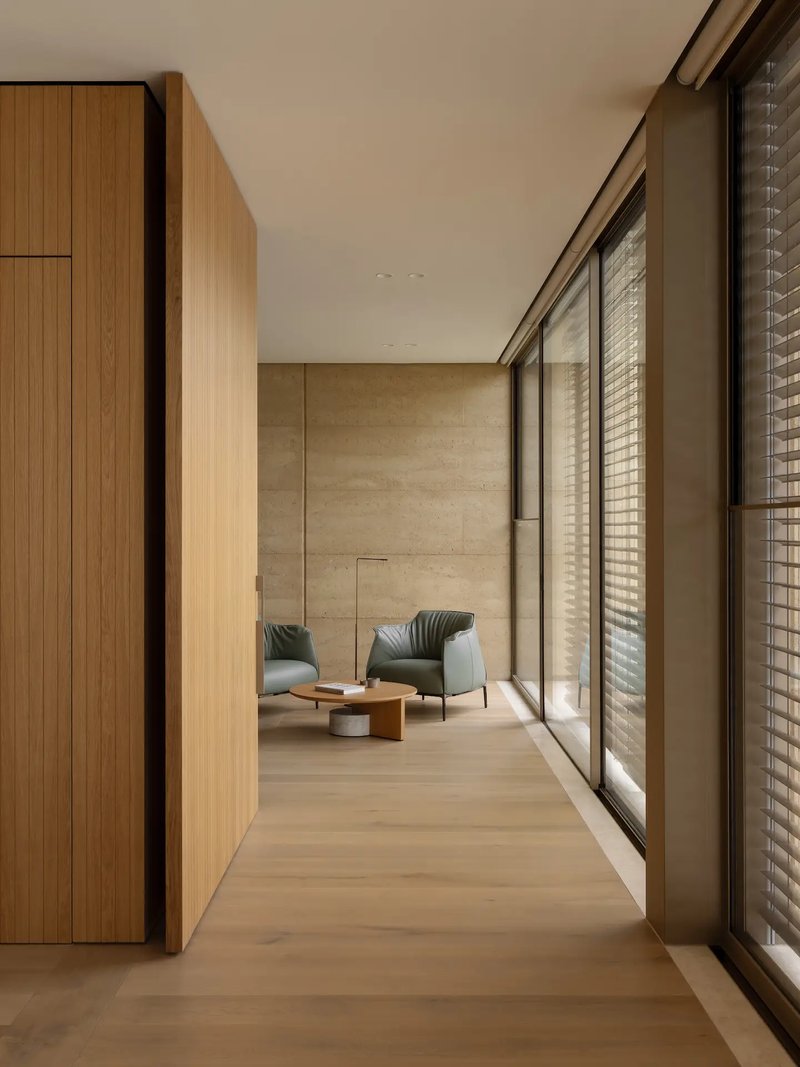
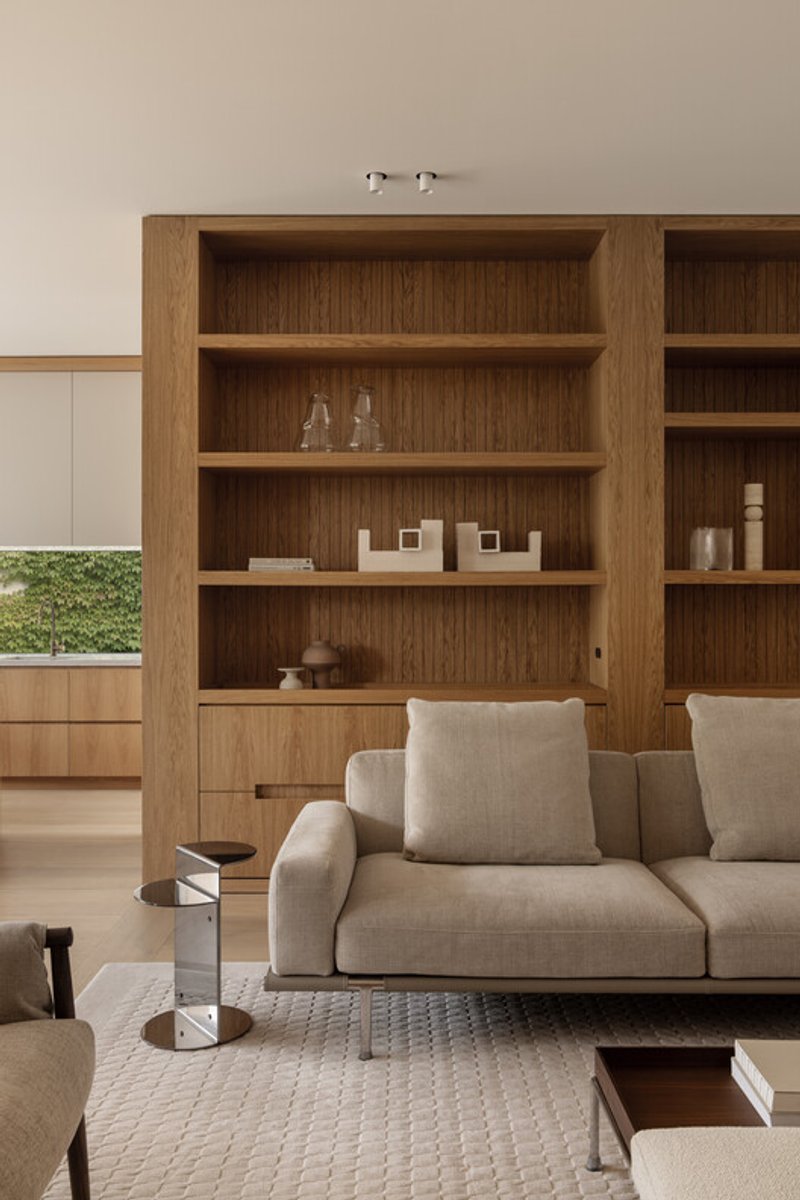
The primary living, dining, and kitchen space is conceived as an open-plan zone that connects seamlessly to outdoor areas. Adjacent to this is a study that doubles as a music conservatory, allowing for creative pursuits without isolating them from daily life. A separate, more intimate sitting room provides a retreat for watching television or a dedicated space for grandchildren to play.
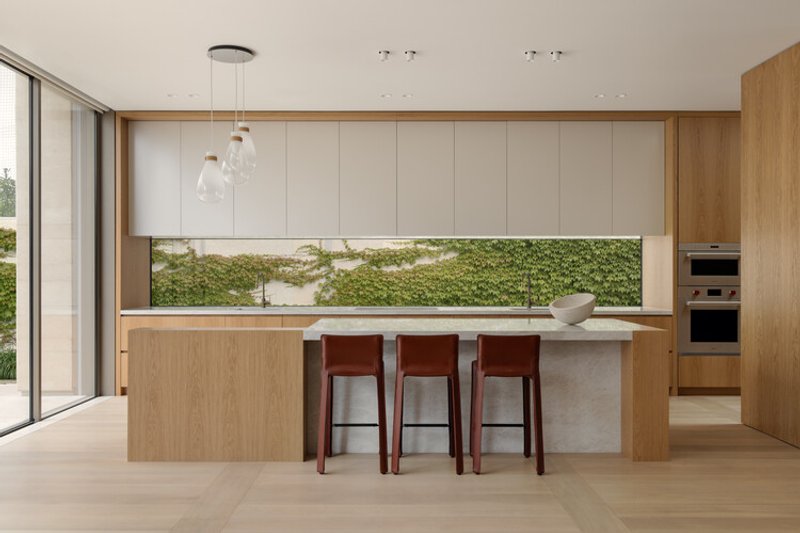
The bedroom wing includes a master suite that maintains strong visual and spatial connection to the landscape, yet is acoustically and physically separated enough to allow independent use of adjacent living spaces. A guest bedroom, shared bathroom, and ancillary back-of-house areas complete the program.
Beyond the boundaries of the house itself, the project extends into the neighborhood through a communal vegetable garden and fruit orchard, shared with immediate neighbors—reinforcing a sense of community and collective stewardship.
Rammed Earth as Structure, Texture, and Rhythm
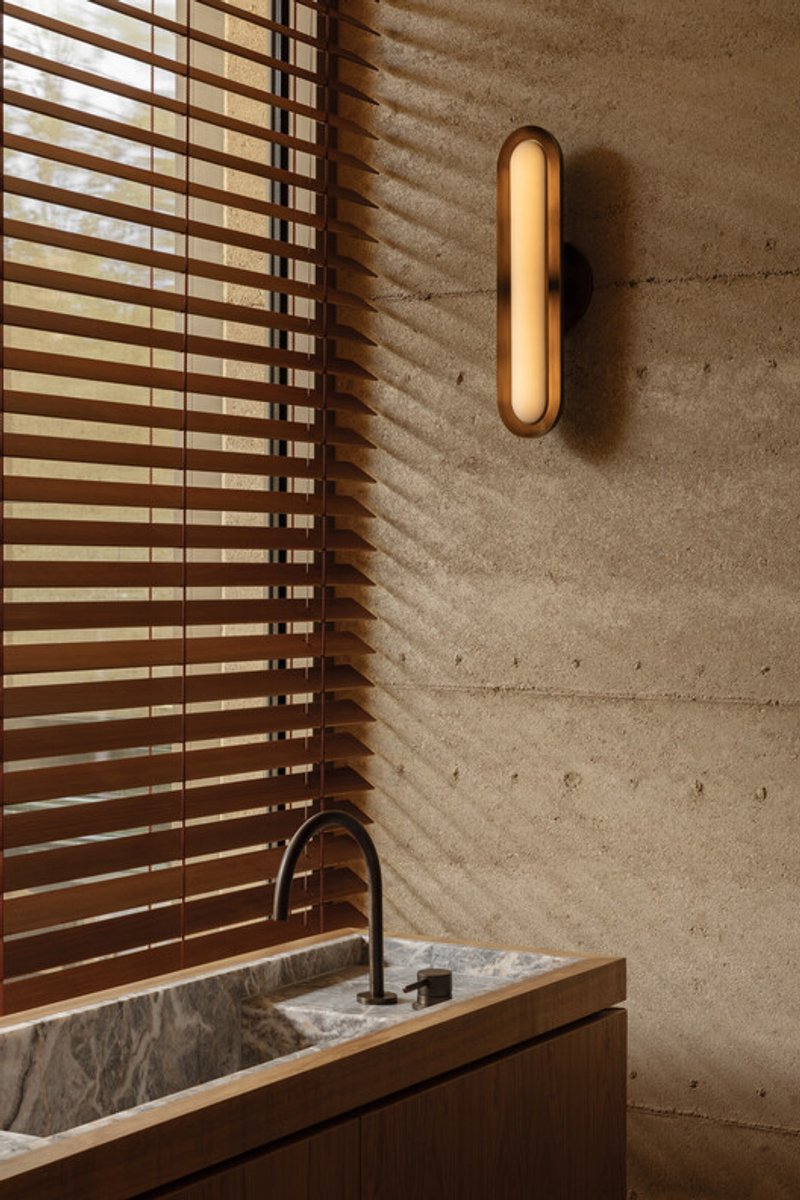
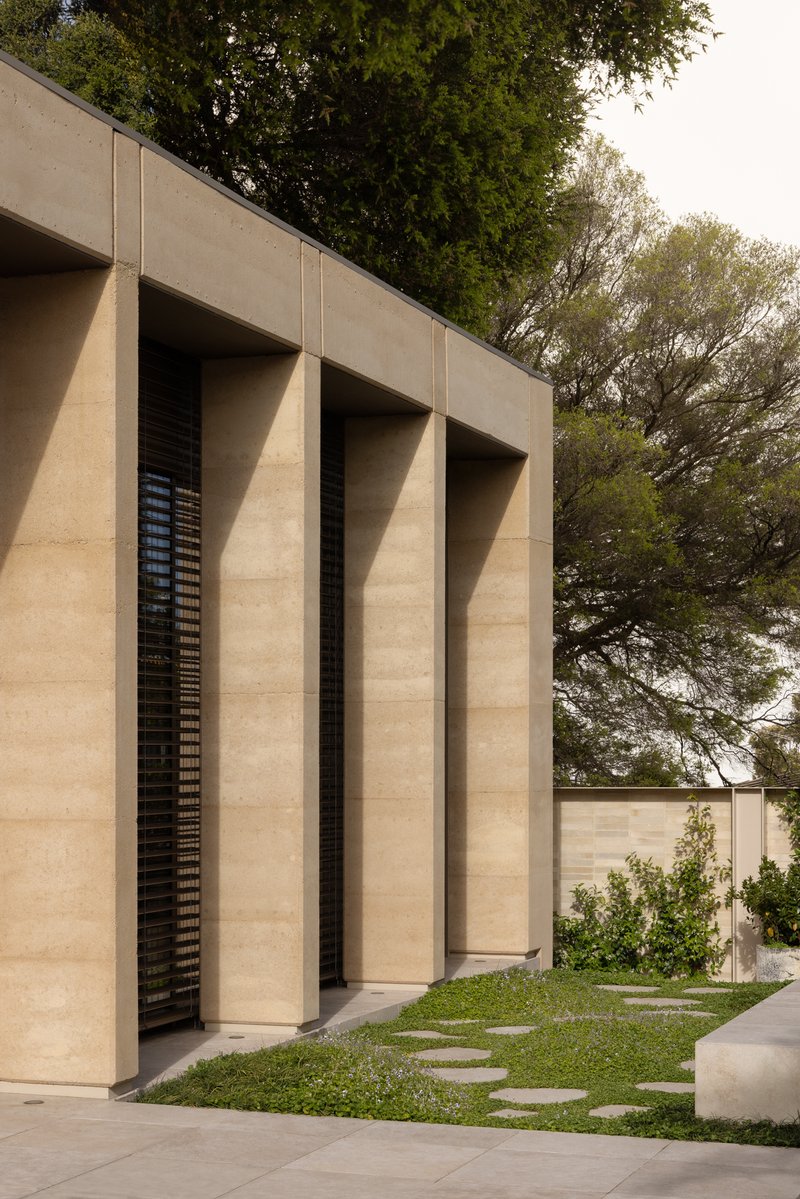
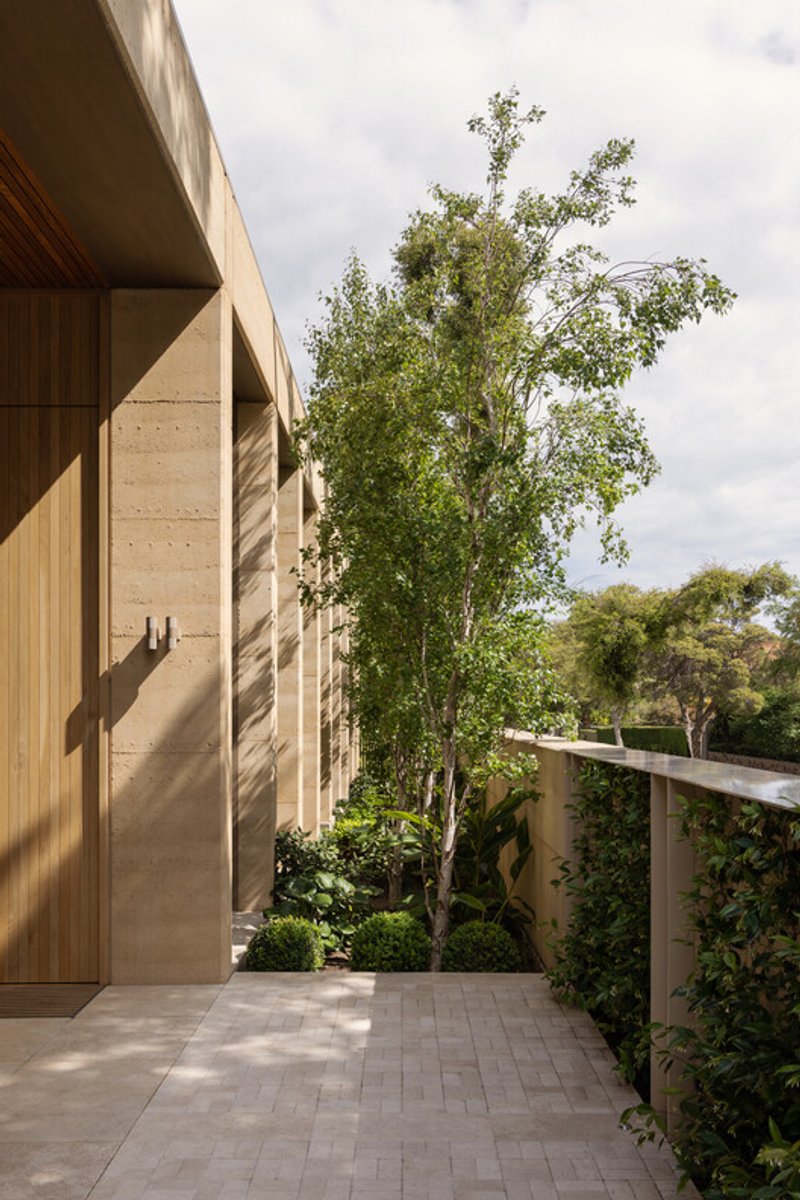
Materiality plays a central role in defining the identity of St Kilda Residence. Rammed earth is the focal element, used not merely as a wall finish but as a structural and spatial generator. Its mass provides thermal stability and acoustic buffering, while its tactile surface introduces depth and richness through subtle variations in tone and texture.
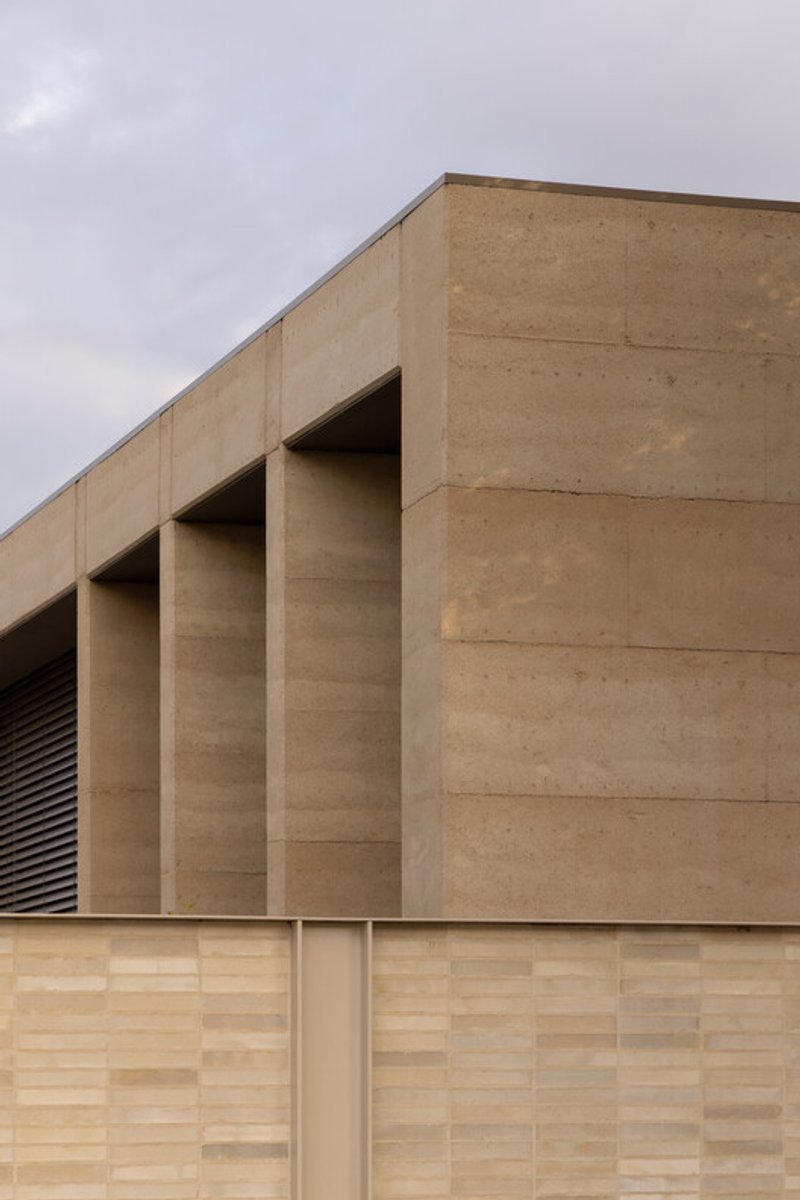
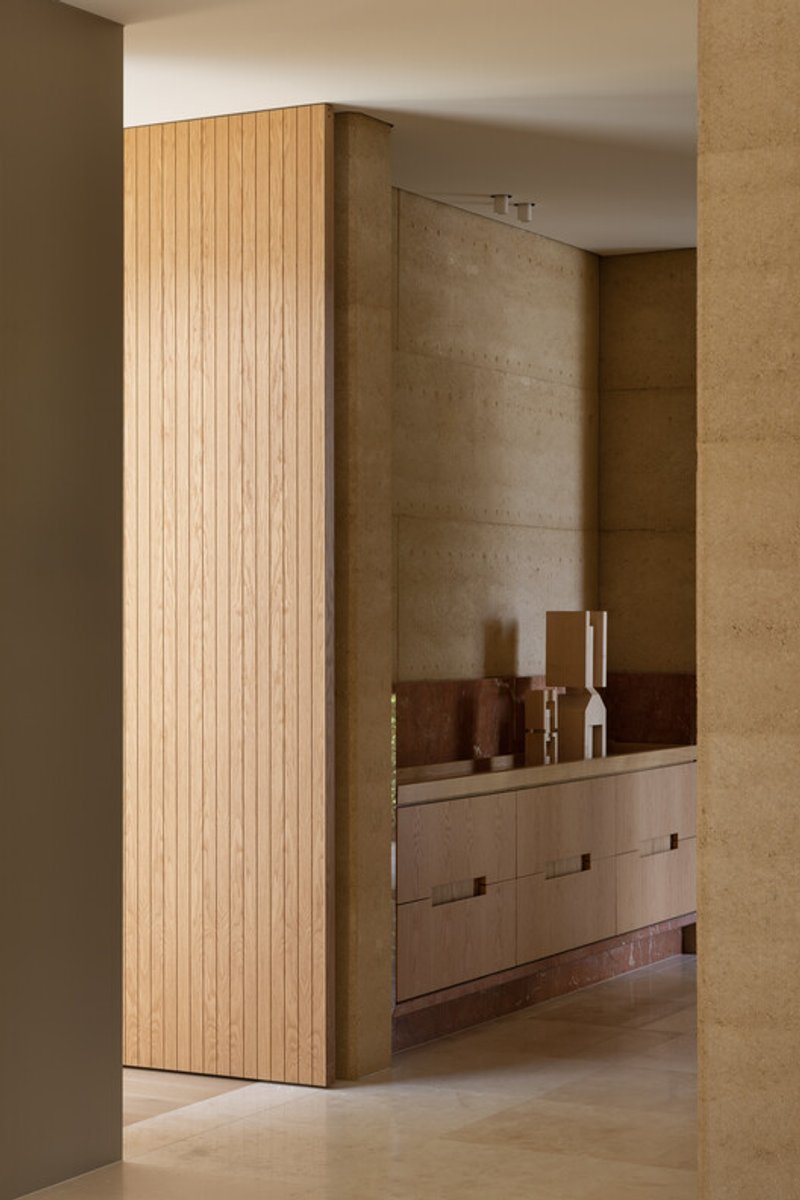
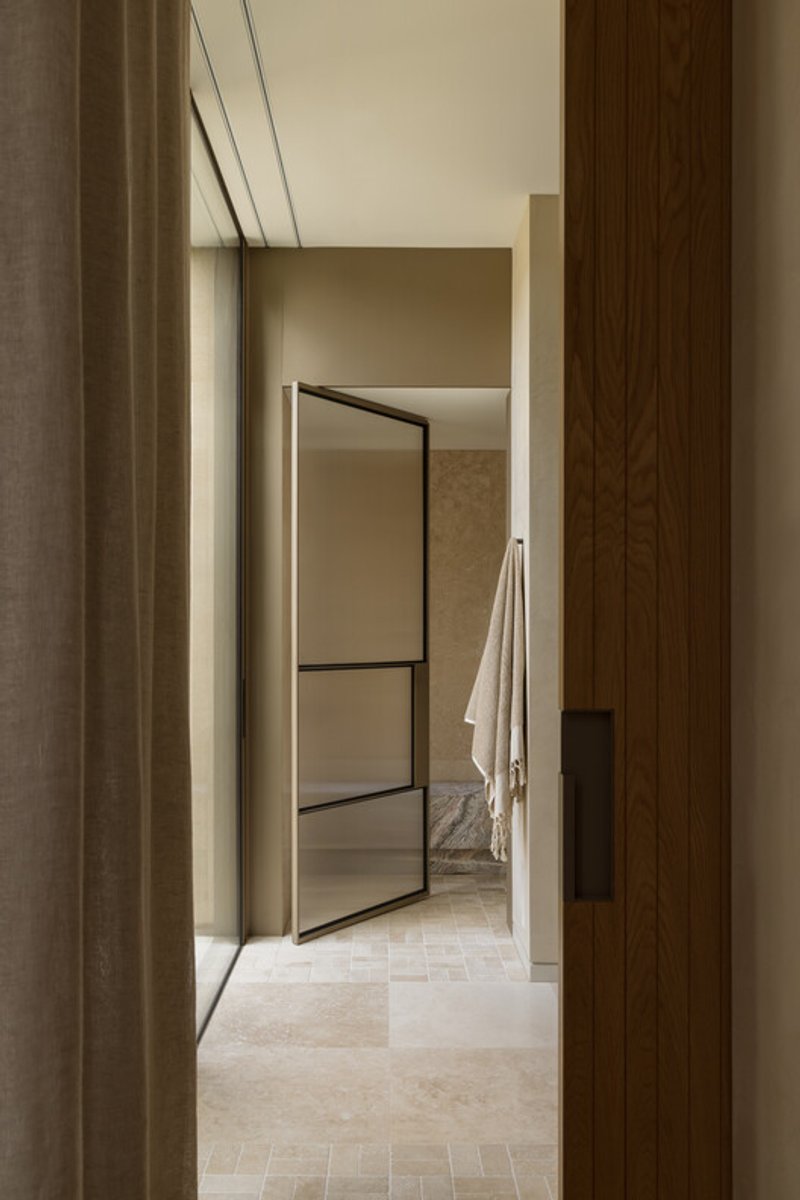
An overarching structural grid within the rammed earth walls establishes a subliminal rhythm throughout the house. This grid is echoed internally through directional changes in timber flooring, the articulation of joinery panels, and shifts in stone flooring formats and textures. These layered cues create a sense of cohesion and order without relying on overt ornamentation.
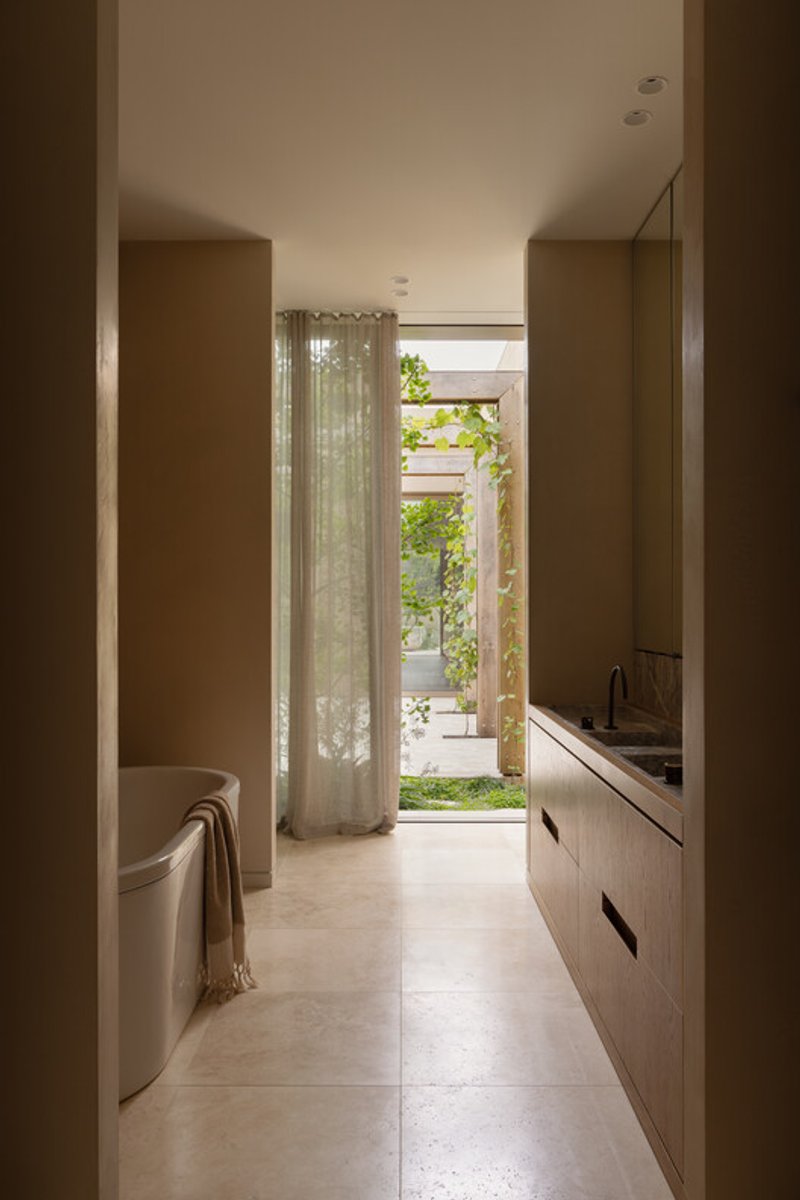
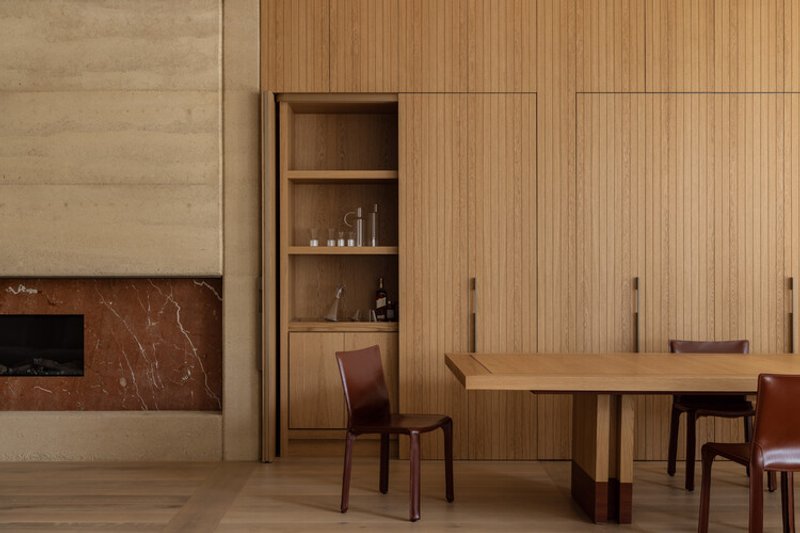
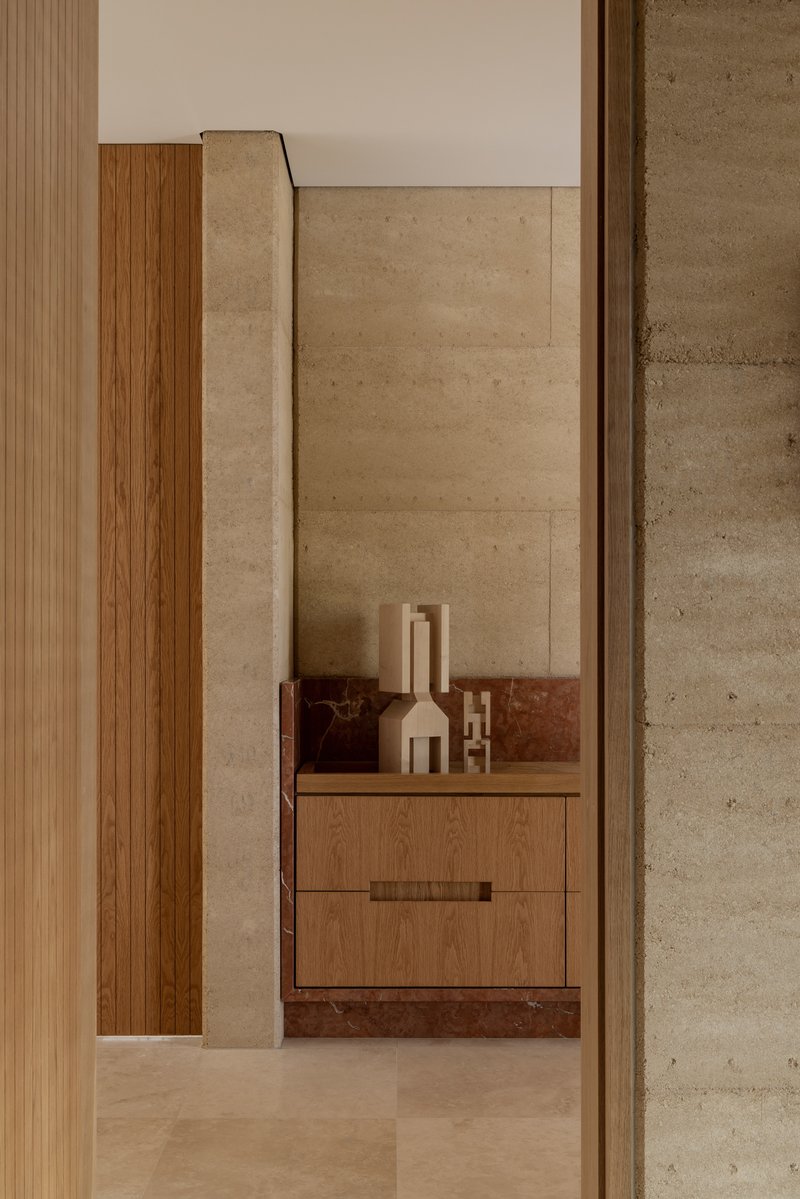
Internally, refined and highly detailed objects—joinery, shelving, and fixtures—are carefully sleeved into the organic rammed earth walls. This juxtaposition between precision-crafted elements and the raw, imperfect surface of earth creates a powerful architectural dialogue.
Precision in an Unforgiving Material
Working with rammed earth demands an exceptional level of coordination and foresight. In this project, inherent formwork alignments—often hidden or ignored—were elevated to become key datums that informed the placement of joinery and detailing throughout the house.
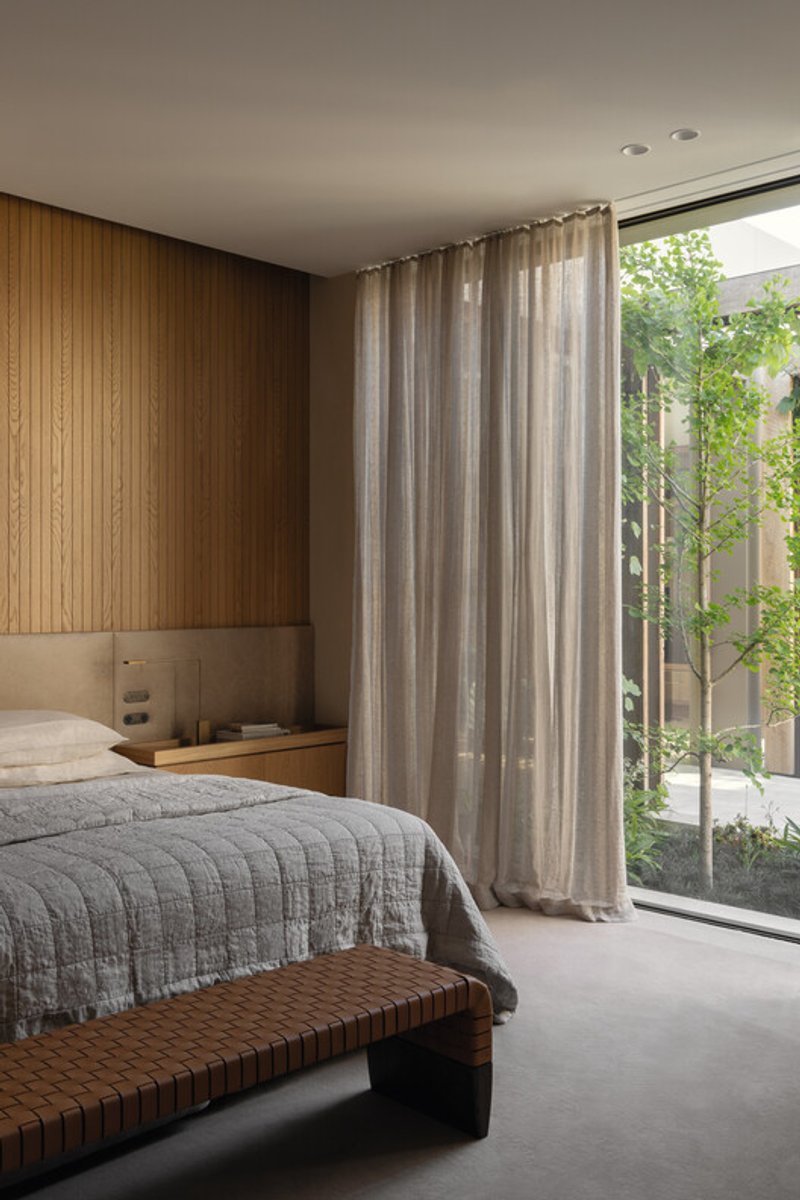
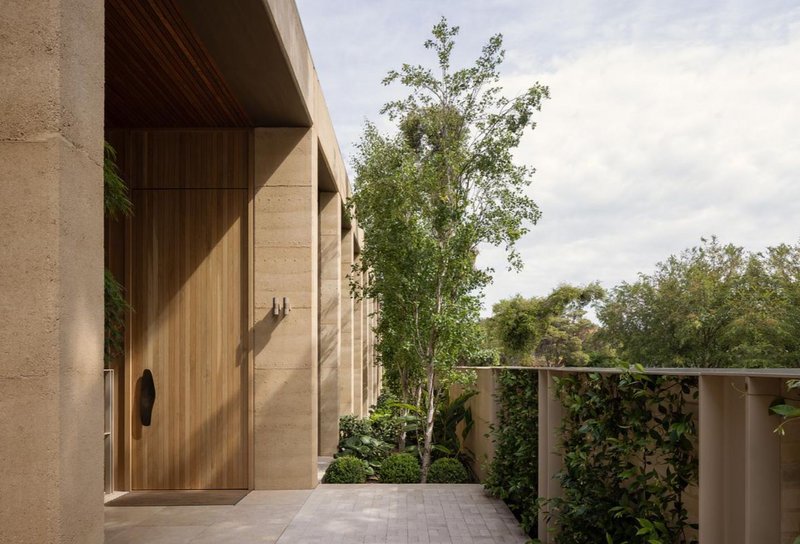
Upfront prototyping and close collaboration between the architect, builder, engineer, and rammed earth contractor were essential. This process allowed ADDARC to achieve minimalist detailing within an inherently rugged material, ensuring junctions were resolved cleanly and consistently.
The result is a home where every detail feels intentional—where construction logic is visible and celebrated rather than concealed.
Light, Shadow, and the Animation of Space
The experience of the house is continually transformed by the movement of light. As sunlight washes across the rammed earth walls, natural imperfections in the material become animated, creating ever-changing patterns of shadow and texture.
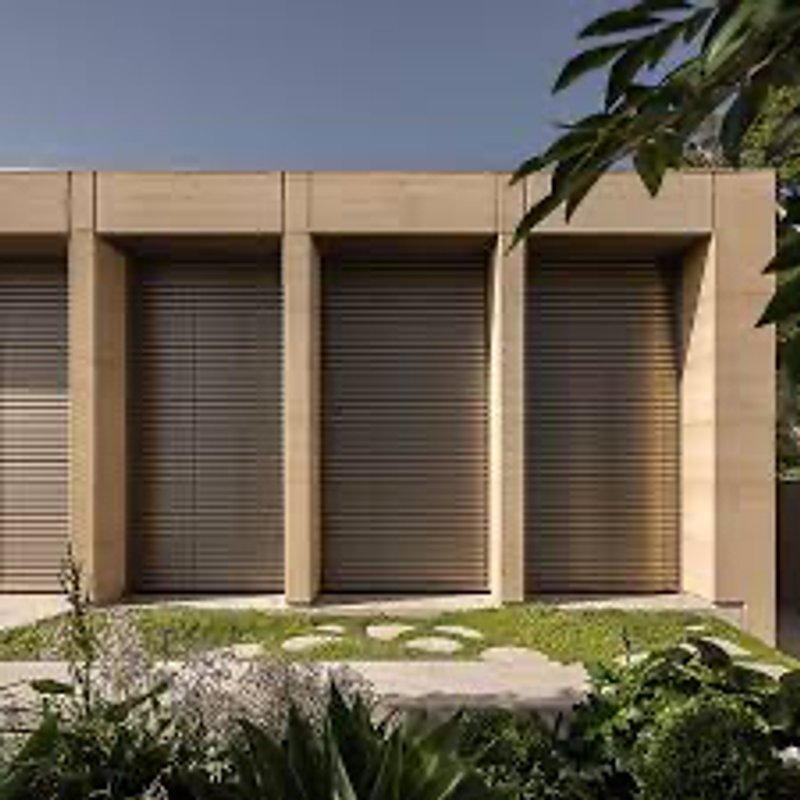
Externally mounted operable venetians allow occupants to fine-tune lighting conditions, privacy, and heat gain throughout the day. These elements enhance environmental performance while reinforcing the tactile, layered character of the architecture.
The interplay of light and material gives the home a sense of quiet dynamism—spaces feel alive and responsive rather than static.
Sustainable Design and Thermal Performance
Sustainability is embedded in both the material and spatial logic of the project. The thermal mass of rammed earth walls stabilizes internal temperatures, reducing reliance on mechanical heating and cooling. Passive design strategies—including orientation, shading, overhangs, cross-flow ventilation, and deep daylight penetration—were fundamental principles guiding the design.
The project also incorporates sustainable construction methodologies and leverages current and emerging technologies to minimize overall energy consumption. By combining passive design with high-performance systems, the house achieves a balance between comfort, longevity, and environmental responsibility.
A Timeless Urban Home
St Kilda Residence is a house defined by restraint, clarity, and material honesty. It demonstrates how robust, enduring materials can be used to create spaces of warmth, intimacy, and adaptability within a challenging urban context.
Through its careful orchestration of courtyards, light, and texture, the project offers a compelling model for sustainable inner-city living—one that prioritizes human experience, long-term use, and meaningful connection to landscape.
All the Photographs are works of Timothy Kaye




Popular Articles
Popular articles from the community

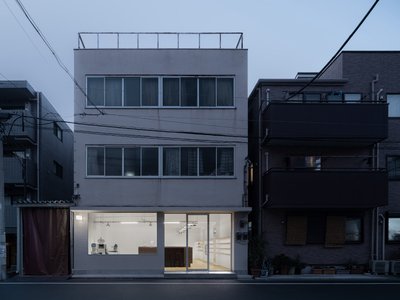
Atelier Macri Concept Store Interior Design by CASE-REAL
Atelier Macri store features a "ko" counter, walnut wood details, cork displays, blending retail, gallery, and seamless customer experiences.

Solar Steam: A Climate-Responsive Architecture That Redefines the Monument
A climate-responsive memorial architecture that transforms heat, decay, and time into a living system reflecting humanity’s ecological impact.


The Ken Roberts Memorial Delineation Competition (Krob)
As the most senior architectural drawing competition currently in operation anywhere in the world, it draws hundreds of entries each year, awarding the very best submissions in a series of medium-based categories.




Similar Reads
You might also enjoy these articles
The Ken Roberts Memorial Delineation Competition (Krob)
As the most senior architectural drawing competition currently in operation anywhere in the world, it draws hundreds of entries each year, awarding the very best submissions in a series of medium-based categories.


Waterfront Redevelopment and Urban Revitalization in Mumbai: Forging a New Dawn for Darukhana
A transformative waterfront redevelopment project reimagining Darukhana’s shipbreaking heritage into an inclusive urban future.

OUT-OF-MAP: A Call for Postcards on Feminist Narratives of Public Space
Rhizoma Design and Research Lab invites artists, designers, architects, researchers, and students to reflect on how feminist perspectives can reshape public space. Selected works will be exhibited in Barcelona, October 2026. Submissions open until 15 April 2026.


Documentation Work on Buddhist Wooden Temple
Architectural syncretism and cultural hybridity: A comparative study of the Buddhist temples in Chattogram Hill tracks

Explore Architecture Competitions
Discover active competitions in this discipline




The International Standard for Design Portfolios


The Global Benchmark for Architecture Dissertation Awards


The Global Benchmark for Graduation Excellence


Challenge to design mud housing for contemporary communities
Comments (0)
Please login or sign up to add comments
No comments yet. Be the first to comment!