
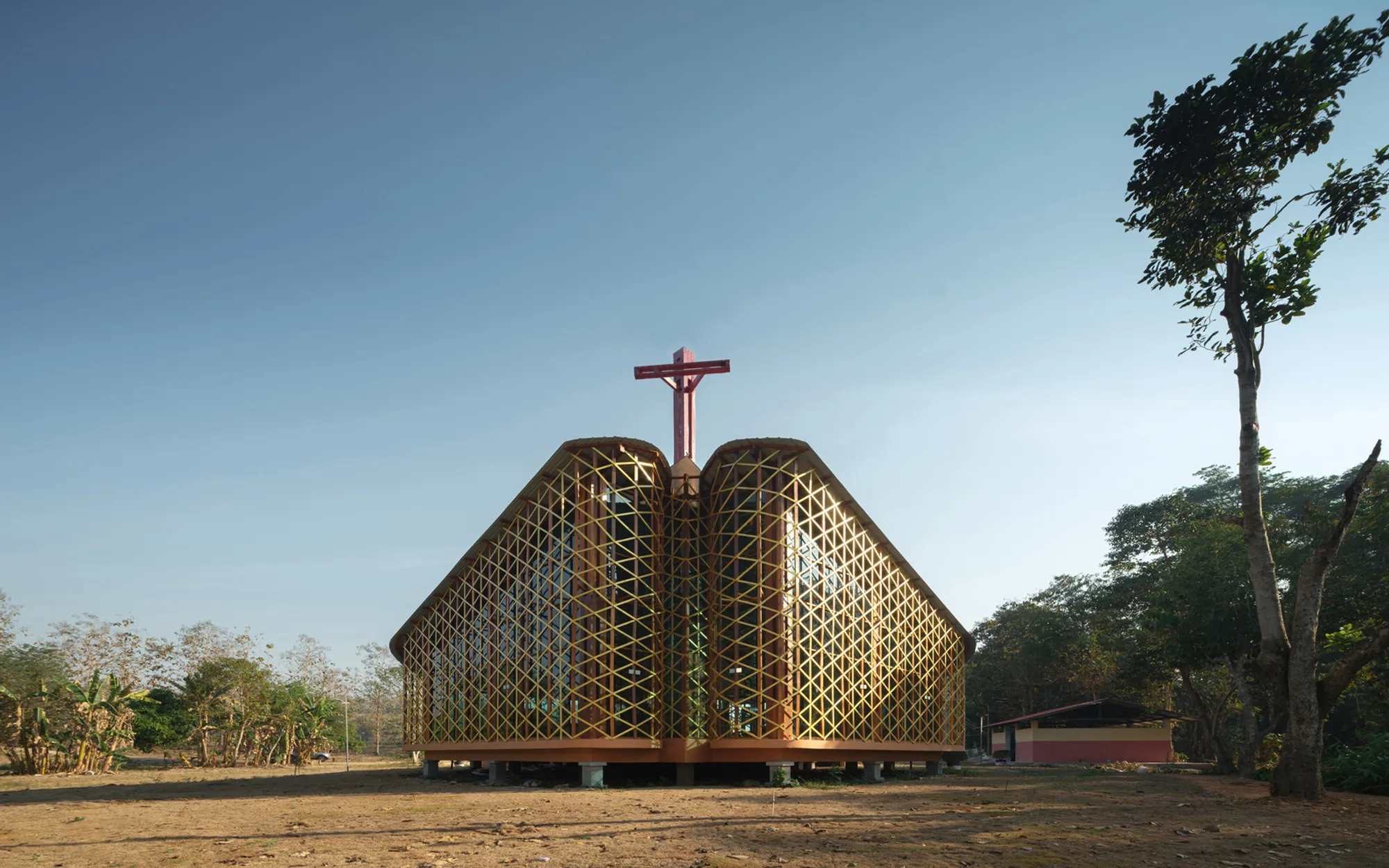
St. Xavier’s Oratory by Paco García Moro: A Sacred Forest Sanctuary in Remote Thailand
A serene timber oratory in remote Thailand blending Karen traditions, Catholic liturgy, and sustainable design within a forested refuge.


A Place of Peace Amid Turbulent Borders
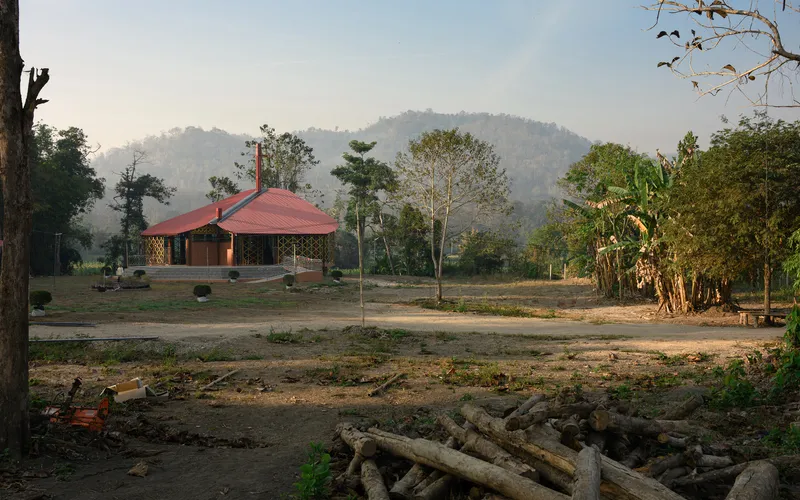
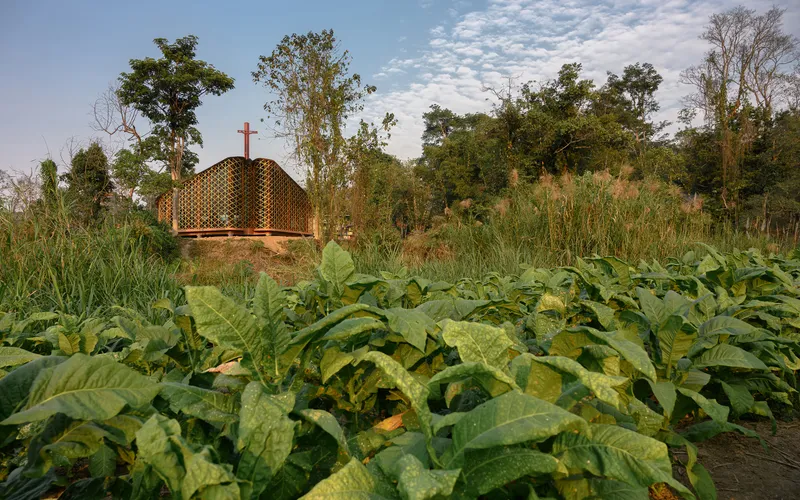
Set against the lush backdrop of Thailand's most isolated district, Umphang, St. Xavier’s Oratory by Paco García Moro emerges as a spiritual sanctuary on the edge of a complex geopolitical landscape. Located near the Umphang River and only a few kilometers from the conflict zone bordering Myanmar, this oratory is more than a place of worship—it is a symbol of cultural fusion, resilience, and harmony with nature.
Accessible only by the sinuous and scenic Route 1090, Umphang borders the Karen Nationalist Union, a secessionist region mired in long-standing tensions. Within this remote terrain—home to refugee camps under Thai military oversight—the oratory offers a calm refuge that speaks to both spiritual and architectural sensibilities.
Design Inspired by Faith and Tradition
Drawing inspiration from a miraculous tale of St. Francis Xavier, the oratory’s organic shape mimics a crab—a reference to the legend where a crab retrieved the saint’s crucifix from the ocean after a shipwreck in the Moluccas. This symbolism is deeply embedded in the structure's orientation and design language.
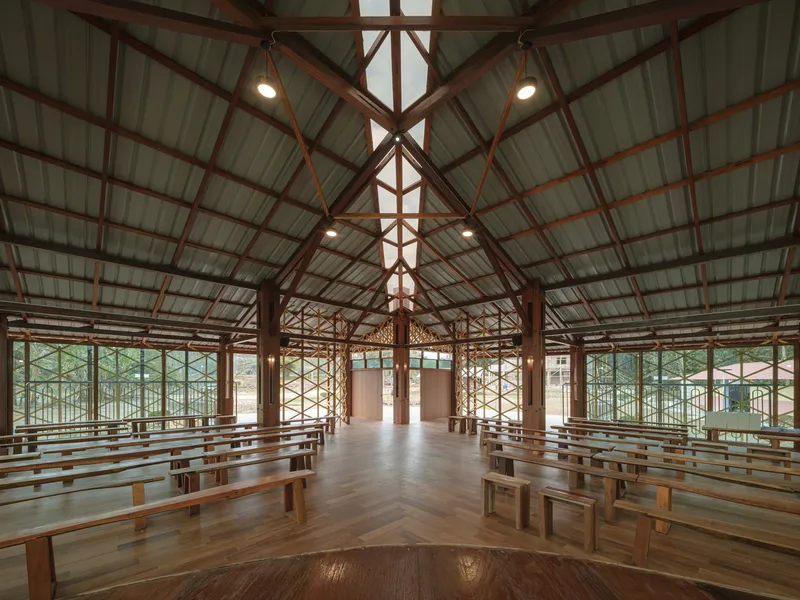
The architectural plan reflects Karen ethnic textile patterns, transforming local cultural identity into spatial poetry. Meanwhile, the spatial organization is grounded in Catholic liturgical practice. The building opens low and wide near the entrance, welcoming worshippers and gradually lifting upward toward the altar—signifying the sacred path to Communion.
A Vernacular Structure Rooted in Ecology
The oratory is constructed primarily from thakien wood, a material typically avoided in Buddhist tradition due to spiritual taboos. In this context, however, it was carefully reclaimed from demolished vernacular homes and responsibly harvested through community forestry programs. This thoughtful material strategy grounds the project in sustainability and cultural preservation.
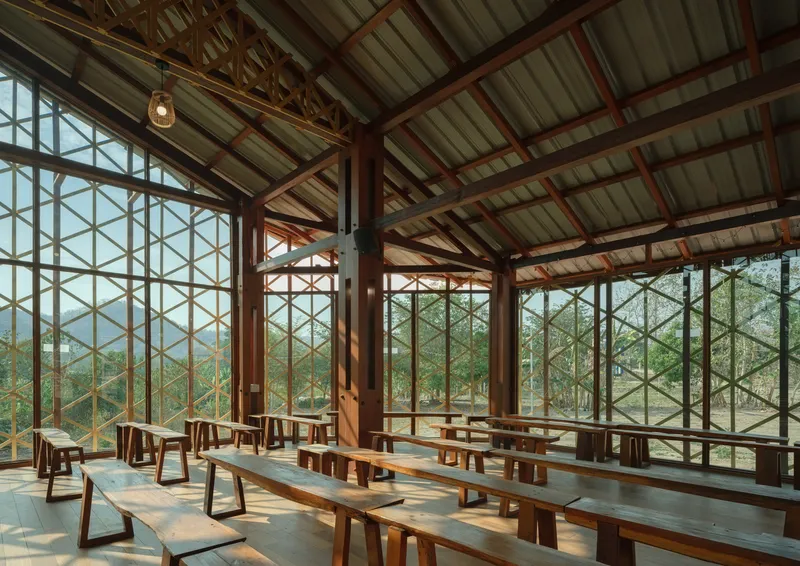
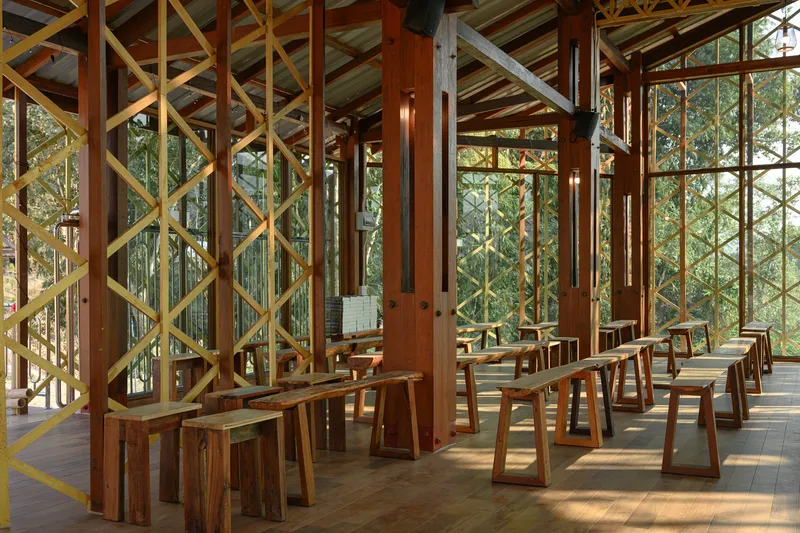
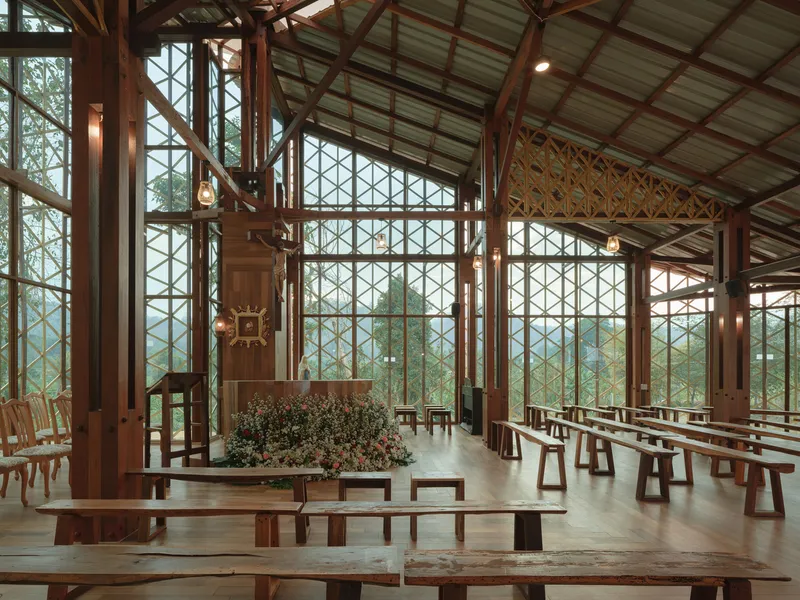
Master carpenter Reen Sulee, a renowned craftsman from the Karen State, led the woodwork. Trained in traditional geometry and carpentry during his incarceration, Sulee's skill brought life to the oratory’s see-through timber pillars, which subtly dissolve into the surrounding forest. These columns are not only structural but also act as passive ventilation channels, allowing the valley breeze to circulate naturally across the space.
Community-Centric Worship
Respecting local Karen customs, the interior was designed for communal floor seating during regular mass, preserving the intimate and grounded spiritual experience of the local people. For special occasions, families contribute benches made of salvaged wood, reinforcing the collective spirit that underpins this sacred space.
This 210-square-meter temple, completed in 2022, stands as a beacon of spiritual architecture, ecological sensitivity, and vernacular craftsmanship. It not only fosters spiritual connection but also celebrates the convergence of cultural narratives, geographic isolation, and architectural innovation.
All Photographs are works of Panoramic Studio



Popular Articles
Popular articles from the community


Lunar Spiral: Space Architecture Shaped by the Mathematics of the Universe
Lunar Spiral reimagines space architecture through Fibonacci geometry, lunar regolith, levitating habitats, and self-sustaining Moon living.

The Ocean Hive: Sustainable Architecture for a Self-Sufficient Civilization at Sea
The Ocean Hive imagines sustainable architecture at sea, where modular habitats, algae, wave power and ocean waste sustain a growing colony.

Riyadh For All: Intergenerational Urban Design for Active Aging in Rabat
Riyadh For All reimagines urban design in Rabat with intergenerational co-living, adaptive courtyards, and Moroccan cultural exchange today.

Co-life: Sustainable Architecture for Age-Friendly Community Living
Co-life reimagines sustainable architecture for seniors through courtyards, rammed earth, shared gardens, and spaces designed for belonging.


Similar Reads
You might also enjoy these articles


Hodi-Mandai Geram
Project Function: Preservation and revitalization of the Intangible heritage and socio-spatial identity of the Hodi by Housing, Cultural Memory Center, Sacred Grove, landscape, local tourism economy


Olio Towers: A Mid-Rise for Performers That Fuses Housing, Rehearsal, and Stage
Located blocks from Houston's Theater District, this modular tower stacks living units around a central performance atrium.

Oasis: Modular Green Housing Carved into Dhaka's Urban Fabric
A shortlisted Plugin Housing entry reclaims unauthorized settlements in Dhaka with stepped concrete volumes, green roofs, and ventilation-driven design.

Black Hole: A Floating Megastructure for the Post-Physical Era
Emiliano Mazzarotto envisions a spherical, self-scaling arena where e-sports, digital hotels, and holographic stadiums replace traditional public space.
Explore Cultural Architecture Competitions
Discover active competitions in this discipline



Challenge to reimagine the Iron Throne


Photograph architecture without architects


Illustrate the lost glory of Angkor Wat - Render Challenge


Bring back Drive In's
Comments (0)
Please login or sign up to add comments
No comments yet. Be the first to comment!