
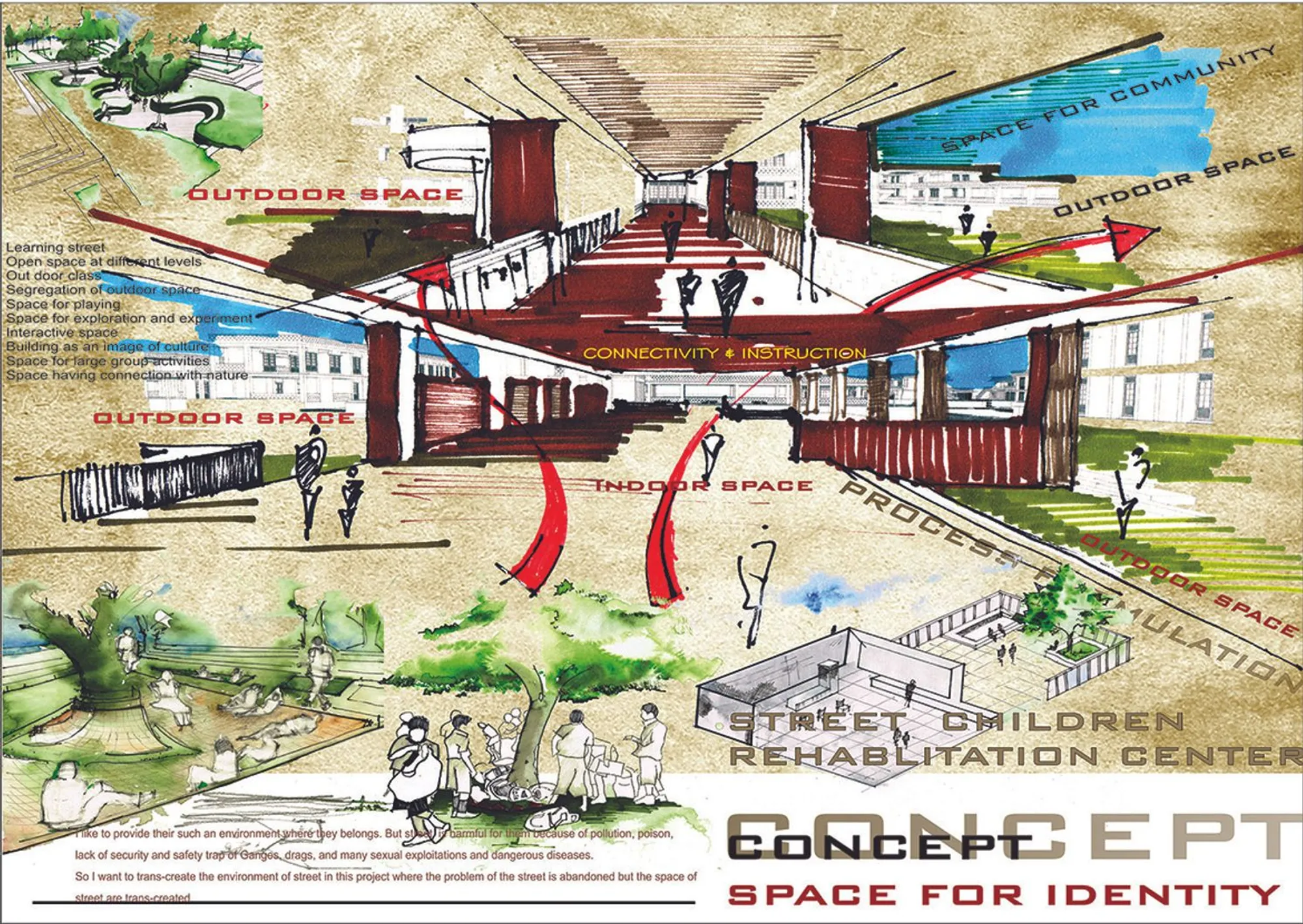
Street Children Rehabilitation Center: A Model of Social Architecture for Community Rehabilitation
An inclusive social architecture project that transforms streets into nurturing environments, restoring dignity, identity, and opportunity for vulnerable children.


The Street Children Rehabilitation Center is conceived as a powerful example of social architecture, where the built environment becomes an active agent of healing, education, and community reintegration. Rooted in the realities of urban poverty, the project addresses the urgent need to provide street children with a safe, dignified, and nurturing environment: one that goes beyond shelter to actively shape identity, confidence, and future potential.
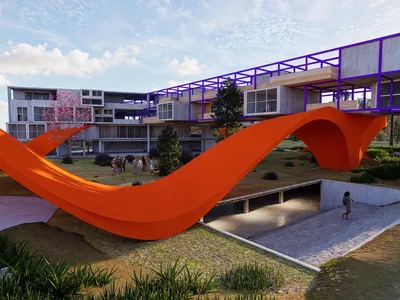
Designed as a holistic campus rather than a conventional institution, the project reframes architecture as a social framework. It recognizes that street children are not outsiders to the city, but an inseparable part of its social fabric: deserving of spaces that foster belonging, growth, and opportunity.
Architecture as a Tool for Social Rehabilitation
At its core, the project positions social architecture as a catalyst for transformation. Instead of isolating rehabilitation within closed walls, the design carefully choreographs a transition from the openness of the street to structured, protective environments. This gradual shift mirrors the psychological journey of the children, from exposure and vulnerability to safety and self‑worth.
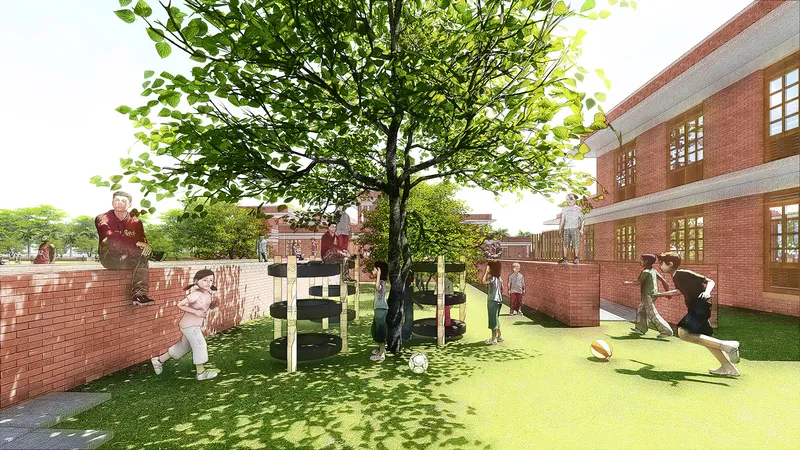
The spatial concept integrates learning streets, internal courtyards, community plazas, and interactive outdoor spaces. These areas encourage movement, play, exploration, and social interaction, allowing children to reclaim childhood experiences often denied to them.
Spatial Organization and Master Planning
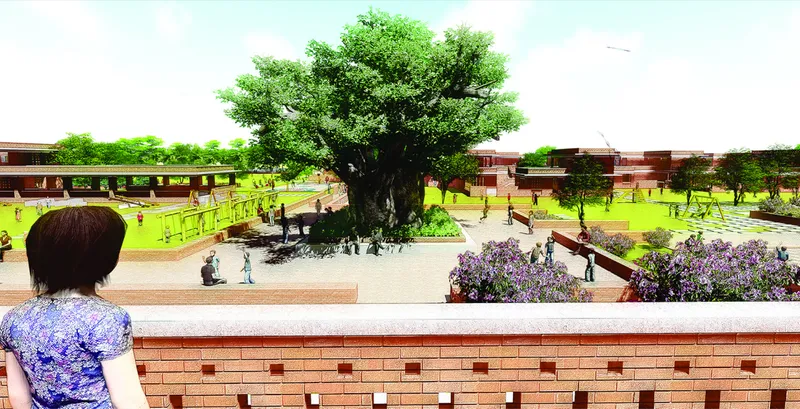
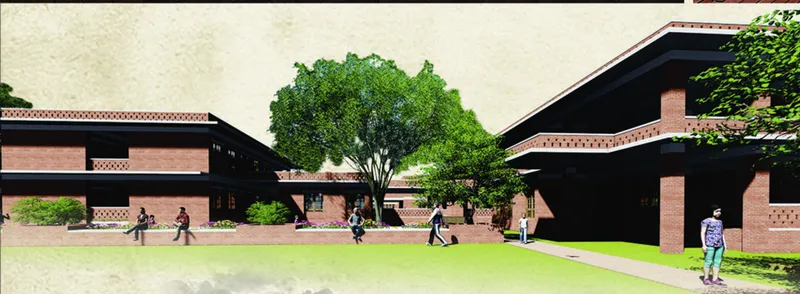
The master plan is organized as a low‑rise, human‑scale campus where buildings are arranged around a series of courts and green zones. Each functional zone is carefully positioned to support both independence and collective life:
- Residential Clusters: Family‑like housing units replace dormitory‑style accommodation, creating smaller, manageable living environments that promote emotional security.
- Educational Facilities: Schools, vocational classrooms, and activity centers are seamlessly woven into daily circulation, reinforcing learning as a natural part of life.
- Community and Social Buildings: Multipurpose halls, social centers, and cafeterias act as communal anchors, strengthening social bonds.
- Healthcare and Support Services: Clinics and administrative blocks are integrated discreetly, ensuring accessibility without institutional dominance.
This layout reflects a key principle of social architecture, spaces must empower users rather than control them.
Courtyards, Streets, and Transitional Spaces
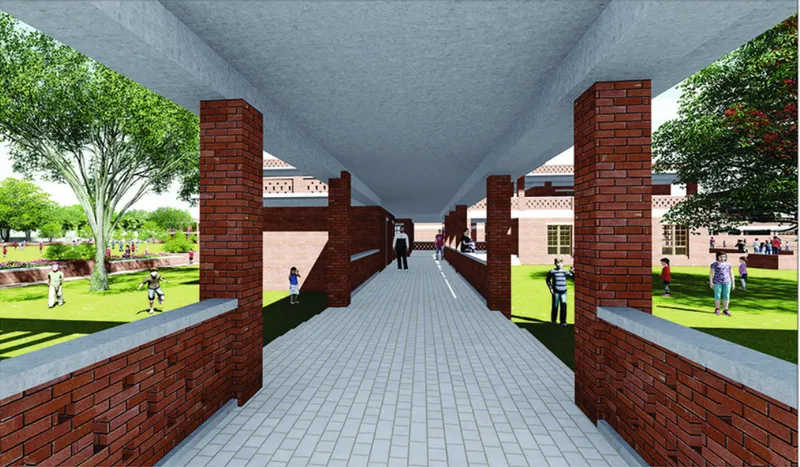
A defining feature of the project is its emphasis on transitional spaces. Internal courts (uthans), angans, learning streets, and shaded corridors form the social spine of the campus. These spaces are intentionally designed to remain active throughout the day, accommodating play, informal learning, social gatherings, and quiet reflection.
By blurring the boundary between indoor and outdoor environments, the architecture allows children to experience freedom without risk. Nature: through trees, gardens, water bodies, and green belts, plays a therapeutic role, reinforcing calmness and emotional balance.
Materiality and Human Scale
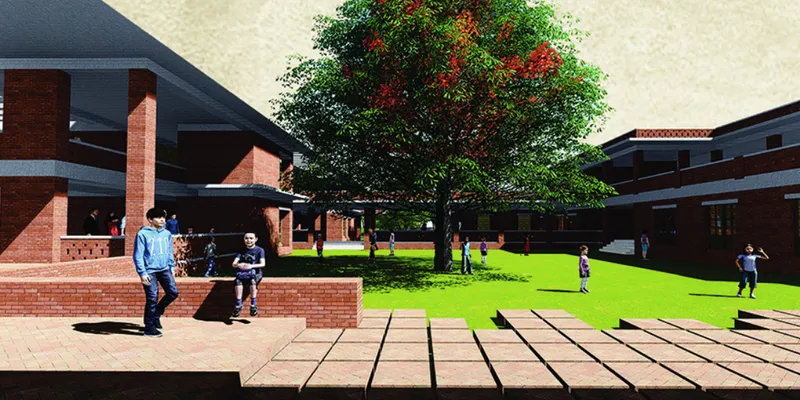
The architectural language relies on exposed brick, simple concrete slabs, and shaded verandahs. These materials are familiar, durable, and climate‑responsive, reinforcing a sense of permanence and trust. The low‑rise massing avoids institutional intimidation, while stepped terraces and open roofs create visual connectivity across the campus.
Human scale is carefully maintained: corridors are wide, courtyards are proportionate, and visual connections are preserved to ensure safety, transparency, and comfort.
Learning Through Environment
Beyond formal classrooms, the project promotes experiential learning. Outdoor classrooms, play zones, discovery gardens, and farm areas allow children to learn through interaction and exploration. Vocational training spaces equip them with practical skills, ensuring long‑term social and economic reintegration.
The architecture itself becomes a silent educator: teaching cooperation, respect for nature, community living, and self‑discipline through spatial experience.
Social Impact and Vision
The Street Children Rehabilitation Center redefines how architecture can respond to social vulnerability. It does not merely provide shelter; it restores dignity, rebuilds identity, and offers a structured path toward a meaningful future. By transforming the chaotic openness of the street into a protected yet liberating environment, the project demonstrates the true power of social architecture.
This visionary project was designed by Md, reflecting a deep understanding of architecture’s responsibility toward marginalized communities. It stands as a compelling example of how thoughtful spatial design can nurture human potential and foster inclusive urban growth.
As cities continue to grow and inequalities deepen, projects like the Street Children Rehabilitation Center highlight the urgent role of social architecture in shaping humane, resilient, and inclusive societies. Through sensitive planning, human‑centered design, and community‑driven spaces, the project offers a blueprint for how architecture can truly serve those who need it most.




Popular Articles
Popular articles from the community


Co-Life: Senior Housing Design That Reconnects Older Adults With the City
Co-Life reimagines senior housing design through healing gardens, shared streets, workshops, and a sustainable community across generations.

The Musturak Paradise: Senior Living Architecture for a Connected Future in Temara, Morocco
The Musturak Paradise reimagines senior living architecture in Temara via private homes, social spaces, culture, community, and shared care.

Conexión: Biophilic Design Reimagines High-Rise Living in Hong Kong
Conexión reimagines high-rise living in Hong Kong through biophilic design, green facades, shared spaces, daylight, water and nature within.

The Ocean Hive: Sustainable Architecture for a Self-Sufficient Civilization at Sea
The Ocean Hive imagines sustainable architecture at sea, where modular habitats, algae, wave power and ocean waste sustain a growing colony.

Similar Reads
You might also enjoy these articles

Maya Harvest: A Cacao Resort Village Rooted in Mayan Tradition and Local Craft
Situated within a Tabasco cacao plantation, this shortlisted resort proposal merges vernacular materials with hands-on cultural immersion.
Harmonia: A River-Shaped Community That Grows Over Decades in Boa Vista
Curved pathways and modular grid structures along the Branco River create a phased settlement designed to evolve from 2030 to 2050.

The Architecture of Bathing: A Mughal Hammam Reimagined Across the Yamuna
Charlotte May's honorable mention entry for The Black Taj reinterprets Agra's bathing rituals through red sandstone, water, and framed views of the Taj Mah

Om-1: A Wall-Hung System That Moves Your Workspace Off the Desk
Modular plywood boards, magnetic pegs, and utility elements migrate clutter from the horizontal surface to the vertical plane.





Comments (0)
Please login or sign up to add comments
No comments yet. Be the first to comment!