

studio2AM Packs a Full Material Palette into a 38-Square-Meter Tbilisi Rental
In Mtatsminda's historic core, plywood joinery, exposed brick, and deliberate color turns redefine what a small rental apartment can feel like.


Rental apartments rarely receive the level of material attention that owner-occupied homes do. The logic is straightforward: landlords want durability and tenants want affordability, and somewhere in that negotiation, design ambition gets flattened into white walls and laminate flooring. studio2AM, working in Tbilisi's Mtatsminda district, refuses that premise entirely. Unit 20, a compact 38-square-meter apartment completed in 2025, treats the rental interior as a legitimate design problem, one that deserves the same rigor applied to any permanent dwelling.
What makes the project worth studying is not its size or its budget but its strategy: a controlled vocabulary of plywood, exposed brick, dark-stained timber, and a recurring green pigment that together produce an interior with genuine spatial depth. Every surface is working. Every joint is considered. The apartment belongs to a series of units that studio2AM has been developing in central Tbilisi, each one pushing the question of how much identity a small rental can hold without becoming precious or impractical.
Brick, Plywood, and a Living Room That Earns Its Keep
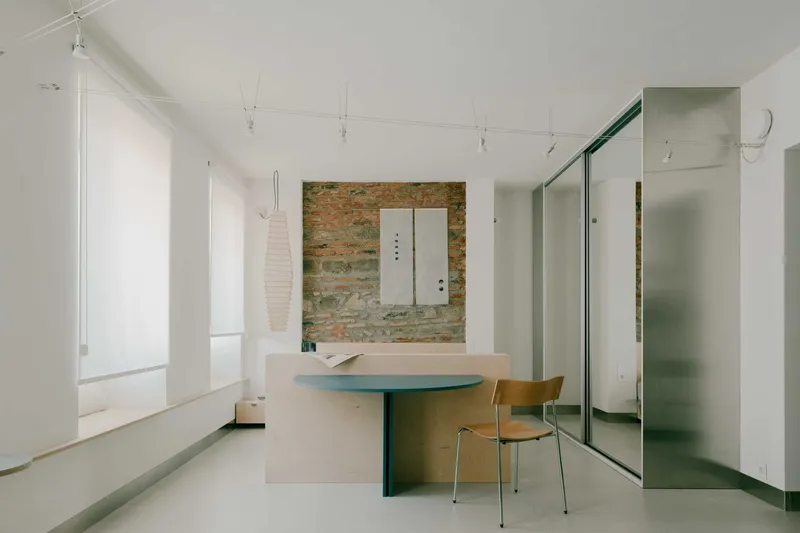
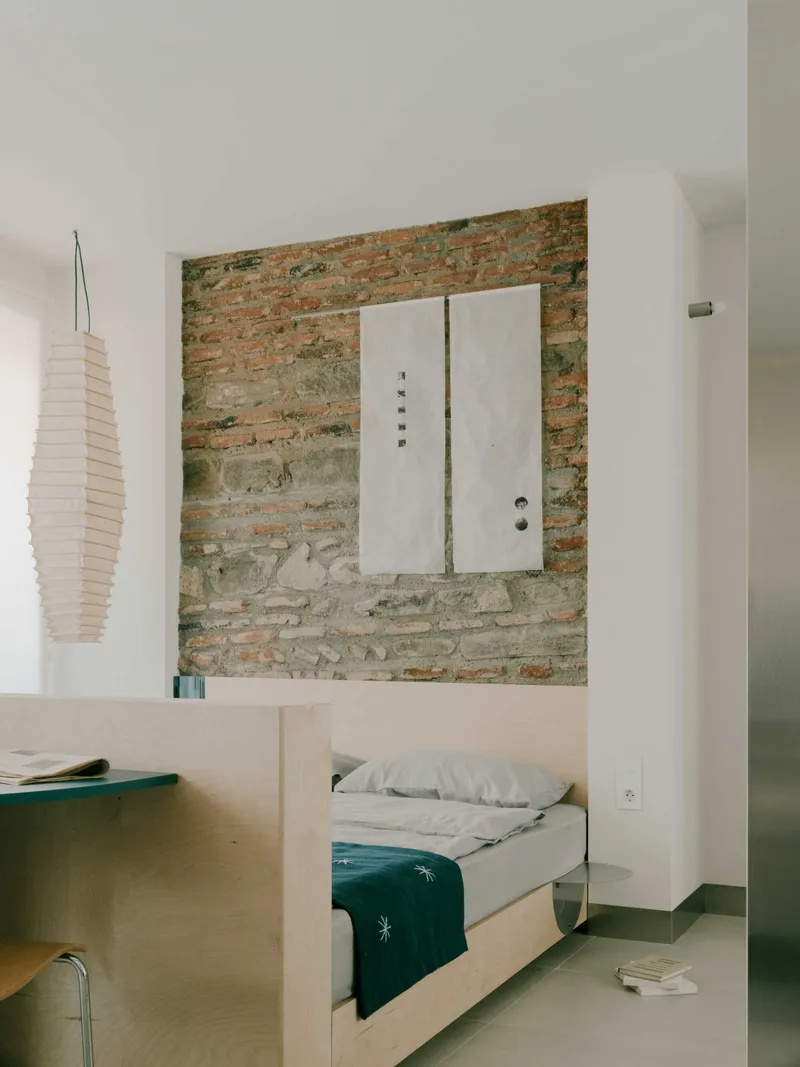
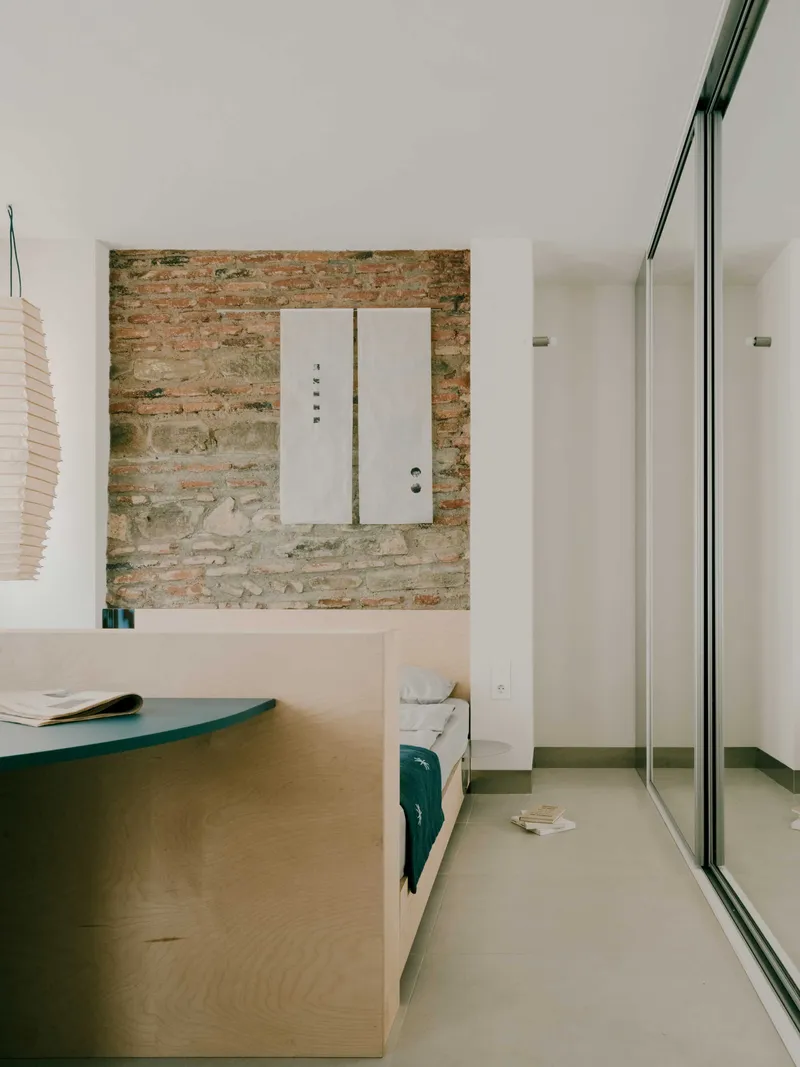
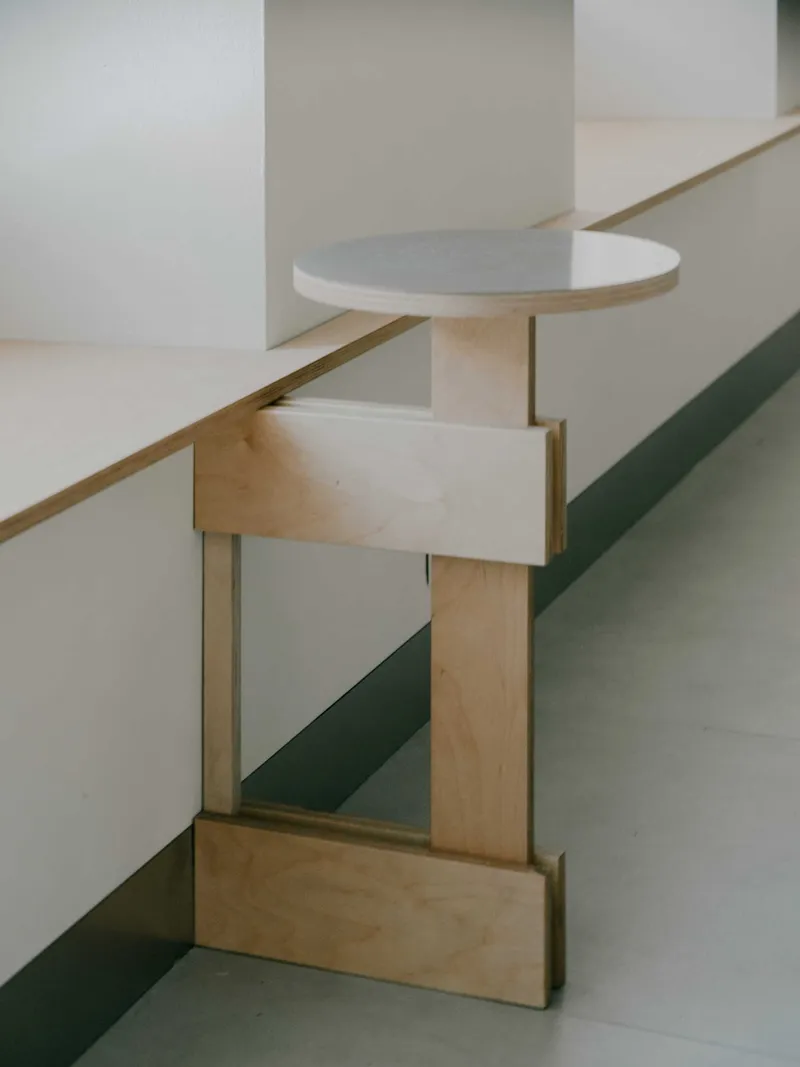
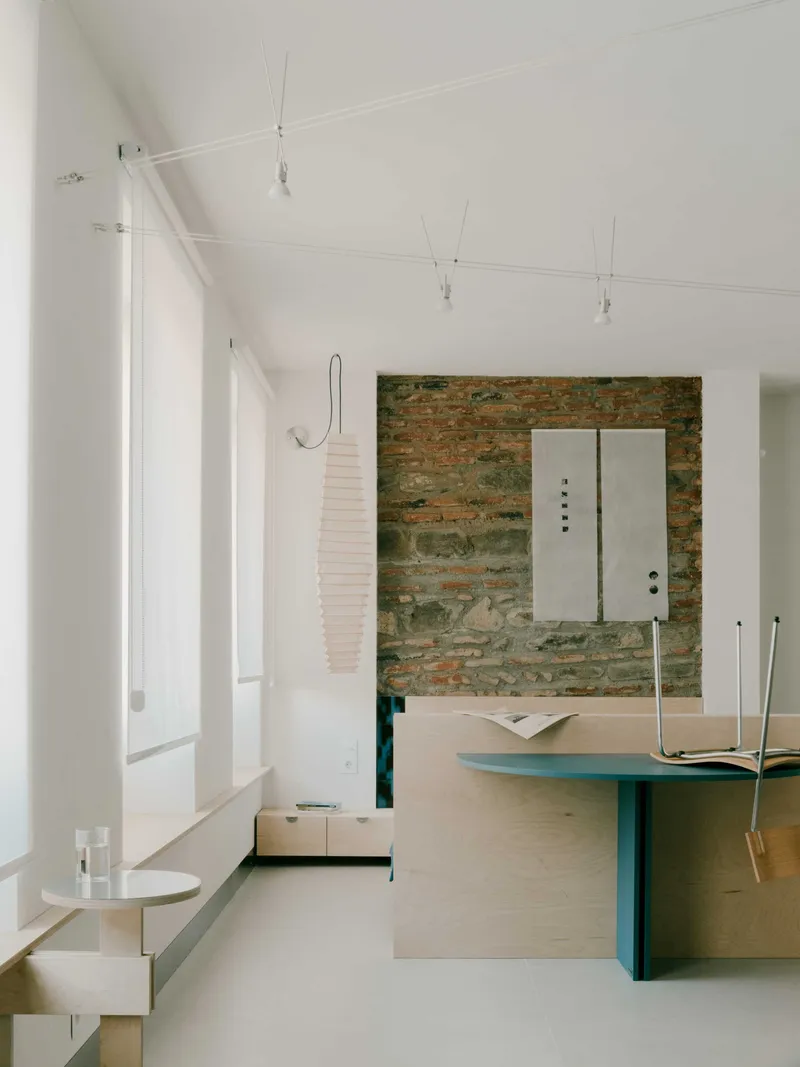
The main living space pivots around a single exposed brick wall that runs the length of the unit. It is not decorative. The brick reads as the building's original structure laid bare, a geological layer that anchors everything else in the room. Against it, studio2AM places plywood furniture, a sliding glass partition, and a white metal panel that once served as a security door, now repurposed as a compositional element. The effect is archaeological: old fabric meets new insertions, and neither pretends to be the other.
Track lighting runs along the ceiling, casting a warm, even wash that keeps the brick from feeling heavy. A paper pendant lamp introduces softness overhead, and the plywood dining table below it sits low enough to make the room feel taller than its actual dimensions. For 38 square meters, the proportions are remarkably comfortable.
Green as a Structural Color
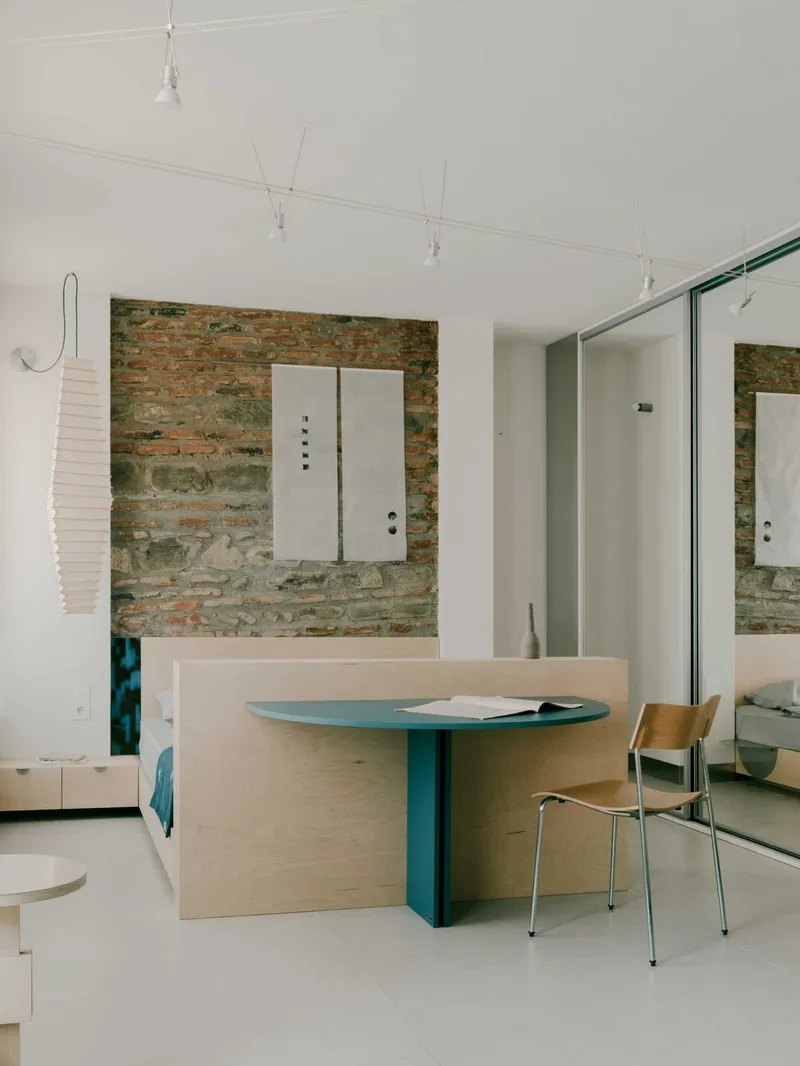
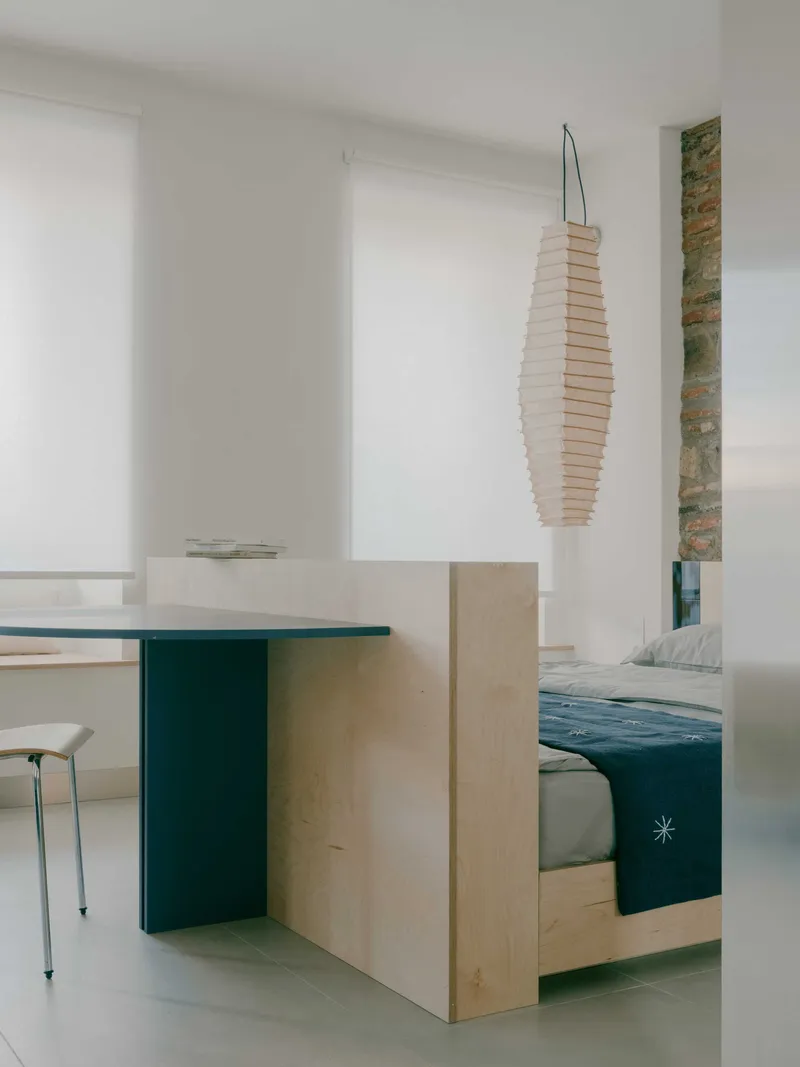
studio2AM uses a specific green, muted, slightly dusty, applied to floor steps, table bases, and the sleeping platform. It is not an accent color. It functions more like a datum line, marking transitions between zones and grounding the lighter plywood surfaces above. When you see the green base of the workspace next to a mirrored wardrobe reflecting the brick behind, the palette snaps into focus: warm, cool, and vegetal all at once.
The sleeping platform, painted the same green, floats a paper lantern pendant above it. The combination is simple but precise. Green signals rest. Plywood signals utility. Brick signals permanence. The apartment never needs to explain itself because the materials are already doing the talking.
Joinery as Architecture
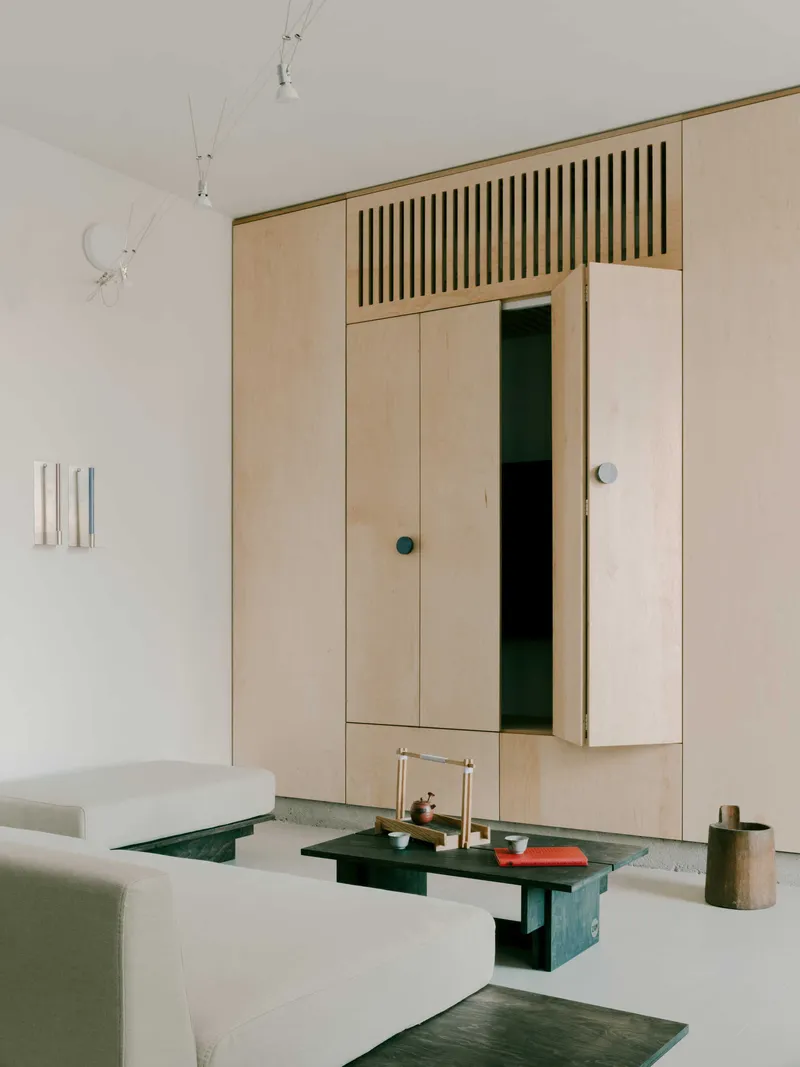
In a space this tight, cabinetry is not furniture. It is the architecture. The built-in plywood storage wall features vertical slatted ventilation panels, a detail that manages airflow while breaking the flatness of the surface. Hinged doors below offer deep storage without swinging into the circulation path. Every millimeter is accounted for.
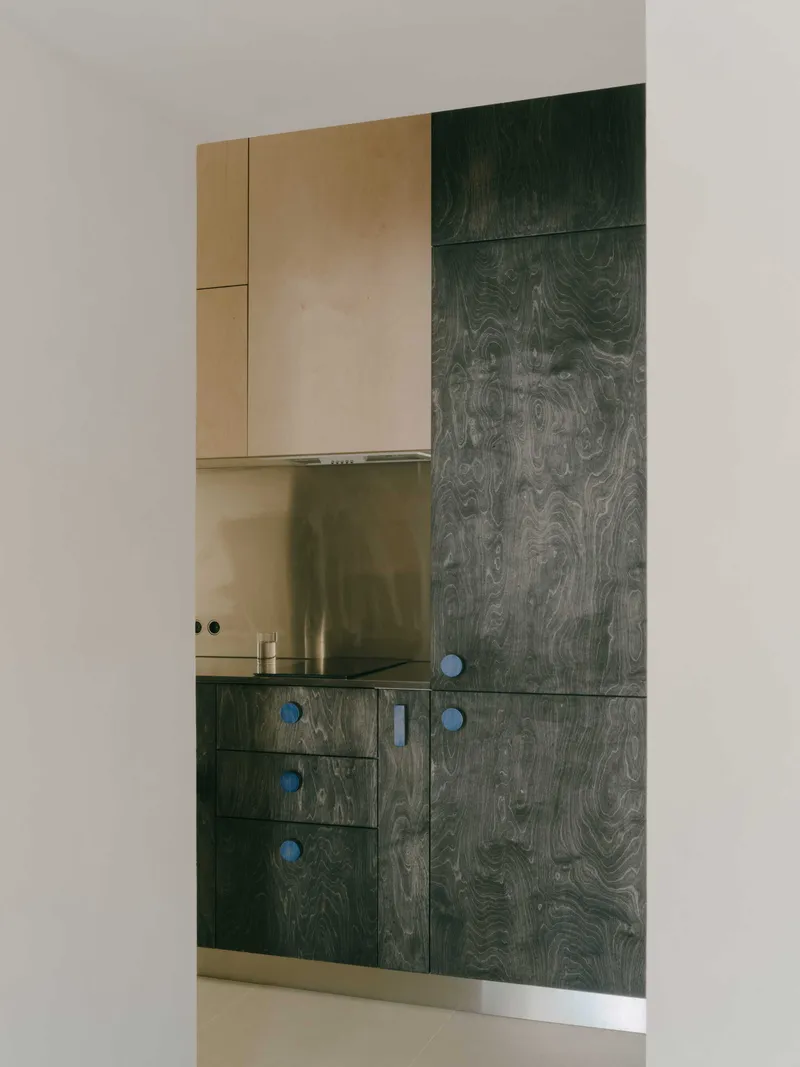
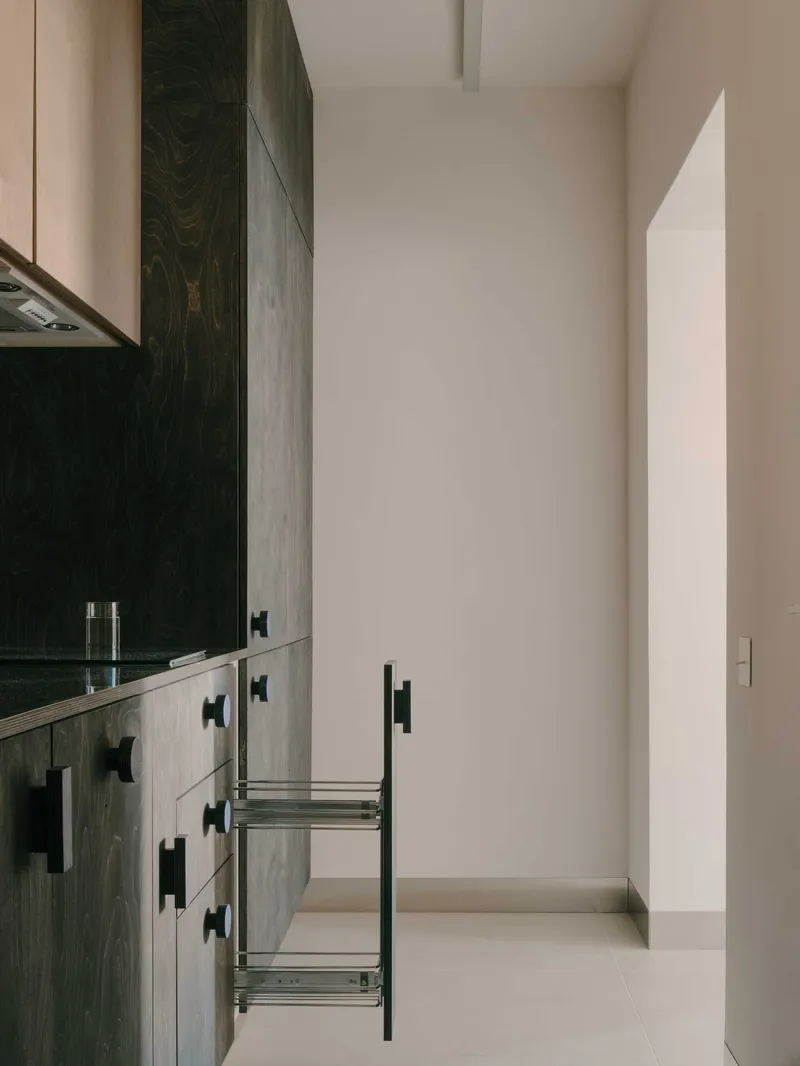
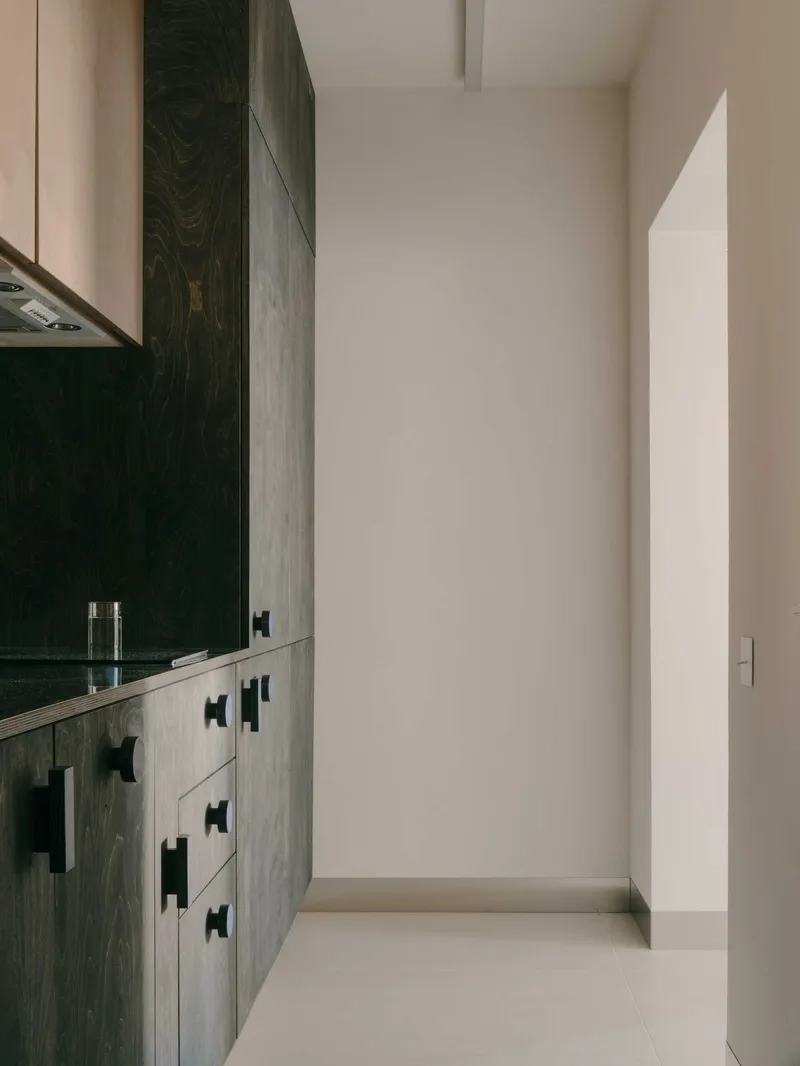
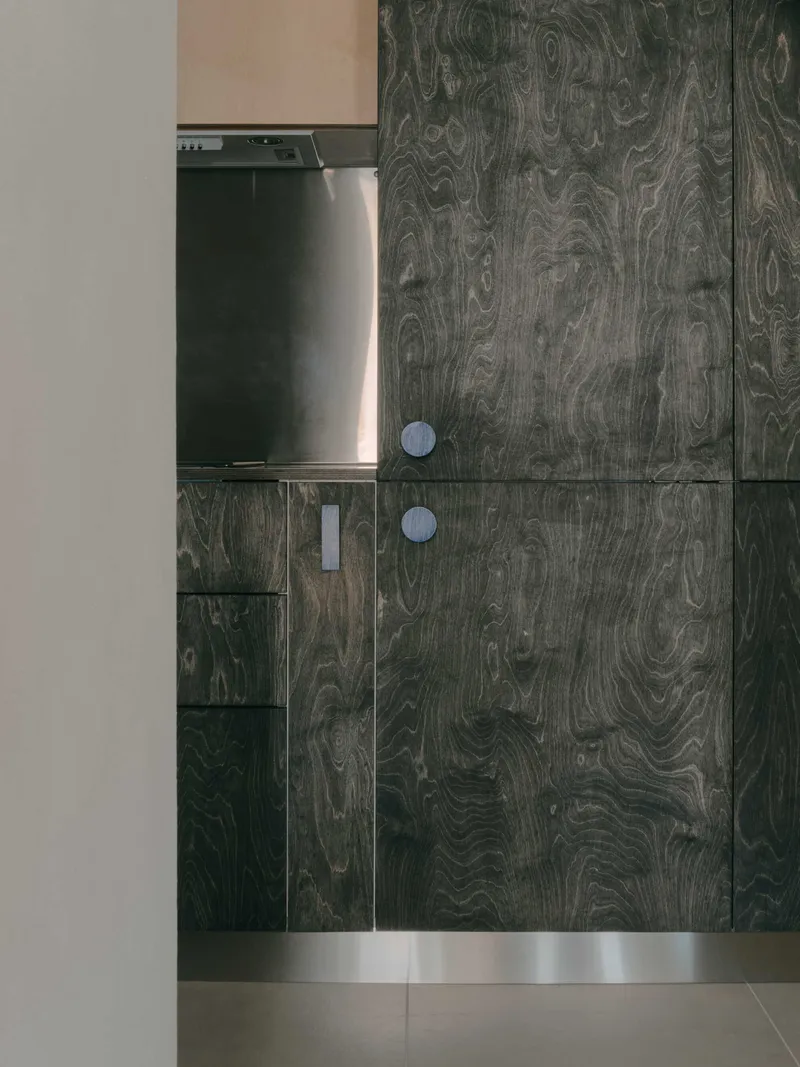
The kitchen takes a different tonal approach. Dark wood veneer doors with blue ceramic knobs and black bar pulls create a moody corridor that contrasts sharply with the brightness of the living area. A pull-out wire basket and reflective backsplash add utilitarian texture. The shift from light plywood to dark stained timber is deliberate: it signals that you have moved from the public zone into the service spine of the apartment.
The Kitchen Corridor and Its Careful Darkness
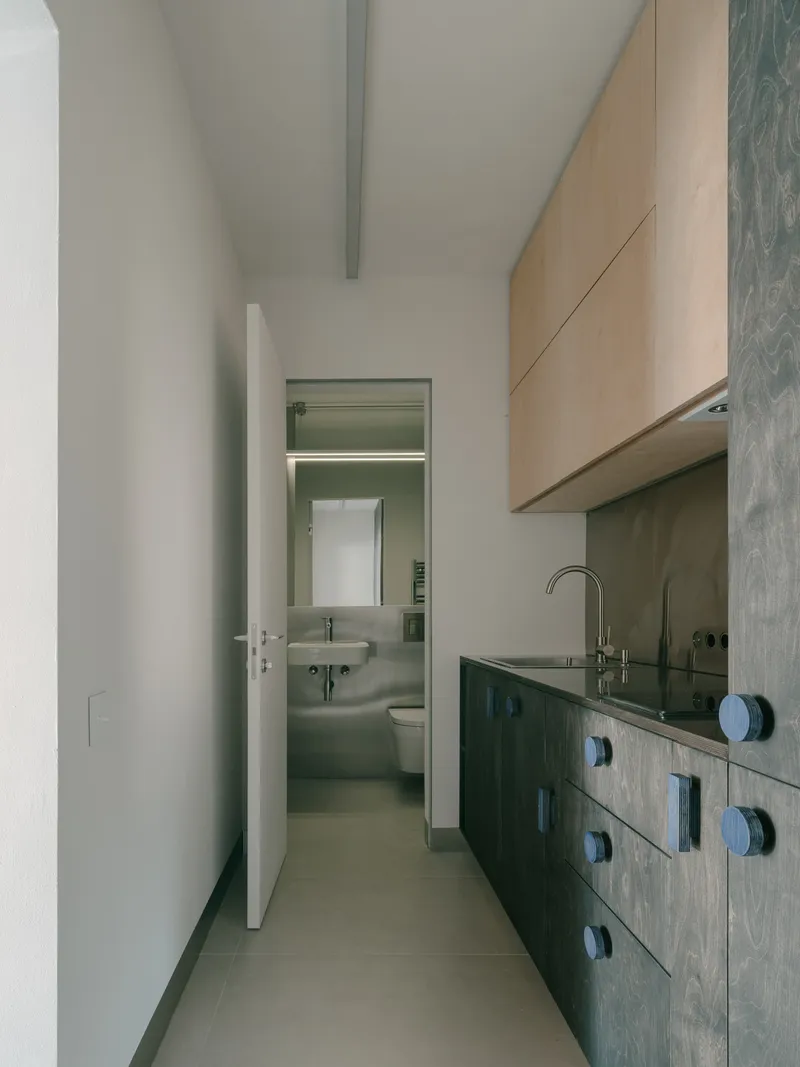
The galley kitchen runs deep into the plan, ending at a view through to the bathroom where a sink is just visible beyond the threshold. An exposed ceiling beam overhead reinforces the longitudinal pull of the space. studio2AM allows the kitchen to be narrow and shadowed rather than fighting the constraint with mirrors or white paint. The dark stained cabinetry absorbs light and creates a sense of compression that makes the re-entry into the living room feel expansive by contrast.
Circular pulls on the cabinet doors add a tactile detail that carries through the rest of the apartment. It is a small consistency, but in a 38-square-meter unit, these repetitions build coherence fast.
Hardware and the Pleasure of Touch
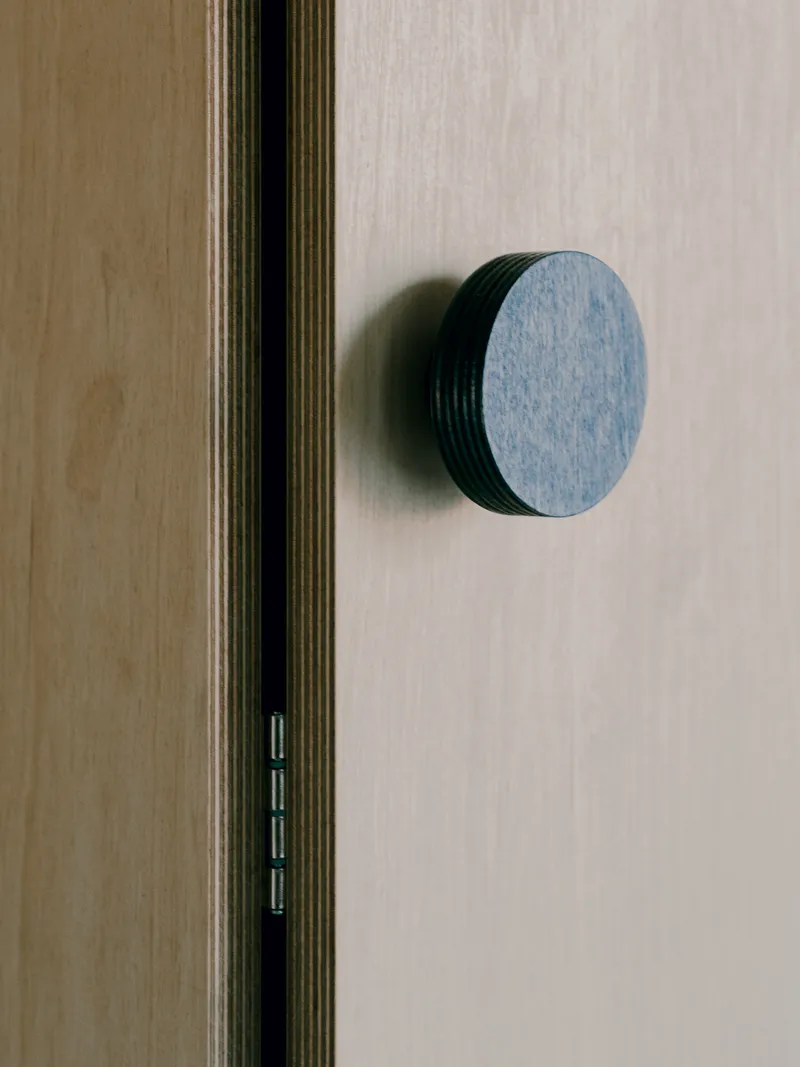
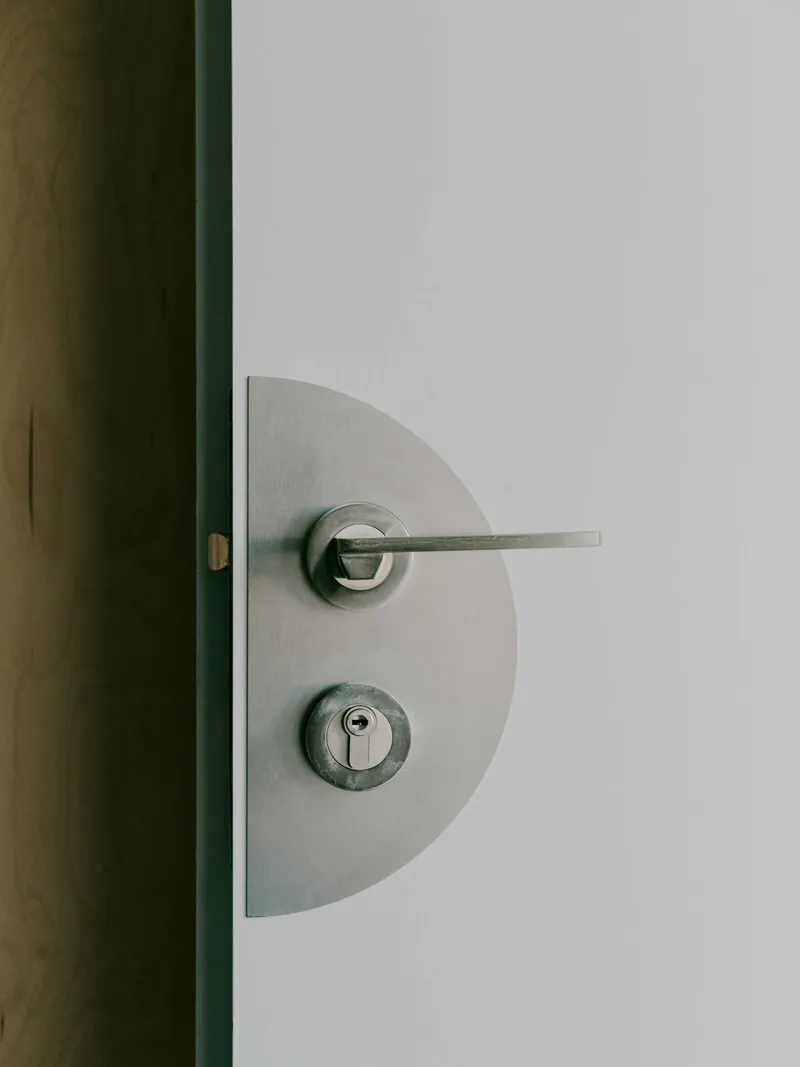
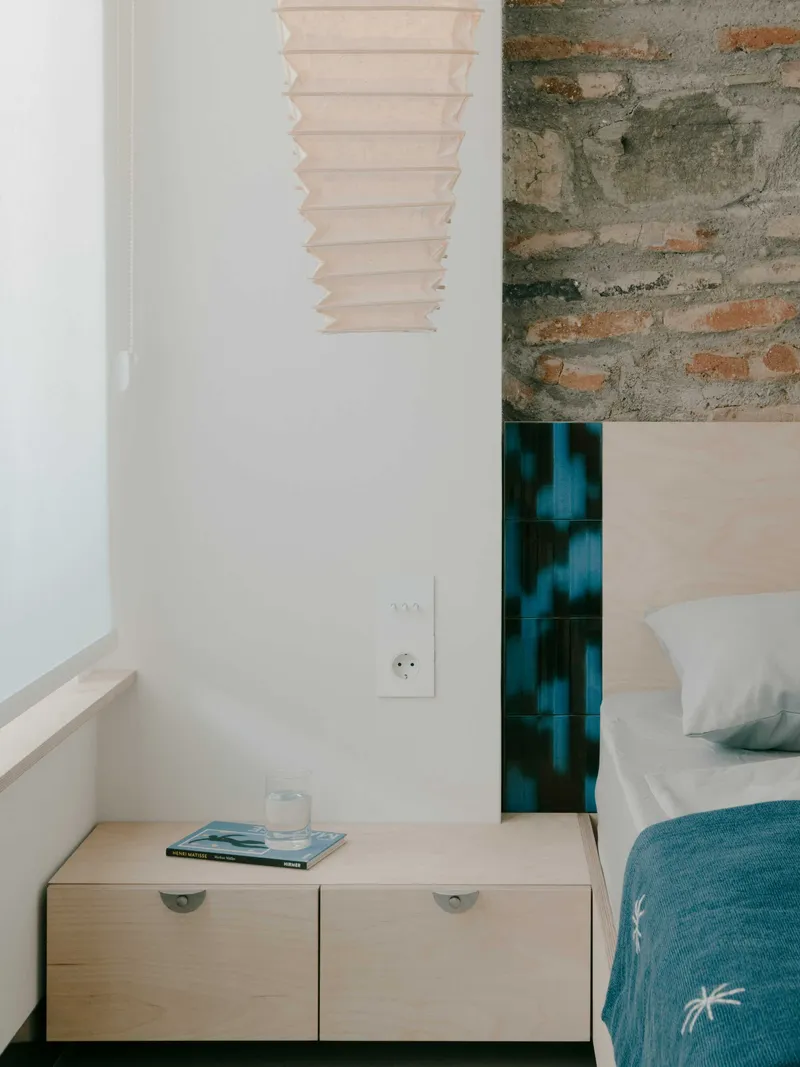
Close-up photographs of the hardware reveal studio2AM's attention at the scale of the hand. A blue-grey circular doorknob sits flush against an exposed plywood edge. A brushed steel handle and lock set are mounted on a semicircular backplate, a detail that reads as both industrial and deliberate. The bedside cabinet uses semicircular pulls in the same family, linking bedroom and kitchen through geometry rather than material.
These are not expensive fittings. They are carefully chosen ones. The consistency across the apartment means that every time you open a door or pull a drawer, the project reasserts its identity. In rental design, where tenants rarely choose the hardware, this kind of coherence is an act of generosity.
Thresholds and the Doors Between
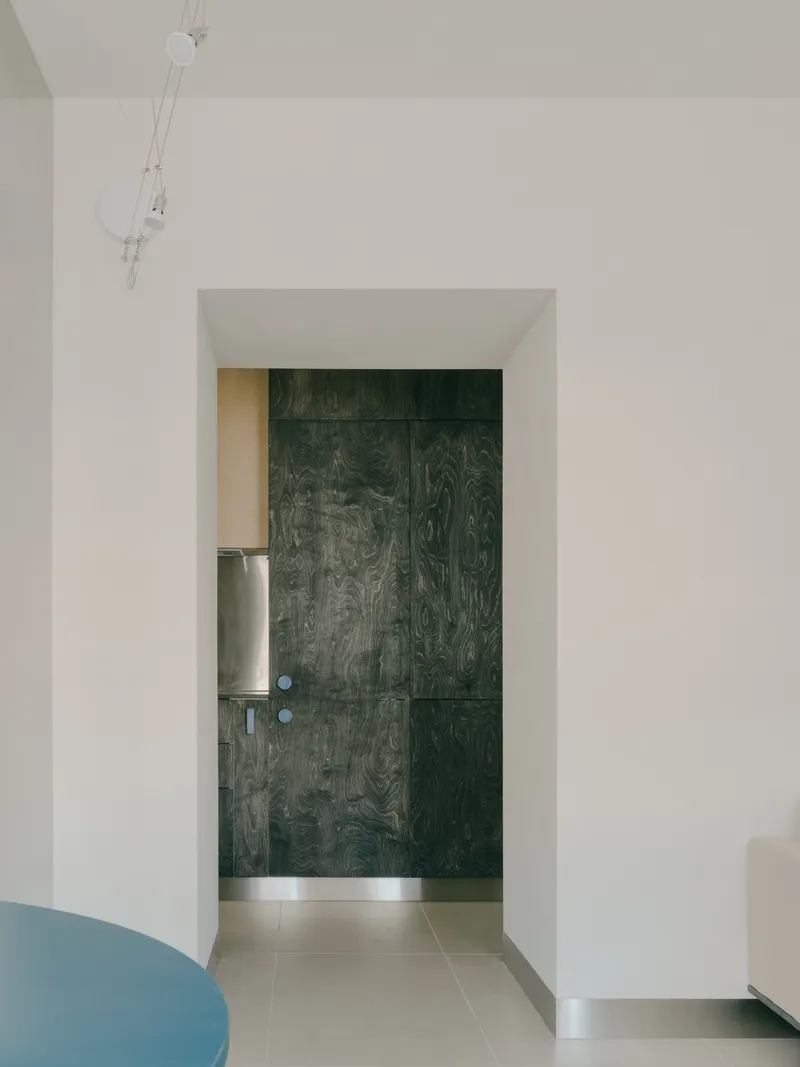
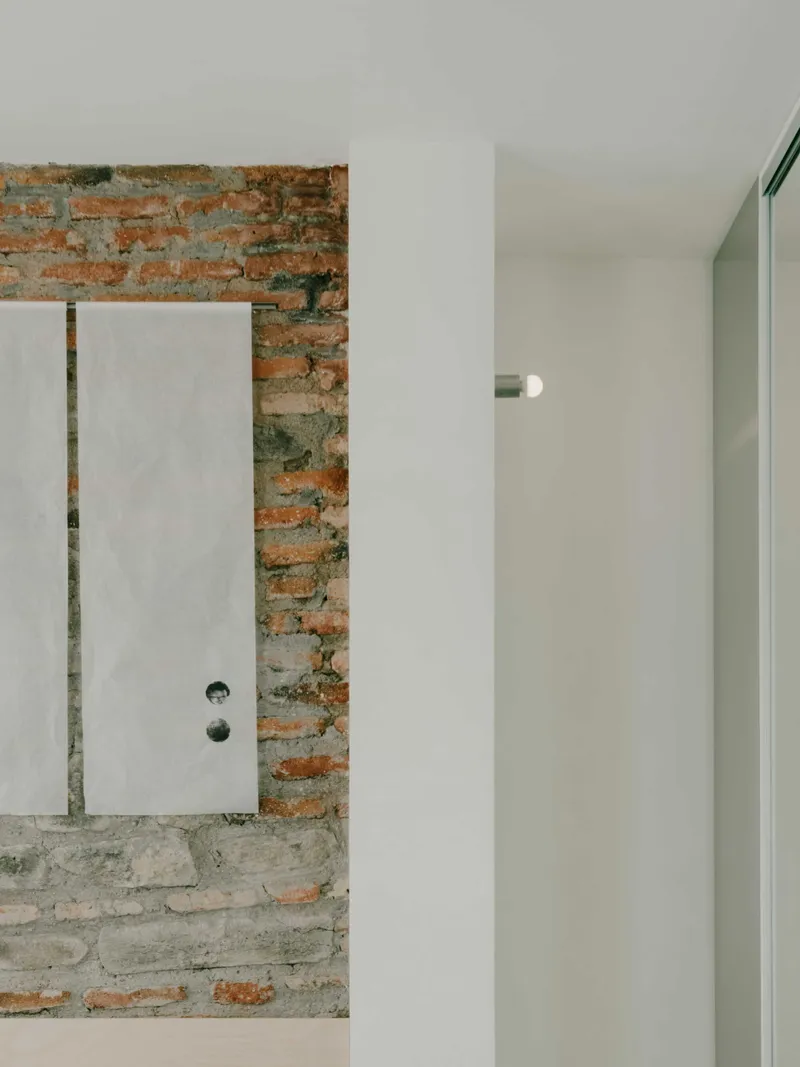
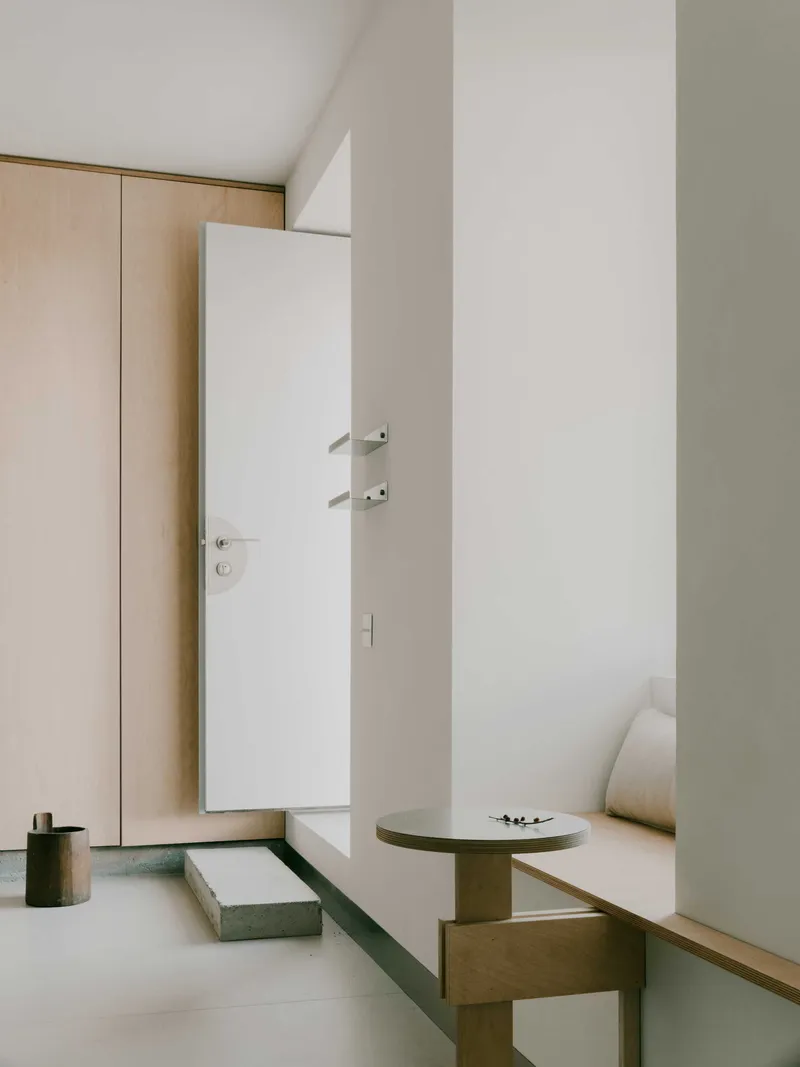
Doors in Unit 20 are not afterthoughts. A dark green wood-grain panel with circular metal hardware is framed by a white plaster opening, turning a doorway into a portrait. Elsewhere, a white door with the same circular hardware sits within an exposed brick surround, collapsing the distance between new insertion and old wall. A light wood staircase with a rounded handrail platform casts long afternoon shadows on white plaster, marking the transition between the apartment and the building's circulation.
studio2AM treats each threshold as a moment of spatial registration: a chance to frame a view, shift a material, or introduce a shadow. In a small apartment, these transitions are the architecture. Without them, 38 square meters would feel like one undifferentiated room.
Bathroom Details and Surface Texture
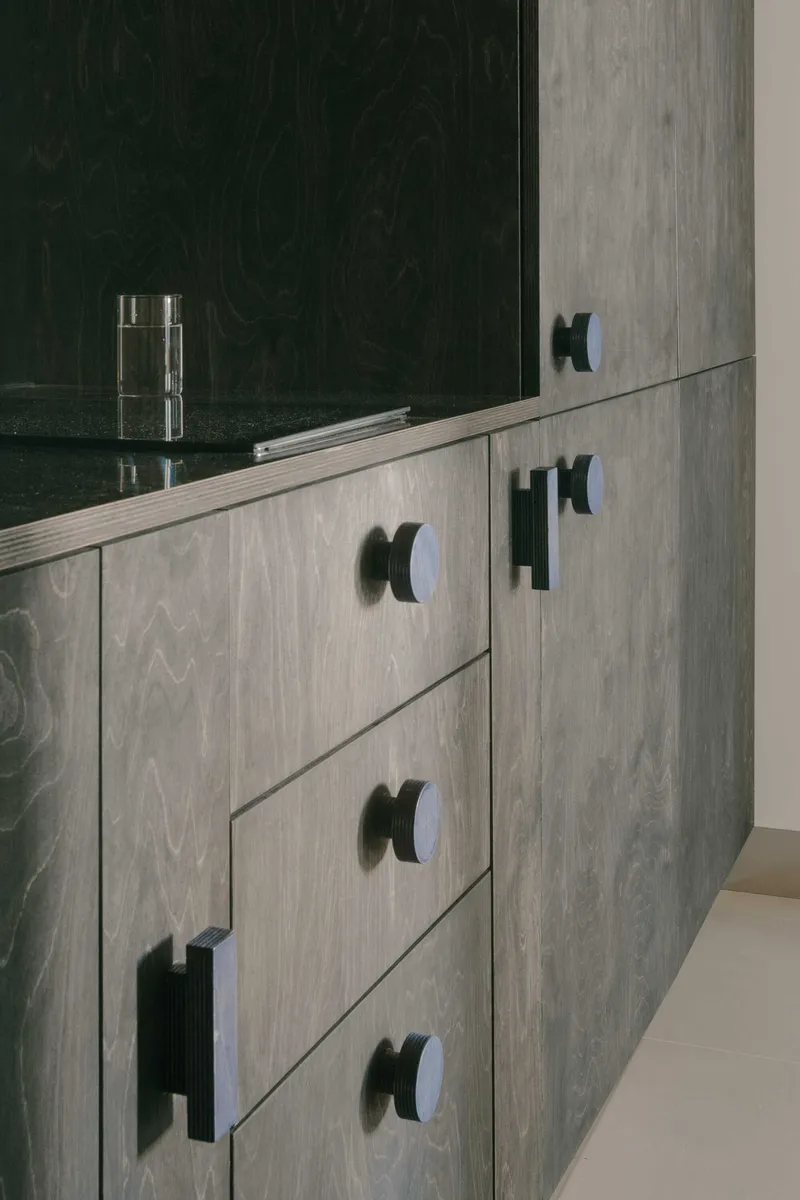
Grey wood veneer drawer fronts with black rounded pulls and a stone countertop above suggest the same calibrated restraint that governs the rest of the unit. The bathroom shares the apartment's material logic without replicating it exactly. Stone replaces plywood at the wet zone, but the hardware family stays consistent. It is a small move that keeps the apartment feeling like a single thought rather than a collection of rooms.
Plans and Drawings
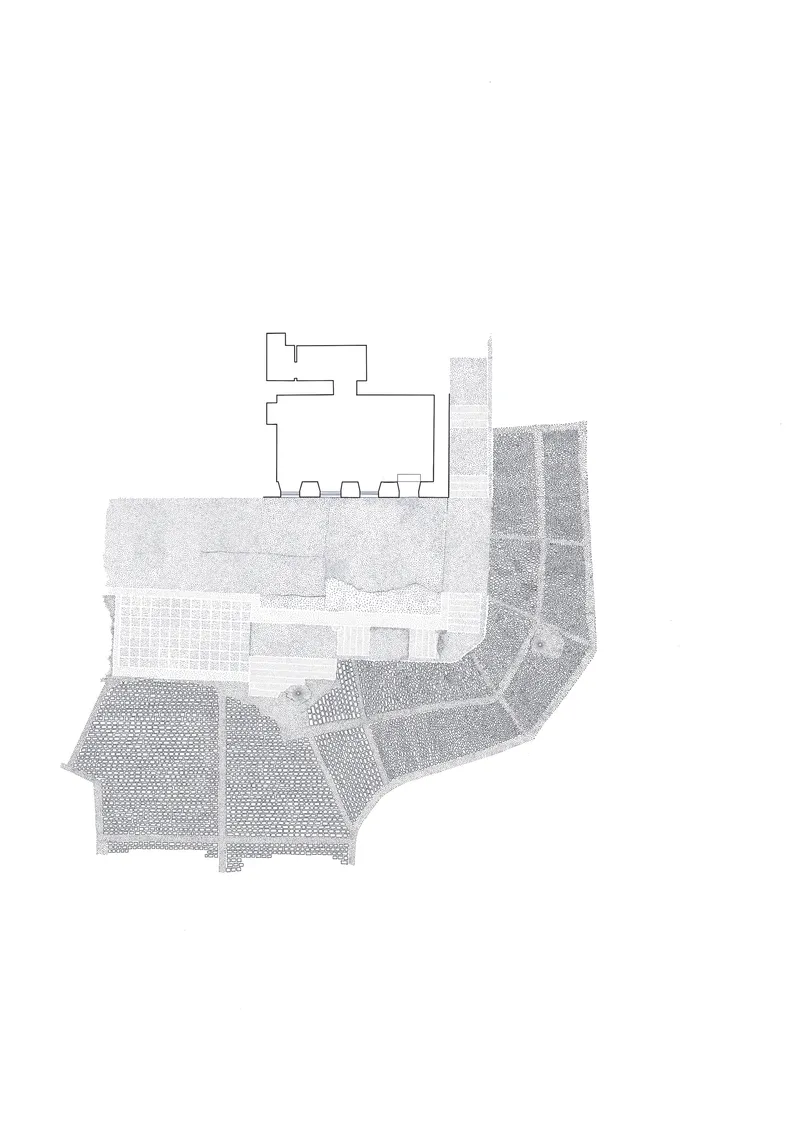
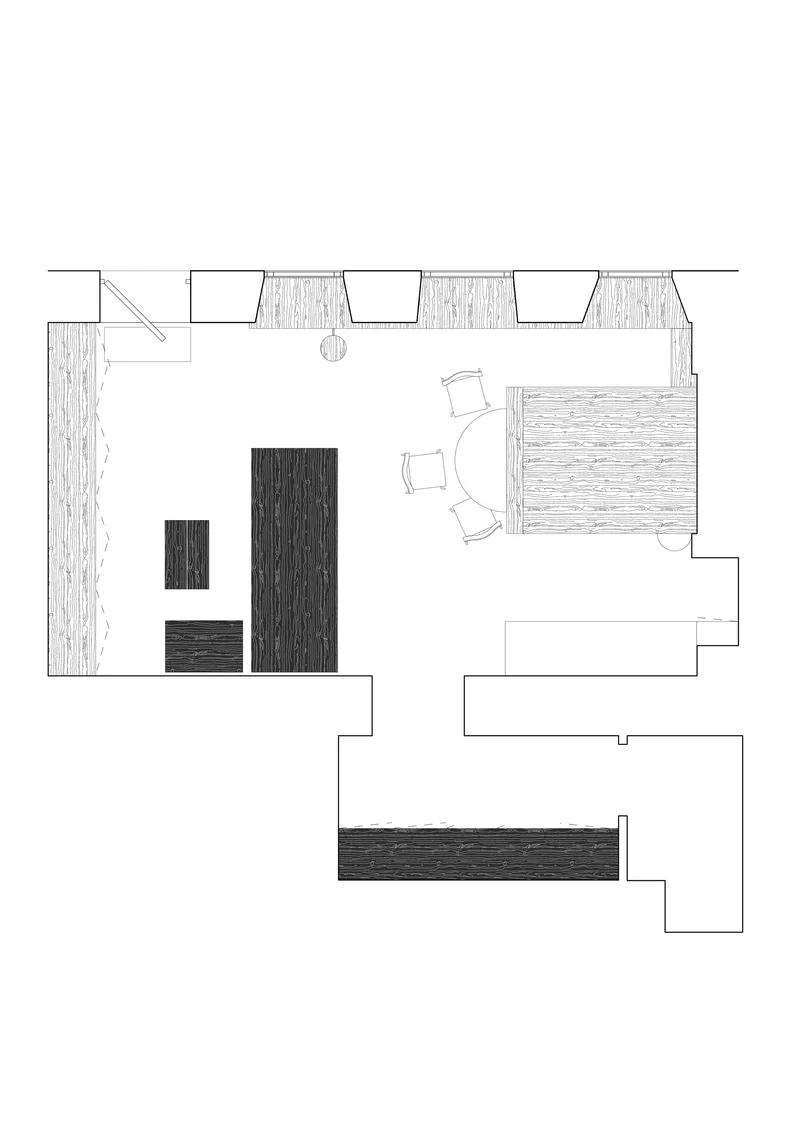
The site plan places Unit 20 within a dense block in Mtatsminda, surrounded by paved and planted areas that suggest a typical Tbilisi courtyard condition. The floor plan reveals how studio2AM organized the 38 square meters: a sleeping zone and living area along the brick wall, a kitchen corridor running perpendicular, and a bathroom tucked at the deepest point of the plan. Skylights are indicated, which explains the even daylight visible in the interior photographs. Furniture is drawn in, confirming that the joinery was designed as part of the architecture, not selected afterward.
Why This Project Matters
Unit 20 matters because it rejects the assumption that rental interiors are disposable. studio2AM has built a small apartment with the care and material specificity that most practices reserve for private commissions. The result is a space that works harder than its square footage suggests, using color, joinery, and threshold design to produce genuine spatial variety within a single room's worth of floor area.
More broadly, the project contributes to a growing conversation about the design of short-term and rental housing in cities like Tbilisi, where tourism pressure and urban density are reshaping the residential market. If every rental unit in Mtatsminda received this level of thought, the neighborhood would be a better place to live, not just a better place to visit. That distinction is worth designing for.
Unit 20 by studio2AM, Tbilisi, Georgia. 38 m². Completed 2025. Photography by Grigory Sokolinsky.
About the Studio
Share Your Own Work on uni.xyz
If projects like this are the kind of work you want to make, uni.xyz is a place to publish your own, find collaborators, and enter design competitions.


Popular Articles
Popular articles from the community


longwave studio Reorganizes a 112 m² Tainan Apartment Around the Daily Routines of a Family and Two Cats
In Tainan, Taiwan, birch plywood, rust-red furniture and a freestanding plaster wall link arrival, storage, work and family life in one apartment.

Jaramillo Van Sluys Arquitectura and Urbanismo Turn a Demolished Registry Lot in Quito into an Orchard Plaza
In Quito's Centro Histórico, a 2,800 m² plaza exposes the San Agustín convent wall and redraws its lost Augustinian orchard in volcanic stone.

Cube Design Draws an Ecological Corridor Between Two Shenzhen Hills with the Nankai Building
Beside Shenzhen's container docks, the Nankai Building pairs stacked balconies with a climbing green screen to connect two hillsides across its height.

David Ortega Stacks a Two-Story Mexico City Penthouse Around a Steel Stair and a Pergola-Shaded Roof Terrace
In Colonia Roma, a 300 m² penthouse uses oak joinery, a planted steel stair and a slatted roof pergola to make a new-build apartment feel like a house.

Similar Reads
You might also enjoy these articles


LAVA Architecten Gives Vocational Education a Sawtooth-Roofed Face on a Mechelen School Campus
In Mechelen, Belgium, a 2,053 m² STEM school on a 6×6 m grid turns workshops and classrooms into rooms that can be rearranged as teaching changes.

KEMA Studio Turns a Derelict Marvila Attic into a 60 m² Lighthouse Apartment Above Lisbon
In Lisbon's Marvila district, a rebuilt roof, four skylights and two plywood volumes turn an unlivable attic into a bright home facing the Tagus.

Pixel Gardens: One Repeated Module Stacked Into a Terraced Social Housing Tower for Famagusta
Salem Bader's shortlisted housing tower builds a vertical neighbourhood from one repeated module, offsetting units to carve terraces, light and air.

Bao Huynh Watercolor Atelier: A Serene Art Retreat in Hội An
Bao Huynh Watercolor Atelier in Hội An blends multifunctional art spaces, sustainable design, local materials, and family-friendly living in a serene environment.


Comments (0)
Please login or sign up to add comments
No comments yet. Be the first to comment!