

Sustainable Architecture Design for Care Homes: Enhancing Well-being through Green Spaces
This article explores sustainable architecture in care homes, highlighting green spaces, eco-friendly materials, and designs enhancing elderly well-being.


In recent years, sustainable architecture has transformed how we design living spaces, especially for the elderly. designed by Marge Arkitekter Care homes, such as The Gardens Care Home in Örebro, Sweden, showcase how thoughtful design can enhance well-being by integrating green spaces and social interaction areas.
This article explores how sustainable design principles, coupled with innovative spatial layouts, are reshaping the architecture of care homes to provide comfort, functionality, and environmental responsibility.
The Importance of Green Spaces in Elderly Care
Green spaces are essential for improving mental and physical health. Research suggests that elderly individuals experience better cognitive function and emotional stability when exposed to nature. In care homes like The Gardens Care Home, expansive gardens and atrium courtyards provide accessible and visually appealing outdoor spaces.


Design Highlights:
- Direct Access to Nature: Ground-level gardens and roof terraces offer residents opportunities to interact with nature daily.
- Visual Connectivity: Large windows ensure constant visual contact with green spaces, promoting relaxation and security.
- Social Interaction Areas: Shared spaces adjacent to gardens foster community engagement.
Sustainability in Material Choices
Modern care homes prioritize low-maintenance, eco-friendly materials to reduce their environmental impact.
Key Features:
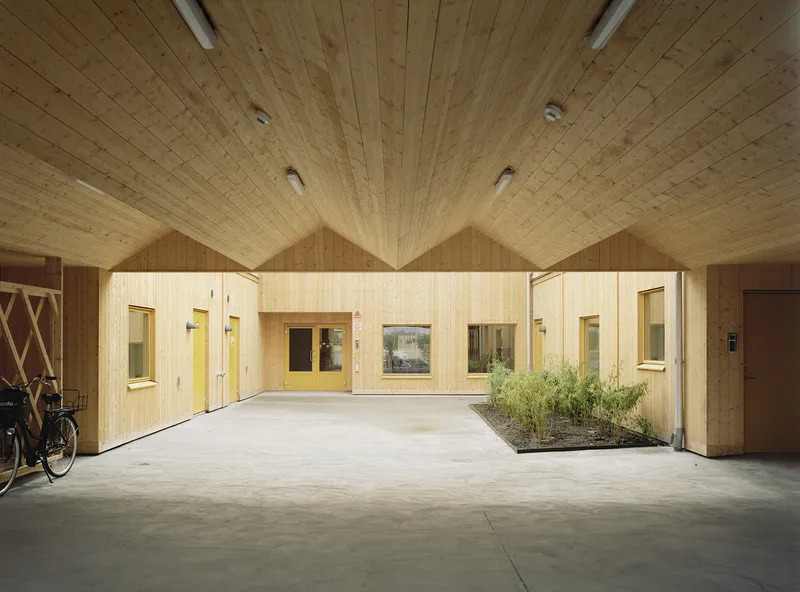
- Durable Wood Paneling:Used for facades in courtyard areas.Reduces maintenance and integrates seamlessly with green landscapes.
- Used for facades in courtyard areas.
- Reduces maintenance and integrates seamlessly with green landscapes.
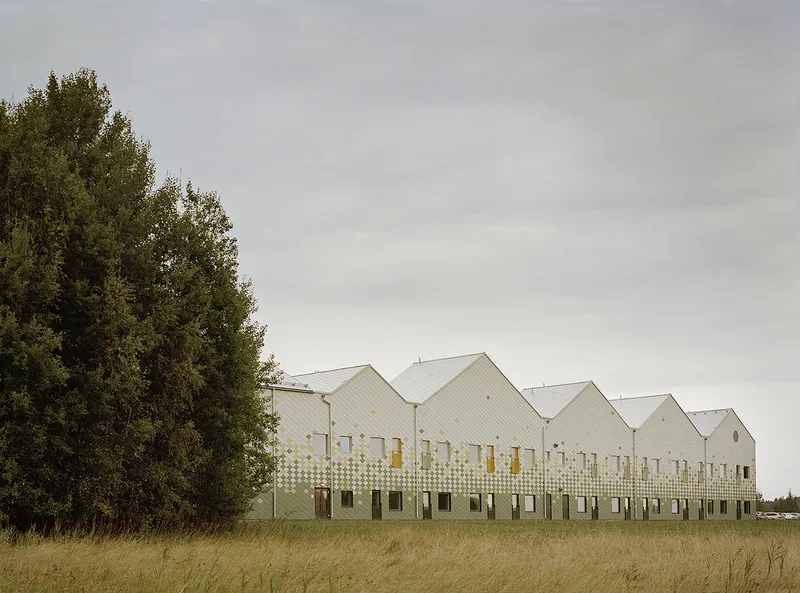
- Fiber Cement Patterns:Mimics the natural hues of surrounding fields, blending the structure with its environment.
- Mimics the natural hues of surrounding fields, blending the structure with its environment.
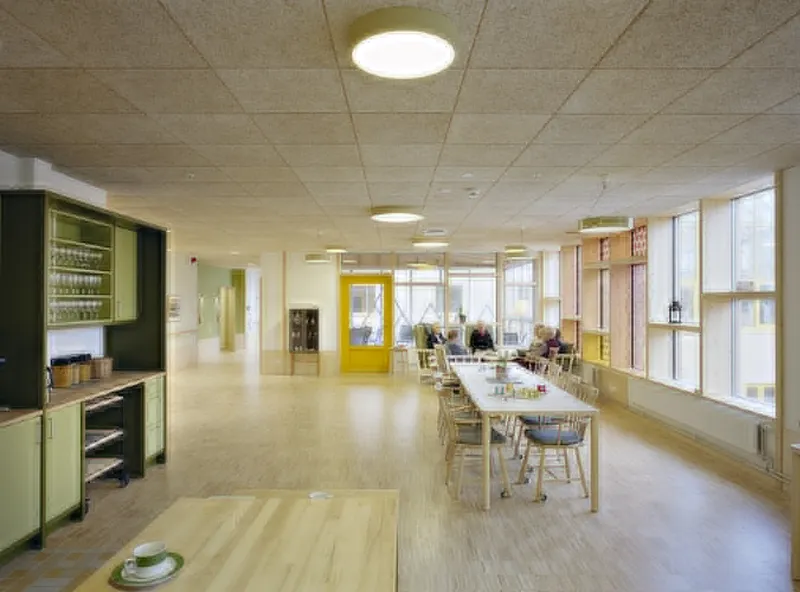
- Energy-Efficient Designs:Large windows optimize natural light, reducing dependency on artificial lighting.
- Large windows optimize natural light, reducing dependency on artificial lighting.


Monastic Simplicity Meets Modern Functionality
The Gardens Care Home adopts a minimalist yet purposeful layout. This "monastic-like" organization creates an intimate environment conducive to both privacy and interaction.
Spatial Features:
- Atrium-Centered Design: Courtyards act as hubs for activities, balancing tranquility and interaction.
- Visitor-Friendly Layouts: Centralized common areas encourage participation from residents, staff, and visitors.
- Adaptive Spaces: Flexibility in interior design accommodates changing needs of aging residents.
The Role of Sustainable Design in Enhancing Well-being
Sustainable architecture does more than just reduce the environmental footprint—it actively improves the quality of life for residents.
Positive Outcomes:
- Mental Health Benefits: Proximity to gardens reduces stress and anxiety.
- Physical Engagement: Easy-to-navigate layouts encourage outdoor activity.
- Sense of Belonging: Thoughtful design nurtures a community atmosphere, reducing loneliness.
Sustainable architecture for care homes is about creating spaces that are not only functional but also nurturing for their residents. Projects like The Gardens Care Home serve as a blueprint for blending ecological responsibility with compassionate design.
As the demand for elder care facilities rises, embracing green design principles will be pivotal in shaping spaces that cater to both human and environmental well-being.

All Photographs are work of Johan Fowelin


Popular Articles
Popular articles from the community


David Ortega Stacks a Two-Story Mexico City Penthouse Around a Steel Stair and a Pergola-Shaded Roof Terrace
In Colonia Roma, a 300 m² penthouse uses oak joinery, a planted steel stair and a slatted roof pergola to make a new-build apartment feel like a house.

GROUP A Strips a 1969 Rotterdam Harbor Headquarters to Its Frame and Wraps It in Timber Louvers
In Rotterdam's M4H harbor district, Ferro Offices reuses a 1969 frame, adds one timber storey and reaches BREEAM-NL Outstanding.

LT2A and OPEN Architectes Thread a Brick and Glass High School Through a Wooded Belgian Campus
In Braine-l'Alleud, a 3,000 m² wing for Collège Cardinal Mercier pairs pale brick with a glazed colonnade, deferring to a small chapel and a dense wood.

Juan García Correa, John González and Claudia Rueda Sink a Circular Amphitheater into a Manizales Engineering Building
On the La Nubia campus in Manizales, Colombia, the S1 Building folds labs and offices into a hillside of ramped lawns that double as a campus route.

Similar Reads
You might also enjoy these articles


Hodi-Mandai Geram
Project Function: Preservation and revitalization of the Intangible heritage and socio-spatial identity of the Hodi by Housing, Cultural Memory Center, Sacred Grove, landscape, local tourism economy


Olio Towers: A Mid-Rise for Performers That Fuses Housing, Rehearsal, and Stage
Located blocks from Houston's Theater District, this modular tower stacks living units around a central performance atrium.

Oasis: Modular Green Housing Carved into Dhaka's Urban Fabric
A shortlisted Plugin Housing entry reclaims unauthorized settlements in Dhaka with stepped concrete volumes, green roofs, and ventilation-driven design.

Black Hole: A Floating Megastructure for the Post-Physical Era
Emiliano Mazzarotto envisions a spherical, self-scaling arena where e-sports, digital hotels, and holographic stadiums replace traditional public space.

Explore Ageing-Well Design Competitions
Discover active competitions in this discipline

Challenge to reimagine the Iron Throne

Photograph architecture without architects

Illustrate the lost glory of Angkor Wat - Render Challenge

Design challenge to reuse E-waste
Comments (0)
Please login or sign up to add comments
No comments yet. Be the first to comment!