
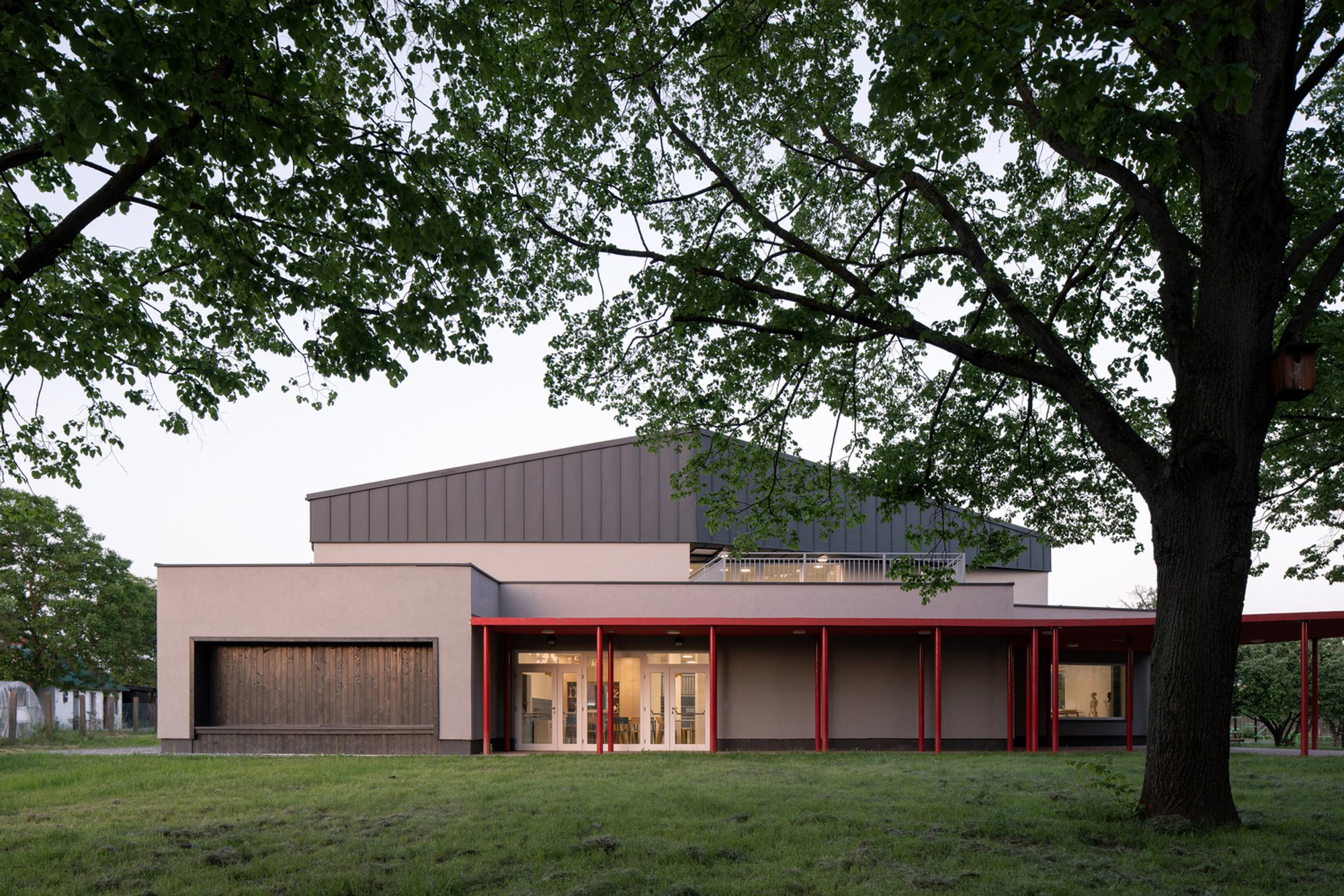
Szentpéterfa Elementary School by CAN Architects: A Visionary Model of Rural Education in Hungary
Szentpéterfa Elementary School redefines learning with innovative, community-driven design, integrating Turning Classrooms, outdoor spaces, and cultural identity.

Redefining Rural School Architecture in Hungary
CAN Architects have reimagined educational architecture with the newly completed Szentpéterfa Elementary School, a forward-thinking campus located in a Croatian minority village along the Hungarian-Austrian border. This groundbreaking project establishes a new benchmark in Hungarian school design, merging deeply rooted cultural identity with progressive spatial and pedagogical strategies.
Community-Centered Design Rooted in Participation
The design of the school was the result of three decades of preparatory work and intensive participatory planning. Despite the limitations imposed by the COVID-19 pandemic, CAN Architects engaged closely with teachers, students, and local government representatives. Their inclusive design process ensured that the final outcome reflected the educational needs and cultural values of the Szentpéterfa community.
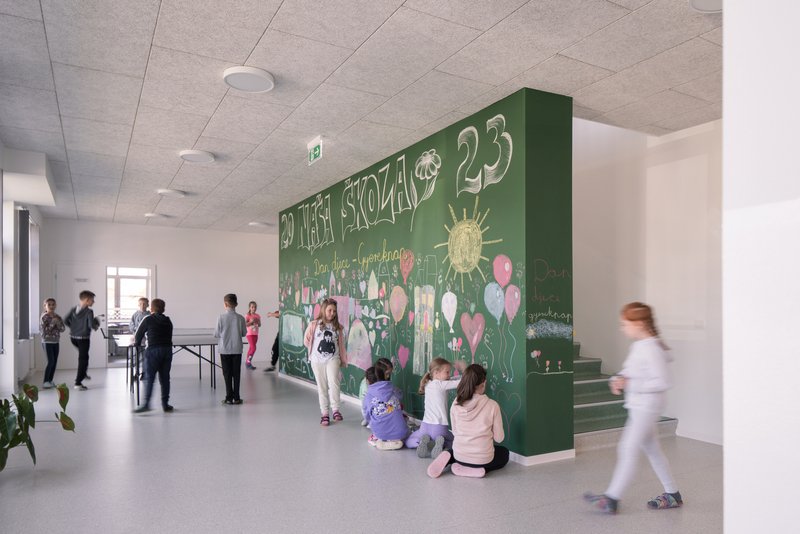
The school was envisioned as more than just a learning environment — it was conceived as a community hub, with spaces that are accessible to the public beyond school hours. Indoor and outdoor learning areas, adaptable classrooms, and multifunctional public zones embody a holistic approach to education.
Alcoved and Turning Classrooms: Pedagogical Innovations
Two of the school’s most striking innovations are the Alcoved Classrooms and the world’s first Turning Classrooms — both derived from years of educational, spatial, and environmental research.
- Alcoved Classrooms for lower grades (ages 6–10) are enhanced with soft, seat-height alcoves designed for reading, play, and contemplation. These playful retreats encourage movement and allow for flexible teaching methods, while integrated storage keeps visual clutter minimal and attention focused.
- Turning Classrooms for upper grades (ages 10–14) are a revolutionary reinterpretation of classroom geometry. Depending on the orientation within the square-shaped space, the atmosphere can shift to suit frontal instruction, group collaboration, or open discussions. This unique layout encourages dynamic learning environments tailored to various pedagogical scenarios.
A Learning Landscape That Connects and Inspires
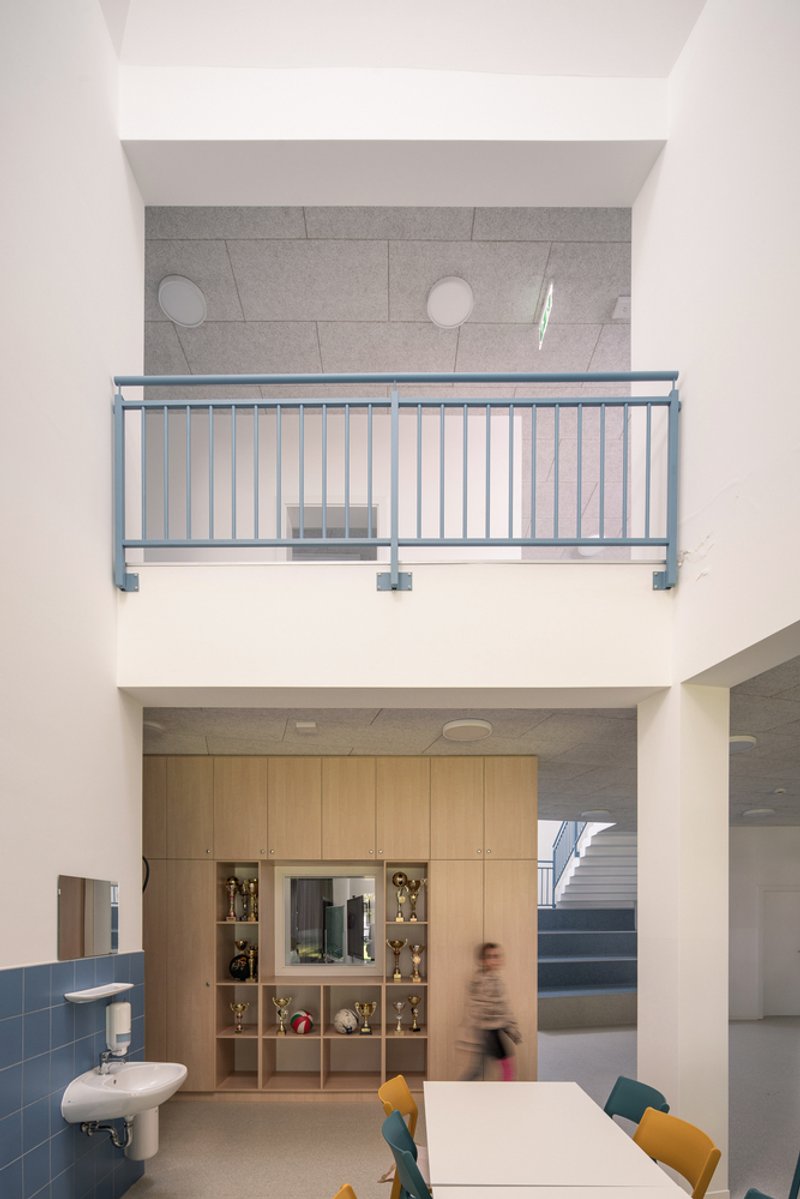
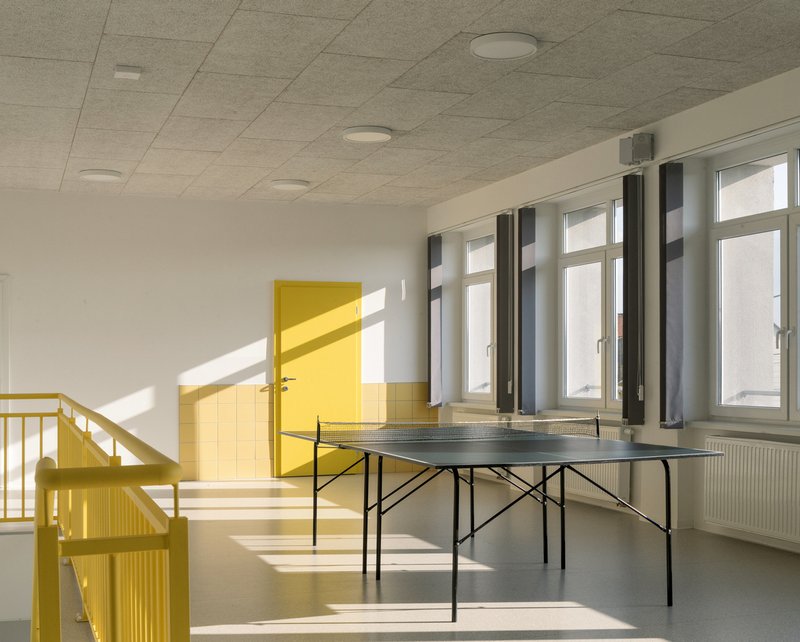
The heart of the school is a vibrant learning landscape — a spatial connector between classrooms that includes a central staircase (named Gengülő by students), indoor recreation zones like a ping-pong area, a dining hall, and an outdoor yoga terrace. These shared spaces foster interaction, movement, and community engagement throughout the school day.
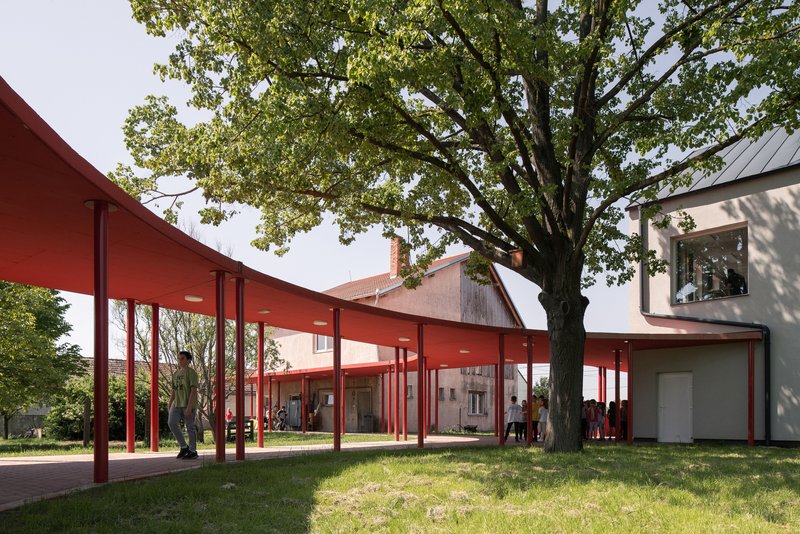
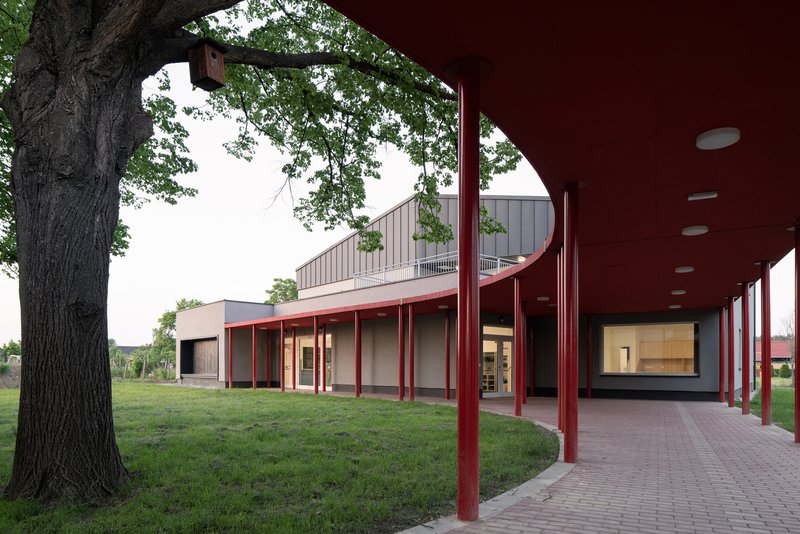
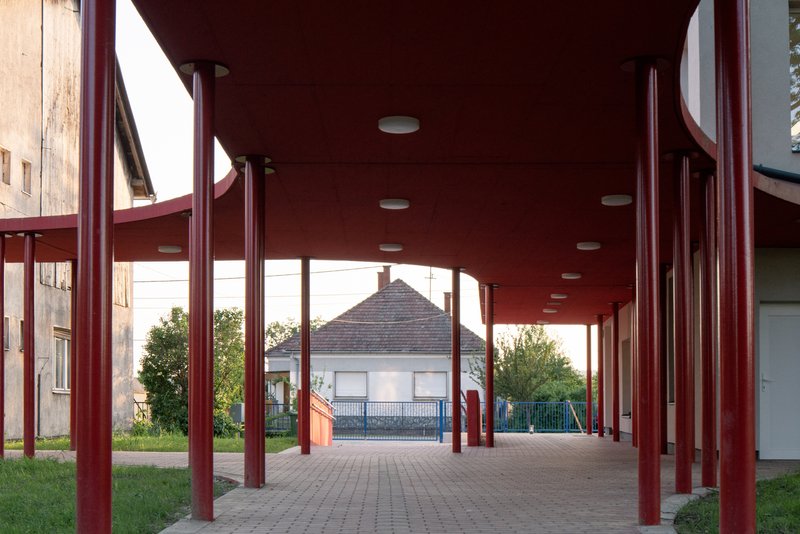
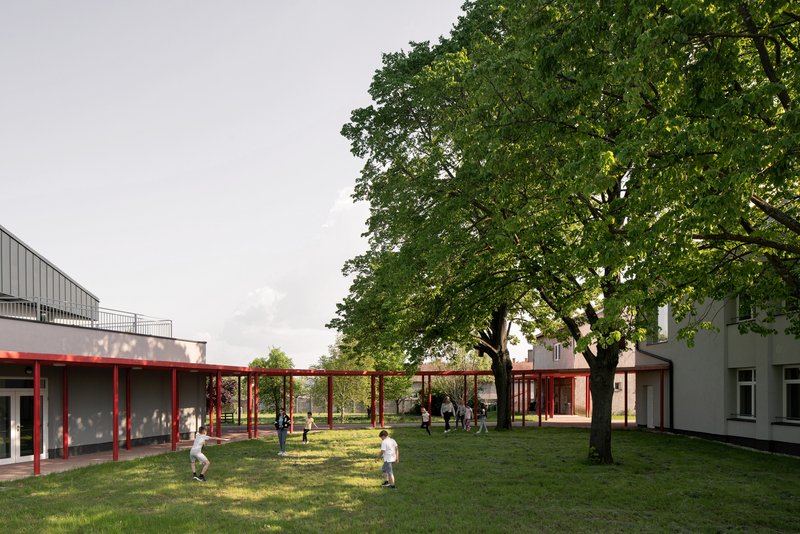
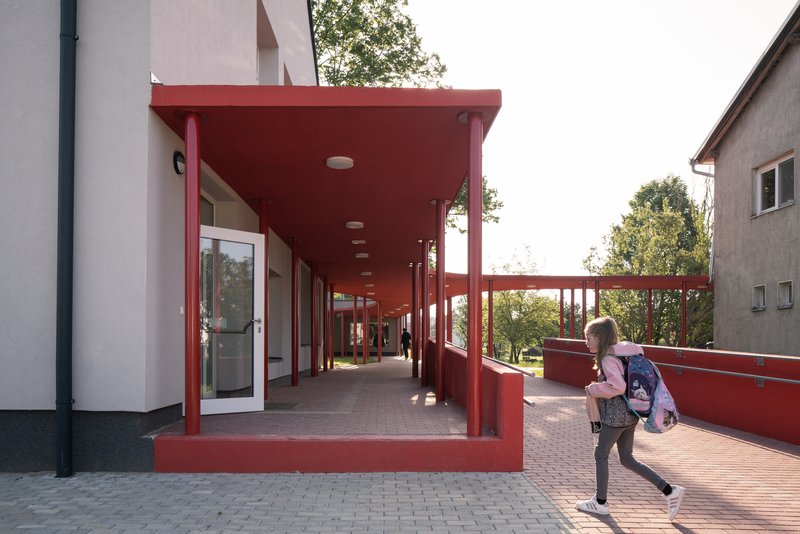
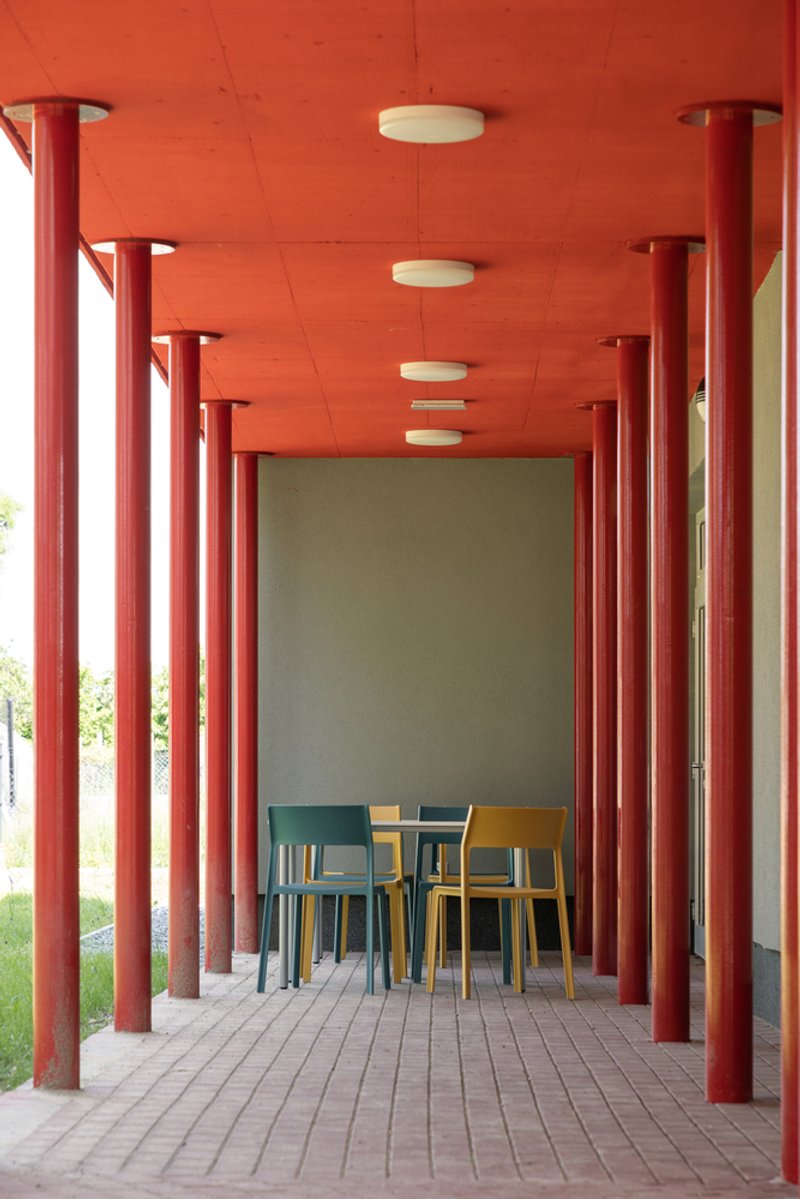
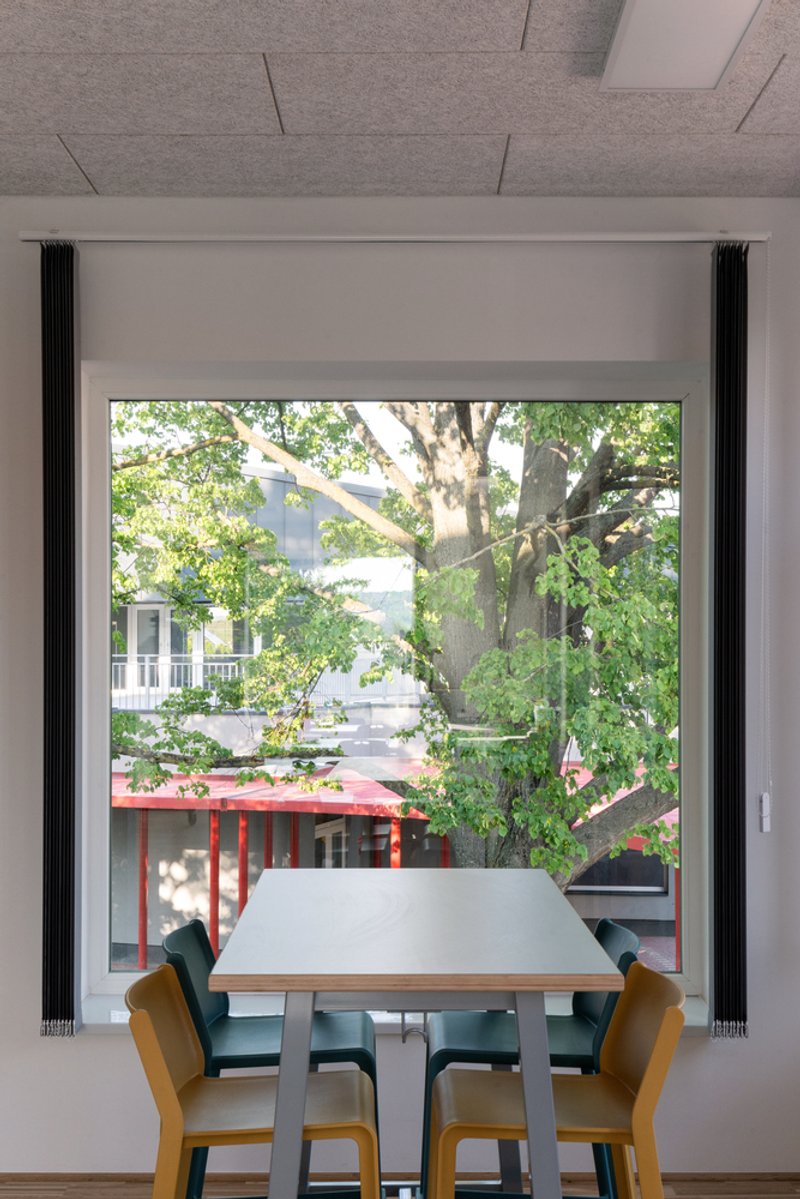
A notable element of the design is the large outdoor canopy, painted red to reflect the Croatian heritage of the community. This multifunctional structure doubles as an outdoor classroom, extending the learning season and connecting different volumes of the campus in a way reminiscent of Hungarian rural vernacular architecture.
Adaptive Reuse and Phased Development
The campus consolidates two previously separated school locations into a single, cohesive site. One of the original buildings has been converted into a lower school cluster, while a former doctor’s office is planned for future transformation. A small gymnasium will also be added as resources allow, ensuring that the project can continue to evolve organically with the needs of the community.
Architecture as an Extension of Identity
CAN Architects carefully balanced contemporary educational needs with the historical and cultural identity of Szentpéterfa. The red tones of the Croatian šahovnica (checkerboard crest) are subtly integrated into the central canopy, while the buildings’ light grey plaster facades and human-scale volumes maintain harmony with the village fabric.
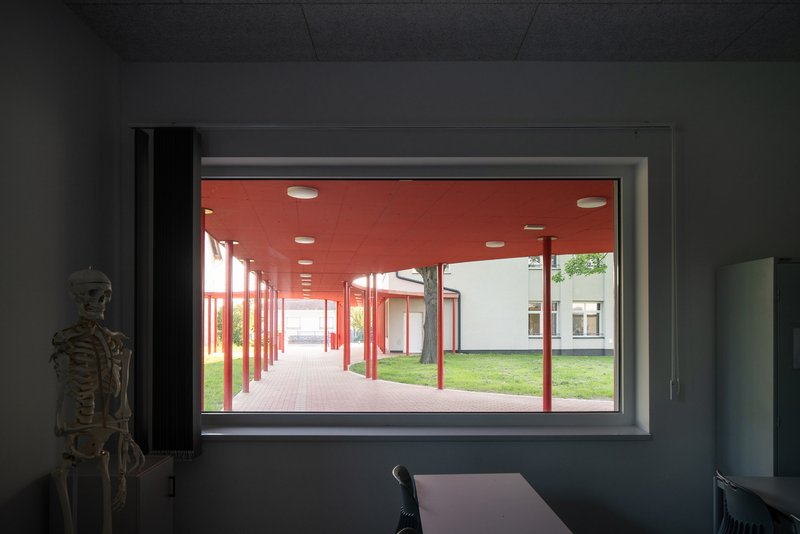
Pictorial openings frame views of the surrounding landscape, ensuring that students remain visually connected to their environment. The school is not an isolated institution but a living, breathing extension of the village — an environment where education, play, heritage, and nature coexist.
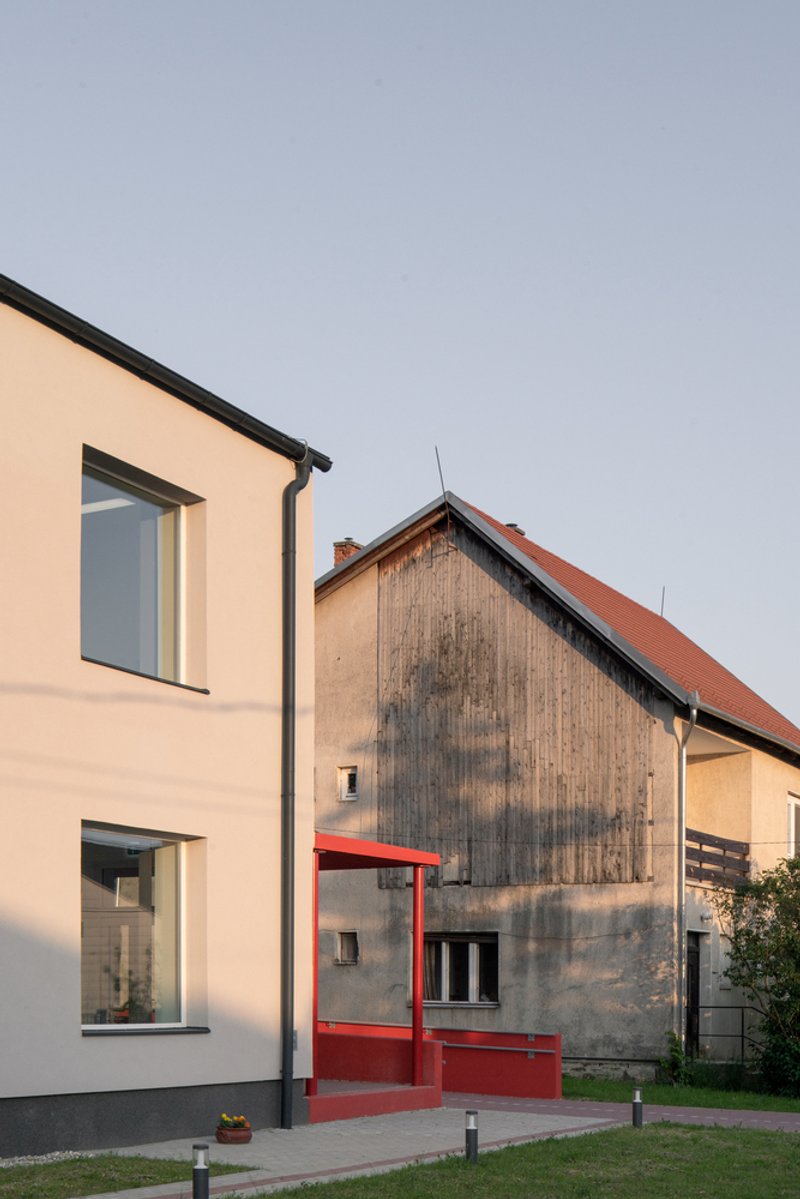
All Photographs are works of Alex Shoots Buildings



Popular Articles
Popular articles from the community

Inverted Architecture Installation by Studio Link-Arc: Exploring the Intersection of Architecture and Living Organisms
Inverted Architecture Installation by Studio Link-Arc blends mycelium, sustainability, inverted design, ecological cycles, and urban adaptive architecture in Shenzhen.
Louis Malle Cinema: A Limestone Cultural Landmark Revitalizing Community Life in Prayssac
Limestone cinema extension with public forecourt, blending heritage and modern design to create flexible cultural spaces and strengthen community interaction.
Solar Steam: A Climate-Responsive Architecture That Redefines the Monument
A climate-responsive memorial architecture that transforms heat, decay, and time into a living system reflecting humanity’s ecological impact.

The Ken Roberts Memorial Delineation Competition (Krob)
As the most senior architectural drawing competition currently in operation anywhere in the world, it draws hundreds of entries each year, awarding the very best submissions in a series of medium-based categories.


Similar Reads
You might also enjoy these articles
The Ken Roberts Memorial Delineation Competition (Krob)
As the most senior architectural drawing competition currently in operation anywhere in the world, it draws hundreds of entries each year, awarding the very best submissions in a series of medium-based categories.

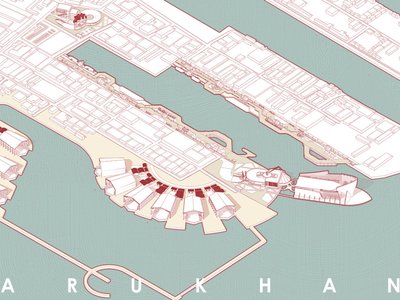
Waterfront Redevelopment and Urban Revitalization in Mumbai: Forging a New Dawn for Darukhana
A transformative waterfront redevelopment project reimagining Darukhana’s shipbreaking heritage into an inclusive urban future.
OUT-OF-MAP: A Call for Postcards on Feminist Narratives of Public Space
Rhizoma Design and Research Lab invites artists, designers, architects, researchers, and students to reflect on how feminist perspectives can reshape public space. Selected works will be exhibited in Barcelona, October 2026. Submissions open until 15 April 2026.

Documentation Work on Buddhist Wooden Temple
Architectural syncretism and cultural hybridity: A comparative study of the Buddhist temples in Chattogram Hill tracks
Explore Architecture Competitions
Discover active competitions in this discipline




The International Standard for Design Portfolios


The Global Benchmark for Architecture Dissertation Awards


The Global Benchmark for Graduation Excellence


Challenge to design public laboratory
Comments (0)
Please login or sign up to add comments
No comments yet. Be the first to comment!