
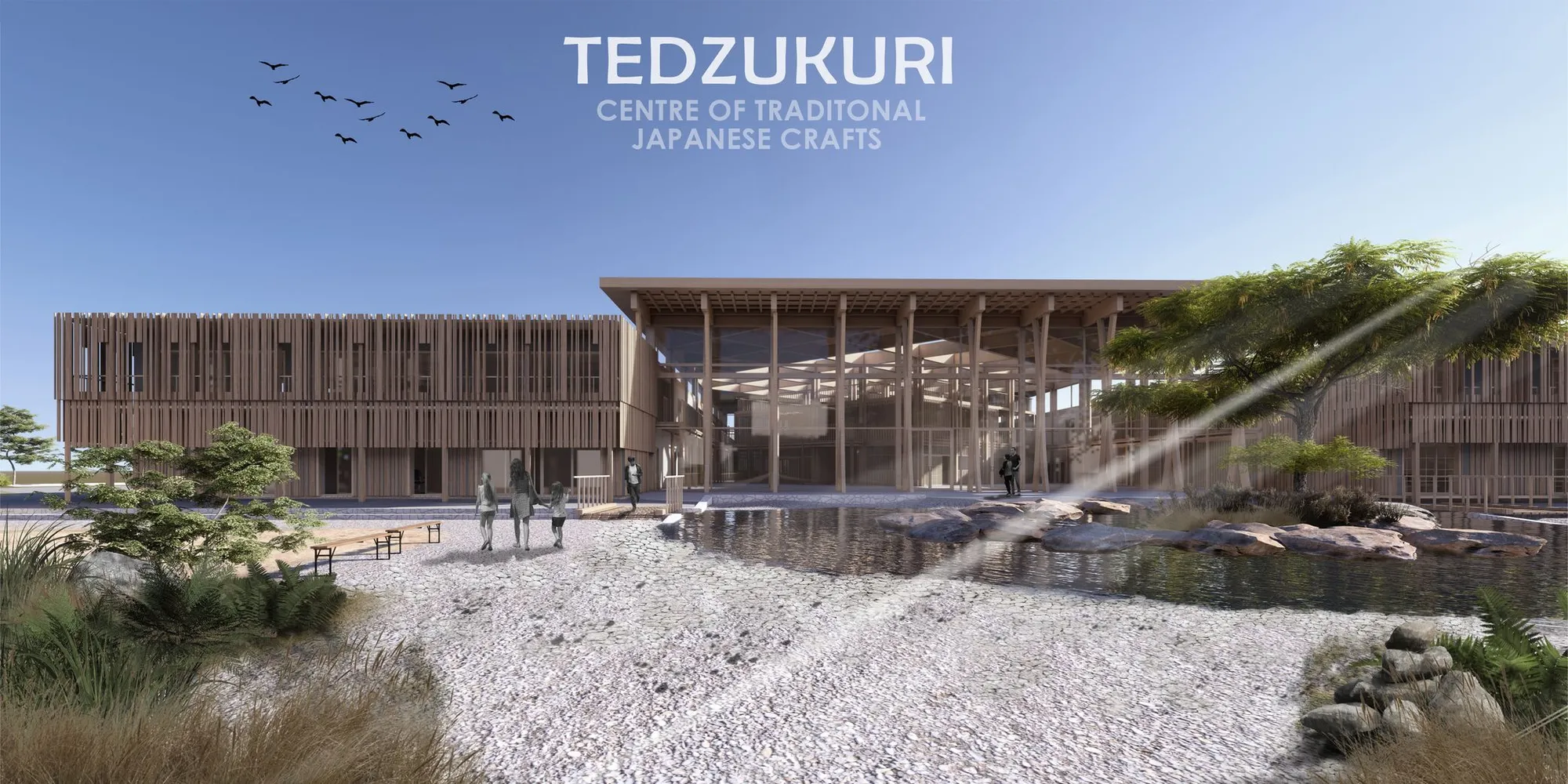
TEDZUKURI Traditional Japanese Craft Center by Michal Kogut: Celebrating Handicrafts in Akita
A design for a Traditional Japanese Craft Center in Akita, Japan, preserving local handicraft traditions.


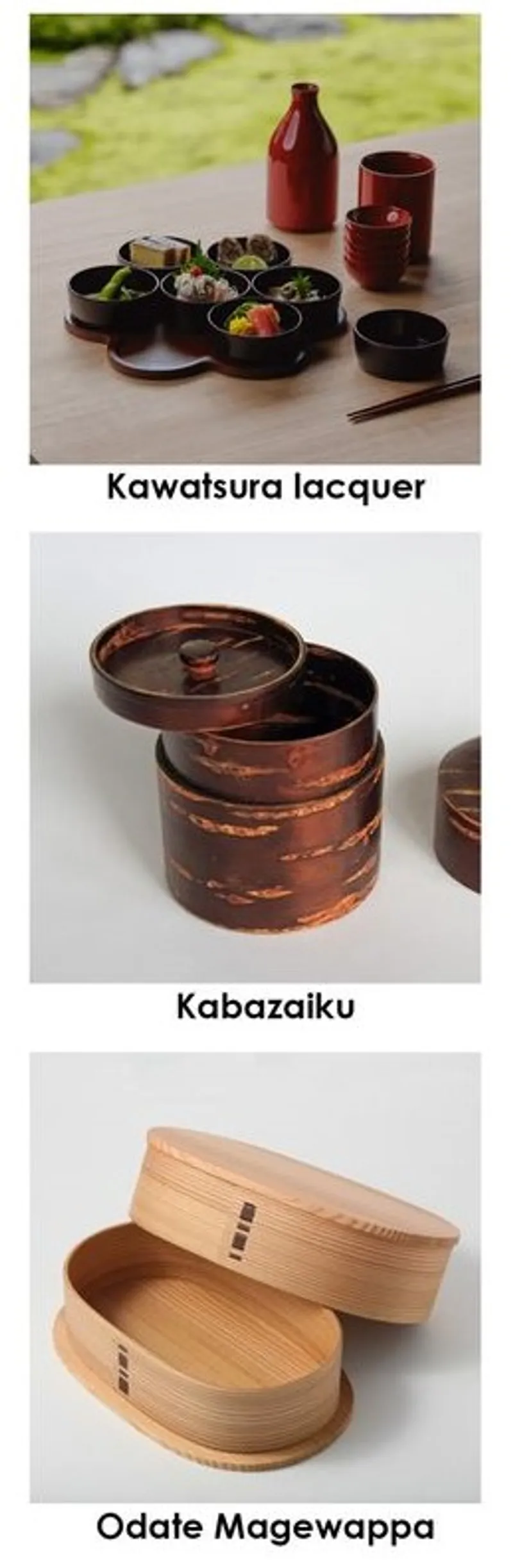
The TEDZUKURI Traditional Japanese Craft Center, a visionary project by Michal Kogut and winner of the prestigious Tedzukuri competition, is set to be a beacon of cultural preservation and innovation in the city of Akita, Japan. This thoughtfully designed center aims to celebrate and perpetuate the rich tradition of local handicrafts, focusing on Kawatsura lacquerware, Kabazaiku, and Odate Magewappa products.
Embracing Tradition in a Modern World
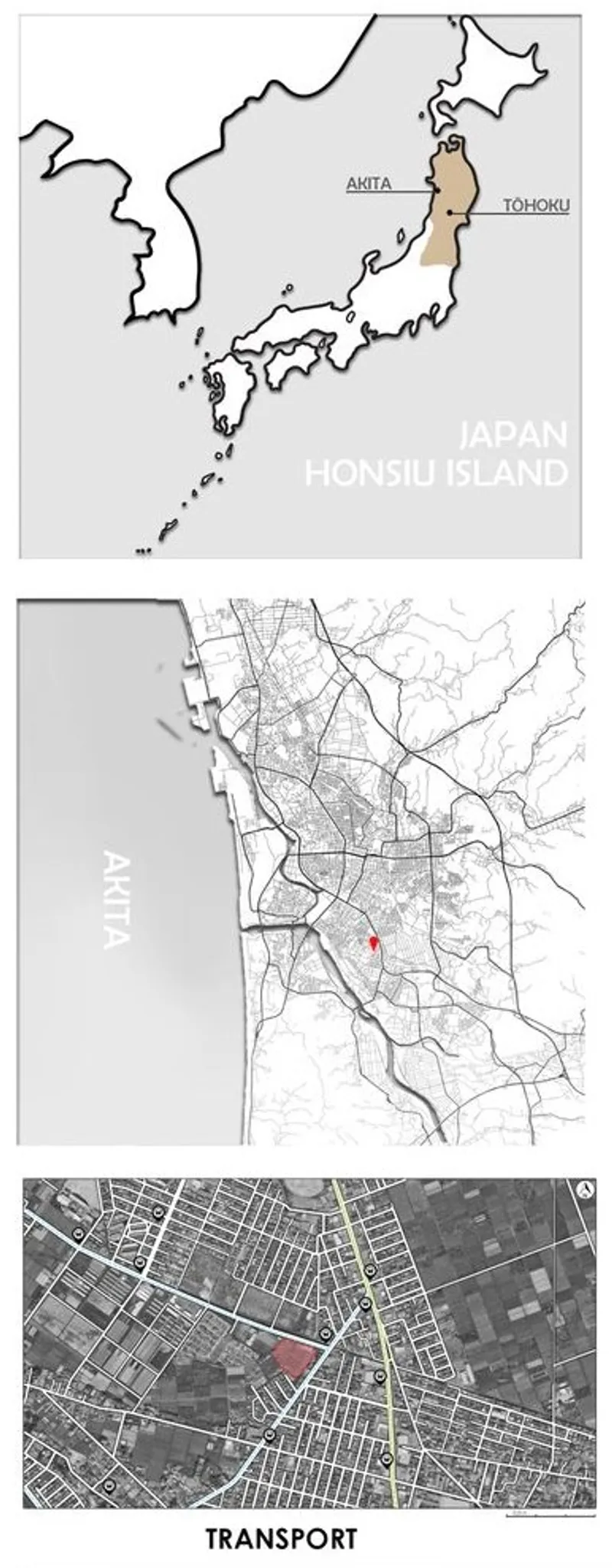
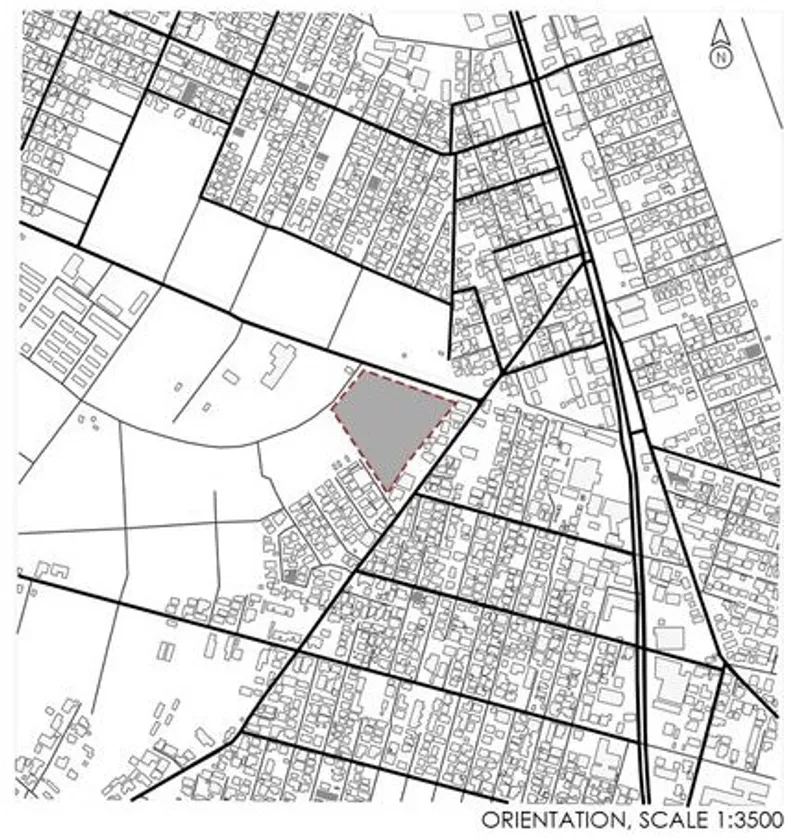
The competition's study area, located in the Tohoku region of northern Japan, offers a unique blend of historical depth and natural beauty. Japan, with its insular, mountainous geography, has developed a rich and unique culture over centuries. The TEDZUKURI Craft Center embodies the spirit of preserving these traditions in the face of globalization, ensuring that knowledge and skills are passed from one generation to the next.
Akita, famous for its industry, festivals, and fishing, is also renowned for its handicrafts. The region's characteristic products, crafted from local wood, include cedar barrels, Odate Magewappa bento containers, Kabazaiku, and Kawatsura lacquerware. These items are not just utilitarian but also beautiful, reflecting the deep-rooted craft traditions of the area.
Function and Urban Planning
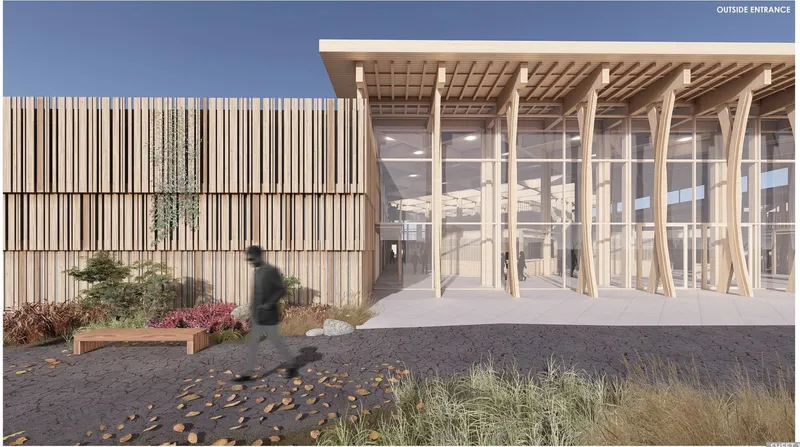
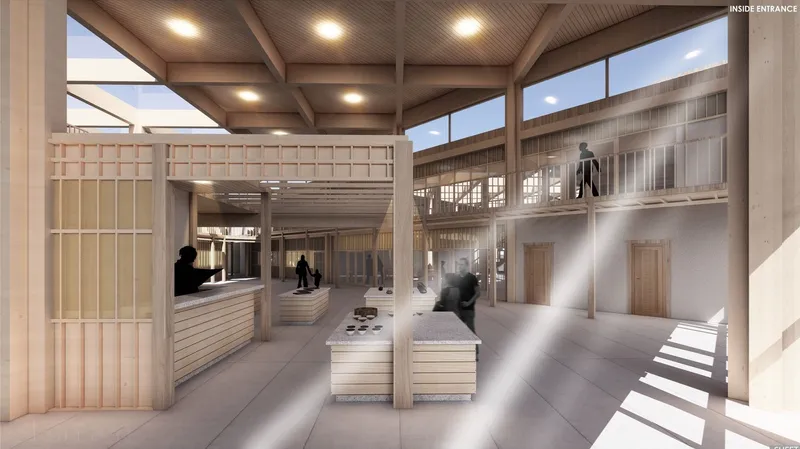
The design of the TEDZUKURI Craft Center is a thoughtful nod to the region's craft history. The building, resembling the form of a traditional Japanese lantern, integrates soft lighting and paper-like walls to create a unique play of light and shadow. The center is not just a static museum but a dynamic space where visitors can observe and participate in the crafting process, fostering a deeper connection to the art.

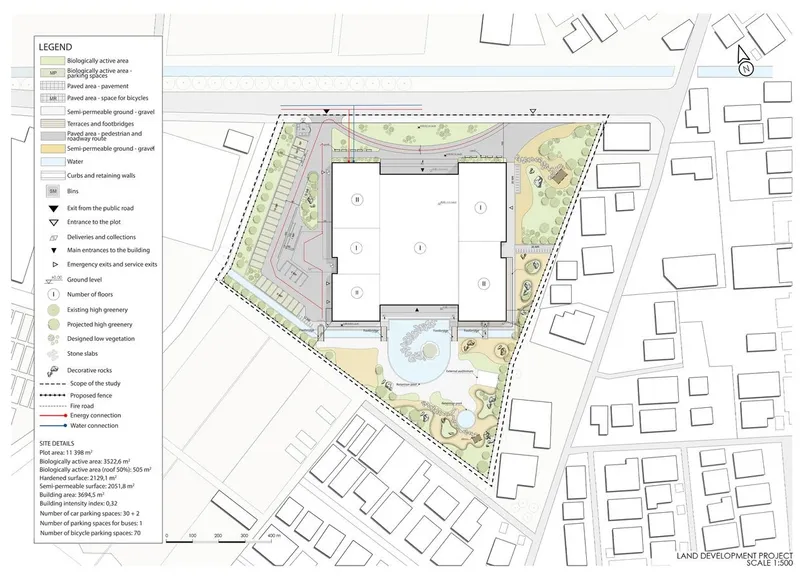
The main hall serves as an exhibition area, surrounded by workshop studios housed in a central cube. This design allows for a fluid movement of visitors, enabling them to witness the intricate processes of crafting Kawatsura lacquerware, Kabazaiku, and Odate Magewappa. These workshops highlight the historical significance and meticulous craftsmanship involved in each product.
Craft Traditions Highlighted
Kawatsura Lacquerware: Originating from the village of Kawatsura in the Kamakura period (1185-1333), Kawatsura lacquerware involves applying layers of natural urushi lacquer. This craft flourished during the Edo period, and techniques such as hananuri (layering lacquer), makie (gold application), and chinkin (engraving) are still used today.
Kabazaiku: This craft, using cherry tree bark, has been popular for over 200 years. Kabazaiku products, such as tea containers and smoking accessories, are prized for their moisture-retaining properties, making them ideal for traditional tea ceremonies.
Odate Magewappa: Developed in the town of Odate, this craft involves making bento containers from bent cedar wood. The process, unchanged for centuries, includes selecting cedar, cutting it into thin slats, soaking in boiling water, bending, drying, and linking to form elegant containers.
Sustainable Design and Functionality
The TEDZUKURI Craft Center's design is both functional and environmentally conscious. The building's timber construction, using square, rectangular, X-shaped, and T-shaped columns, reflects Japan's traditional building materials and reduces carbon emissions. The structure is divided into zones, each served by separate air handling units, ensuring efficient ventilation.
The center includes various functional areas, such as an auditorium, hotel, administration offices, and a vibrant main hall for exhibitions. The auditorium, designed with soundproofing and acoustic panels, is perfect for presentations and cultural events. The hotel, located in a quiet wing, offers a serene retreat for visitors, combining Japanese and European styles. The administration offices provide easy access for employees and open up to a lush garden environment.
The TEDZUKURI Traditional Japanese Craft Center by Michal Kogut is a testament to the enduring value of cultural heritage in a modern world. By creating a space that both celebrates and educates about traditional crafts, the center ensures that these invaluable skills and traditions will continue to thrive for generations to come. This innovative project not only honors the past but also provides a dynamic and engaging environment for the present and future.




Popular Articles
Popular articles from the community


Riyadh For All: Intergenerational Urban Design for Active Aging in Rabat
Riyadh For All reimagines urban design in Rabat with intergenerational co-living, adaptive courtyards, and Moroccan cultural exchange today.

AL-JANNAH: Sustainable Architecture and Permaculture for Afghan Widows
AL-JANNAH uses sustainable architecture and permaculture to create resilient oasis of housing, learning, work and renewal for Afghan widows.

Co-life: Sustainable Architecture for Age-Friendly Community Living
Co-life reimagines sustainable architecture for seniors through courtyards, rammed earth, shared gardens, and spaces designed for belonging.

The Ocean Hive: Sustainable Architecture for a Self-Sufficient Civilization at Sea
The Ocean Hive imagines sustainable architecture at sea, where modular habitats, algae, wave power and ocean waste sustain a growing colony.


Similar Reads
You might also enjoy these articles

Day and Night Park: A Time-Based Urban Newsstand in Beijing
A temporary urban newsstand in Beijing blending travel, light, and reading through poetic colors, compact form, and community-focused design.

Modernist Patio Renovation in El Masnou, Barcelona by Oliver Segura Arquitectura + Cebrià Arquitectura
Modernist patio renovation blending tradition and innovation with a movable pool, leveled floors, and Catalan materials in El Masnou.

Alto Residencial Coop: Cooperative Housing Development in Santiago de Compostela by Carbajo Barrios Arquitectos
A linear cooperative housing complex blending white volumes and perforated metal façades, enhancing community living, natural light, privacy, and urban integration.
Vil Genis School by BPA ARCHITECTURE – Massy, France
Vil Genis School in Massy, France, features sustainable design, south-facing classrooms, community integration, accessible spaces, and modern educational architecture.


Explore Cultural Architecture Competitions
Discover active competitions in this discipline



Challenge to reimagine the Iron Throne


Photograph architecture without architects


Illustrate the lost glory of Angkor Wat - Render Challenge


Bring back Drive In's
Comments (0)
Please login or sign up to add comments
No comments yet. Be the first to comment!