

Temporary Commercial Pavilion – Visitor Center by FP/ARQS
Temporary modular pavilion in Mendoza, designed as an immersive visitor center with transparent spaces, elevated platforms, and flexible open-plan layout previewing future development.


An Immersive Entry Point to a Future Development in Mendoza, Argentina
The Temporary Commercial Pavilion – Visitor Center by FP/ARQS introduces the first architectural gesture for a new large-scale residential development in the foothills of Mendoza, Argentina. Designed as both a commercial pavilion and an experiential gateway, the project functions as a temporary architecture piece that sparks imagination, fosters emotional connection, and previews the lifestyle to come.
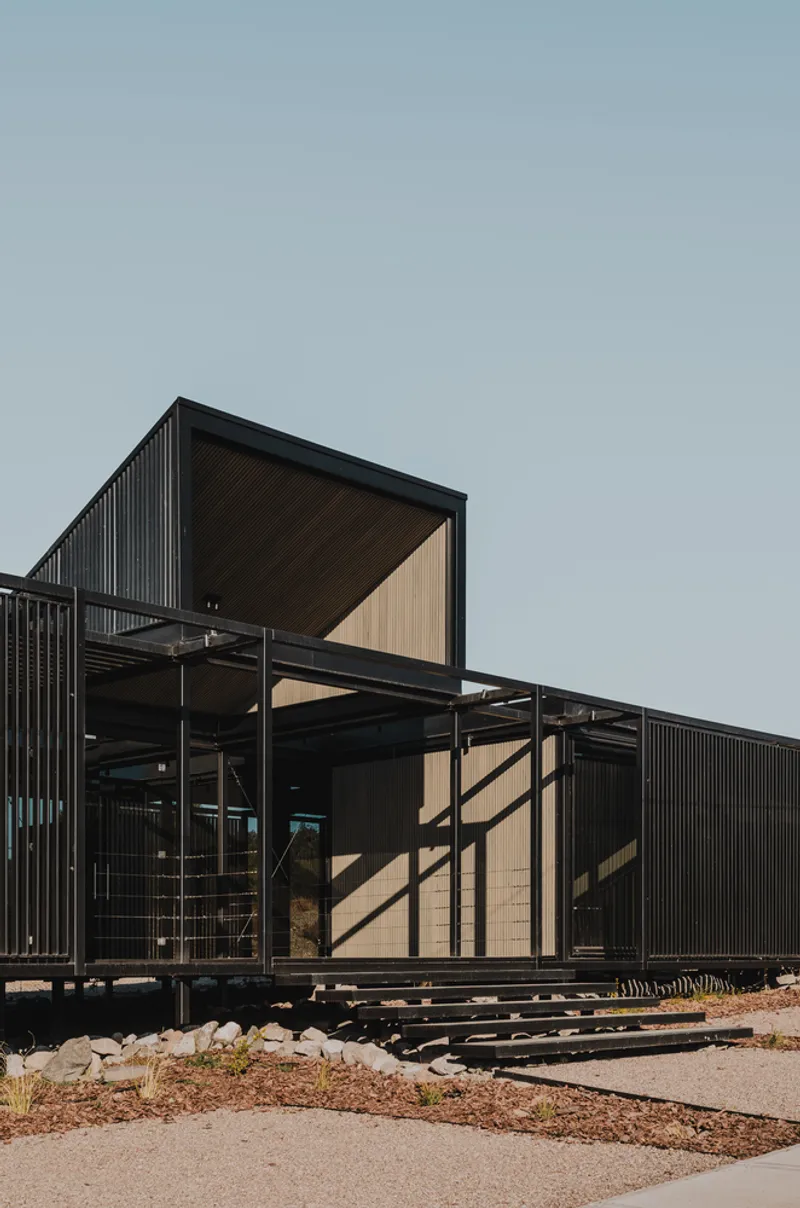
More than a sales center, this pavilion becomes a space where brand identity, place-making, and aspirational living intersect, shaping early perceptions of the future neighborhood.
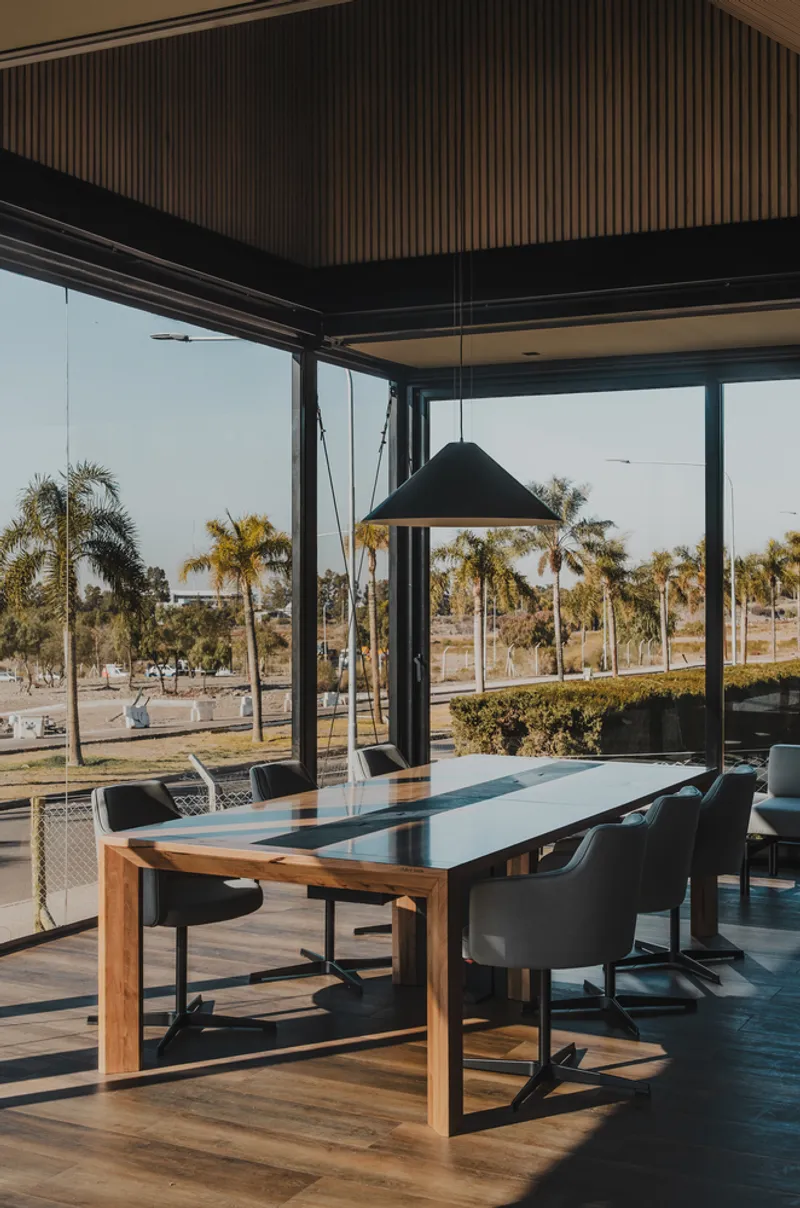
Concept: Architecture as a Catalyst for Experience
Instead of acting merely as a physical facility, the pavilion is conceived as an experiential interface—a curated environment where visitors engage socially, visualize future possibilities, and build emotional affinity with the upcoming development.
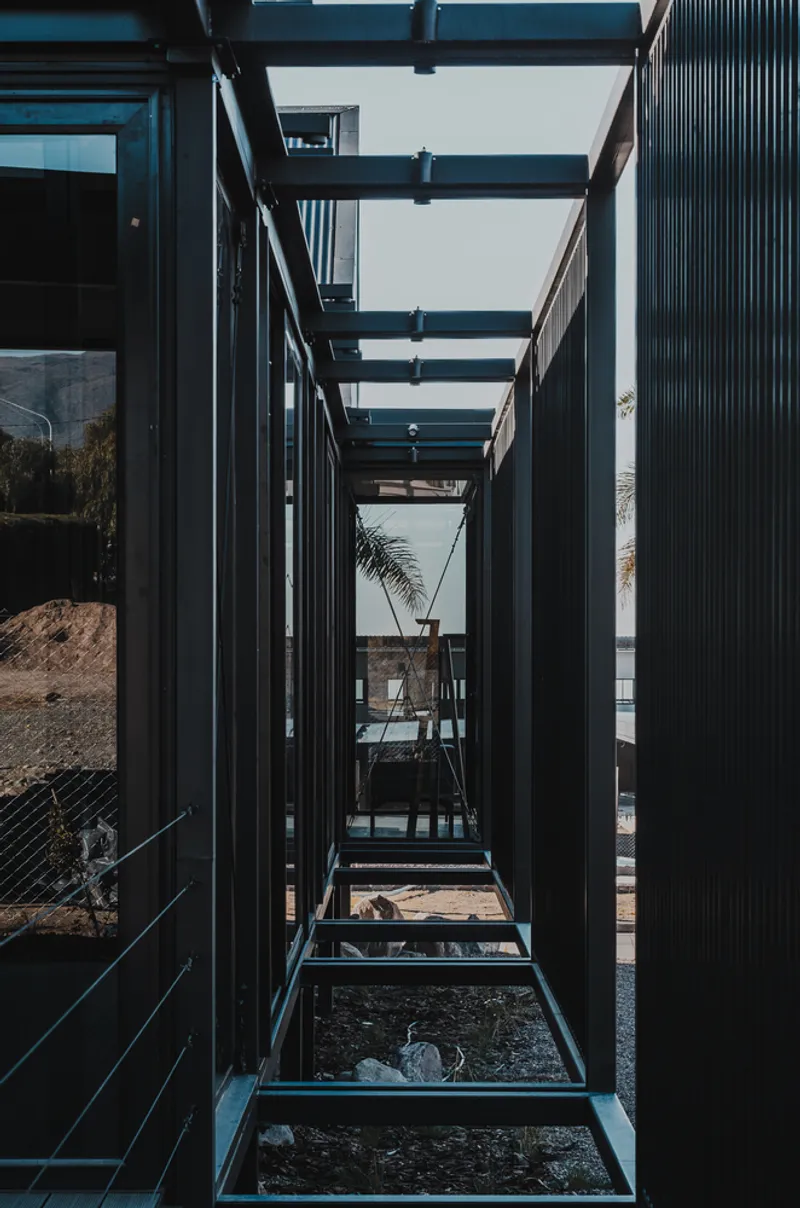
Visitors are invited to explore the space as a precursor to the lifestyle envisioned for the community. Through transparency, fluid circulation, and visual openness, the pavilion establishes an ongoing dialogue between built form and landscape, reinforcing anticipation and connection to place.
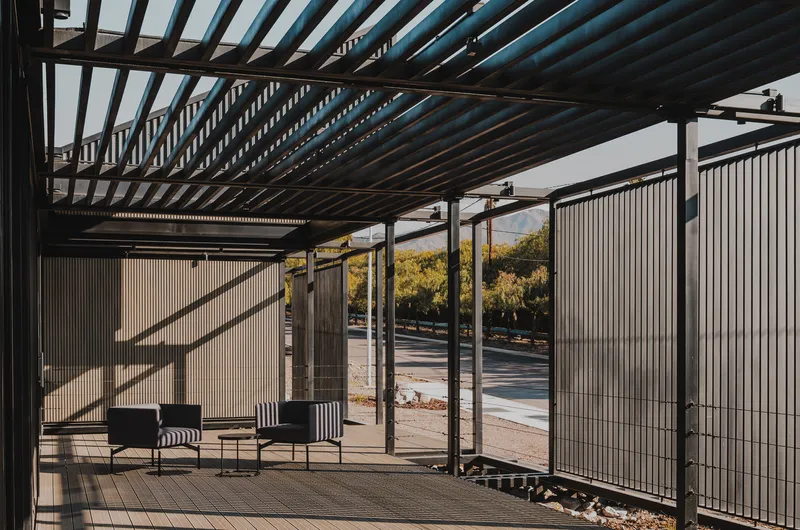
Temporary Structure with a Lasting Architectural Imprint
Although temporary, the pavilion sets the tone for the entire project.
Designed for impermanence and meaningful presence:
- Temporary life cycle aligned with the construction period
- Full dismantling and removal once the development is completed
- Architecture as a symbolic cornerstone—leaving memory, not material trace
The building introduces the masterplan’s identity, then gracefully withdraws to allow the permanent environment to emerge. The architecture therefore becomes ephemeral yet foundational.

Site Strategy and Spatial Organization
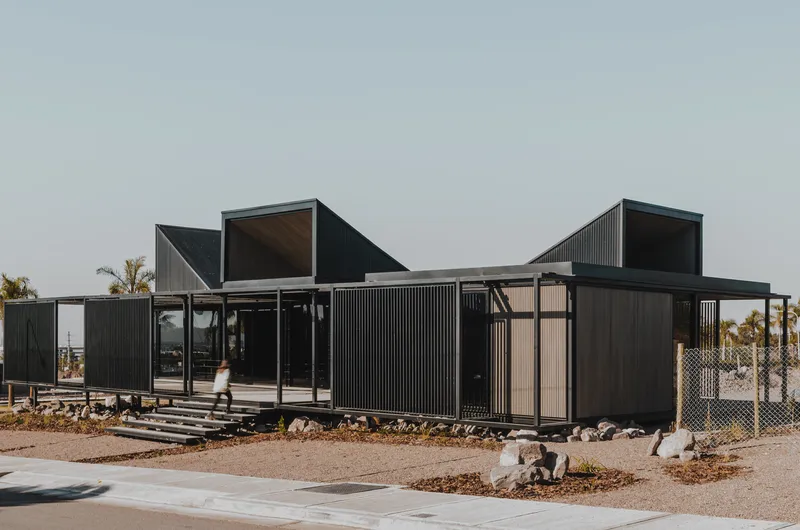
Positioned at a corner within a larger 10,000 m² property, the pavilion benefits from maximum visibility and accessibility. The elevated platform creates a subtle yet intentional separation from street level, establishing a curated arrival moment via a floating staircase.
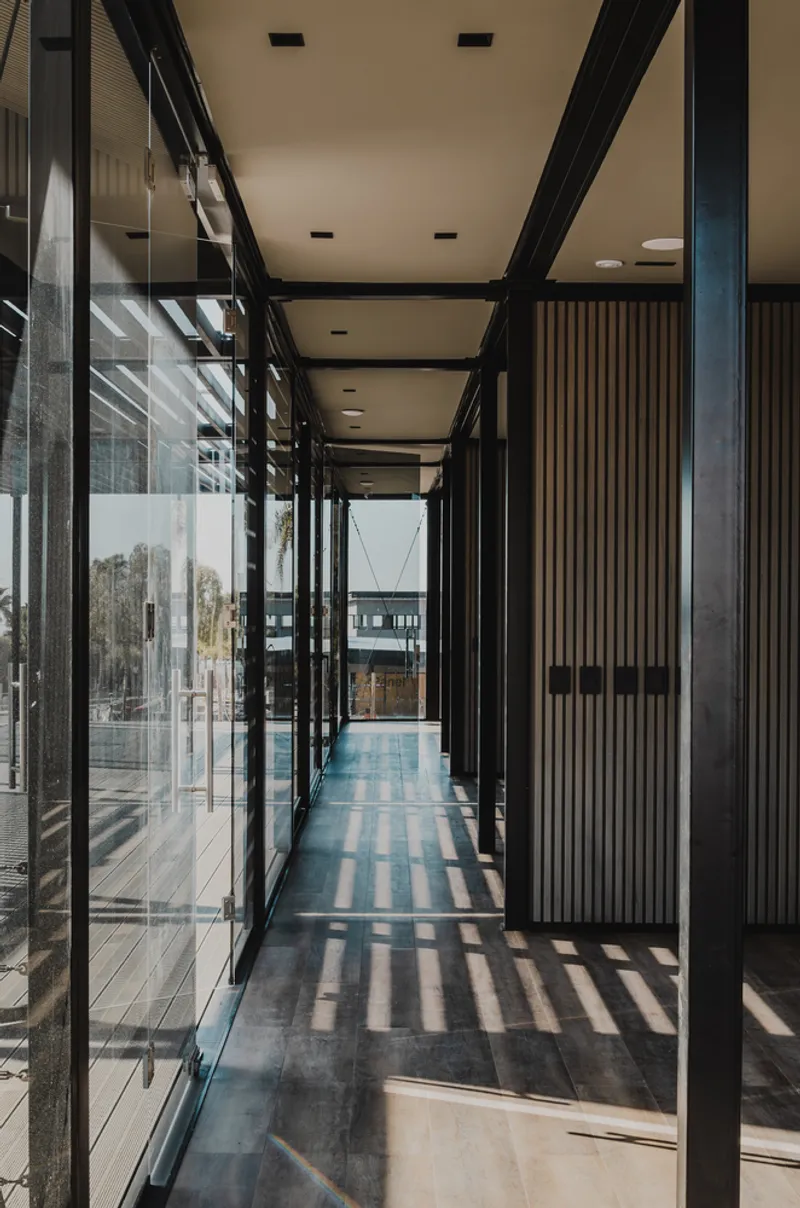
Spatial zoning emphasizes fluid experience:
- Open public area at grade
- Semi-covered intermediate zone for social interaction and transition
- Enclosed private spaces for meetings and sales discussions
This layered composition fosters an easy-to-navigate experiential journey—from public encounter to private engagement.
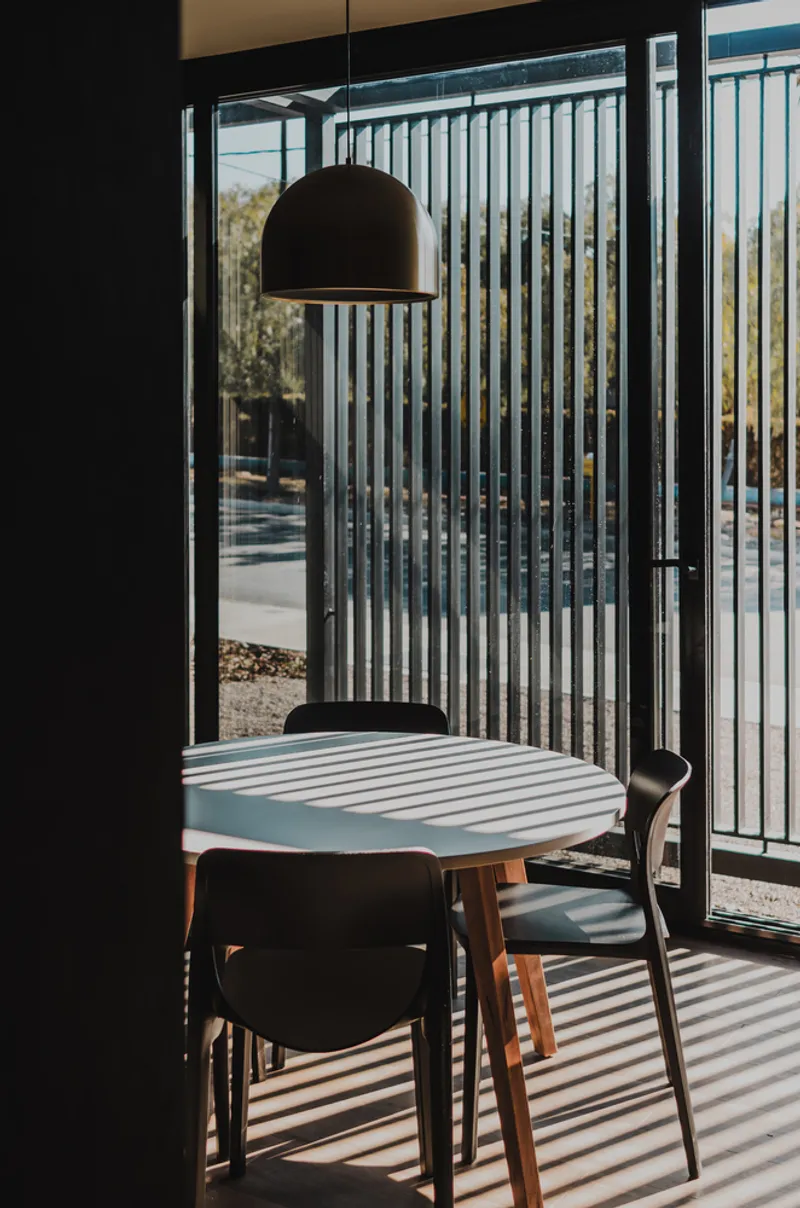
Modular Structure and Lightweight Construction
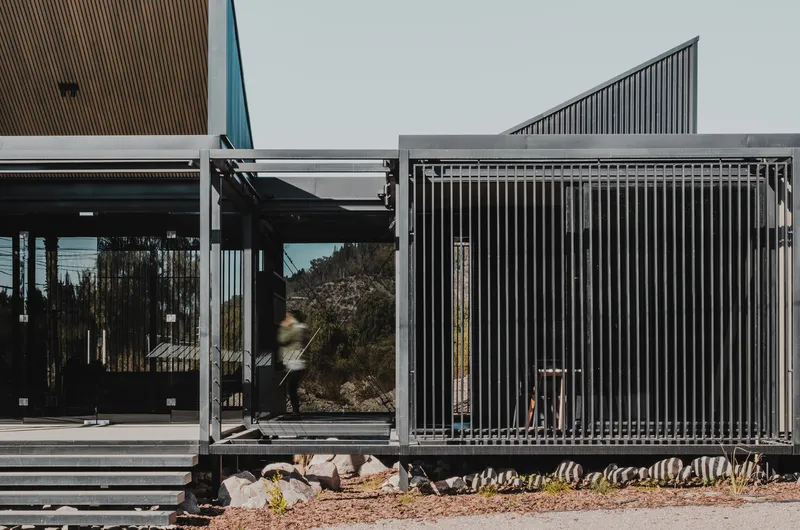
A steel modular system enables fast assembly, flexibility, and ecological disassembly—highlighting sustainability through reversibility and resource economy.
Key construction elements:
- Lightweight metal frame
- Elevated deck system
- Glazed openings enhancing permeability
- Sunshades and galleries for solar control and climate comfort
- Minimal interior partitions, supporting open-plan adaptability
The horizontal roofline is animated with folds and vertical gestures, marking key program areas and offering visual rhythm from near and far.
Interior Atmosphere and Material Language
Inside, the pavilion embraces neutral tones, natural textures, and soft lighting, curating an atmosphere aligned with aspirational residential living.
Interior program includes:
- Reception and welcome zone
- Flexible sales lounge
- Private meeting room
- Support services
Transparency, reflections, and vertical patterns blur boundaries between indoors and outdoors, reinforcing the pavilion’s sense of lightness, openness, and natural integration.
Ephemeral Architecture as Memory-Making
In its temporary life, the pavilion creates place identity, emotional resonance, and future-focused vision. When removed, it leaves not absence but impression—a spatial and emotional memory shaping how future residents relate to the site.
This project positions architecture as:
- Storytelling tool
- Brand space
- Emotional catalyst
- Bridge between present and future
It proves that temporary structures can hold permanent narrative power, transforming the intangible into a meaningful architectural experience.
Project Details
Architects: FP/ARQS Lead Architects: Juan Manuel Filice, Roberto Santos Piña Location: Mendoza, Argentina Project Type: Temporary Commercial Pavilion / Visitor Center Area: 240 m² Year: 2025



Popular Articles
Popular articles from the community


Riyadh For All: Intergenerational Urban Design for Active Aging in Rabat
Riyadh For All reimagines urban design in Rabat with intergenerational co-living, adaptive courtyards, and Moroccan cultural exchange today.

Conexión: Biophilic Design Reimagines High-Rise Living in Hong Kong
Conexión reimagines high-rise living in Hong Kong through biophilic design, green facades, shared spaces, daylight, water and nature within.

Co-Life: Senior Housing Design That Reconnects Older Adults With the City
Co-Life reimagines senior housing design through healing gardens, shared streets, workshops, and a sustainable community across generations.

Play: Fragments of Their World
Familiar architecture becomes modular playground design, creating safe spaces where displaced children can learn, connect, imagine and play.


Similar Reads
You might also enjoy these articles


Hodi-Mandai Geram
Project Function: Preservation and revitalization of the Intangible heritage and socio-spatial identity of the Hodi by Housing, Cultural Memory Center, Sacred Grove, landscape, local tourism economy


Olio Towers: A Mid-Rise for Performers That Fuses Housing, Rehearsal, and Stage
Located blocks from Houston's Theater District, this modular tower stacks living units around a central performance atrium.

Oasis: Modular Green Housing Carved into Dhaka's Urban Fabric
A shortlisted Plugin Housing entry reclaims unauthorized settlements in Dhaka with stepped concrete volumes, green roofs, and ventilation-driven design.

Black Hole: A Floating Megastructure for the Post-Physical Era
Emiliano Mazzarotto envisions a spherical, self-scaling arena where e-sports, digital hotels, and holographic stadiums replace traditional public space.


Explore Commercial Buildings Competitions
Discover active competitions in this discipline



Challenge to reimagine the Iron Throne


Photograph architecture without architects


Illustrate the lost glory of Angkor Wat - Render Challenge


Design challenge to reuse E-waste
Comments (0)
Please login or sign up to add comments
No comments yet. Be the first to comment!