
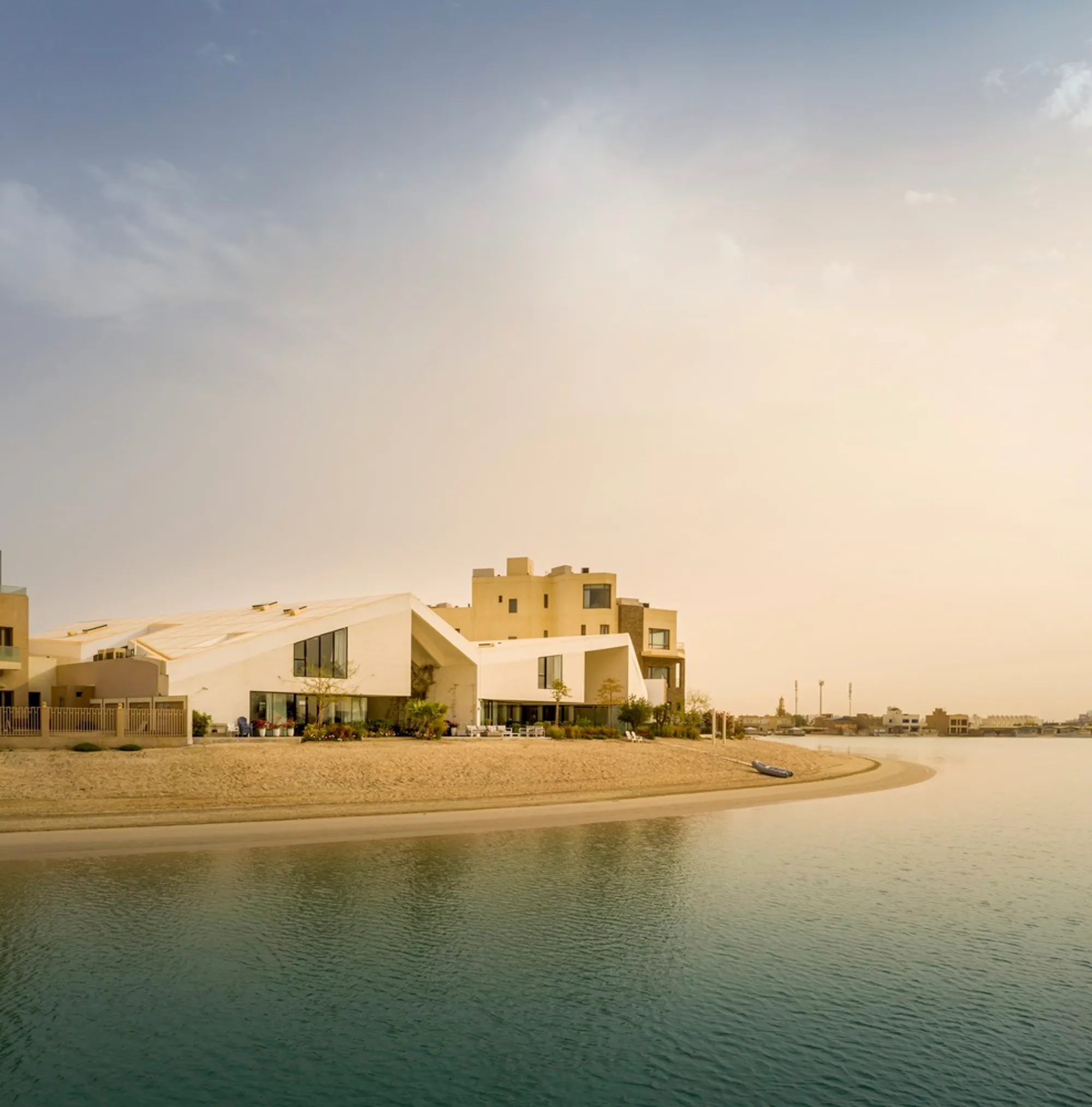
Tent House by TAEP/AAP: A Contemporary Coastal Retreat Inspired by Desert Nomads
Tent House by TAEP/AAP is a modern coastal retreat blending desert traditions, communal living, and sculptural concrete roof design.


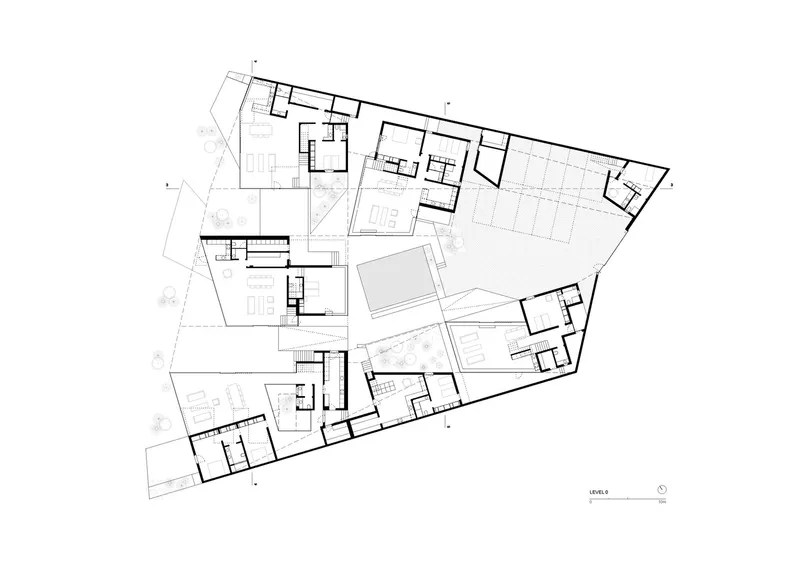
The Tent House by TAEP/AAP reimagines traditional nomadic lifestyles of the Arabian Peninsula within a contemporary architectural framework. Located on the serene coastline of Al Khiran, Kuwait, this visionary residential complex draws inspiration from the ephemeral shelters historically used by desert dwellers who journeyed to the sea or sand dunes during holidays. Designed as a retreat for extended family gatherings, Tent House blends cultural tradition with modern design, crafting a unique coastal architecture rooted in regional identity.
A Symbol of Shelter: Architectural Concept and Cultural Influence
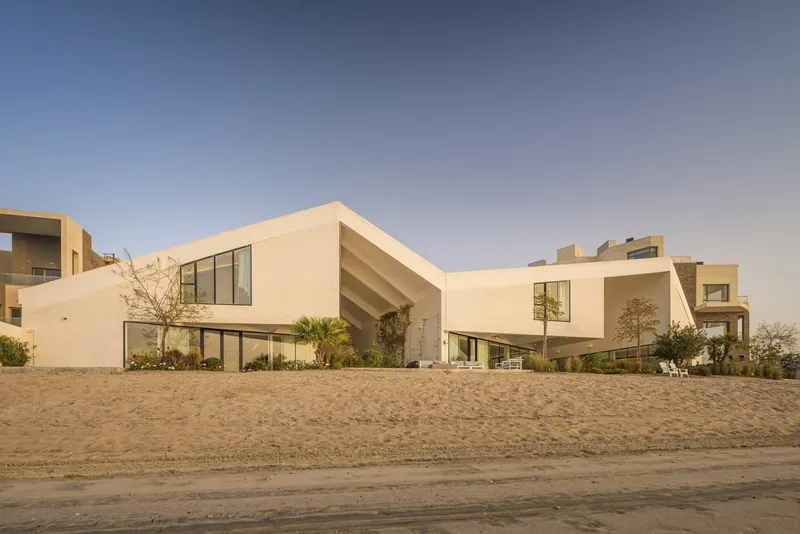
In the harsh desert climate of the Gulf, shade is sacred. TAEP/AAP's design concept centers on this fundamental element, materializing it into a bold architectural form that mimics the protective quality of a tent. The project consists of five interconnected residences unified by a dramatic, folded white concrete roof. This roof structure is more than an aesthetic gesture—it serves as a functional canopy that shields from the scorching sun, reduces wind exposure, and modulates natural light throughout the day.
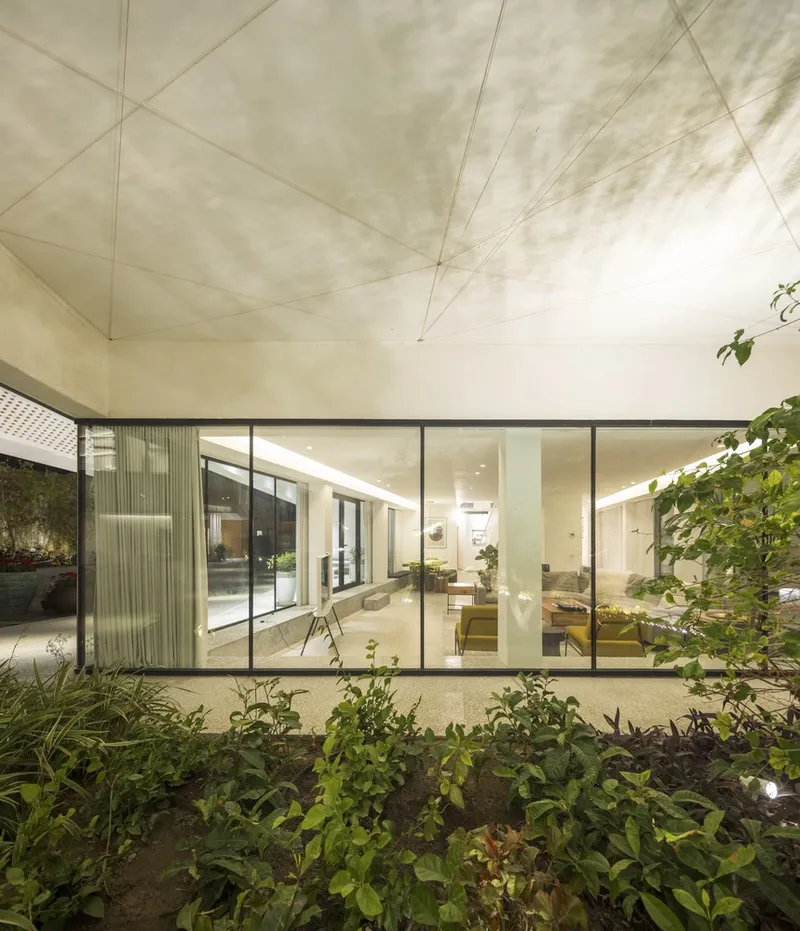
Roof as Filter and Frame
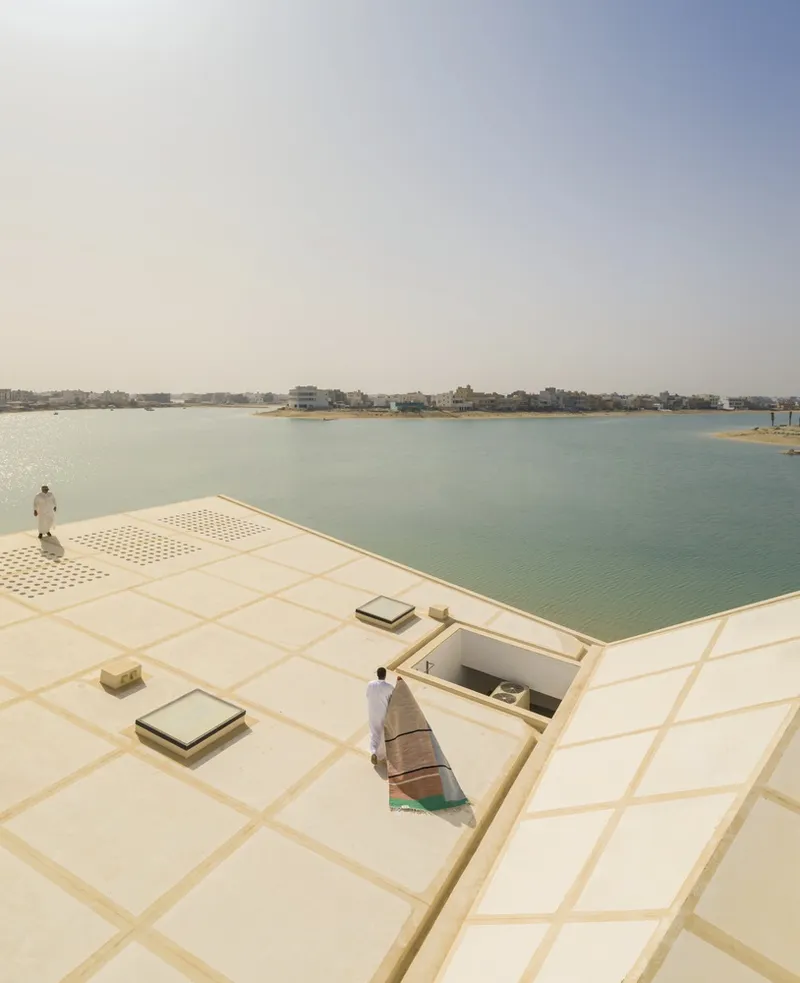
Perforated with geometric precision, the sculptural roof filters sunlight into the living areas, creating a play of shadows and soft illumination. Strategic rectangular cut-outs open up to the sky, allowing natural light to animate the interiors while providing glimpses of the heavens—an architectural nod to the openness of traditional tent living. This interplay between solidity and void elevates the residence into a sensory experience of light, shadow, and spatial fluidity.
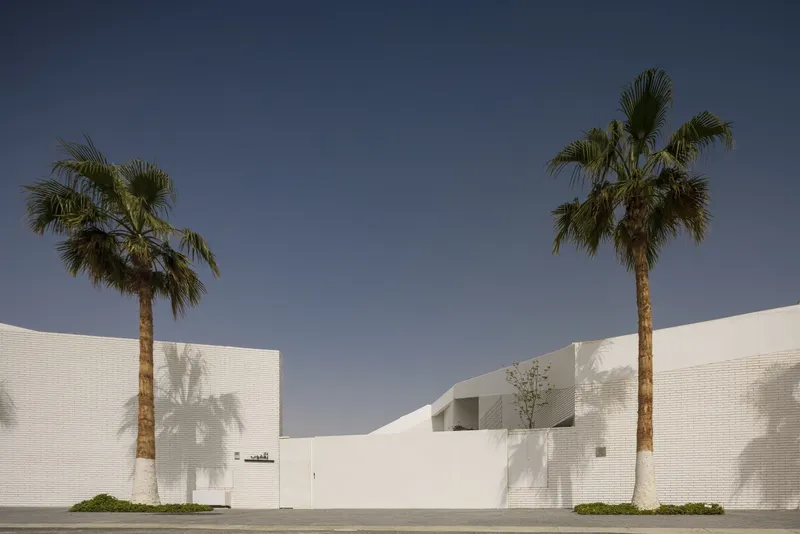
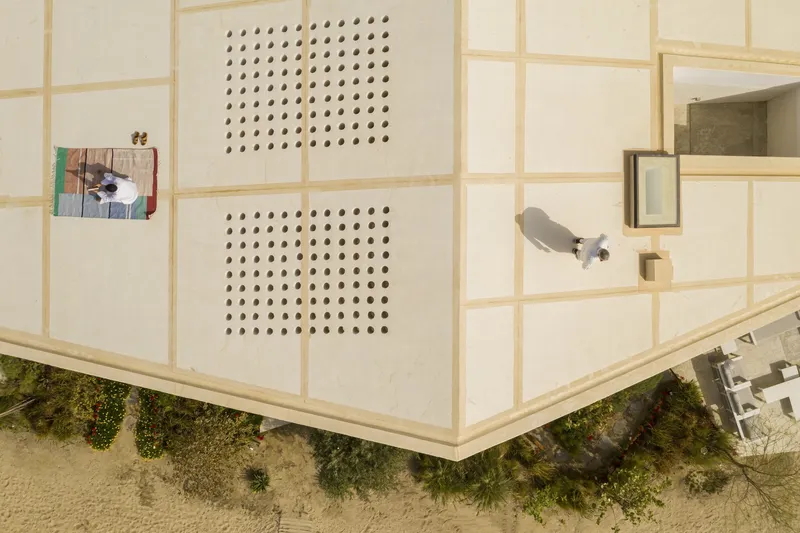
Integrated Landscape and Spatial Openness
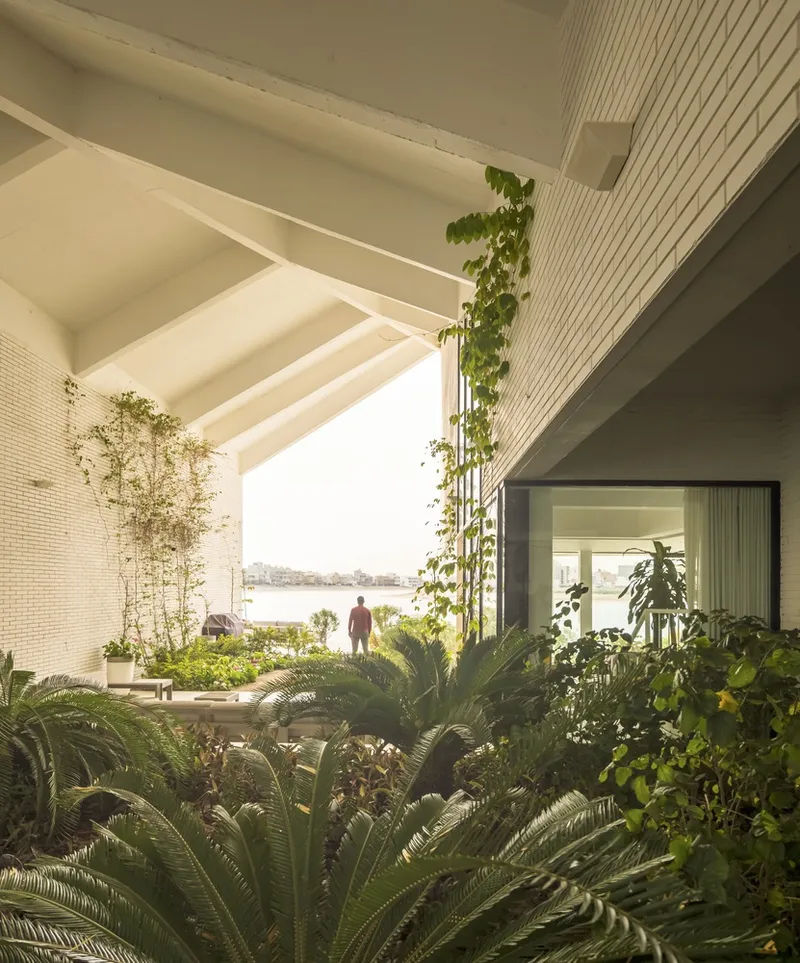
At ground level, the architecture dissolves into a lushly landscaped oasis. Vegetation and water elements carve out communal garden spaces that bring nature into the heart of the project. These green courtyards flow into double-height shaded lounges that create a seamless connection between interior and exterior, culminating at the beachfront. These outdoor gathering zones not only foster social interaction among residents but also offer framed views of the sea, especially for the inward-facing units.
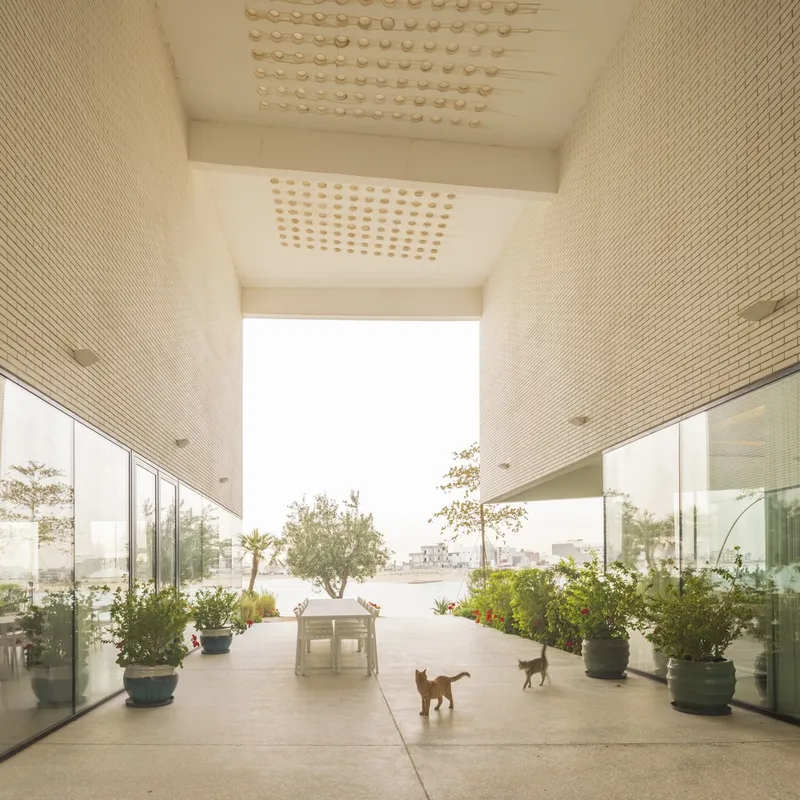
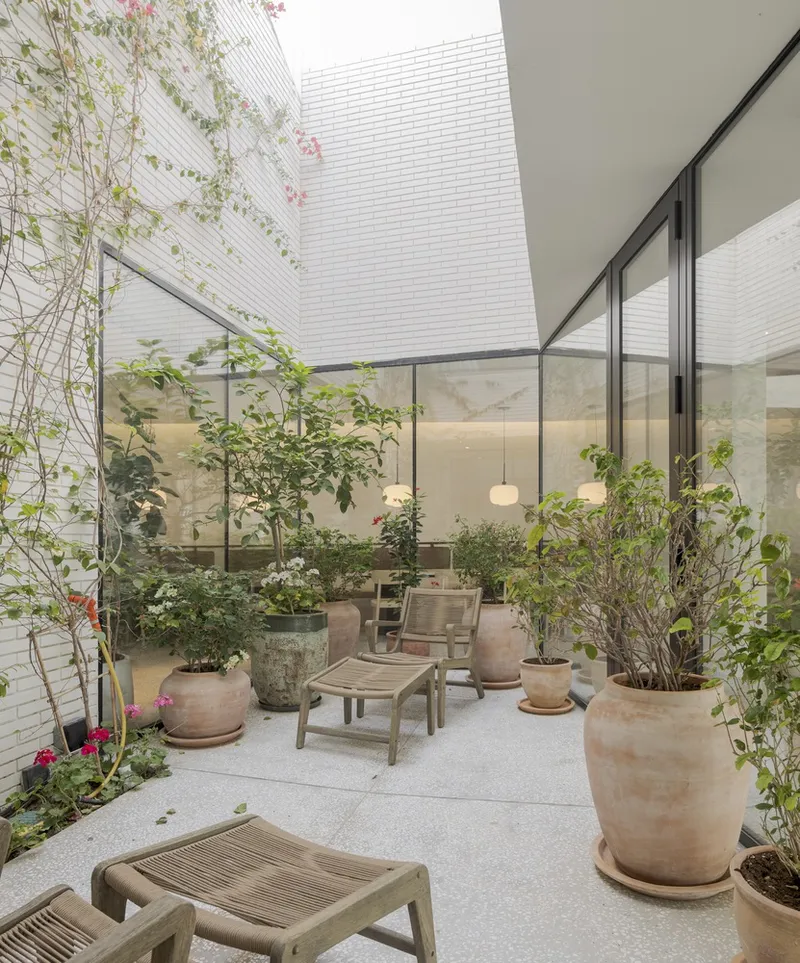
Privacy Meets Transparency: Interior Experience
Balancing privacy and openness, the Tent House turns away from the access road and neighboring plots to maintain a secluded environment. In contrast, the facades facing the sea embrace transparency, with floor-to-ceiling glass walls and terraces that open directly onto the private beach. This orientation enables uninterrupted views of the coast while bathing interiors in natural light. The internal planning ensures that each residence enjoys a strong connection to both nature and family life—honoring the desert camp ethos while offering all the amenities of a modern luxury beach house.
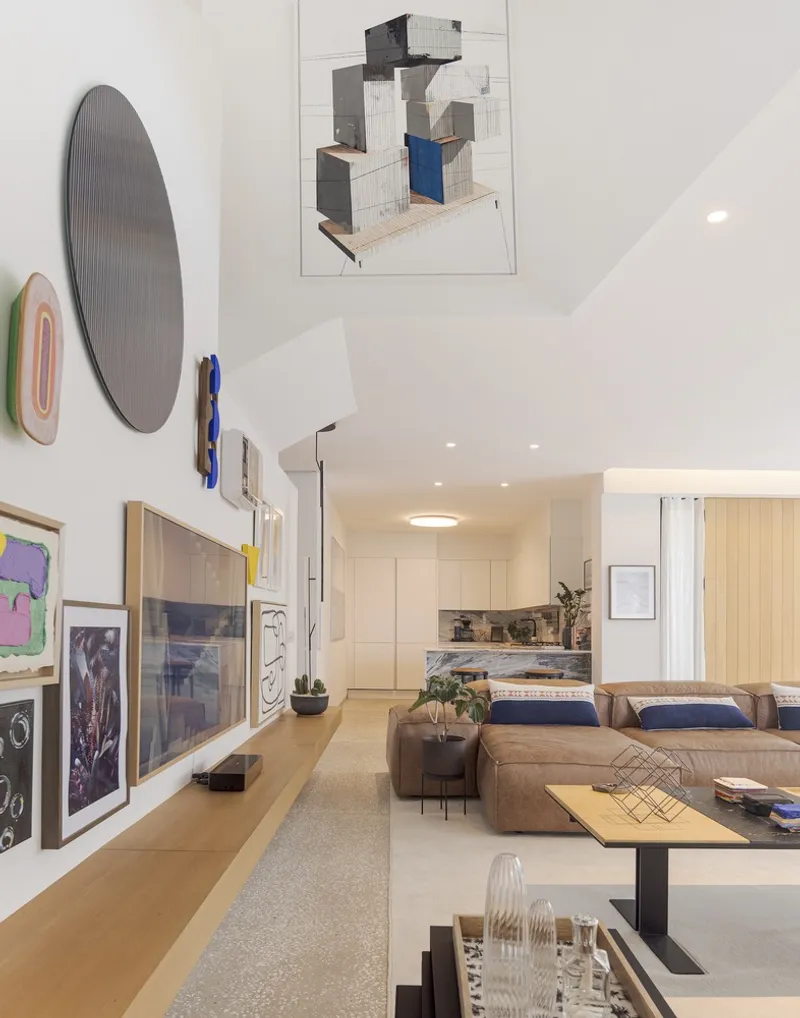
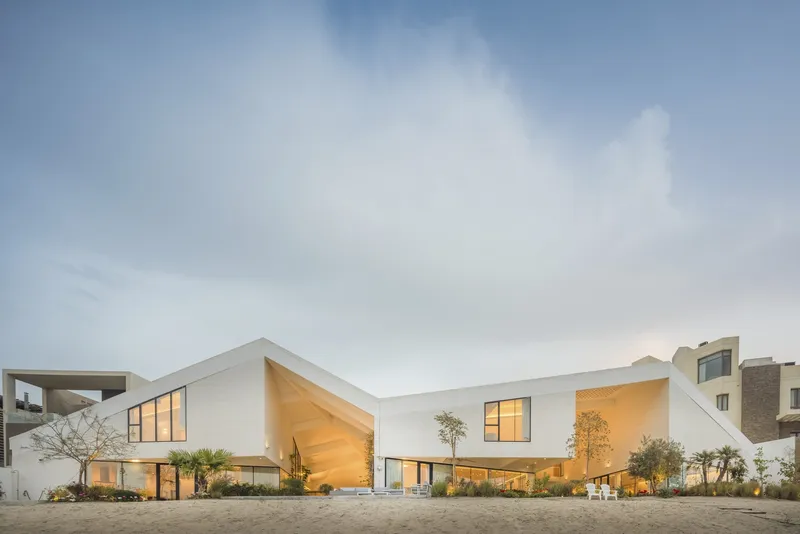
A Coastal, Cultural, and Architectural Hybrid
The Tent House stands as an architectural hybrid of desert camp, modernist retreat, and seaside villa. It captures the spirit of communal living and cultural heritage while advancing a forward-thinking approach to sustainable and contextual design. Through its expressive roof, intimate courtyards, and ocean-facing transparency, the Tent House offers a compelling new model for luxury coastal living in the Gulf region.
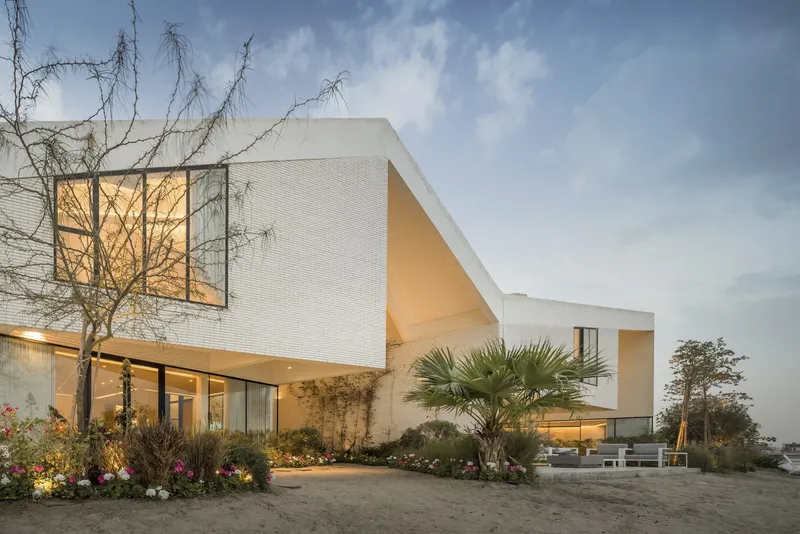
All Photographs are works of Fernando Guerra | FG+SG



Popular Articles
Popular articles from the community


Conexión: Biophilic Design Reimagines High-Rise Living in Hong Kong
Conexión reimagines high-rise living in Hong Kong through biophilic design, green facades, shared spaces, daylight, water and nature within.

The Musturak Paradise: Senior Living Architecture for a Connected Future in Temara, Morocco
The Musturak Paradise reimagines senior living architecture in Temara via private homes, social spaces, culture, community, and shared care.

Play: Fragments of Their World
Familiar architecture becomes modular playground design, creating safe spaces where displaced children can learn, connect, imagine and play.

Hill & Cross Opera: Sculptural Opera House Architecture Shaped by Tallinn’s Landscape and Identity
Hill & Cross Opera reimagines opera house architecture in Tallinn through its sculptural hill, civic plaza, glass wave and a luminous cross.

Similar Reads
You might also enjoy these articles


Hodi-Mandai Geram
Project Function: Preservation and revitalization of the Intangible heritage and socio-spatial identity of the Hodi by Housing, Cultural Memory Center, Sacred Grove, landscape, local tourism economy


Olio Towers: A Mid-Rise for Performers That Fuses Housing, Rehearsal, and Stage
Located blocks from Houston's Theater District, this modular tower stacks living units around a central performance atrium.

Oasis: Modular Green Housing Carved into Dhaka's Urban Fabric
A shortlisted Plugin Housing entry reclaims unauthorized settlements in Dhaka with stepped concrete volumes, green roofs, and ventilation-driven design.

Black Hole: A Floating Megastructure for the Post-Physical Era
Emiliano Mazzarotto envisions a spherical, self-scaling arena where e-sports, digital hotels, and holographic stadiums replace traditional public space.


Explore Desert Architecture Competitions
Discover active competitions in this discipline



Challenge to reimagine the Iron Throne


Photograph architecture without architects


Illustrate the lost glory of Angkor Wat - Render Challenge


Design challenge to reuse E-waste
Comments (0)
Please login or sign up to add comments
No comments yet. Be the first to comment!