
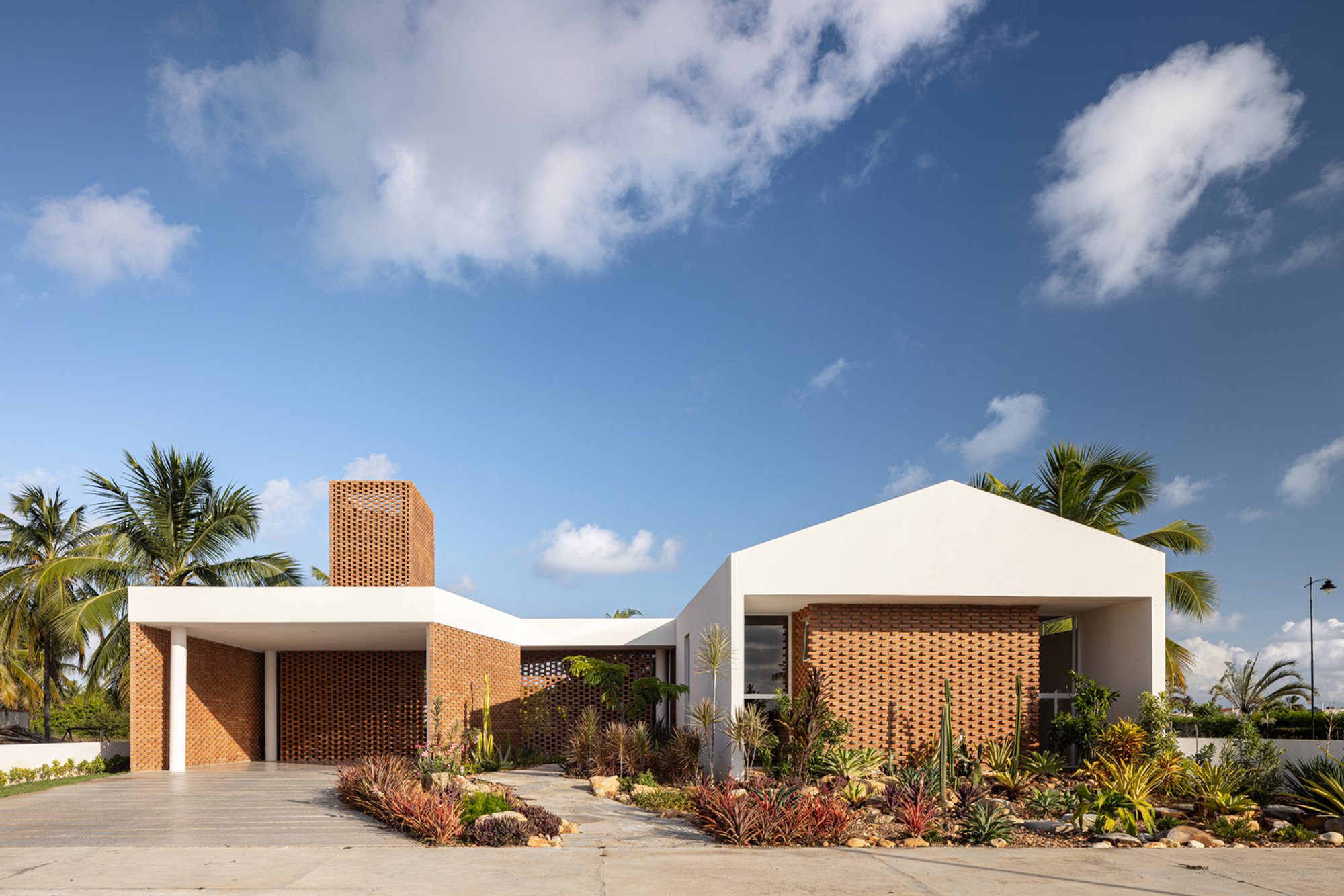
Thai Residence by Coletivo de Arquitetos: A Climate-Responsive Coastal Home in Brazil
Thai Residence blends brick, wood, and passive design to create a climate-responsive coastal home with natural ventilation and tropical landscaping.

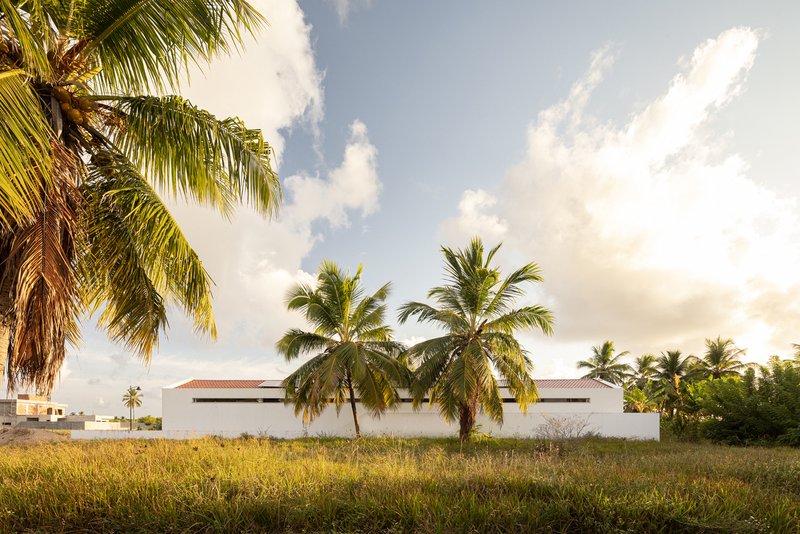
Located in the tropical coastal city of Aracajú, in the Brazilian state of Sergipe, the Thai Residence by Coletivo de Arquitetos exemplifies the principles of climate-conscious design and material honesty. Initially envisioned as a vacation house, this 300-square-meter dwelling quickly transformed into the client’s permanent home—thanks to its spatial comfort, bioclimatic efficiency, and emotional connection to place.
A Site Chosen for the Wind
From the project's inception, the architects prioritized natural ventilation. The selected plot—strategically free from adjacent constructions—was chosen to optimize wind flow through the residence. In Brazil's Northeast, where high temperatures and strong sun exposure dominate much of the year, cross ventilation is not just desirable but essential. This site-based approach became the cornerstone of the design strategy.
Spatial Layout: Two Interlocking Volumes
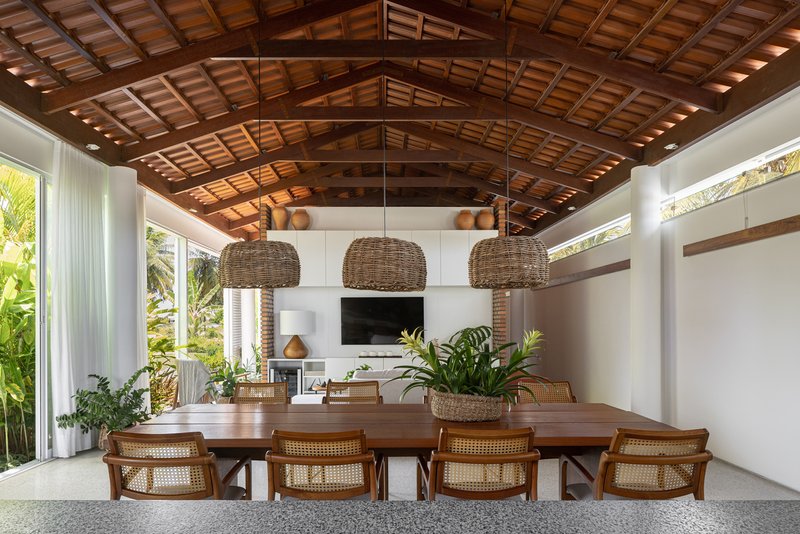
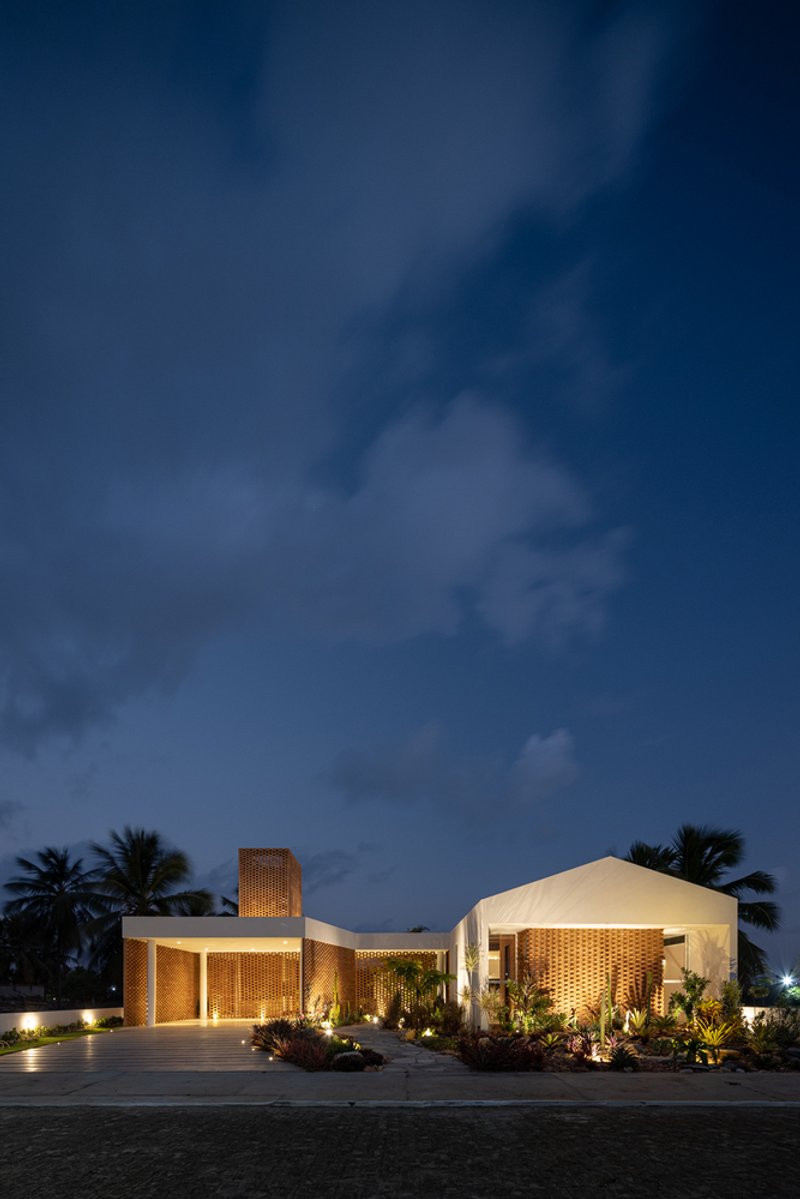
The house unfolds across two distinct architectural blocks. The primary block forms the core of the home and accommodates the main living functions, including integrated kitchen, dining, and living spaces, as well as two enclosed private volumes that house bedrooms and bathrooms—acting like “shelters within a shelter.”
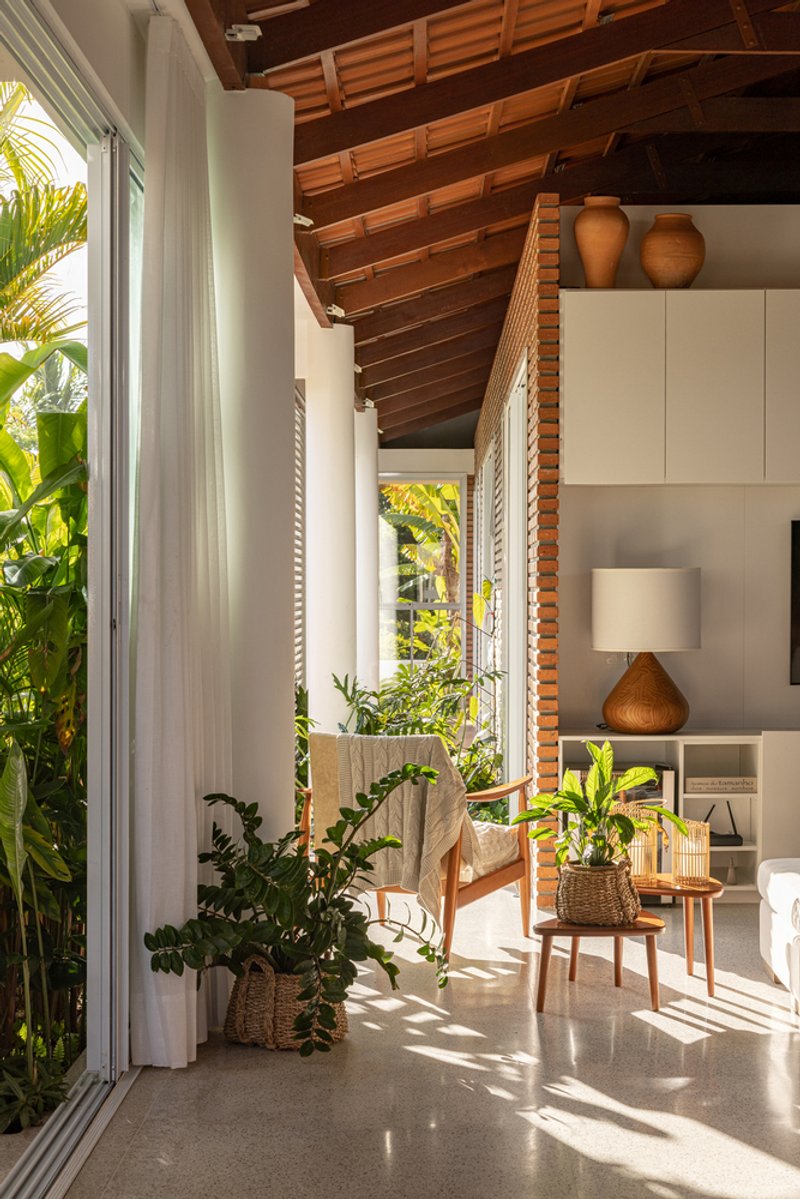
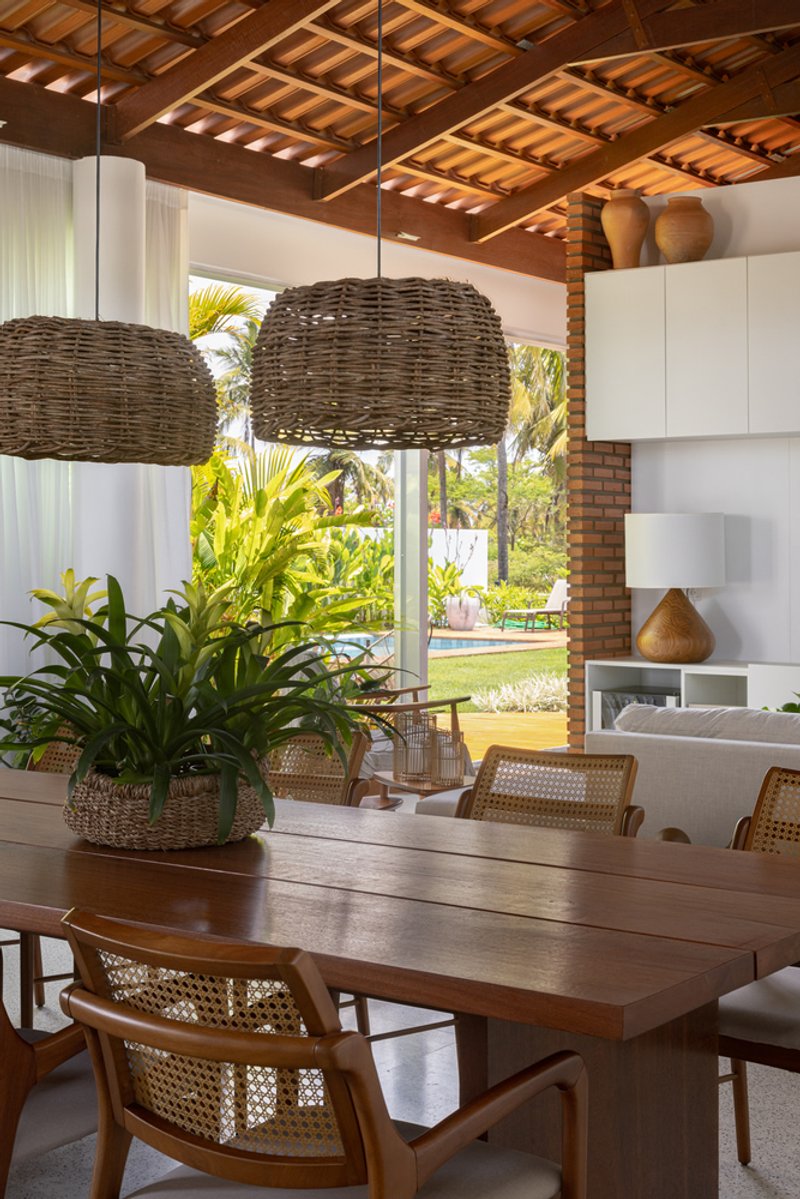
Attached to the main block, a secondary volume designed as a polygonal slab houses the gourmet area, garage, and utility spaces, offering flexibility for both leisure and service functions. The entire layout is unified by a broad ceramic tile roof in a dual-pitched "two waters" configuration, creating a generous ceiling height in the social areas and aiding thermal comfort.
Passive Design: Learning from Vernacular Wisdom
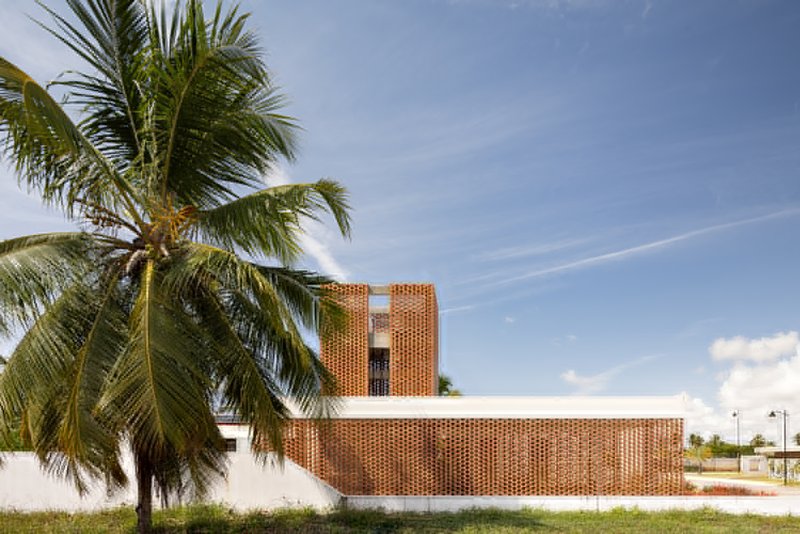
Heavily influenced by Armando de Holanda’s “Guidebook for Building in the Northeast”, the architects implemented passive design elements rooted in regional tradition. Features such as deep eaves, balconies, brise-soleils, and thermal voids between volumes help shield the house from excessive solar gain while ensuring internal airflow. The main structure runs along the East-West axis, limiting exposure to harsh morning and evening sun.
- The North facade, which receives milder sunlight, incorporates wooden brises that allow filtered light and breeze.
- The South facade remains largely closed, with a long horizontal slit designed to facilitate cross ventilation while preserving privacy and minimizing heat gain.
Materiality: Brick, Wood, and White
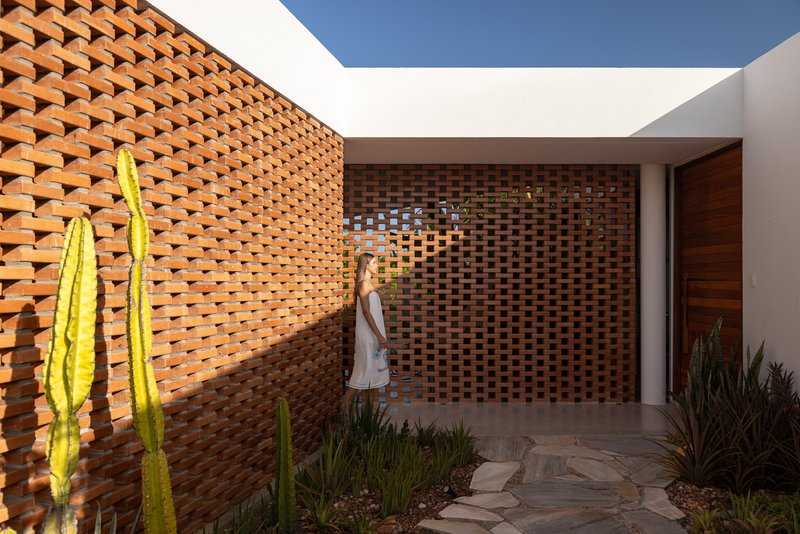
Material simplicity and durability define the residence’s aesthetic. Exposed solid brickwork is used not only as a structural and sealing element but also as flooring and shading. This material is celebrated for its thermal inertia, low maintenance, and visual warmth.
Paired with natural wood details and whitewashed masonry, the material palette reflects both modern minimalism and regional authenticity. Together, these textures lend the home a sense of timelessness, rooted in the context of coastal Brazil.
Adaptive Shading with Movable Brises
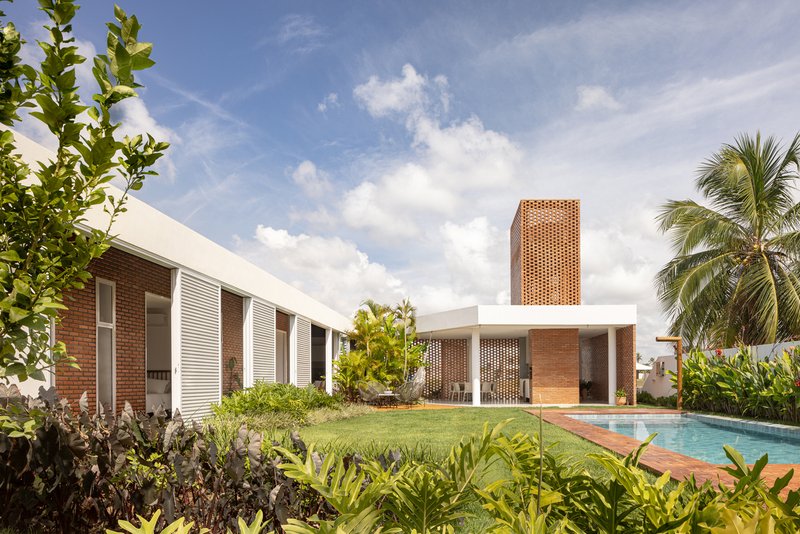
One of the most intelligent features of the house is the use of movable wooden brises. These elements perform a dual role—providing shade from the sun and acting as operable filters for airflow. Even when closed, their permeable design ensures continuous ventilation and interior comfort.
Layered Landscaping
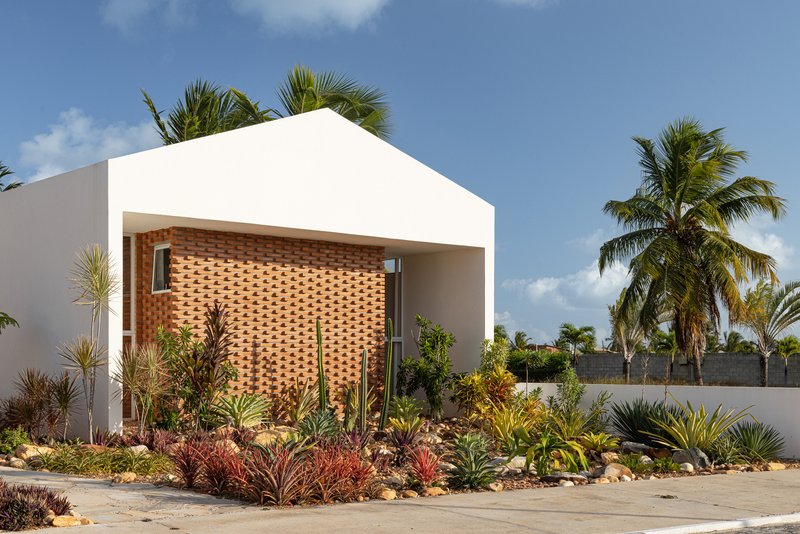
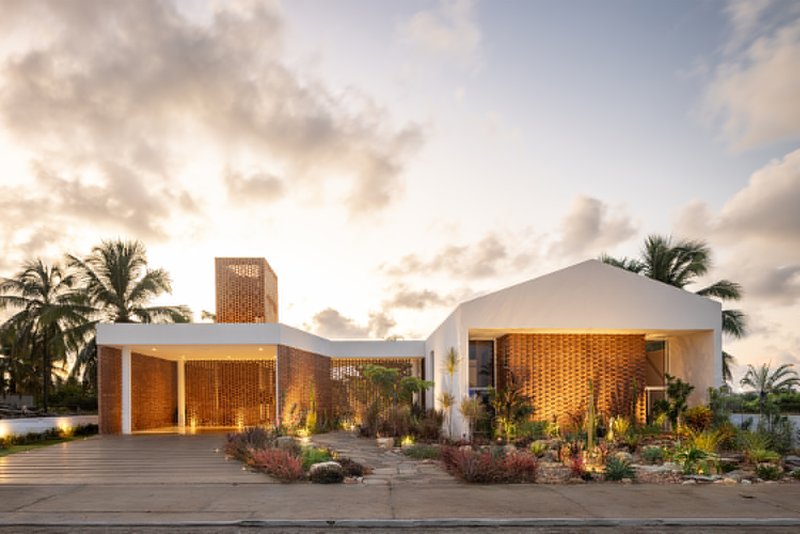
Landscaping was carefully integrated into both the exterior façade and interior courtyards, using vegetation as a tool for spatial and microclimatic enhancement. Along the street-facing front, low-water native species were chosen to withstand the dry, sunny environment. In the rear and internal zones, tropical plantings create shaded gardens and green pockets that enrich transitions between indoor and outdoor spaces.
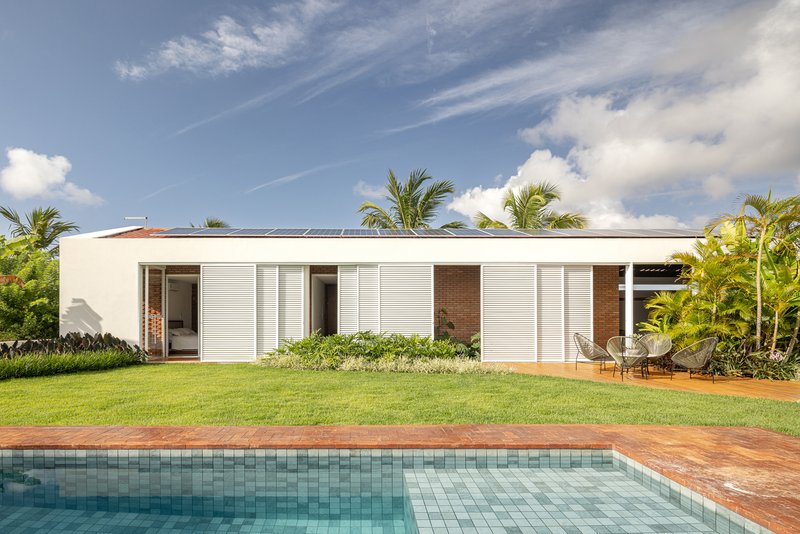
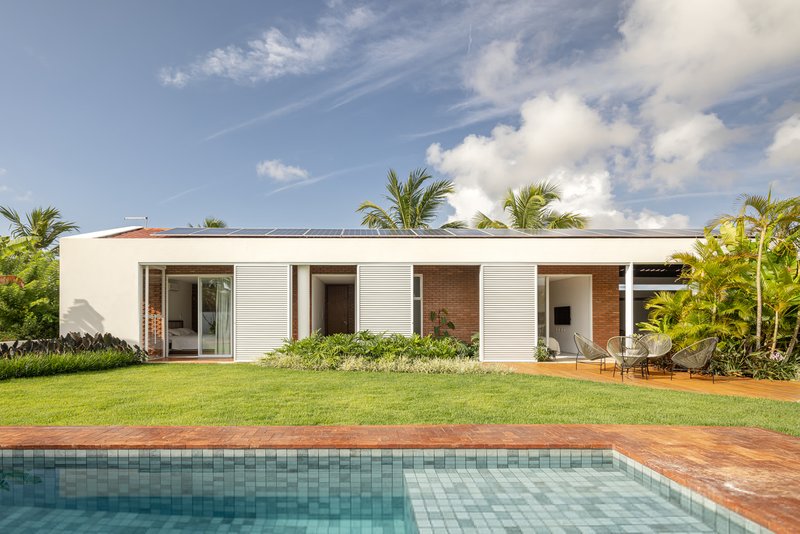
The Thai Residence stands as a model for sustainable coastal living in Brazil. Through intelligent orientation, material expression, and a deep understanding of regional climate, Coletivo de Arquitetos have crafted a home that harmonizes aesthetic restraint, environmental responsibility, and architectural warmth. More than just a house, it’s a climate-resilient sanctuary tailored for both leisure and long-term family life.
All photographs are works of
Joana França



Popular Articles
Popular articles from the community

Free Architecture Competitions You Can Enter Right Now
No entry fees, real prizes. Here are the best free architecture competitions open for submissions in 2026.

Gads Hill Early Learning Center by JGMA: Adaptive Reuse Shaping Community-Focused Educational Architecture
Adaptive reuse transforms fragmented structure into vibrant early learning center with playful façade, natural light, and community-focused sustainable design.

Solar Steam: A Climate-Responsive Architecture That Redefines the Monument
A climate-responsive memorial architecture that transforms heat, decay, and time into a living system reflecting humanity’s ecological impact.
Atelier Macri Concept Store Interior Design by CASE-REAL
Atelier Macri store features a "ko" counter, walnut wood details, cork displays, blending retail, gallery, and seamless customer experiences.


Similar Reads
You might also enjoy these articles


The Ken Roberts Memorial Delineation Competition (Krob)
As the most senior architectural drawing competition currently in operation anywhere in the world, it draws hundreds of entries each year, awarding the very best submissions in a series of medium-based categories.

Waterfront Redevelopment and Urban Revitalization in Mumbai: Forging a New Dawn for Darukhana
A transformative waterfront redevelopment project reimagining Darukhana’s shipbreaking heritage into an inclusive urban future.

OUT-OF-MAP: A Call for Postcards on Feminist Narratives of Public Space
Rhizoma Design and Research Lab invites artists, designers, architects, researchers, and students to reflect on how feminist perspectives can reshape public space. Selected works will be exhibited in Barcelona, October 2026. Submissions open until 15 April 2026.


Documentation Work on Buddhist Wooden Temple
Architectural syncretism and cultural hybridity: A comparative study of the Buddhist temples in Chattogram Hill tracks


Explore Architecture Competitions
Discover active competitions in this discipline




The International Standard for Design Portfolios


The Global Benchmark for Architecture Dissertation Awards


The Global Benchmark for Graduation Excellence


Challenge to reimagine the Iron Throne
Comments (0)
Please login or sign up to add comments
No comments yet. Be the first to comment!