
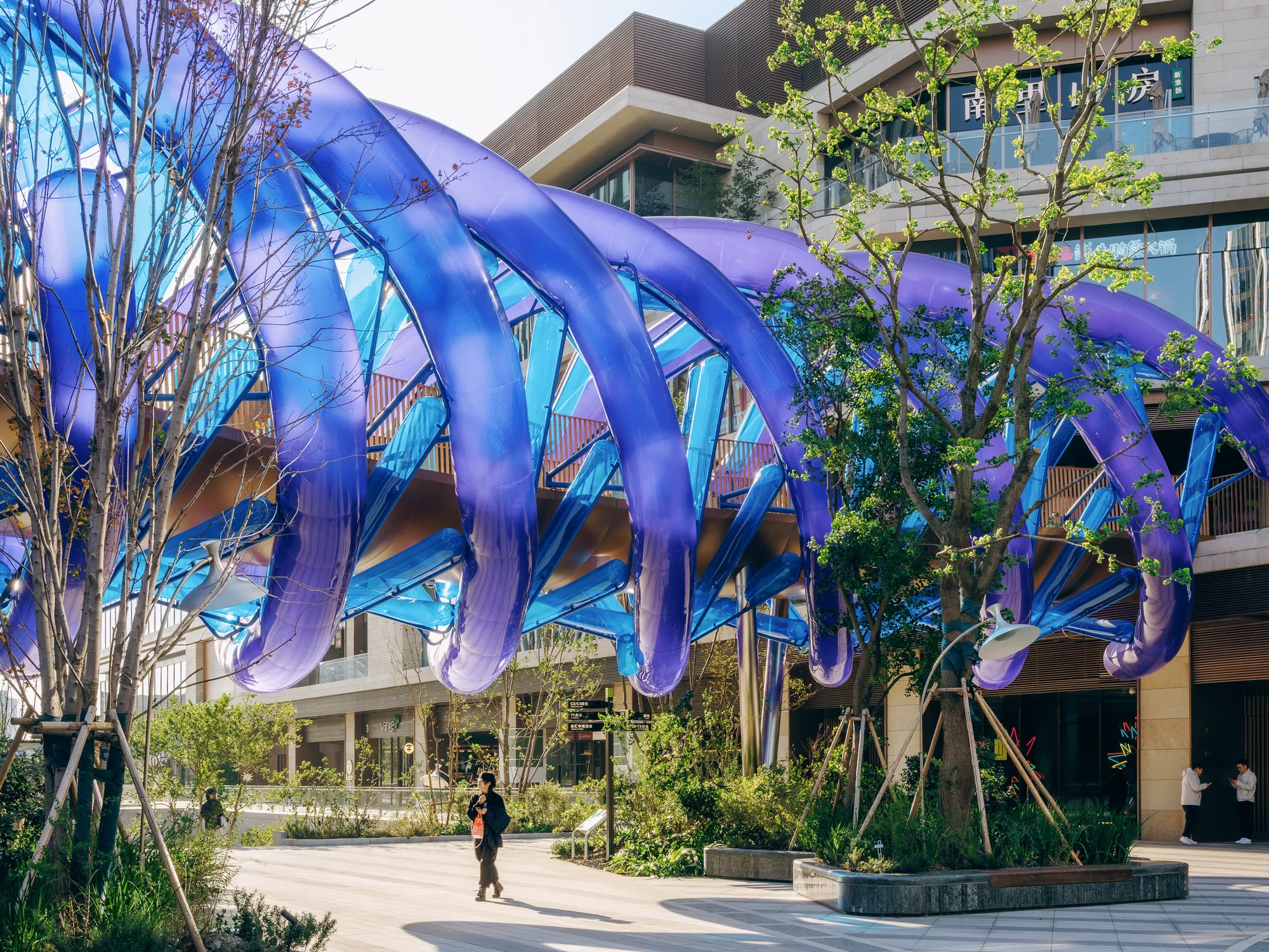
The Blue Rotary Membrane Bridge By People’s Architecture Office, Shanghai, China
An immersive blue pedestrian bridge in Shanghai, using rotating inflatable membranes to transform circulation into an interactive, iconic urban experience.


The Blue Rotary Membrane Bridge, designed by People’s Architecture Office (PAO) and completed in 2024, is a striking public installation that transforms an everyday pedestrian bridge into an immersive urban landmark. Located within Shanghai Xuhui Vanke Plaza, a newly developed TOD (Transit-Oriented Development) commercial complex, the project demonstrates how light-touch architectural interventions can activate public space through color, movement, and interaction.
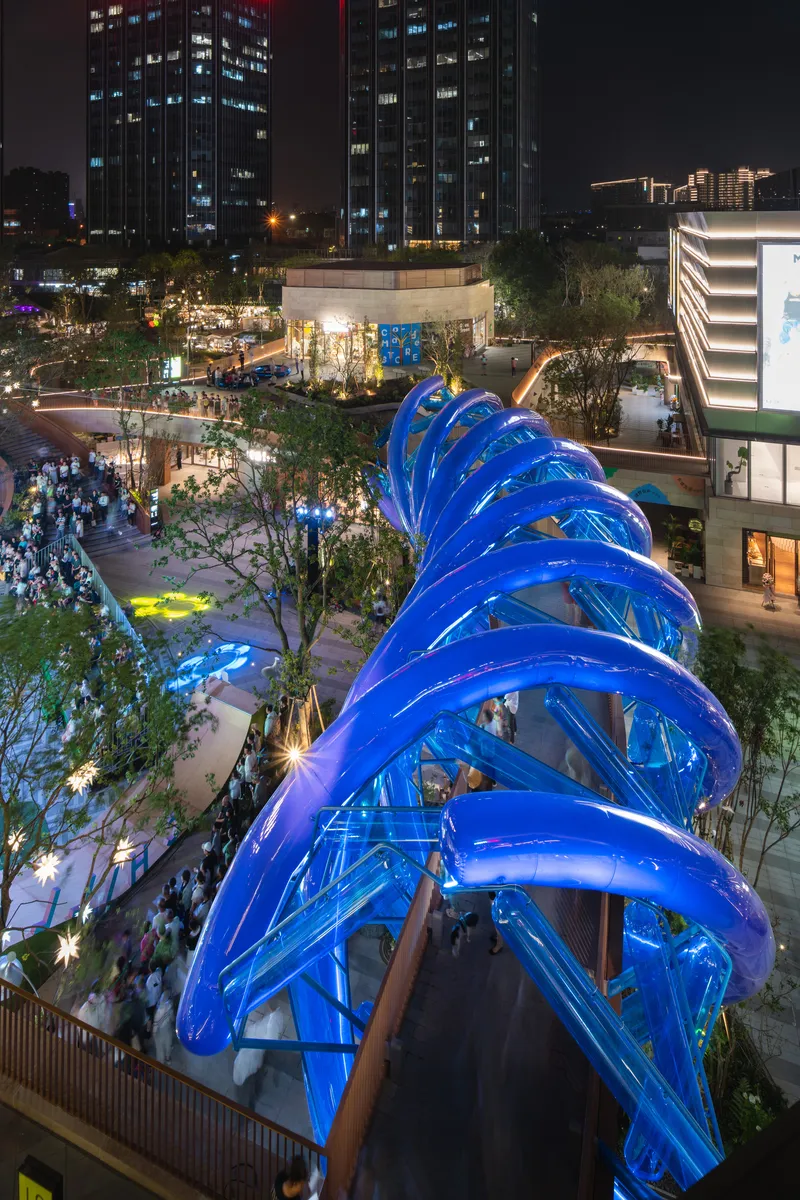
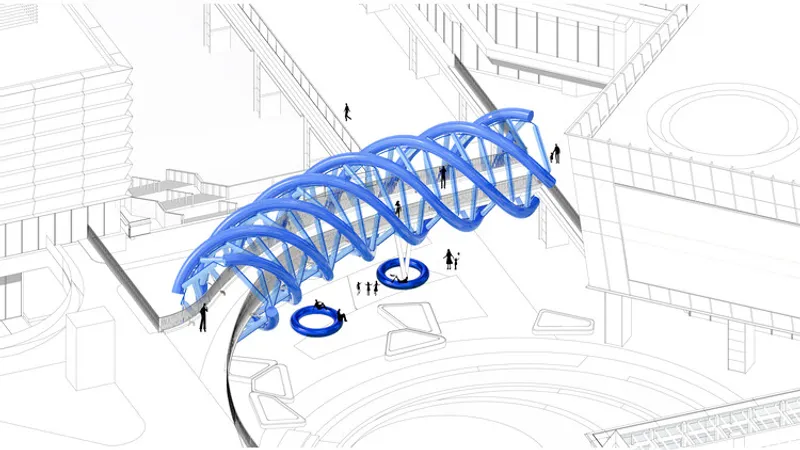
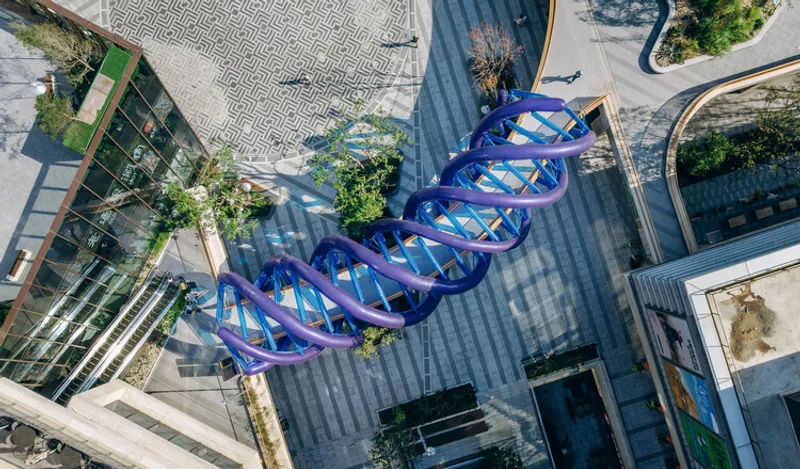
Spanning an area of just 30 square meters, the bridge connects the east and west second-level platforms of the complex, arching over a central outdoor passageway and a sunken courtyard facing the main southwest entrance. Rather than altering the existing structure heavily, PAO adopted a gentle intervention strategy, inserting an artistic membrane system that harmonizes with the site while dramatically redefining the spatial experience.
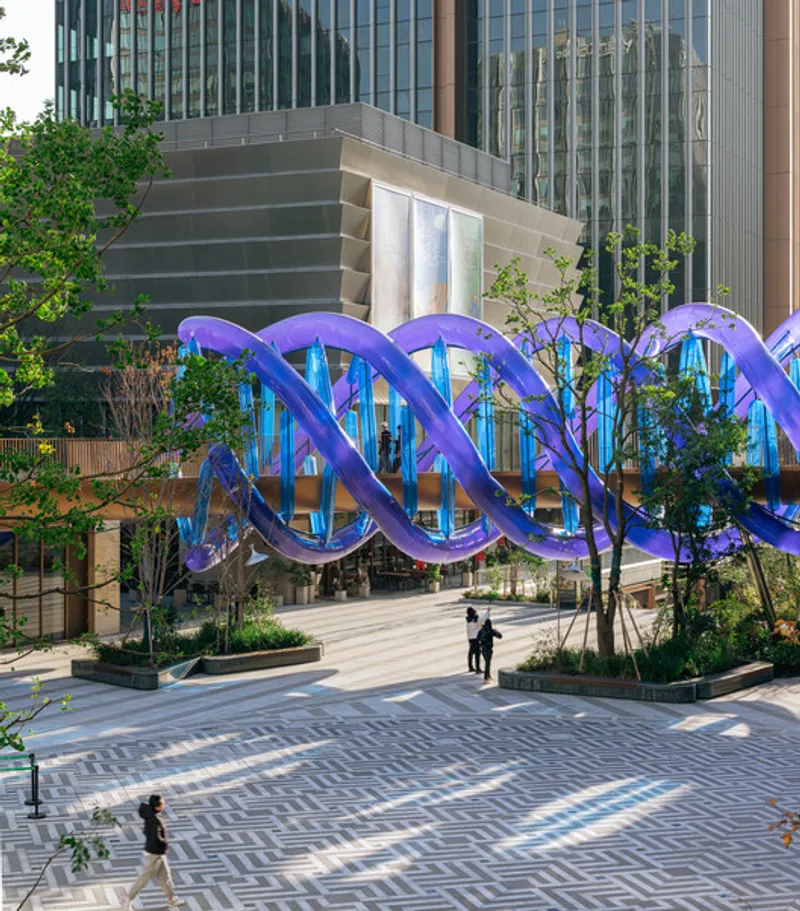
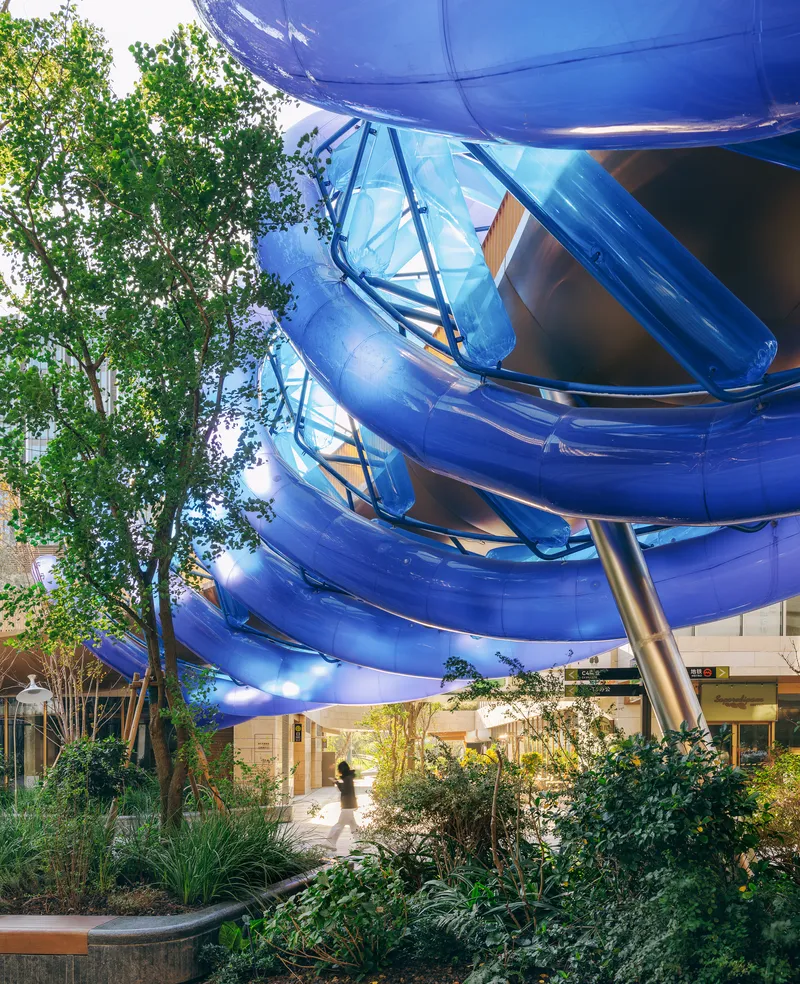
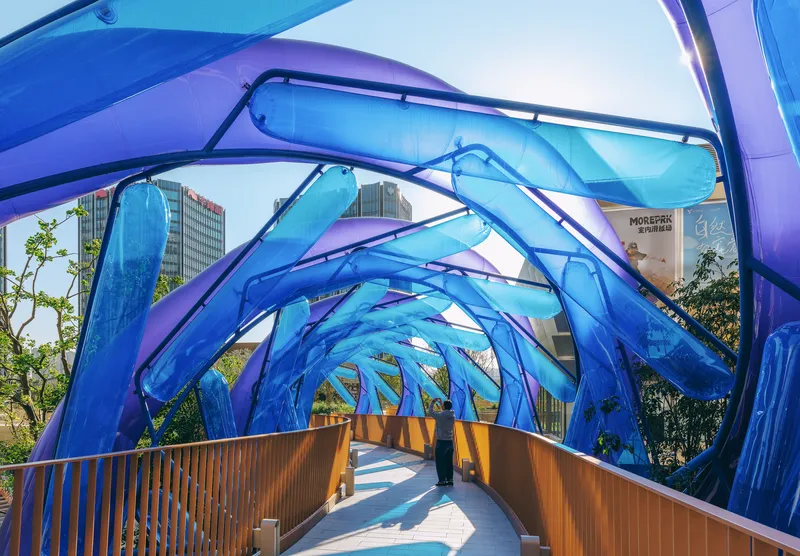
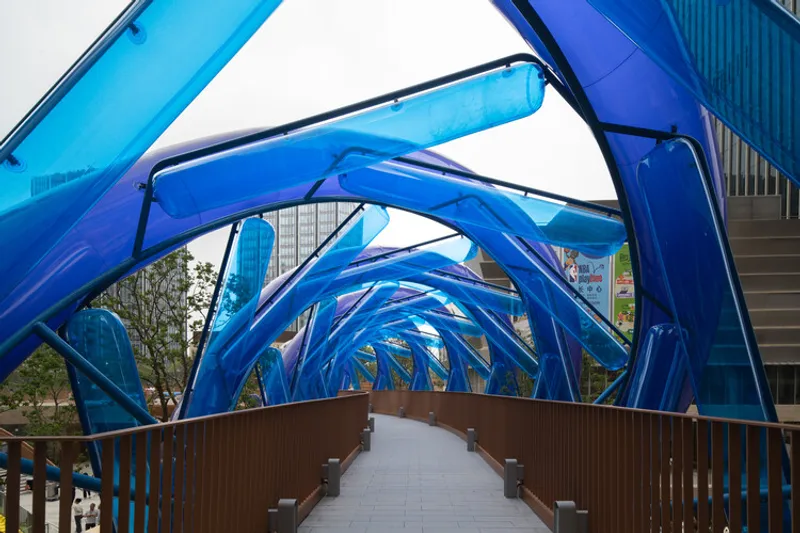
The defining feature of the project is its rotating blue inflatable membrane system, which wraps the curved bridge in a dynamic, translucent skin. From afar, the Blue Rotary Membrane Bridge reads as an iconic urban art installation—an eye-catching spiral form floating within the commercial complex. From within, it becomes a sensory tunnel, enveloping pedestrians in layers of blue light and motion.
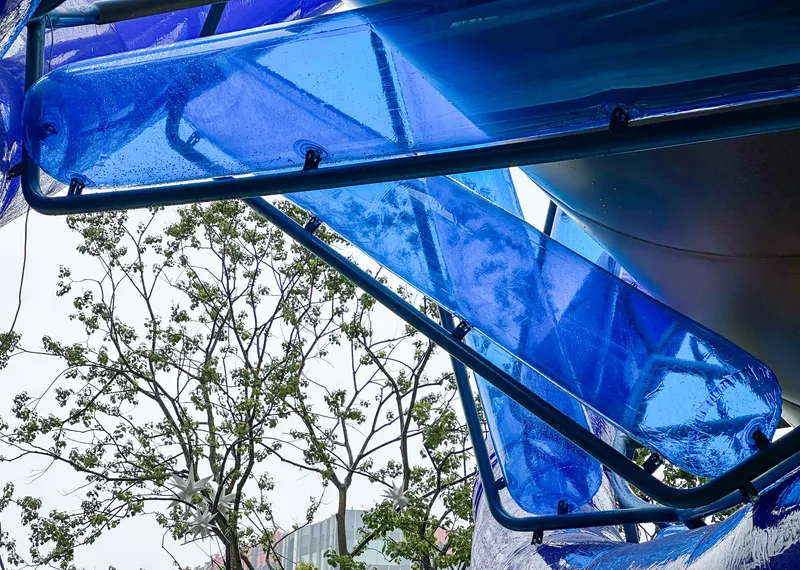
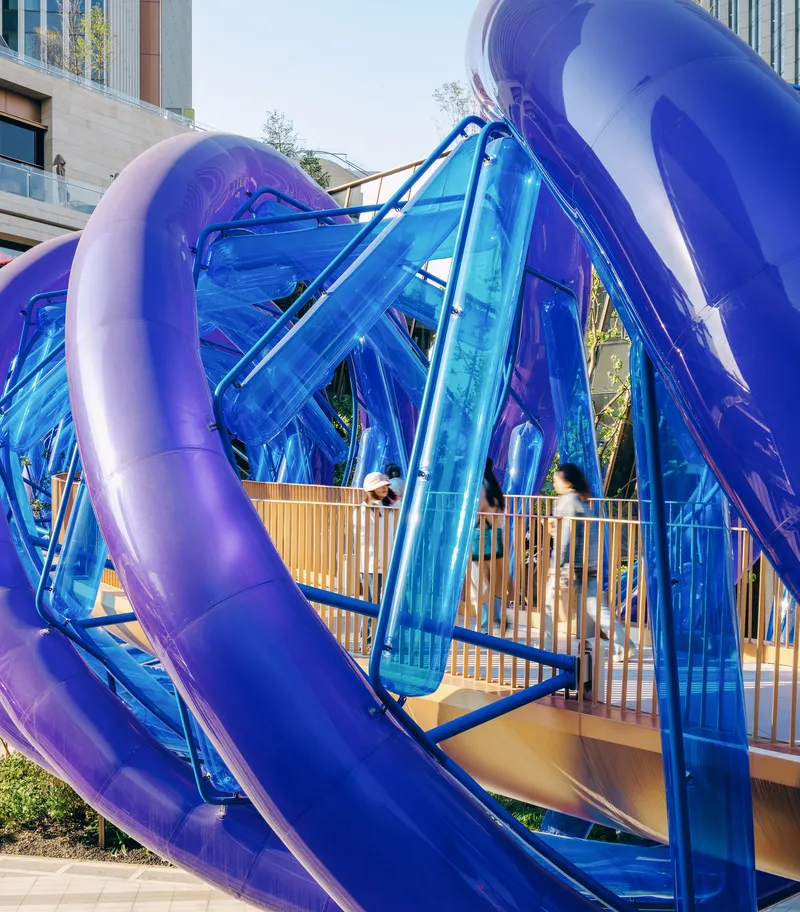
The installation is composed of two distinct types of inflatable membranes. The first is a spiral membrane with a diameter of 600 mm, made from matte dark blue material, emphasizing the sculptural, outward-facing visual identity of the bridge. The second is a linear membrane with a diameter of 400 mm, fabricated from transparent light blue material. These membranes interweave to create varying spiral configurations, producing shifting textures and color gradients as natural light passes through them. Under sunlight, the contrast between matte and translucent surfaces generates depth, rhythm, and a constantly changing visual atmosphere.
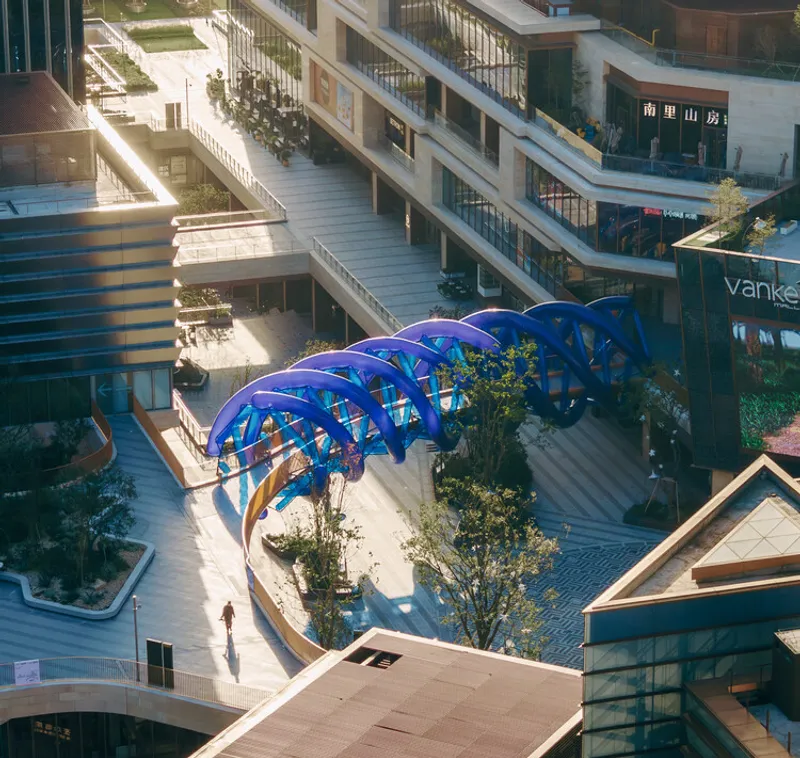
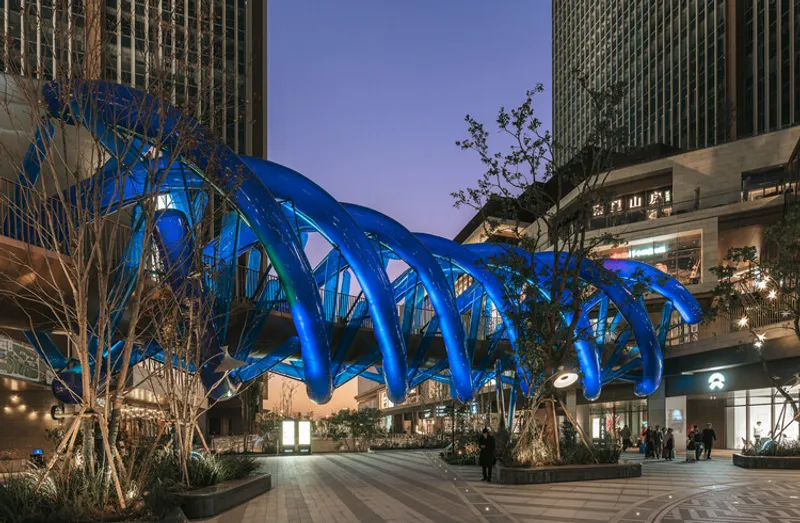
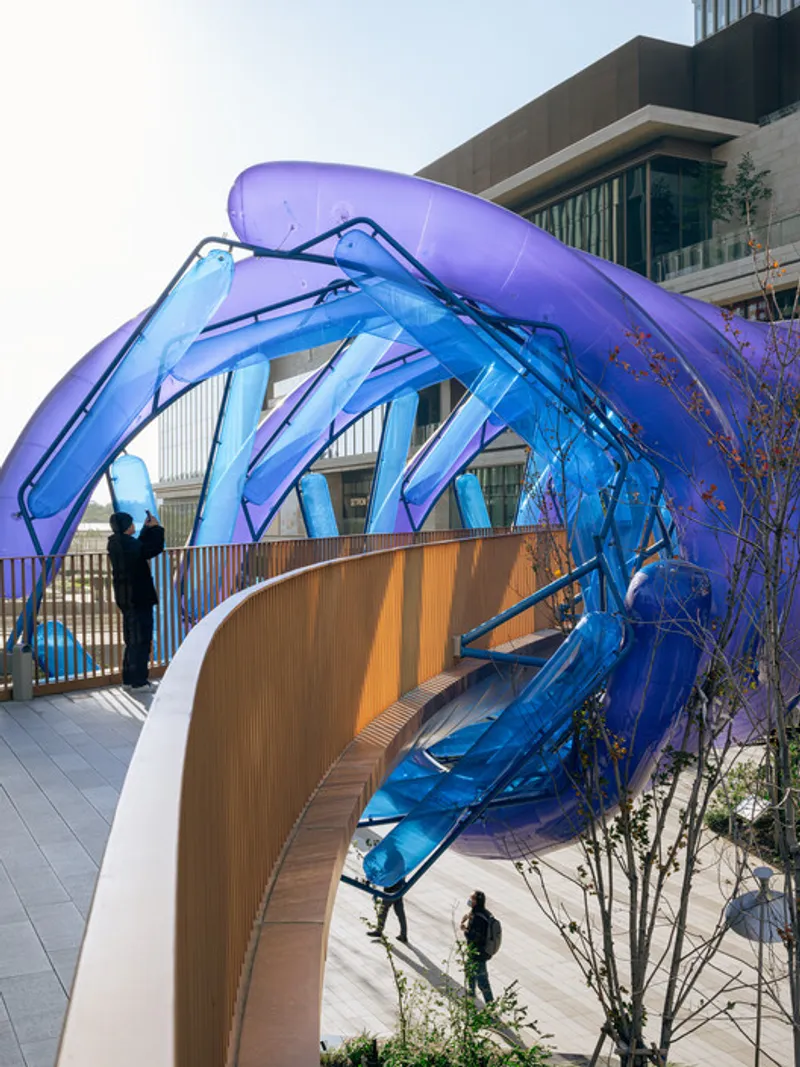
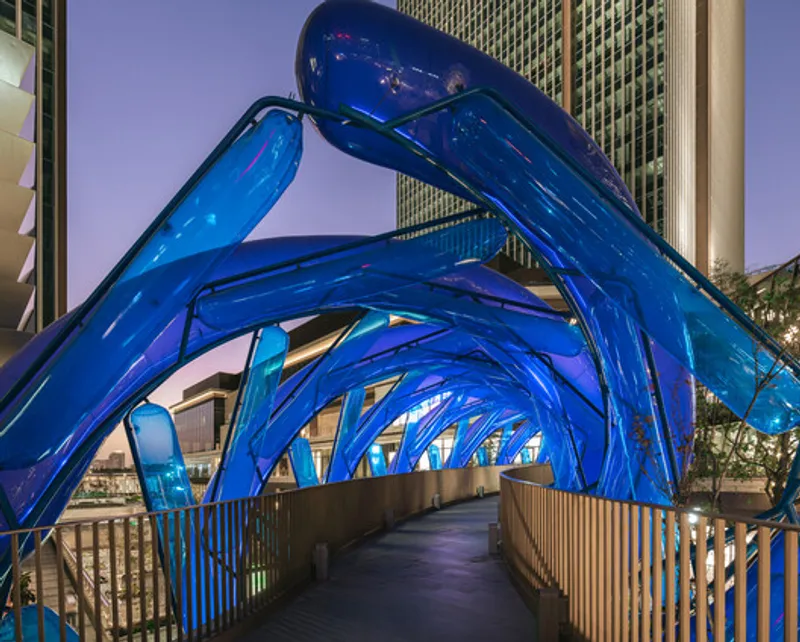
Structurally, the bridge relies on a lightweight steel framework designed to support the membranes with minimal visual intrusion. Spiral circular steel tubes, 60 mm in diameter, form the primary structure and are anchored to the bridge’s main beams using diagonal V-shaped supports. Secondary linear steel tubes, 40 mm in diameter, rotate between the spiral elements, creating a delicate lattice that fixes the membranes in place. The spiral membranes are mounted on the exterior of the frame to reinforce the bridge’s visual impact, while the linear membranes are positioned on the interior, prioritizing the experiential quality for pedestrians moving through the space.
Interaction lies at the heart of the Blue Rotary Membrane Bridge. As people enter, they are immediately immersed in a translucent blue environment. Ambient light shifts in color, the sky appears layered in varying shades of blue, and the spiral geometry heightens the perception of movement through space. Walking across the bridge becomes a moment of pause and sensory awareness, transforming a routine circulation path into a memorable urban experience.
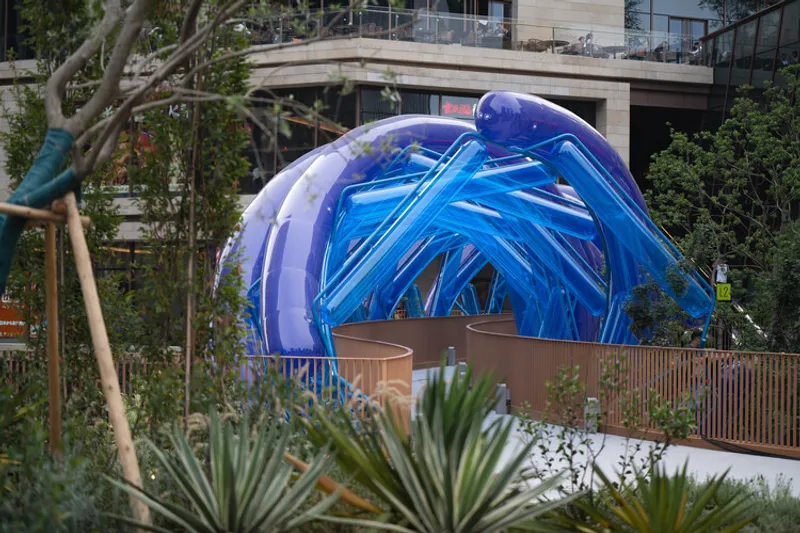
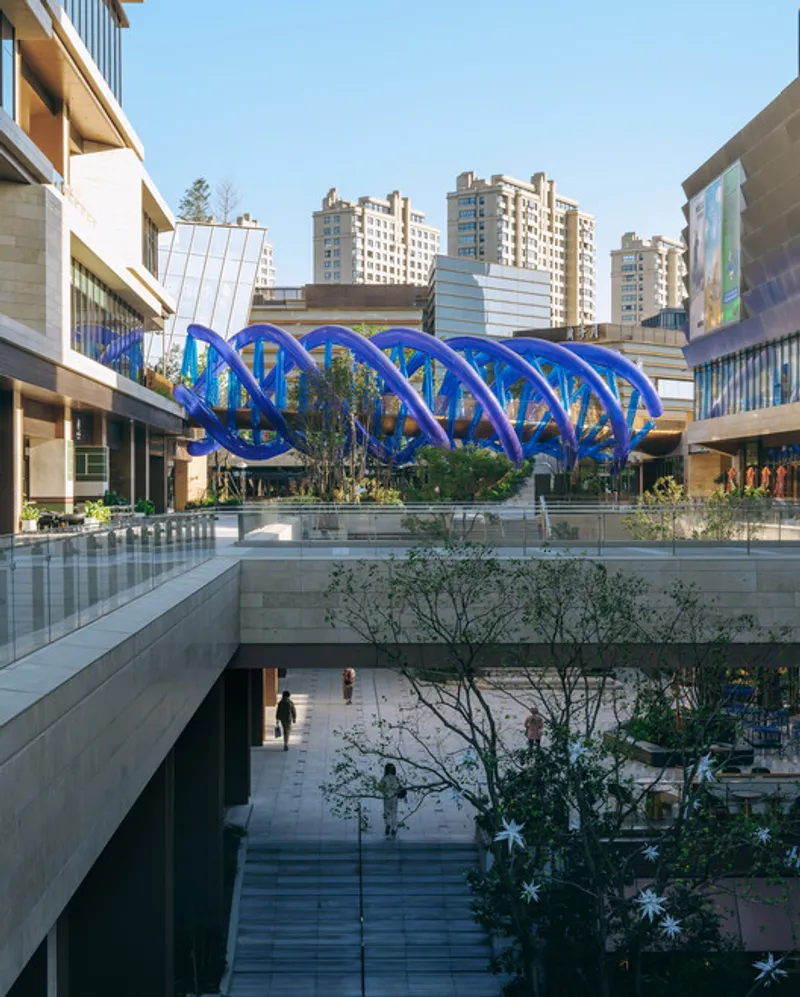
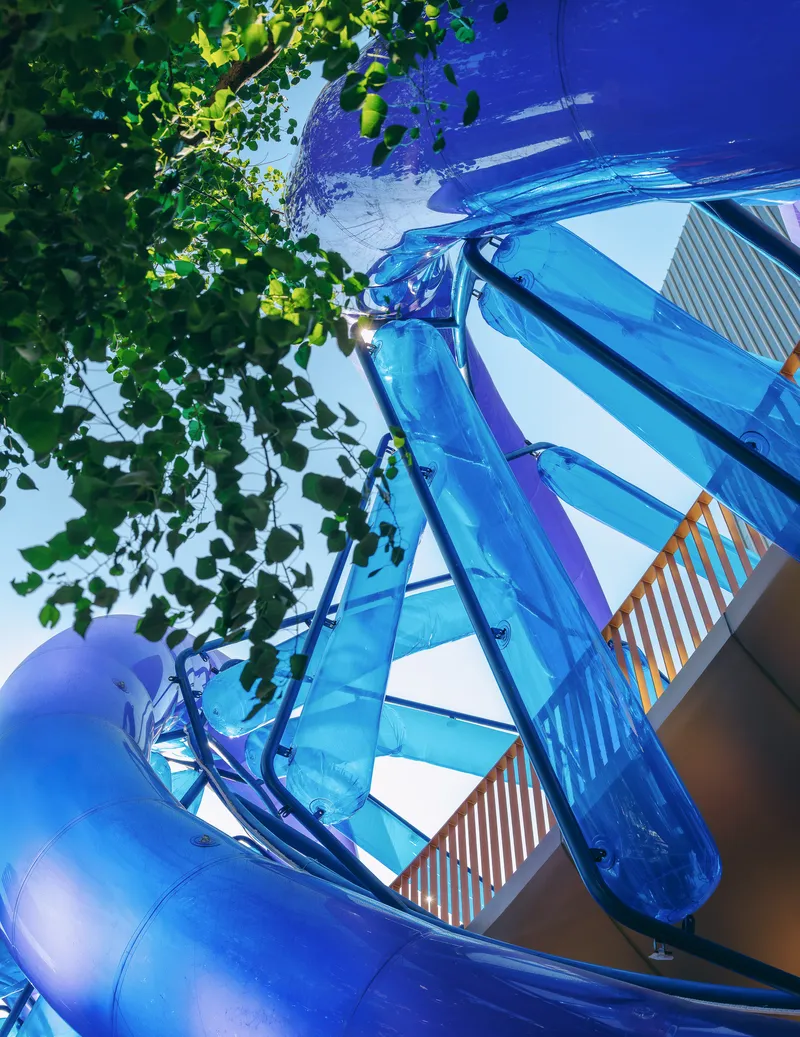
Beyond its physical presence, the installation plays a significant role in shaping the identity of Xuhui Vanke Plaza. Its iconic form has become a focal point for photography, sketching, and visual storytelling, embedding itself into the collective image of the site. For many visitors and creatives, the Rotary Membrane Bridge serves as the defining impression of the complex, reinforcing the power of temporary or lightweight architectural interventions in placemaking.
In summary, the Blue Rotary Membrane Bridge exemplifies People’s Architecture Office’s approach to socially engaged design. Through minimal materials, interactive form, and a sensitive response to context, the project enhances public participation, strengthens the character of the place, and demonstrates how architecture, art, and infrastructure can merge to create vibrant urban experiences.
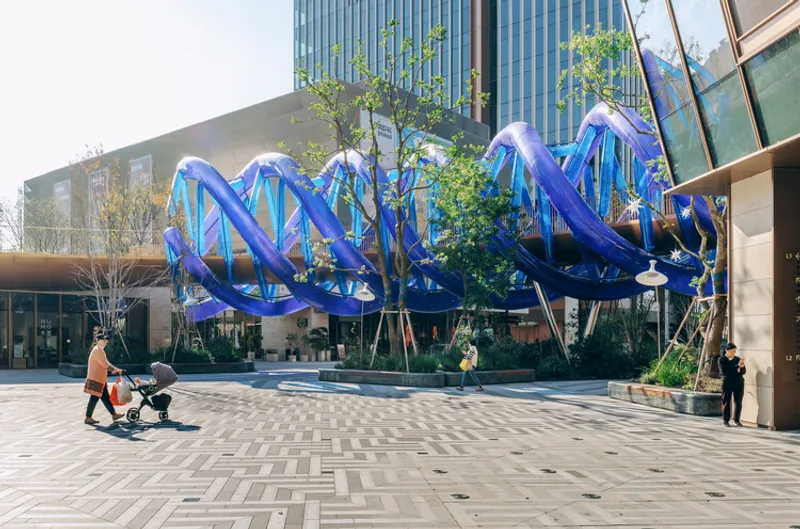
All the photographs are works of Yumeng Zhu



Popular Articles
Popular articles from the community


Hill & Cross Opera: Sculptural Opera House Architecture Shaped by Tallinn’s Landscape and Identity
Hill & Cross Opera reimagines opera house architecture in Tallinn through its sculptural hill, civic plaza, glass wave and a luminous cross.

The Ocean Hive: Sustainable Architecture for a Self-Sufficient Civilization at Sea
The Ocean Hive imagines sustainable architecture at sea, where modular habitats, algae, wave power and ocean waste sustain a growing colony.

Co-life: Sustainable Architecture for Age-Friendly Community Living
Co-life reimagines sustainable architecture for seniors through courtyards, rammed earth, shared gardens, and spaces designed for belonging.

Co-Life: Senior Housing Design That Reconnects Older Adults With the City
Co-Life reimagines senior housing design through healing gardens, shared streets, workshops, and a sustainable community across generations.
Similar Reads
You might also enjoy these articles


Hodi-Mandai Geram
Project Function: Preservation and revitalization of the Intangible heritage and socio-spatial identity of the Hodi by Housing, Cultural Memory Center, Sacred Grove, landscape, local tourism economy


Olio Towers: A Mid-Rise for Performers That Fuses Housing, Rehearsal, and Stage
Located blocks from Houston's Theater District, this modular tower stacks living units around a central performance atrium.

Oasis: Modular Green Housing Carved into Dhaka's Urban Fabric
A shortlisted Plugin Housing entry reclaims unauthorized settlements in Dhaka with stepped concrete volumes, green roofs, and ventilation-driven design.

Black Hole: A Floating Megastructure for the Post-Physical Era
Emiliano Mazzarotto envisions a spherical, self-scaling arena where e-sports, digital hotels, and holographic stadiums replace traditional public space.

Explore Pedestrian Bridge Competitions
Discover active competitions in this discipline


Challenge to design locus for the upliftment of human rights


Challenge to reimagine the Iron Throne


Photograph architecture without architects


Illustrate the lost glory of Angkor Wat - Render Challenge
Comments (0)
Please login or sign up to add comments
No comments yet. Be the first to comment!