
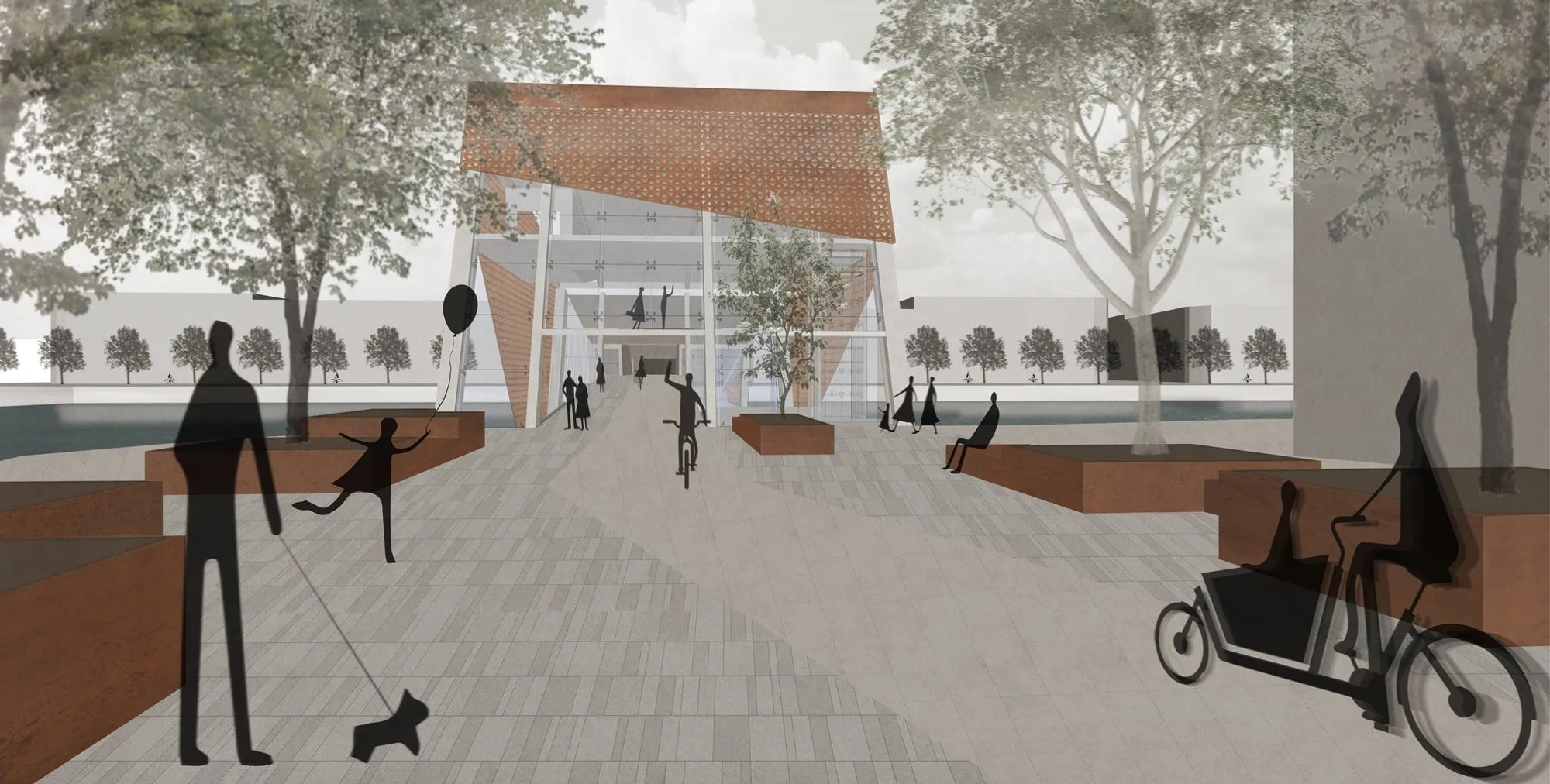
The Bridge Within the Bridge
A visionary cycling bridge redefining sustainable urban design, public space, and mobility in the heart of Copenhagen.


Project by Michiel De Houwer
In cities such as Copenhagen, Amsterdam, and Utrecht, cycling is not just transportation, it is identity. Yet even in the world’s most bicycle-friendly cities, infrastructure often separates movement from experience. The Bridge Within the Bridge challenges this limitation through an innovative approach to sustainable urban design, transforming a simple crossing into a layered public destination.
Located across Copenhagen’s inner harbour, the project reimagines what cycling infrastructure can be. Rather than functioning solely as a utilitarian passage, the bridge becomes architecture, exhibition, landscape, and landmark, unifying fast movement with immersive public space.
Rethinking Cycling Infrastructure Through Sustainable Urban Design
At its core, the project responds to a crucial question in contemporary architecture: how can infrastructure become meaningful public space? In many cities, bridges prioritize efficiency but neglect spatial quality. This proposal introduces two distinct yet interconnected experiences.
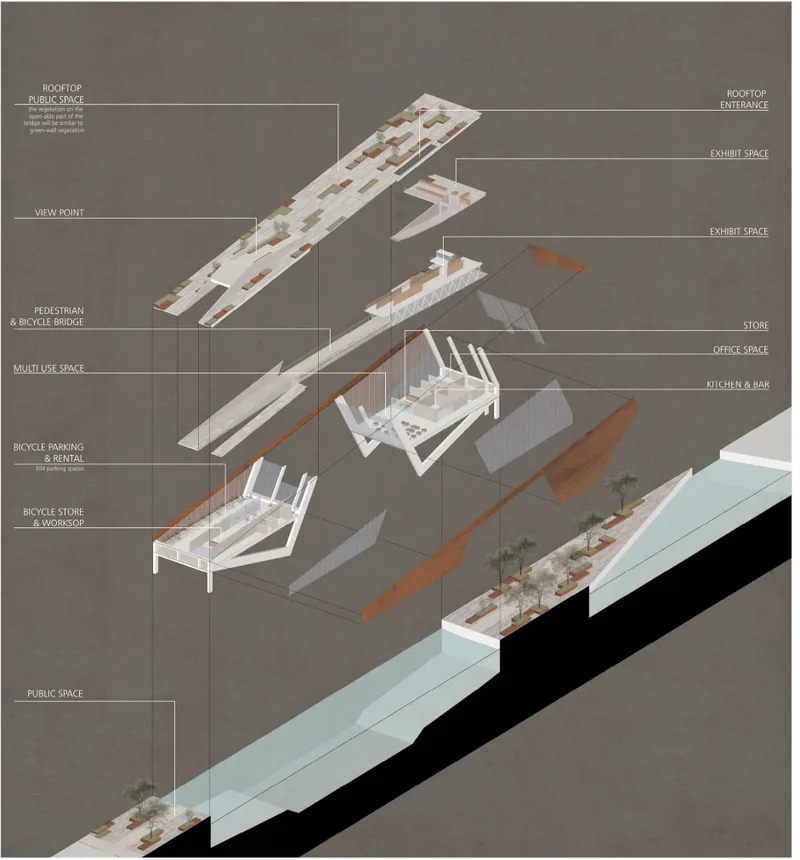
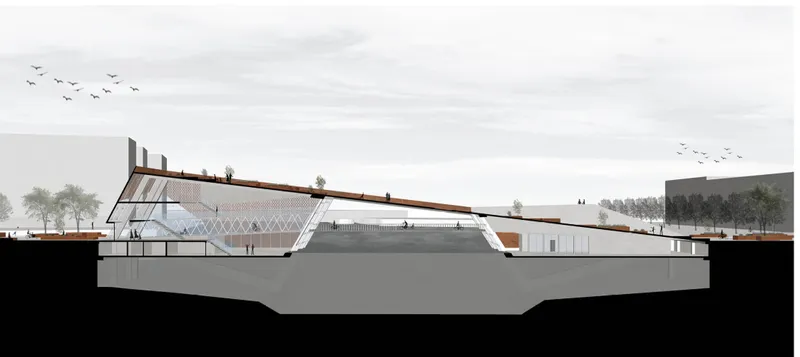
The first is a direct, efficient pedestrian and bicycle bridge. Designed with a limited slope and straight alignment, it allows cyclists to cross the harbour quickly and safely. The simplicity of this gesture reflects best practices in cycling infrastructure: clarity, comfort, and accessibility.
The second layer introduces the "bridge within the bridge." The roof of the structure extends the public realm, forming an elevated park that connects the Havnegade Harbour Promenade on the downtown side to the Christianshavn neighbourhood. What begins as infrastructure evolves into a civic landscape.
By integrating mobility with public programming, the project exemplifies forward-thinking sustainable urban design, where infrastructure supports both movement and community life.
Extending Public Space Across the Water
While the downtown harbourfront is vibrant and active, the Christianshavn side lacks comparable public space. The project addresses this imbalance by stretching the park over the water, ensuring that the bridge is not merely an endpoint, but a connector between neighbourhoods.
The roofscape becomes a destination in itself: featuring seating, vegetation, and viewing platforms. Visitors can pause, gather, and experience panoramic views of the inner harbour. This layered design transforms the crossing into a shared urban room suspended above the water.
The building beneath the roof accommodates bicycle parking, a bike shop and workshop, exhibition spaces, office areas, and a kitchen and bar. These programs reinforce the bridge’s role as both infrastructure and cultural hub.
The Cycling Museum: Infrastructure as Exhibition
A defining feature of the project is the integration of a small cycling museum within the bridge. Rather than placing art inside a building detached from its context, the cycling bridge itself becomes the primary exhibit.
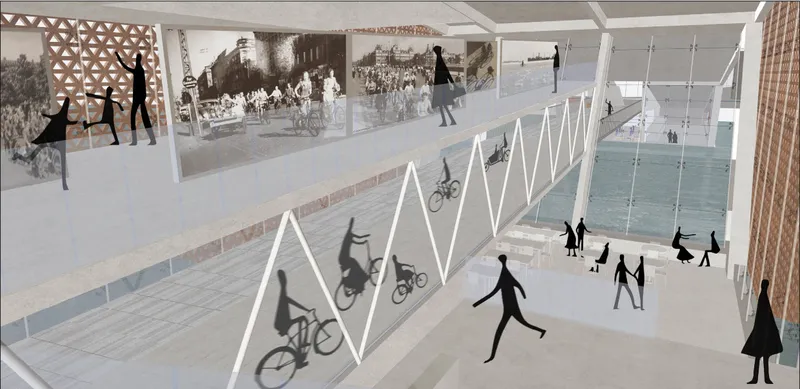
Visitors entering at the upper level encounter an exhibition dedicated to urban cycling: past, present, and future. Historical photographs, documentation of Copenhagen’s bicycle culture, and projections of future mobility strategies immerse guests in the story of sustainable transportation.
Descending to the main floor, visitors witness cyclists moving across the structure in real time. The bridge is no longer hidden infrastructure, it is celebrated as living urban choreography.
This fusion of exhibition and infrastructure elevates the project beyond functional design, positioning it as a model of experiential sustainable urban design.
Architecture and Material Identity
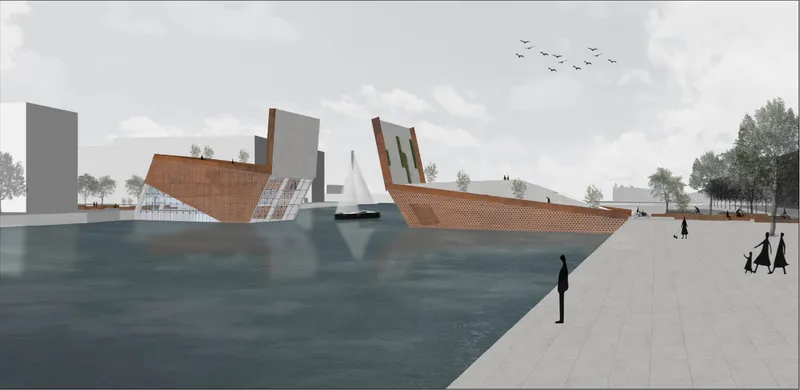
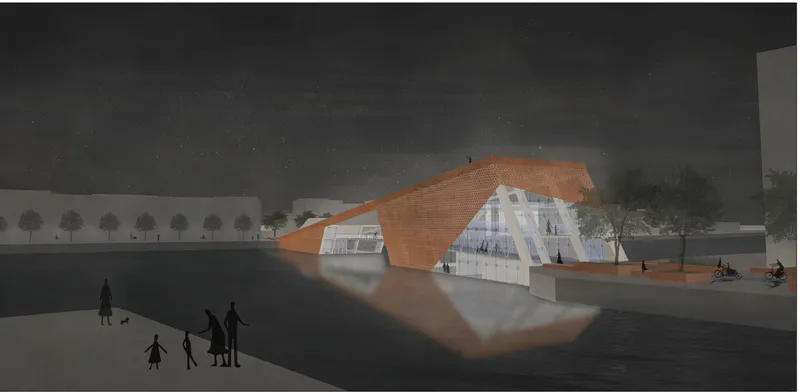
Architecturally, the building is composed primarily of glass, wrapped with perforated Corten steel cladding. The material references the site’s industrial past, when the area functioned as a shipyard. The warm tone of the steel contrasts with the transparency of the glass, symbolizing dialogue between history and contemporary innovation.
At night, the structure glows from within, casting reflections onto the water and reinforcing its presence as a new architectural landmark. The opening roof mechanism pays homage to traditional movable bridges, while introducing a contemporary reinterpretation that maintains public accessibility even when the central span is raised.
This blend of industrial memory, adaptive infrastructure, and public activation demonstrates how sustainable urban design can honour context while embracing future mobility.
Designing for Inclusive Urban Mobility
The philosophy behind the project extends beyond architecture. It advocates for inclusive cycling infrastructure that serves not only experienced cyclists but newcomers, tourists, and everyday commuters.
Cities worldwide have invested in bicycle lanes, yet poorly designed networks often discourage widespread adoption. By creating a direct, obstacle-free route and embedding it within a vibrant public environment, the bridge encourages broader participation in sustainable transport.
The design recognizes that infrastructure shapes behaviour. When cycling becomes safe, accessible, and culturally celebrated, cities reclaim public space from cars and return it to people.
A New Urban Landmark for Copenhagen
More than just a crossing, The Bridge Within the Bridge positions itself as a landmark of sustainable urban design. Its sculptural form, public roofscape, and cultural programming create a multi-dimensional experience that transcends conventional bridge typologies.
By merging cycling infrastructure, museum space, and public park into a single architectural gesture, Michiel De Houwer proposes a future where infrastructure is not hidden, but celebrated.
In an era defined by climate urgency and the need for healthier cities, this project demonstrates how architecture can transform everyday mobility into civic experience. The bridge is not simply a path across water: it is a bridge between speed and slowness, movement and pause, infrastructure and community.
It is, quite literally, a bridge within the bridge.




Popular Articles
Popular articles from the community


Riyadh For All: Intergenerational Urban Design for Active Aging in Rabat
Riyadh For All reimagines urban design in Rabat with intergenerational co-living, adaptive courtyards, and Moroccan cultural exchange today.

Hill & Cross Opera: Sculptural Opera House Architecture Shaped by Tallinn’s Landscape and Identity
Hill & Cross Opera reimagines opera house architecture in Tallinn through its sculptural hill, civic plaza, glass wave and a luminous cross.

Play: Fragments of Their World
Familiar architecture becomes modular playground design, creating safe spaces where displaced children can learn, connect, imagine and play.

The Musturak Paradise: Senior Living Architecture for a Connected Future in Temara, Morocco
The Musturak Paradise reimagines senior living architecture in Temara via private homes, social spaces, culture, community, and shared care.

Similar Reads
You might also enjoy these articles

Eco Chapel: A Green Architecture Pavilion Designed in Symbiosis with the Forest
Eco Chapel uses green architecture to weave prayer, learning and reuse into a forest pavilion shaped by modular hexagonal canopies for life.
Kaffeebühnen: Coffee Shop Architecture Designed as a Civic Stage Between Vienna’s City and Park
Kaffeebühnen turns coffee shop architecture into a civic stage, linking Vienna’s park edge, urban life, warm timber yards, and coffee craft.
Healing Façade: Sustainable Architecture for Reforestation, Community, and Sacred Ecology in Ethiopia
Healing Façade reimagines sustainable architecture as a living wall that restores soil, catches water and renews Ethiopia's forest churches.


Urban Forest: A Vertical Ecosystem for 5,000 Workers in Singapore's Changi Business Park
Radially stacked pods and layered green decks turn a 7-acre plot into 47 acres of ecological workspace projected for 2040.

Comments (0)
Please login or sign up to add comments
No comments yet. Be the first to comment!