

THE BURNING HOPE
Informality in Architecture (Design Exposition)

Silent Flames
I still remember that night clearly – flames rose in the middle of the night from the apartment next to ours in Dhanmondi, Dhaka. From our balcony, we watched fear spread faster than the fire. Water ran out, people screamed for help and panic filled the air. If the wind had shifted, it could have been our home next. There were no hydrants, no coordinated evacuation plan - only hope.
In the first-world nations, architectural and policy debates around fire are often framed in relation to bushfires and the protection of ecological systems. These concerns are undeniably urgent, but they also raise a haunting question: where is the value placed on human life in a small developing country, where urban fires devastate communities on a daily basis? Why does so little global concern extend to human justice and social equity in these contexts? Everyday fires in Global South rarely receive the same urgency or visibility as disasters in the Global North. As Susan Moeller notes, chronic suffering in the Global South often receives little sustained media attention due to “compassion fatigue.” Similarly, Lilie Chouliaraki demonstrates how humanitarian narratives selectively highlight certain crises while silencing others.
My own encounter with fire left a lasting impression that architecture cannot remain neutral in the face of such avoidable destruction. As an emerging architect, I situate myself within a discipline that carries both the power and the responsibility to address systemic vulnerabilities.
Now living in Tasmania, I am surrounded by landscapes often celebrated for their beauty and safety. Yet, this environment constantly reminds me of the stark contrast with the city where I spent the first twenty-five years of my life. There, the fear was never about losing bushland, but about losing one’s home, one’s family, and the fragile means of survival. I may be fortunate to have escaped this cycle of destruction, but what about those who remain? For underprivileged communities, fire consumes not only their structures but also their futures, leaving them with nothing but a hope to rebuild. This contrast drives me to focus my work not on places of privilege, but on the most vulnerable informal communities, those who face fire without awareness, preparation, or protective systems. The informality are not isolated tragedies, but manifestations of systemic neglect that deny the urban poor the capacity to resist or recover. Paul Farmer reminds us that “human rights violations are not accidents; they are symptoms of deeper pathologies of power.” He names this “structural violence”: the social and political arrangements that determine whose lives will be secure and whose will be marked by vulnerability.
“The Burning Hope” will be my approach with an ethical commitment and rethinking of informality. My aim is to demonstrate that designing fire-resilient informal community is not only a technical challenge, but also a socio-cultural and ethical responsibility.
Architecture in the Shadow of Everyday Flames
The scenario of informal settlements in Dhaka illustrates a densely woven urban fabric of self-built housing, inadequate infrastructure, and high population density. In these fragile landscapes, fires are rarely accidents; they result from structural neglect - narrow, winding pathways that block fire truck access, use of untreated bamboo, plastic sheeting, paper, and corrugated metal, faulty electrical wiring, open-flame cooking, and a near-total absence of formal fire mitigation systems or water access for firefighting. Studies confirm that fire risks in Dhaka’s informal settlements are ethically and materially embedded in everyday living conditions, not merely incidental. Additionally, research examining fire preparedness indicates that more than 70% of residents in such communities have experienced fires, yet fewer than 15% are familiar with basic fire safety equipment or protocols. A comparative analysis between Dhaka and Cape Town further highlights that catastrophic fires in informal settlements are not rare one-offs but frequent, worsening phenomena rooted in systemic urban vulnerabilities.
Across the Global South, the vulnerability of informal settlements to disaster has been documented extensively. Mike Davis describes them as “the architecture of despair and survival,” where risk is normalized by systemic exclusion from infrastructure and governance. More recent studies extend this view: Informal Settlements of the Global South frames these neighborhoods as both sites of exclusion and laboratories of adaptation, while Li Zhang’s research on China’s chengzhongcun (urban villages) demonstrates how state-led urbanization continually displaces and reconfigures informal communities. These insights resonate strongly in Dhaka, where rapid migration, unregulated development, and weak enforcement of building codes converge to heighten fire risk.
Positioning in the Fireline
Architectural responses in informality must extend beyond simply replacing flammable materials or widening access roads. True resilience requires strategies that integrate passive fire safety measures, collective evacuation zones, and culturally embedded construction systems that allow for incremental implementation without displacement. For instance, Lumkani’s early-warning heat detectors and community microinsurance model in Cape Town demonstrates how localized, bottom-up systems can enable collective fire preparedness. In parallel, Arup’s Framework for Fire Safety in Informal Settlements advocates a holistic, multi-stakeholder approach—embedding mitigation, preparedness, response, and recovery across disaster cycles. In Nairobi’s Mukuru Fuata Nyayo settlements, community-based fire response groups have been shown to significantly improve emergency outcomes by organizing informal watch systems, evacuation assistance, and local risk mapping. These examples illustrate that combining technological innovation, decentralized infrastructure (such as water storage, community corridors. Use water/river channel), and social cohesion can create effective pathways for fire-resilient design in marginal urban contexts.
This discussion connects with broader architectural discourse on resilience. Amos Rapoport, in his classic House Form and Culture, reminds us that vernacular forms are never arbitrary, they are deeply responsive to environment, culture, and economy. Applying this perspective to Dhaka suggests that bamboo and tin housing in informal settlement need not be erased, but rather reconfigured to embed fire safety. Likewise, Sedehi and Moeini argue that architects working in informality must focus less on imposing formalized structures and more on enabling communities to exercise their “right to the city.”
From this standpoint my position as a community architect is to practice counter-narrative design – listening to and amplifying unspoken voices that are often ignored in dominant planning agendas. I challenge the assumption that “upgrading” informal settlements must mean replacing them with generic concrete blocks as seen in Bhasantek Rehabilitation Project which erased social networks in the name of modernization. The ethical task, instead, is to integrate resilience into existing forms of life - reinforcing safety without destroying the intricate social ties that give community its meaning and strength.
Ethics at the Edge of Survival
Ethics in architecture is not a decorative afterthought; it is the structuring force behind design decisions. To frame ethics as an add-on to form or aesthetics is to fundamentally misunderstand its central role. Architectural ethics is not abstract - it is about responsibility, to immediate users, to the broader public, and to the socio-ecological systems in which design is embedded.
Thomas Fisher presents architectural ethics as an act of mediation - a balancing of the moral claims of clients, the public, and the environment.” In the context of informal settlements, The “client” is the community struggling for survival, the “public” is the wider city that benefits from safer and more resilient neighborhoods, and the environment is the fragile urban ecosystem that demands care and resilience. This resonates with Emmanuel Levinas’s philosophy of responsibility for the Other, which insists that ethical obligation begins with attentiveness to those most vulnerable. In Dhaka’s informal settlements, this means recognizing the residents are not abstract “users” but human beings whose survival is directly shaped by architectural decisions. Architecture, then, becomes an ethical act of care: an obligation to safeguard life where precarity is most acute.
From this standpoint, ethical architectural practice must be:
• Grounded in community agency - partnering with residents as co-authors, not passive recipients.
• Attuned to systemic power structures - exposing and resisting designs that reproduce marginalization.
• Materially embedded and politically intelligent - working with and through existing infrastructure, rather than imposing abstract urban models.
These principles stand in direct tension with dominant urban redevelopment models in Dhaka, which often privilege clearance and formalization over incremental upgrading. The failure of such approaches was tragically revealed in the 2019 Chawkbazar fire, in which more than 70 people lost their lives. Illegal chemical storage, unsafe wiring, and blocked escape routes – symptoms of governance failure and architectural neglect - turned a preventable incident into a catastrophe. Ethical practice in such contexts demands resisting technocratic quick fixes that ignore social dynamics, instead embedding safety and dignity into the everyday fabric of settlement life.
Cameron Sinclair’s call to “design like you give a damn” reinforces this position, urging architects to move beyond detached professionalism toward empathy-driven action. In this sense, my role shifts no longer an external expert imposing predetermined forms, but an enabler who strengthens community capacity. Ethical practice here is therefore both preventive—mitigating fire risk through safer materials, pathways, and preparedness—and generative—fostering long-term dignity, agency, and the right to remain for residents navigating lives of precarity.
My responsibility in these contexts cannot rest solely on technical or aesthetic solutions. It must embrace a broader ethical mandate - one that amplifies the right to the city for disenfranchised communities. This stance challenges me with prevailing assumptions about architecture’s role, reorienting it toward inclusive, justice-oriented engagement. More than abstract theorizing, this ethical activation of architecture will help me to engage with the material realities of daily life: infrastructures, pathways, thresholds, and material legacies that structure survival and displacement.
Ethics Beyond Borders
The ethical framework guiding fire-resilient design in Dhaka’s informal settlements is not limited to one city. Similar vulnerabilities are present across the Global South—in Cape Town’s townships, Rio de Janeiro’s favelas, or Nairobi’s Mukuru neighborhoods—where residents endure systemic neglect, insecure tenure, and heightened fire risk. In this context, embedding ethics as a structuring principle allows architectural practice to move beyond technical fixes, offering replicable approaches that prioritize dignity, survival, and equity.
Practical strategies such as community-based fire watch systems, incremental construction methods, and the use of locally adapted materials can be transferred across regions with modification to cultural and environmental conditions. What unites these approaches is their grounding in agency: residents are treated not as passive beneficiaries, but as co-authors of safer environments. This principle holds as true in Bangladesh as it does in Kenya or South Africa. Participatory fire safety initiatives such as Lumkani’s community alarm and microinsurance model in Cape Town already demonstrate how grassroots innovation can scale effectively when rooted in local realities.
Such an ethical framework is not a rigid blueprint but a portable methodology stance that travels. By insisting that architecture balance responsibility to people, place, and ecology, the lessons drawn from Dhaka can inform a broader repertoire of just and resilient practices for vulnerable communities worldwide.
Shaped by Fire
Standpoint epistemology highlights the situated nature of knowledge. As Sandra Harding reminds us, knowledge is socially embedded, and those positioned at the margins often hold insights inaccessible to dominant perspectives. Applied to architecture, this means that understandings of fire resilience in informal settlements are shaped not only by technical training but also by cultural background, lived experience, and immersion in specific urban conditions.
My own standpoint emerges from dual positioning. On one hand, I belong to the academic world of architectural education; on the other, I carry the lived realities of a fire-risk environment. Having witnessed fire devastation firsthand in Dhaka, my reading of spatial safety is visceral rather than abstract. I occupy the role of both insider and outsider: as a Bangladeshi, deeply familiar with cultural norms and the everyday logics of informal settlement life; and as a formally trained in architecture, now embedded within an Australian academic context. This duality allows me to bridge global architectural discourse with locally embodied knowledge, positioning practice as a dialogue between universal theory and situated survival.
Crucially, this standpoint unsettles the universalist claims embedded in so-called “global best practice” fire safety standards. For instance, both Australian and Bangladeshi building codes prioritize hydrant systems and clear vehicular access, such measures are often unfeasible in Dhaka’s informal settlements without mass demolition. My situated knowledge tells me that alternative strategies: decentralized water tanks, firebreak courtyards, and community-run early-warning systems – solutions that are viable, incremental, and culturally resonant.
Acknowledging the validity of lived expertise also reframes residents not as passive recipients of architectural interventions but as co-authors of resilience. Their intimate knowledge of circulation routes, everyday routines, and seasonal hazards provides insights that no imported standard can replicate. As scholars of urban informality argue, the epistemic authority of residents is central to design that works in practice rather than remaining on paper.
Designing Otherwise
Knowledge from existing situations to work with this community is strengthened by dialogue with architects, scholars, and communities who have already addressed informality, disaster resilience, and participatory practice.
• Jane Jacobs — In The Death and Life of Great American Cities, Jacobs argues for the vitality of dense, mixed-use neighborhoods and warns against modernist clearance strategies. Her critique resonates with Dhaka, where informal settlement clearance often destroys the very social fabric that supports resilience.
Anna Heringer
Anna Heringer’s work in Bangladesh demonstrates how architecture can elevate local materials and labor without imposing foreign aesthetics. Her METI Handmade School (Rudrapur, 2006) combines mud and bamboo construction with community participation, proving that traditional techniques can achieve both structural integrity and architectural beauty. Heringer’s approach reinforces a commitment to culturally embedded construction, where design strengthens, rather than supplants, local knowledge.
• Shigeru Ban — Shigeru Ban’s ingenious post-disaster housing—such as the Paper Log House (Kobe, 1995)—uses inexpensive, recycled materials to quickly deliver dignified shelter. These projects demonstrate adaptability under constraint, offering models for incremental fire-resilience strategies in resource-limited urban environments.
Alejandro Aravena/Elemental
Chile’s Elemental redefined social housing with its Quinta Monroy project (Iquique, 2003). By delivering “half a good house” to residents—complete with essential services and a structural shell designed for future expansion—Elemental made affordable, dignified, and community-led incremental housing possible. Twelve years later, nearly all households had expanded their homes organically, reflecting both the flexibility and challenges of self-driven development.
UN-Habitat
The Participatory Slum Upgrading Programme (PSUP) provides a high-level framework for integrating community priorities into infrastructural and policy solutions across 40+ countries. PSUP demonstrates that inclusive planning can align municipal governance with grassroots realities.
Local community-based organisations
BRAC’s Urban Development Programme, through its fire awareness campaigns and incremental infrastructure improvements, shows how locally rooted organizations can catalyse resilient design within informal systems, ensuring uptake and sustainability.
From this existing knowledge, I distil three lessons:
1. Work with what is present — materials, skills, and social patterns are resources, not obstacles.
2. Embed interventions in existing governance — solutions must be sustained through community structures and local institutions.
3. Balance dignity with urgency — resilience requires not only rapid implementation but also cultural and aesthetic recognition.
Guiding Frameworks: Adaptive Principles
The following six principles form the foundation of an adaptive approach to fire-resilient community design. Rather than offering prescriptive technical fixes, they provide a framework for embedding resilience within existing social and spatial fabrics.
1. Life First
Resilience begins with prioritizing human life over the preservation of infrastructure. In fire-prone informal settlements, every design decision must place the protection of lives at its core. This principle recognizes that architecture is, at its most fundamental, a guardian of survival.
2. Build to Transform, Not Just to Replace
Every fire presents not only a moment of loss but also an opportunity for systemic improvement. Reconstruction should not replicate the vulnerabilities of the past but instead address underlying structural risks. Building to transform reframe recovery as a catalyst for more just and adaptive urban futures.
3. Design with Fire, Not Against It
Fire is not only a hazard but also a cultural and practical presence—used in cooking, gathering, and ritual. Design must work with this duality, embedding safety while respecting the central role of fire in community life. These principal resists treating fire solely as a threat, recognizing instead its place in everyday social practices.
4. Use What Is Available, Not What Is Ideal
Effective design grows from existing conditions rather than imported ideals. By working with local materials, skills, and traditions, architecture strengthens community capacity while ensuring affordability and adaptability. This approach challenges the dominance of high-tech, external solutions by validating what communities already know and have.
5. Communities as Code-Makers
Resilience cannot be imposed from above. Residents must be recognized as co-authors of fire safety strategies, shaping rules and interventions based on lived experience. Community-led code-making ensures that measures are not only technically sound but also socially embedded, culturally resonant, and widely adopted.
6. Connect Scales: From Shelter to City
Fire resilience must extend beyond individual homes to neighborhoods, infrastructures, and cities. Local strategies—such as firebreak courtyards or decentralized water tanks—must be integrated with municipal planning to strengthen overall adaptive capacity. This principle highlights the necessity of multi-scalar design, where resilience is shared across networks rather than confined to isolated units.
Conclusion: Between Flames and Futures
This exposition positions me as an emerging architect committed to advancing fi re resilience in contexts of informality through an ethically grounded, epistemologically aware, and community-engaged practice. By situating the work within broader architectural discourse, grounding it in my lived standpoint, and drawing from global precedents, I have articulated a proposition that challenges conventional models of redevelopment. At its heart, this is a profoundly social project—one that honors lived expertise, safeguards cultural identity, and places human life at the center of design. The six adaptive principles outlined here form a framework for practice that is not only technically sound and functionally safe, but also meaningful, just, and responsive to the aspirations of those who inhabit these vulnerable contexts. This proposition aims to reframe codes not as rigid prescriptions but as adaptive, transferable frameworks: adaptable across borders, sensitive to local conditions, and capable of guiding resilience in diverse contexts. As Le Corbusier provocatively reminded us, we are always faced with the choice between architecture or revolution, warning that “revolution can be avoided” if architecture rises to the challenge. In the fragile landscapes of informality, resilience must therefore be inseparable from justice—ensuring that dignity, safety, and the right to shelter are not privileges, but guarantees for all.
References
- Author’s personal experience, Dhaka, Bangladesh, 2016.
- Susan D. Moeller, Compassion Fatigue: How the Media Sell Disease, Famine, War and Death (New York: Routledge, 1999), 10–12;
- Lilie Chouliaraki, The Ironic Spectator: Solidarity in the Age of Post-Humanitarianism (Cambridge: Polity, 2013), 42–47.
- Paul Farmer, Pathologies of Power: Health, Human Rights, and the New War on the Poor (Berkeley: University of California Press, 2004), 7–8.
- Farmer, Pathologies of Power: Health, Human Rights, and the New War on the Poor.
- Swagata Dutta et al., “Evaluating the Fire-Reaction Properties of Building Materials Used in Informal Settlements in Dhaka, Bangladesh,” Asia-Pacific Journal of Fire Science & Technology (Nov.–Dec. 2024)
- Rahman, Md Mostafizur, Saadmaan Jubayer Khan, Kamrun Nahar Tanni, Mohammed Sadman Sakib, Masrur Abdul Quader, Ifta Alam Shobuj, Arman Uddin, and Komal Raj Aryal. Holistic Individual Fire Preparedness in Informal Settlements, Bangladesh, Fire Technology 61, no. 3 (2025): 1129–56. https://doi.org/10.1007/s10694-022-01340-0
- Danielle Antonellis et al., “A Comparative Study of Fire Risk Emergence in Informal Settlements in Dhaka and Cape Town,” Safer Complex Systems Case Studies (Royal Academy of Engineering)
- Mike Davis, Planet of Slums (London: Verso, 2006), 37
- Marie Huchzermeyer and Alison Todes, eds., Informal Settlements of the Global South (London: Routledge, 2020).
- Li Zhang, Urban Informal Settlements: Chengzhongcun and Chinese Urbanism (Singapore: Springer, 2020).
- Pharoah, Robyn, Patricia Zweig, Richard Walls, and Rodney Eksteen. “Smoke Alarms for Informal Settlements: Monitoring and Challenges from a Large-Scale Community Rollout in Cape Town, South Africa.” International Journal of Disaster Risk Science 13 (2022): 1–15, https://doi.org/10.1007/s13753-022-00457-8 . Accessed 15.08.25
- Arup Foundation, A Framework for Fire Safety in Informal Settlements (London: Arup, 2018), https://www.arup.com/insights/a-framework-for-fire-safety-in-informal-settlements/ . Accessed 20.08.25
- Danielle Antonellis et al, “A Comparative Study of Fire Risk Emergence., “A Comparative Study of Fire Risk Emergence.”
- Amos Rapoport, House Form and Culture (Englewood Cliffs, NJ: Prentice-Hall, 1969).
- Sedehi, Nastaran, and Seyed Hossein Iradj Moeini. The Role of Architects in Informal Settlements: Claiming the Right to the City. First edition. Cham, Switzerland: Springer, 2024. https://doi.org/10.1007/978-3-031-67125-8.
- Md. Golam Rabbani, State and the Low-Cost Housing for the Poor: Fall of Bhashantek Rehabilitation Project (in Dhaka City): Bangladesh (Dhaka: Unnayan Onneshan, 2015).
- Thomas Fisher, Ethics for Architects: 50 Dilemmas of Professional Practice (New York: Princeton Architectural Press, 2010).
- Emmanuel Levinas, Totality and Infinity: An Essay on Exteriority, trans. Alphonso Lingis (Pittsburgh: Duquesne University Press, 1969).
- BBC News. “Dhaka Fire: Blaze Kills Dozens in Historic Chawkbazar Area.” February 21, 2019. https://www.bbc.com/news/world-asia-47308052 . Accessed 10.08.25
- Cameron Sinclair, Design Like You Give a Damn: Architectural Responses to Humanitarian Crises (New York: Metropolis Books, 2006)
- Sandra Harding, Whose Science? Whose Knowledge? Thinking from Women’s Lives (Ithaca, NY: Cornell University Press, 1991).
- Johannes Widodo, Beyond the Informal: Understanding Self-Organized Kampungs in Indonesia (Singapore: Springer, 2021).
- Jane Jacobs, The Death and Life of Great American Cities (New York: Random House, 1961).
- Anna Heringer, background and documentation in Andres Lepik, Small Scale, Big Change: New Architectures of Social Engagement (New York: Museum of Modern Art, 2010), 38–45.
- Shigeru Ban, Paper Log House, Kobe, Japan, 1995 (and later iterations); discussed in Matilda McQuaid, Shigeru Ban (New York: Phaidon Press, 2003).
- Alejandro Aravena and Elemental, Quinta Monroy Housing Project, Iquique, Chile, 2003. See details in ArchDaily, “Quinta Monroy / ELEMENTAL,” accessed August 2025.
- Sandra Carrasco and David O’Brien, “Beyond the Freedom to Build: Long‑Term Outcomes of Elemental’s Incremental Housing in Quinta Monroy,” urbe. Revista Brasileira de Gestão Urbana 13 (2021): e20200001.
- UN-Habitat, Participatory Slum Upgrading Programme: Annual Report (Nairobi: UN-Habitat, 2020).
- BRAC, Urban Development Programme Annual Report (Dhaka: BRAC, 2022).


Popular Articles
Popular articles from the community

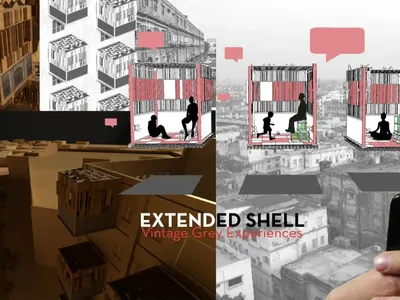
Extended Shell: Retrofitting Kolkata's Balconies as Living Urban Thresholds
A modular retrofit system recovers the social and environmental intelligence of Kolkata's historic verandas for contemporary Park Street residents.

The Amber Palace Opera: A Geological Fiction Surfaces on Tallinn's Baltic Waterfront
Pierre Brillard reimagines a Baltic legend as a public landscape, opera house, and waterfront promenade rooted in Tallinn's coastal identity.

Tsunami Convergenics: Turning Catastrophic Ocean Forces into Underwater Housing Infrastructure
A speculative underwater settlement off the coast of Onagawa, Japan, treats tsunamis and typhoons as energy sources rather than threats.

Opera on the Sea: Driftwood Logic Shapes a Timber Opera House on Estonia's Coast
Trevor Orgill's opera house translates the entangled drift of floating timber into a civic building where wood, water, and music converge.

Similar Reads
You might also enjoy these articles

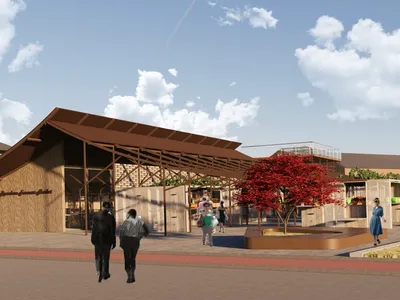
The Rhythm of Seasons
A Farmers' Market Connecting Nature and the City


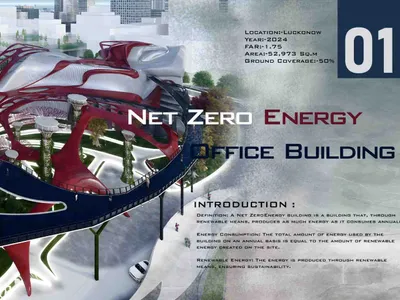
More Than a Building-Designing a Living System
More Than a Building-Designing a Living System
Base Beyond
DESERT COMPOUND ARID: TOURISM OF ABSENCE AND ABUNDANCE

Explore Architecture Competitions
Discover active competitions in this discipline


Challenge to reimagine the Iron Throne

Photograph architecture without architects

Illustrate the lost glory of Angkor Wat - Render Challenge

Design challenge to reuse E-waste
Comments (0)
Please login or sign up to add comments
No comments yet. Be the first to comment!