
The Chapel by Berger Parkkinen + Architects: A Contemporary Monument of Light, Stone, and Memory
Circular stone chapel in Styria blending ancient masonry reuse, natural light, and minimalist form to create a serene spiritual retreat.


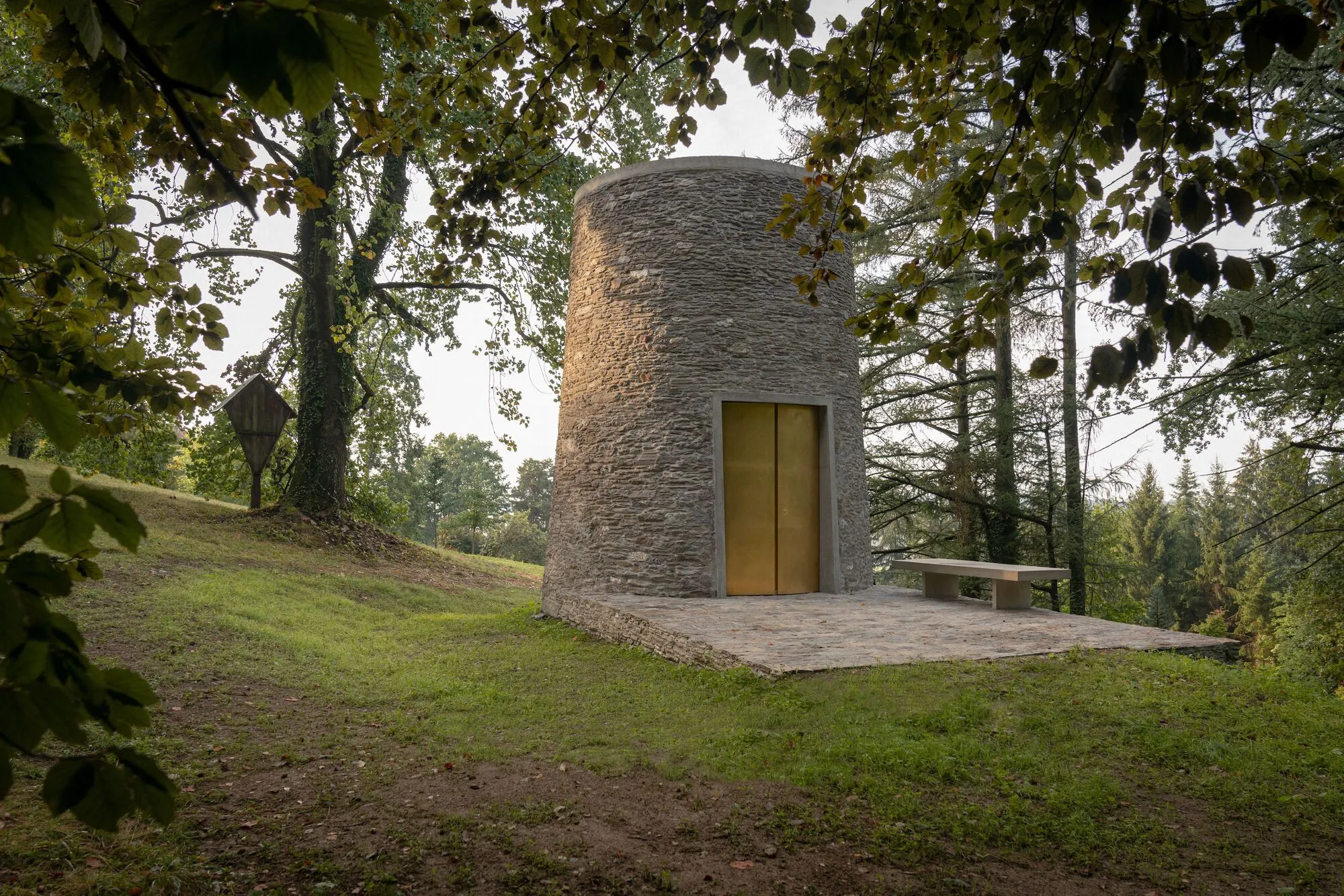
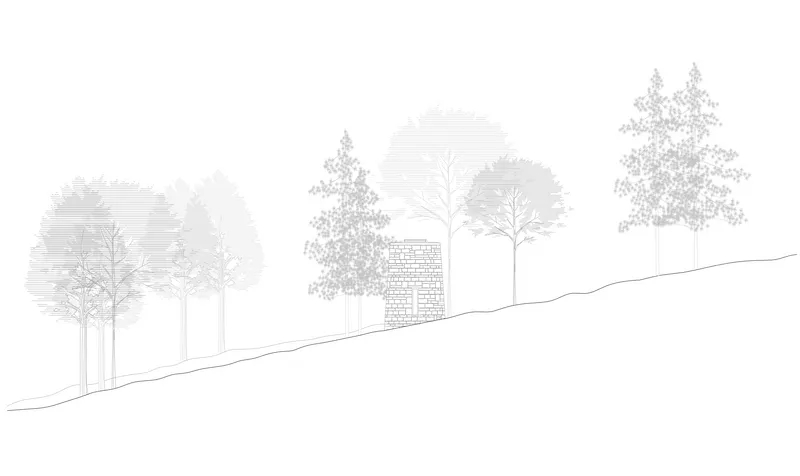
Nestled within a castle park in Styria, Austria, The Chapel by Berger Parkkinen + Architects offers a poetic rethinking of sacred architecture. Completed in 2022, this private funeral chapel is both a spiritual space and a sculptural object—timeless yet contemporary, rooted in ancient tradition yet expressed through minimalist clarity.
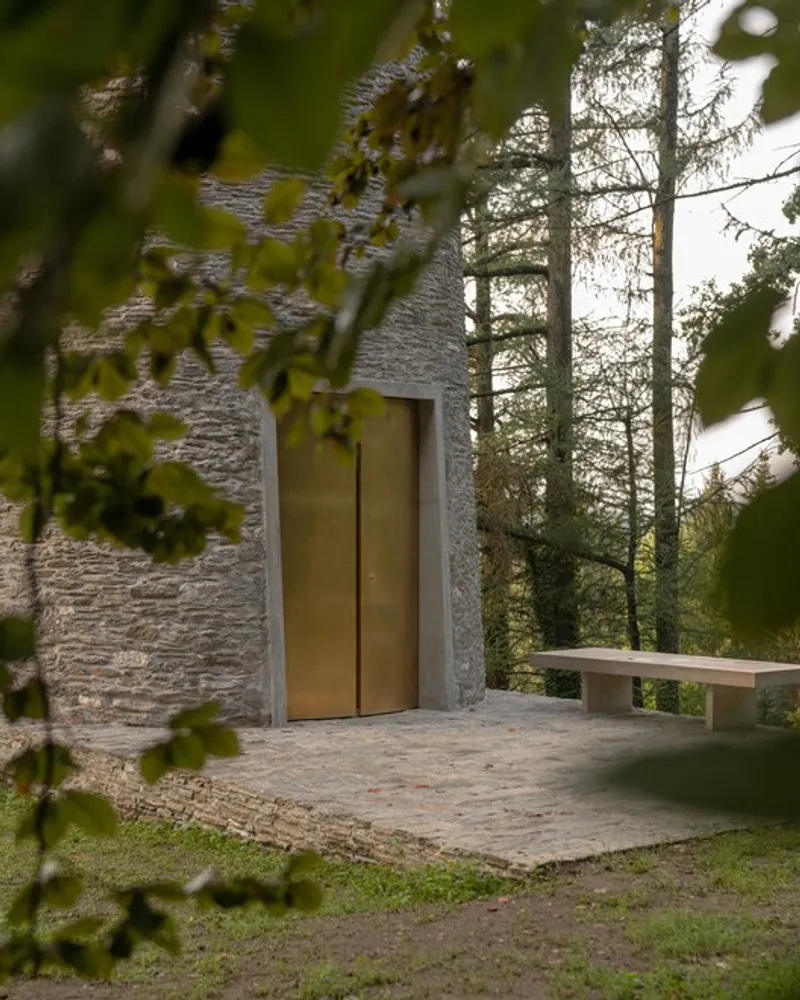
Commissioned by a local family for a site surrounded by centuries-old trees, the project presented a rare opportunity: a building liberated from functional compromise, freed to seek pure emotional and symbolic resonance.
A Sacred Architecture Beyond Function
Designing a funeral chapel is not part of everyday architectural practice, and for the Austrian-Finnish firm Berger Parkkinen + Architects, this became an exercise in distilling architecture to its elemental essence. Citing Adolf Loos’ notion that only the tomb and monument truly belong to art, the design explores a “borderline of architecture”—a space where purpose subsides, and expression emerges.
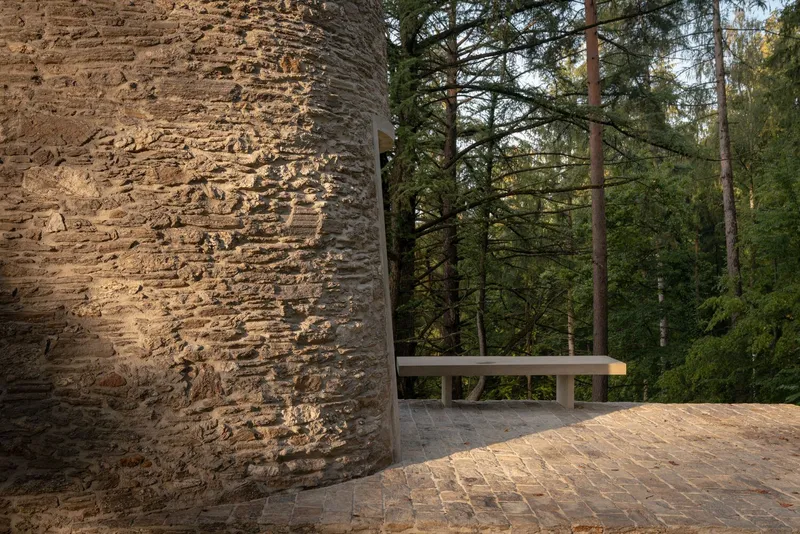
This idea guided the architects toward a form where function yields to contemplation, and spatial experience communicates directly with human emotion. The result is a minimalist, tower-like sanctuary rising from the park, both solitary and deeply connected to its setting.
Material Resurrection and Continuity
Central to the chapel’s identity is its material story—a narrative of continuity and reuse. Rather than import new construction materials, the architects built the chapel from reclaimed local stone, salvaged from the ruins of an 800-year-old farm building that once stood near the castle grounds.
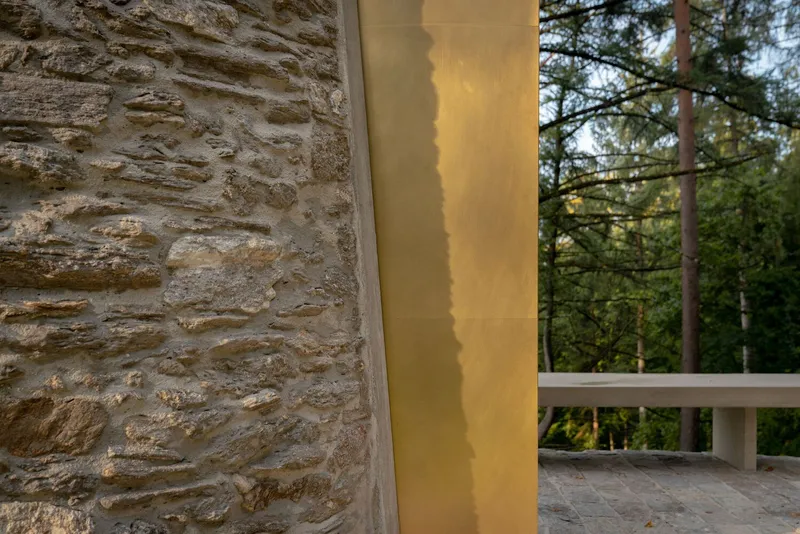
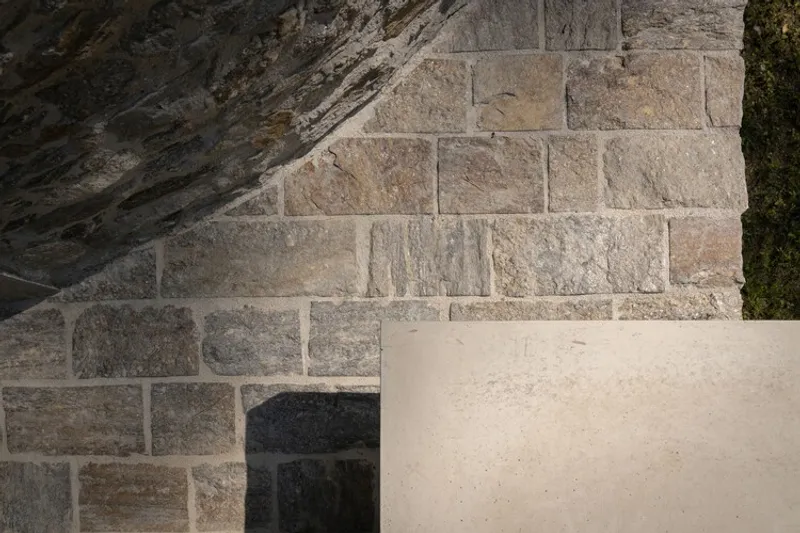
This stone, historically tied to the same masonry as the castle’s foundations and retaining walls, carries within it the memory of the site. By reassembling old stone into a new sacred form, the architects achieved both historical resonance and environmental sustainability—an architectural act of regeneration, linking the living to the departed through matter.
Form: A Timeless Cylinder in the Landscape
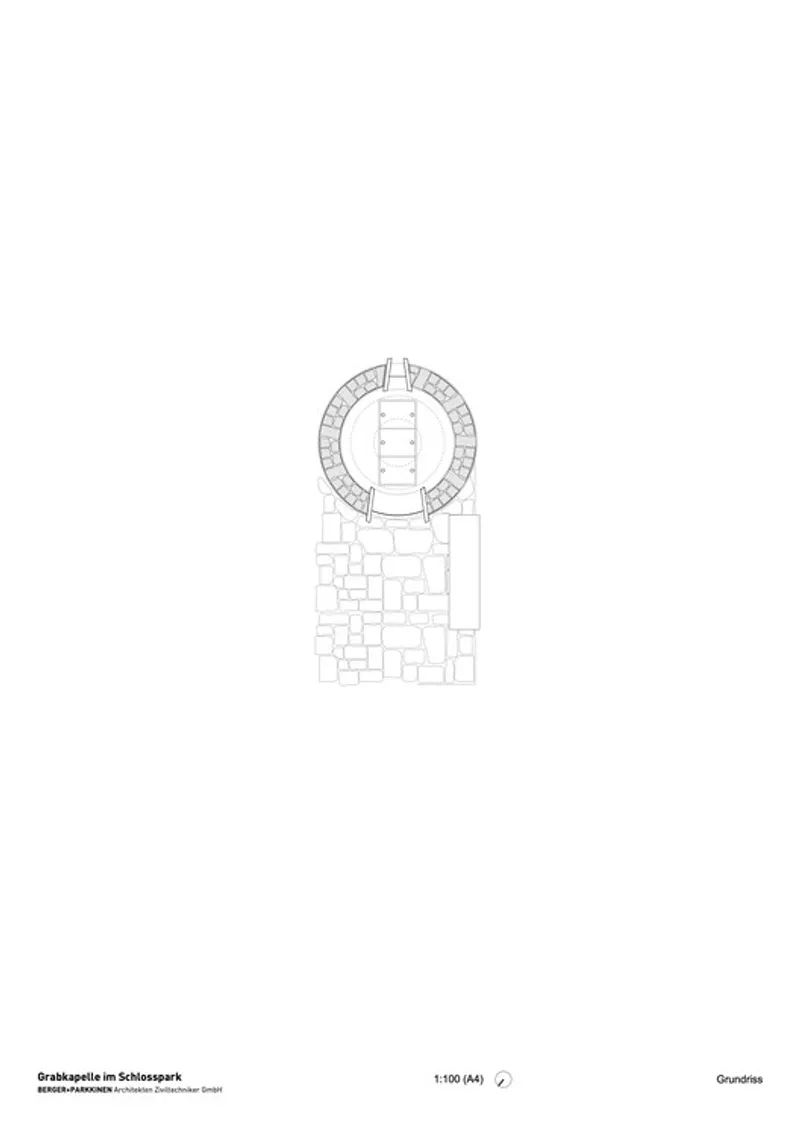
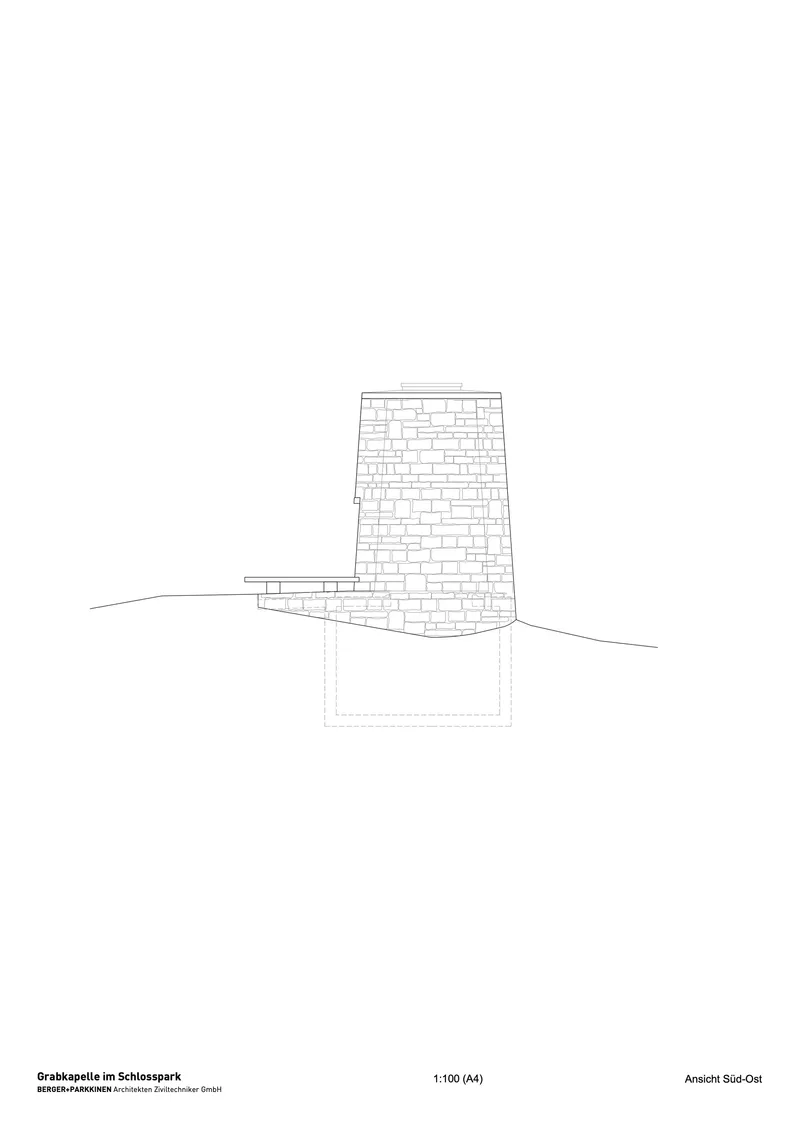
Rejecting sharp geometry and ornamentation, the design gravitates toward simplicity. The resulting structure is a round, tapering tower, serene and monumental, its cylindrical form harmonizing with the natural textures of the stone.
“Rough-hewn and rustic, this local stone resists precision geometry,” notes Alfred Berger. “Its true beauty lies in its surface and irregularity.” This characteristic material inherently defined the design logic: a continuous curved form that reveals the organic nature of the stone.
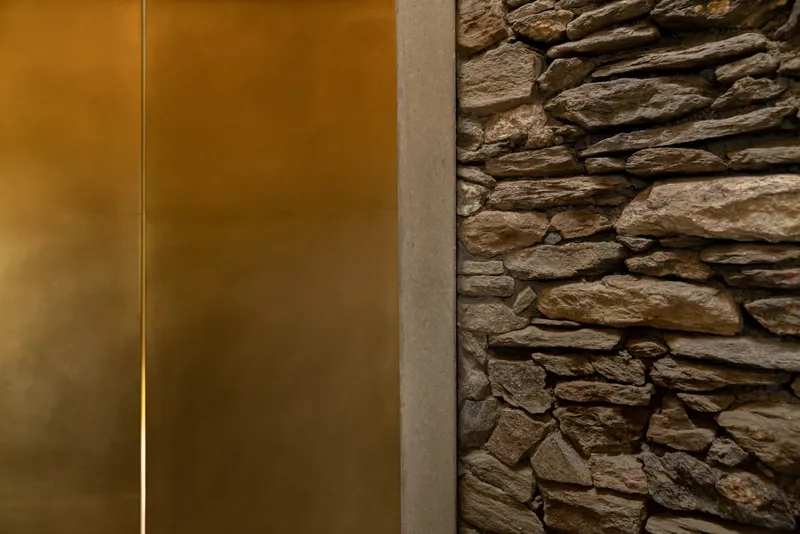
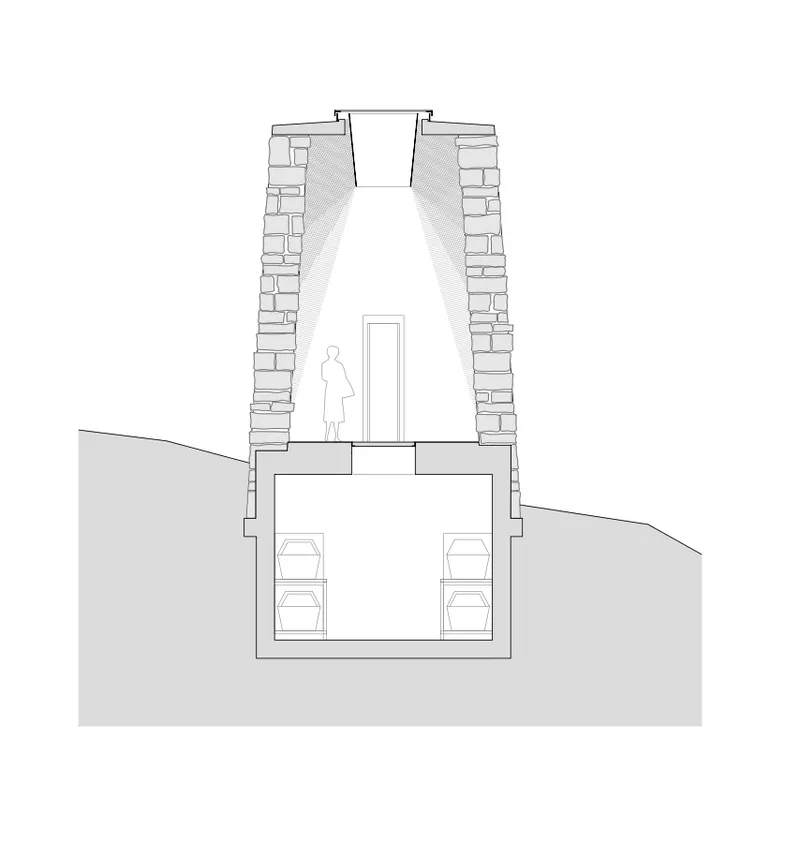
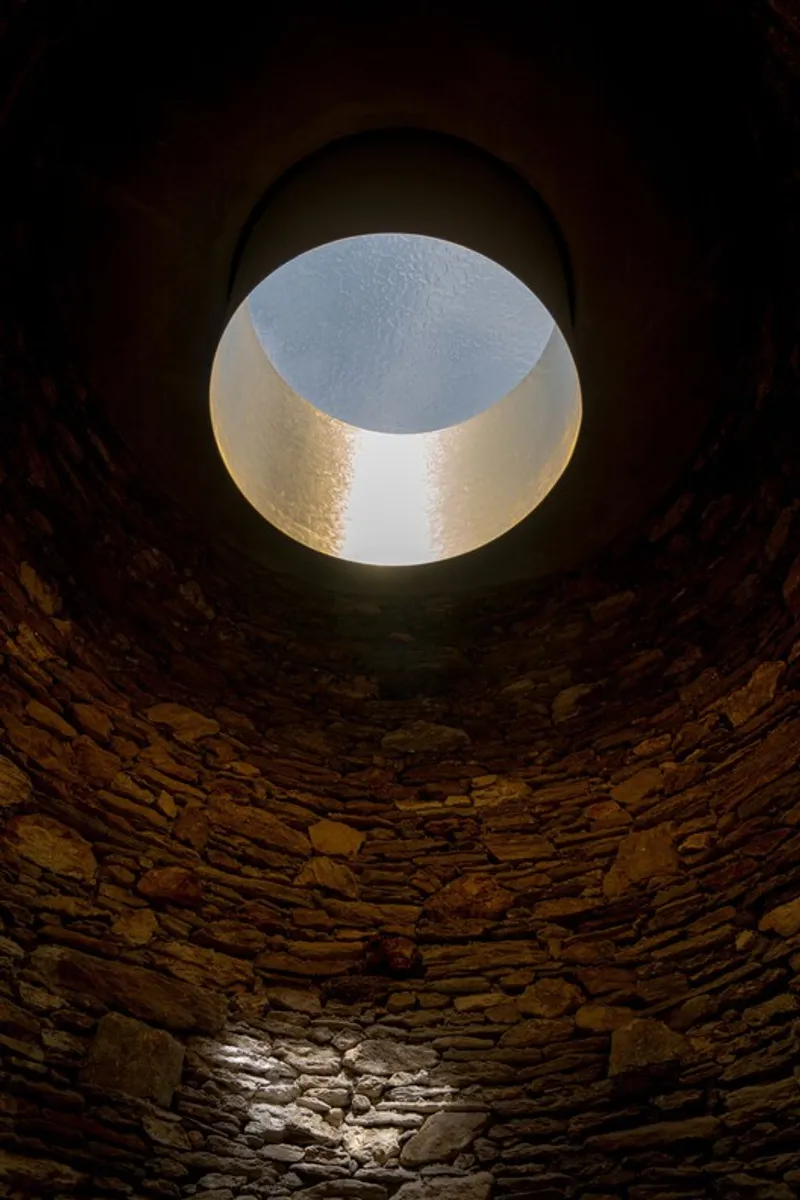
Three openings articulate the volume—a recessed entrance, a narrow vertical window framing a view toward the castle, and a circular skylight that connects the earthbound structure to the heavens above. These openings are framed with prefabricated, sandblasted concrete elementsthat contrast delicately with the texture of the ancient masonry, highlighting the dialogue between old and new.
Light: The Architecture of the Divine
Light plays the protagonist’s role within the chapel. Entered through a small vestibule on the shaded side, visitors step into a bright, vaulted interior washed in natural luminosity.
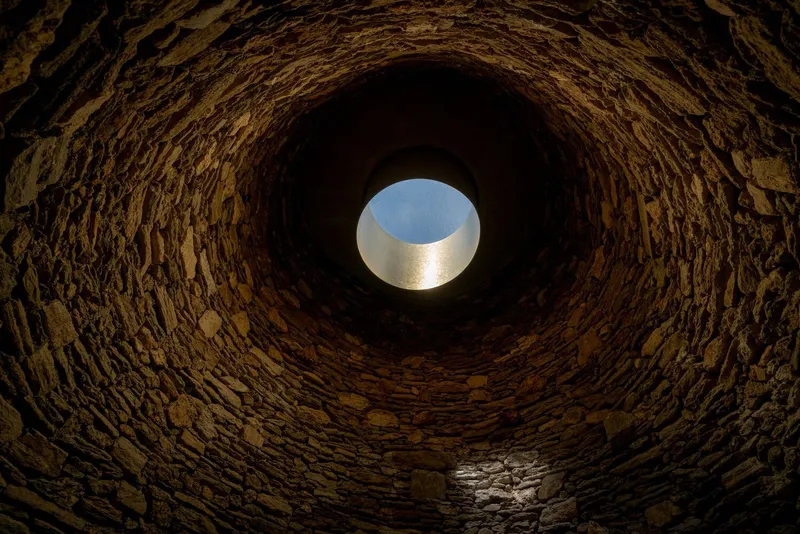
A perfectly circular oculus in the ceiling becomes the conduit between sky and earth. Sunlight streams through this aperture, filtered by an inverted gilded conical insert that diffuses and softens the light, producing a gradual downward glow. Throughout the day, this cone transforms the atmosphere—from the warm gold tones of morning to the silvery calm of dusk—creating an ever-changing spiritual experience.
The light enhances the tactile quality of the rough stonework, revealing its depth and imperfections, while symbolically linking the vertical axis of the building to notions of transcendence and eternal return.
Connecting Life and Death Through Architecture
The composition establishes a visual axis between the chapel and the nearby castle tower, uniting spaces of the living and the departed. Through its site placement and window framing, the chapel becomes a spatial dialogue—its gaze turned gently toward civilization while maintaining a meditative isolation amid nature.
This duality embodies the project’s conceptual intent: to create architecture as both memorial and bridge—a threshold between worlds.
Construction as Craft and Reflection
The building’s construction showcases artisanal mastery. Each stone—imperfect, varied, and weighty—was manually selected, cut, and laid, respecting its natural contours. While the design is contemporary in its precision, the craftsmanship echoes ancient building traditions of permanence and patience.
The chapel thus becomes a material expression of continuity, where architectural innovation emerges not through technology but through the intelligent reappropriation of history.
A Living Monument
The Chapel stands as a modern reinterpretation of sacred permanence. Its circular form, luminous interior, and rough stone shell together embody the timeless human desire for connection—with nature, ancestry, and transcendence.
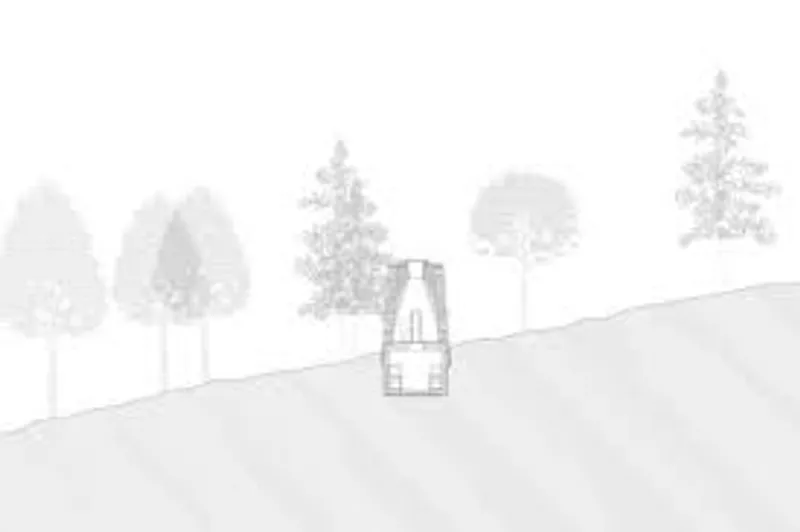
Berger Parkkinen + Architects have created a masterpiece of restraint and emotion, proving that even in minimalism, architecture can carry profound weight. In its silence, it speaks of renewal, memory, and the enduring beauty of light upon stone.
All the Photographs are works of Ana Barros



Popular Articles
Popular articles from the community


Conexión: Biophilic Design Reimagines High-Rise Living in Hong Kong
Conexión reimagines high-rise living in Hong Kong through biophilic design, green facades, shared spaces, daylight, water and nature within.

Lunar Spiral: Space Architecture Shaped by the Mathematics of the Universe
Lunar Spiral reimagines space architecture through Fibonacci geometry, lunar regolith, levitating habitats, and self-sustaining Moon living.

Co-Life: Senior Housing Design That Reconnects Older Adults With the City
Co-Life reimagines senior housing design through healing gardens, shared streets, workshops, and a sustainable community across generations.

Play: Fragments of Their World
Familiar architecture becomes modular playground design, creating safe spaces where displaced children can learn, connect, imagine and play.

Similar Reads
You might also enjoy these articles


Hodi-Mandai Geram
Project Function: Preservation and revitalization of the Intangible heritage and socio-spatial identity of the Hodi by Housing, Cultural Memory Center, Sacred Grove, landscape, local tourism economy


Olio Towers: A Mid-Rise for Performers That Fuses Housing, Rehearsal, and Stage
Located blocks from Houston's Theater District, this modular tower stacks living units around a central performance atrium.

Oasis: Modular Green Housing Carved into Dhaka's Urban Fabric
A shortlisted Plugin Housing entry reclaims unauthorized settlements in Dhaka with stepped concrete volumes, green roofs, and ventilation-driven design.

Black Hole: A Floating Megastructure for the Post-Physical Era
Emiliano Mazzarotto envisions a spherical, self-scaling arena where e-sports, digital hotels, and holographic stadiums replace traditional public space.


Explore Chapel Competitions
Discover active competitions in this discipline


Design Challenge - Contemporary interpretation of a religious complex


Challenge to reimagine the Iron Throne


Photograph architecture without architects


Illustrate the lost glory of Angkor Wat - Render Challenge
Comments (0)
Please login or sign up to add comments
No comments yet. Be the first to comment!