
The Collage Community by TJAD Original Design Studio: Revitalizing Urban Life Through Adaptive Reuse
Colorful adaptive reuse project transforms underused ground floor into vibrant community hub, blending transparency, flexible spaces, and urban interaction.


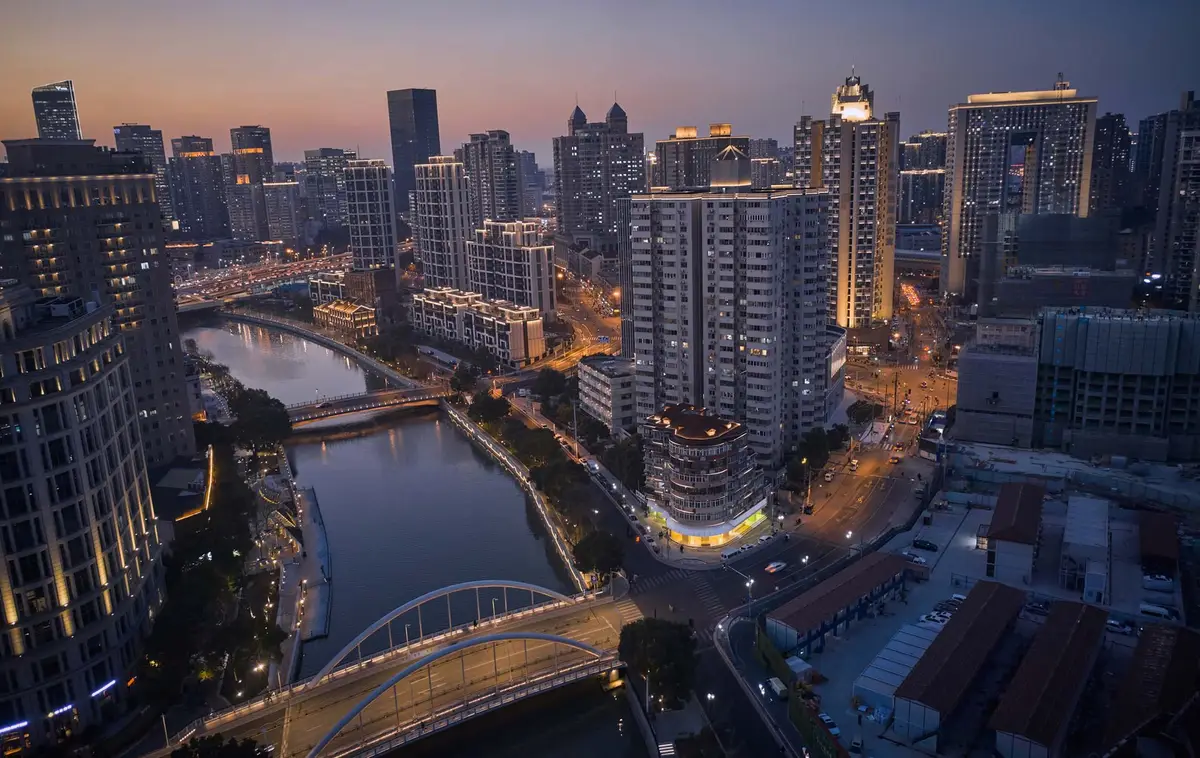
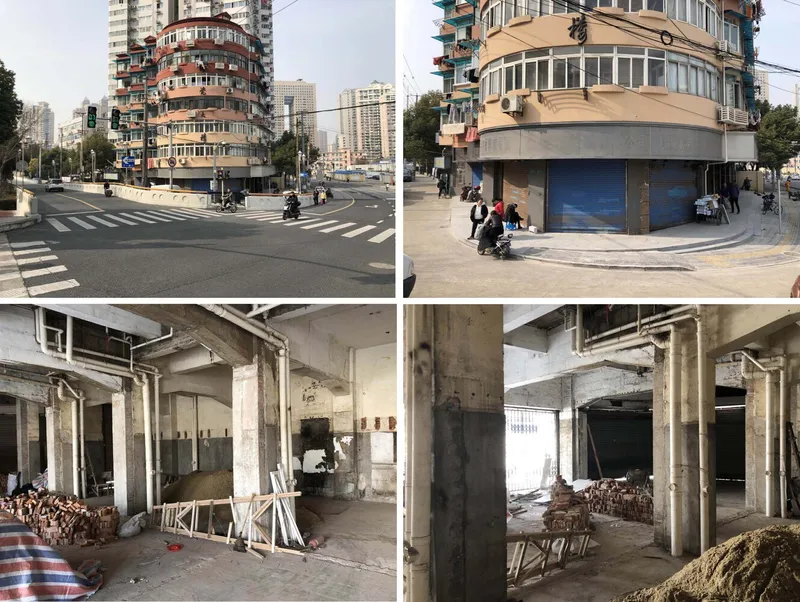
Located in Shanghai, The Collage Community by TJAD Original Design Studio represents a thoughtful transformation of an underutilized ground-floor space into a vibrant, multi-functional community hub. Completed in 2022, this 350-square-meter renovation project reimagines a former service station beneath a 1990s residential building owned by the Shanghai Ceramic Corporation, turning it into an active social interface that reconnects architecture with everyday urban life.
Adaptive Reuse and Urban Integration
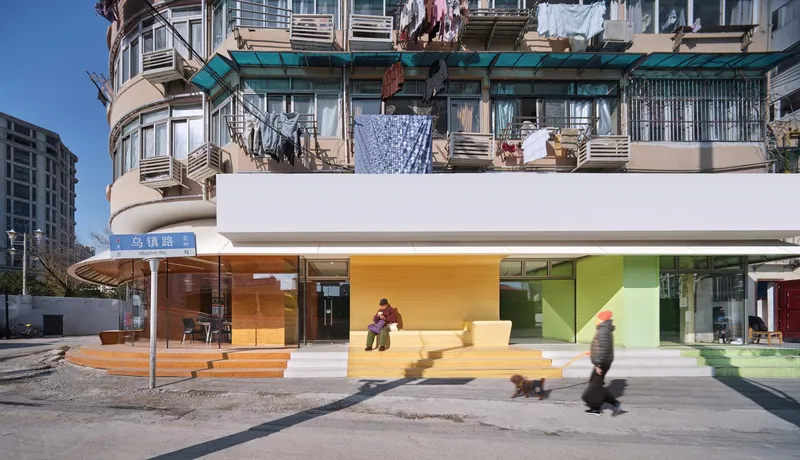
Originally occupied by hardware shops and auto repair services, the ground floor lacked connection to the surrounding residential community. The architects approached the project as an opportunity for adaptive reuse, introducing a program that integrates fitness, reading areas, volunteer services, and community activities. This shift not only revitalizes the physical space but also strengthens neighborhood engagement.
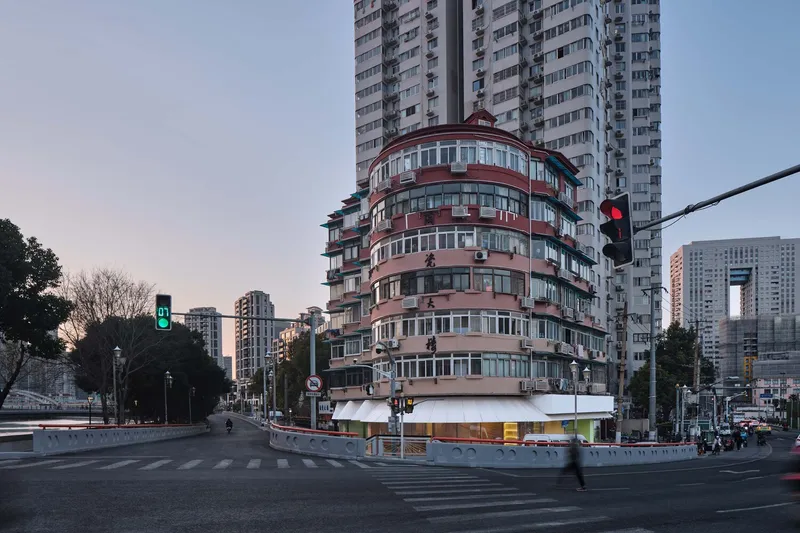
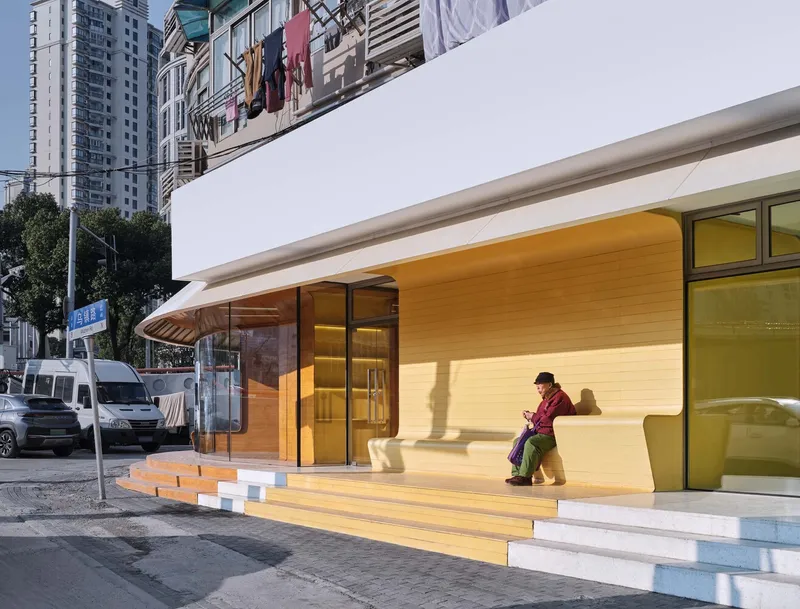
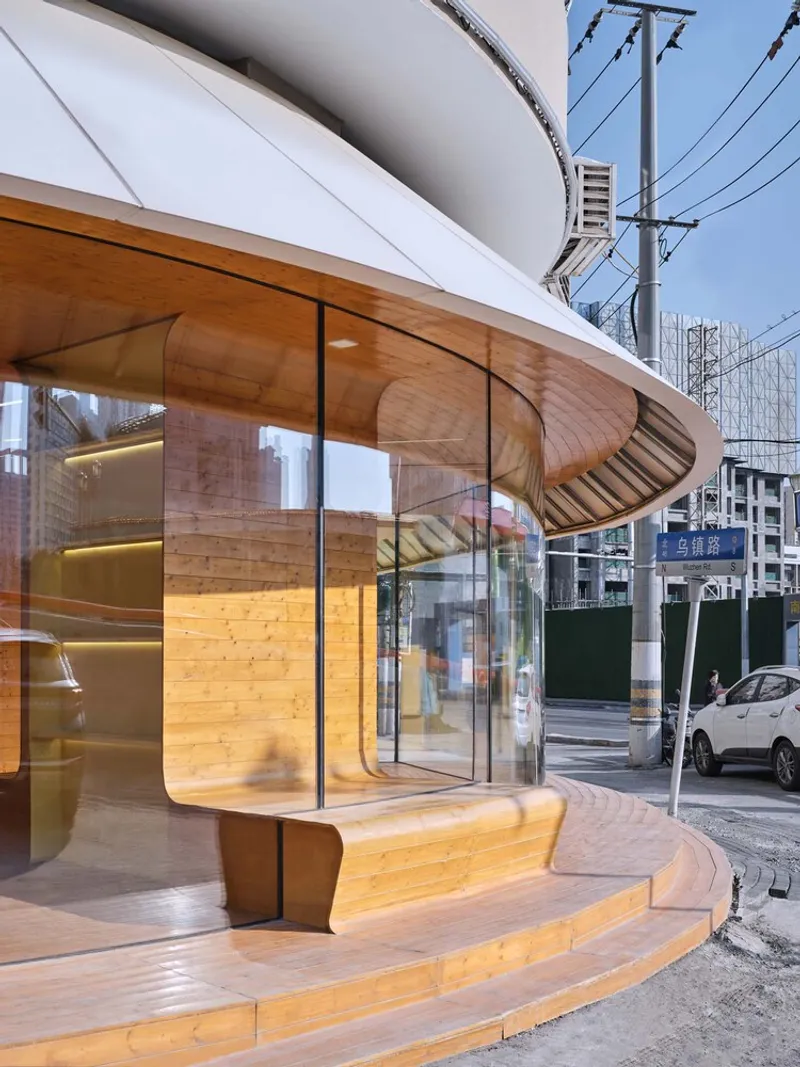
The building itself features a distinctive curved facade, horizontal window bands, and a gradient-colored exterior, elements that set it apart from typical late-20th-century residential structures. The intervention enhances these characteristics through a continuous white steel sheet roof that reinforces the building’s horizontal rhythm while visually unifying the facade.
A Transparent and Engaging Urban Interface
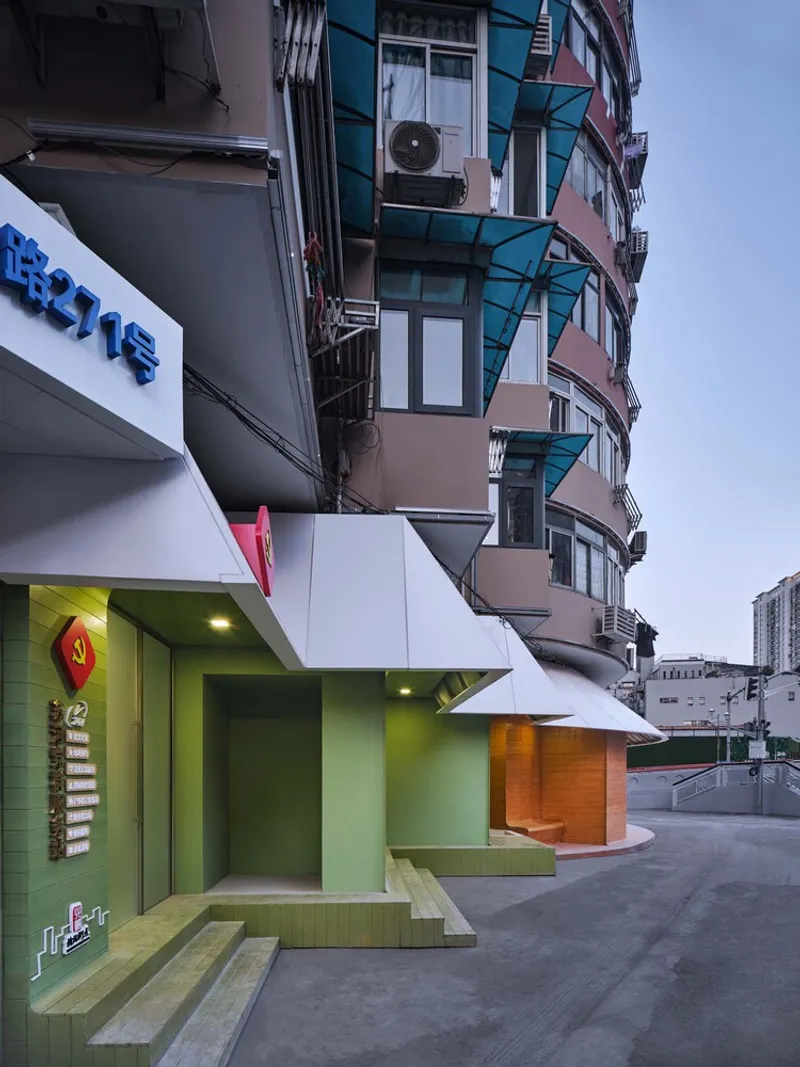
A defining feature of the project is its transparent ground-floor facade, achieved through expansive glass surfaces. This design strategy dissolves the boundary between interior and exterior, allowing passersby to visually engage with the activities inside. By externalizing internal functions, the architecture becomes an extension of the street, fostering inclusivity and interaction.
The outdoor extension of interior flooring, combined with strategically placed seating and a tea space, creates an inviting threshold where people can pause, socialize, and observe. This seamless transition between inside and outside enhances the building’s role as “urban furniture.”
Spatial Organization and Functional Flexibility
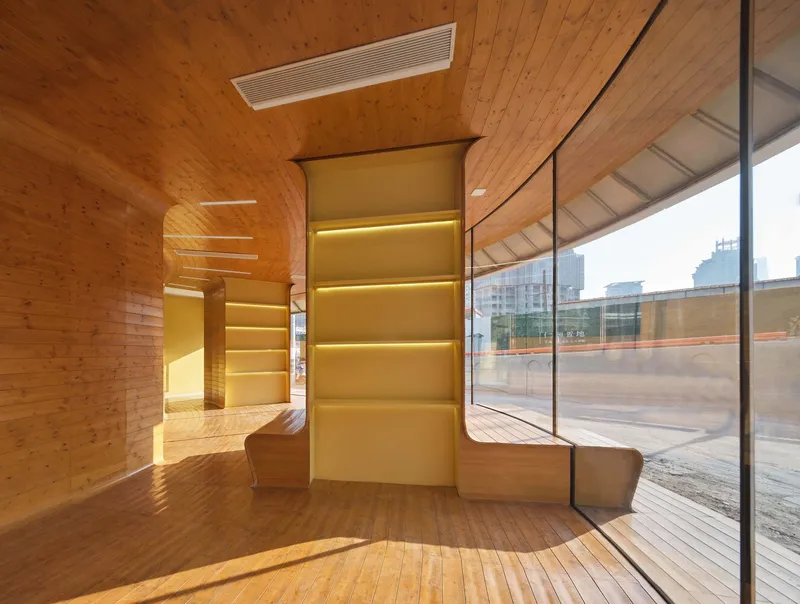
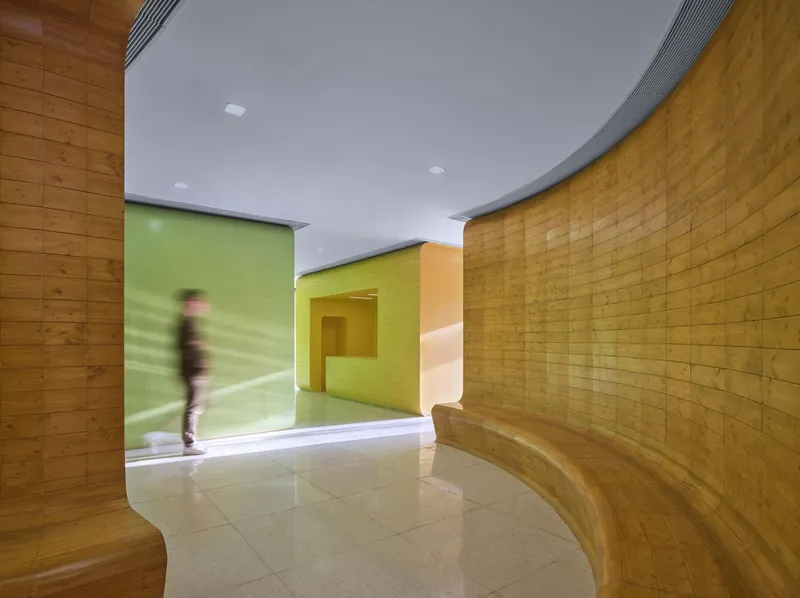
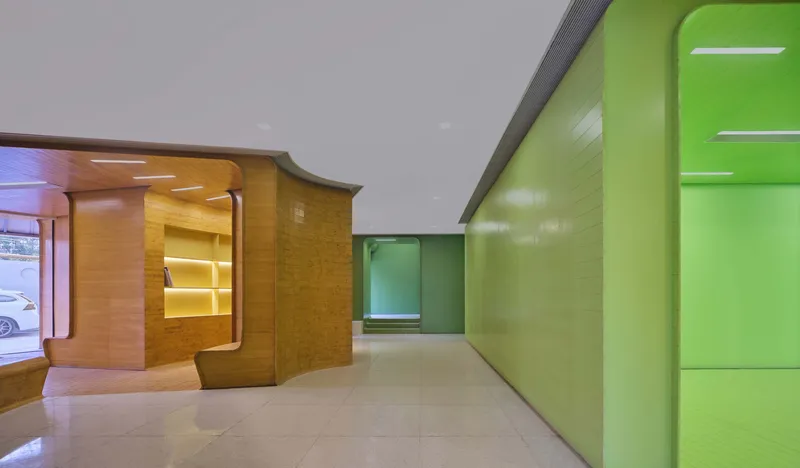
The layout follows a “space scroll” concept, where core functions are arranged along the daylight-facing facade. Larger, more structured areas like the gym occupy the northern zone, while flexible spaces such as reading areas are positioned at the curved corner to benefit from visibility and natural light.
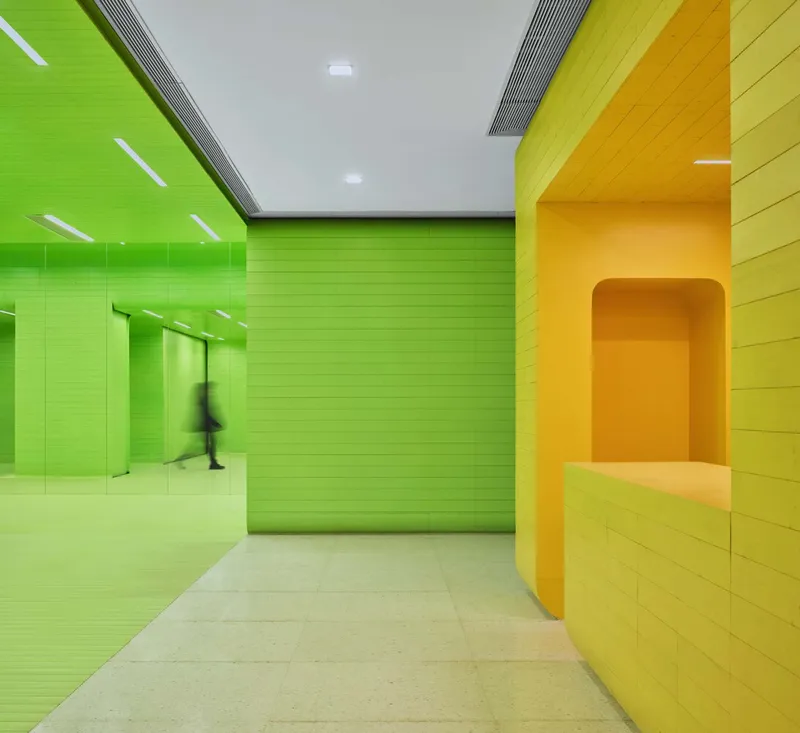
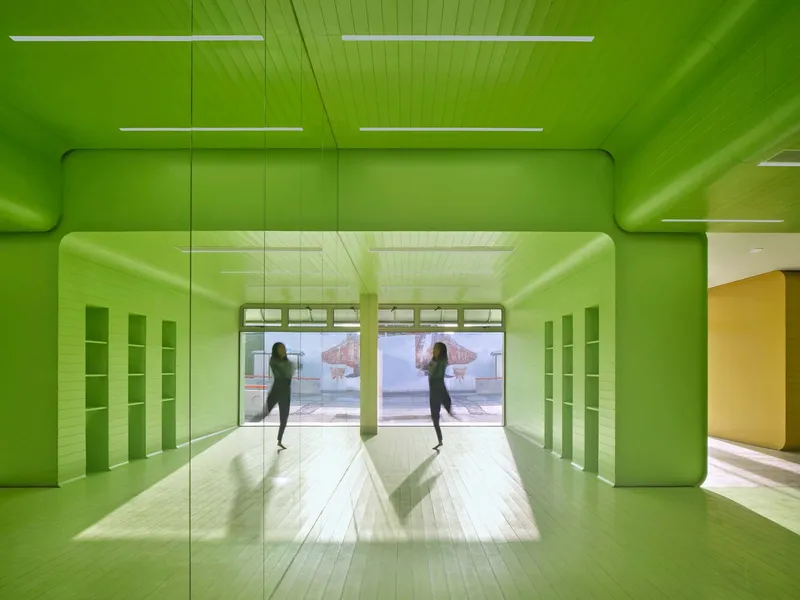
A continuous C-shaped spatial system, defined by colored wooden volumes, organizes the interior. These volumes house different functions while opening outward toward the facade, enabling visual connectivity. Each zone is distinguished by color: dark green for dynamic activity, natural wood for quiet study, light yellow for services, and soft green for fitness, creating a vibrant, collage-like spatial identity.
Shared Spaces and Community Interaction
Between these colored zones lie neutral, off-white shared spaces that act as flexible communal areas. These transitional zones host small lectures, reading sessions, and informal gatherings, reinforcing the project’s role as a community-centered environment.
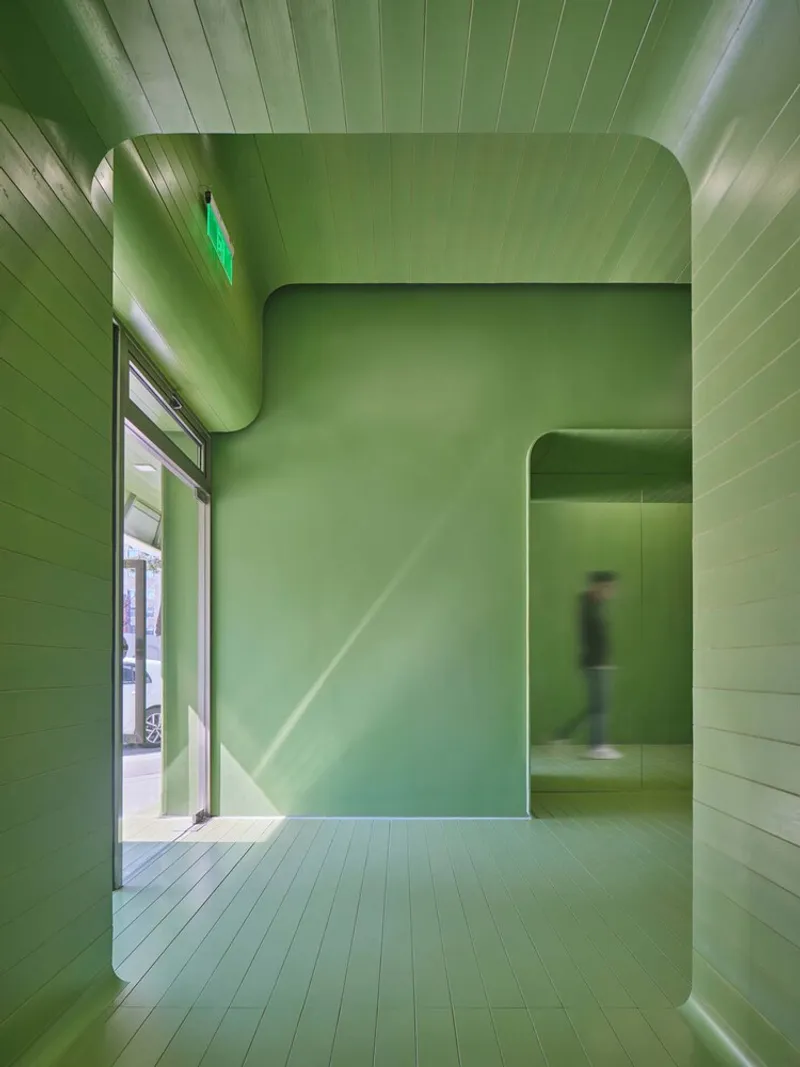
The design encourages visual permeability, allowing different functions to “glimpse” each other through openings and gaps. This layered spatial experience fosters a sense of openness while maintaining functional clarity.
Transforming Constraints into Design Opportunities
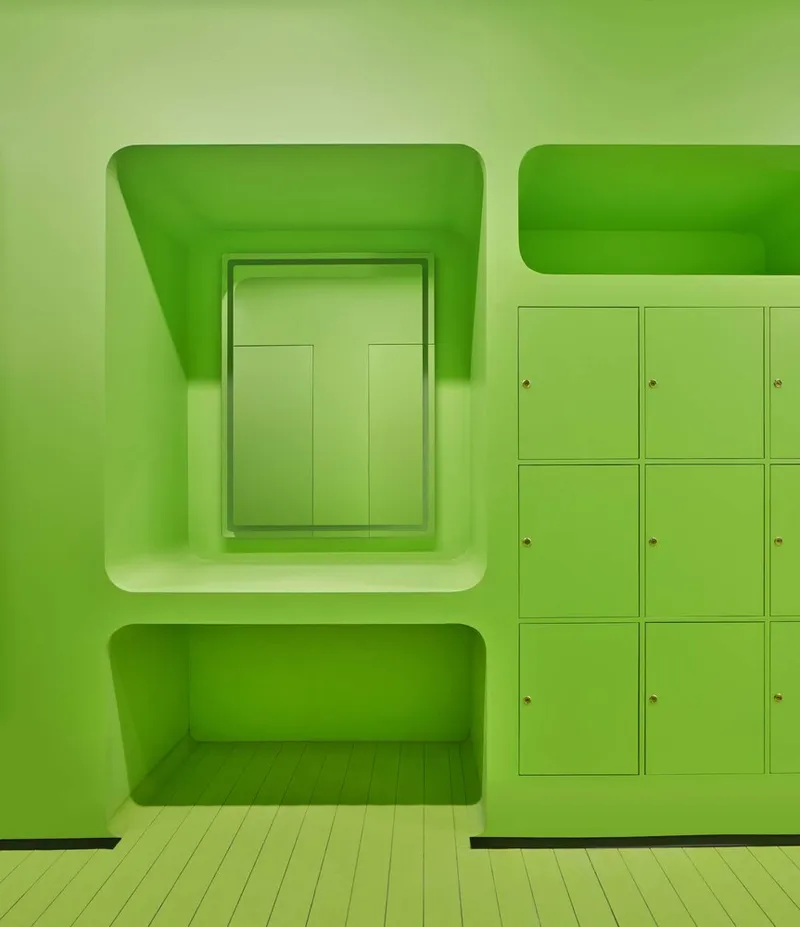
One of the project’s biggest challenges was the dense structural grid of columns and exposed service pipes. Instead of concealing these elements, the architects integrated them into the design. Using wood veneer and a strategy of continuous surfaces across walls, floors, and ceilings, structural components are transformed into functional features such as seating, partitions, display units, and alcoves.
This approach not only resolves spatial constraints but also enriches the architectural language, turning limitations into defining characteristics of the interior.
A Model for Community-Centered Design
The Collage Community demonstrates how small-scale urban interventions can generate significant social impact. By combining adaptive reuse, spatial innovation, and community-focused programming, the project redefines the relationship between architecture and public life.
It stands as a compelling example of how neglected urban spaces can be reactivated into dynamic, inclusive environments that support everyday interaction, learning, and well-being.
All photographs are works of
ZY Architectural Photography


Popular Articles
Popular articles from the community


Little Red Riding Hood: Architectural Design as a Journey Through Fear, Light, and Storytelling
Little Red Riding Hood reimagines the fairy tale through architectural design shaped by fear, light, scale, memory, uncertainty, and choice.

Conexión: Biophilic Design Reimagines High-Rise Living in Hong Kong
Conexión reimagines high-rise living in Hong Kong through biophilic design, green facades, shared spaces, daylight, water and nature within.

The Musturak Paradise: Senior Living Architecture for a Connected Future in Temara, Morocco
The Musturak Paradise reimagines senior living architecture in Temara via private homes, social spaces, culture, community, and shared care.

Lunar Spiral: Space Architecture Shaped by the Mathematics of the Universe
Lunar Spiral reimagines space architecture through Fibonacci geometry, lunar regolith, levitating habitats, and self-sustaining Moon living.

Similar Reads
You might also enjoy these articles

FAMM Arquitectura Organizes Ten Villas Around Courtyards and Jungle in Nosara, Costa Rica
El Molino pairs two elongated volumes with deep overhangs and timber louvers to build a compact coastal community five minutes from the beach.
Oscar Niemeyer's Ibirapuera Park Pavilions Define São Paulo's Cultural Identity in Concrete and Curve
A constellation of modernist volumes set within São Paulo's most important urban park, conceived for the city's 400th anniversary in 1954.
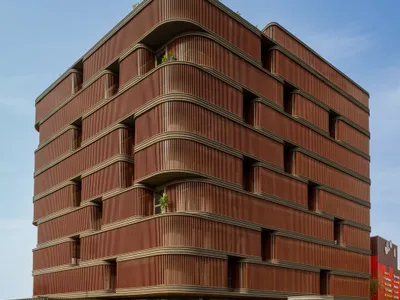
Sanjay Puri Architects Wraps a Jaipur Office Tower in Capsule-Shaped Green Buffers
A nine-level climate-responsive workplace near Jaipur Airport uses stacked planter terraces and aluminium screens to fight 40°C heat.
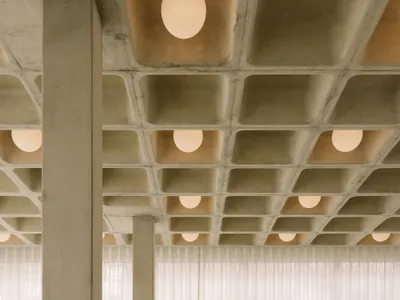
RHO Converts a Berlin Spree-Side Industrial Courtyard into Enkime's 1,000 m² Agency Headquarters
A social media agency's new home in Charlottenburg trades glossy branding for concrete waffle ceilings, glazed tile, and sheer curtains.

Explore Architecture Competitions
Discover active competitions in this discipline

Challenge to reimagine the Iron Throne

Photograph architecture without architects

Illustrate the lost glory of Angkor Wat - Render Challenge

Design challenge to reuse E-waste
Comments (0)
Please login or sign up to add comments
No comments yet. Be the first to comment!