

The DECK by VIASCAPE Design – Community Garden & Pocket Park in Shanghai
The DECK by VIASCAPE in Shanghai transforms a neglected greenbelt into an elevated community park, fostering recreation, social interaction, and urban connectivity.


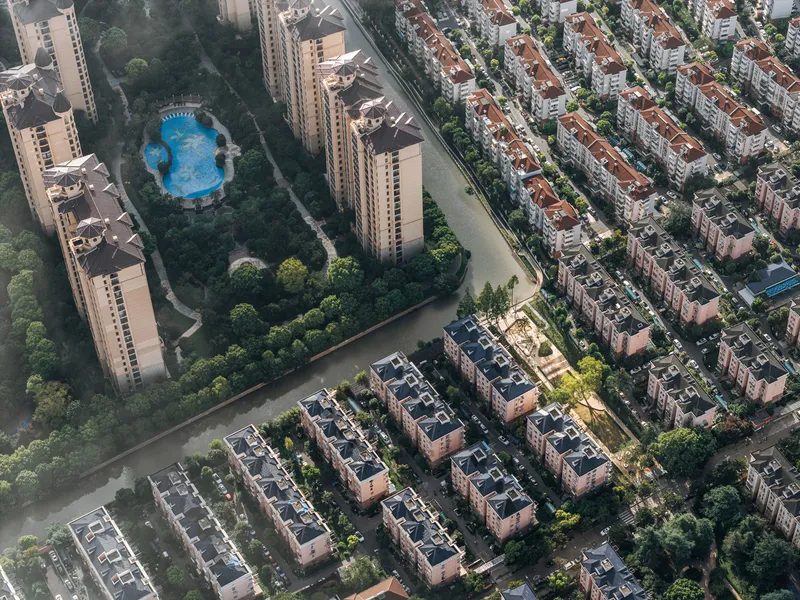
Located within the historic Youyou Community, one of Shanghai’s earliest self-built residential settlements, The DECK represents a transformative approach to urban public space design. Established in the early 1990s on expropriated farmland, the community originally lacked centralized spaces for social interaction. Narrow, mixed-use streets, congested parking, and a fragmented greenbelt contributed to a confined and introverted spatial experience.
Before renewal, the DECK site was a disordered greenbelt with tangled vegetation and zigzagging paths, offering almost no active public areas. Its spatial complexity and lack of openness hindered community engagement, highlighting the need for a revitalized green public space that fosters social connectivity.
Design Concept
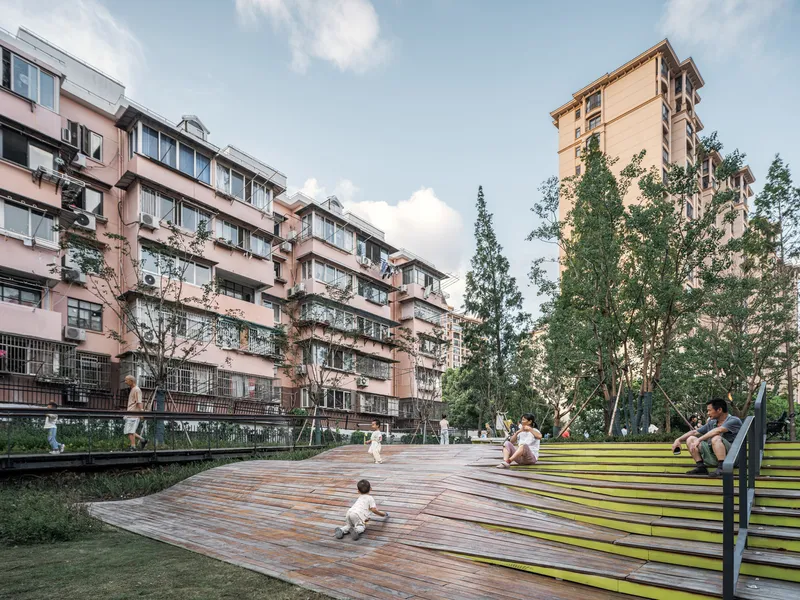
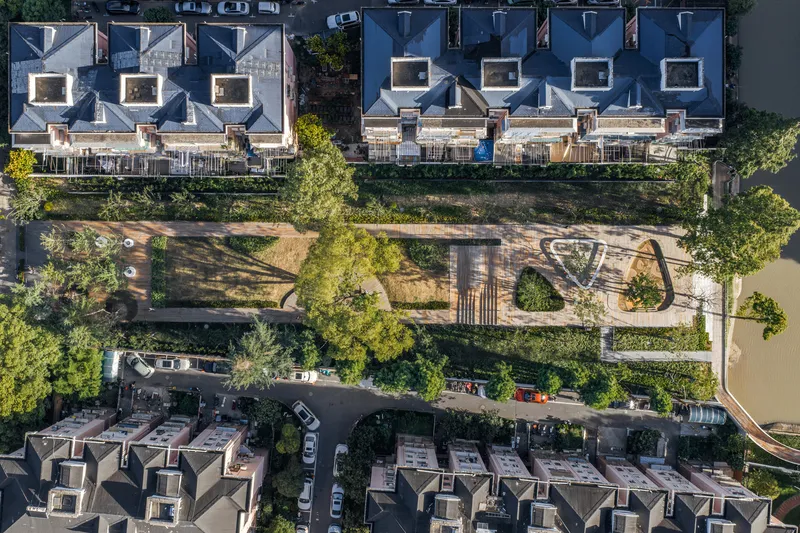
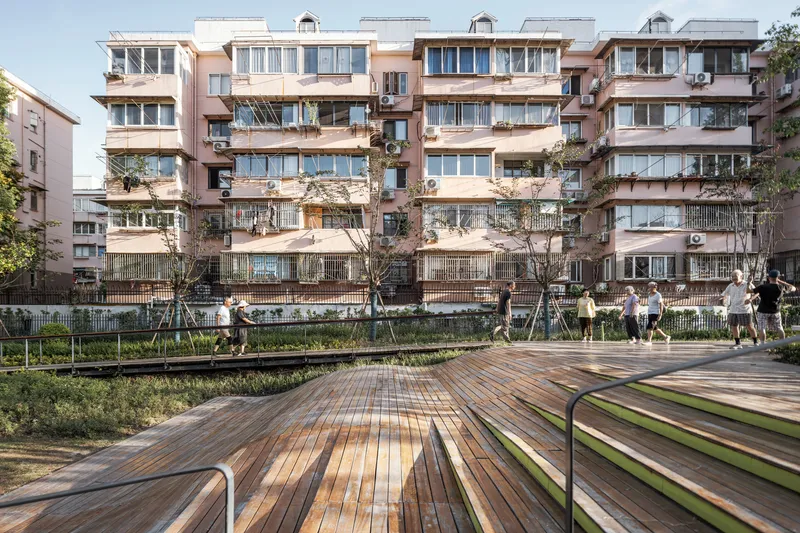
From the outset, VIASCAPE Design rejected traditional multi-level park structures and conventional scenic motifs. Instead, the design embraces simplicity, direct spatial expression, and maximum openness. The focal point of the project is a 90-meter-long, 15-meter-wide elevated Deck, which acts as both a physical and symbolic gesture of shared community space.
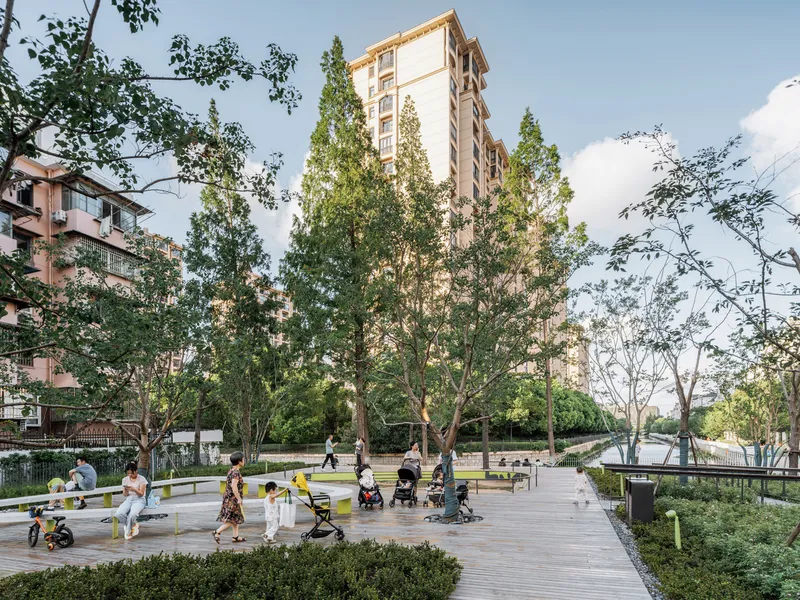
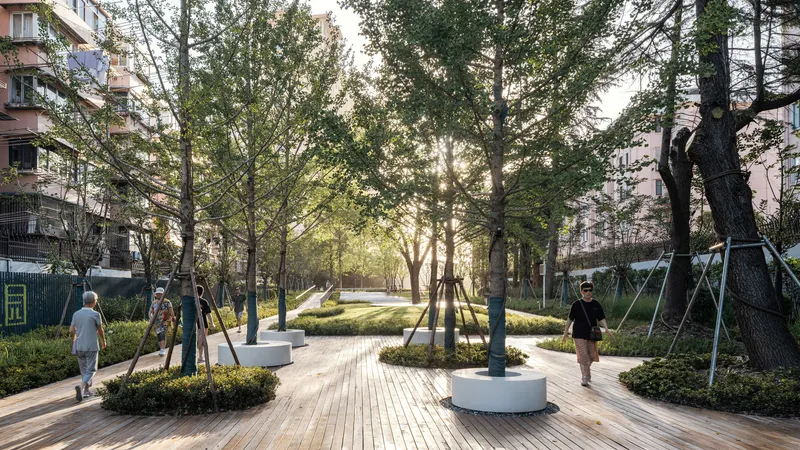
The Deck respects the site's existing trees and carefully integrates surrounding urban elements—residences, roads, and the nearby river—into a cohesive spatial narrative. Its elevated design provides residents with an enhanced green public space, fostering social interaction, play, recreation, and visual connectivity.
Integration with Langshuibang Creek
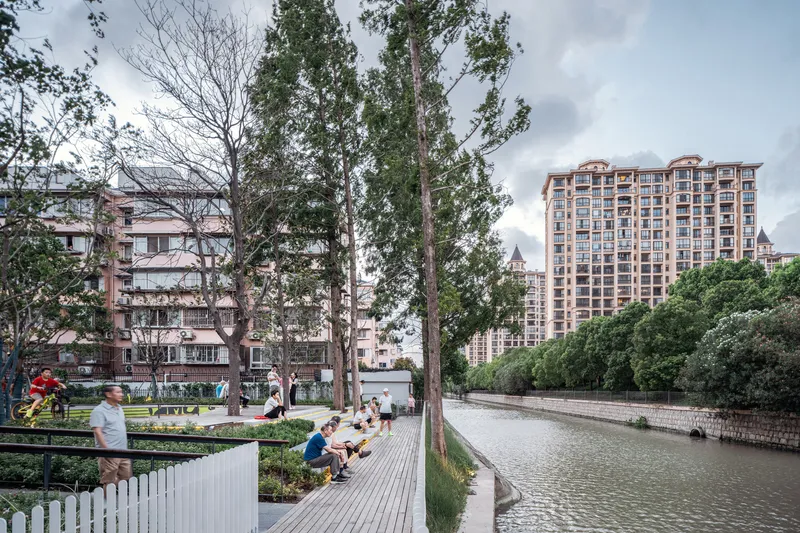
The eastern boundary of the site borders Langshuibang Creek, a key urban public landscape previously inaccessible to Youyou Community residents due to high riverbanks and enclosed vegetation. By elevating the Deck 1.5 meters, residents can now enjoy unobstructed views along the river, towards new landmarks like the Pudong Library, and across the skyline to the "Three Iconic Towers of Lujiazui." This design fosters a sense of urban connectivity, allowing the community to engage with Shanghai’s larger cityscape.
Spatial Strategy
The DECK’s spatial design emphasizes linear continuity, functional diversity, and playful interaction:
- Central Green Courtyard: A rectangular green space in the Deck’s middle mitigates noise and enhances a sense of enclosure while maintaining openness.
- West Entrance Relaxation Zone: Integrated benches and preserved cedar trees create casual resting spaces, blending garden atmosphere with street front.
- Elevated Deck Features: A seamless ramp (0 to +1.5m) and stepped activity zones encourage playful engagement. The highest platform incorporates trees to define subspaces for small-scale social interactions. Stepped seating transitions the Deck toward the riverside, promoting leisure and visual connectivity.
- A seamless ramp (0 to +1.5m) and stepped activity zones encourage playful engagement.
- The highest platform incorporates trees to define subspaces for small-scale social interactions.
- Stepped seating transitions the Deck toward the riverside, promoting leisure and visual connectivity.
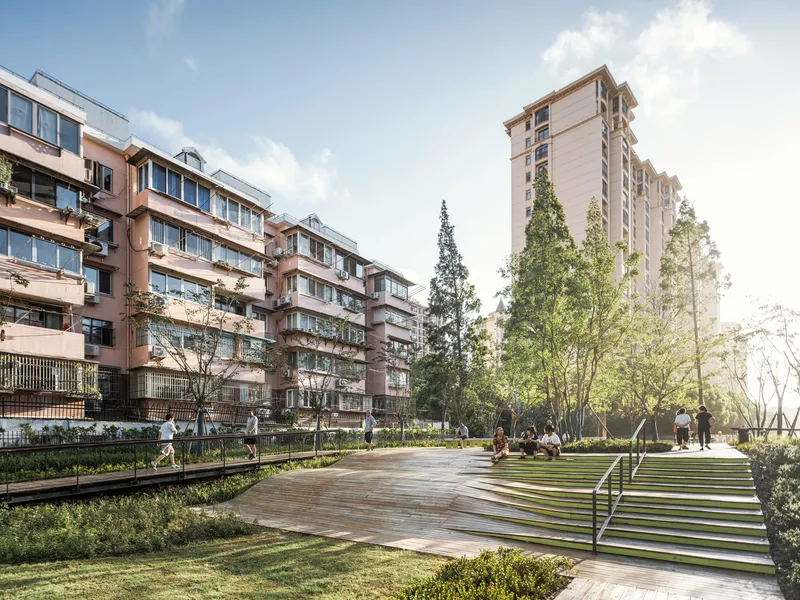
This approach allows spontaneous activities like children’s self-initiated play, adult exercise, and intergenerational recreation—fostering social interaction in a compact yet versatile urban green space.
Community & Urban Impact
Functionally, The DECK operates as a pocket park within a high-density urban context. Beyond providing recreational opportunities, it embodies a vision of landscape equality, offering the Youyou Community access to urban public spaces traditionally dominated by nearby high-end housing.
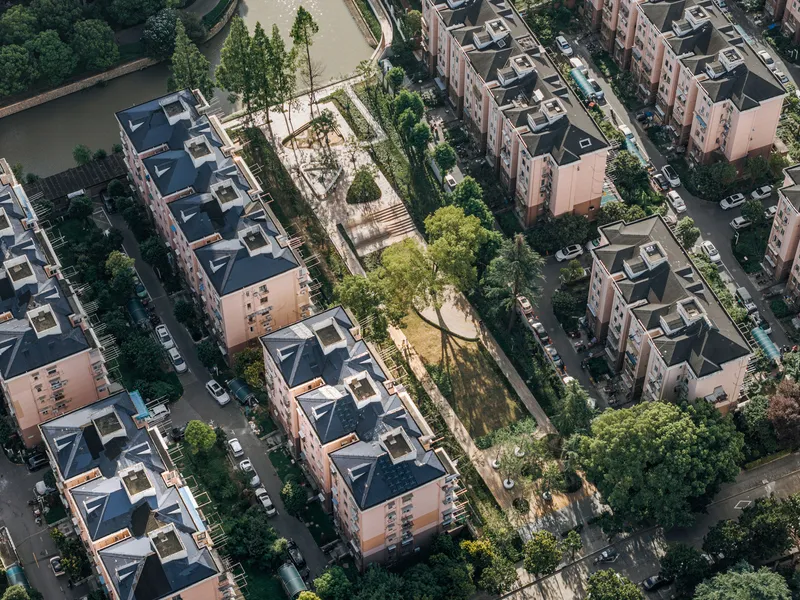
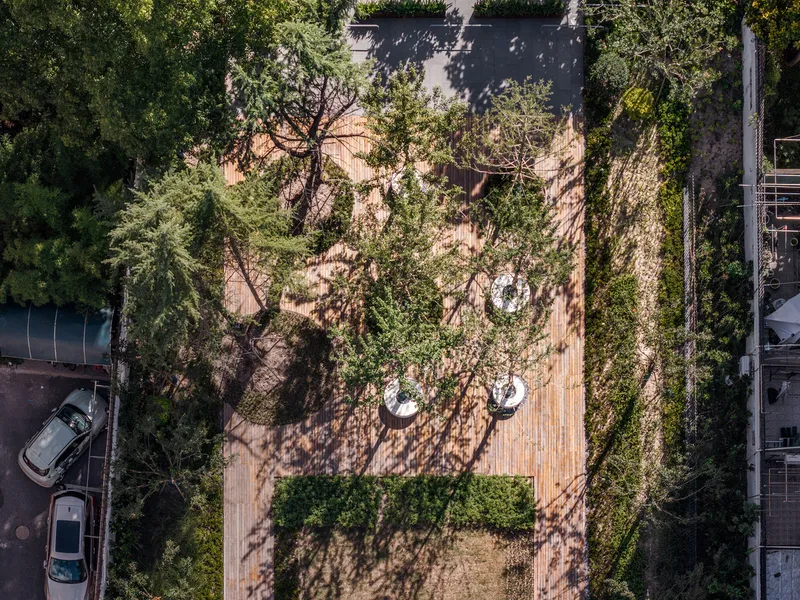
Following approval in 2021, VIASCAPE initiated a “15-Minute Walk Circle”, connecting the Deck to transportation, cultural facilities, and adjacent public landscapes through an accessible 1.8 km loop. The intervention integrates:
- Waterfront walkways
- Bike parking
- Recreational and commuter paths
- Kindergarten waiting areas
- Small-scale leisure spaces
This “from point to line, from line to loop” strategy demonstrates a replicable model for bottom-up urban renewal in dense Chinese cities, reinforcing community-driven landscape planning.
Future renewal of Youyou Park, adjacent to the Deck, is recommended to align with the Deck’s design principles and the 15-Minute Walk Circle framework, ensuring a holistic approach to public space programming and environmental quality.
All Photographs are works of CreatAR Images


Popular Articles
Popular articles from the community


The Amber Palace Opera: A Geological Fiction Surfaces on Tallinn's Baltic Waterfront
Pierre Brillard reimagines a Baltic legend as a public landscape, opera house, and waterfront promenade rooted in Tallinn's coastal identity.

Opera on the Sea: Driftwood Logic Shapes a Timber Opera House on Estonia's Coast
Trevor Orgill's opera house translates the entangled drift of floating timber into a civic building where wood, water, and music converge.

Opera by the Sea Estonia: Three Shells Dissolving Architecture into Tallinn's Coastline
A winning opera house proposal replaces monumental form with interconnected shells that blur the boundary between building, park and Baltic Sea.
Tsunami Convergenics: Turning Catastrophic Ocean Forces into Underwater Housing Infrastructure
A speculative underwater settlement off the coast of Onagawa, Japan, treats tsunamis and typhoons as energy sources rather than threats.

Similar Reads
You might also enjoy these articles


Hodi-Mandai Geram
Project Function: Preservation and revitalization of the Intangible heritage and socio-spatial identity of the Hodi by Housing, Cultural Memory Center, Sacred Grove, landscape, local tourism economy


Olio Towers: A Mid-Rise for Performers That Fuses Housing, Rehearsal, and Stage
Located blocks from Houston's Theater District, this modular tower stacks living units around a central performance atrium.

Oasis: Modular Green Housing Carved into Dhaka's Urban Fabric
A shortlisted Plugin Housing entry reclaims unauthorized settlements in Dhaka with stepped concrete volumes, green roofs, and ventilation-driven design.

Black Hole: A Floating Megastructure for the Post-Physical Era
Emiliano Mazzarotto envisions a spherical, self-scaling arena where e-sports, digital hotels, and holographic stadiums replace traditional public space.

Explore Vertical Garden Competitions
Discover active competitions in this discipline

Challenge to reimagine the Iron Throne

Photograph architecture without architects

Illustrate the lost glory of Angkor Wat - Render Challenge

Design challenge to reuse E-waste
Comments (0)
Please login or sign up to add comments
No comments yet. Be the first to comment!