
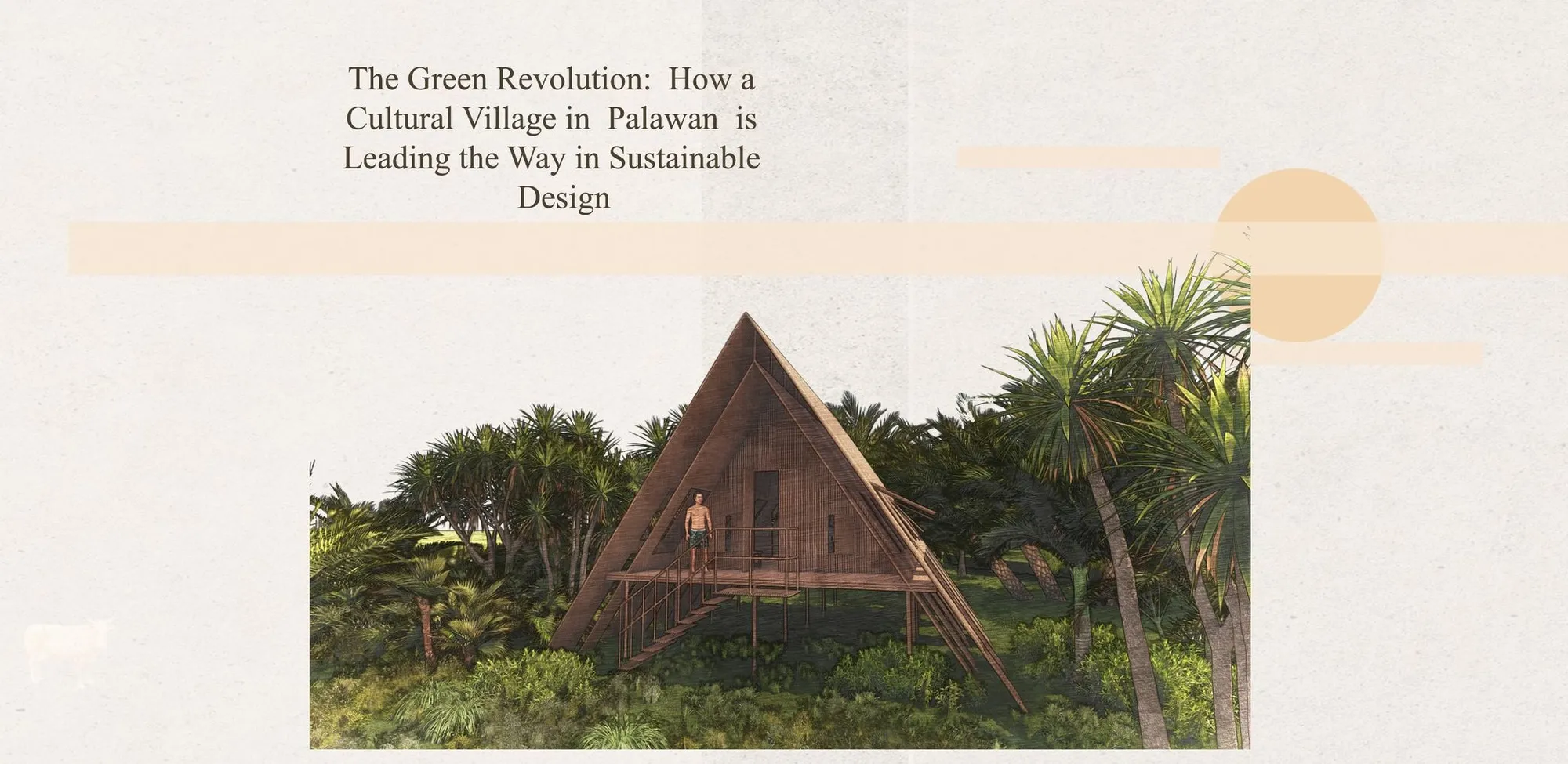
The Green Revolution: How a Cultural Village in Palawan is Leading the Way in Sustainable Design
This article discusses sustainable design in Palawan's cultural village, blending local culture with eco-friendly architecture.


Project The Green Revolution created by Alireza Ghasemi, Winner entry of Footprints competition Palawan, located in the western part of the Philippines, is known for its crystal clear waters, white sandy beaches, and lush tropical forests. However, the influx of tourists poses a threat to the island's delicate ecosystem and cultural traditions. In response, our team has designed a sustainable cultural village in Palawan that not only preserves local culture but also promotes environmentally responsible tourism. This article discusses the design approach, sustainable features, and the importance of using local labor and materials in the project.
Design Approach:
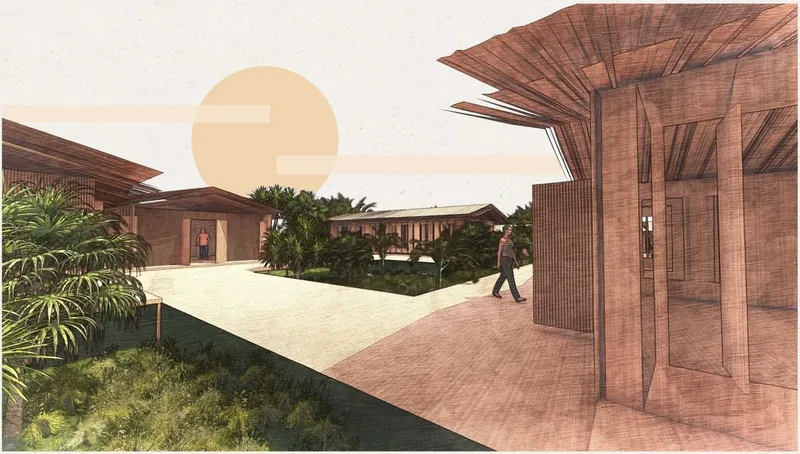
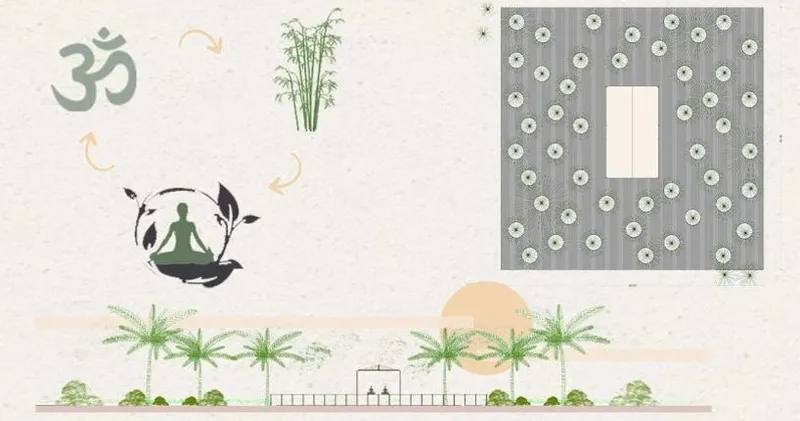
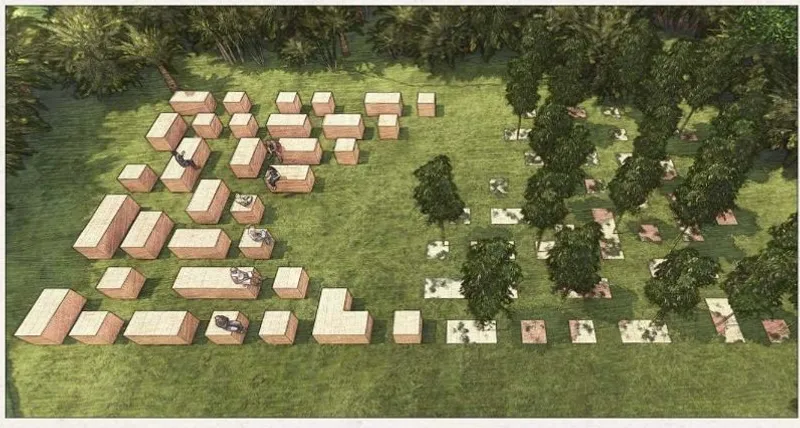
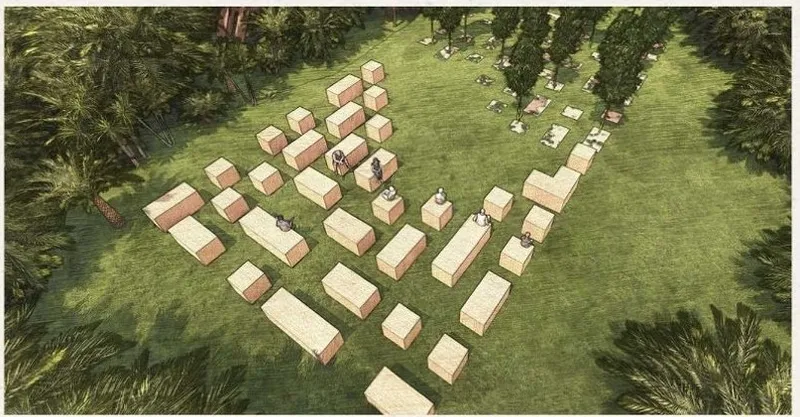
The design of the cultural village was inspired by the traditional Bahay Kubo houses found in Palawan City. Bahay Kubo is characterized by its simple and low-rise structure that blends seamlessly with the surrounding environment. Our design uses similar design elements, such as gable roofs and bamboo materials, to create a harmonious relationship between nature and architecture. In the design of the office spaces, we placed the buildings at a distance so that we can use the favorable wind, and we extended their roofs up to one meter to avoid the unfavorable sunlight with proper shading. In the yoga area, we tried to provide shade by planting bamboo. Let's have peace and spread respect for nature and help the forest to grow.

Sustainable Features:
To minimize the environmental impact of the project, we adopted several sustainable features. These include:
Green Spaces: We maintained green spaces throughout the project to promote biodiversity and combat the negative effects of urbanization. Even in areas like the yoga space, we integrated bamboo planting to create a unique and refreshing experience for visitors..
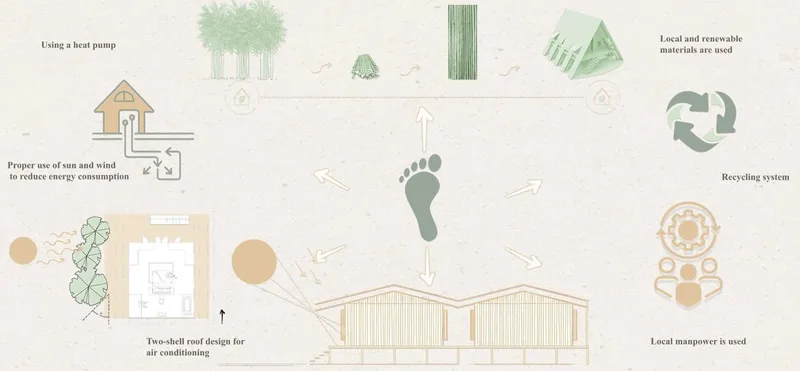
Local Materials: We used local materials whenever possible to support the local economy and minimize greenhouse gas emissions. This approach also helps preserve local traditions and cultural practices..
Cultural Preservation: Our design includes elements that celebrate and preserve Palawan's cultural heritage. For example, we have included a community center where local people can share their customs, traditions, and stories with visitors, fostering a deeper understanding of the region's rich history.
Eco-Friendly Waste Management: We have implemented an eco-friendly waste management system that encourages recycling and composting. This system helps to minimize waste sent to landfills, reducing greenhouse gas emissions and environmental pollution..
Natural Ventilation: Our design uses natural ventilation techniques, maximizing airflow through the design of multiple openings that raise the floor of the building above ground level to control humidity and minimize the need for mechanical cooling systems. This approach not only reduces energy consumption but also provides a more comfortable and healthy indoor environment.
Energy Efficiency: Our design uses efficient energy systems and renewable energy sources such as solar energy to minimize reliance on non-renewable resources. This approach helps reduce the project's overall carbon footprint and operating costs..
Water Conservation: We have implemented water conservation measures, including rainwater collection systems and gray water reuse, to minimize potable water consumption. This helps protect local water resources and reduces pressure on community resources.
Use of Local Labor and Materials:
Our team proposes to use local labor for production and carbon reduction. Due to the reduction of costs and reduction of carbon consumption in the region, we propose a suite unit for both common space and individual space, all of which can be used at very low costs and quite economically
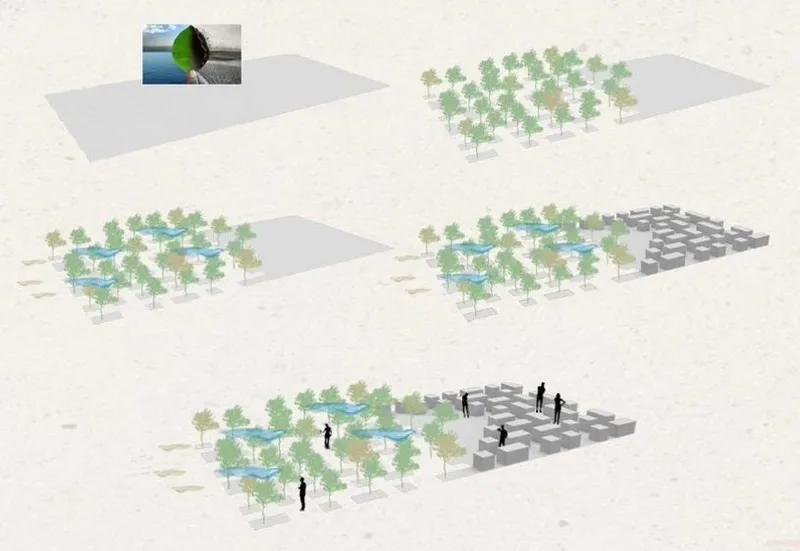
Our Sustainable Cultural Village in Palawan demonstrates that sustainability and cultural preservation can coexist while providing a functional and aesthetic space. By incorporating local design elements, sustainable features, and the use of local labor and materials, we can create structures that not only serve their purpose but also contribute to society and the planet. The project serves as a model for future developments in the region and demonstrates the potential of responsible tourism that benefits both locals and visitors.


Popular Articles
Popular articles from the community


The Ocean Hive: Sustainable Architecture for a Self-Sufficient Civilization at Sea
The Ocean Hive imagines sustainable architecture at sea, where modular habitats, algae, wave power and ocean waste sustain a growing colony.

Riyadh For All: Intergenerational Urban Design for Active Aging in Rabat
Riyadh For All reimagines urban design in Rabat with intergenerational co-living, adaptive courtyards, and Moroccan cultural exchange today.

The Earth Pod: 3D Printed Homes for Resilient Refugee Communities
The Earth Pod reimagines refugee housing through 3D printed homes made from clay, combining resilience, self-sufficiency, and rapid shelter.

Conexión: Biophilic Design Reimagines High-Rise Living in Hong Kong
Conexión reimagines high-rise living in Hong Kong through biophilic design, green facades, shared spaces, daylight, water and nature within.


Similar Reads
You might also enjoy these articles

Day and Night Park: A Time-Based Urban Newsstand in Beijing
A temporary urban newsstand in Beijing blending travel, light, and reading through poetic colors, compact form, and community-focused design.

Modernist Patio Renovation in El Masnou, Barcelona by Oliver Segura Arquitectura + Cebrià Arquitectura
Modernist patio renovation blending tradition and innovation with a movable pool, leveled floors, and Catalan materials in El Masnou.

Alto Residencial Coop: Cooperative Housing Development in Santiago de Compostela by Carbajo Barrios Arquitectos
A linear cooperative housing complex blending white volumes and perforated metal façades, enhancing community living, natural light, privacy, and urban integration.

Vil Genis School by BPA ARCHITECTURE – Massy, France
Vil Genis School in Massy, France, features sustainable design, south-facing classrooms, community integration, accessible spaces, and modern educational architecture.


Explore Cultural Architecture Competitions
Discover active competitions in this discipline



Challenge to reimagine the Iron Throne


Photograph architecture without architects


Illustrate the lost glory of Angkor Wat - Render Challenge


Bring back Drive In's
Comments (0)
Please login or sign up to add comments
No comments yet. Be the first to comment!