
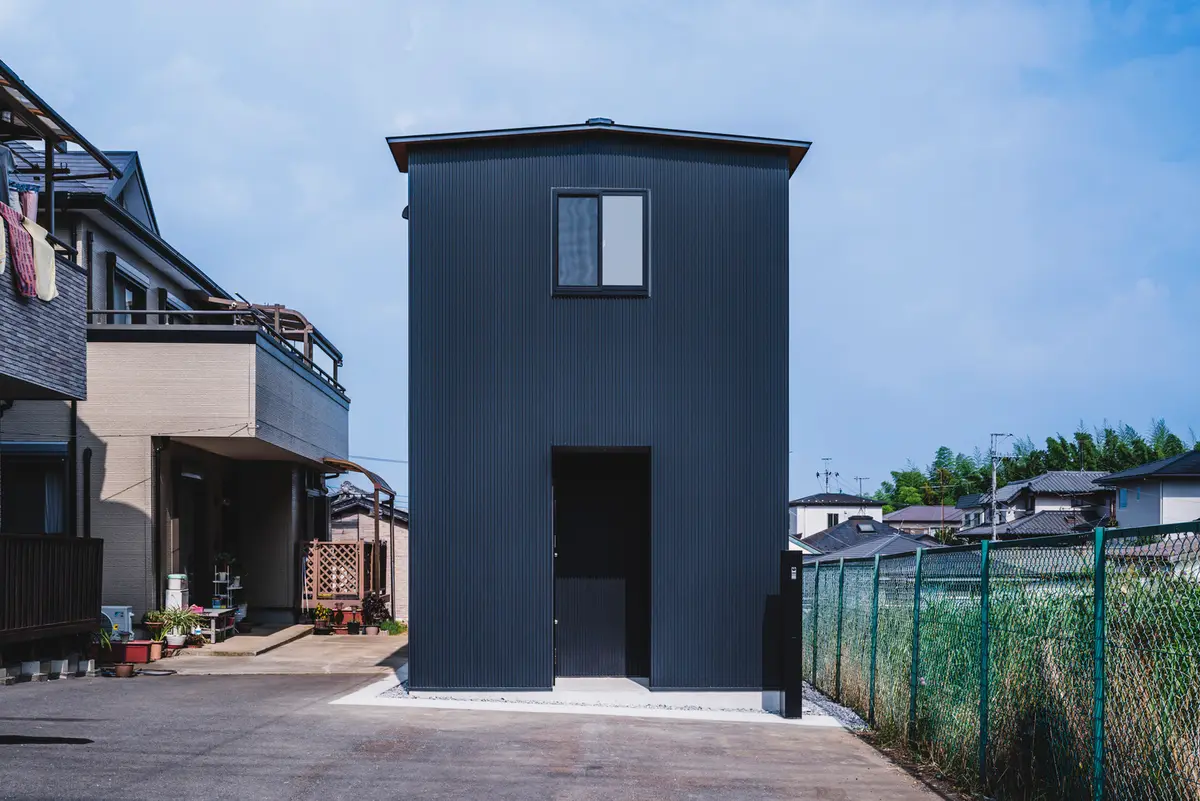
The House Apart by IGArchitects: A Contemporary Hanare in Chiba, Japan
A contemporary Japanese home by IGArchitects blending tradition and modernity, fostering intergenerational connection through minimalist design and spatial openness.


Reinterpreting Family Living Through Architecture
Located in Chiba, Japan, The House Apart by IGArchitects reimagines intergenerational living through a spatial dialogue between tradition and modernity. Designed by Masato Igarashi, this 144-square-meter residence sits on a long and narrow site that was once a private road—measuring 4 meters wide and 35 meters deep. The project emerges as a sensitive architectural response to family proximity, environmental context, and strict zoning regulations.
A Home Rooted in Connection and Independence
The new home was built on the corner of the client’s family property, adjacent to their parents’ house. Observing the natural daily interactions between the client, their mother, and grandmother, IGArchitects envisioned a contemporary reinterpretation of the hanare—a traditional detached dwelling found in Japanese domestic architecture. This approach allows the new home to exist in close connection with the main family house while maintaining a sense of independence and privacy.
Spatial Simplicity and Site Responsiveness
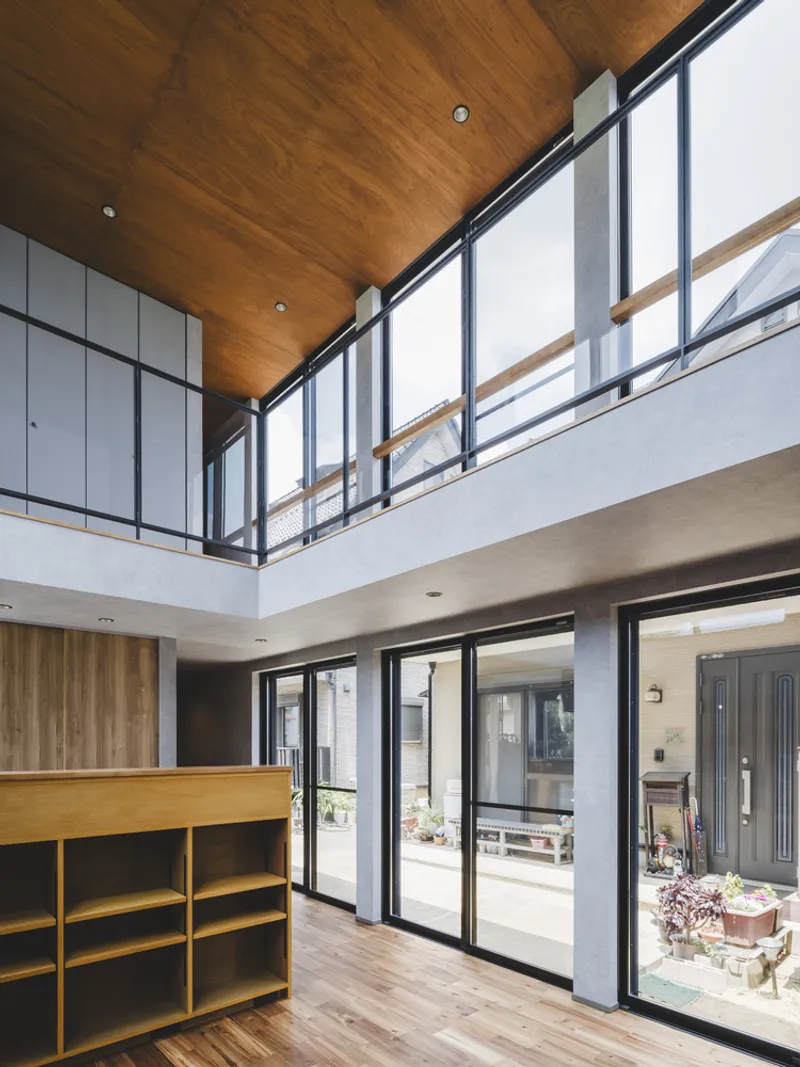
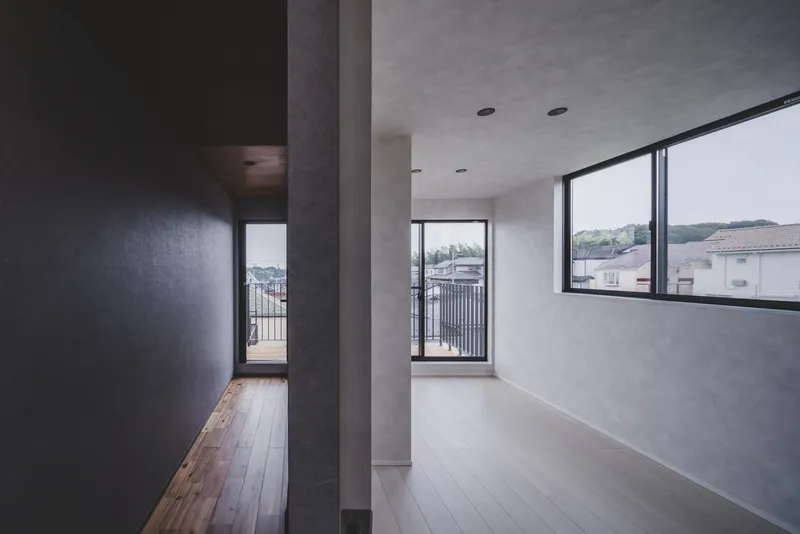
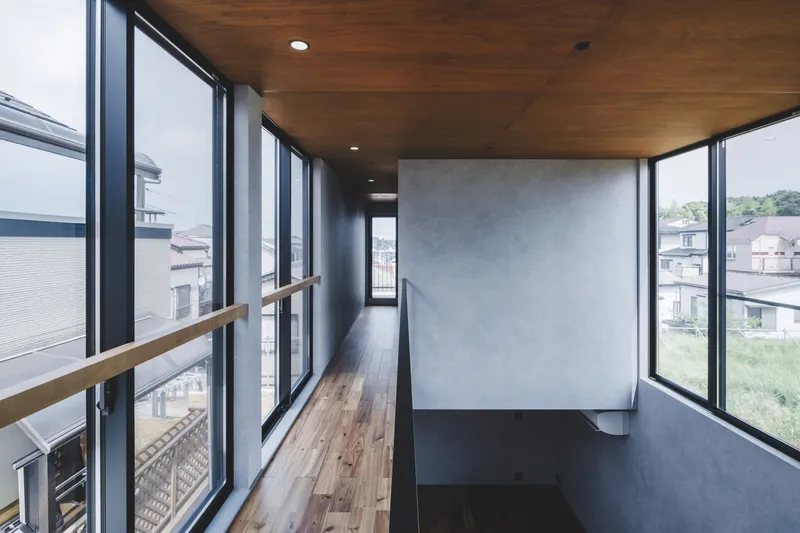
Due to zoning restrictions and the site’s slender configuration, the architectural form was kept deliberately simple. IGArchitects organized the plan based on environmental relationships rather than formal symmetry. The circulation spaces are aligned along the north side, facing the parents’ home, while the private rooms are oriented toward the south, where sunlight and openness are maximized.
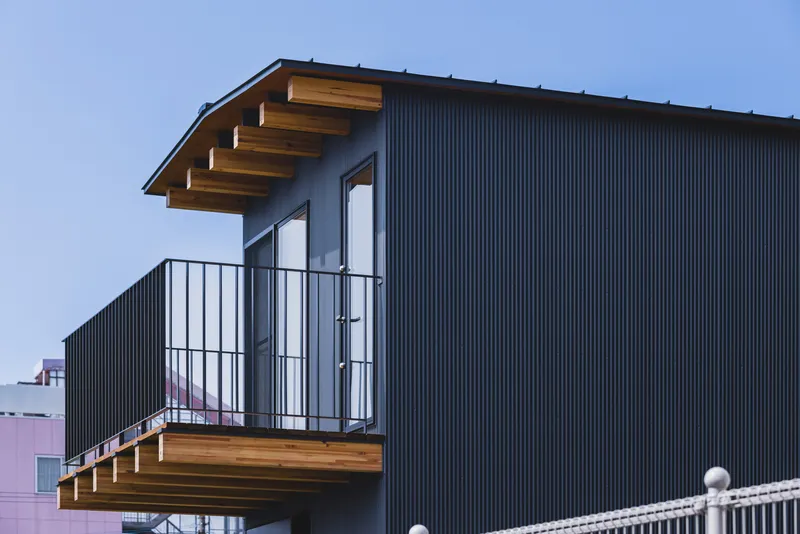
A sliding glass door on the northern façade creates a semi-outdoor veranda that visually links the two homes, while terraces and balconies on the eastern side overlook the city from the elevated edge of the cliff. This design ensures that every opening captures light, air, and connection—without compromising privacy or structure.
Vertical and Longitudinal Connections
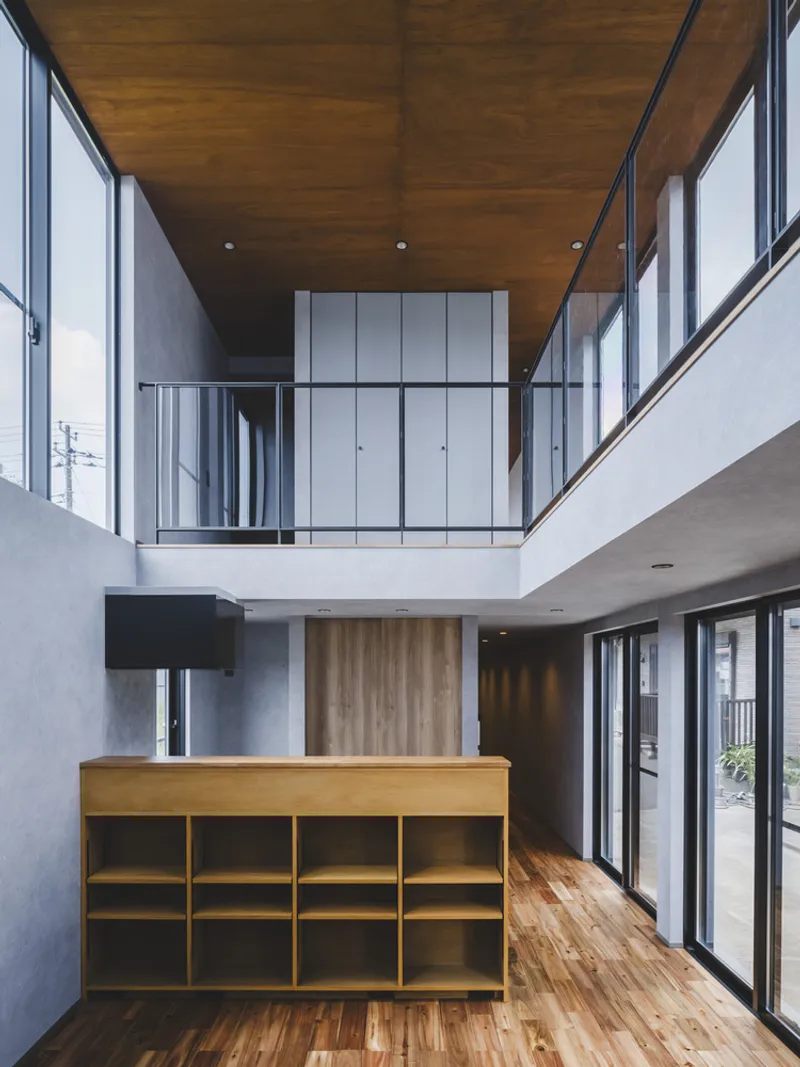
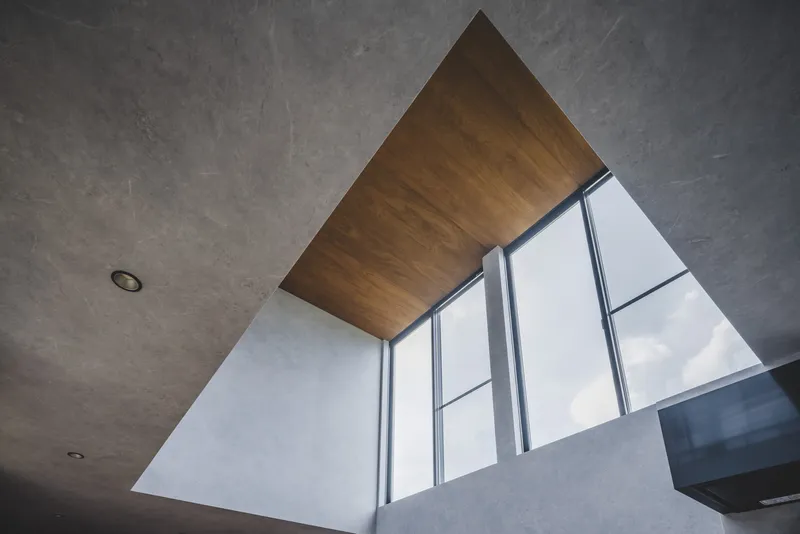
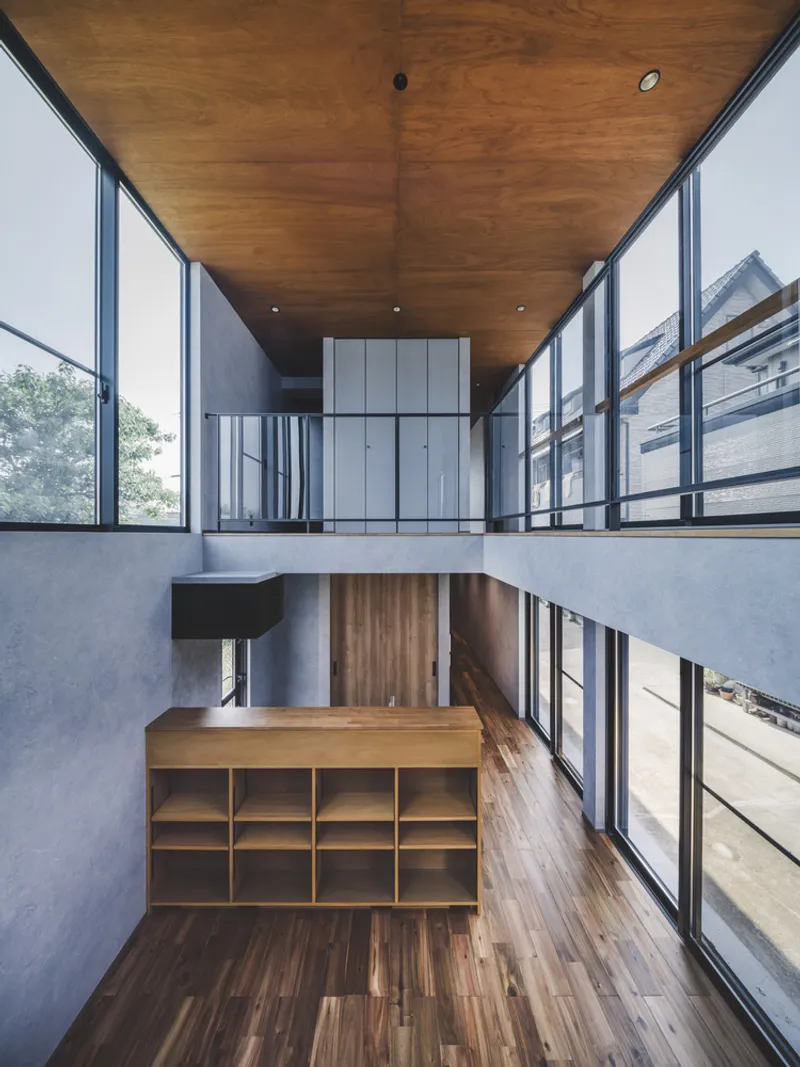
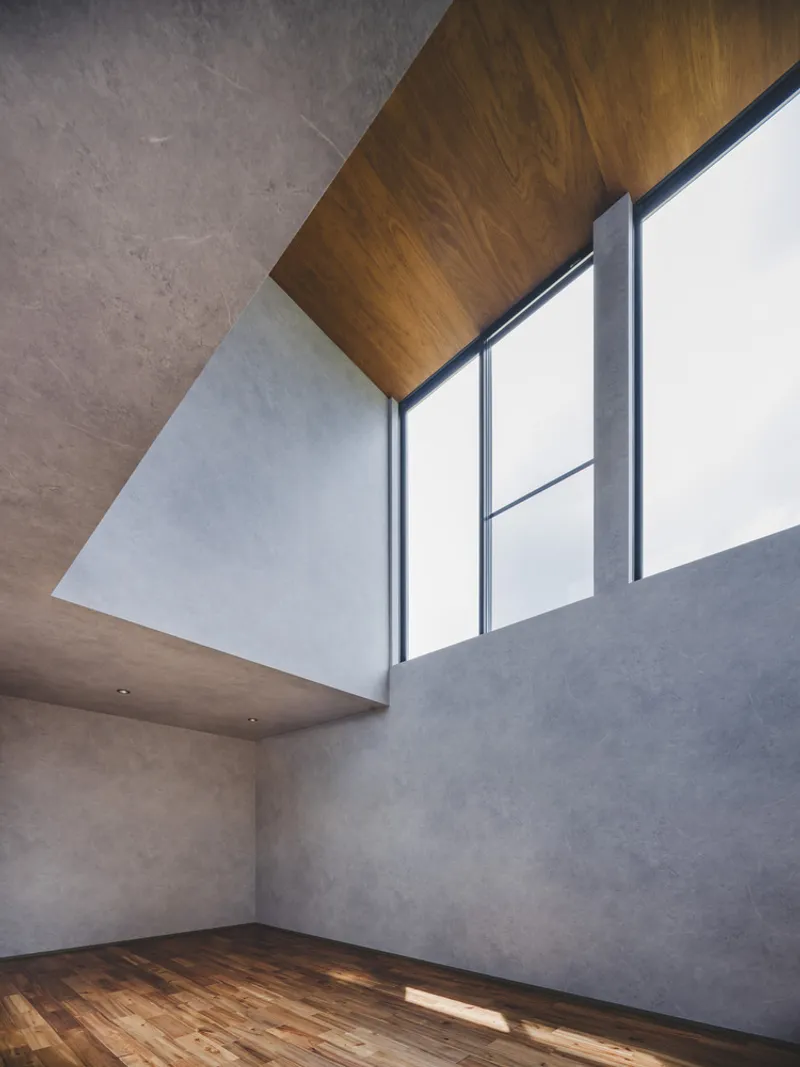
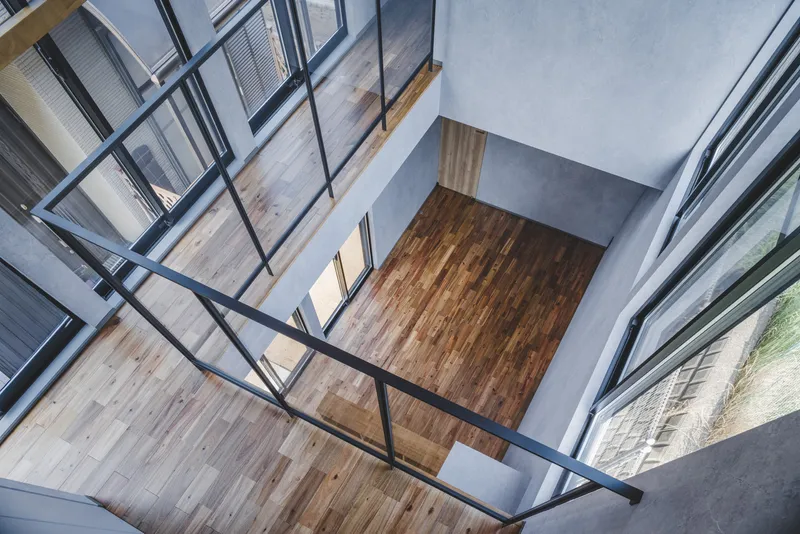
At the core of the house, a large void space extends vertically and longitudinally through the building, forming a spatial axis that connects the family’s private quarters, the hanare, the main house, and the open government-owned land beyond. This architectural gesture turns the central void into a symbolic and physical connector between generations—merging openness with intimacy.
The house thus becomes more than a single-family dwelling; it evolves into a living bridge between three generations, encouraging fluid movement and communication while respecting boundaries.
Modest Design, Meaningful Presence
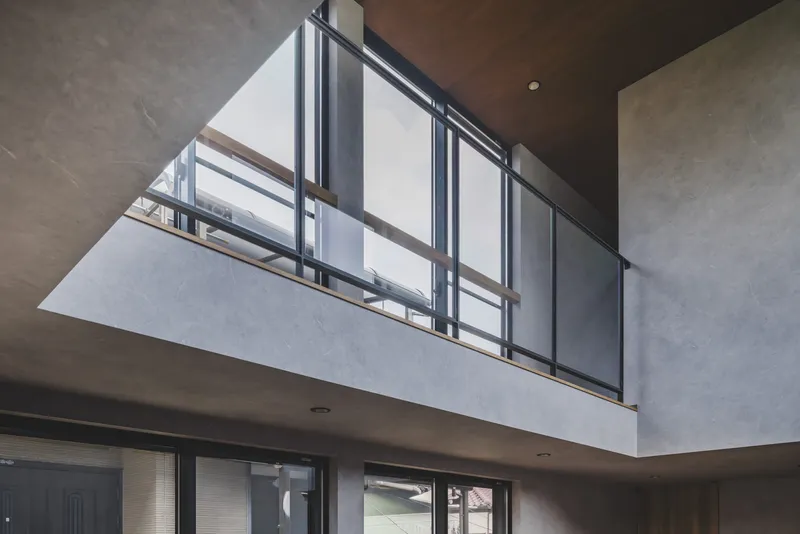
Rather than standing out through ornamentation, The House Apart seeks harmony with its surroundings. Its restrained materials—wood, concrete, and glass—convey warmth and familiarity, while the architectural form feels simultaneously humble and contemporary. The design’s strength lies in its subtlety: it complements the parents’ home while asserting its own identity as a gentle architectural dialogue.
In this way, IGArchitects turns regulatory limitations into opportunities for creative openness. The resulting architecture feels both timeless and new—a space that belongs to its context yet looks confidently toward the future of family living in Japan.
All Photographs are works of Ooki Jingu


Popular Articles
Popular articles from the community


ALGAL REALM: A Bio-Integrated Lunar Habitat Design for Life Beyond Earth
ALGAL REALM reimagines lunar habitat design with algae-powered life support, 3D-printed regolith, and vertical living for a lunar future.

Conexión: Biophilic Design Reimagines High-Rise Living in Hong Kong
Conexión reimagines high-rise living in Hong Kong through biophilic design, green facades, shared spaces, daylight, water and nature within.

Lunar Spiral: Space Architecture Shaped by the Mathematics of the Universe
Lunar Spiral reimagines space architecture through Fibonacci geometry, lunar regolith, levitating habitats, and self-sustaining Moon living.

Play: Fragments of Their World
Familiar architecture becomes modular playground design, creating safe spaces where displaced children can learn, connect, imagine and play.

Similar Reads
You might also enjoy these articles


Hodi-Mandai Geram
Project Function: Preservation and revitalization of the Intangible heritage and socio-spatial identity of the Hodi by Housing, Cultural Memory Center, Sacred Grove, landscape, local tourism economy


Olio Towers: A Mid-Rise for Performers That Fuses Housing, Rehearsal, and Stage
Located blocks from Houston's Theater District, this modular tower stacks living units around a central performance atrium.

Oasis: Modular Green Housing Carved into Dhaka's Urban Fabric
A shortlisted Plugin Housing entry reclaims unauthorized settlements in Dhaka with stepped concrete volumes, green roofs, and ventilation-driven design.

Black Hole: A Floating Megastructure for the Post-Physical Era
Emiliano Mazzarotto envisions a spherical, self-scaling arena where e-sports, digital hotels, and holographic stadiums replace traditional public space.

Explore Housing Competitions
Discover active competitions in this discipline

Challenge to reimagine the Iron Throne

Photograph architecture without architects

Illustrate the lost glory of Angkor Wat - Render Challenge

Design challenge to reuse E-waste
Comments (0)
Please login or sign up to add comments
No comments yet. Be the first to comment!