
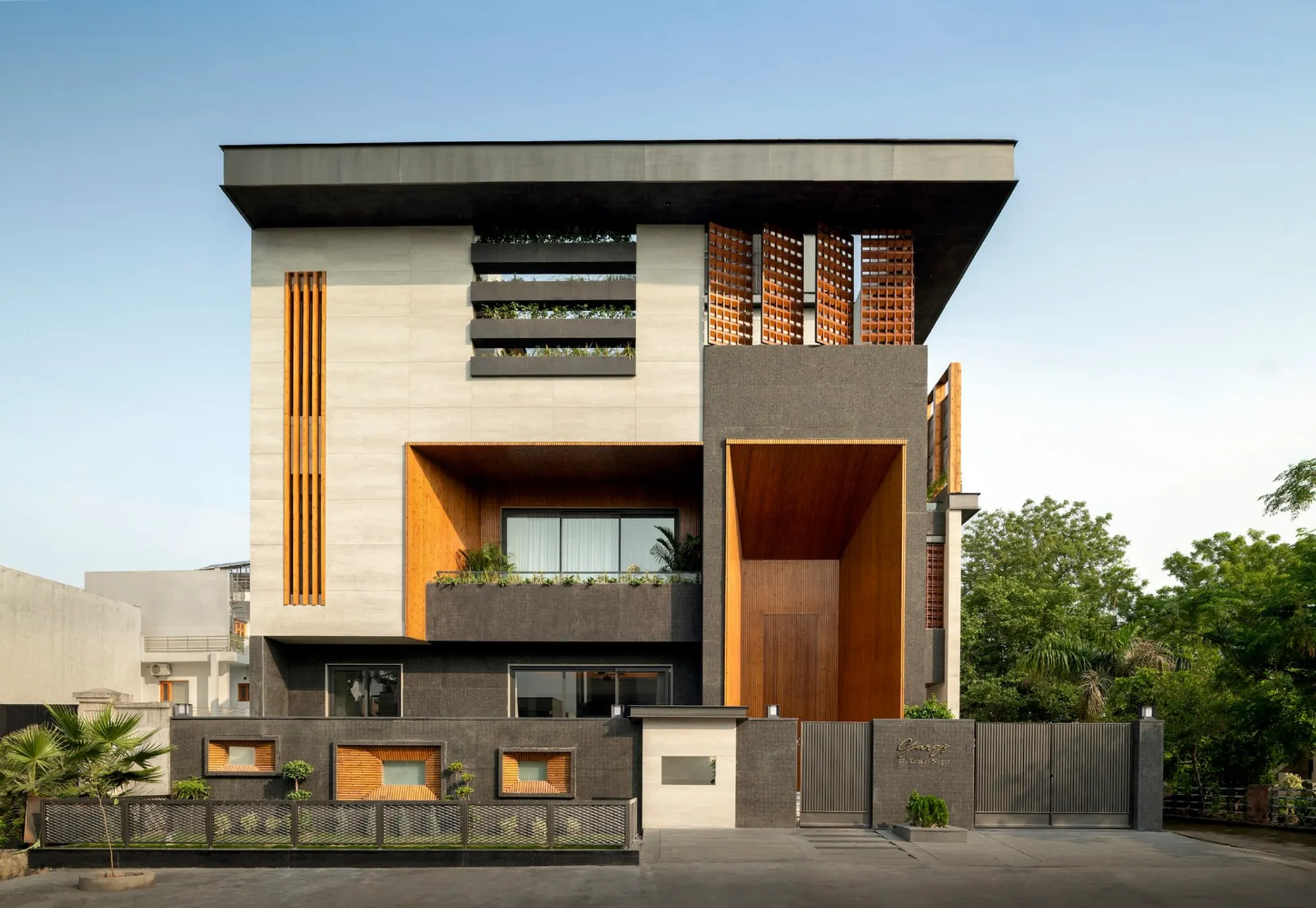
The House of Dancing Screens by Spaces Architects
The House of Dancing Screens features pivoting screens, open-plan interiors, vibrant colors, terraces, and lounges, harmonizing family living with dynamic, fluid spaces.


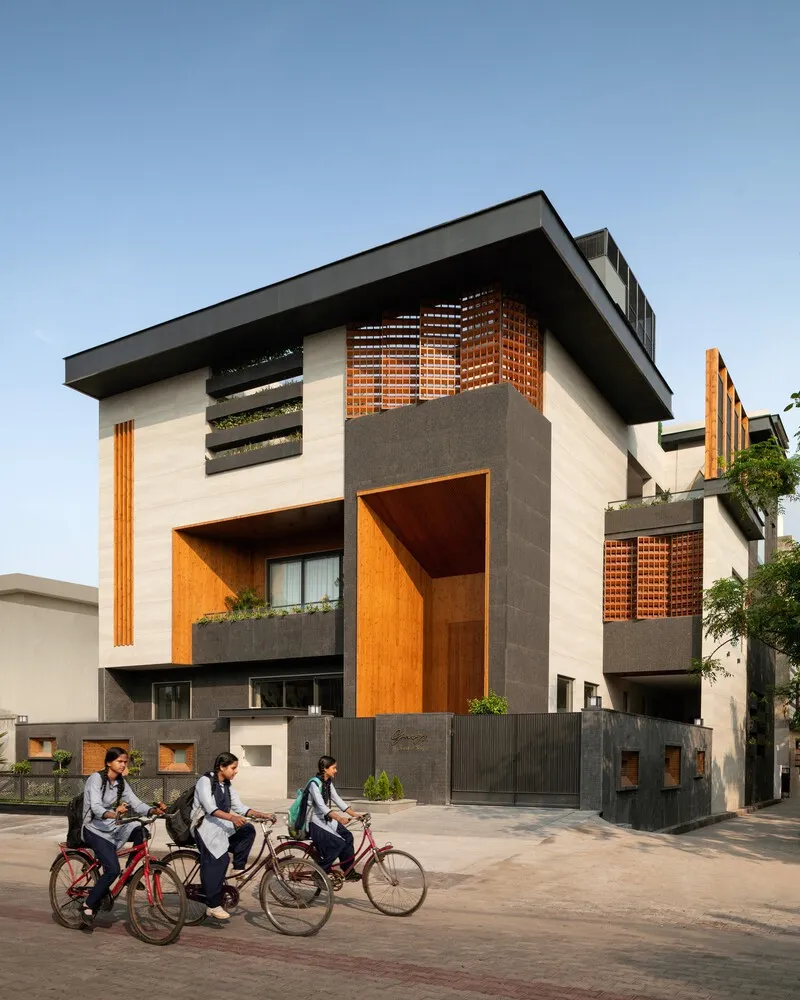
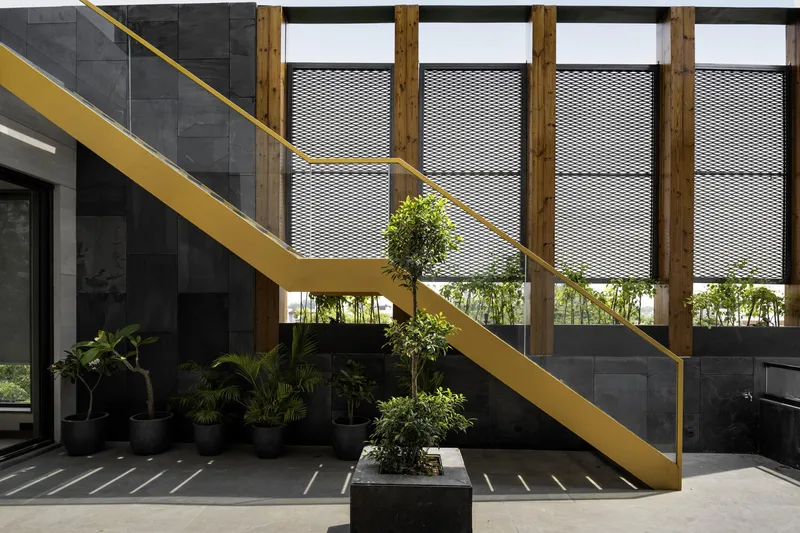
The House of Dancing Screens, designed by Spaces Architects, is a striking contemporary residence in Ambala, India, where dynamic architecture meets fluid living. As its name suggests, the design revolves around the central concept of pivoting screens, which define the home’s distinctive character. These screens are more than mere partitions: they are sculptural, functional elements that rotate gracefully, creating a sense of movement and transforming spaces in response to natural light, wind, and the family’s evolving needs. Their motion evokes a dance-like rhythm, bringing both elegance and flexibility to the residence.
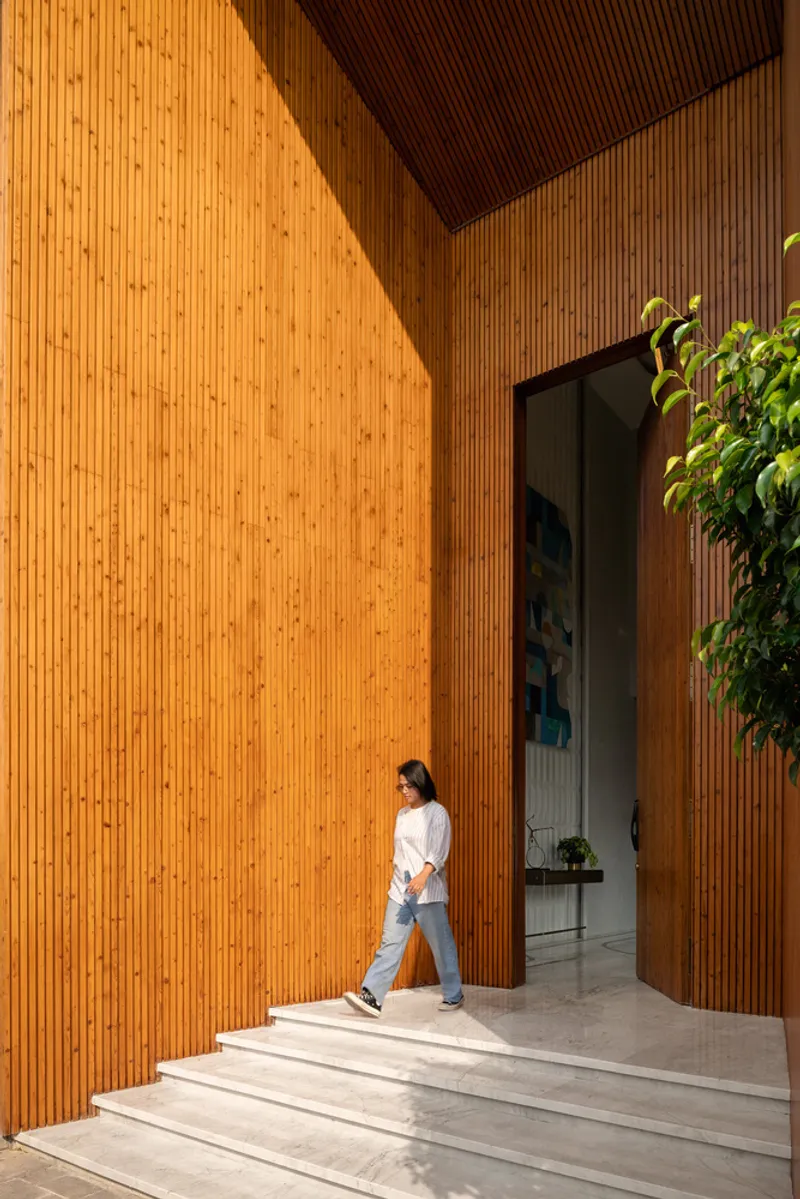
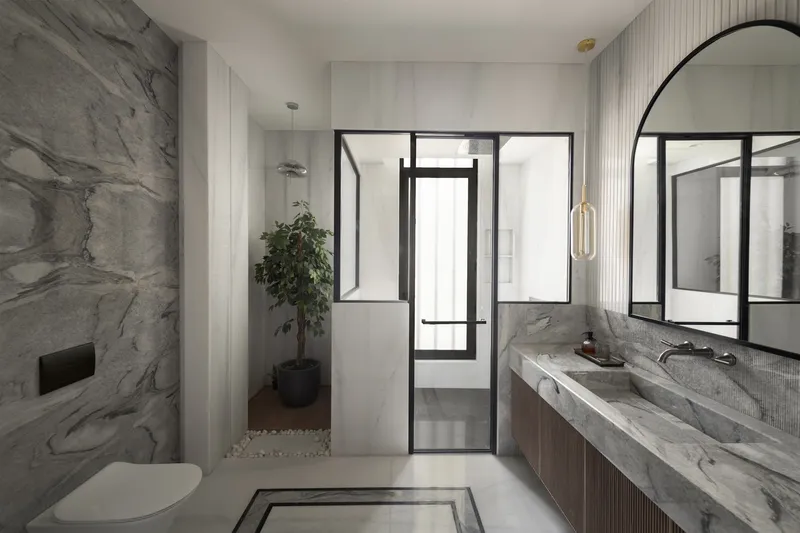
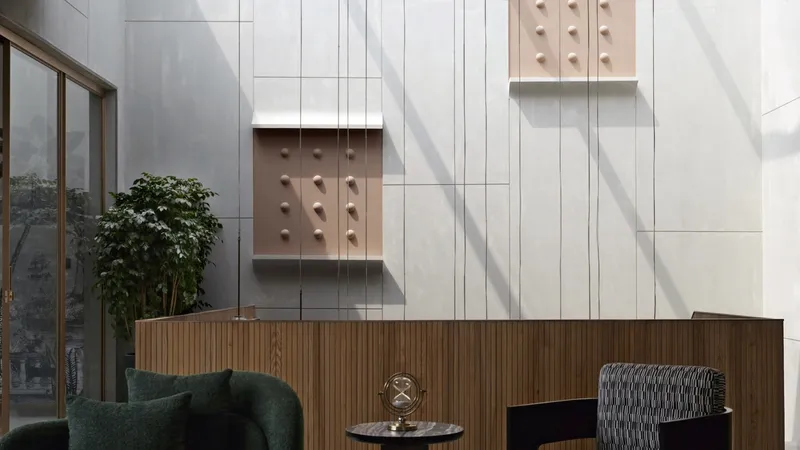
Spanning 11,500 ft², the house is conceived as an open-plan sanctuary, emphasizing connectivity and seamless spatial transitions. Each level is meticulously tailored to accommodate different family members and age groups, with family lounges on every floor serving as central gathering hubs. From these lounges, private areas extend outward, allowing bedrooms to enjoy the luxury of private terraces and balconies, enhancing the sense of openness while maintaining personal privacy.
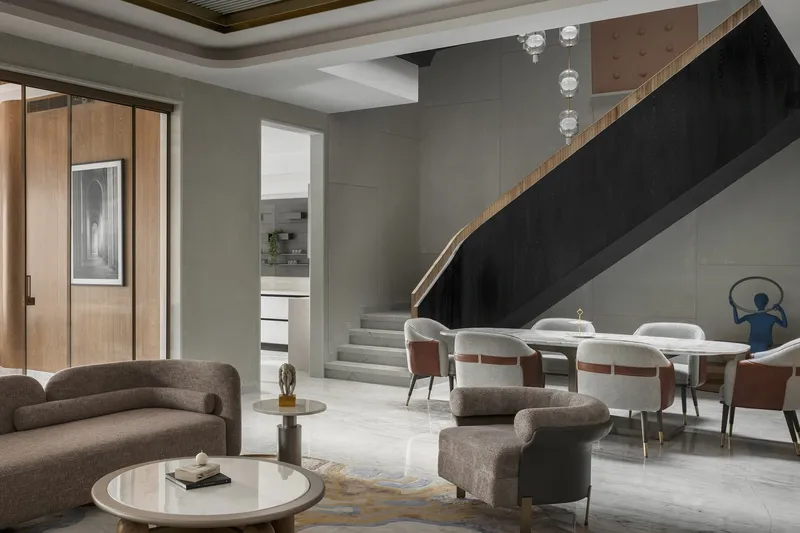
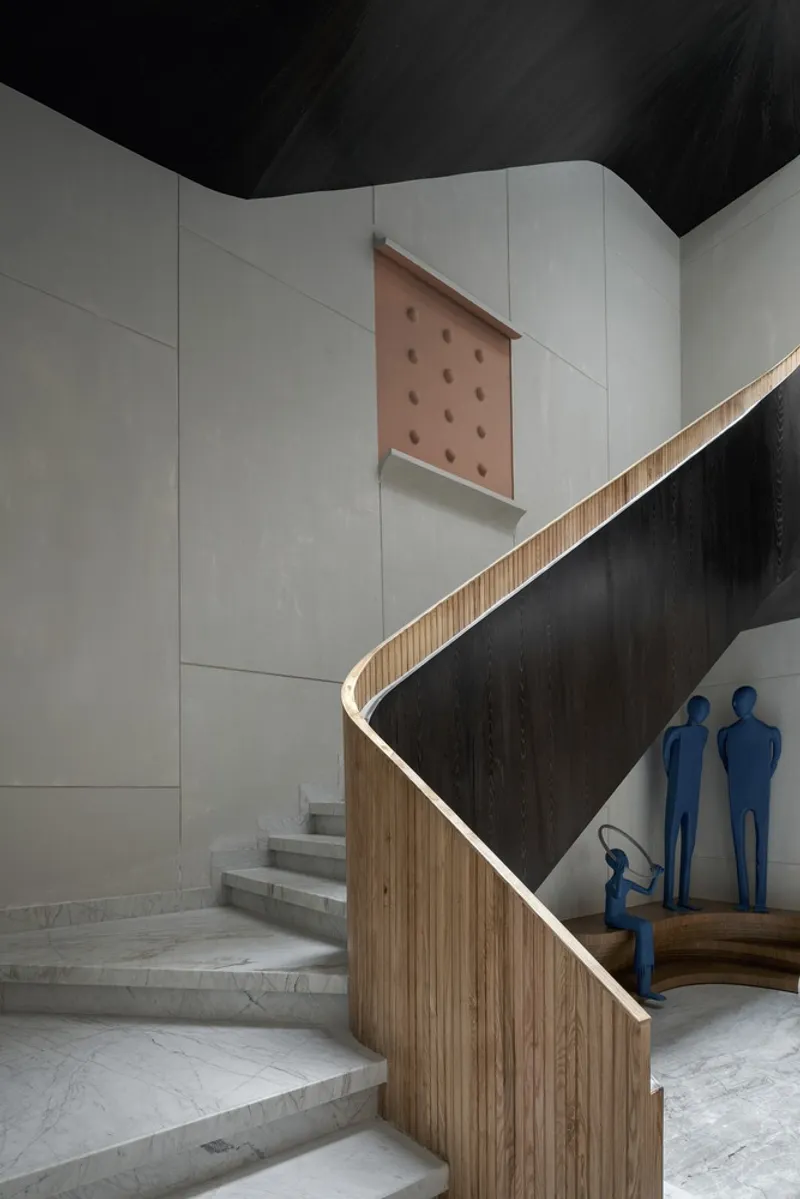
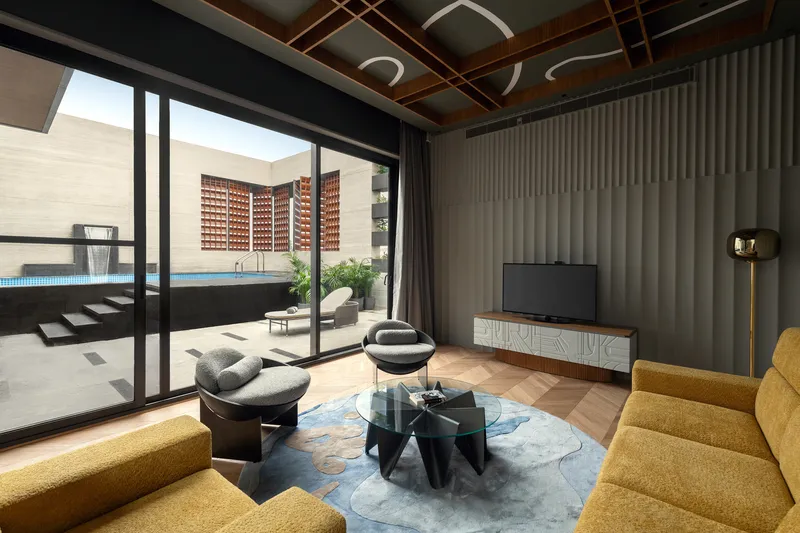
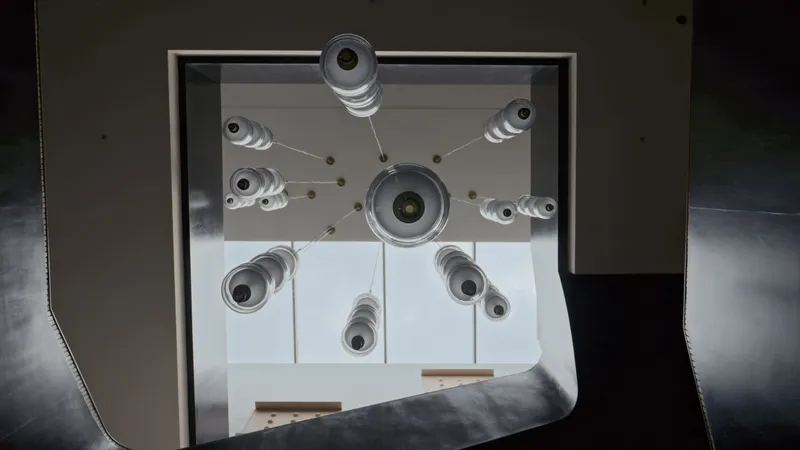
On the ground floor, a formal lounge flows effortlessly into the drawing room and dining area. The dining space is anchored by a gracefully curved staircase that rises through a triple-height void, flooding the home with natural light across all three floors. This staircase acts as the architectural thread connecting the three family lounges, harmonizing the circulation and visual connectivity of the home. Vibrant colors and textures define each interior space, creating dynamic environments that enhance daily living.
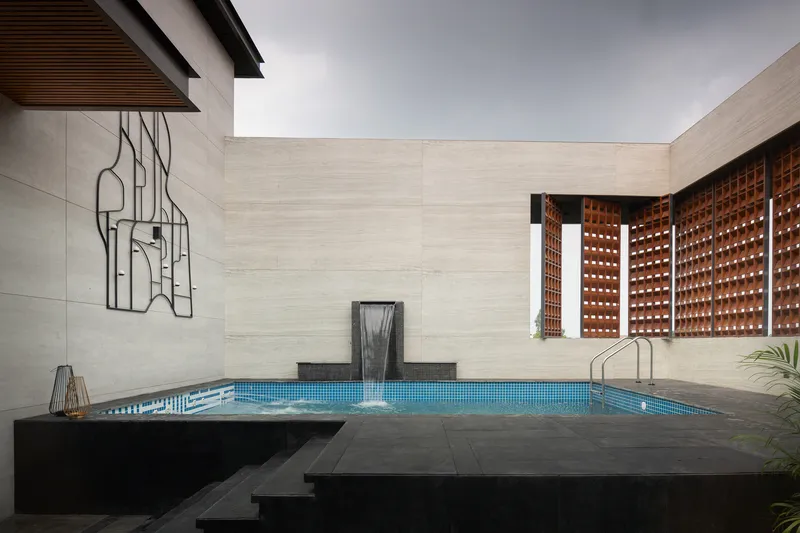
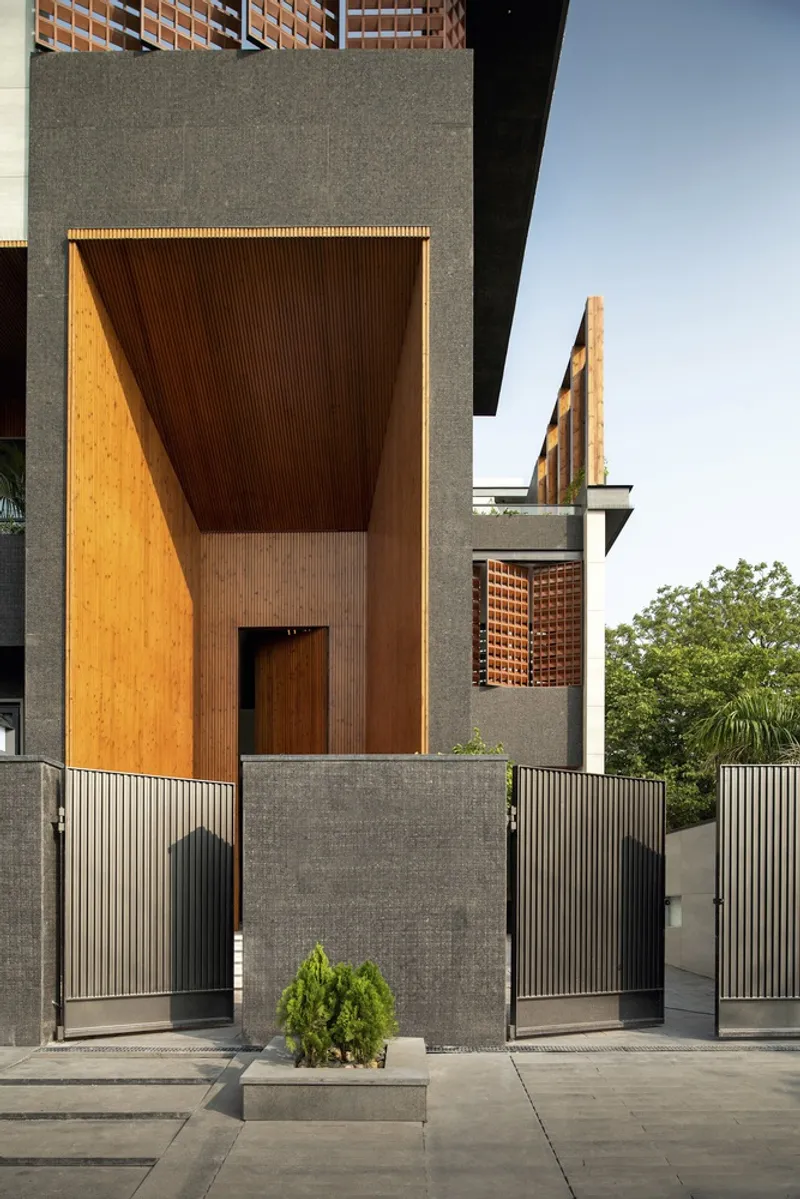
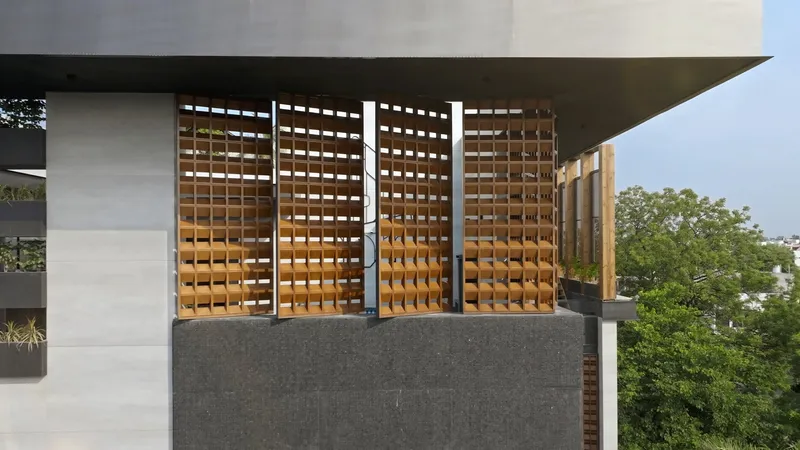
The top floor is designed for leisure and entertainment, featuring a swimming pool and terrace garden. Pivoting screens here serve as both functional shading elements and visual focal points, integrating indoor and outdoor spaces. This floor seamlessly blends entertainment areas, family lounges, and private retreats, ensuring that each moment spent in the home is enriched by light, views, and thoughtful design.
All photographs are works of Bharat Aggarwal




Popular Articles
Popular articles from the community


The Earth Pod: 3D Printed Homes for Resilient Refugee Communities
The Earth Pod reimagines refugee housing through 3D printed homes made from clay, combining resilience, self-sufficiency, and rapid shelter.

Lunar Spiral: Space Architecture Shaped by the Mathematics of the Universe
Lunar Spiral reimagines space architecture through Fibonacci geometry, lunar regolith, levitating habitats, and self-sustaining Moon living.

Hill & Cross Opera: Sculptural Opera House Architecture Shaped by Tallinn’s Landscape and Identity
Hill & Cross Opera reimagines opera house architecture in Tallinn through its sculptural hill, civic plaza, glass wave and a luminous cross.

Conexión: Biophilic Design Reimagines High-Rise Living in Hong Kong
Conexión reimagines high-rise living in Hong Kong through biophilic design, green facades, shared spaces, daylight, water and nature within.


Similar Reads
You might also enjoy these articles


Hodi-Mandai Geram
Project Function: Preservation and revitalization of the Intangible heritage and socio-spatial identity of the Hodi by Housing, Cultural Memory Center, Sacred Grove, landscape, local tourism economy


Olio Towers: A Mid-Rise for Performers That Fuses Housing, Rehearsal, and Stage
Located blocks from Houston's Theater District, this modular tower stacks living units around a central performance atrium.

Oasis: Modular Green Housing Carved into Dhaka's Urban Fabric
A shortlisted Plugin Housing entry reclaims unauthorized settlements in Dhaka with stepped concrete volumes, green roofs, and ventilation-driven design.

Black Hole: A Floating Megastructure for the Post-Physical Era
Emiliano Mazzarotto envisions a spherical, self-scaling arena where e-sports, digital hotels, and holographic stadiums replace traditional public space.


Explore Vinyasa Architecture Competitions
Discover active competitions in this discipline



Challenge to reimagine the Iron Throne


Photograph architecture without architects


Illustrate the lost glory of Angkor Wat - Render Challenge


Design challenge to reuse E-waste
Comments (0)
Please login or sign up to add comments
No comments yet. Be the first to comment!