

The Hudsons Housing in Rotterdam by Orange Architects: Sustainable Living with Community at Heart
The Hudsons Housing in Rotterdam by Orange Architects blends sustainability, community courtyards, and brick façades, creating eco-friendly homes beside Roof Park.


The Hudsons Housing project by Orange Architects is a landmark residential development located at the foot of the Roof Park in Rotterdam, The Netherlands. Completed in 2022, the project spans 29,100 m² and introduces a thoughtful mix of 118 single-family homes, 24 modern apartments, and 2 commercial spaces, creating a vibrant and sustainable living environment.
Designed with a strong urban vision, The Hudsons bridges the gap between the historic Bospolder-Tussendijken district and the industrial Merwe-Vierhavens harbor (M4H), which is set to be transformed into an innovative living and working hub. The project is not just about housing but about community building, sustainability, and architectural harmony.

Blending History and Modernity
The Bospolder-Tussendijken district, with its early 20th-century architecture, is known for cultural diversity and a strong neighborhood identity. Orange Architects designed The Hudsons to respect this heritage while introducing modern typologies. The development was carefully divided into five building blocks, each with a unique character yet forming a cohesive whole.
These blocks feature profiled brick façades that gradually open up and shift in tone from the neighborhood side to the park-facing side. This detailing allows the architecture to blend seamlessly with the red brickwork of the historic district while transitioning into the lighter, greener environment of the Roof Park.


Community-Centered Courtyards
At the heart of each block lies a courtyard garden, thoughtfully designed as either communal or semi-private. These spaces encourage interaction among residents, offering safe play areas for children and green retreats for families. The courtyards connect with pedestrian-friendly passages, ensuring that green pathways from the Roof Park extend into the neighborhood, strengthening the relationship between urban and natural landscapes.

Sustainability at the Core
Sustainability is deeply integrated into The Hudsons Housing design. Each block is equipped with:
- Collective photovoltaic (PV) solar panels for renewable energy.
- Green roofs to improve insulation and biodiversity.
- Nesting facilities for local bird species, supporting ecological balance.
- All-electric housing systems, eliminating fossil fuel dependency.
The development fosters social sustainability as well, with shared gardens, car-free zones, and welcoming meeting areas that promote community bonds and healthy urban living.

Vibrant Urban Life with Commercial Integration
In addition to housing, two commercial spaces are strategically placed along the central axis of the neighborhood. These spaces activate the ground floor, offering amenities and fostering economic activity. Positioned at the main entrance to the Roof Park, they serve as lively gathering spots where residents and visitors can enjoy social interactions, especially during warm summer evenings.
The Hudsons Housing by Orange Architects is more than just a residential project—it is a model of sustainable urban regeneration. By blending historic architectural language with modern design, prioritizing eco-friendly construction, and enhancing social cohesion, it represents the future of housing in Rotterdam. The Hudsons shows how architecture can transform neighborhoods, strengthen cultural identity, and contribute to a greener, more connected city.

All the photographs are works of Sebastian van Damme, Sander van Wettum


Popular Articles
Popular articles from the community

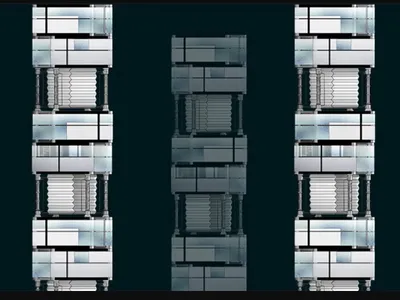
Tsunami Convergenics: Turning Catastrophic Ocean Forces into Underwater Housing Infrastructure
A speculative underwater settlement off the coast of Onagawa, Japan, treats tsunamis and typhoons as energy sources rather than threats.
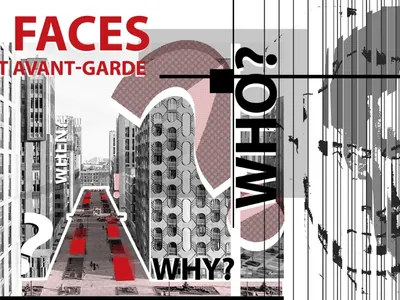
Faces of the Soviet Avant-Garde: Turning Moscow's Street Names into an Open-Air Museum
A network of sculptural installations across a Moscow residential district transforms forgotten architect names into spatial encounters with cultural memor
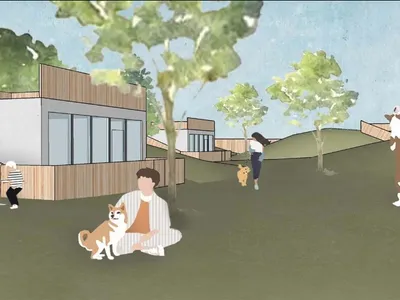
Temporary Home for Dogs: A Reversed Zoo Rethinks Animal Shelter Architecture
In Bucharest, a sinuous corridor and freed landscape flip the logic of containment, designing a shelter that works to make itself unnecessary.
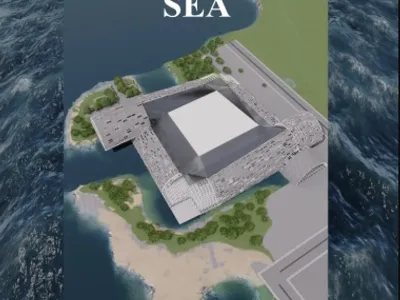
Opera on the Sea: Driftwood Logic Shapes a Timber Opera House on Estonia's Coast
Trevor Orgill's opera house translates the entangled drift of floating timber into a civic building where wood, water, and music converge.

Similar Reads
You might also enjoy these articles


Hodi-Mandai Geram
Project Function: Preservation and revitalization of the Intangible heritage and socio-spatial identity of the Hodi by Housing, Cultural Memory Center, Sacred Grove, landscape, local tourism economy


Olio Towers: A Mid-Rise for Performers That Fuses Housing, Rehearsal, and Stage
Located blocks from Houston's Theater District, this modular tower stacks living units around a central performance atrium.

Oasis: Modular Green Housing Carved into Dhaka's Urban Fabric
A shortlisted Plugin Housing entry reclaims unauthorized settlements in Dhaka with stepped concrete volumes, green roofs, and ventilation-driven design.

Black Hole: A Floating Megastructure for the Post-Physical Era
Emiliano Mazzarotto envisions a spherical, self-scaling arena where e-sports, digital hotels, and holographic stadiums replace traditional public space.

Explore Residential Building Competitions
Discover active competitions in this discipline

Challenge to design mud housing for contemporary communities

Challenge to reimagine the Iron Throne

Photograph architecture without architects

Illustrate the lost glory of Angkor Wat - Render Challenge
Comments (0)
Please login or sign up to add comments
No comments yet. Be the first to comment!