

...the little tea house on the hill
A little cafe in the small, cozy town of Bellingham, England, which specializes in offering the best tea party experience to its guests.
Bellingham is a small village near Newcastle. A quiet community on a small hill, close to nature. Pennine Way, one of the village’s larger roads, as well as the one our plot is located along, is said to be quite popular with hikers and cyclists.
Those characteristics of this area were what informed the majority of my design. I wished to stress the tight relationship with nature this village seems to have by incorporating a large amount of greenery in my design, as well as using natural materials for the building and construction.
The load bearing structure of the building is to be made by prefabricated CLT elements. This choice offers a number of advantages. As has been determined by numerous studies, CLT is friendlier for the environment that a number of other more common construction methods, such as concrete or steel, as its manufacturing results in fewer carbon dioxide emissions. It is also lightweight and easy to transport, resulting thus in lower logistics costs, as fewer trucks will be required to bring the elements to the site. The separate elements can be easily assembled on site. This material choice also offers a high degree of future flexibility, as the structure can easily be modified or even disassembled, making altering its use or even recycling it possible.
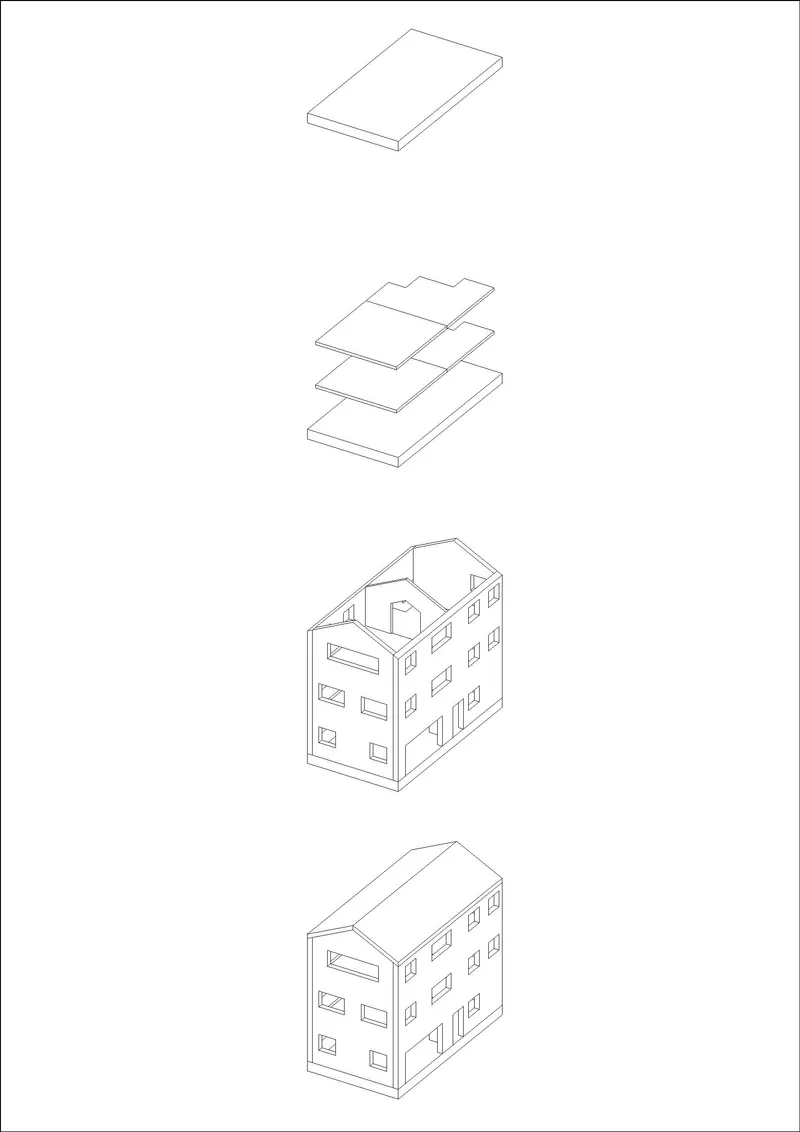
Structural diagram
The building was designed as a simple rectangular volume, reflecting the simplicity of the village’s other buildings. Taking into account the FAR and height limit, one ground floor and two floors were designed, each having an area of about 70 sqm. Given the limited amount of space, as well as the expected occupancy (30 people), each floor was designed to contain as much open area as possible, given the structural needs of the building. Storage space has been fitted mainly underneath the ground floor staircase, thus combining it with the kitchen. Additional storage spaces have been incorporated in large built-in cupboards on the other floors. One accessible WC has been planned on the ground floor.
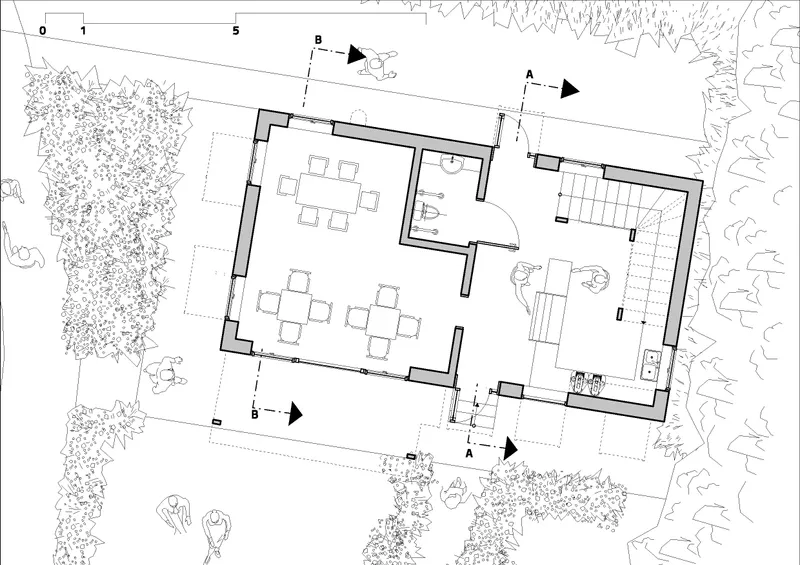
Ground floor
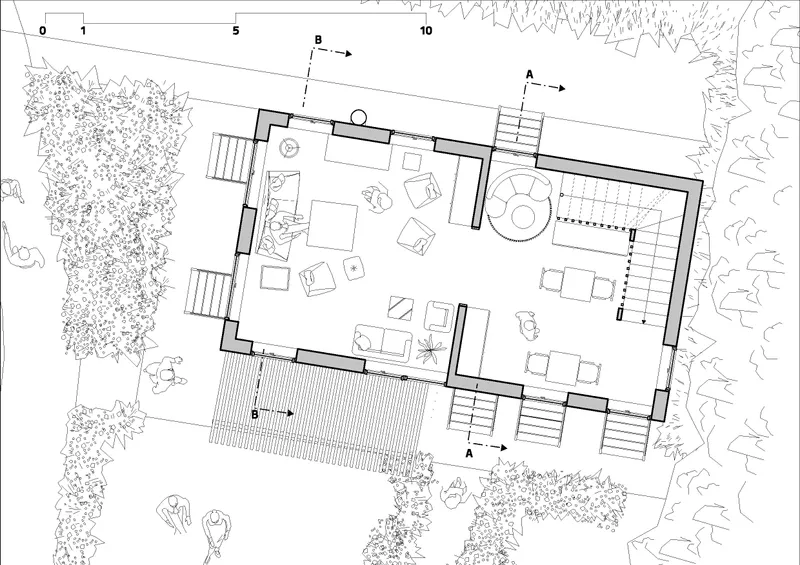
First floor
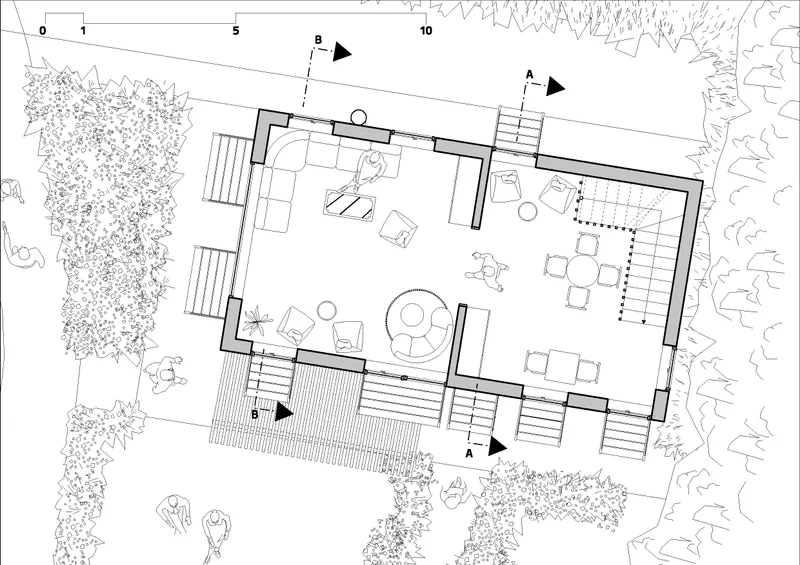
Second floor
The southern part of the plot is occupied by a large garden. A single path leads from the crossroads to the tea house. Gravel is used on the path, as well as the area around the building, to enhance the feeling of being close to nature. The design for the garden incorporates large grassy areas to the south and west, where visitors are welcome to have a picnic and bask in the sun during the warmer months. On the northern part of the plot, behind the building, a small street has been incorporated, to be used by supply vehicles.
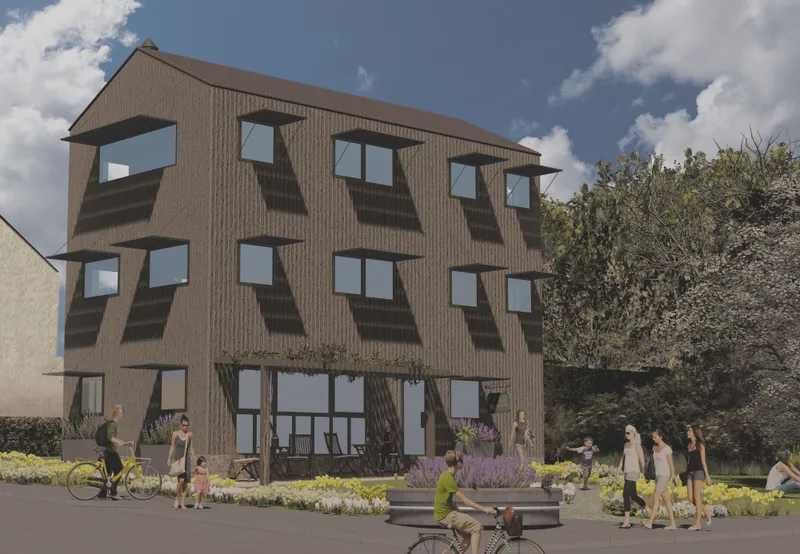
For the exterior facade, a cladding of wooden planks was chosen. This is expected to age into a pastel grey color, which makes it stand out from its surroundings just enough to make an impression, but not too much so that it looks over the top.
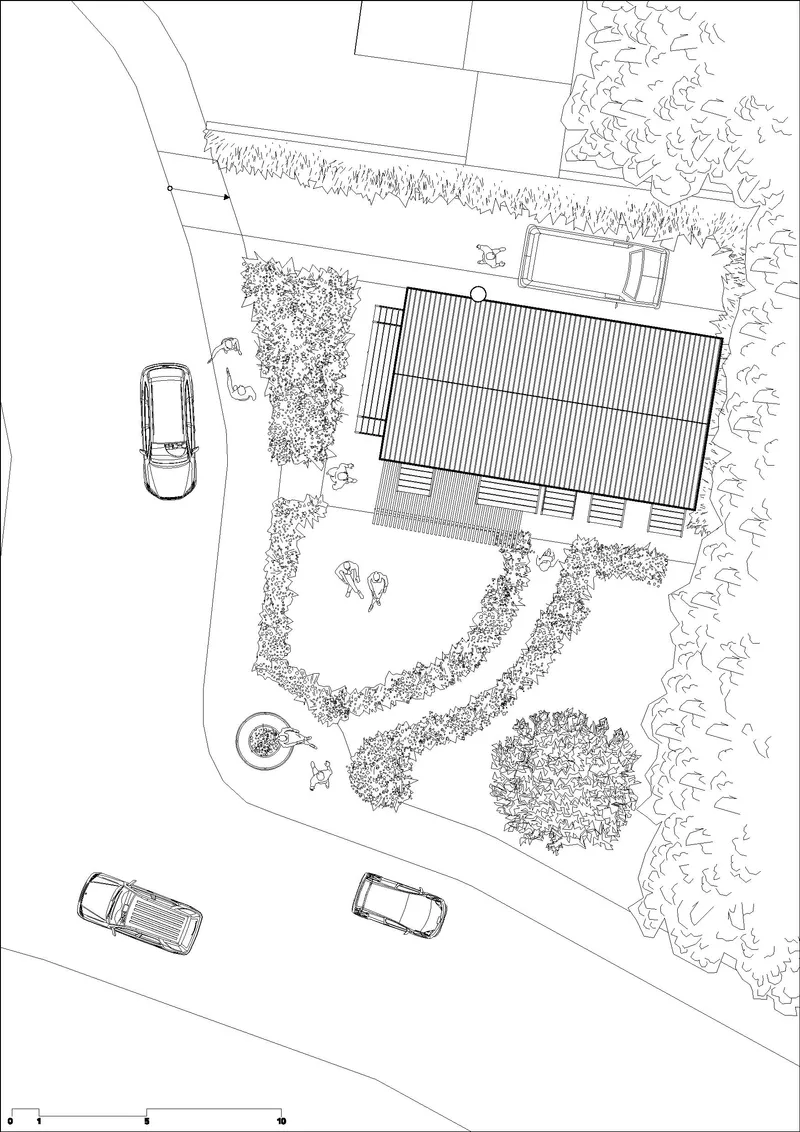
Site plan
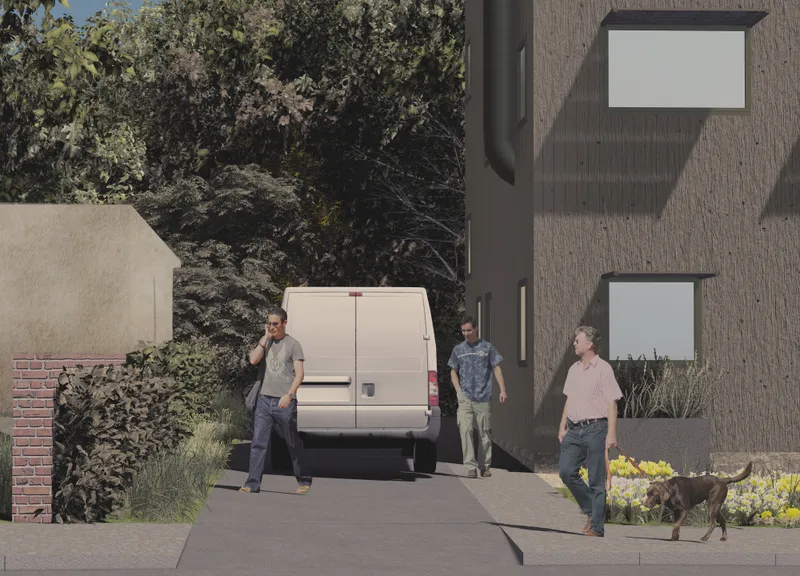
Given the open, mostly flat nature of the garden, which lacks heavy structures, expanding the building to the south in the future should be fairly easy, if one desires to do so.
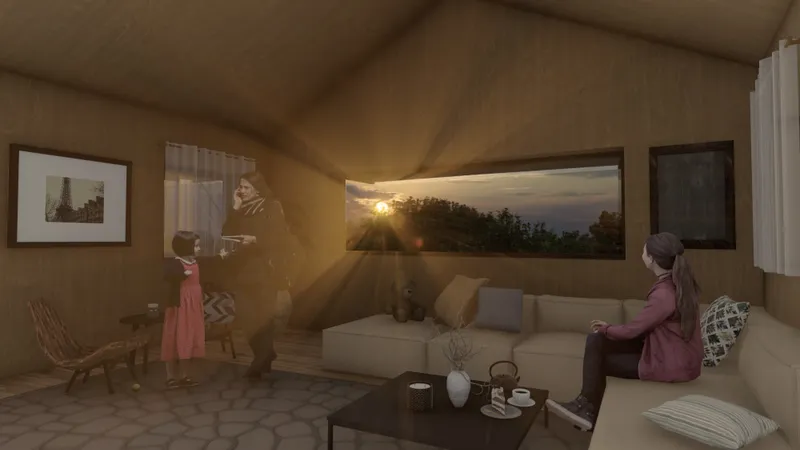
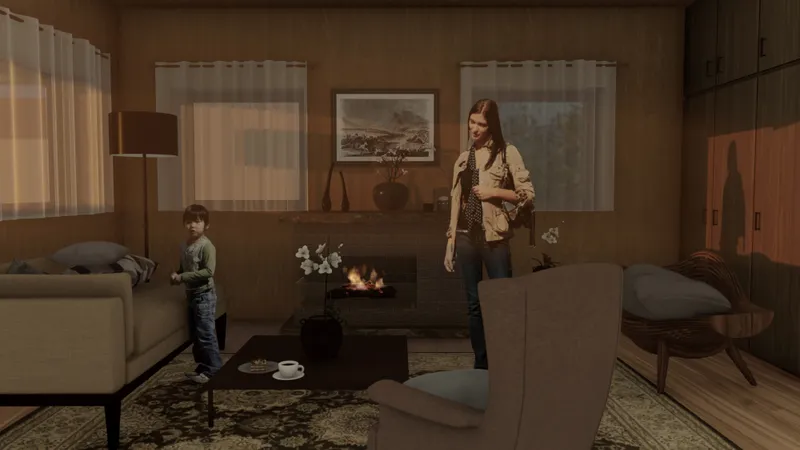
Much thought went into the choice of materials in the interior as well. It was driven by a desire to create a warm, inviting atmosphere, as well as a sense of luxury; much like as if one is visiting the house of a dear friend to have a cup of tea, instead of going to a cafe. Wood in warm tones, large couches, armchairs, and a fireplace on the first floor create an intimate, cozy atmosphere, which is accentuated by the glimpse of the sunset the building allows, as its larger openings are directed to the south and west. The largest window, on the second floor, frames the view of the setting sun like a painting.
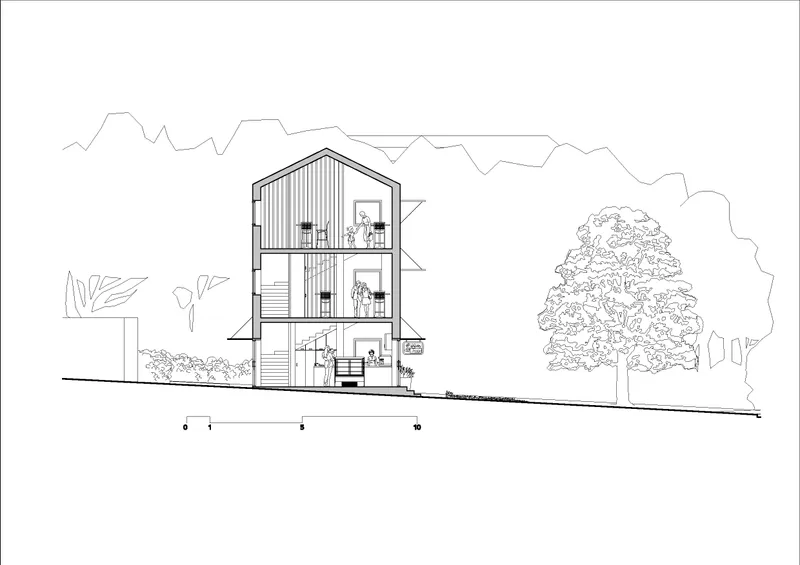
Context section A-A
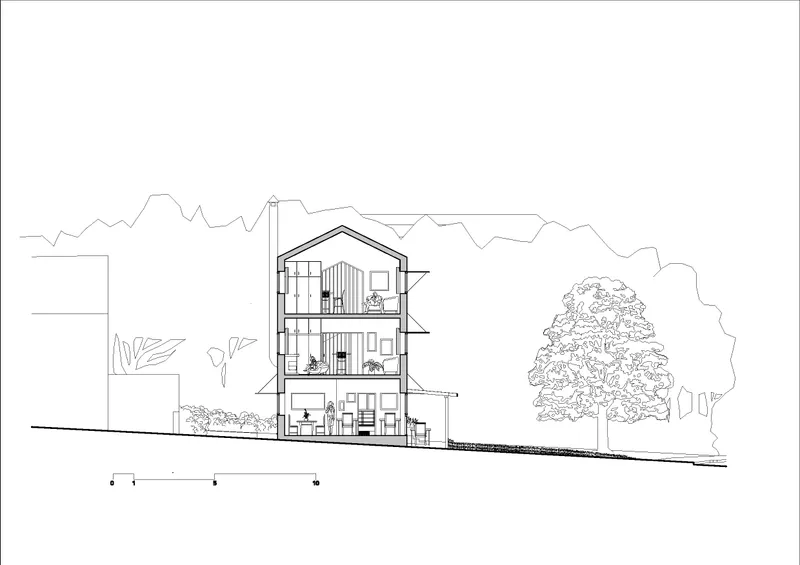
Section B-B
The openings were arranged on the facades in a somewhat rhythmic fashion, which is then broken playfully by the shading devices, as well as the placement, size and proportions of the openings on the south and north facades.
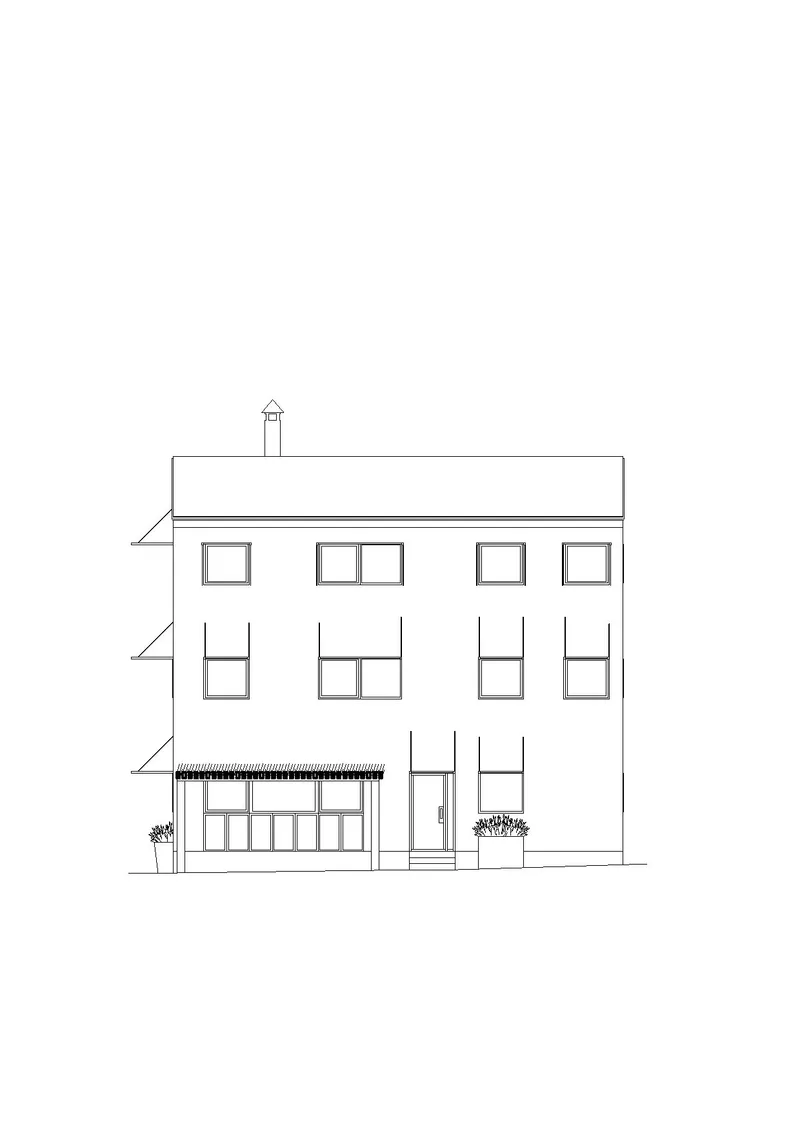
South facade
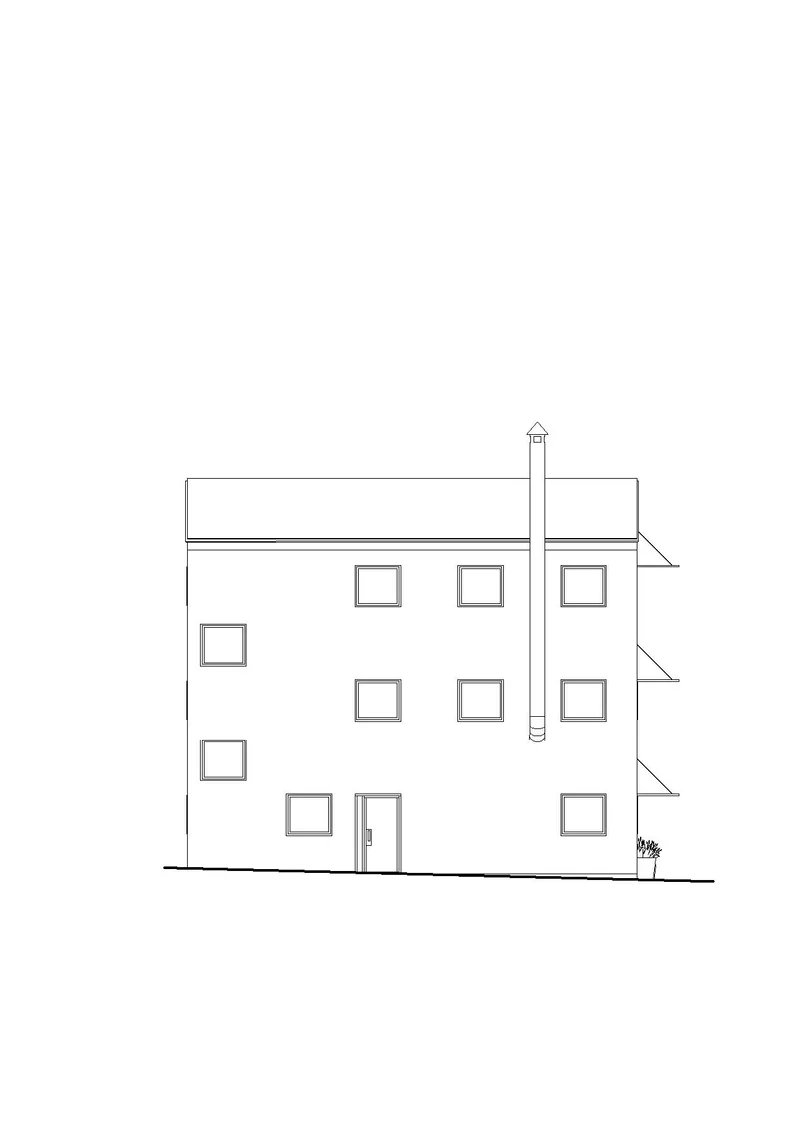
North facade
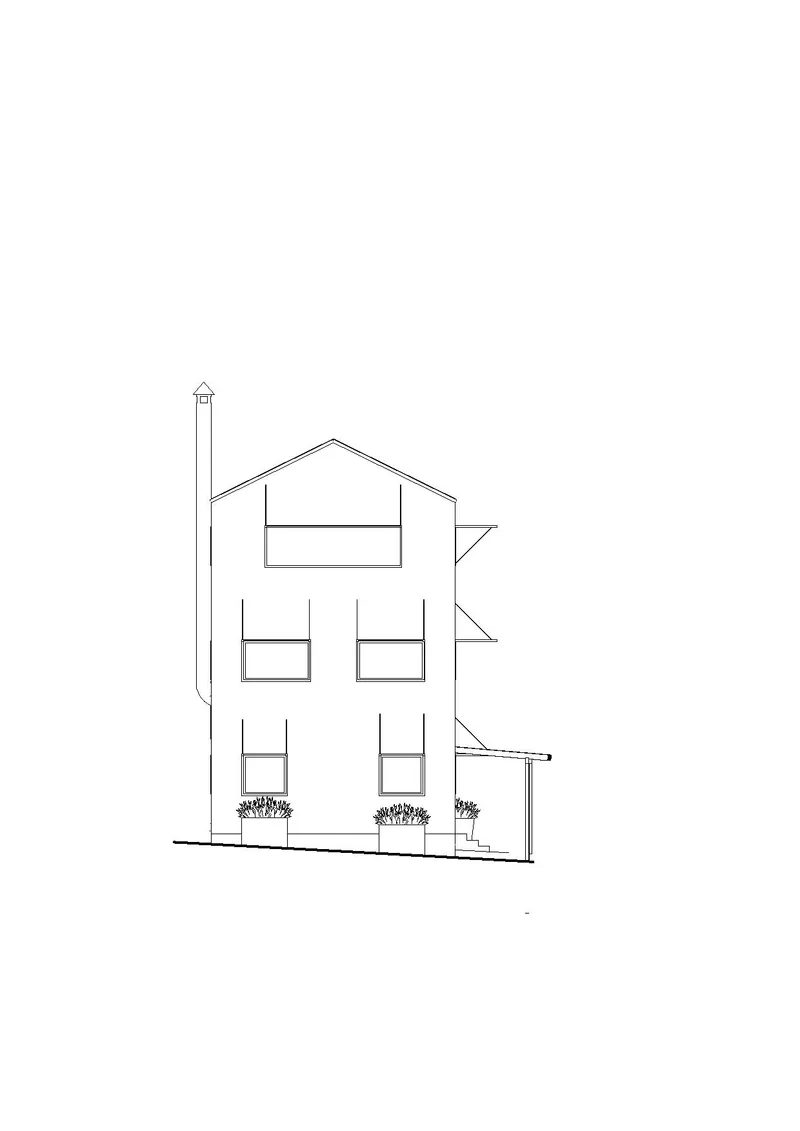
West facade
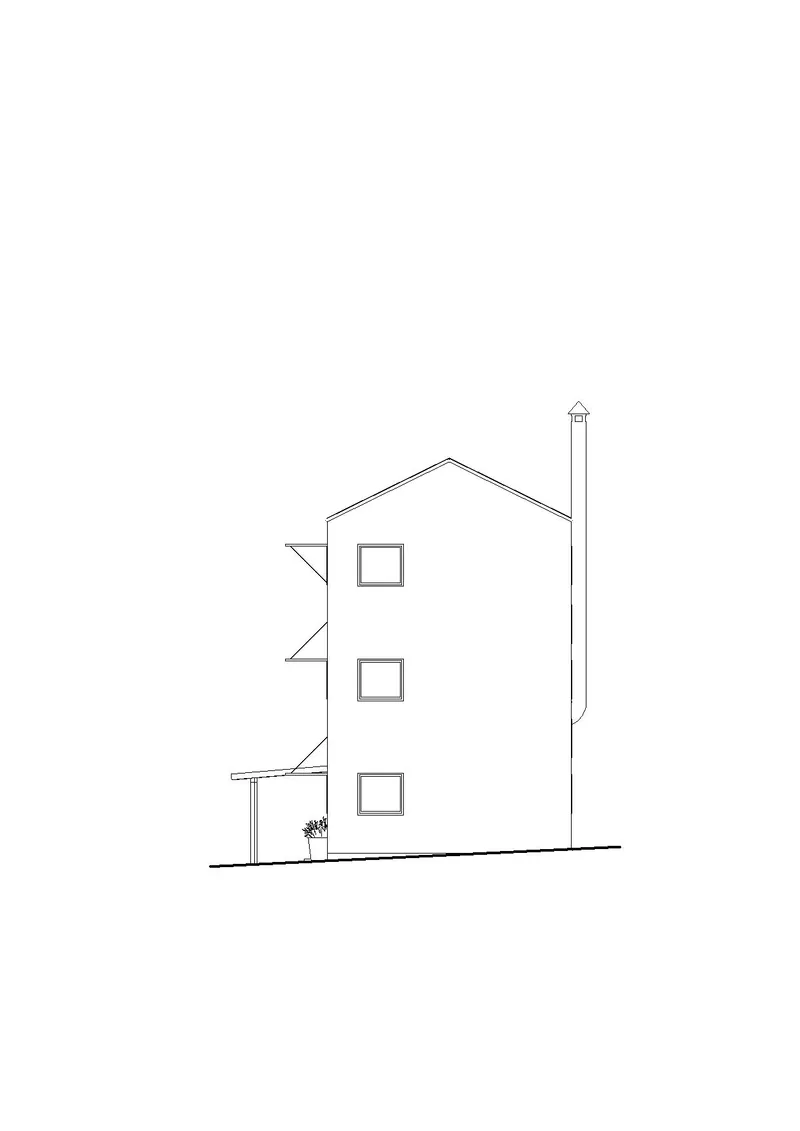
East facade
A grid of 60x60 cm was used to design the floor plans, as well as the facades to a certain extent. This made it easy to produce multiple iterations of the solution and finally choose the one that fit best my concept and the requirements of the brief. 3D modeling and rendering was used to explore the volumetric expression of the building, as well as simulate materials and lighting.



Popular Articles
Popular articles from the community


The Musturak Paradise: Senior Living Architecture for a Connected Future in Temara, Morocco
The Musturak Paradise reimagines senior living architecture in Temara via private homes, social spaces, culture, community, and shared care.

Lunar Spiral: Space Architecture Shaped by the Mathematics of the Universe
Lunar Spiral reimagines space architecture through Fibonacci geometry, lunar regolith, levitating habitats, and self-sustaining Moon living.

Co-Life: Senior Housing Design That Reconnects Older Adults With the City
Co-Life reimagines senior housing design through healing gardens, shared streets, workshops, and a sustainable community across generations.

The Ocean Hive: Sustainable Architecture for a Self-Sufficient Civilization at Sea
The Ocean Hive imagines sustainable architecture at sea, where modular habitats, algae, wave power and ocean waste sustain a growing colony.


Similar Reads
You might also enjoy these articles

Day and Night Park: A Time-Based Urban Newsstand in Beijing
A temporary urban newsstand in Beijing blending travel, light, and reading through poetic colors, compact form, and community-focused design.

Modernist Patio Renovation in El Masnou, Barcelona by Oliver Segura Arquitectura + Cebrià Arquitectura
Modernist patio renovation blending tradition and innovation with a movable pool, leveled floors, and Catalan materials in El Masnou.

Alto Residencial Coop: Cooperative Housing Development in Santiago de Compostela by Carbajo Barrios Arquitectos
A linear cooperative housing complex blending white volumes and perforated metal façades, enhancing community living, natural light, privacy, and urban integration.
Vil Genis School by BPA ARCHITECTURE – Massy, France
Vil Genis School in Massy, France, features sustainable design, south-facing classrooms, community integration, accessible spaces, and modern educational architecture.

Explore Coffee Shop Competitions
Discover active competitions in this discipline


Challenge to design luxury tourism on rails


Challenge to reimagine the Iron Throne


Photograph architecture without architects


VR headsets Storefront design competition
Comments (0)
Please login or sign up to add comments
No comments yet. Be the first to comment!