
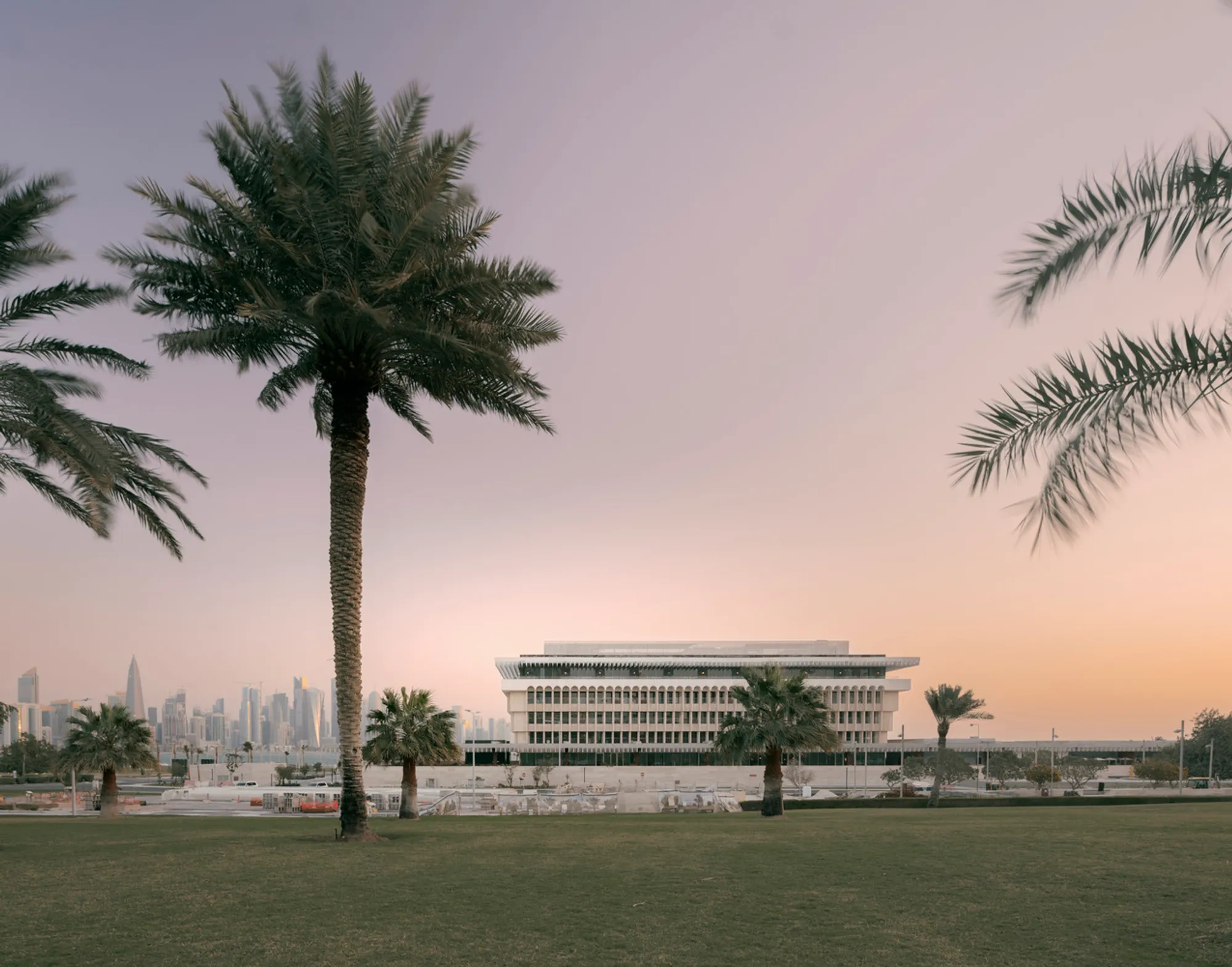
The Ned Doha by David Chipperfield Architects: A Landmark Transformation on the Corniche
The Ned Doha transforms a Brutalist landmark into a luxury hotel, blending heritage, sustainability, and 1970s-inspired interior elegance.


Reviving a Landmark of Brutalist Architecture in Qatar
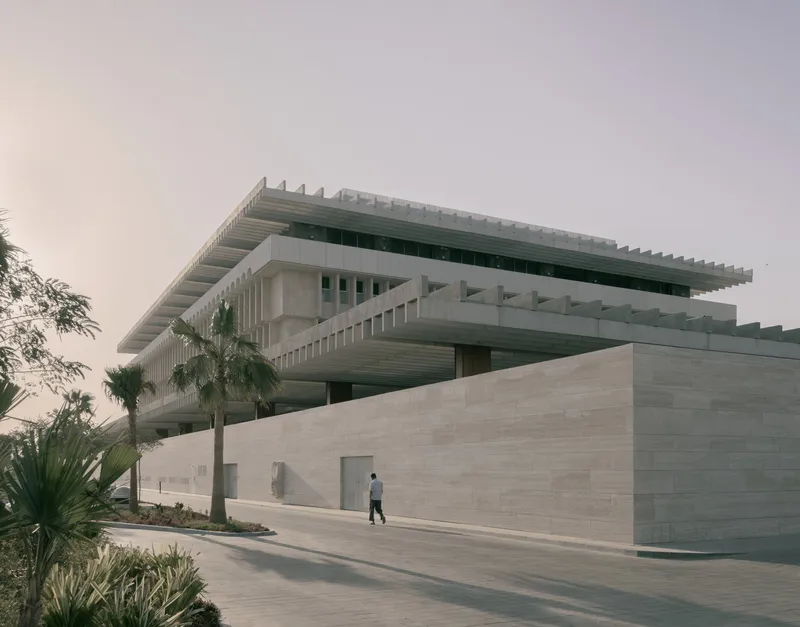
The Ned Doha is an iconic adaptive reuse project that transforms one of Doha’s oldest modernist landmarks—the former Ministry of Interior building—into a luxury boutique hotel. Originally designed by Lebanese architect William Sednaoui in the 1970s, the building is a distinguished example of Brutalist architecture in the Middle East. David Chipperfield Architects, in collaboration with a team of international consultants, reimagined the structure while respecting its heritage, preserving its sculptural identity, and enhancing its presence along Doha’s prominent Corniche waterfront.
Strategic Urban Positioning and Cultural Significance
Situated near the Grand Mosque and the Amiri Diwan, The Ned Doha commands a significant urban position. The transformation celebrates the site’s cultural importance by embracing adaptive reuse rather than demolition, aligning with growing regional and global commitments to sustainability and architectural conservation. This sensitive intervention underscores the importance of preserving modern heritage in a rapidly evolving urban context like Doha.
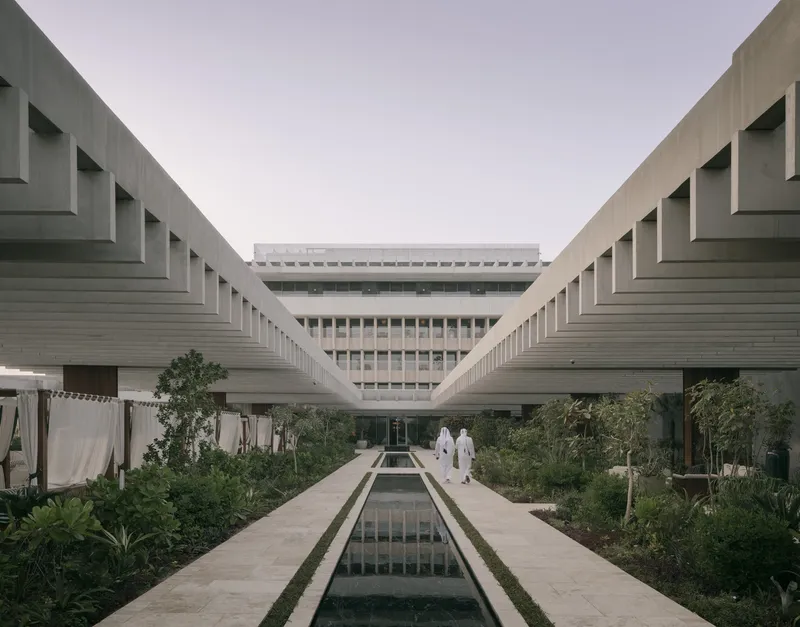
A New Podium and Lush Courtyard Experience
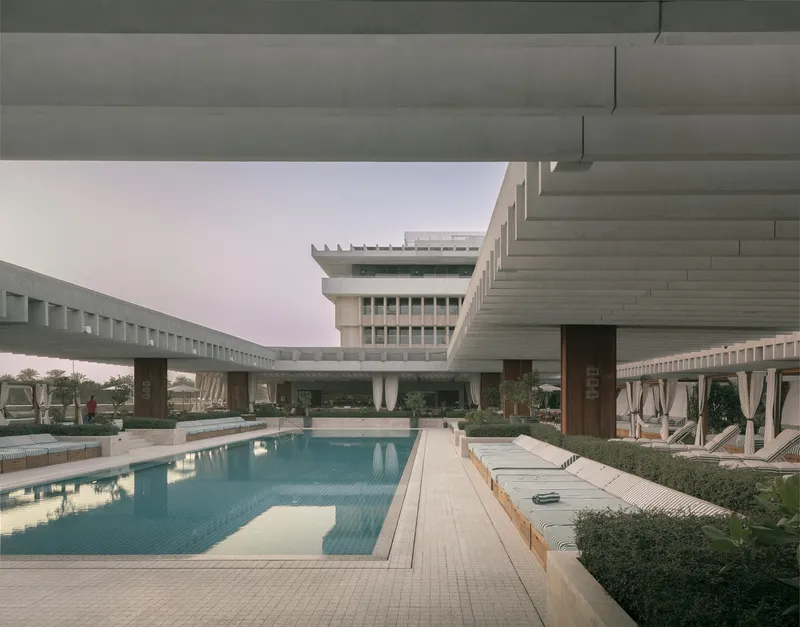
At the ground level, the addition of a 260-meter-long landscaped podium redefines the building’s relationship with its surroundings. The green plinth integrates lush vegetation, tranquil basins, and curated art installations to form a serene courtyard oasis. New pavilions along the water’s edge provide hospitality and event functions, all unified by a sleek brise-soleil canopy made of slender concrete ribs. This feature not only creates shaded outdoor zones but also reflects the vertical rhythm of the original façade.
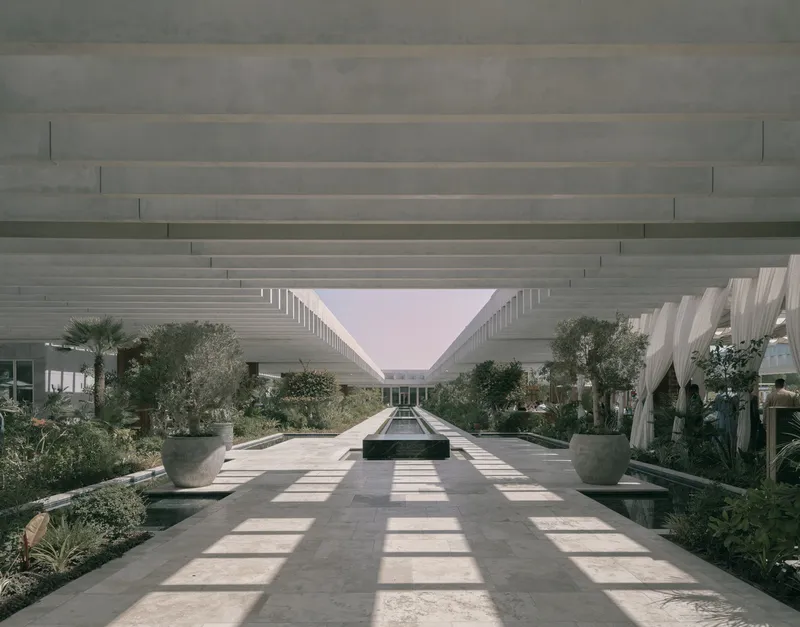
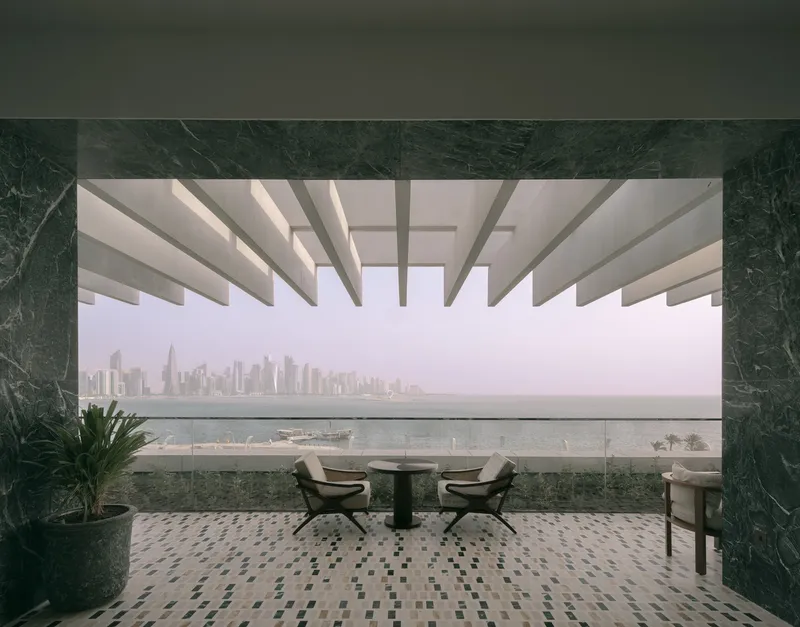
Luxury Interiors Inspired by the 1970s
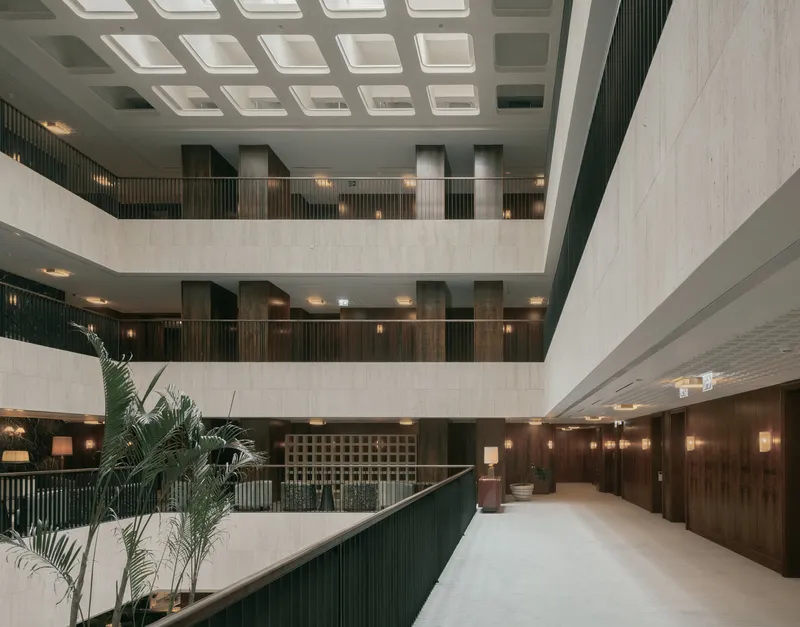
The hotel’s interiors, crafted by Soho House Design and Highness HEC, are inspired by the glamour and material richness of the 1970s. Across three upper levels, the 90 guest rooms and suites combine retro elements with contemporary luxury, featuring custom furnishings, marble detailing, and layered textures. At the heart of the building, a covered inner courtyard and atrium serve as vibrant social spaces, connecting guests to a variety of restaurant concepts and a dramatic gallery-level bar.
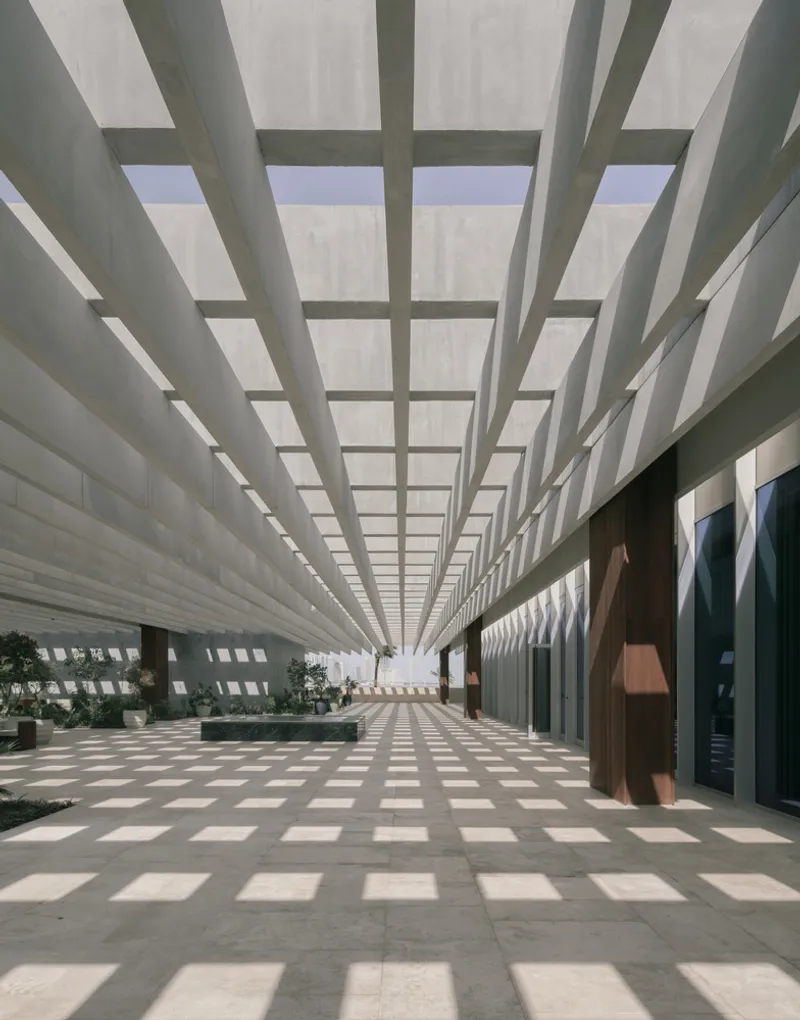
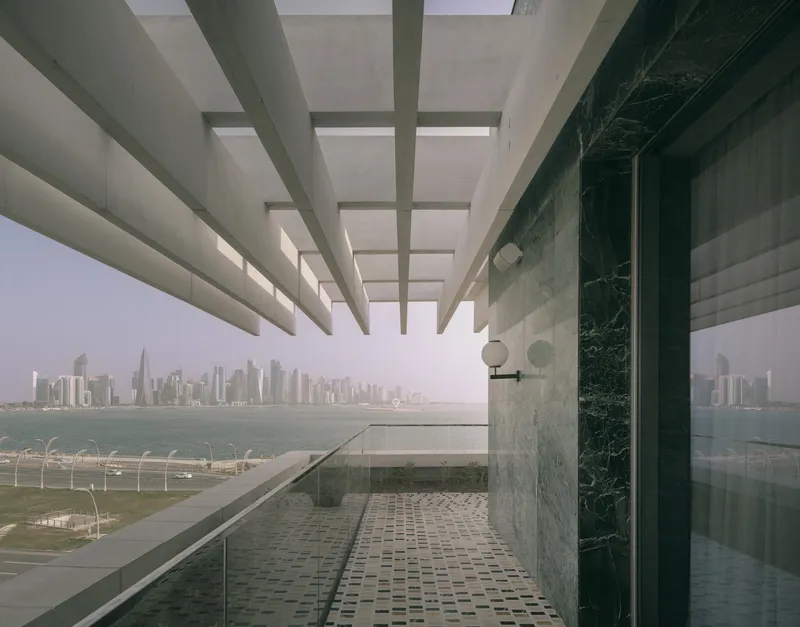
A Rooftop Destination with Panoramic Views
A newly added top floor redefines the building’s silhouette while introducing elevated amenities. The rooftop hosts a wellness spa, a gym, and a private club lounge—each offering sweeping views over the Persian Gulf and Doha’s urban skyline. This addition is seamlessly integrated into the existing structure, continuing the architectural dialogue between old and new.
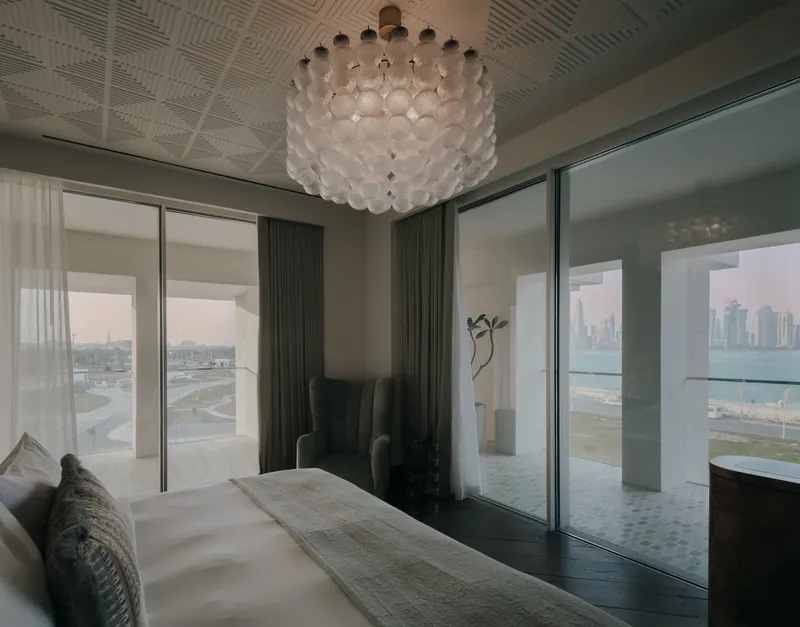
Material Continuity and Refined Detailing
Material selection plays a crucial role in unifying the renovated structure. Finishes such as white Calacatta marble, green Tinos stone, and textured travertine were chosen to reflect and reinterpret the tones and textures of the original façade. Internally and externally, linear design motifs—such as the vertical pilaster strips—are echoed in roof slats and shading devices, creating a cohesive architectural language.
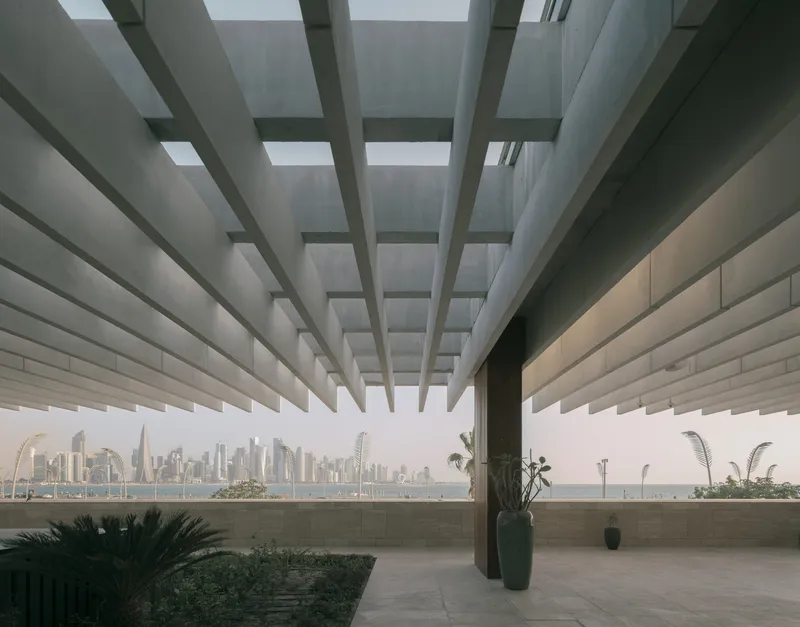
A Model for Regenerative Architecture in the Gulf
The Ned Doha is more than a hotel—it is a benchmark for sustainable, culturally rooted redevelopment in the Gulf region. Through its commitment to adaptive reuse, preservation of Brutalist architecture, and integration of contemporary luxury, the project stands as a model for how cities can evolve without erasing their architectural past.
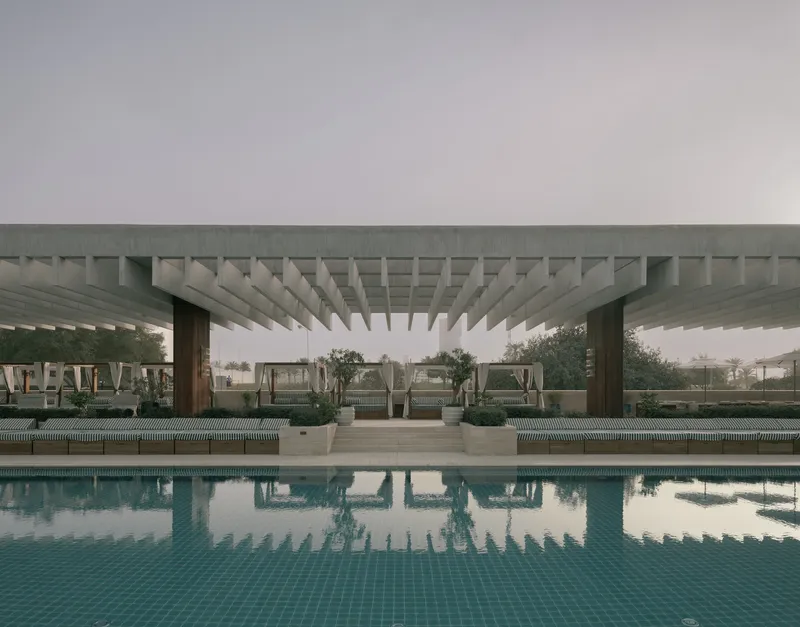
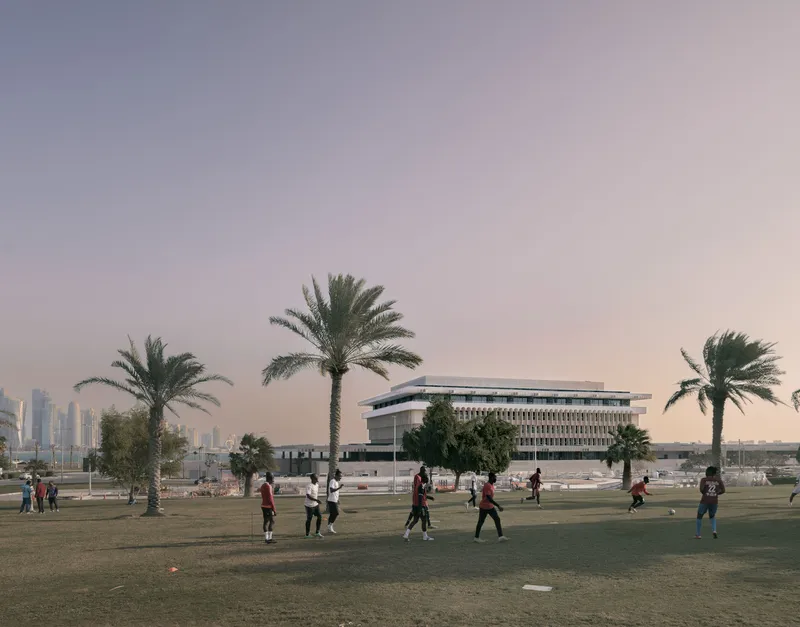
All Photographs are works of Simon Menges


Popular Articles
Popular articles from the community


Co-life: Sustainable Architecture for Age-Friendly Community Living
Co-life reimagines sustainable architecture for seniors through courtyards, rammed earth, shared gardens, and spaces designed for belonging.
AL-JANNAH: Sustainable Architecture and Permaculture for Afghan Widows
AL-JANNAH uses sustainable architecture and permaculture to create resilient oasis of housing, learning, work and renewal for Afghan widows.

The Musturak Paradise: Senior Living Architecture for a Connected Future in Temara, Morocco
The Musturak Paradise reimagines senior living architecture in Temara via private homes, social spaces, culture, community, and shared care.

Conexión: Biophilic Design Reimagines High-Rise Living in Hong Kong
Conexión reimagines high-rise living in Hong Kong through biophilic design, green facades, shared spaces, daylight, water and nature within.


Similar Reads
You might also enjoy these articles


Hodi-Mandai Geram
Project Function: Preservation and revitalization of the Intangible heritage and socio-spatial identity of the Hodi by Housing, Cultural Memory Center, Sacred Grove, landscape, local tourism economy


Olio Towers: A Mid-Rise for Performers That Fuses Housing, Rehearsal, and Stage
Located blocks from Houston's Theater District, this modular tower stacks living units around a central performance atrium.

Oasis: Modular Green Housing Carved into Dhaka's Urban Fabric
A shortlisted Plugin Housing entry reclaims unauthorized settlements in Dhaka with stepped concrete volumes, green roofs, and ventilation-driven design.

Black Hole: A Floating Megastructure for the Post-Physical Era
Emiliano Mazzarotto envisions a spherical, self-scaling arena where e-sports, digital hotels, and holographic stadiums replace traditional public space.


Explore Hospitality Building Competitions
Discover active competitions in this discipline



Challenge to reimagine the Iron Throne


Photograph architecture without architects


Illustrate the lost glory of Angkor Wat - Render Challenge


Design challenge to reuse E-waste
Comments (0)
Please login or sign up to add comments
No comments yet. Be the first to comment!