
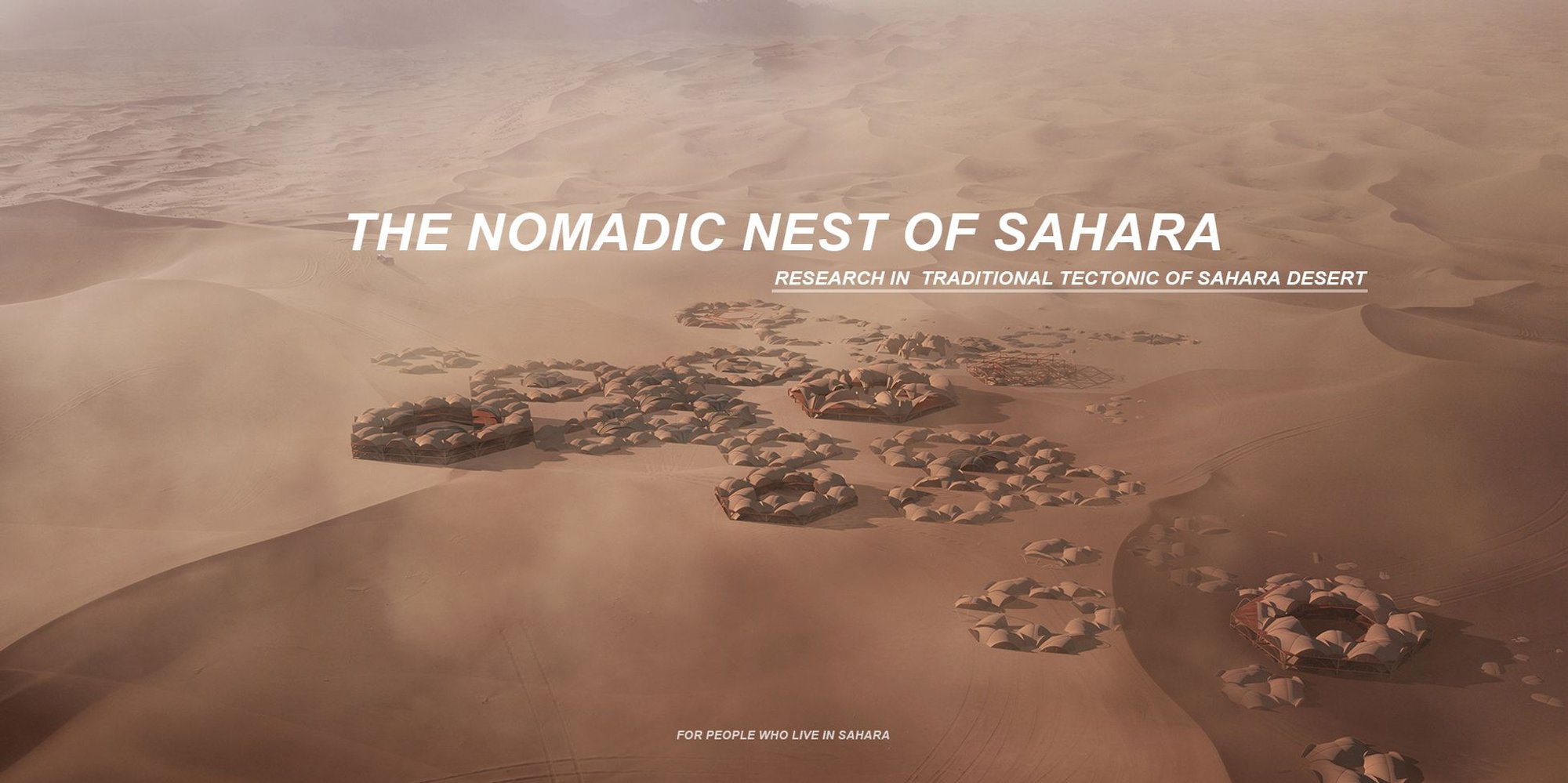
The Nomadic Nest of Sahara
Designing Sustainable Architecture to Empower Desert Communities and Adapt to Sahara's Unique Environmental Challenges

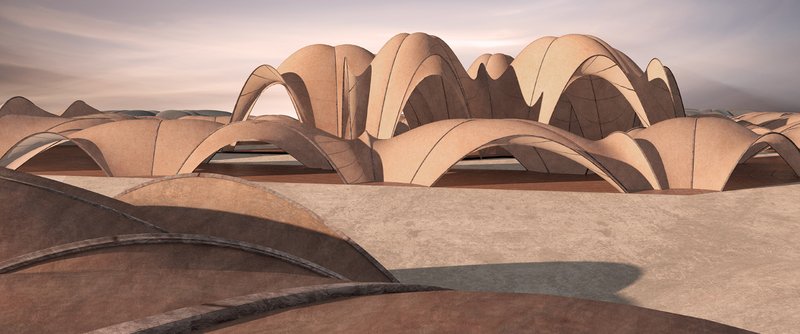
The design aims to create a sustainable architectural solution that is based on local materials and adapted to the unique challenges of desert living. Through the exploration of Saharan traditional tectonic methods and modern temporary construction technology, this project seeks to bridge the gap between traditional knowledge and contemporary design.
This project is Honorable Mention entry of EHC - Sahara
Purpose of Research
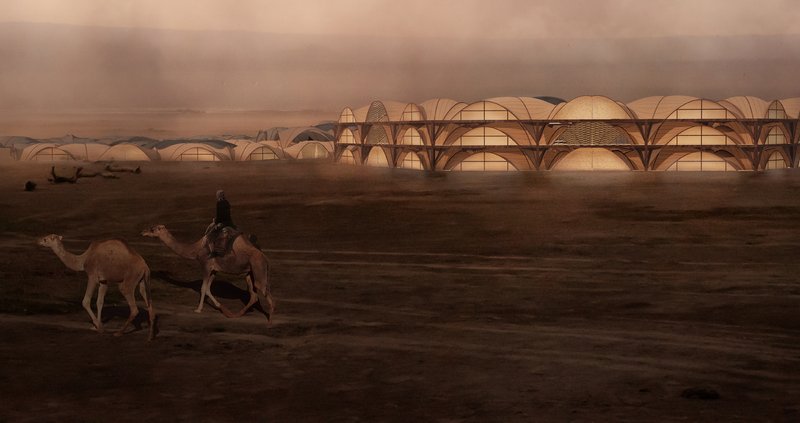
This initiative focuses on developing constructions suitable for the harsh environment of the Sahara Desert, leveraging insights from both historical and modern construction techniques. It addresses critical environmental factors such as extreme temperatures, windstorms, and water scarcity while incorporating innovative material use and design principles.
Key Insights
- Environmental Challenges: With temperatures soaring to 60°C during the day and plunging to -10°C at night, the Sahara's extreme conditions demand adaptive design strategies. Sandstorms and high winds necessitate robust structural forms and materials.
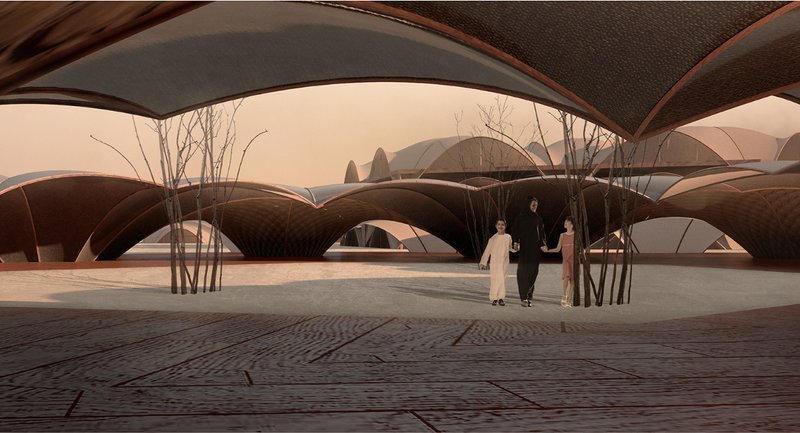
- Material Innovation: Local materials such as palm wood and branches are integrated with modern materials like membranes to enhance durability, heat resistance, and energy efficiency.
- Cultural Relevance: Drawing inspiration from the traditional dwellings of the Berbers, Tuaregs, and Bedouins, the design respects cultural heritage while meeting contemporary needs.
Project Features
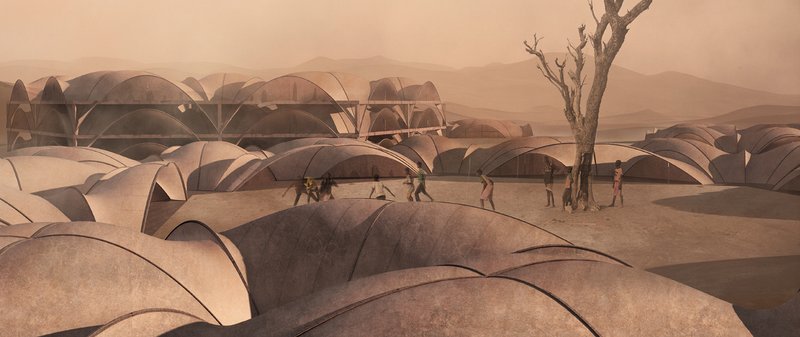
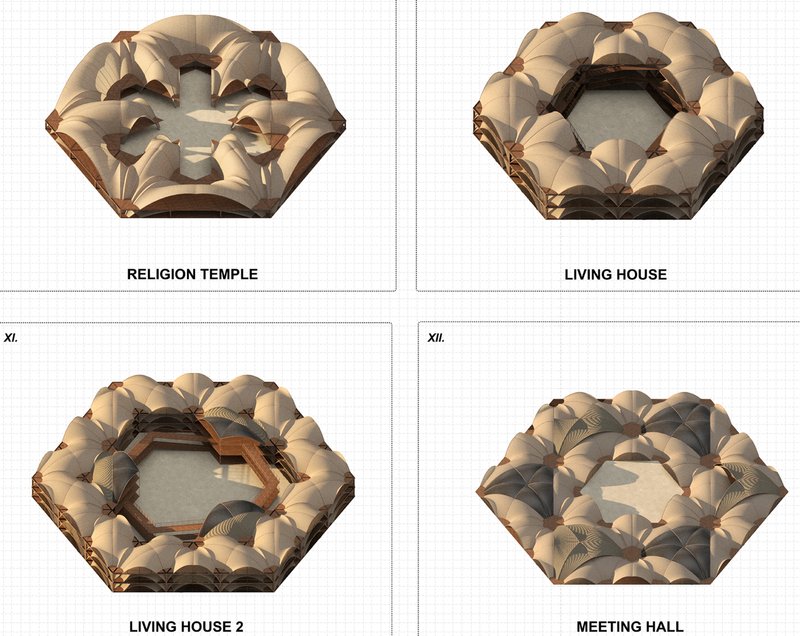
- Prototype Development: Modular structures designed to expand horizontally and vertically, offering flexibility for various functions, such as living spaces, meeting halls, and temples.
- Energy Efficiency: Utilizing renewable energy sources like solar and wind power to sustain the settlements.
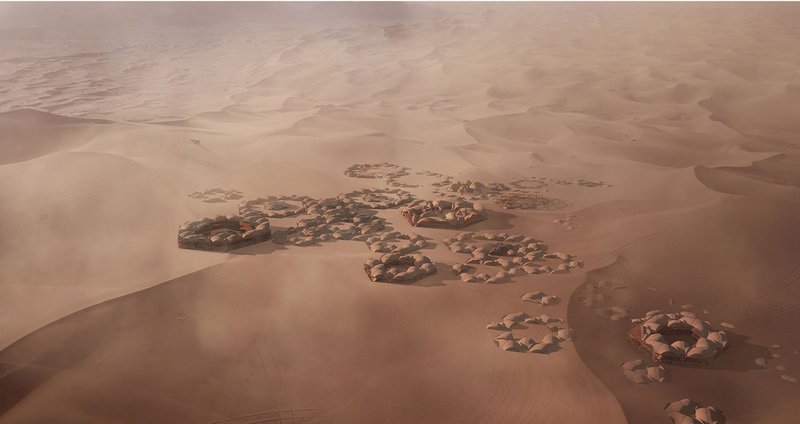
- Community Focus: The layout fosters communal interaction while addressing individual privacy needs.
Collaboration
This project by Jiang Peiwei represents an architectural exploration of creating livable, sustainable spaces in one of the world's most challenging environments. By combining traditional wisdom with modern technology, it showcases a path forward for resilient and adaptive desert architecture.
The Nomadic Nest of Sahara exemplifies the potential of architecture to transform and enhance the living conditions of desert communities. By leveraging local resources, honoring cultural traditions, and embracing innovation, this project sets a benchmark for sustainable design in extreme environments.



Popular Articles
Popular articles from the community

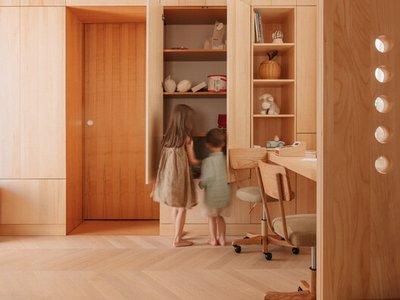
Treehouse Apartment: A Warm Timber Interior Blending Craft, Play, and Contemporary Living
Warm timber apartment with integrated treehouse, combining natural materials, craftsmanship, and playful design to create a flexible, family-oriented living environment.
On the Brooks House by Monsoon Collective – A Contemporary Kerala Home Rooted in Tradition
Kerala home blending tradition and modernity with water-inspired design, brick architecture, courtyard planning, and sustainable rainwater harvesting strategies.


The Ken Roberts Memorial Delineation Competition (Krob)
As the most senior architectural drawing competition currently in operation anywhere in the world, it draws hundreds of entries each year, awarding the very best submissions in a series of medium-based categories.
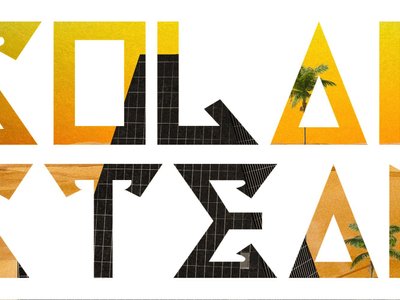
Solar Steam: A Climate-Responsive Architecture That Redefines the Monument
A climate-responsive memorial architecture that transforms heat, decay, and time into a living system reflecting humanity’s ecological impact.

Similar Reads
You might also enjoy these articles
The Ken Roberts Memorial Delineation Competition (Krob)
As the most senior architectural drawing competition currently in operation anywhere in the world, it draws hundreds of entries each year, awarding the very best submissions in a series of medium-based categories.


Waterfront Redevelopment and Urban Revitalization in Mumbai: Forging a New Dawn for Darukhana
A transformative waterfront redevelopment project reimagining Darukhana’s shipbreaking heritage into an inclusive urban future.

OUT-OF-MAP: A Call for Postcards on Feminist Narratives of Public Space
Rhizoma Design and Research Lab invites artists, designers, architects, researchers, and students to reflect on how feminist perspectives can reshape public space. Selected works will be exhibited in Barcelona, October 2026. Submissions open until 15 April 2026.


Documentation Work on Buddhist Wooden Temple
Architectural syncretism and cultural hybridity: A comparative study of the Buddhist temples in Chattogram Hill tracks





Comments (0)
Please login or sign up to add comments
No comments yet. Be the first to comment!