

The Sanctum House by RENESA Architecture Design Interiors Studio
The Sanctum House by RENESA in Amritsar redefines Indian residential architecture with a circular courtyard, brick-concrete forms, and modern, contemplative interiors.


Reimagining the Indian Home through Geometry and Atmosphere
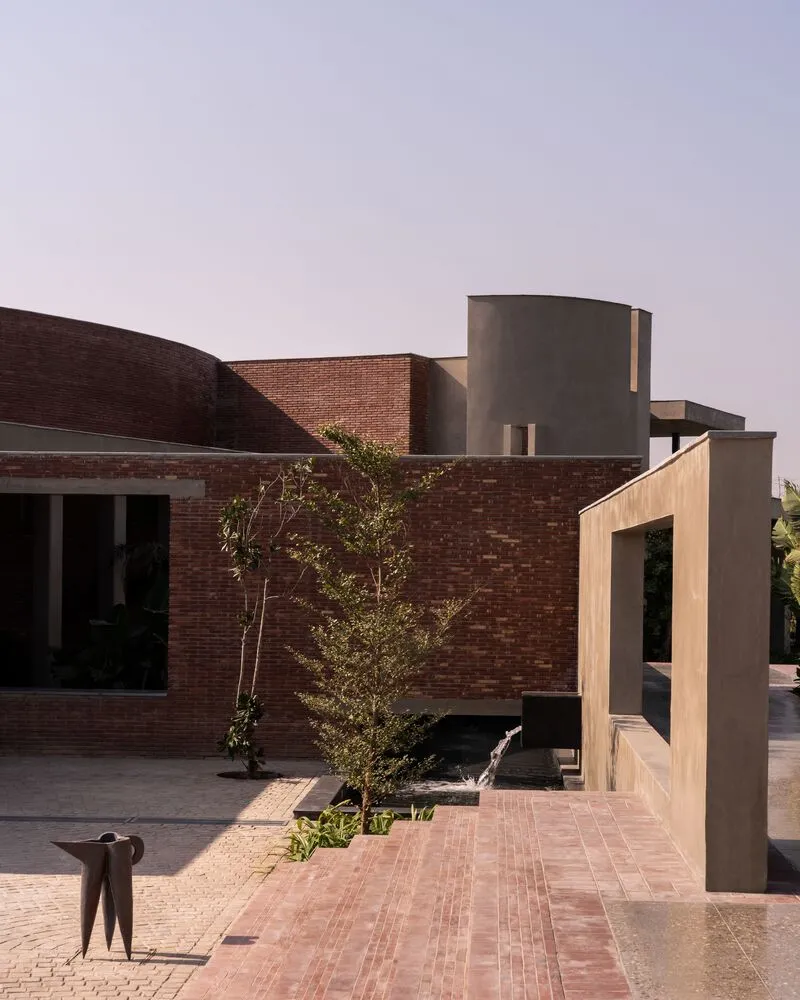
The Sanctum House in Amritsar, designed by RENESA Architecture Design Interiors Studio, is a rare architectural experiment that redefines the idea of home in India. Moving beyond the conventional typologies of box-like houses and ornate villas, the residence is conceived as a modernist interpretation of Indian domestic life, blending spatial geometry, material honesty, and emotional resonance.
Spanning 12,000 square feet on a three-acre site, The Sanctum stands as a contemporary meditation on permanence and introspection. The architects propose a structure that feels both grounded and transcendent—anchored in brick and concrete yet open to the light, the sky, and the landscape beyond.

The Courtyard as the Heart of the Home
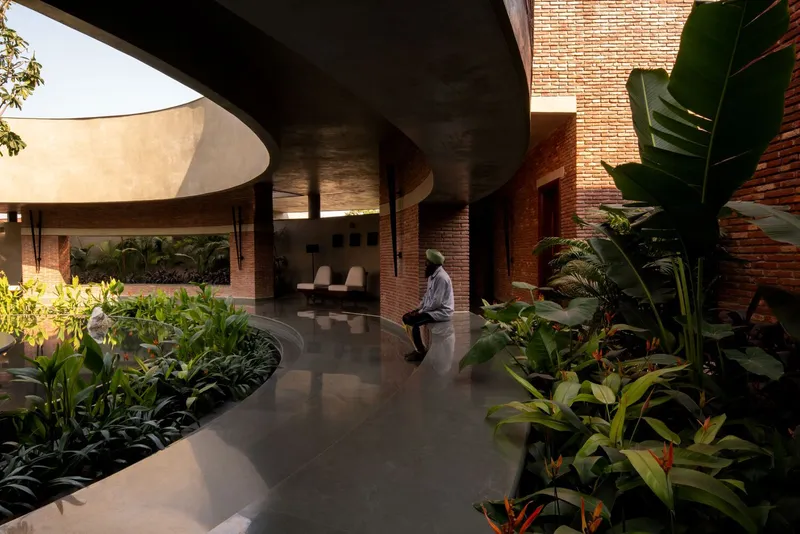
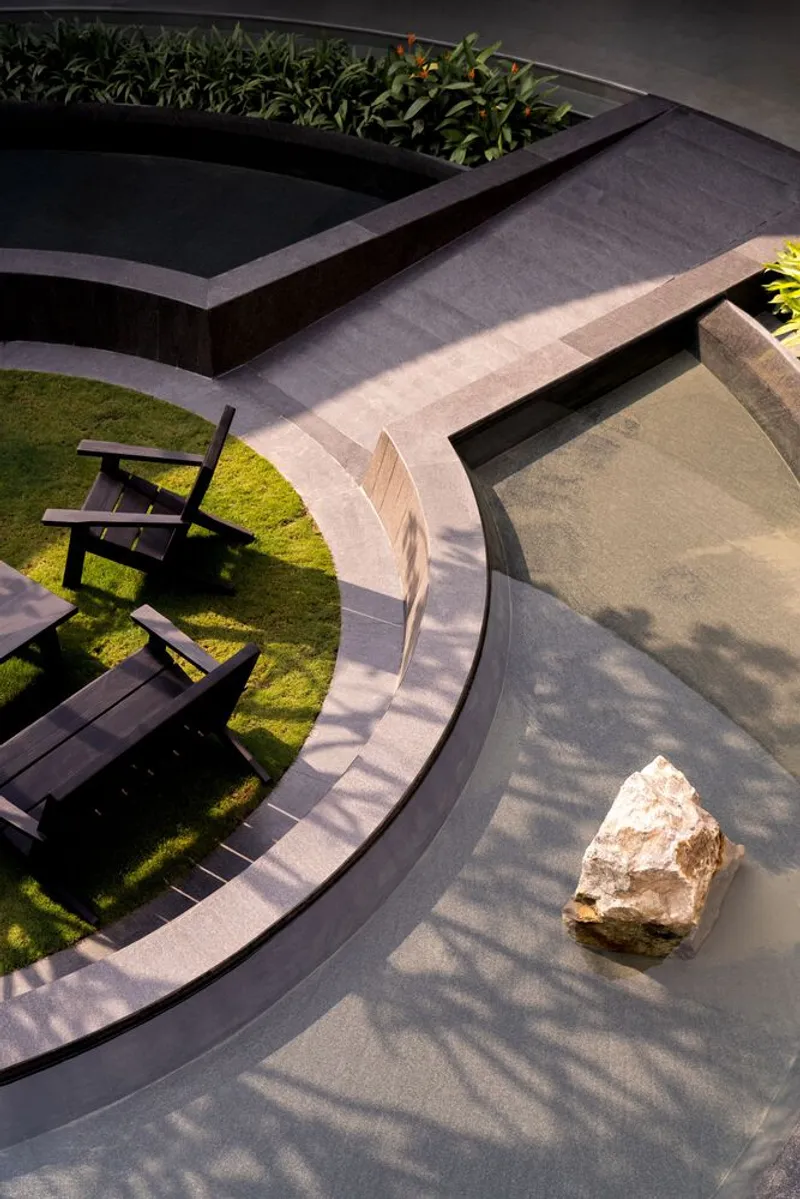
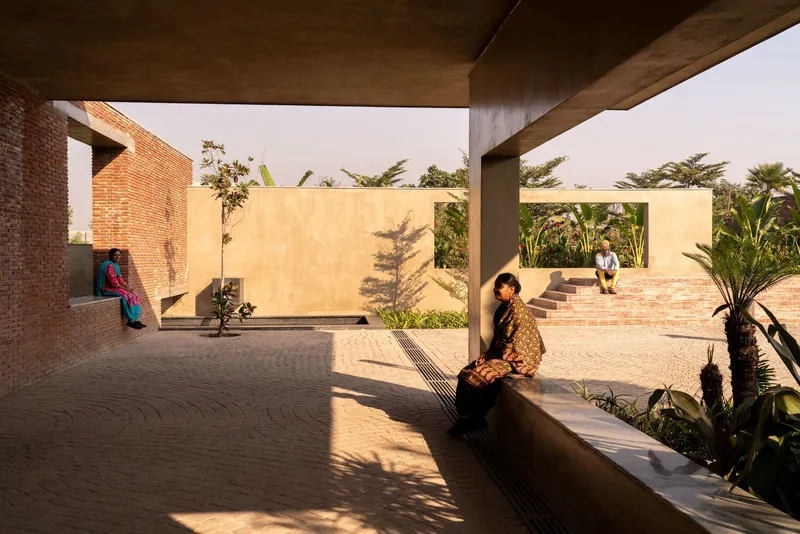
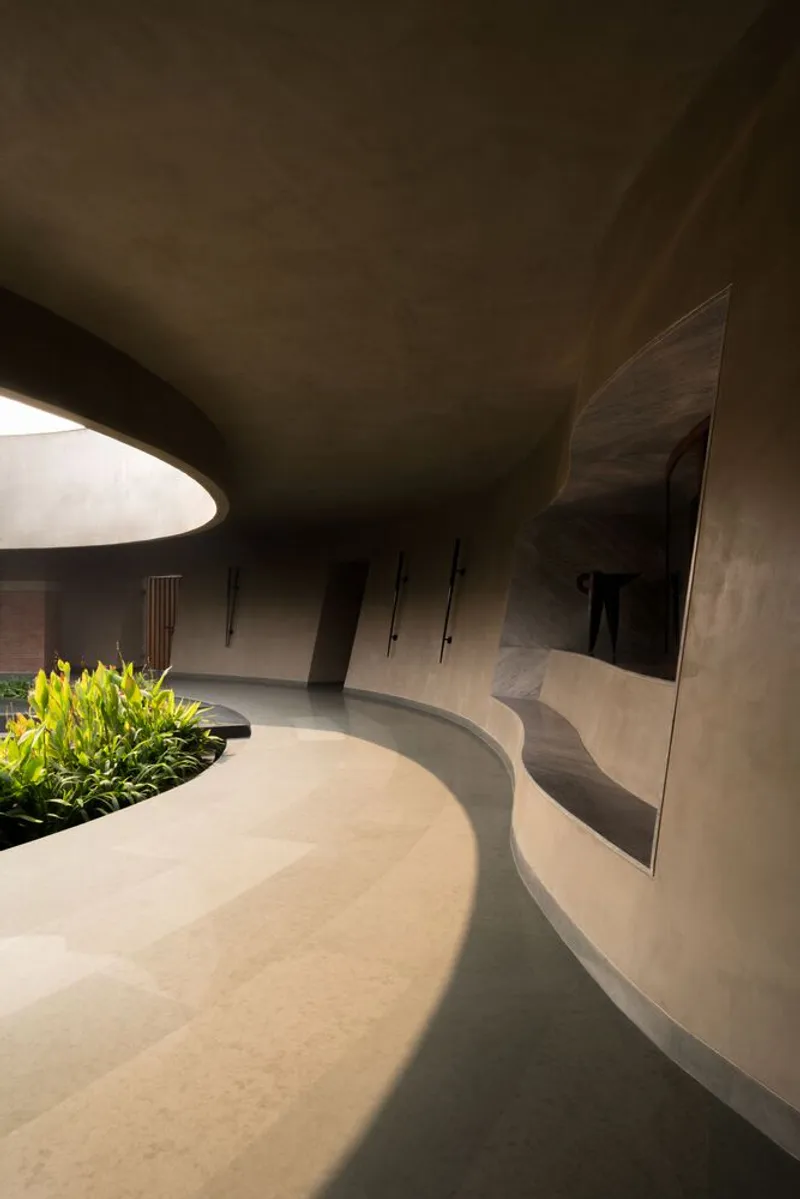
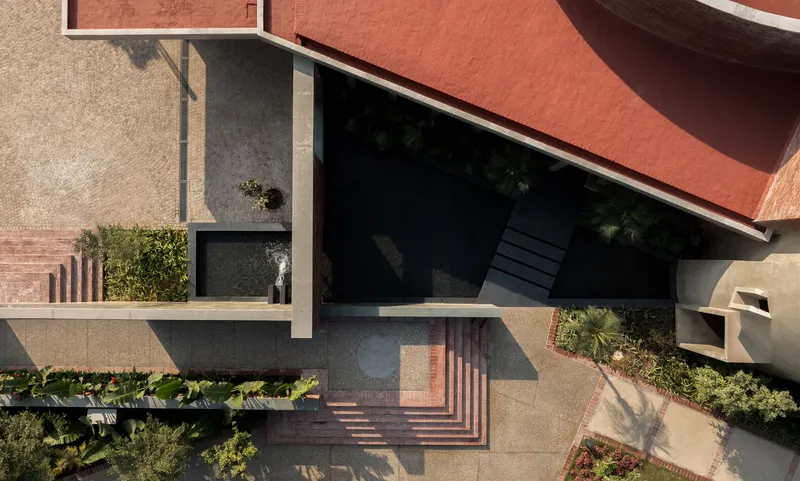
At the core of the house lies a vast circular courtyard—a sculptural void that becomes the generative nucleus of the design. Far more than a decorative gesture, this circular sanctum recalls the spiritual and ritualistic essence of traditional Indian courtyards. Here, water bodies, planters, and shaded walkways are woven into a living landscape that changes with the rhythm of light and time.
The courtyard redefines the idea of inwardness. It is both a private sanctuary and a communal heart, where architecture becomes an act of reflection and connection—between people, nature, and the passage of day.
A Dialogue Between Solidity and Lightness
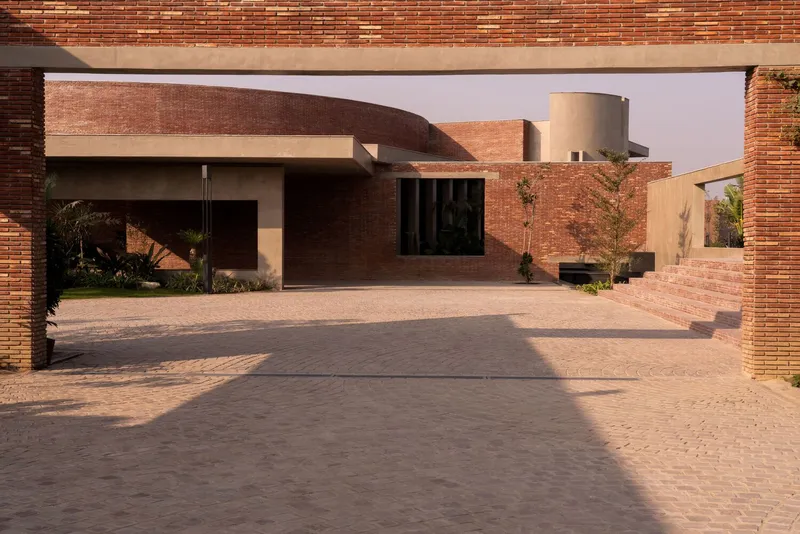
The architectural composition unfolds as concentric bands radiating from the circular core, gradually transitioning from semi-public zones to more intimate family areas. RENESA orchestrates a subtle play between horizontal and vertical gestures—cantilevered slabs, open-to-sky cutouts, and shifting volumes that infuse movement and dynamism into the layout.
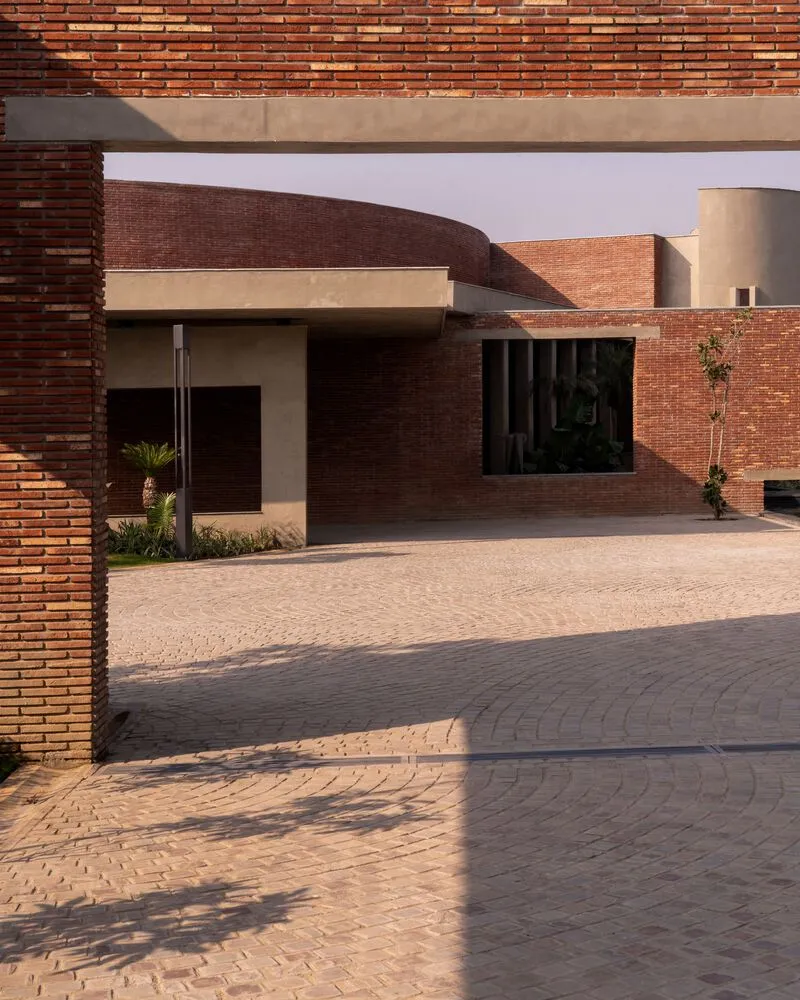
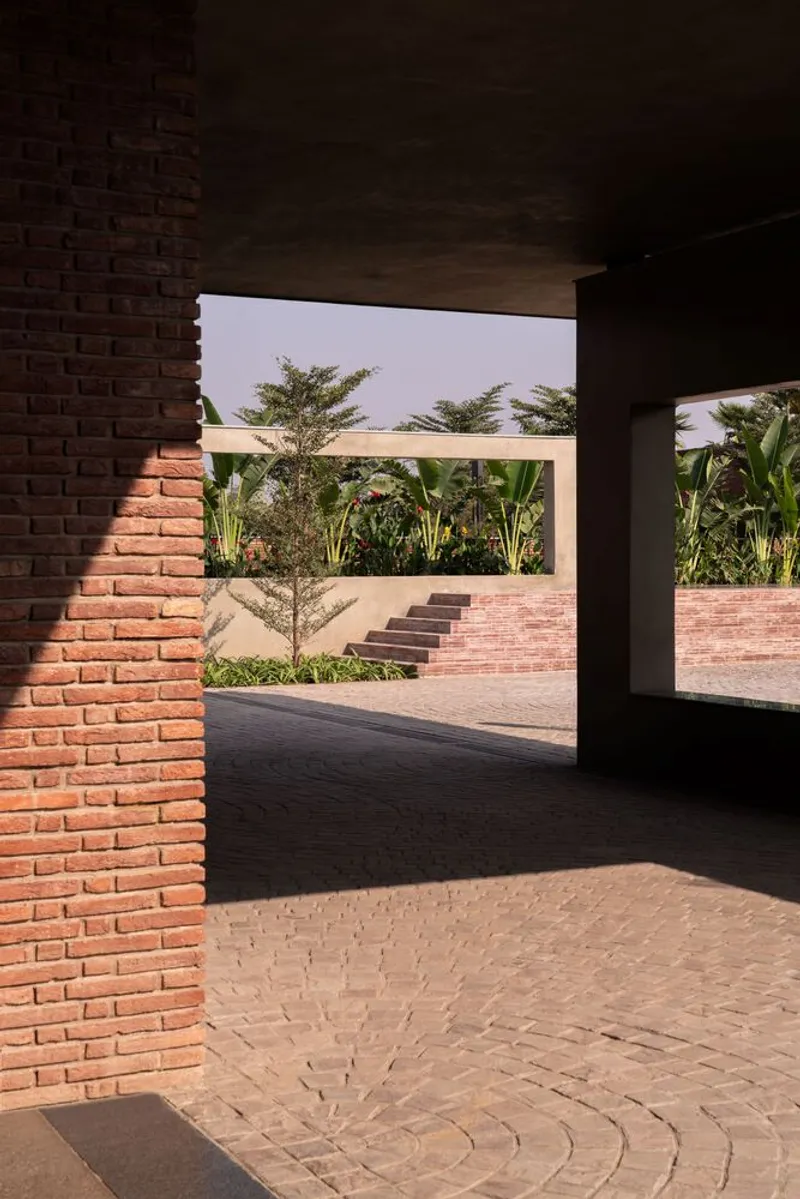
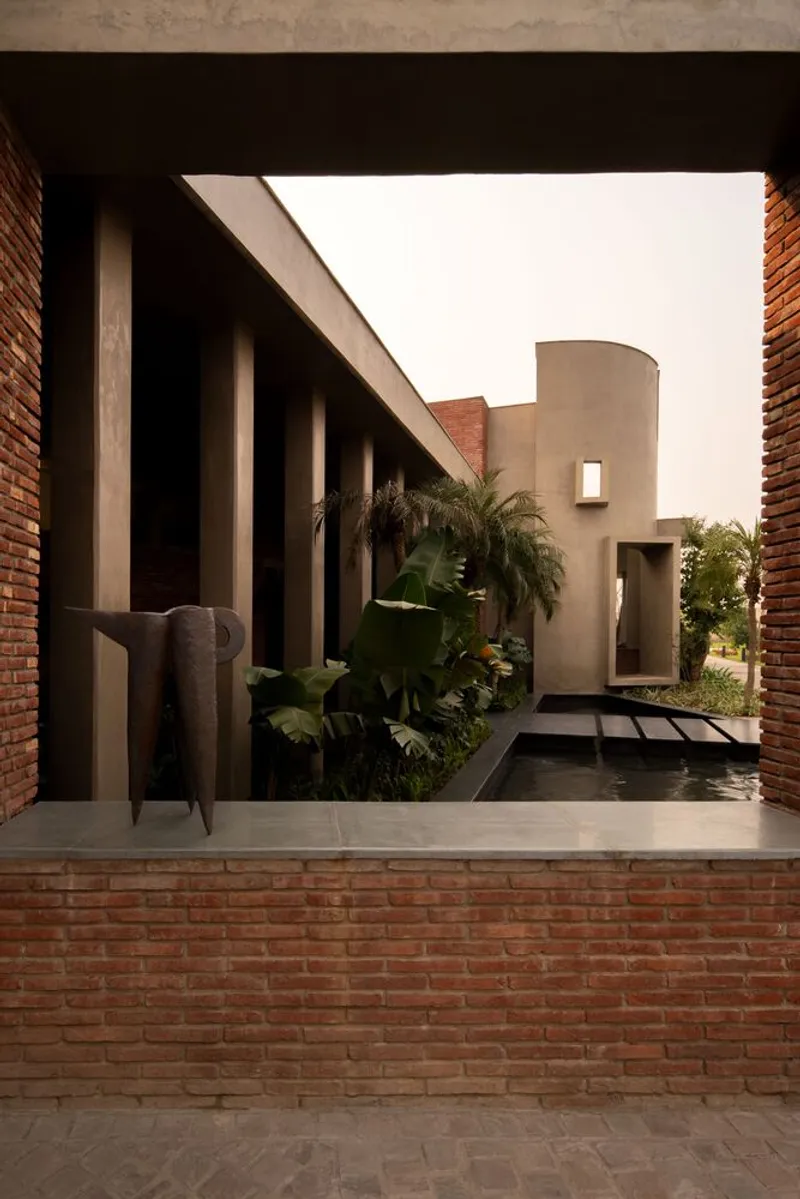
Materially, the project achieves a balance between brick and exposed concrete, forming a language of quiet monumentality. The heavy texture of the brick walls contrasts with the floating presence of concrete planes, creating an aesthetic that is both grounded and ethereal. The restraint in ornamentation further amplifies this spatial clarity, celebrating the raw honesty of materials over decorative indulgence.

Interiors of Warmth and Modern Elegance
Inside, the interiors take on a mid-century modern sensibility. Tactile wood finishes, low-slung leather seating, and custom-designed furniture introduce an atmosphere of comfort and refinement. The palette remains intentionally minimal, allowing natural light and shadow to shape the experience.
This contrast between the rough exterior and the refined interior forms the emotional backbone of the house. The Sanctum’s design becomes a dialogue between monumentality and intimacy, structure and softness, matter and mood.
Architecture as Experience and Emotion
As one moves through the residence, the transitions between compressed passages and expansive living spaces become deeply experiential. Light, sound, and texture guide movement through the house—brick corridors leading to sunlit courtyards, shaded verandas opening to water reflections, and framed views of trees rising within the circular void.
The Sanctum transforms everyday movement into a ritual of awareness. It embodies the idea that architecture must move beyond form and function to evoke feeling, creating atmospheres that invite contemplation and belonging.
Redefining Luxury and Modern Indian Identity
The true radicalism of The Sanctum lies in its reinterpretation of luxury. RENESA rejects superficial grandeur in favor of spatial purity, material integrity, and emotional depth. This is a luxury of stillness—an architecture of restraint and introspection, monumental without excess and spiritual without dogma.
In a cultural landscape often preoccupied with visual spectacle, The Sanctum offers an alternative: a modern Indian home that celebrates abstraction, atmosphere, and authenticity. The brick-and-concrete architecture roots the project in its context while the refined interiors connect it to an international lineage of modernist design.
Towards a New Language of Indian Residential Architecture
Beyond its visual power, The Sanctum House signals a new direction for contemporary Indian architecture—one that prioritizes experience over exhibition, and emotion over embellishment. It demonstrates how homes can become spaces of thought and reflection, fostering deeper connections between inhabitants and their surroundings.
Through its masterful interplay of light, geometry, and material, The Sanctum transcends being just a residence—it becomes a philosophical statement about how we inhabit space. RENESA’s vision invites a broader rethinking of Indian domestic architecture: an evolution towards timelessness, abstraction, and atmosphere.
All Photographs are works of AVESH GAUR


Popular Articles
Popular articles from the community


David Ortega Stacks a Two-Story Mexico City Penthouse Around a Steel Stair and a Pergola-Shaded Roof Terrace
In Colonia Roma, a 300 m² penthouse uses oak joinery, a planted steel stair and a slatted roof pergola to make a new-build apartment feel like a house.


Opera on the Sea: Driftwood Logic Shapes a Timber Opera House on Estonia's Coast
Trevor Orgill's opera house translates the entangled drift of floating timber into a civic building where wood, water, and music converge.

Aquadapt: An Underwater Habitat That Rewrites Its Rooms by the Hour
Curved modules ring the seabed while one shell shifts from breakfast room to cinema, farm and football pitch as residents' needs change.

Cube Design Draws an Ecological Corridor Between Two Shenzhen Hills with the Nankai Building
Beside Shenzhen's container docks, the Nankai Building pairs stacked balconies with a climbing green screen to connect two hillsides across its height.

Similar Reads
You might also enjoy these articles


Hodi-Mandai Geram
Project Function: Preservation and revitalization of the Intangible heritage and socio-spatial identity of the Hodi by Housing, Cultural Memory Center, Sacred Grove, landscape, local tourism economy


Olio Towers: A Mid-Rise for Performers That Fuses Housing, Rehearsal, and Stage
Located blocks from Houston's Theater District, this modular tower stacks living units around a central performance atrium.

Oasis: Modular Green Housing Carved into Dhaka's Urban Fabric
A shortlisted Plugin Housing entry reclaims unauthorized settlements in Dhaka with stepped concrete volumes, green roofs, and ventilation-driven design.

Black Hole: A Floating Megastructure for the Post-Physical Era
Emiliano Mazzarotto envisions a spherical, self-scaling arena where e-sports, digital hotels, and holographic stadiums replace traditional public space.

Explore Sacralized Architecture Competitions
Discover active competitions in this discipline

Challenge to reimagine the Iron Throne

Photograph architecture without architects

Illustrate the lost glory of Angkor Wat - Render Challenge

Design challenge to reuse E-waste
Comments (0)
Please login or sign up to add comments
No comments yet. Be the first to comment!