
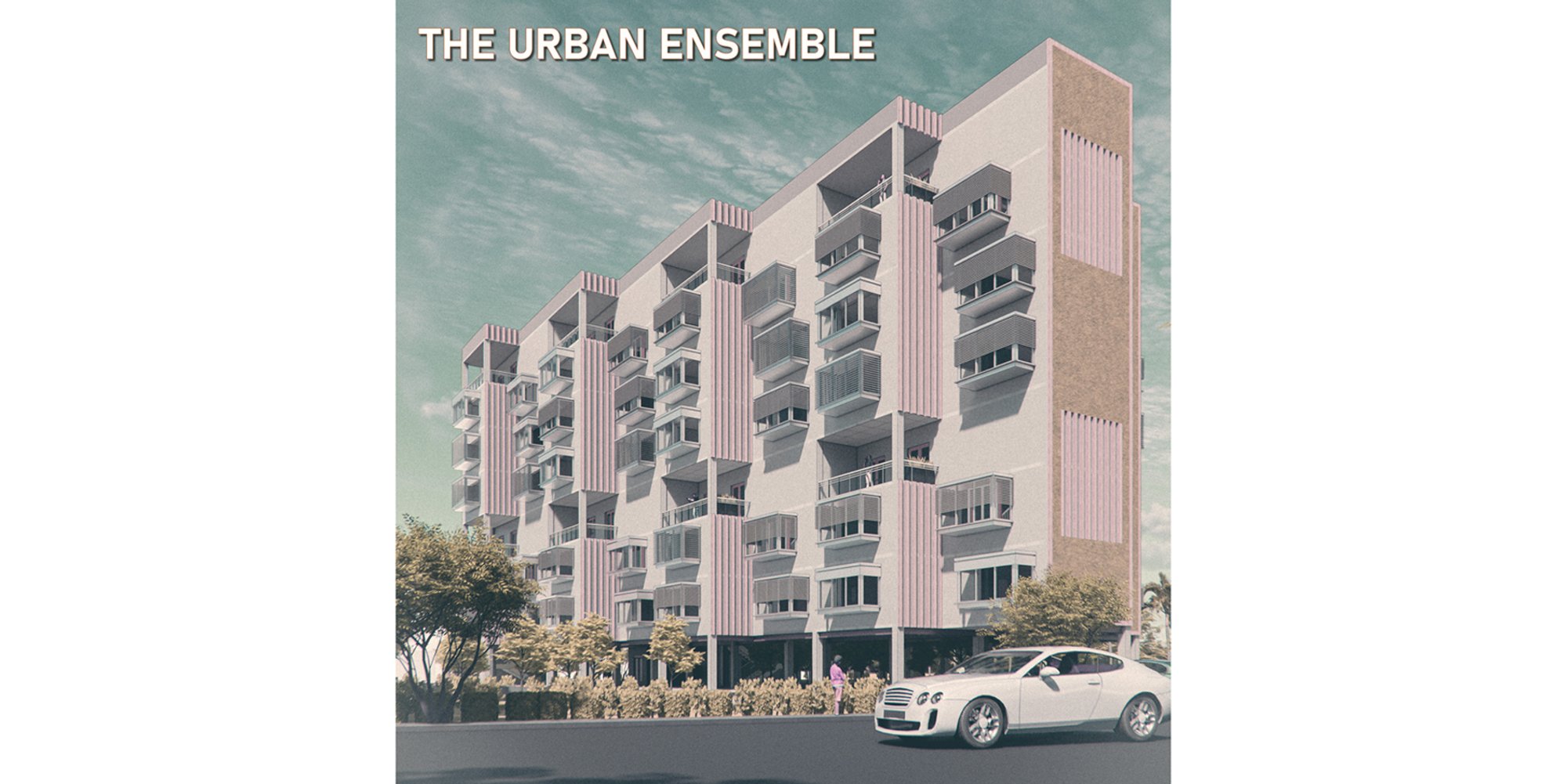
THE URBAN ENSEMBLE
Building blocks for a better tomorrow

THE URBAN ENSEMBLE is an innovative micro-housing solution that addresses the need for affordable housing in Bengaluru, India - one of India’s several urban centres and a bustling tech city, where young migrants and working individuals are constantly in search of affordable living options in the vicinity of their workplace or institution. The design aims to tackle the issue of the rising population in today’s world, resulting in a rise in demand for resources for sustenance. As the influx of people increases, especially in urban cores like Bengaluru, the need for space and accommodation for young working individuals also increases, along with the cost of living for better quality and provisions. Hence, this design is a work in progress that attempts to integrate conceptual ideas and techniques for micro-housing for the working class and come up with possible solutions for affordable accommodation in small spaces. It acts
as a base to further ideas that can be implemented in such dwellings to ease living in smaller spaces facilitating all day-to-day activities for any individual.
Finding opportunity on a relatively smaller land area in the sprawling urban city, the site selected for the proposal is located just 80m away from Halasuru Lake, Bengaluru, offering magnificent views of the lake while also being in proximity of 1.3 km from Halasuru metro station. Ease of accessibility, a suitable locality as well as a beautiful environmental ambience for the residents were the main ideals behind choosing the right site for the proposal. Access to the site via the Kensington main road and smaller pocket roads on the periphery allows trouble-free commute and easy pedestrian access to the site as well.
As a requisite to the design process, a thorough SWOT analysis was done along with case studies of existing micro and modular homes. These studies yielded valuable inferences about the site, the feasibility of the project on the chosen land and the various innovative concepts for effective space usage in a micro- dwelling. Using space-saving, convertible furniture like murphy beds, collapsible curtain separators and foldable furniture helped transform spaces into multi-use zones throughout different times of the day. This translated as a concept of flexibility in the design. A study of standards pertaining to micro-housing space requirements and an anthropometric study helped to ensure that the modular layouts generated are workable in themselves as well as functioning as a single entity when plugged in together.
During the early stages of concept development, we approached the unit organisation strategy by adopting a flexible modular system. The individual modular units together form a knitted whole in a staggered, Vshaped form placed on site to maximise the benefits of the prevailing wind flow and wind direction in the area, as well as incorporating views of the surrounding lake and outdoor ambiences for the dwelling units. The built-up forms around a staggered central courtyard, providing privacy and encouraging safety, while also offering comfortable pockets for interaction zones, fostering a sense of community among residents. The funnel form of the built-up on-site encourages wind flow and creates the Venturi effect, enhancing natural ventilation.
With regard to internal planning, two module types have been designed with generous indoor spaces: one for single occupancy and another for double occupancy. The main zones considered while designing were the recreational, sleeping, and food & services zone.
The single occupancy hosts one resident full-time and has space for an additional guest as well. The spaces are flexible and could be used in any manner as seen fit by the resident. The bay windows provide uninhibited views of the lake and the surroundings, and the surface also doubles up as a worktop. The double occupancy unit works on a similar concept, with the main difference being the provision of another floor. The ground level houses the entertainment and services zone, whereas the first level accommodates the sleeping zone and private spaces. The services were clubbed together to facilitate easy access for plumbing purposes. The double occupancy module also has a balcony which can be accessed by both residence spaces. These two units are put together to form a larger module which is replicated throughout the site. Easier construction practises with DFMA design and prefab components help quicker assembly on site as well as minimizing construction waste.
Designed keeping sustainable practises in mind, green terraces and rainwater harvesting practises having also been integrated into the design of the overall building and the site context considering the rainfall that Bangalore receives throughout the monsoon season. The collected rainwater can be channelised for use for the onsite vegetation or stored for future usage. PV panels are present on the rooftops to make use of solar energy as a resourceful alternative. Value addition through landscaping elements and making use of existing flora was also one aspect considered during overall site planning. Local plant species used for landscaping need less maintenance and would require lesser water consumption leading to overall water savings.
The design also proposes the use of water-efficient fixtures such as WaterSense labelled products and energy star appliances in the building which help to reduce consumption costs and add to eco-friendly measures. The corridors and public spaces in the building also use smart technologies for automation that promote judicious resource usage, saving costs as well as being sensitive to the environment.
Additional building features such as the façade elements - vertical timber louvre systems and moss walls also help in ventilation and encourage shading for the building environment by daylight control. It also enhances external visual detail. The design features stilt parking as well as open parking spaces to accommodate the vehicles for the residents along with universal friendly parking spaces for the specially-abled. The parking spaces are provided keeping the current and future requirements in mind and include provisions for bicycles as well. Corridor and entrance widths, elevators etc have also been compliant with disabled standards.
The design proposal, therefore, lays possible solutions to a house's ever-increasing working youth population, providing affordable micro dwellings with a quality environment, aiming to dispel the conventional notions surrounding small-space living. The location and the design of the proposal make it a perfect compact living alternative. Refining the design as per the needs of the working community played an important role in shaping the overall form and cohesively integrating what the site could offer along with the design requirements.


Popular Articles
Popular articles from the community

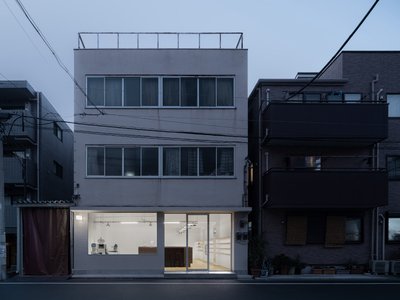
Atelier Macri Concept Store Interior Design by CASE-REAL
Atelier Macri store features a "ko" counter, walnut wood details, cork displays, blending retail, gallery, and seamless customer experiences.


The Ken Roberts Memorial Delineation Competition (Krob)
As the most senior architectural drawing competition currently in operation anywhere in the world, it draws hundreds of entries each year, awarding the very best submissions in a series of medium-based categories.
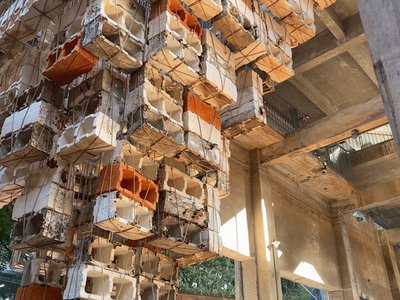
Inverted Architecture Installation by Studio Link-Arc: Exploring the Intersection of Architecture and Living Organisms
Inverted Architecture Installation by Studio Link-Arc blends mycelium, sustainability, inverted design, ecological cycles, and urban adaptive architecture in Shenzhen.
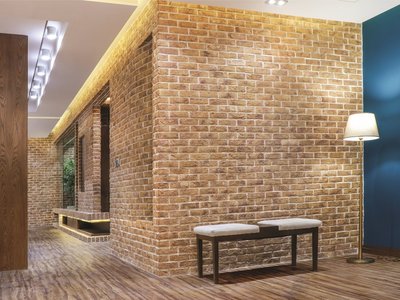
A Contemporary Take on Iranian Residential Architecture
A modern interior design in Mashhad that reinterprets brick, light, and spatial flow to create a warm, contemporary residential architecture.

Similar Reads
You might also enjoy these articles

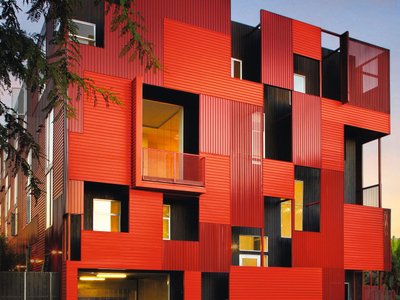
Converge Hub – A Human-Centered and Sustainable Mobility Hub at the Urban Edge
Its open and permeable design promotes sustainable movement through walkable connections, green axes, and integrated public transport
51st Annual KRob - Ken Roberts Memorial Delineation Competition
Join us in celebrating 51 years in excellence in architectural representation! With $2,400 in prize money awarded across 8 categories, this prompt-less competition is accessible to all!

Explore Architecture Competitions
Discover active competitions in this discipline




The International Standard for Design Portfolios


The Global Benchmark for Architecture Dissertation Awards


The Global Benchmark for Graduation Excellence


Challenge to reimagine the Iron Throne
Comments (0)
Please login or sign up to add comments
No comments yet. Be the first to comment!