
Timber Residence by Architecture Discipline: Pioneering Mass Timber Construction in India
Timber Residence by Architecture Discipline redefines sustainable living in Goa through mass timber construction, prefabrication, and elegant tropical design harmony.


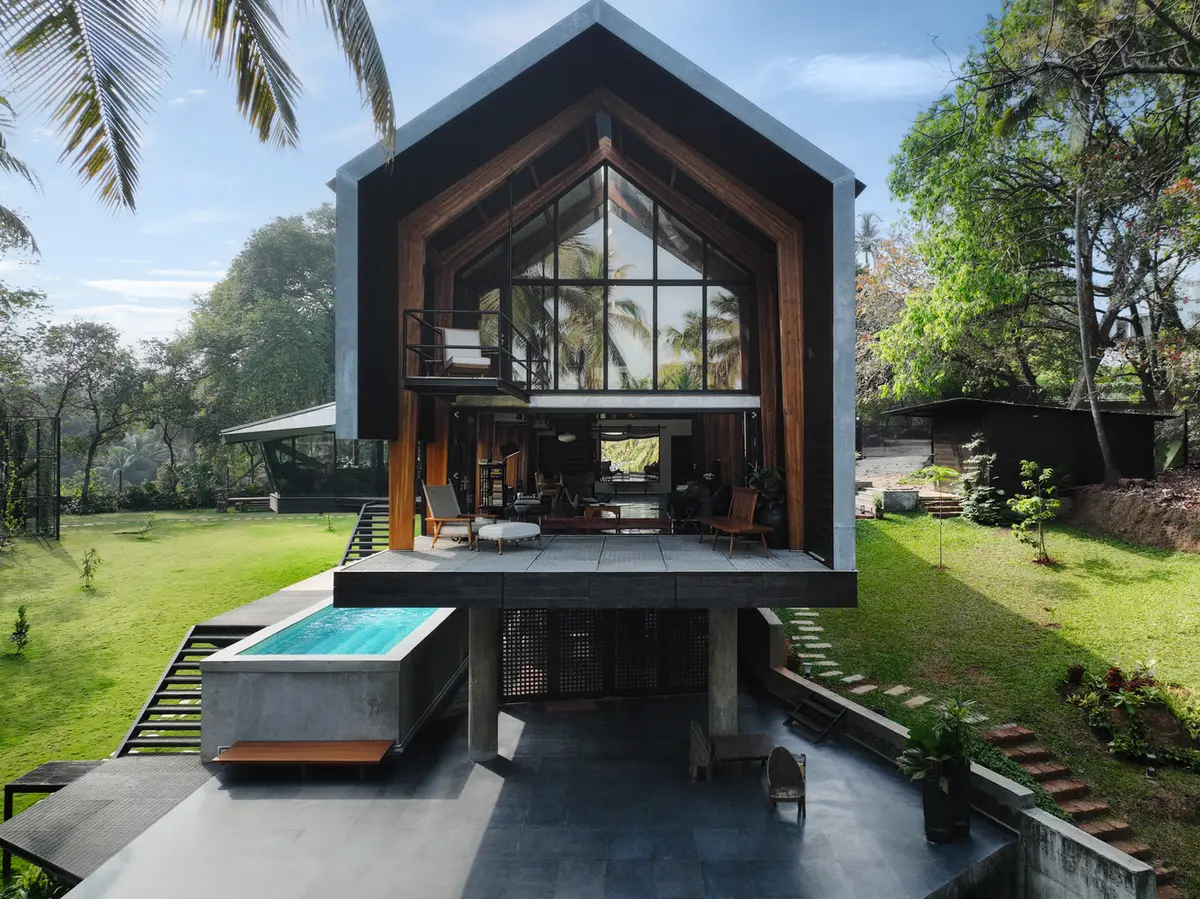
Located in the serene coastal village of Vagator, Goa, the Timber Residence by Architecture Discipline marks a significant shift in India’s architectural narrative — from concrete dominance to sustainable, mass timber construction. Designed for Sahil Barua, co-founder of one of India’s largest logistics companies, this 8,650-square-foot residence redefines tropical living through precision-engineered design, low-carbon materials, and a profound respect for nature.
Redefining Material Culture: The Rise of Timber Architecture
For over a century, concrete has been the cornerstone of modern architecture, valued for its durability and affordability. However, the environmental impact of its production — particularly its high carbon emissions — calls for a radical rethinking. The Timber Residence stands as an architectural experiment in sustainable construction, exploring mass timber as a viable alternative to traditional building materials in India.
This sea-facing home demonstrates how architecture can balance innovation with environmental responsibility, using material intelligence to inspire a new era of carbon-conscious design.

A Home Shaped by Context and Character
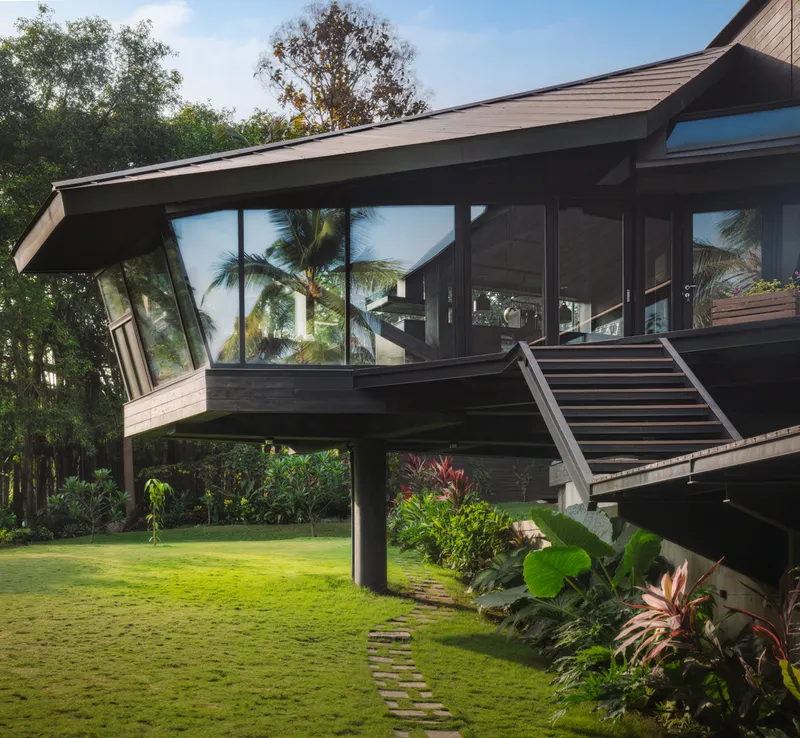
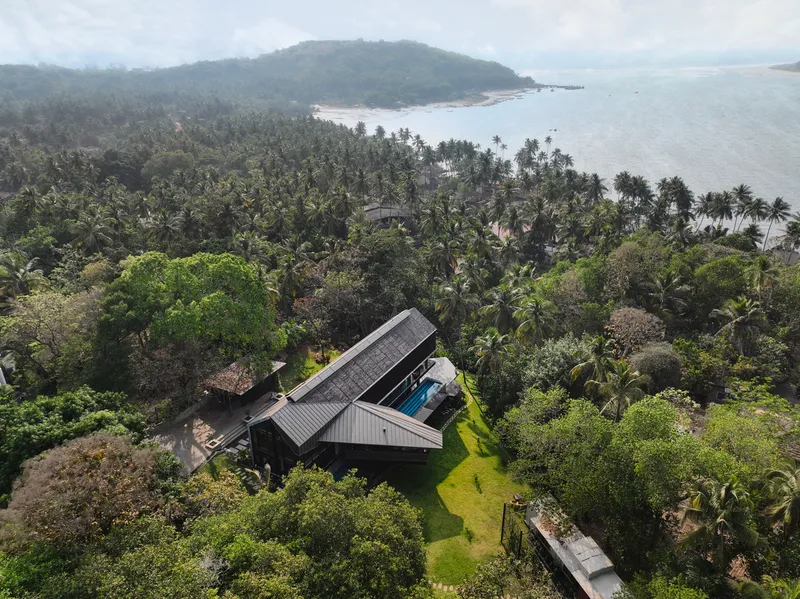
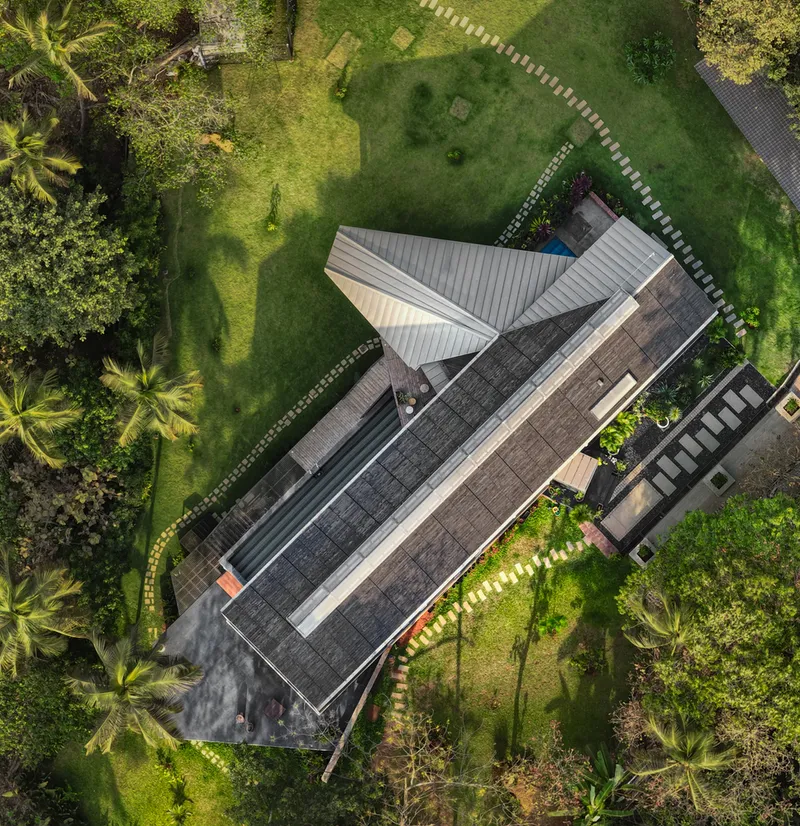
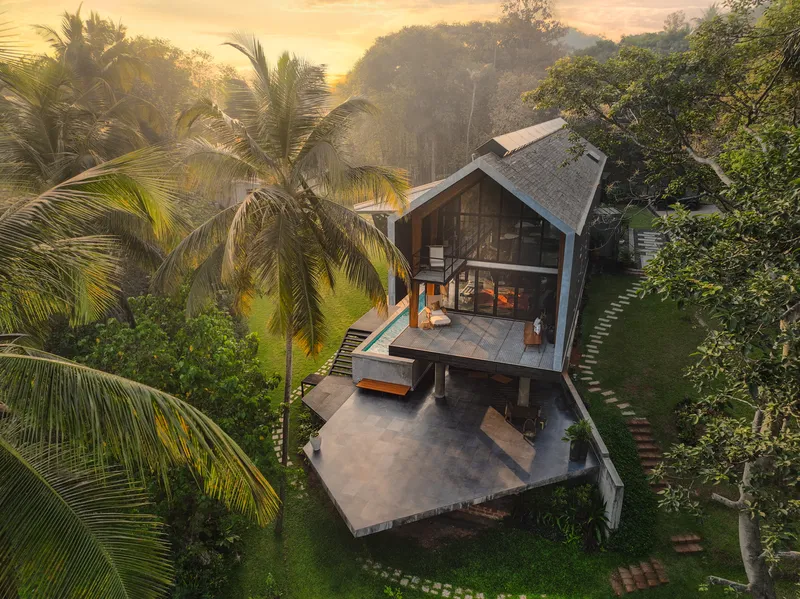
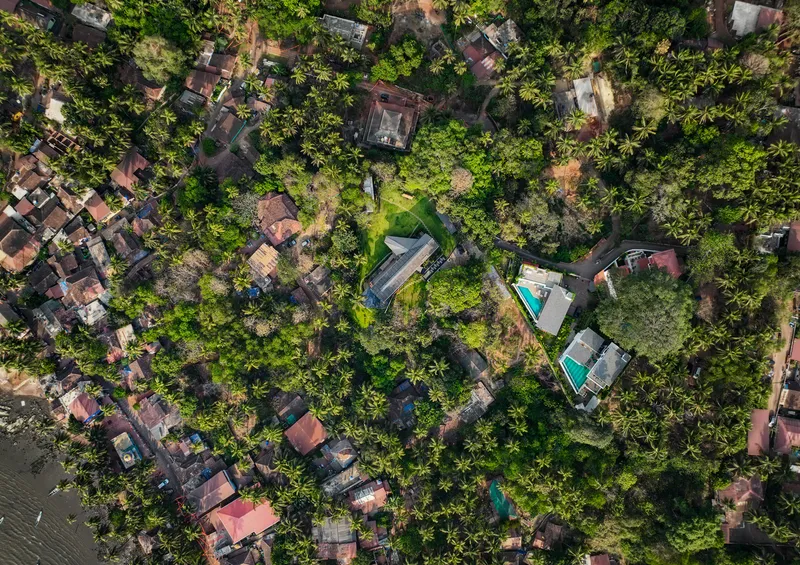
The site, located at the highest point of a lush, sloping terrain, overlooks the Chapora River and the Arabian Sea. Principal architect Akshat Bhatt emphasizes the importance of how “a building touches the ground.” To preserve the site’s natural slope and existing vegetation, the house is delicately perched on stilts and concrete retaining walls, minimizing ground disturbance and moisture ingress.
The result is a home that floats lightly above the landscape, its elevated foundation protecting it from tropical humidity while offering panoramic coastal views.
Structural Innovation: The Power of Glulam
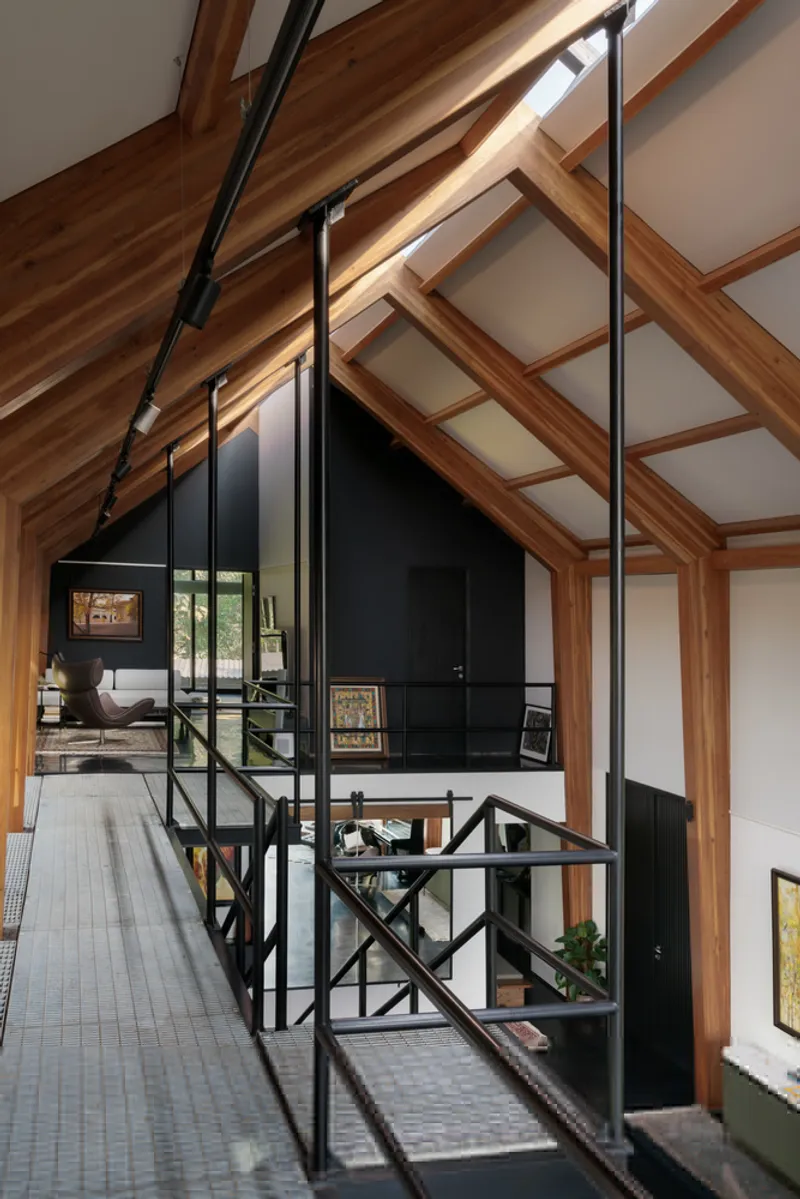
The residence is defined by a linear, unidirectional form with a pitched roof tailored for Goa’s heavy monsoons. The structure comprises eleven glulam (glued laminated timber) portal frames, creating a rhythmic architectural language of warmth and precision.
Glulam, a type of mass timber, combines strength comparable to steel with a significantly lower carbon footprint. Prefabricated in collaboration with Artius, the entire post-and-beam structure was manufactured in Gurugram and assembled on-site within just 30 days by a team of nine.
The precision-engineered anchors securing the glulam frame to its concrete base ensure both structural integrity and visual refinement, showcasing the efficiency and scalability of timber construction in tropical environments.
Prefabrication and Sustainable Efficiency
The project exemplifies value-engineered design — optimizing both cost and carbon efficiency. Through detailed planning and collaborative engineering, the complex timber system was executed with accuracy equal to conventional concrete construction.
The prefabricated approach minimized waste, accelerated assembly, and reduced on-site environmental damage, proving that sustainable construction can be both efficient and elegant.

Open Plan Living with Light and Landscape
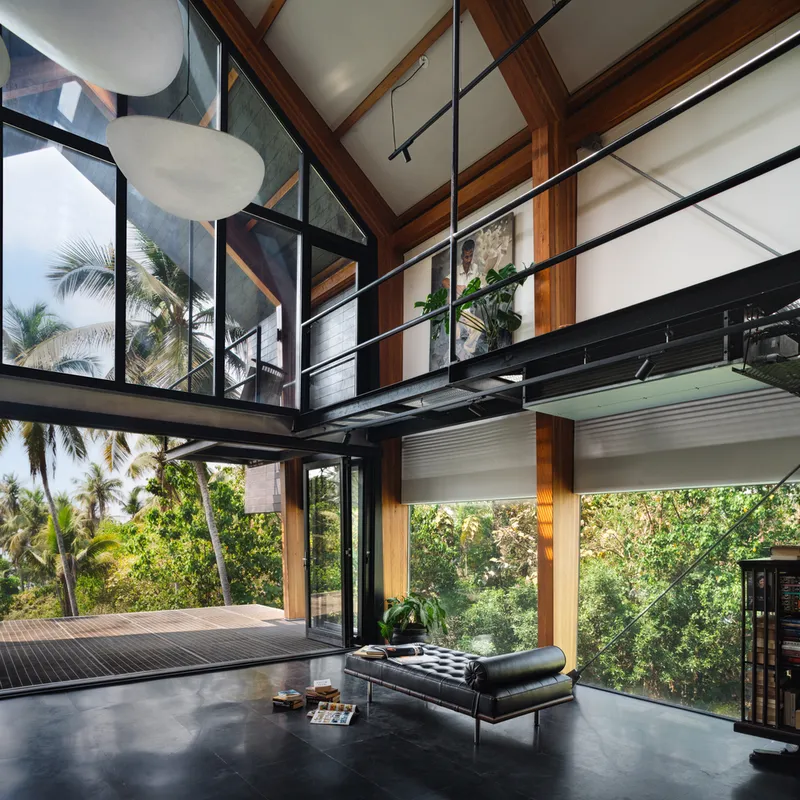
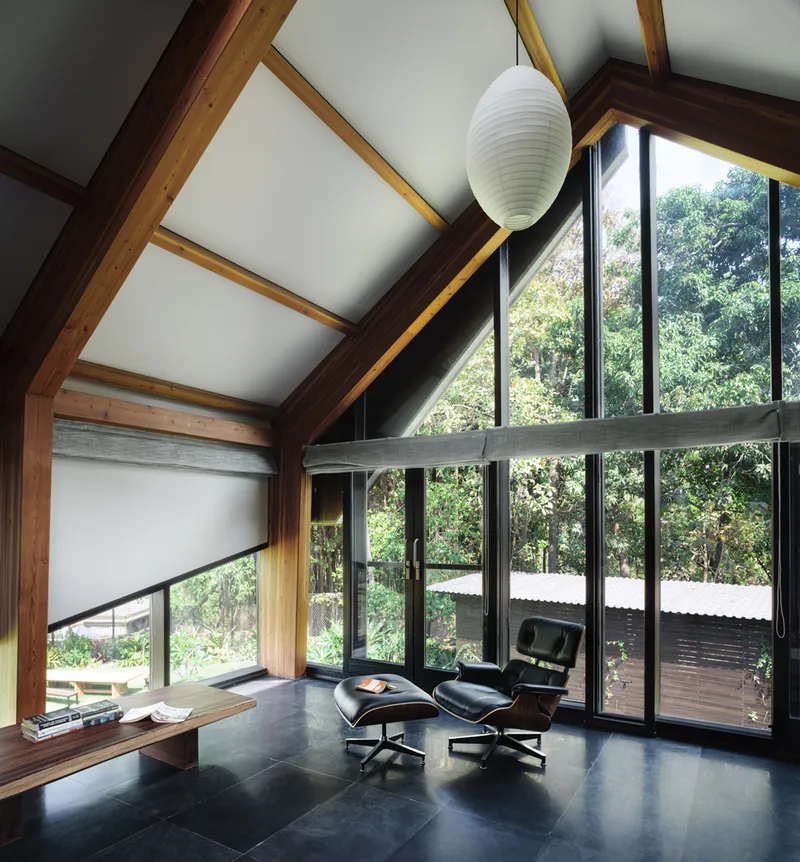
Inside, the open-plan layout unfolds within a linear block defined by natural light and material honesty. The double-height living area is illuminated by expansive glazed openings and a continuous ridge skylight that enhances ventilation while framing the sky above.
A seamless connection between interior and exterior is achieved through a floating metal deck, extending the living space toward the Arabian Sea. The mezzanine level hosts a gallery and master suite, with the gallery acting as a bridge overlooking the living area — a curated space for the client’s art collection.
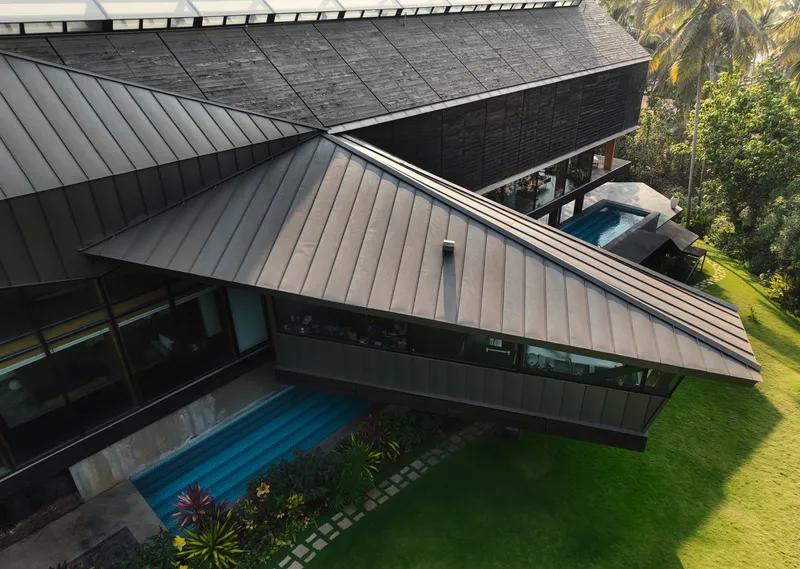
In contrast, the kitchen and dining space break away from the linear form, projecting outward as a metal-clad volume that overlooks both the swimming pool and kitchen garden, creating an immersive dialogue between architecture and nature.
A Workshop in the Woods
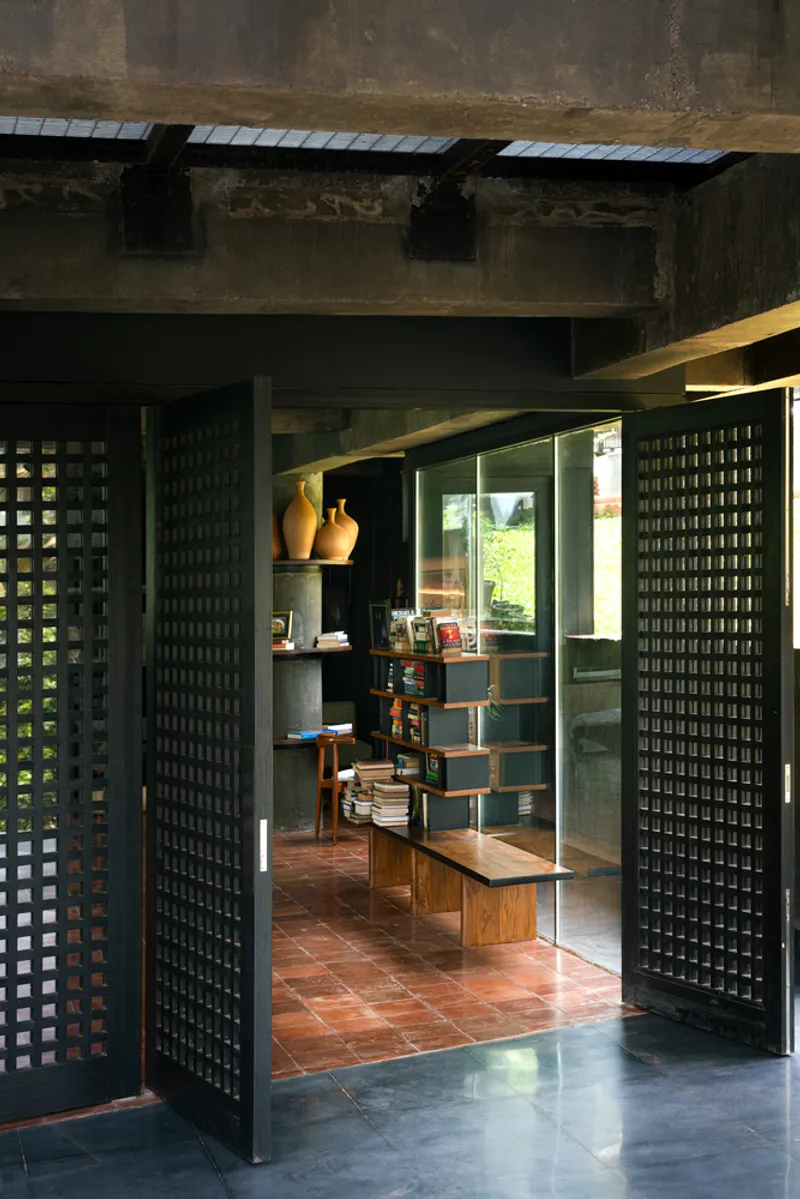
Below the living quarters, a private wood workshop opens to a partially shaded timber deck framed by planters. This flexible outdoor zone blurs boundaries between interior and landscape, allowing for both work and contemplation amidst natural light.
Interior Aesthetics: Simplicity and Authenticity
The interior design embodies restraint — raw timber frames, exposed joinery, and unclad surfaces celebrate the honesty of materials. Black granite flooring contrasts with white walls, creating a quiet, reflective backdrop.
Furniture pieces are minimal yet timeless: a live-edge timber dining table, Eames chairs, and a Mies-inspired daybed enhance the spatial purity. The interiors encourage clarity of thought and tactile comfort, highlighting the expressive beauty of wood and light.
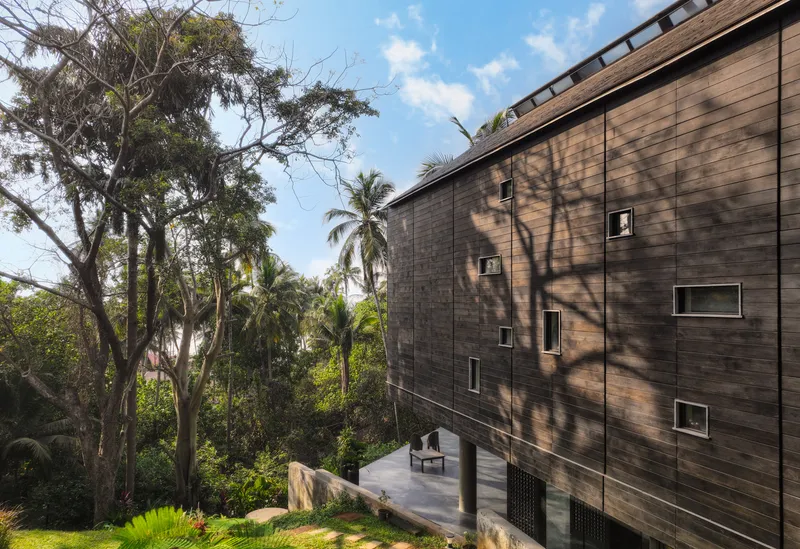
Yakisugi Facade: Charred Elegance
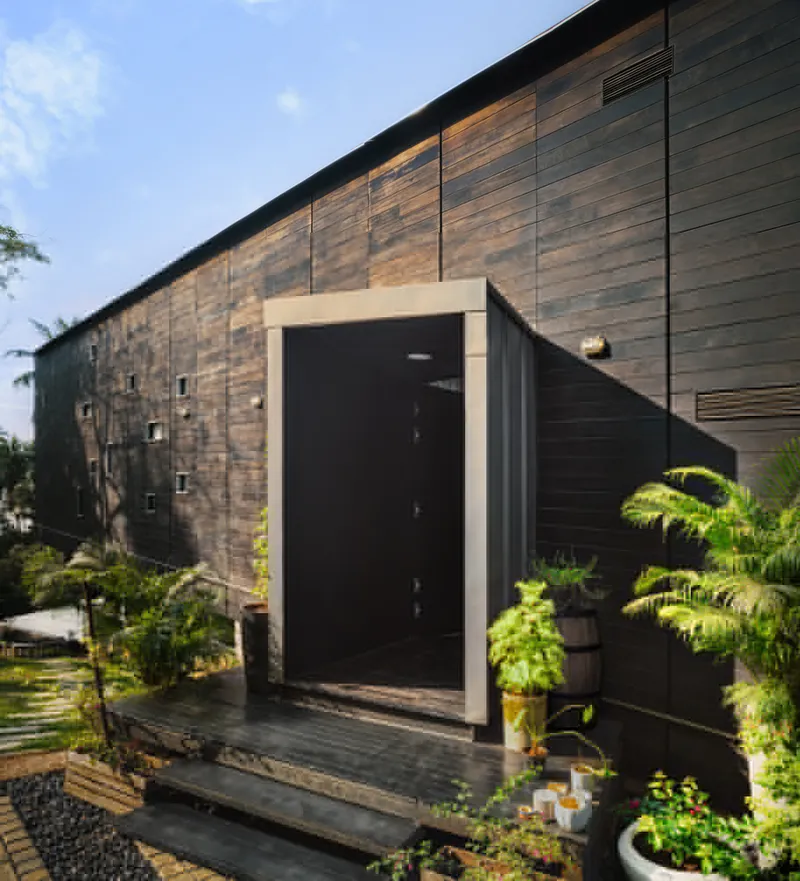
Externally, the house’s bold expression contrasts sharply with its tranquil interiors. The facade is wrapped in charred timber panels crafted using Yakisugi, an ancient Japanese technique that preserves wood by charring its surface.
This process enhances durability, moisture resistance, and thermal stability, making it ideal for Goa’s humid climate. The charcoal-gray exterior harmonizes with the surrounding greenery, while the zinc-clad kitchen volume provides a contemporary counterpoint, shimmering subtly under tropical light.
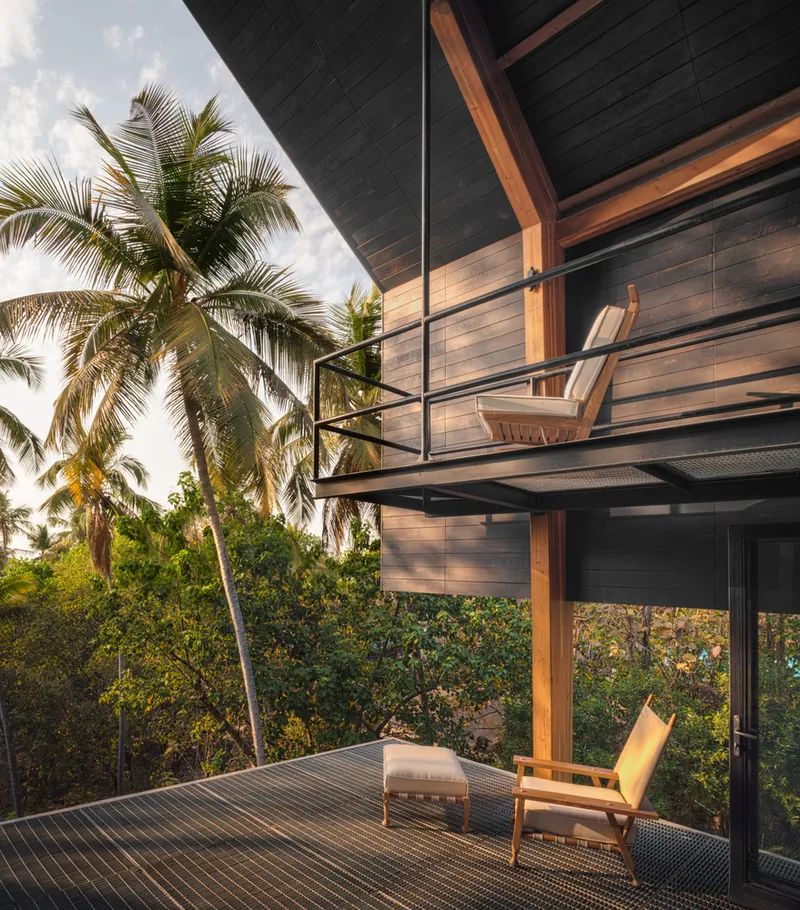
Living with Nature
The landscape, curated yet wild, complements the home’s material ethos. A 25-meter exercise pool, kitchen gardens, and preserved trees create a lush microclimate. The outdoor areas are designed for wellness and sustainability, enabling the client — an avid triathlete — to live in close contact with the natural environment.
The lawn acts as a soft frame to the minimalist structure, establishing a serene dialogue between architecture and ecology.
A Blueprint for the Future of Sustainable Homes
The Timber Residence by Architecture Discipline represents a new paradigm in Indian residential architecture — one that prioritizes ecological integrity, material experimentation, and construction efficiency.
All photographs are works of Studio Charuau


Popular Articles
Popular articles from the community

Extended Shell: Retrofitting Kolkata's Balconies as Living Urban Thresholds
A modular retrofit system recovers the social and environmental intelligence of Kolkata's historic verandas for contemporary Park Street residents.

Singing Woman: Contemporary Architecture Inspired by Estonia’s Voice and the Sea
Singing Woman turns Estonia’s song culture into flowing opera house architecture, blending public life, landscape, sea, and national memory.
Tsunami Convergenics: Turning Catastrophic Ocean Forces into Underwater Housing Infrastructure
A speculative underwater settlement off the coast of Onagawa, Japan, treats tsunamis and typhoons as energy sources rather than threats.
Cloaked Colonization: A Mobile Underwater Habitat That Moves Like a Fish
Micah Abaya's shortlisted EHC Pacific entry reimagines ocean settlement as a dispersed network of self-sustaining architectural organisms.

Similar Reads
You might also enjoy these articles


Hodi-Mandai Geram
Project Function: Preservation and revitalization of the Intangible heritage and socio-spatial identity of the Hodi by Housing, Cultural Memory Center, Sacred Grove, landscape, local tourism economy


Olio Towers: A Mid-Rise for Performers That Fuses Housing, Rehearsal, and Stage
Located blocks from Houston's Theater District, this modular tower stacks living units around a central performance atrium.

Oasis: Modular Green Housing Carved into Dhaka's Urban Fabric
A shortlisted Plugin Housing entry reclaims unauthorized settlements in Dhaka with stepped concrete volumes, green roofs, and ventilation-driven design.

Black Hole: A Floating Megastructure for the Post-Physical Era
Emiliano Mazzarotto envisions a spherical, self-scaling arena where e-sports, digital hotels, and holographic stadiums replace traditional public space.

Explore Heavy Timber Competitions
Discover active competitions in this discipline

Challenge to reimagine the Iron Throne

Photograph architecture without architects

Illustrate the lost glory of Angkor Wat - Render Challenge

Design challenge to reuse E-waste
Comments (0)
Please login or sign up to add comments
No comments yet. Be the first to comment!