
Transforming Semarang: Sustainable Architecture in Indonesia with Tritopía
Tritopía, a sustainable architectural project in Semarang, Indonesia, designed for flood resilience.

Introduction In the heart of Semarang, Indonesia, a revolutionary architectural project named Tritopía is setting a new standard for sustainable living in flood-prone areas. This initiative not only tackles the persistent challenge of flooding but also preserves the rich cultural heritage of the region through innovative design and community-focused solutions.
Understanding the Challenges
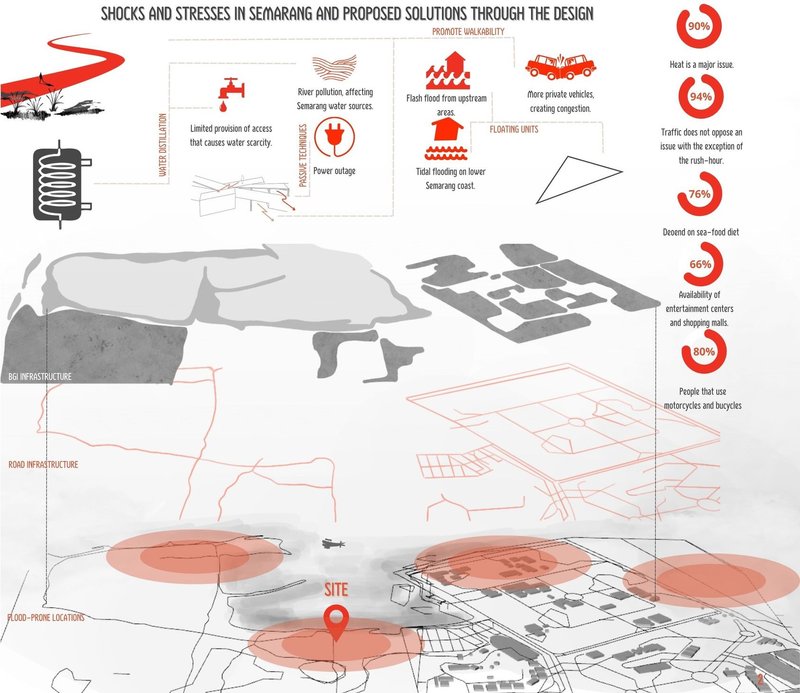
Semarang faces frequent flooding due to its geographical location, rapid urbanization, and significant land subsidence exacerbated by excessive groundwater extraction. These challenges demand resilient and adaptive architectural solutions.
The Vision of Tritopía
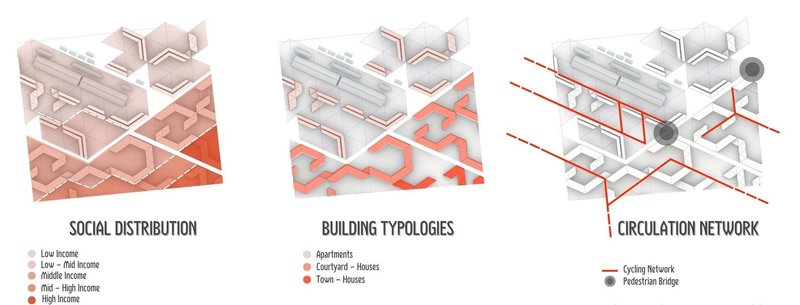
Tritopía, created by architects Hend alsuwaidi, Youssif Alqadhi, and Sarah Alawneh, People's Choice Award entry of Afloat 2.0 represents a paradigm shift in addressing these environmental and social challenges. The project leverages modular triangular units to build a community designed to withstand future floods and sea-level rises while enhancing local lifestyles.
Innovative Design Approach
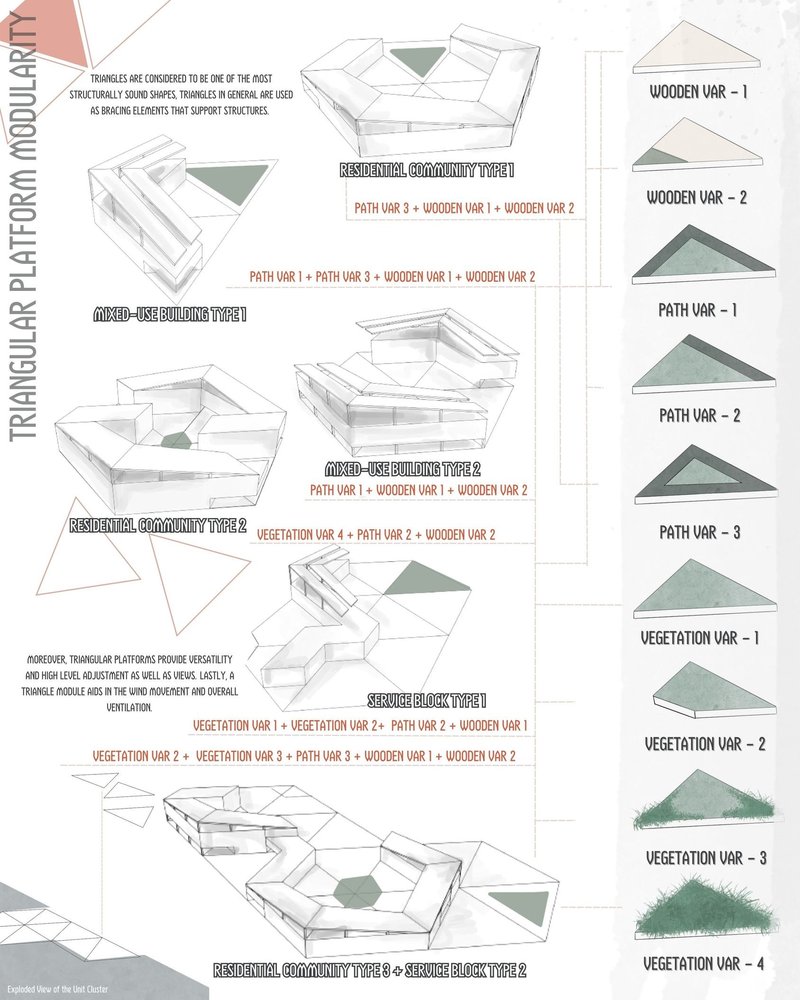
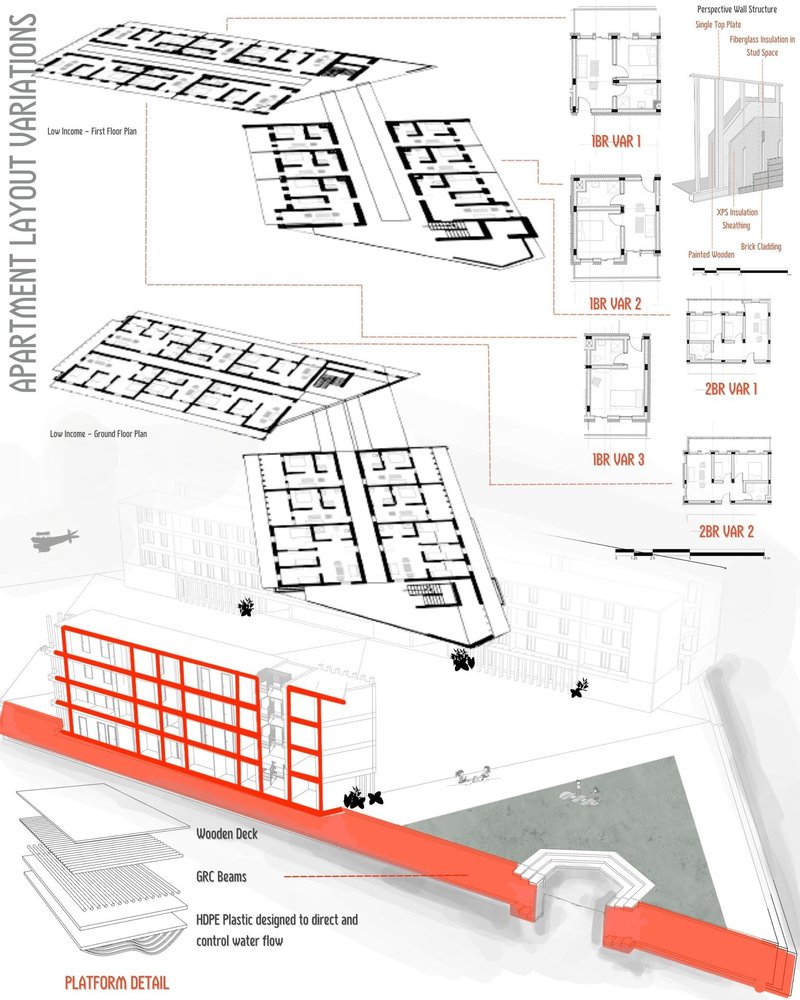
The triangular form of Tritopía is not just aesthetically unique; it's a strategic choice. Known for their structural integrity, triangles provide essential bracing elements that support the architecture against floods. This shape allows for the creation of wind funnels and diffusers, which are crucial for ventilation and cooling, addressing Semarang’s microclimatic challenges.
Cultural and Environmental Sustainability
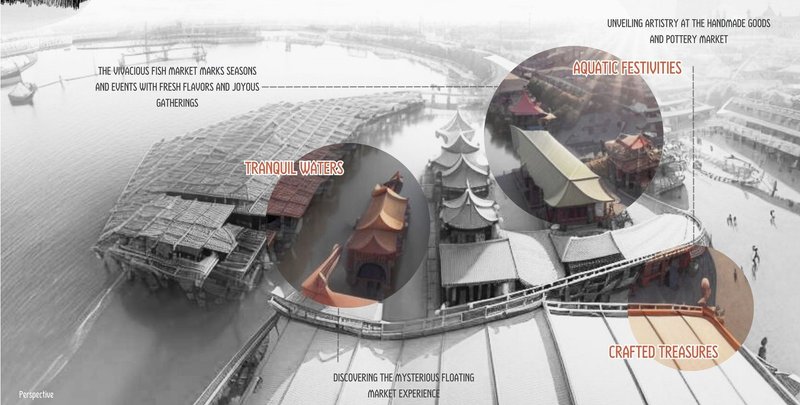
One of Tritopía's core objectives is to integrate traditional Indonesian architectural elements into its design, thus maintaining a connection to the area's cultural identity. Materials like bamboo and techniques like passive cooling are employed to align with sustainable practices and local aesthetics.
Community and Adaptability
Tritopía’s design is inherently flexible, which allows the community to grow and adapt organically. Platforms can be added or reconfigured as environmental conditions change, ensuring the longevity and resilience of the community. This adaptability is crucial for areas like Semarang, where future conditions can be unpredictable due to climate change.
Project Impact and Future Prospects
Tritopía not only provides a safe, sustainable habitat for residents but also sets a benchmark for future projects worldwide. It showcases how thoughtful design can mitigate environmental risks while enhancing the social fabric of a community. As Semarang and similar regions continue to develop, projects like Tritopía offer a blueprint for sustainable urban planning that other cities might follow.
Tritopía stands as a testament to the power of sustainable architecture in Indonesia to create resilient, culturally-rich communities. It exemplifies how innovative design can harmonize with traditional practices to forge a sustainable future. As this project continues to evolve, it will undoubtedly inspire more initiatives that prioritize resilience, sustainability, and cultural integrity in architecture.



Popular Articles
Popular articles from the community


Solar Steam: A Climate-Responsive Architecture That Redefines the Monument
A climate-responsive memorial architecture that transforms heat, decay, and time into a living system reflecting humanity’s ecological impact.
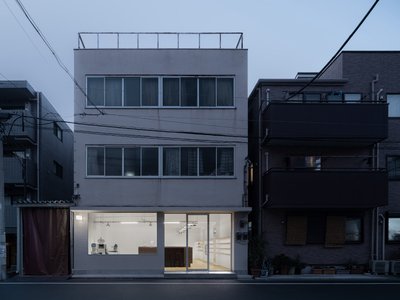
Atelier Macri Concept Store Interior Design by CASE-REAL
Atelier Macri store features a "ko" counter, walnut wood details, cork displays, blending retail, gallery, and seamless customer experiences.
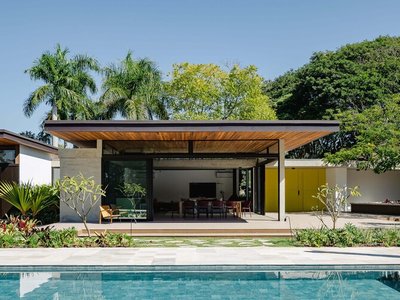
Flamboyant House by Juliana Camargo + Prumo Projetos
Modern Brazilian house integrating existing tree, pool, and volumes with glass, wood, and transitional spaces blending interior, exterior, and landscape seamlessly.
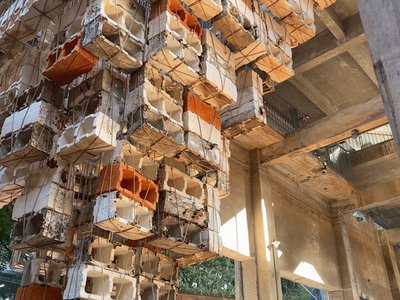
Inverted Architecture Installation by Studio Link-Arc: Exploring the Intersection of Architecture and Living Organisms
Inverted Architecture Installation by Studio Link-Arc blends mycelium, sustainability, inverted design, ecological cycles, and urban adaptive architecture in Shenzhen.


Similar Reads
You might also enjoy these articles


The Ken Roberts Memorial Delineation Competition (Krob)
As the most senior architectural drawing competition currently in operation anywhere in the world, it draws hundreds of entries each year, awarding the very best submissions in a series of medium-based categories.
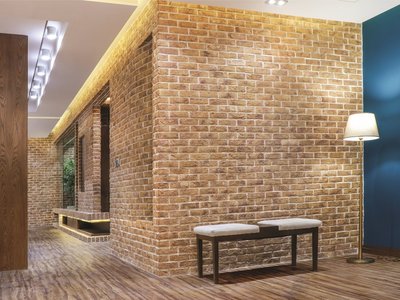
A Contemporary Take on Iranian Residential Architecture
A modern interior design in Mashhad that reinterprets brick, light, and spatial flow to create a warm, contemporary residential architecture.
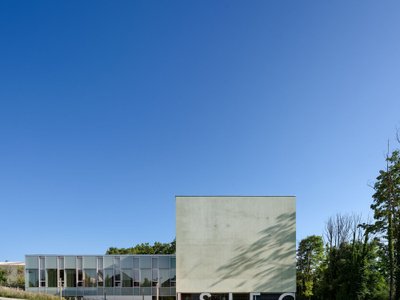
Franche-Comté Advanced School of Engineering by Dominique Coulon & associés, Besançon
A flexible engineering school immersed in woodland, combining concrete minimalism, adaptable spaces, and natural light to support evolving educational environments.

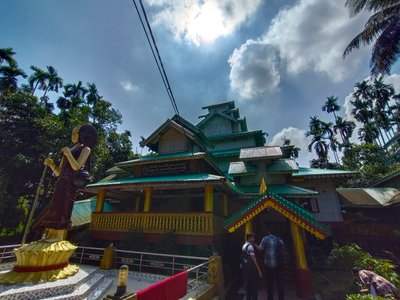
Documentation Work on Buddhist Wooden Temple
Architectural syncretism and cultural hybridity: A comparative study of the Buddhist temples in Chattogram Hill tracks

Explore Architecture Competitions
Discover active competitions in this discipline




The International Standard for Design Portfolios


The Global Benchmark for Architecture Dissertation Awards


The Global Benchmark for Graduation Excellence


Challenge to reimagine the Iron Throne
Comments (0)
Please login or sign up to add comments
No comments yet. Be the first to comment!