
Translating Intangible Heritage into Contemporary Product Design
How a contemporary blind-box gift transforms sugar painting, ancient Chinese scripts, and cultural storytelling into an interactive product experience that brings intangible heritage into everyday life.

How can a centuries-old cultural tradition remain relevant in contemporary consumer culture?
This question became the starting point of the SparksGlo Horse Sugar Script Blind Box, a cultural gift set designed for the 2026 Year of the Horse by senior graphic designer Danting Li. The project explores how intangible heritage can move beyond preservation and become part of everyday interaction, collecting culture, and gift giving.
At its core, the project brings together two important aspects of Chinese cultural heritage. The first is sugar painting, a traditional folk art that originated during the Ming Dynasty and is recognized as a national intangible cultural heritage of China. The second is the long history of Chinese script development, represented through eleven different historical forms of the character “horse.”
By combining these cultural elements with contemporary packaging design and blind-box culture, the project seeks to create a product experience that is both educational and engaging.
Understanding the Heritage
Sugar painting has been practiced in China for centuries. Using melted sugar as a drawing medium, artisans create intricate images that function as both visual art and edible treats. The craft carries cultural significance and reflects generations of traditional knowledge and craftsmanship.
Despite its historical value, sugar painting is often encountered only at cultural festivals, tourist destinations, or heritage demonstrations. Many people appreciate the art form, yet few have opportunities to interact with it in their daily lives.
Rather than treating sugar painting as a static historical artifact, this project explores how it can be reinterpreted through contemporary design. The goal was not simply to preserve a traditional craft, but to create a meaningful experience that encourages curiosity and cultural appreciation.
Connecting Ancient Scripts with Sugar Art
One of the project's central ideas was to combine sugar painting with the evolution of Chinese writing.
Instead of creating decorative horse imagery, each sugar painting presents the Chinese character “horse” in a different historical script. The collection includes cursive, running, clerical, regular, seal, Wei stele, bamboo slip, oracle bone, bronze, Nüshu, and nine-fold seal script.
Each version reflects a different period in the history of Chinese written language. Together, the eleven sugar paintings form a visual journey through centuries of cultural development.

This approach allows the product to communicate multiple layers of heritage simultaneously. The audience is introduced not only to the traditional craft of sugar painting, but also to the evolution of Chinese typography, calligraphy, and written communication.
The project therefore transforms a simple confection into a cultural storytelling medium.
Designing the Hoof-Shaped Packaging
The packaging was designed specifically for the 2026 Year of the Horse.
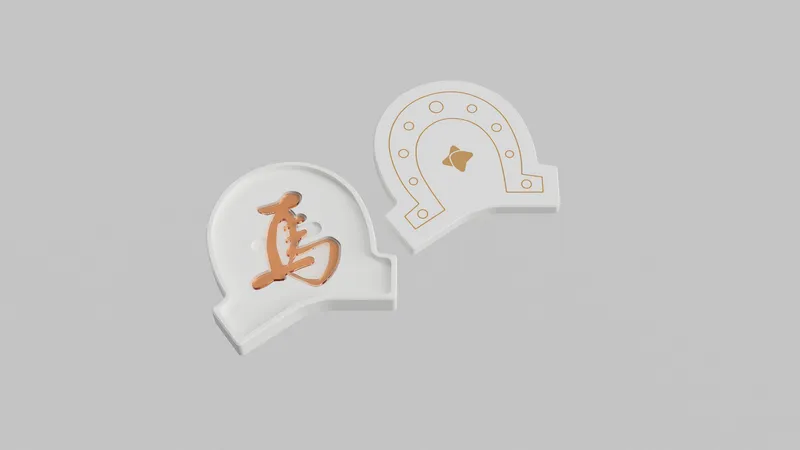
Each box takes the shape of a horse hoof, creating an immediate connection to the zodiac theme. The lid features a golden hoof motif that gives the product a festive and premium appearance. The SparksGlo logo is subtly integrated into the hoof imprint, connecting brand identity with the overall concept.
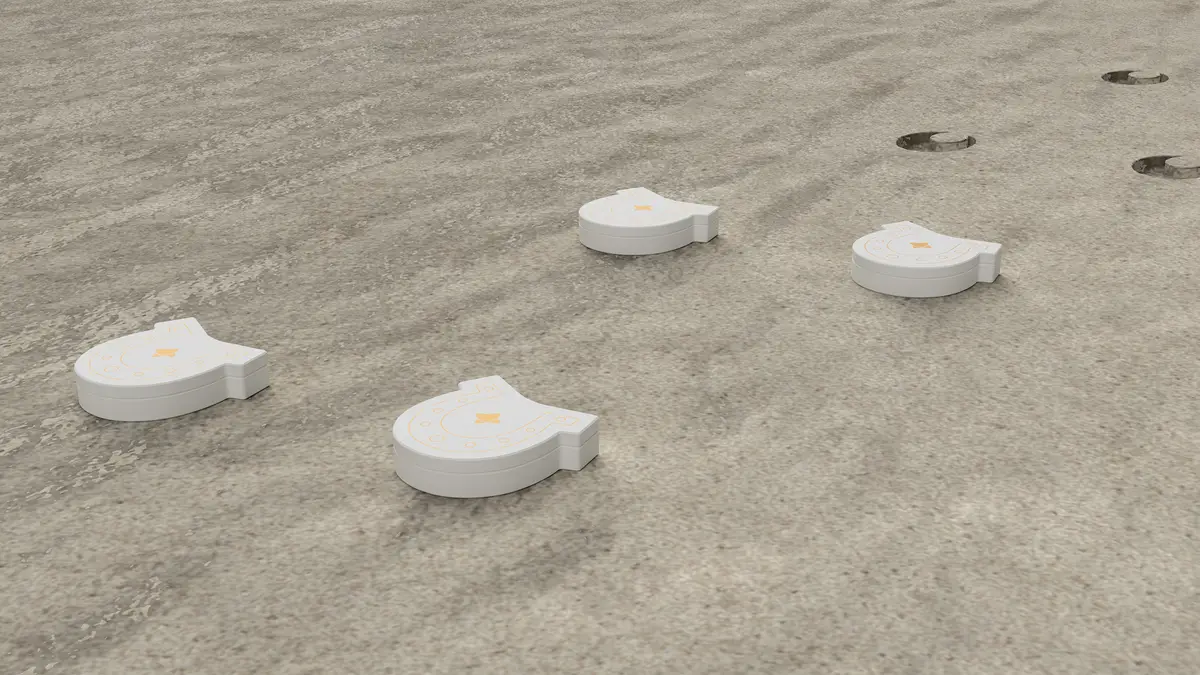
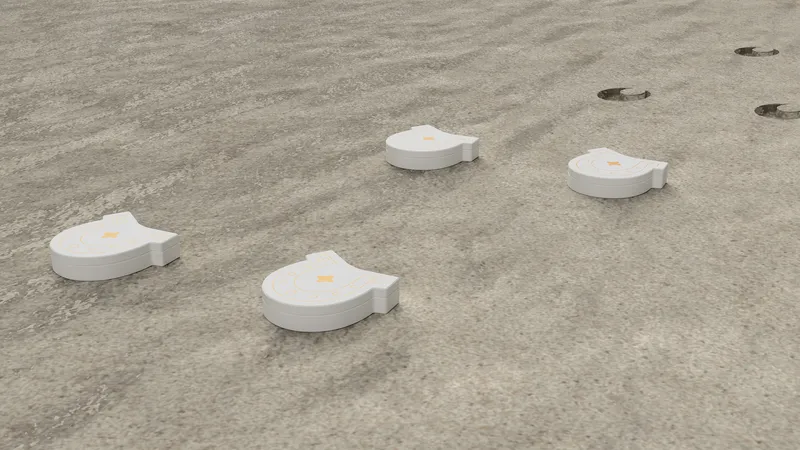
In one presentation image, the hoof-shaped boxes are placed along a trail of hoof prints in the sand. The transition between natural hoof prints and the packaging form highlights how the design draws inspiration from nature while transforming it into a refined product.
Rather than relying solely on decorative graphics, the cultural narrative is embedded directly into the structure of the packaging itself.
Why a Blind Box?
The blind-box format plays an important role in the overall experience.
Although every package looks identical from the outside, each box contains one of the eleven script variations. Recipients do not know which version they will receive until they open it.
This element of surprise creates anticipation and encourages engagement. The unboxing process becomes more than simply opening a package. It becomes a moment of discovery.
The format also encourages people to learn about different historical scripts and compare them with one another. Collectors may seek multiple versions, while casual recipients are introduced to a small piece of Chinese cultural history through a playful and accessible experience.
In this way, contemporary consumer behavior becomes a vehicle for cultural education.
Creating a Meaningful Unboxing Experience
The project places equal emphasis on functionality and aesthetics.
Each sugar painting has a unique shape based on its script style. To accommodate these differences, every box contains a custom inner tray precisely designed for its corresponding sugar painting.

The tray securely protects the delicate sugar artwork during transportation and handling. A dedicated finger slot allows the piece to be removed easily without damaging it.
These details may seem small, but they contribute significantly to the overall user experience. They ensure that the cultural artifact can be appreciated comfortably while maintaining the elegance of the presentation.
The result is an interaction that feels intentional from the moment the box is opened.
Cultural Symbolism Through Form
One of the most distinctive features of the project appears when multiple boxes are stacked together.
The hoof-shaped packages resemble the glazed roof tiles found on traditional Chinese palaces and historical architecture. This visual relationship was intentionally incorporated into the design.

Viewed individually, each box functions as a gift container. Viewed collectively, the boxes create an architectural composition that evokes history, continuity, and cultural memory.
This transformation gives the packaging a second layer of meaning. The design no longer serves only as a container. It becomes a visual metaphor for the transmission of culture across generations.
Just as historical architecture carries stories from the past into the present, intangible heritage survives through adaptation, reinterpretation, and continued participation.
Translating Heritage Through Contemporary Design
In recent decades, a growing number of designers have explored how cultural knowledge can be translated into contemporary forms rather than preserved solely through historical documentation. Designers such as Kenya Hara and Naoto Fukasawa have demonstrated that everyday objects can communicate cultural values, collective memory, and human experience through thoughtful design decisions. Their work has helped expand the role of design beyond function and aesthetics, positioning it as a medium for cultural interpretation and public engagement.
The SparksGlo Horse Sugar Script Blind Box engages with a similar design challenge. Rather than presenting sugar painting as a historical artifact, Danting Li introduces it through a contemporary product experience shaped by interaction, discovery, and storytelling. The project combines traditional sugar art, the evolution of Chinese scripts, blind-box culture, and symbolic packaging to create a new point of entry into Chinese cultural heritage.
What distinguishes the project is its emphasis on participation. While heritage is often presented through exhibition, documentation, or historical preservation, the blind-box format invites audiences to actively engage with cultural content. The act of opening, collecting, and discovering different script variations becomes part of the learning experience itself. In this way, cultural transmission occurs not only through visual representation, but also through interaction.
This approach reflects a broader movement within contemporary design that views culture as something that can be experienced through everyday objects. Like designers who have used product design to make cultural ideas more accessible to the public, Danting treats design as a tool for translation. The goal is not simply to preserve heritage, but to create new forms through which heritage can continue to evolve and remain relevant to contemporary audiences.
Viewed within this wider international context, the project demonstrates how product design can function as both a cultural artifact and a cultural bridge, connecting traditional knowledge with present-day modes of engagement.
Lessons from the Project
This project demonstrated that preserving heritage does not necessarily mean reproducing the past exactly as it was.
Instead, contemporary design can act as a bridge between traditional culture and modern audiences.
Several principles guided the development of the project.
First, preserve meaning rather than appearance alone. The project retains the cultural significance of sugar painting while presenting it in a new context.
Second, encourage participation rather than observation. The blind-box format invites users to actively engage with the cultural content through discovery and collecting.
Third, create multiple layers of storytelling. Sugar painting, Chinese script history, zodiac symbolism, architecture, and gift culture are woven together into a single product experience.
By combining these principles, the project demonstrates how cultural heritage can remain relevant while continuing to evolve.
Conclusion
The SparksGlo Horse Sugar Script Blind Box explores how intangible heritage can be translated into contemporary product design through storytelling, interaction, and cultural symbolism.
By bringing together sugar painting, historical Chinese scripts, blind-box culture, and innovative packaging, the project transforms traditional cultural knowledge into an accessible and engaging experience.
Rather than presenting heritage as something distant or static, the design invites people to interact with it, learn from it, and share it with others. It shows how thoughtful product design can help cultural traditions find new life in contemporary society while maintaining a meaningful connection to their historical roots.

Popular Articles
Popular articles from the community


Singing Woman: Contemporary Architecture Inspired by Estonia’s Voice and the Sea
Singing Woman turns Estonia’s song culture into flowing opera house architecture, blending public life, landscape, sea, and national memory.

Temporary Home for Dogs: A Reversed Zoo Rethinks Animal Shelter Architecture
In Bucharest, a sinuous corridor and freed landscape flip the logic of containment, designing a shelter that works to make itself unnecessary.

Extended Shell: Retrofitting Kolkata's Balconies as Living Urban Thresholds
A modular retrofit system recovers the social and environmental intelligence of Kolkata's historic verandas for contemporary Park Street residents.

Faces of the Soviet Avant-Garde: Turning Moscow's Street Names into an Open-Air Museum
A network of sculptural installations across a Moscow residential district transforms forgotten architect names into spatial encounters with cultural memor

Similar Reads
You might also enjoy these articles

Day and Night Park: A Time-Based Urban Newsstand in Beijing
A temporary urban newsstand in Beijing blending travel, light, and reading through poetic colors, compact form, and community-focused design.

Modernist Patio Renovation in El Masnou, Barcelona by Oliver Segura Arquitectura + Cebrià Arquitectura
Modernist patio renovation blending tradition and innovation with a movable pool, leveled floors, and Catalan materials in El Masnou.

Alto Residencial Coop: Cooperative Housing Development in Santiago de Compostela by Carbajo Barrios Arquitectos
A linear cooperative housing complex blending white volumes and perforated metal façades, enhancing community living, natural light, privacy, and urban integration.

Vil Genis School by BPA ARCHITECTURE – Massy, France
Vil Genis School in Massy, France, features sustainable design, south-facing classrooms, community integration, accessible spaces, and modern educational architecture.

Explore Design Ink Competitions
Discover active competitions in this discipline


Design a brochure to showcase the effects of the technosphere

Challenge to illustrate ‘A tale of Two Cities’

Deconstructivism - Illustration Design Challenge

Challenge to illustrate a Contemporary Castle
Comments (0)
Please login or sign up to add comments
No comments yet. Be the first to comment!