

Urban Redevelopment Architecture: Infrastructure at Isae-Supmeca Engineering School
The Isae-Supmeca Infrastructure project is a striking example of urban redevelopment architecture, blending historic and modern design elements.


The Infrastructure project at Isae-Supmeca Engineering School, located in Saint-Ouen, France, is a prime example of how urban redevelopment architecture can transform educational spaces while maintaining historical integrity. The project was initiated as part of the urban renewal efforts surrounding the 2024 Olympic and Paralympic Games. The area’s spatial organization was significantly impacted by the development of new road networks for the Athletes' Village district, which led to the creation of a cutting-edge infrastructure solution. This project aimed to reconnect the Isae-Supmeca School’s two buildings and restore functional continuity, facilitating easier access between different parts of the campus.
The Historical Context and Design Challenge
Saint-Ouen, a northern suburb of Paris, is known for its rich history and urban development challenges. One of the most significant elements of this redevelopment project was the need to create a new link between two buildings of the Isae-Supmeca Engineering School: the historic 19th-century structure and the modern extension housing the school’s auditorium. The historical building, originally the premises of the Ecole Nationale Professionnelle de Commerce et d'Industrie de Saint-Ouen, features a classical design characterized by symmetrical facades and regular construction, offering a sharp contrast to the modernity of the new campus extension.
The need for a functional link between the two buildings was clear, but the architectural challenge was to create a bridge that not only connects these two distinct architectural styles but also fits within the context of the ongoing urban redevelopment.
The Gallery: More Than Just a Functional Link
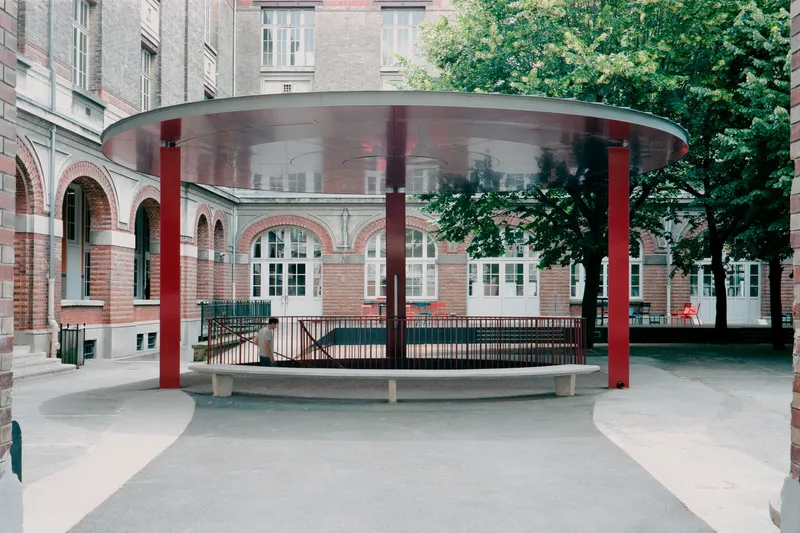
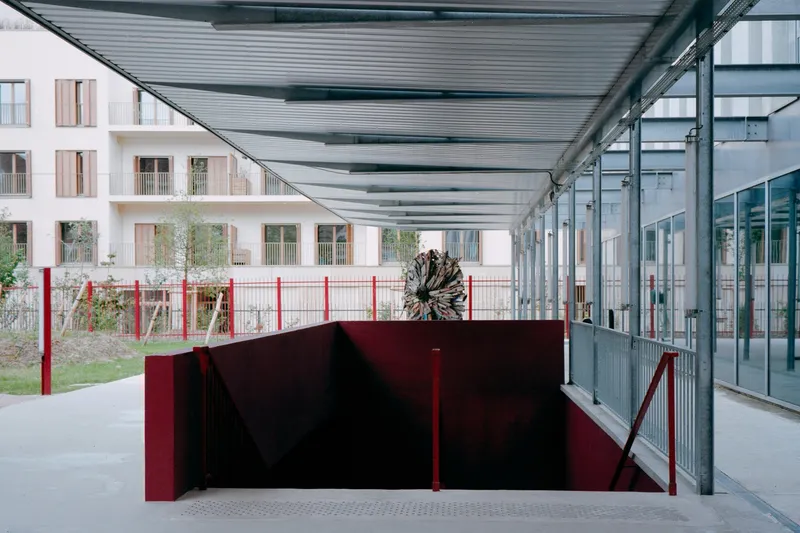
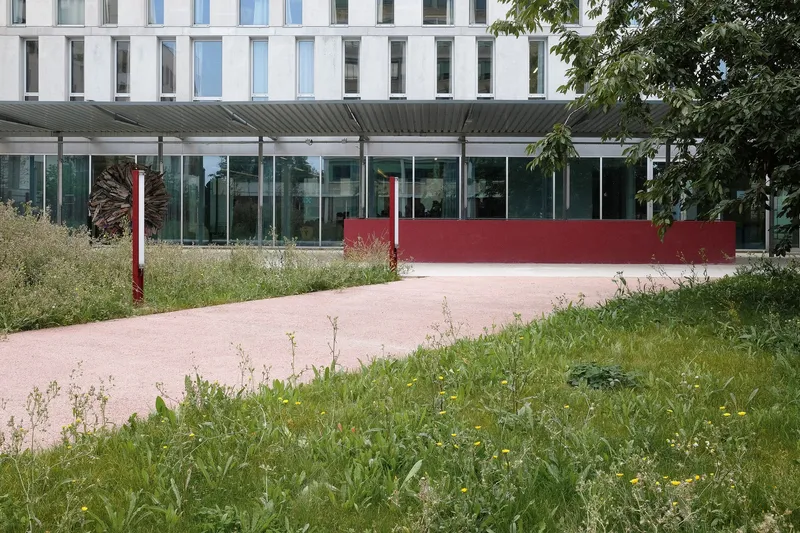
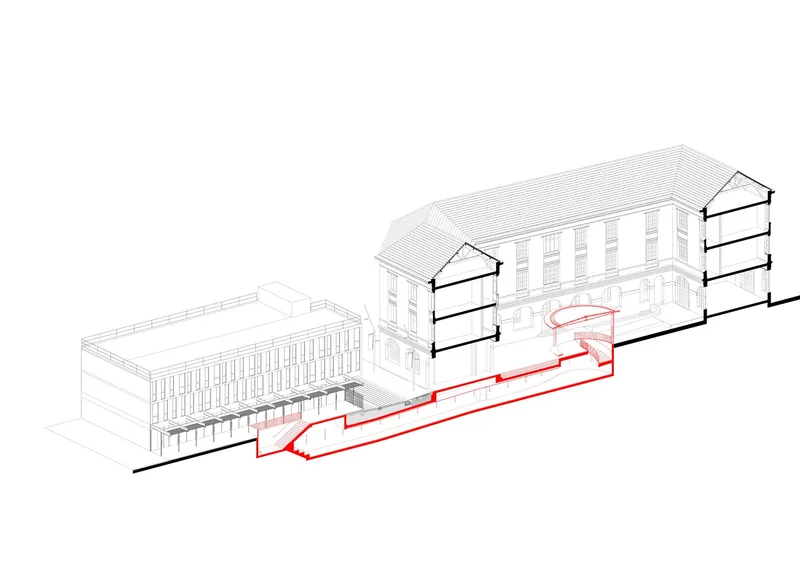
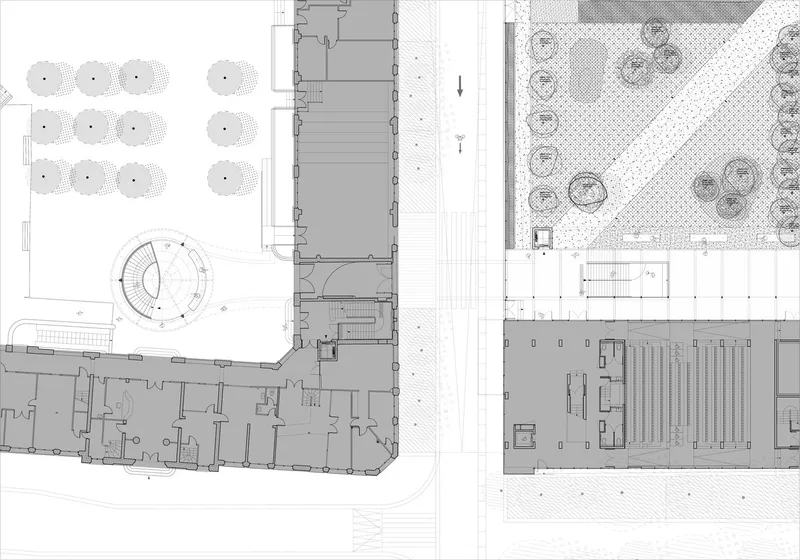
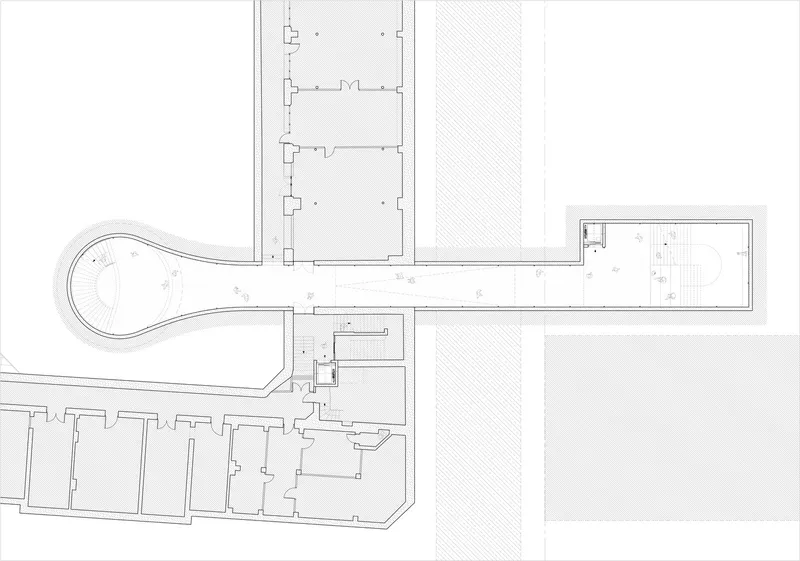
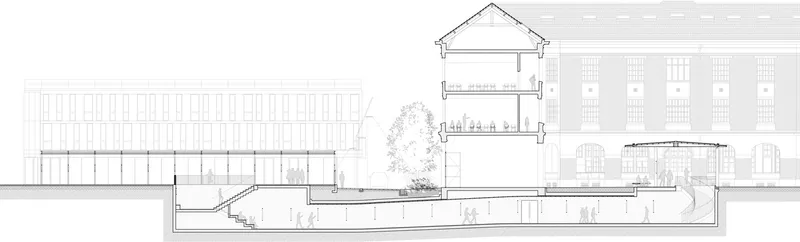
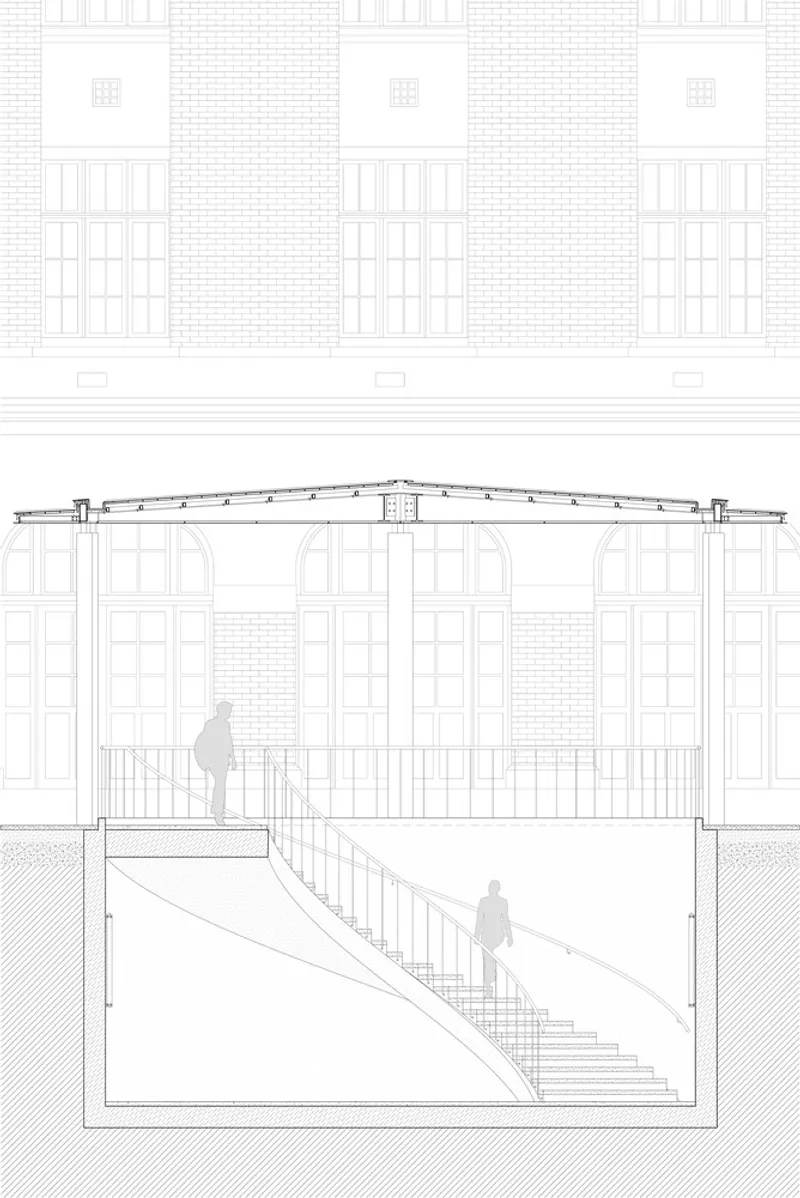
At the heart of the project is a new underground gallery that connects the two buildings beneath the new road. However, this gallery serves more than just a functional purpose. It is designed as a new space that becomes an integral part of the Isae-Supmeca campus, providing a place for the students and staff to interact. The gallery is flanked by two striking canopies, one at the historic side of the site, and the other in front of the auditorium. These canopies are not merely structural elements but also become symbolic markers of the gallery’s importance, guiding campus users between the two buildings.
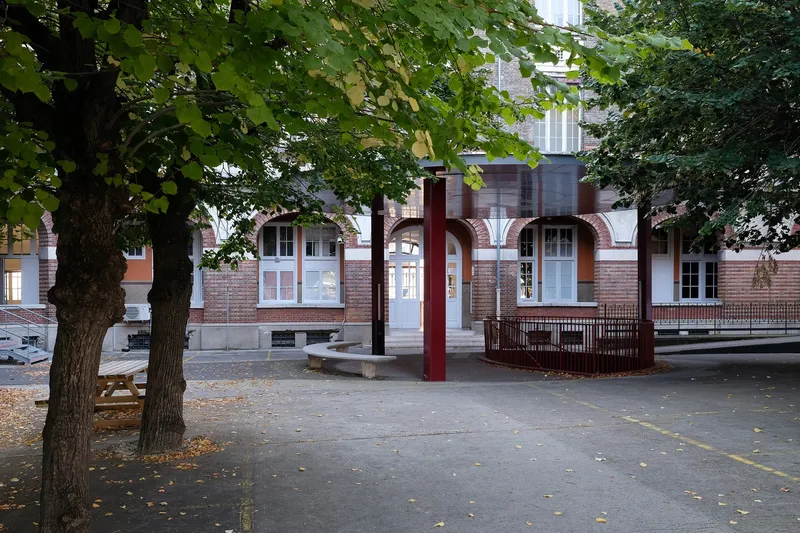
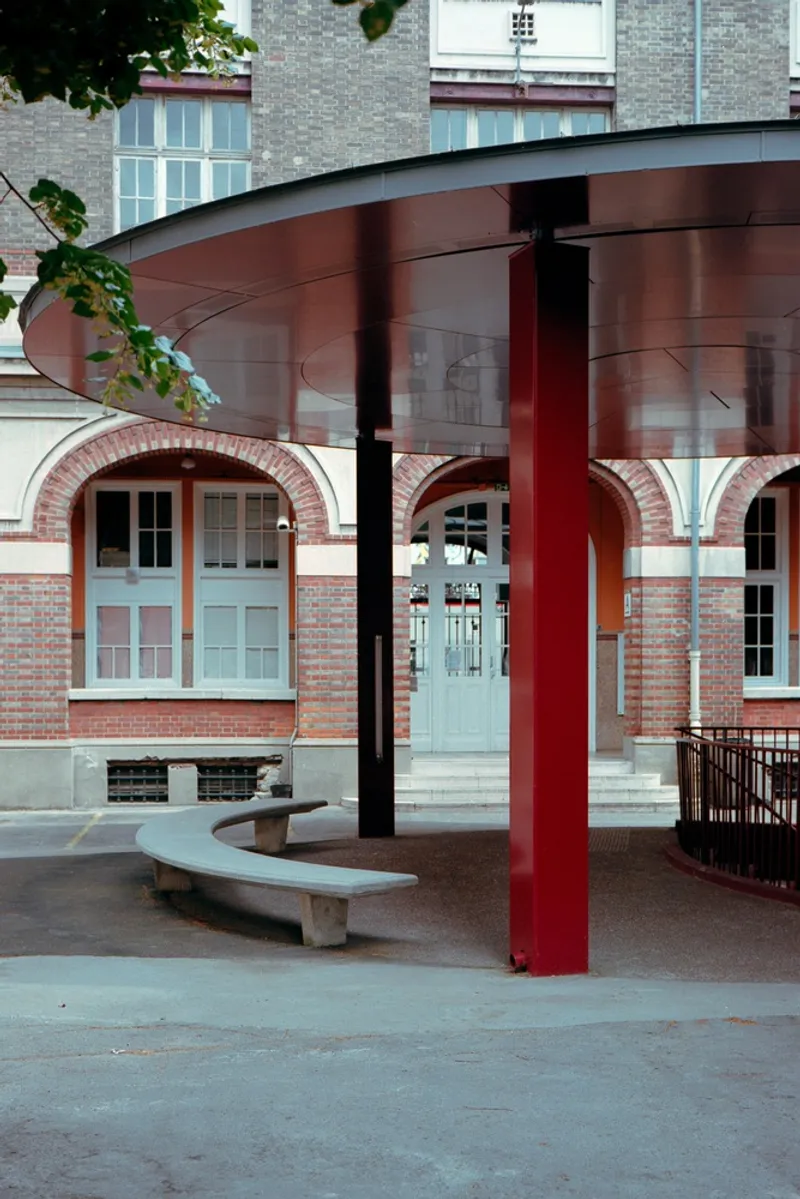
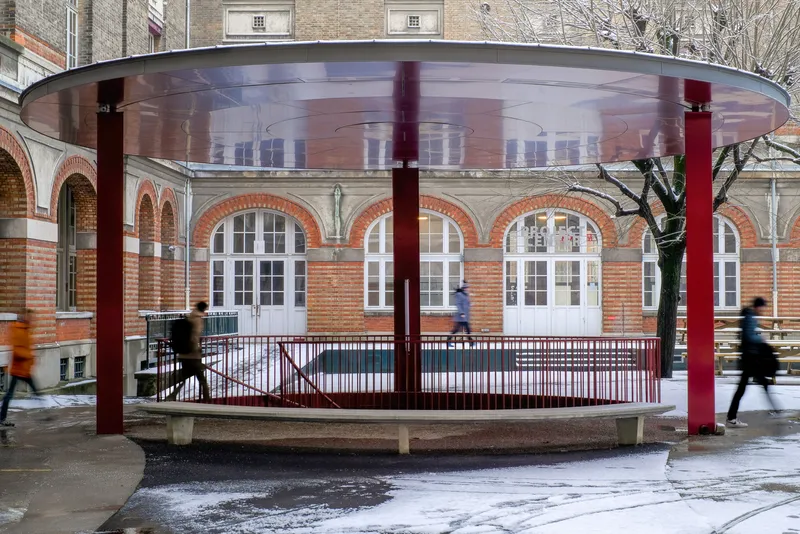
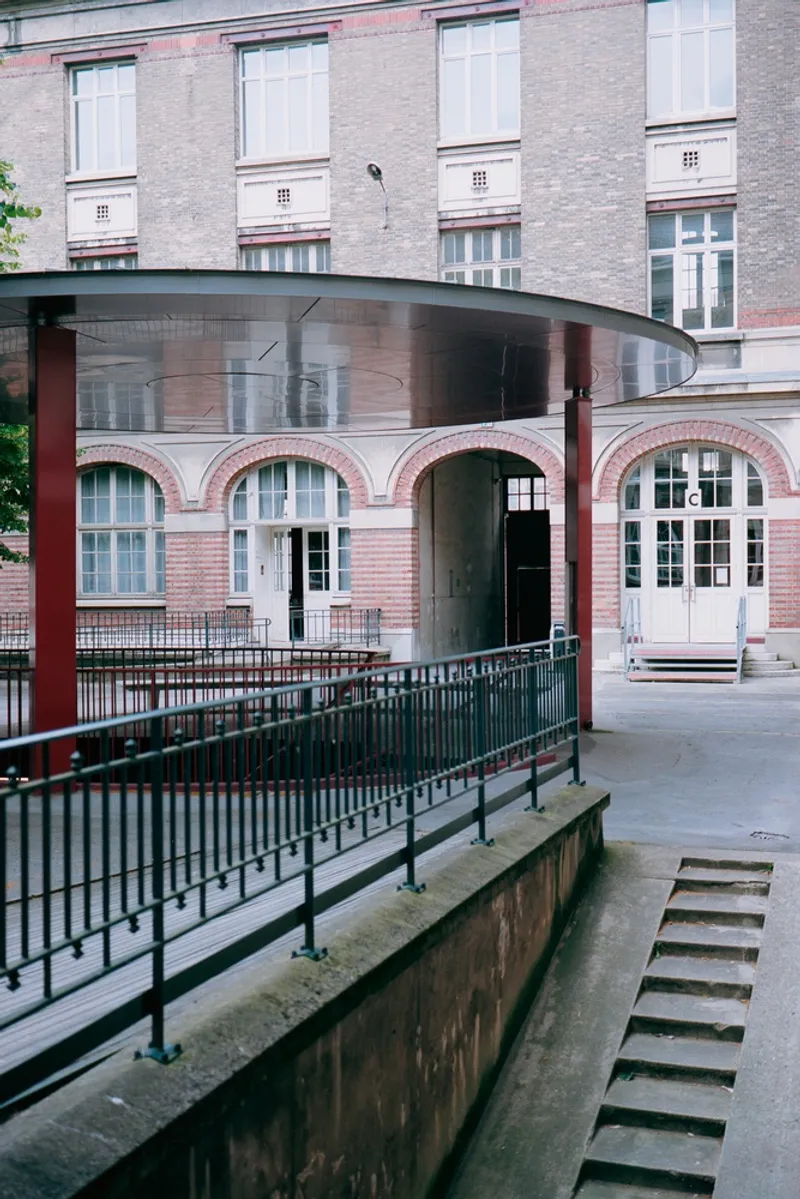
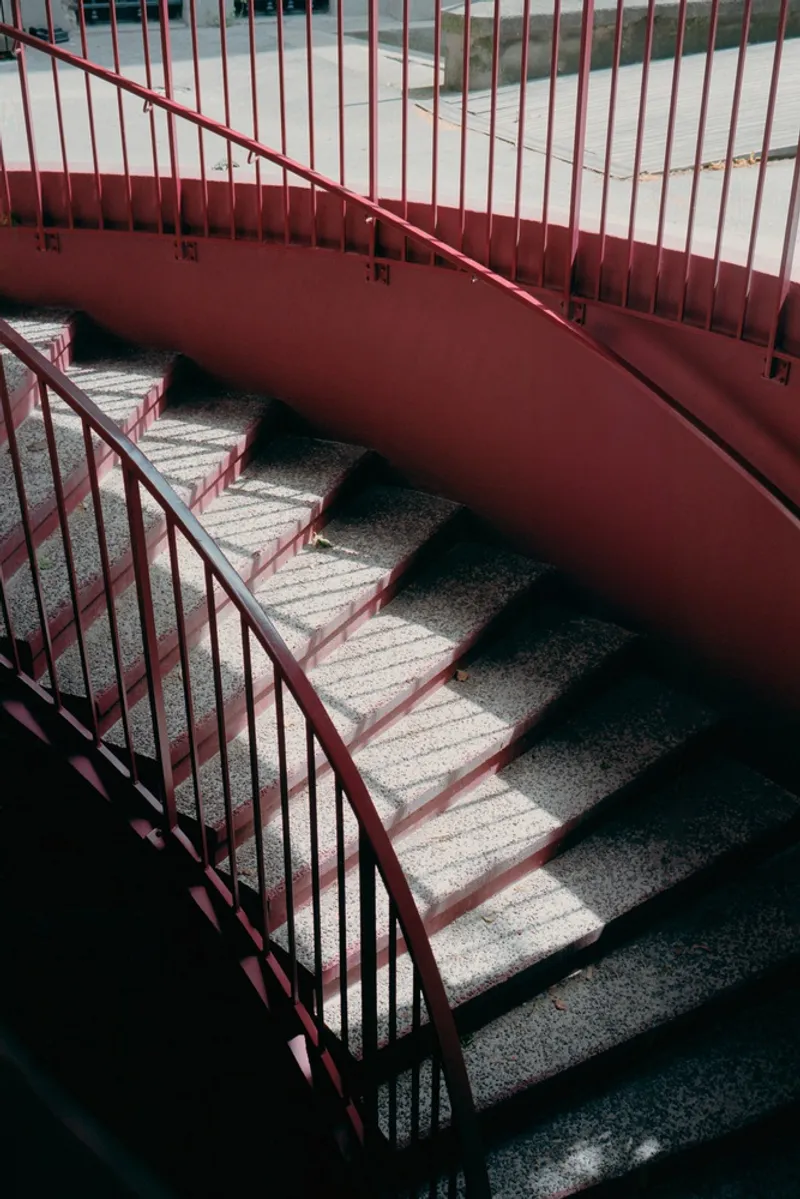
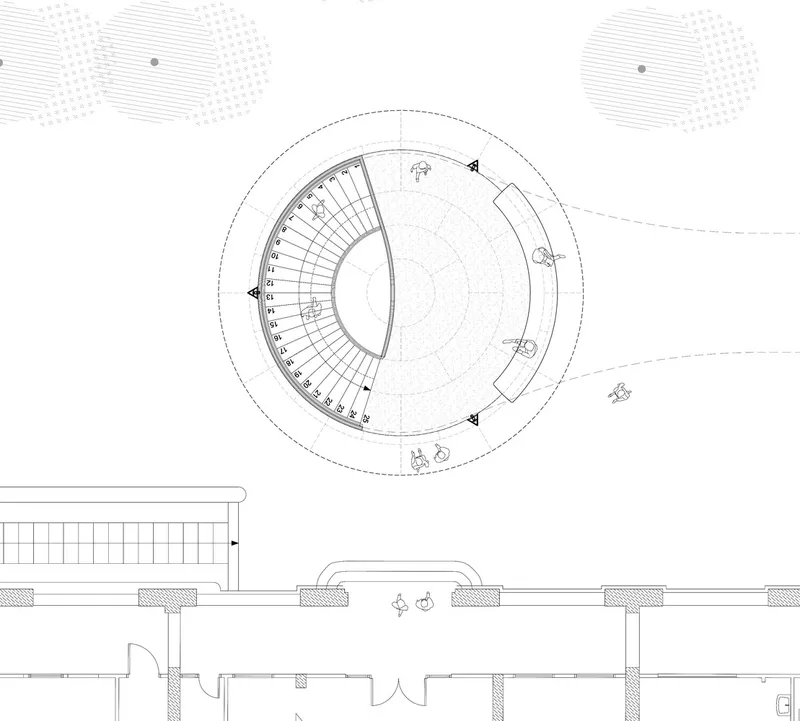
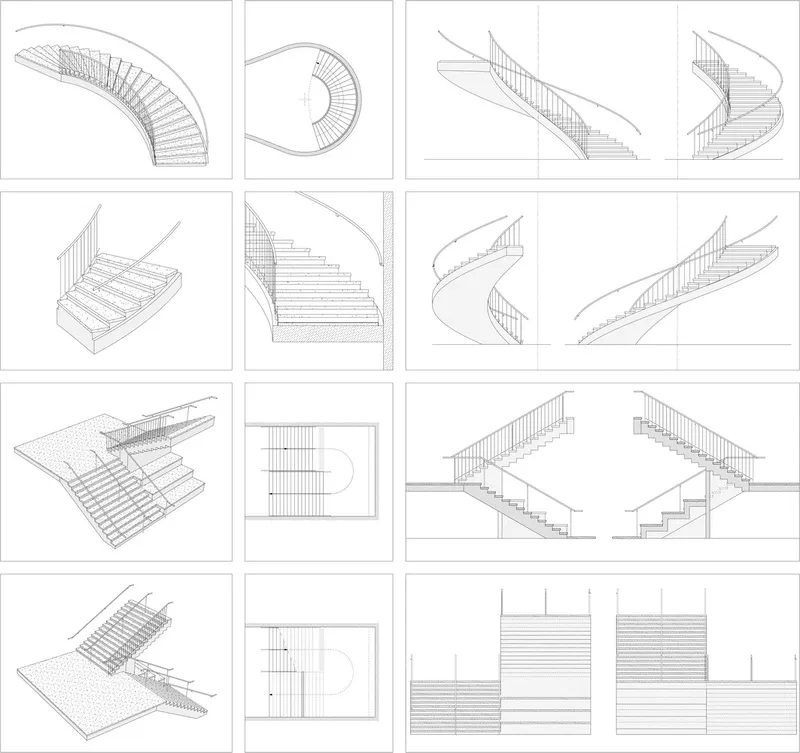
On the historic side, the canopy is positioned centrally within the courtyard, acting as both a shelter and a signpost. It houses a spiral staircase that leads visitors down into the gallery, providing a fluid transition from the exterior to the interior. The canopy is designed as an abstract disc, floating delicately within the courtyard space, emphasizing its role as a functional and aesthetic addition to the historical environment.
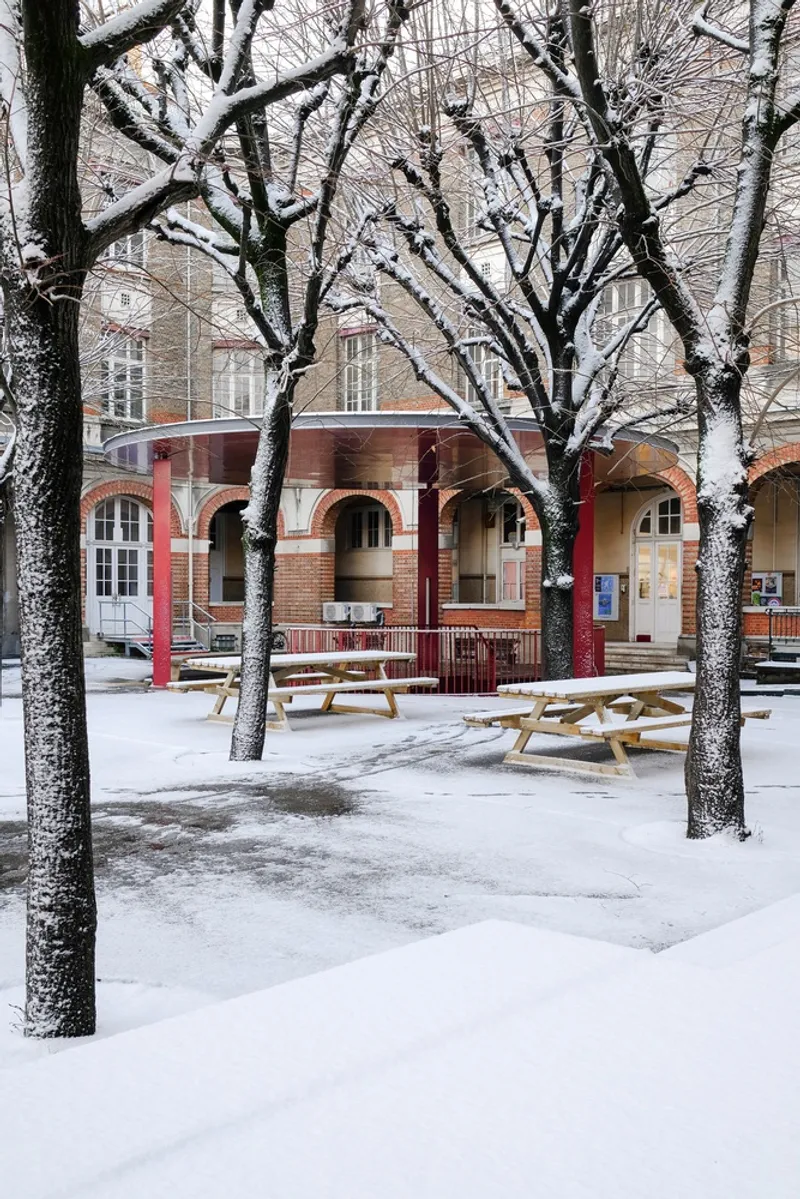
On the opposite side, the gallery emerges with a simpler geometric form, its design in continuity with the modern architecture of the auditorium. This juxtaposition of contemporary and traditional forms creates a seamless dialogue between the old and the new, a hallmark of successful urban redevelopment architecture.
The Materiality: Blending the Old and New
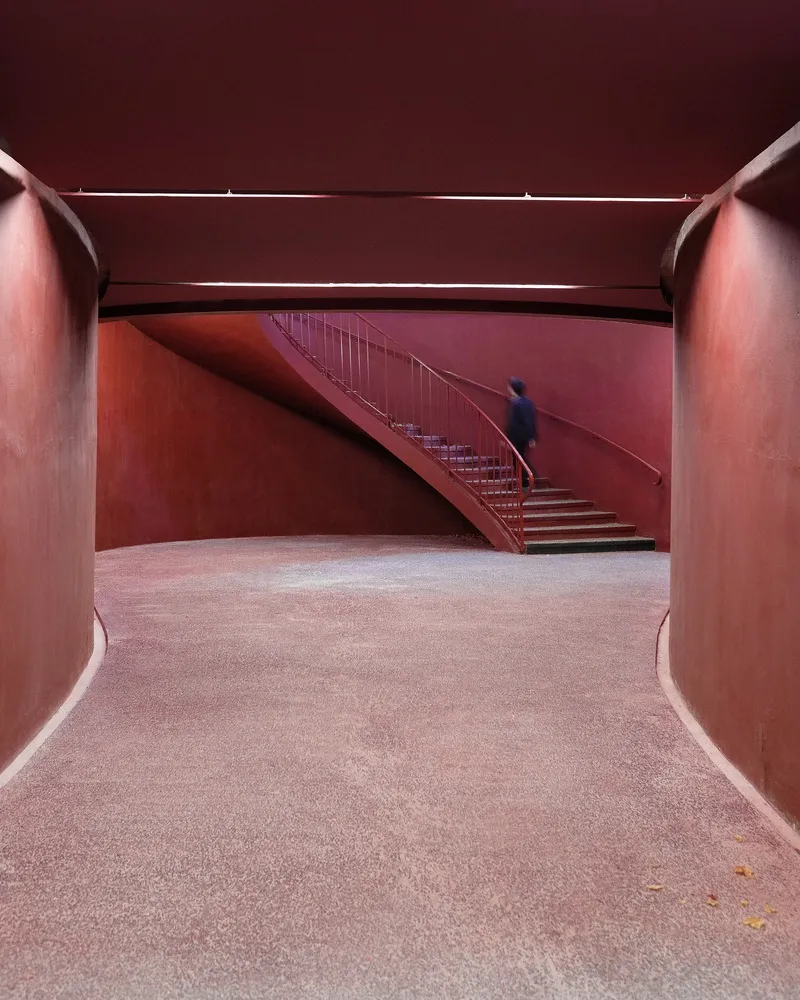
A key aspect of this project is the careful selection of materials. The structure of the gallery is made of reinforced concrete, which is coated with a red stain to echo the ornamental brickwork of the historic building. This material choice not only ties the new gallery to the existing structures but also reveals the construction process through the exposed shotcrete. This raw, unfinished material showcases the gallery’s construction, adding an industrial yet refined touch to the overall aesthetic.
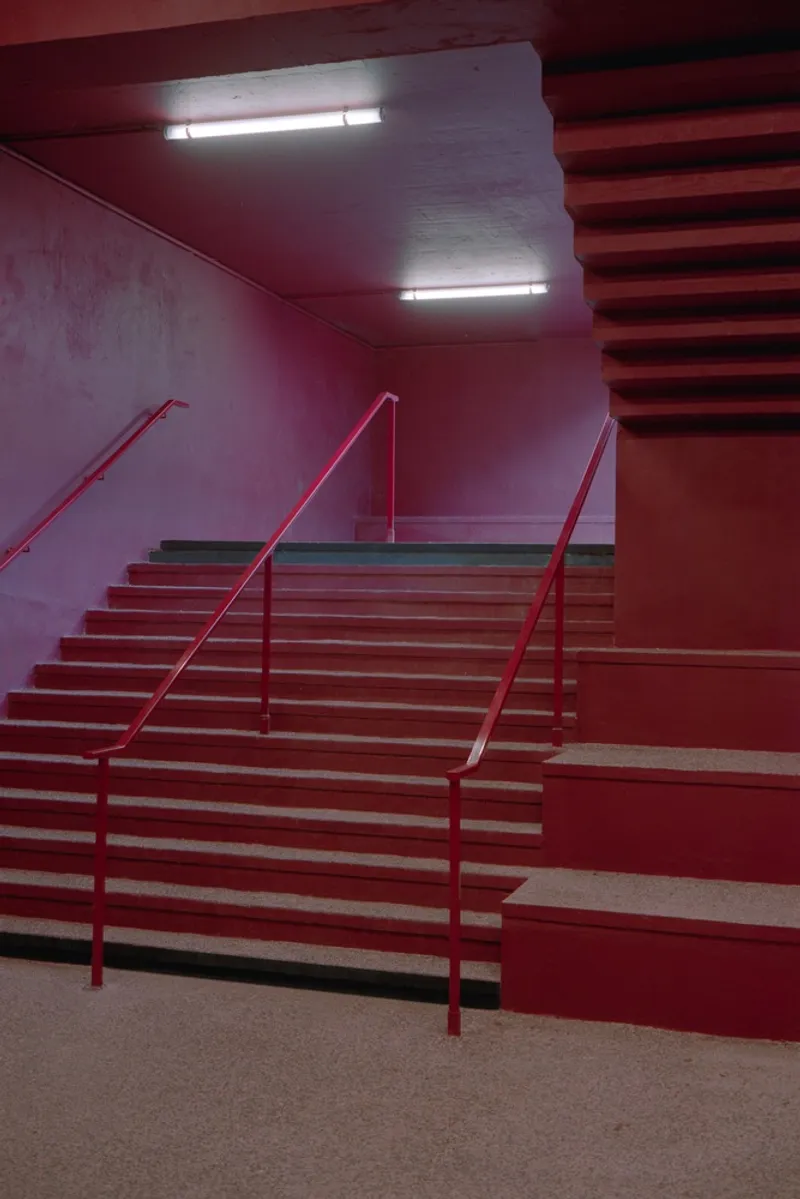
The interior of the gallery continues this narrative with the use of red porphyry aggregates in the floors and staircases, further reinforcing the visual continuity between the old and the new. The red hue of the materials ties the entire project together, ensuring a cohesive architectural identity that blends seamlessly with the surrounding urban fabric.
Structural Challenges and Construction Process
The construction of this underground link posed significant technical and organizational challenges. The project required excavation of the courtyards of both buildings, while ensuring the structural stability of the historic structures. The gallery was constructed entirely within an occupied campus, which meant that the works had to be carried out without disrupting the daily activities of the school. The construction team had to carefully manage the excavation process, ensuring that both buildings remained stable throughout the entire operation.
In addition to the logistical challenges, there were complex structural considerations. The gallery needed to be integrated into the existing campus without compromising the functionality or safety of the school. The construction of the underground gallery required careful planning and execution, with an emphasis on preserving the architectural heritage of the historic building while introducing modern infrastructural elements.
A Successful Integration of Old and New
The Infrastructure project at Isae-Supmeca Engineering School is an exemplary model of urban redevelopment architecture, showing how thoughtful design can preserve historical elements while introducing modern functionality. The gallery, with its unique blend of old and new materials, and its integration into the campus landscape, offers a seamless connection between the past and the future of the school. The project not only improves the school’s accessibility but also enhances its campus environment, creating a space that serves both practical and aesthetic purposes.
All Photographs are work of Olivier Knepper


Popular Articles
Popular articles from the community


U.GA Architects Wraps an Oval Rooftop Pool in Curved Board-Formed Concrete on Busan's Jeollidan-gil
In Busan's Jeonpo-dong, a 454 m² mixed-use block stacks a neighborhood facility, guest rooms and an oval rooftop pool inside spiraling concrete walls.

Juan García Correa, John González and Claudia Rueda Sink a Circular Amphitheater into a Manizales Engineering Building
On the La Nubia campus in Manizales, Colombia, the S1 Building folds labs and offices into a hillside of ramped lawns that double as a campus route.

David Ortega Stacks a Two-Story Mexico City Penthouse Around a Steel Stair and a Pergola-Shaded Roof Terrace
In Colonia Roma, a 300 m² penthouse uses oak joinery, a planted steel stair and a slatted roof pergola to make a new-build apartment feel like a house.

Cube Design Draws an Ecological Corridor Between Two Shenzhen Hills with the Nankai Building
Beside Shenzhen's container docks, the Nankai Building pairs stacked balconies with a climbing green screen to connect two hillsides across its height.

Similar Reads
You might also enjoy these articles


Hodi-Mandai Geram
Project Function: Preservation and revitalization of the Intangible heritage and socio-spatial identity of the Hodi by Housing, Cultural Memory Center, Sacred Grove, landscape, local tourism economy


Olio Towers: A Mid-Rise for Performers That Fuses Housing, Rehearsal, and Stage
Located blocks from Houston's Theater District, this modular tower stacks living units around a central performance atrium.

Oasis: Modular Green Housing Carved into Dhaka's Urban Fabric
A shortlisted Plugin Housing entry reclaims unauthorized settlements in Dhaka with stepped concrete volumes, green roofs, and ventilation-driven design.

Black Hole: A Floating Megastructure for the Post-Physical Era
Emiliano Mazzarotto envisions a spherical, self-scaling arena where e-sports, digital hotels, and holographic stadiums replace traditional public space.

Explore Urban Infrastructure Competitions
Discover active competitions in this discipline

Challenge to reimagine the Iron Throne

Photograph architecture without architects

Illustrate the lost glory of Angkor Wat - Render Challenge

Design challenge to reuse E-waste
Comments (0)
Please login or sign up to add comments
No comments yet. Be the first to comment!