

Versatilis: A Pioneering Research Center on Deception Island, Antarctica
Adaptive research architecture explores Versatilis, a modular center studying Antarctica’s Deception Island volcano and climate change.


Versatilis is an innovative and versatile research center designed to study the active underwater volcano, Deception Island, located in Antarctica. This project, created by Alexander Erickson, Azhea Humphrey, and Bryson Victoria, has garnered significant attention, earning the People's Choice Award in the At Sea competition. The research center's primary goal is to understand the various global effects of Deception Island's volcanic activity, particularly its impact on climate change.

Adaptive Research Architecture in Extreme Environments
The Versatilis project exemplifies the concept of adaptive research architecture, showcasing its ability to thrive in one of the most extreme environments on Earth. Located on Deception Island, Antarctica, this research center is designed to study the active underwater volcano and its global implications. The adaptive nature of the architecture allows it to meet the unique challenges posed by the harsh Antarctic environment.

Understanding the Importance of Studying Arctic Volcanoes
Studying Arctic volcanoes is crucial for understanding their impact on climate change. Eruptions release gases and particles that can significantly affect global temperatures and weather patterns. In Antarctica, these volcanic activities can accelerate ice melt, raising sea levels and contributing to global climate shifts. By focusing on these volcanoes, scientists can improve climate models and develop strategies to mitigate the environmental shifts caused by these events.

Modular and Adaptive Design
The Versatilis research center features a modular shell that can expand from a mobile state to create an adaptive biomorphic membrane. This membrane is capable of bracing, supporting, penetrating, and collecting data based on the researchers' needs. The modular pods are designed to act as protective barriers in their mobile state, allowing the lab to withstand the pressures of deep-sea exploration. The circular form of the pods ensures even distribution of water pressure, enabling the lab to dive to significant depths.

Sustainable and Functional Features
The modular pods open up in their static state, allowing natural light to penetrate the lab and facilitating the movement of researchers and deployable drones. These drones are launched from a docking bay below the lab, where they begin to collect samples. Researchers can also dive from the moon pool located in the central lab space, providing direct access to the underwater environment.
The lab's biomorphic membranes serve as anchors, preventing movement from underwater currents. This stability is essential for conducting accurate research and ensuring the safety of the researchers. Additionally, storage tanks made from the modules can store magma accumulated by the biomorphic membrane. The magma is then filtered of its toxic gases, and the heat energy is used for passive and active heating, which is crucial for survival in the harsh, cold environment.

Energy Generation and Sustainability
The Versatilis research center incorporates innovative energy generation mechanisms to sustain its operations. A mechanism located underneath the lab allows water currents to flow through and spin gears, producing kinetic energy. This kinetic energy is then converted into electrical energy, powering the utilities needed to sustain the research lab. This sustainable approach ensures that the research center can operate independently in a remote and challenging environment.

Educational Opportunities
In addition to its research capabilities, the Versatilis project includes spaces for educational programs. Extra space is allotted to allow students to experience the harsh Arctic environment, study the effects of climate change, and understand volcanic activity. The space consists of dwelling areas for two students and dedicated study areas, providing a unique opportunity for hands-on learning in one of the most extreme environments on Earth.
The Versatilis project is a groundbreaking example of adaptive research architecture, designed to study the active underwater volcano, Deception Island, in Antarctica. Its modular and adaptive design, combined with sustainable energy generation and educational opportunities, makes it a pioneering research center capable of withstanding the challenges of one of the harshest environments on the planet. By focusing on the impact of Arctic volcanoes on climate change, Versatilis contributes to our understanding of global environmental shifts and the development of strategies to mitigate their effects.


Popular Articles
Popular articles from the community

Cloaked Colonization: A Mobile Underwater Habitat That Moves Like a Fish
Micah Abaya's shortlisted EHC Pacific entry reimagines ocean settlement as a dispersed network of self-sustaining architectural organisms.
Faces of the Soviet Avant-Garde: Turning Moscow's Street Names into an Open-Air Museum
A network of sculptural installations across a Moscow residential district transforms forgotten architect names into spatial encounters with cultural memor
Opera by the Sea Estonia: Three Shells Dissolving Architecture into Tallinn's Coastline
A winning opera house proposal replaces monumental form with interconnected shells that blur the boundary between building, park and Baltic Sea.
Extended Shell: Retrofitting Kolkata's Balconies as Living Urban Thresholds
A modular retrofit system recovers the social and environmental intelligence of Kolkata's historic verandas for contemporary Park Street residents.

Similar Reads
You might also enjoy these articles

Shakur's House: Exposed Brick as an Interior Organiser in a 168 m² Mashhad Residence
Brick moves indoors in this Mashhad residence, where masonry walls, glass partitions and teal planes sequence a compact home without closing it off.
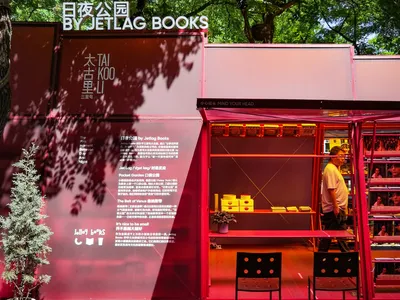
Day and Night Park: A Time-Based Urban Newsstand in Beijing
A temporary urban newsstand in Beijing blending travel, light, and reading through poetic colors, compact form, and community-focused design.

Modernist Patio Renovation in El Masnou, Barcelona by Oliver Segura Arquitectura + Cebrià Arquitectura
Modernist patio renovation blending tradition and innovation with a movable pool, leveled floors, and Catalan materials in El Masnou.
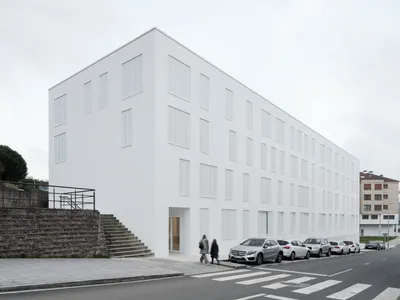
Alto Residencial Coop: Cooperative Housing Development in Santiago de Compostela by Carbajo Barrios Arquitectos
A linear cooperative housing complex blending white volumes and perforated metal façades, enhancing community living, natural light, privacy, and urban integration.

Explore Computational Design Competitions
Discover active competitions in this discipline


From Logic to Configurators

Challenge to reimagine the Iron Throne

Photograph architecture without architects

Illustrate the lost glory of Angkor Wat - Render Challenge
Comments (0)
Please login or sign up to add comments
No comments yet. Be the first to comment!