

Villa Dellago by JM Architecture – A Minimalist Lakeside Retreat Immersed in Nature
A minimalist lakeside villa with glass façades, custom interiors, cantilevered roof, and terraced landscape seamlessly integrated into Lake Garda’s natural slopes.


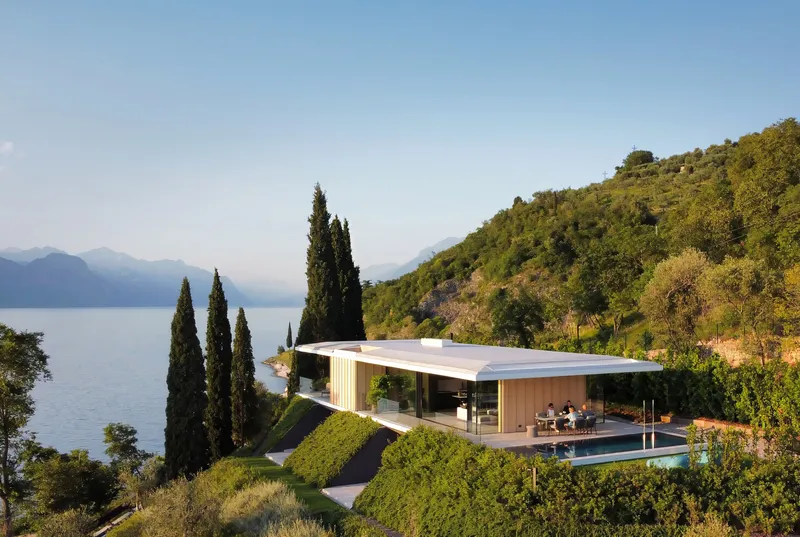
Villa Dellago, designed by JM Architecture, is a refined private residence situated on the eastern shore of Lake Garda, Italy. Completed in 2023, the 250 m² villa blends contemporary minimalism with the dramatic natural landscape, creating a light, transparent, and highly integrated architectural experience.
A Site-Specific Design Inspired by Natural Topography
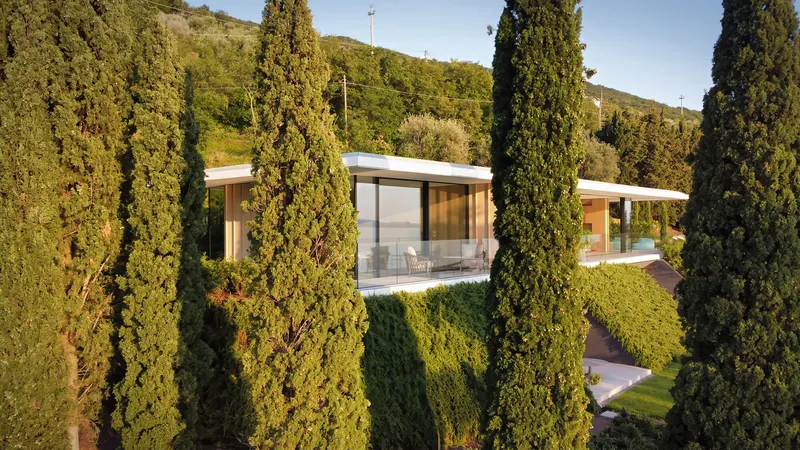
The concept for Villa Dellago emerges directly from the site’s natural morphology. The architects positioned the structure on a natural terrace parallel to the lake, selecting a compact footprint that minimizes excavation and preserves the existing terrain. This sensitive approach allows the house to sit gently on the landscape, maintaining the integrity of the surrounding slopes and vegetation.
A One-Storey Pavilion with Fluid Spatial Organization
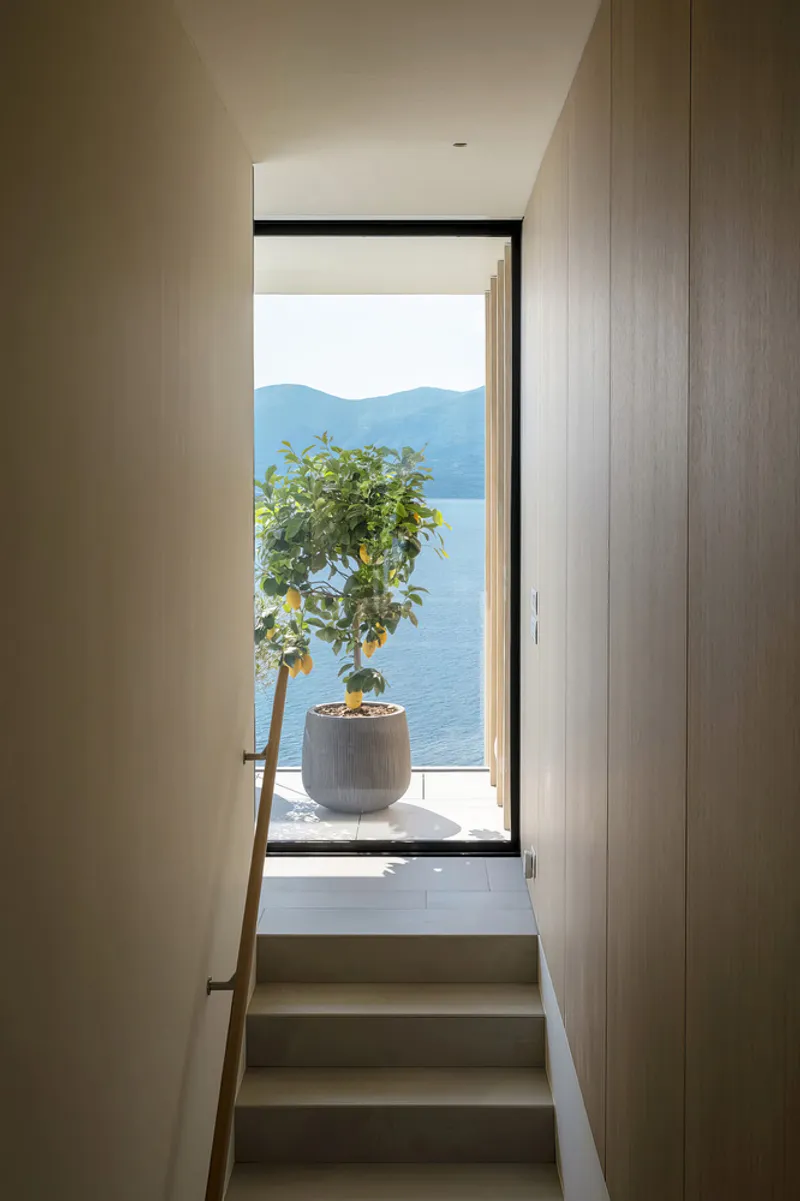
The villa is conceived as a single-story pavilion, with a clear and highly functional layout. The living area anchors one end of the pavilion, while the master bedroom occupies the opposite side. Service spaces are centrally placed, with a carefully integrated staircase leading to the underground level.
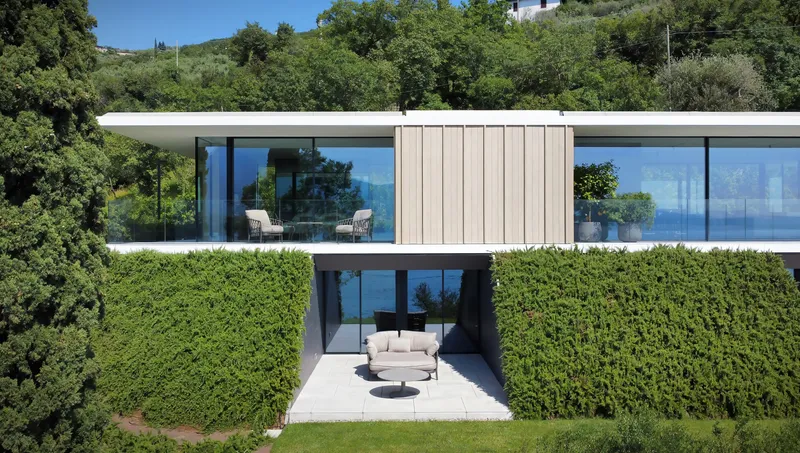
Below the main floor, the architecture engages the natural slope of the terrain. Two generous patios open toward the lake, ensuring that the lower-level rooms receive ample natural light and sweeping views. These carved-out courtyards visually and physically connect the interior spaces to the surrounding landscape.
Transparency, Lightness, and a Floating Architectural Expression
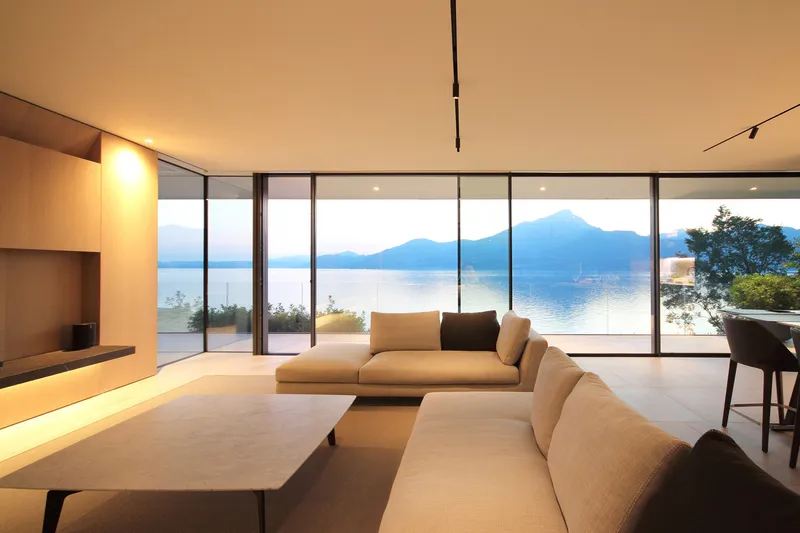
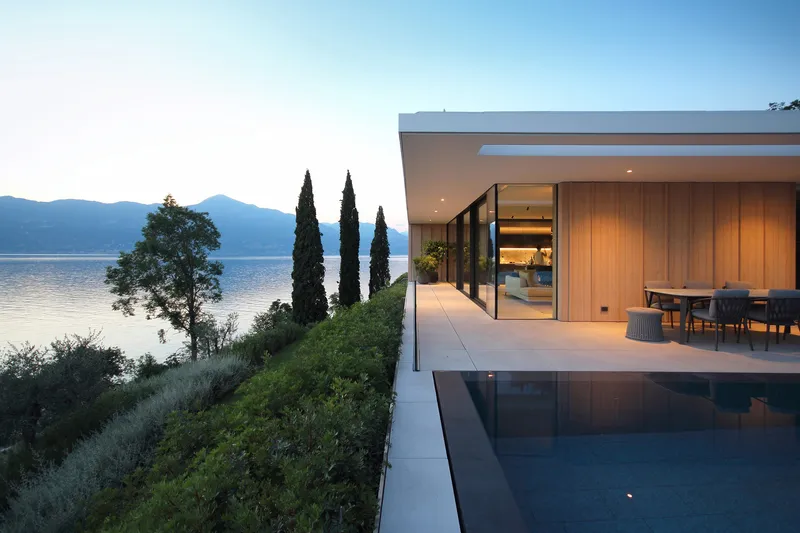
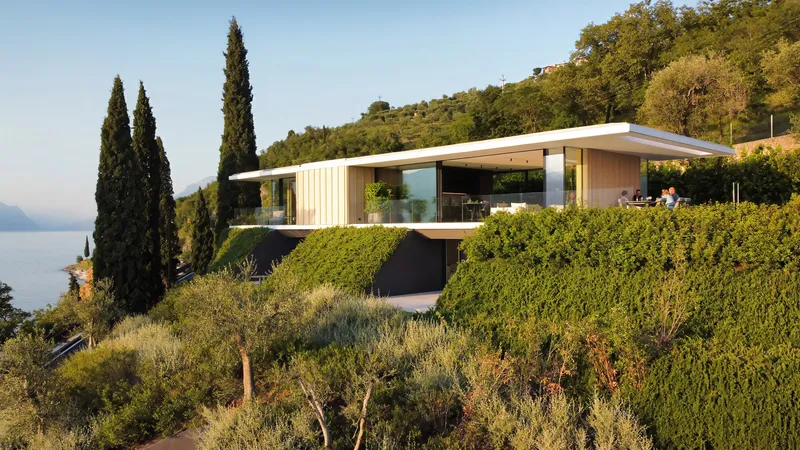
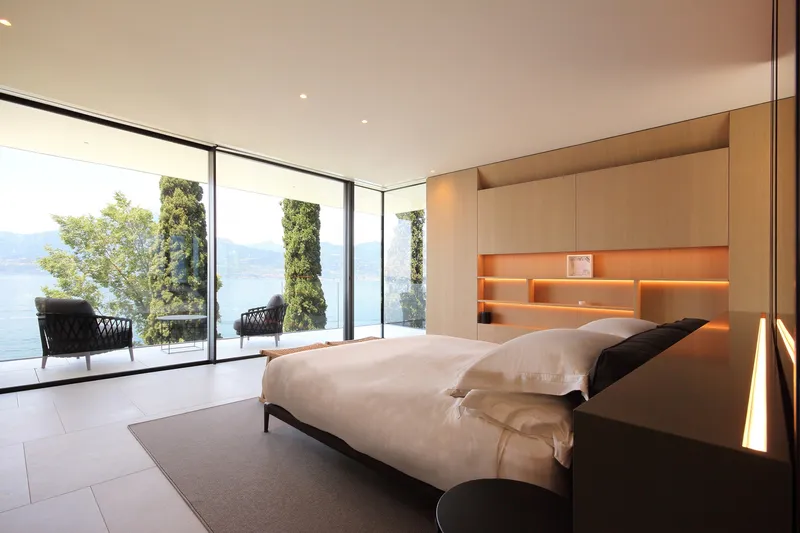
The main façade is defined by extensive glazing, allowing every room to enjoy uninterrupted panoramas of Lake Garda. This creates a sense of weightlessness—the pavilion reads as an open and permeable volume immersed in greenery.
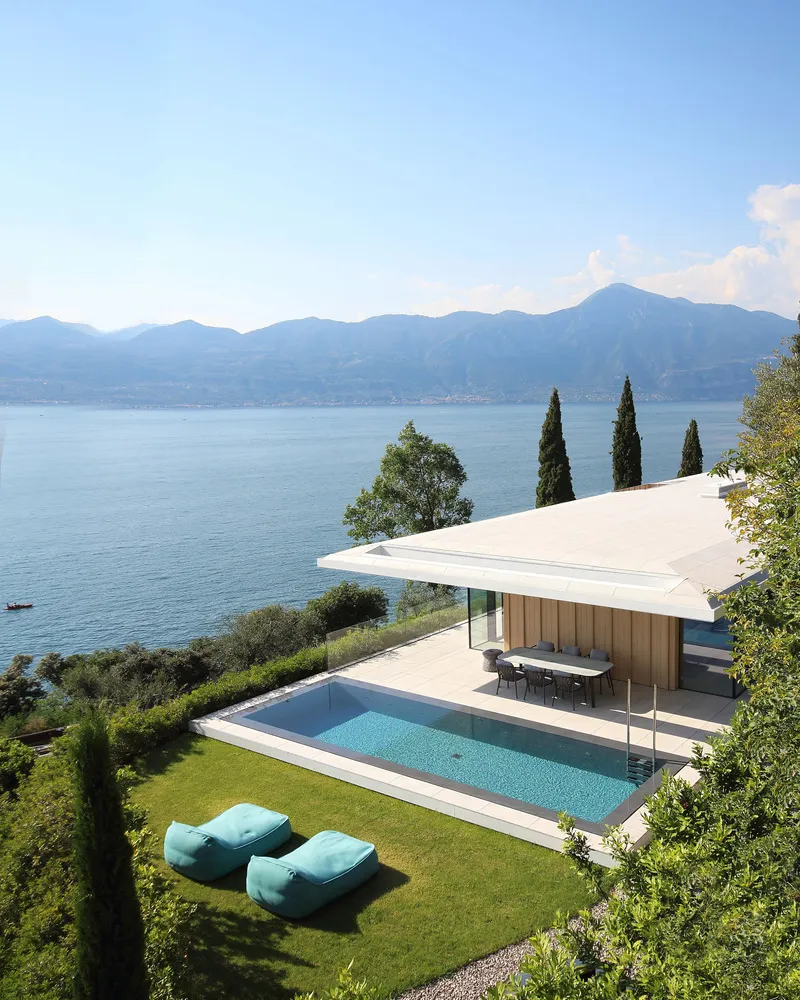
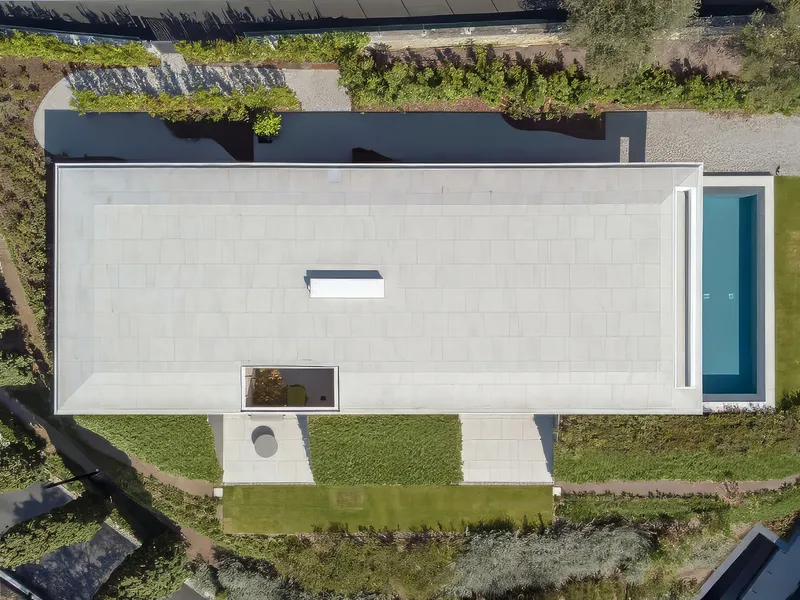
A cantilevered flat roof extends uniformly on all sides, offering shade, controlling sunlight, and subtly lifting the structure above the terrain. Carefully concealing all technical elements, the roof is clad in light gray ceramic finishes, emphasizing a clean, minimalist expression.

Material Warmth and Natural Integration
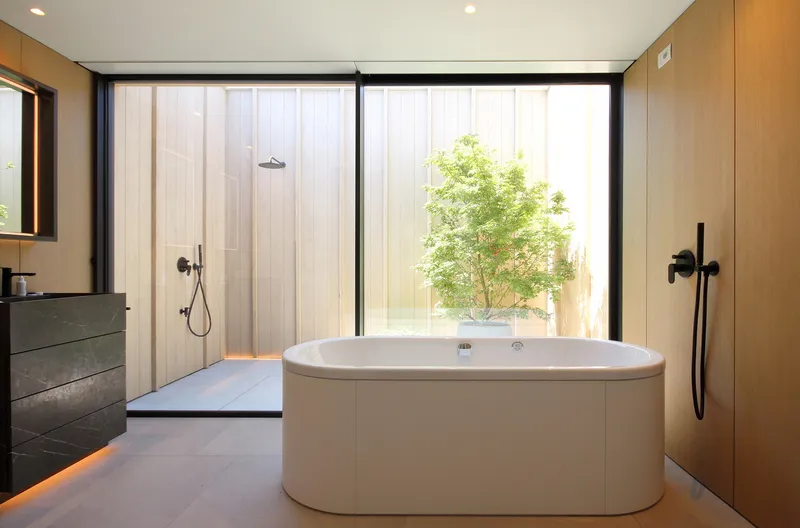
While the architecture is inherently minimal, material selection introduces warmth and texture. The master bathroom façade is the only fully enclosed section of the pavilion and is clad with wood plastic composite slats in an oak finish, echoing the tones of the surrounding landscape. This volume extends into an open-air patio that becomes a private wellness space.
A crisp white aluminum frame outlines the pavilion’s perimeter, providing a delicate visual base. On the south side, the swimming pool extends from the structure’s footprint, reflecting the sky and adding continuity between architecture and nature.
Custom Interiors Crafted with Precision
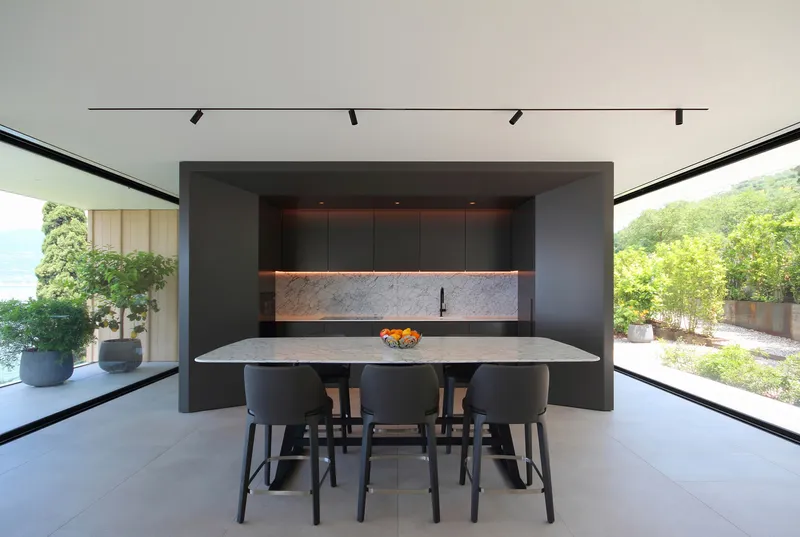
The interiors continue JM Architecture’s signature minimalist approach, featuring custom-made fixed furniture, oak wall paneling, and integrated storage that enhances the clean lines of each space. In the bathrooms, marble vanities add a sculptural touch, while the open kitchen incorporates concealed technical equipment for a seamless, uncluttered appearance.
Furniture pieces appear to float within the rooms, amplifying light and emphasizing a contemporary, serene atmosphere. Retractable roller blinds are seamlessly integrated into the ceiling perimeter, offering privacy while maintaining visual purity.
Landscape Architecture that Preserves and Enhances Nature
The landscape, designed by Frassinago, complements the house through a terraced composition shaped by the site’s natural levels. Native olive trees and mature cypresses were preserved and celebrated, anchoring the garden in its Mediterranean context. The planting strategy adapts to the varied topography: lawns appear on flat terraces, while specific species stabilize steeper slopes.

All photographs are works of Jacopo Mascheroni



Popular Articles
Popular articles from the community


Co-Life: Senior Housing Design That Reconnects Older Adults With the City
Co-Life reimagines senior housing design through healing gardens, shared streets, workshops, and a sustainable community across generations.

The Musturak Paradise: Senior Living Architecture for a Connected Future in Temara, Morocco
The Musturak Paradise reimagines senior living architecture in Temara via private homes, social spaces, culture, community, and shared care.

Co-life: Sustainable Architecture for Age-Friendly Community Living
Co-life reimagines sustainable architecture for seniors through courtyards, rammed earth, shared gardens, and spaces designed for belonging.

Conexión: Biophilic Design Reimagines High-Rise Living in Hong Kong
Conexión reimagines high-rise living in Hong Kong through biophilic design, green facades, shared spaces, daylight, water and nature within.


Similar Reads
You might also enjoy these articles


Hodi-Mandai Geram
Project Function: Preservation and revitalization of the Intangible heritage and socio-spatial identity of the Hodi by Housing, Cultural Memory Center, Sacred Grove, landscape, local tourism economy


Olio Towers: A Mid-Rise for Performers That Fuses Housing, Rehearsal, and Stage
Located blocks from Houston's Theater District, this modular tower stacks living units around a central performance atrium.

Oasis: Modular Green Housing Carved into Dhaka's Urban Fabric
A shortlisted Plugin Housing entry reclaims unauthorized settlements in Dhaka with stepped concrete volumes, green roofs, and ventilation-driven design.

Black Hole: A Floating Megastructure for the Post-Physical Era
Emiliano Mazzarotto envisions a spherical, self-scaling arena where e-sports, digital hotels, and holographic stadiums replace traditional public space.


Explore Architecture Competitions
Discover active competitions in this discipline



Challenge to reimagine the Iron Throne


Photograph architecture without architects


Illustrate the lost glory of Angkor Wat - Render Challenge


Design challenge to reuse E-waste
Comments (0)
Please login or sign up to add comments
No comments yet. Be the first to comment!