
Villa Ruwiel by Studio Vincent Architecture: A Contemporary Barn-Inspired Energy-Neutral Home in Breukelen
Villa Ruwiel blends traditional Dutch barn forms with modern, energy-neutral design, featuring open interiors, panoramic views, sustainable materials, and landscaped surroundings.

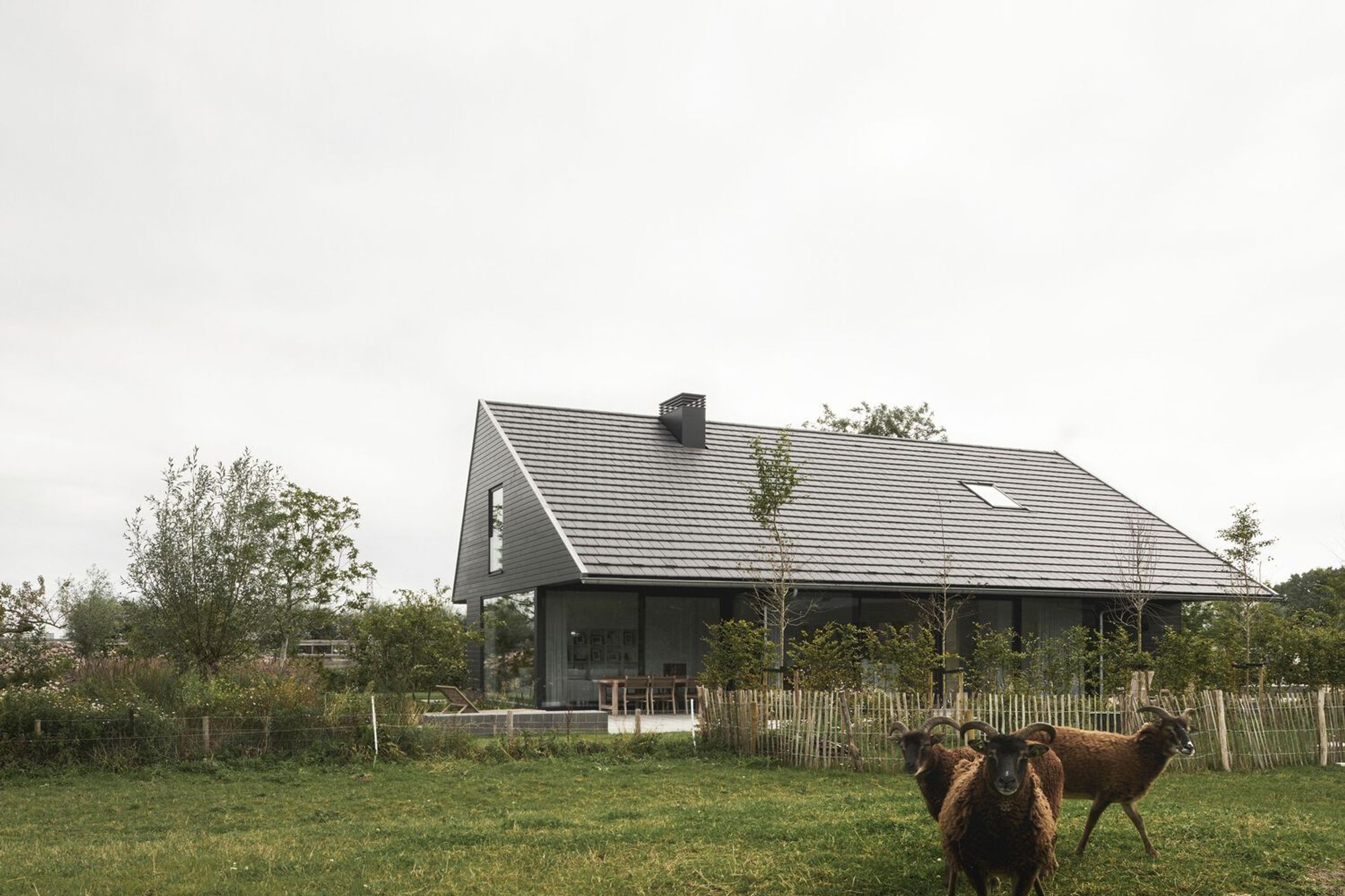
Nestled between an historic farmstead and expansive agricultural land dotted with fruit trees, Villa Ruwiel by Studio Vincent Architecture is a masterful reinterpretation of traditional Dutch barn typology. Set along the scenic “Aa” waterway within the protected Natura 2000 area, the villa transforms the former goat farm site into a modern, energy-efficient residence while respecting the cultural and natural heritage of the Ruwiel estate. This architectural project balances sustainability, energy neutrality, and contemporary design, creating a home that seamlessly merges with its historic and rural surroundings.
Design Concept: Asymmetry Meets Function
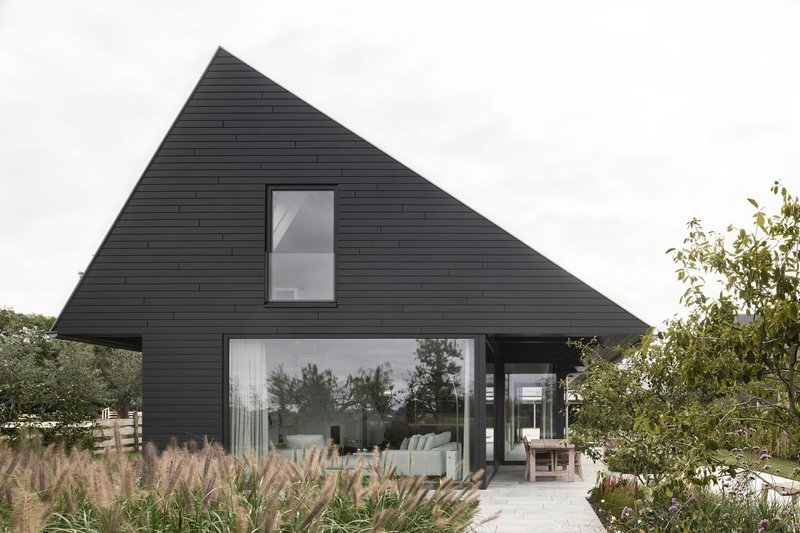
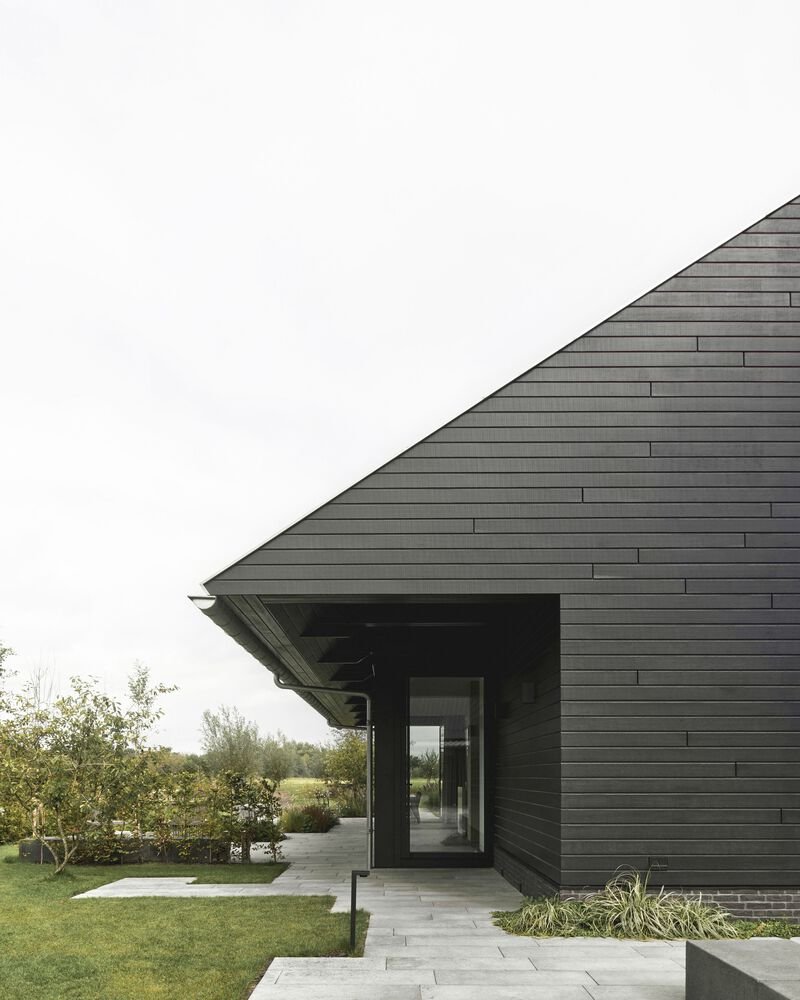
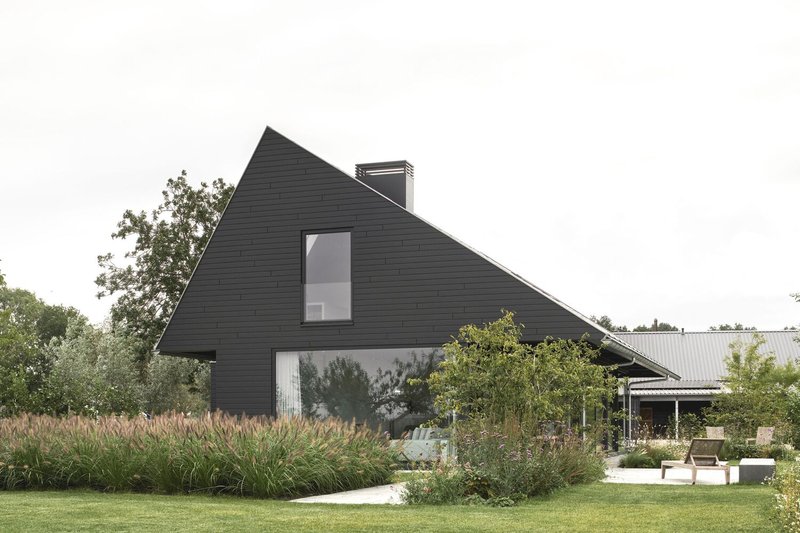
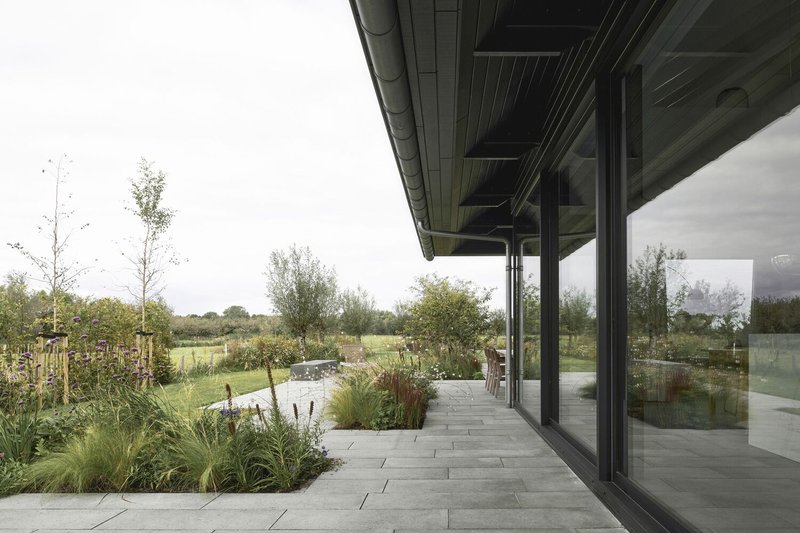
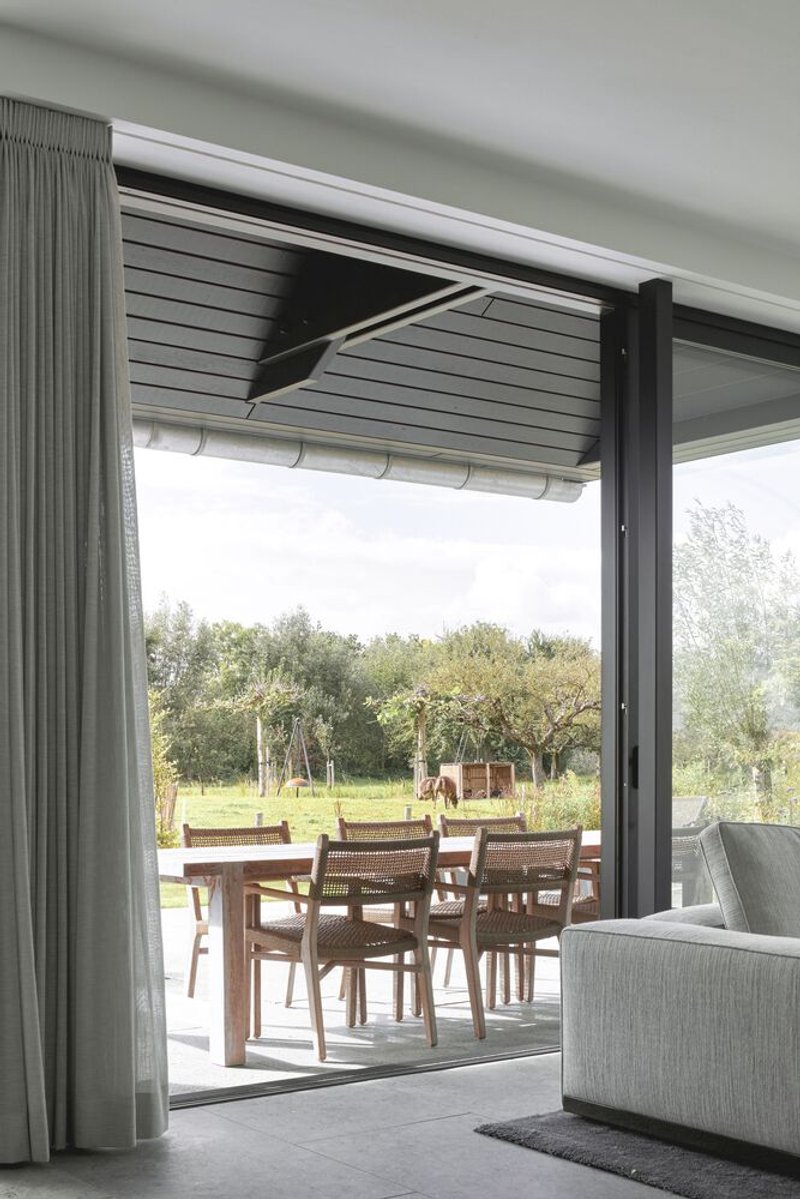
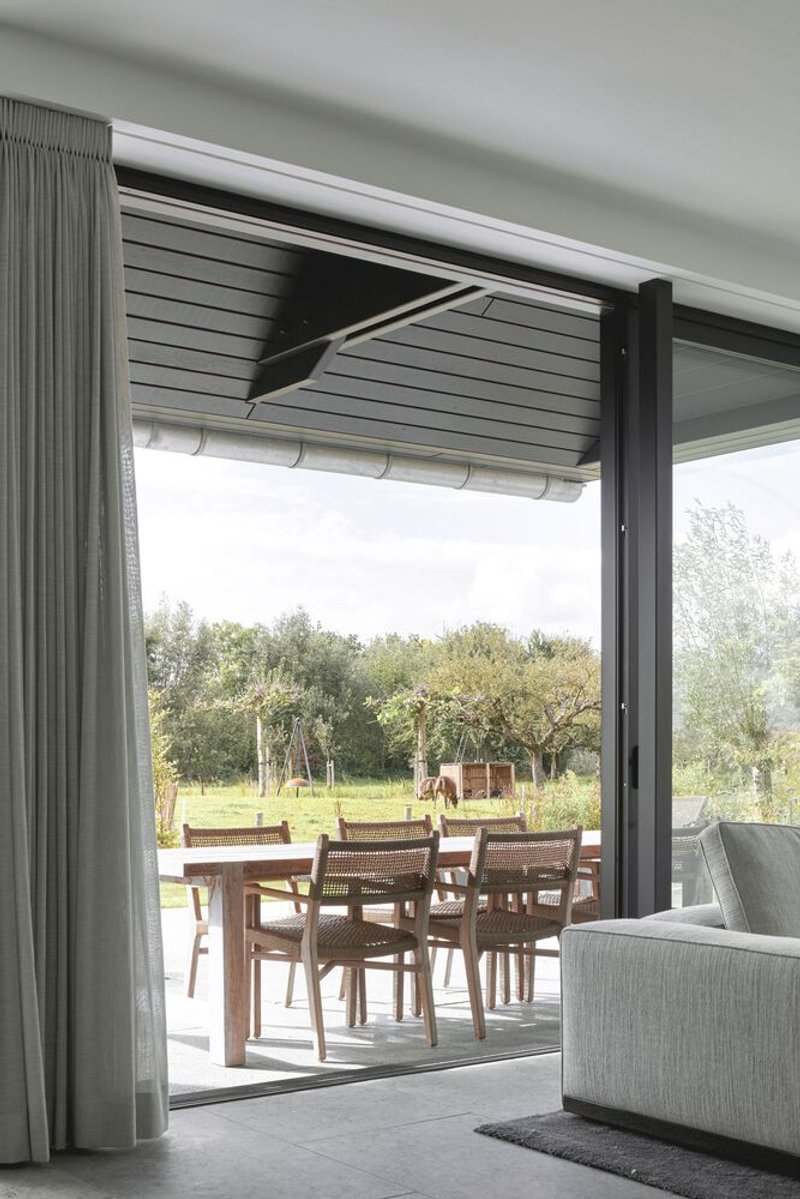
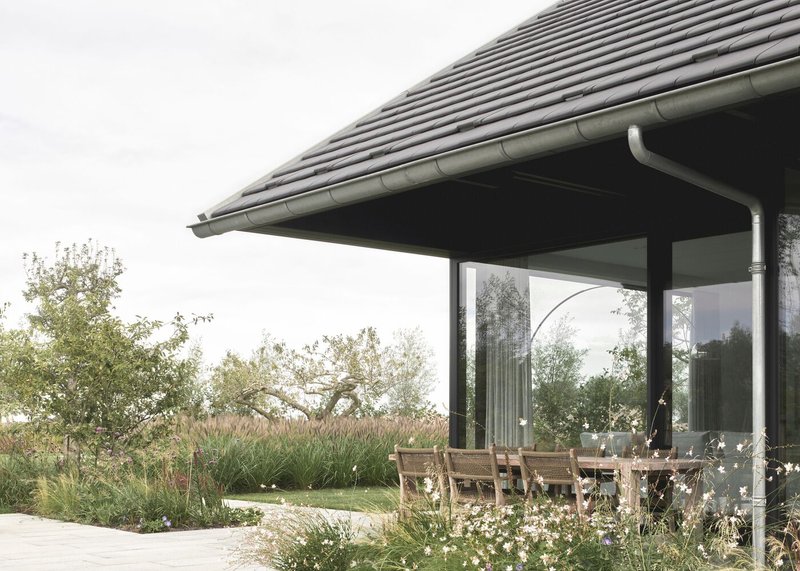
One of the defining features of Villa Ruwiel is its asymmetrical barn-inspired roof, referencing the traditional agricultural buildings of the region. Historically, barn roofs extended outward to allow generous heights for work and storage activities. In this modern adaptation, the roof forms a sweeping canopy that shelters entrances, terraces, and outdoor living areas while visually connecting the villa to the surrounding landscape. The design captures the simplicity, functionality, and elegance of old barns, translated into a contemporary residence that emphasizes spatial openness, natural light, and visual continuity with nature.
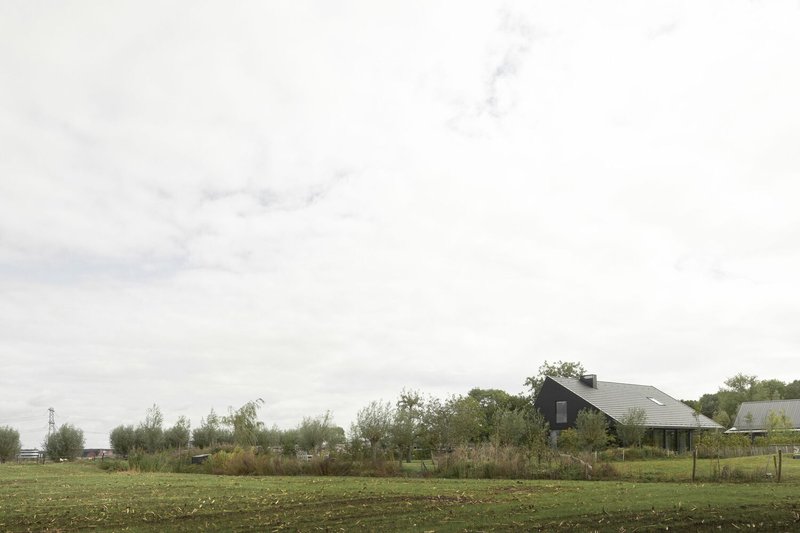
Materials and Exterior Aesthetic
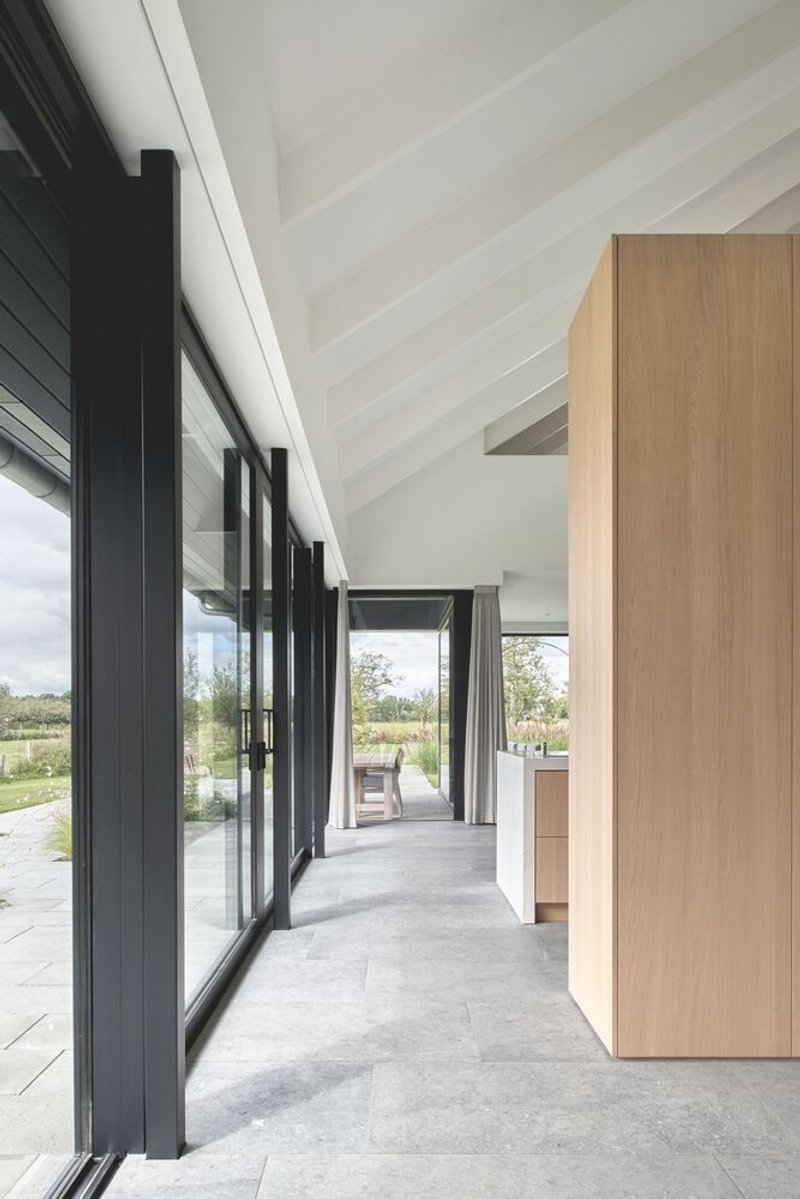
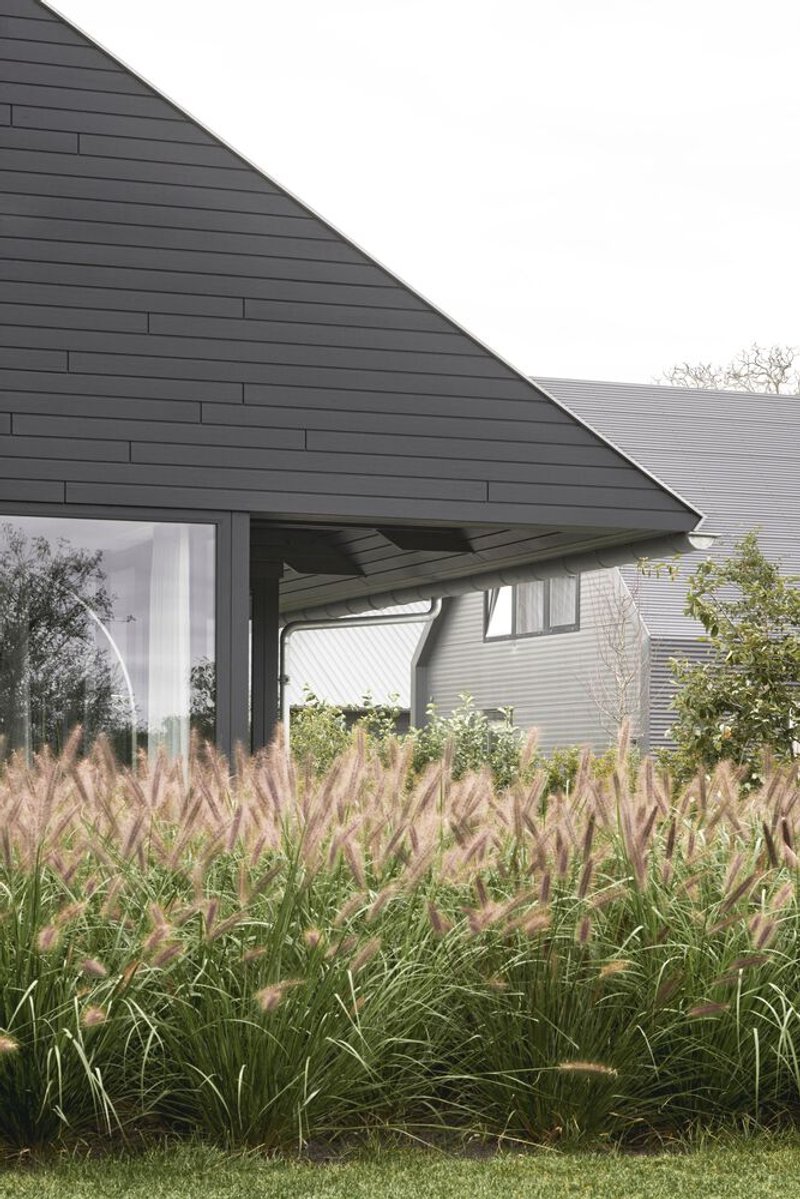
The villa’s exterior cleverly combines brick and durable Fraké wood, reflecting the practical material palette of traditional farm buildings. The lower brick façade provides robust protection against the elements, while the upper horizontal Fraké cladding offers texture and warmth. Functional details like exposed gutters highlight the building’s practical elegance, while large sliding windows on the west façade frame panoramic views of fruit orchards and open fields, flooding interiors with daylight.
Designed with energy efficiency at the forefront, Villa Ruwiel is completely energy-neutral. Its large overhangs provide passive shading in the summer while allowing winter sunlight to naturally warm the interiors. Complementing this sustainable strategy, 18 photovoltaic panels installed on an adjacent structure generate surplus energy, further reinforcing the villa’s environmental credentials.
Interior Layout and Spatial Experience
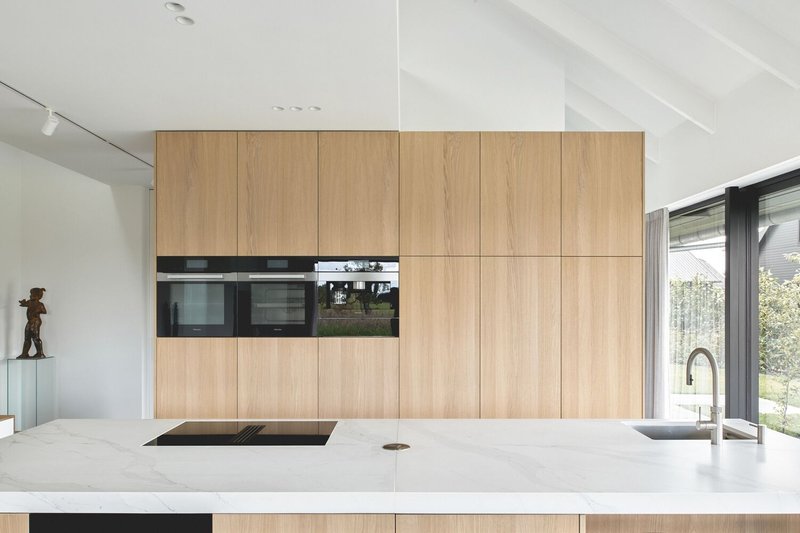
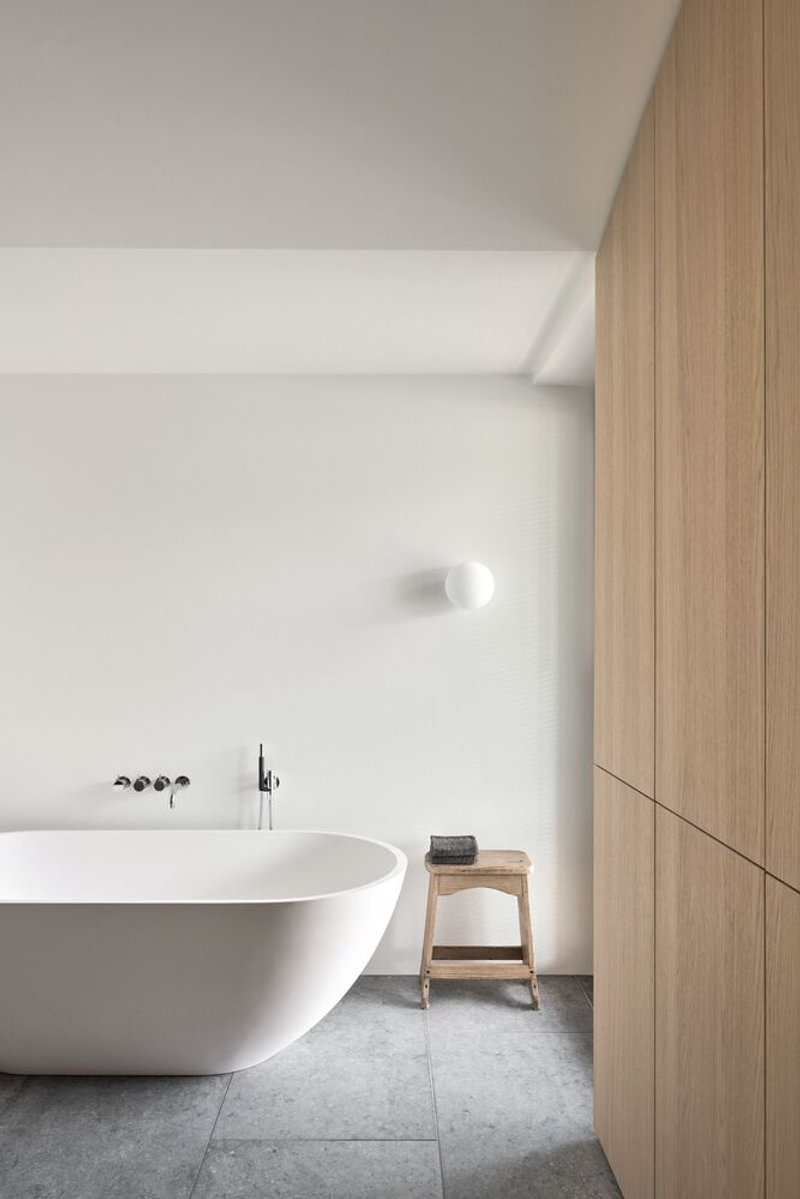
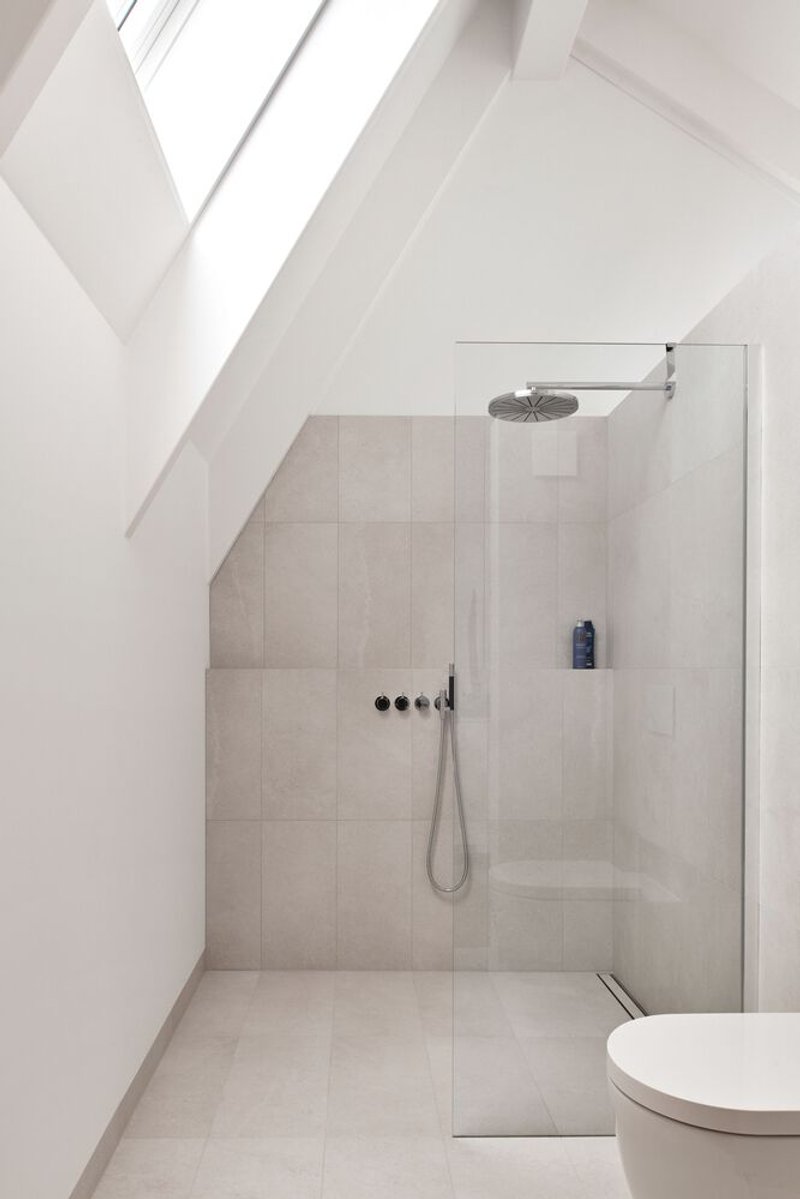
Villa Ruwiel spans two floors and features a carefully considered open floor plan. On the ground level, residents enjoy an integrated kitchen, dining, and living area designed for family living and social interaction. Adjacent to the main spaces are the entrance and a master suite with an en-suite bathroom.
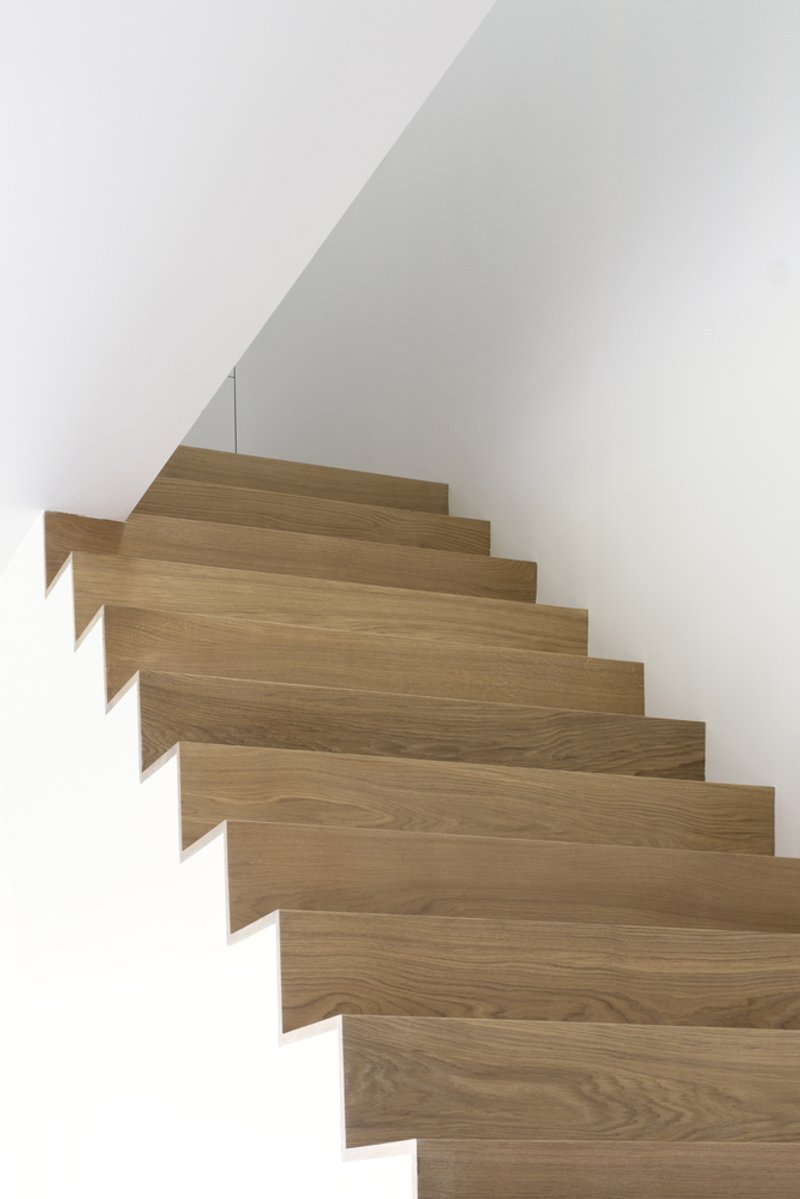
A partially double-height space enhances connectivity between the ground and first floors, where a guest room and office with archive cabinets are located. Long sightlines throughout the house draw the interior toward the surrounding landscape, creating a sense of fluidity and openness. The interior design emphasizes natural light, material honesty, and minimalism, echoing the functional charm of traditional barns while supporting modern living.
Landscape and Garden Integration
The villa’s landscape design, by Wisse Tuinen, complements its architectural language with taller plantings, fruit trees, and a garden layout that mirrors the nearby orchards along the Aa. This approach not only extends the living space outdoors but also fosters a harmonious dialogue between the house, the historic farmstead, and the natural countryside.
Sustainability and Energy Performance
Villa Ruwiel exemplifies cutting-edge sustainable residential design. Its energy-neutral performance is achieved through passive design strategies, high-performance materials, and renewable energy technologies. The integration of photovoltaic panels, strategic overhangs, and natural ventilation ensures minimal environmental impact while maintaining high comfort levels for its inhabitants.
Villa Ruwiel is a stunning example of contemporary Dutch residential architecture, where the elegance of traditional barn forms meets modern sustainability and functionality. Studio Vincent Architecture has created a home that is visually striking, environmentally responsible, and intimately connected to its historic and natural context—a perfect model of energy-efficient, landscape-integrated design.
All photographs are works of MWA Hart Nibbrig, Studio Vincent Architecture



Popular Articles
Popular articles from the community

Alton Cliff House: A Harmonious Retreat by f2a Architecture in Lake Country, Canada
Alton Cliff House blends corten steel, prefabrication, and sustainable design, creating a luxurious, energy-efficient retreat perched on Canadian cliffs.

Solar Steam: A Climate-Responsive Architecture That Redefines the Monument
A climate-responsive memorial architecture that transforms heat, decay, and time into a living system reflecting humanity’s ecological impact.
Atelier Macri Concept Store Interior Design by CASE-REAL
Atelier Macri store features a "ko" counter, walnut wood details, cork displays, blending retail, gallery, and seamless customer experiences.
Fifth NRE Jazz Club – De Bever Architecten: Eindhoven’s Revitalized Cultural Hub
Historic gas factory transformed into Fifth NRE Jazz Club blending modern sustainability, jazz culture, dining, and heritage architecture seamlessly.


Similar Reads
You might also enjoy these articles


The Ken Roberts Memorial Delineation Competition (Krob)
As the most senior architectural drawing competition currently in operation anywhere in the world, it draws hundreds of entries each year, awarding the very best submissions in a series of medium-based categories.

Waterfront Redevelopment and Urban Revitalization in Mumbai: Forging a New Dawn for Darukhana
A transformative waterfront redevelopment project reimagining Darukhana’s shipbreaking heritage into an inclusive urban future.
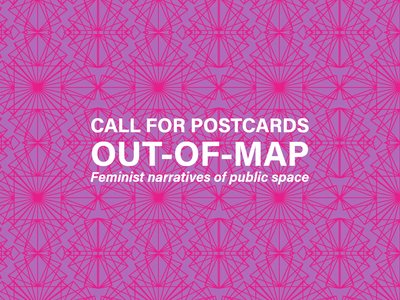
OUT-OF-MAP: A Call for Postcards on Feminist Narratives of Public Space
Rhizoma Design and Research Lab invites artists, designers, architects, researchers, and students to reflect on how feminist perspectives can reshape public space. Selected works will be exhibited in Barcelona, October 2026. Submissions open until 15 April 2026.

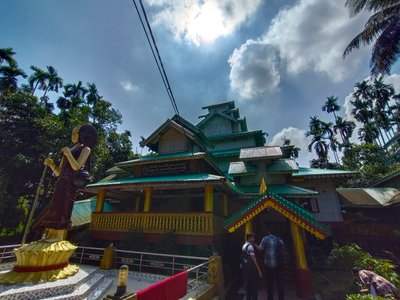
Documentation Work on Buddhist Wooden Temple
Architectural syncretism and cultural hybridity: A comparative study of the Buddhist temples in Chattogram Hill tracks
Explore Architecture Competitions
Discover active competitions in this discipline




The International Standard for Design Portfolios


The Global Benchmark for Architecture Dissertation Awards


The Global Benchmark for Graduation Excellence


Challenge to reimagine the Iron Throne
Comments (0)
Please login or sign up to add comments
No comments yet. Be the first to comment!