

Waechter + Waechter Architekten Rotate a Timber Grid 45 Degrees to Build a Support Centre with No Front or Back
A modular timber post-and-beam structure in Neuwied, Germany, dissolves building hierarchy through a rotated grid and generous daylight.


Most institutional buildings declare their importance through a single dominant facade. The Assessment and Support Centre in Neuwied-Engers, designed by Waechter + Waechter Architekten, refuses that convention entirely. By rotating a strict rectangular grid 45 degrees against the orientation of every neighboring structure on the site, the architects produced a two-story timber building that has no obvious front or back. Every elevation steps in and out, generating setbacks and projections that break down what is actually a 3,153 square meter volume into something far more intimate.
The building consolidates assessment, training, and support functions that were previously scattered across multiple locations between Koblenz and Neuwied. It sits on an 8,000 square meter plot surrounded on three sides by existing structures of varying scales, a campus that has served people with disabilities for decades. Structuralism is the operative word here: systematic repetition of timber modules creates an orderly skeleton, but the rotated placement and generous glazing inject a liveliness that keeps the order from feeling rigid. The result is a large-scale learning landscape where rooms can be flexibly subdivided, centered on a multifaceted hall flooded with daylight from above.
A Rotated Volume in a Heterogeneous Campus
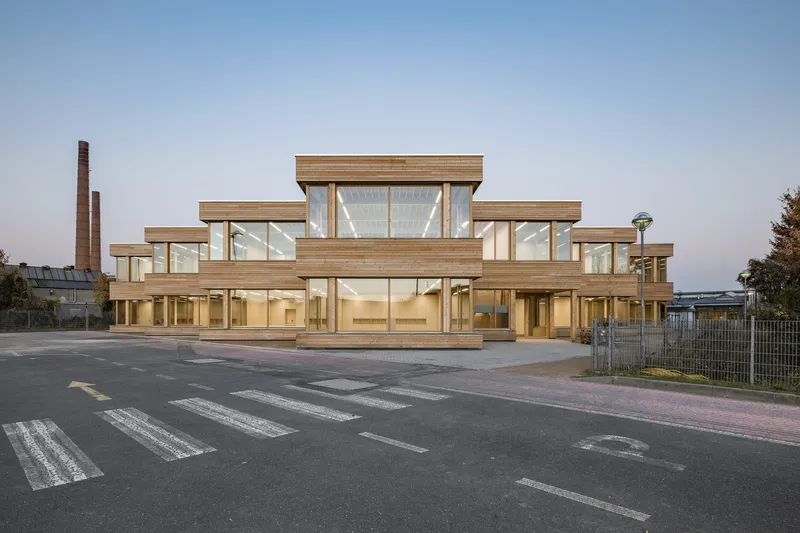
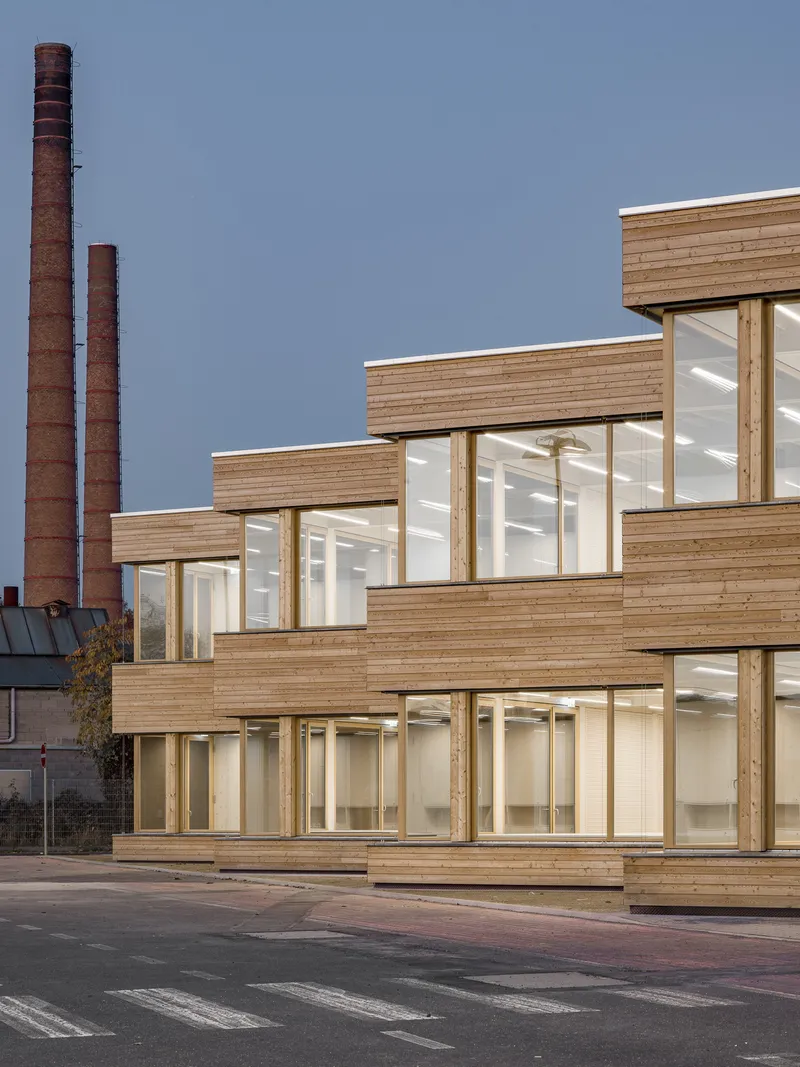
From outside, the 45-degree rotation is immediately legible. Where neighboring buildings present flat facades parallel to the street, the Assessment and Support Centre angles its wings so that each exterior face catches light and frames views differently. The stepped timber cladding and floor-to-ceiling glazing panels create a rhythm of solid and void that articulates the grid behind them, while the two-story scale deliberately holds itself to the height of the surrounding heterogeneous context. Industrial chimneys and brick structures sit behind the building without any awkward confrontation; the rotation absorbs contextual difference rather than competing with it.
Timber Skeleton as Both Structure and Identity
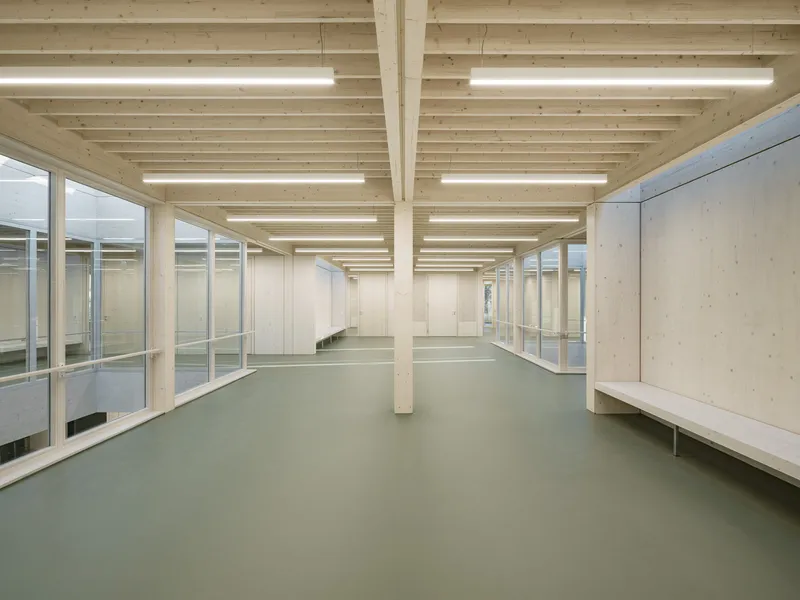
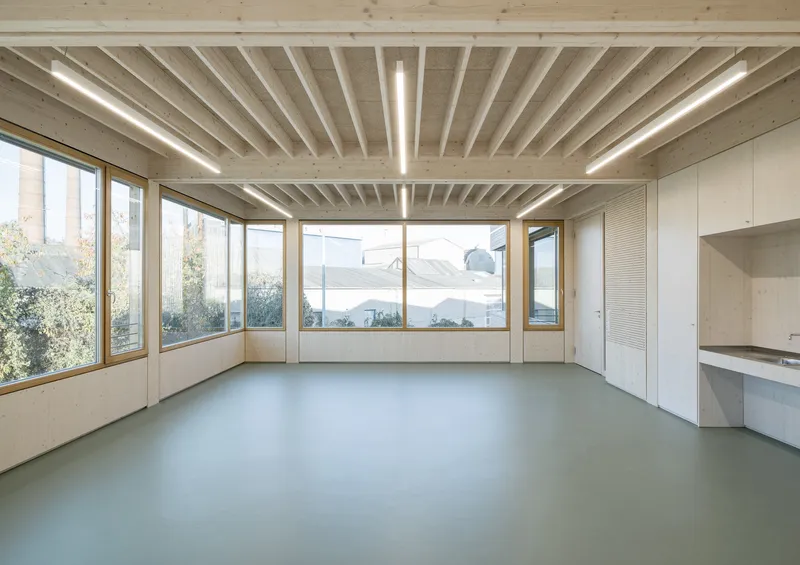
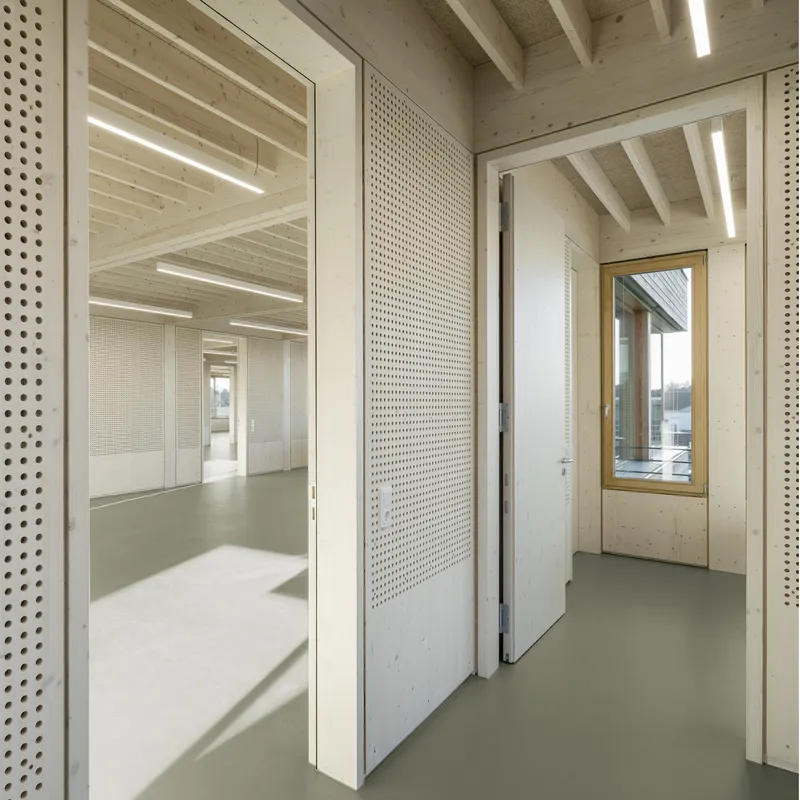
The post-and-beam system in glue-laminated timber is not decorative. BSH columns with steel head plates and foot plates transfer loads between upper and lower floors through a continuous skeletal frame that spans both stories, braced by timber cores. This is the building's organizing logic and its visual identity at once: light-colored columns march through open workspaces, and the rhythmic joist ceiling overhead doubles as an acoustic element. Ceiling modules carry both structural loads and sound absorption, which means the architects avoided the usual layered ceiling assemblies that hide structure behind drywall.
The material palette stays deliberately narrow. Timber handles the structural system, the facade cladding, the window frames, the doors, and much of the built-in furniture. OSB and solid wood plates fill in where needed. The consistency is purposeful: in a building designed to help people prepare for their futures, the legibility of how the space is made becomes part of the environment's character. You understand how the room works because the structure tells you.
The Central Hall and Its Ceiling Openings
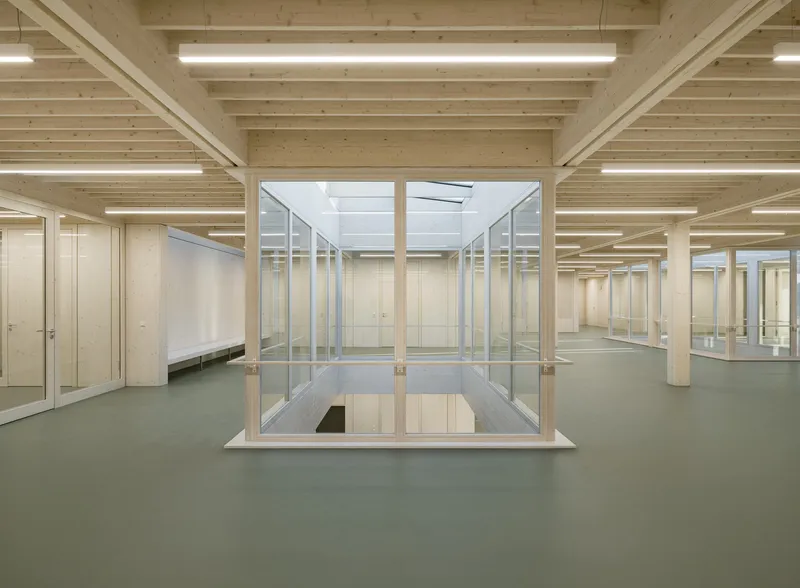
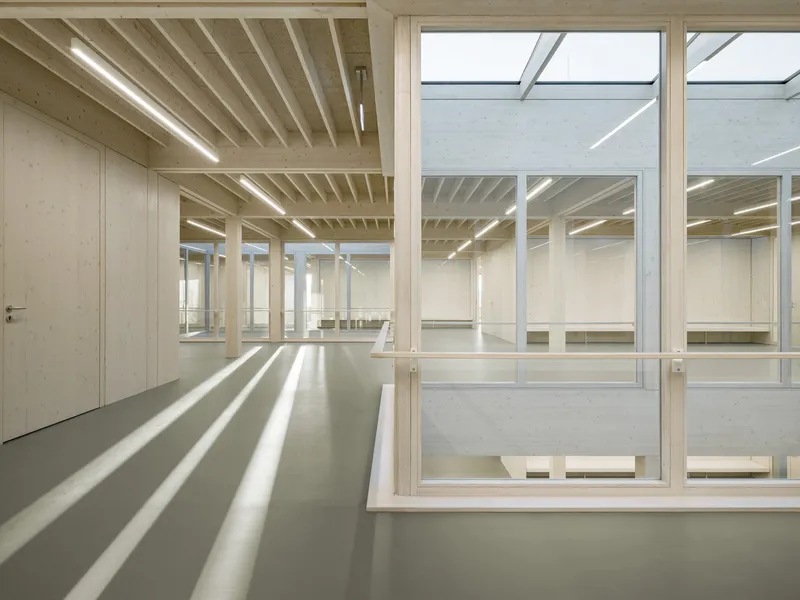
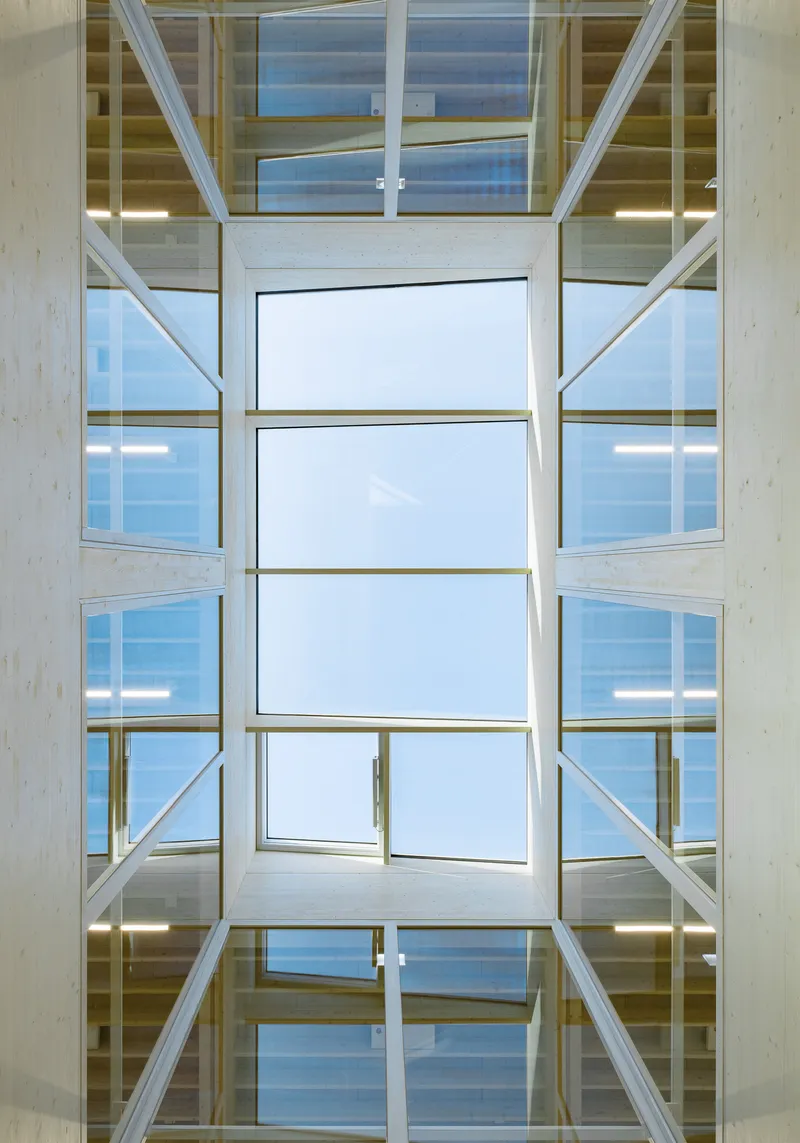
The building's four wings radiate from a central communal hall, and this is where the section gets interesting. Two ceiling openings punch through the upper floor, creating glazed atria that pull daylight deep into the ground level. The effect is not subtle. Standing on the ground floor and looking up, you see timber beams, steel bracing, and sky. The glass-enclosed courtyard openings transform what could be a dark core into the brightest space in the building, and they give the upper and lower floors a visual connection that reinforces the sense of a single community rather than stacked, disconnected levels.
Strip lighting integrated into the joist grid supplements natural light without competing with it, running parallel to the beams so the ceiling reads as one continuous system. The structural engineers at Merz Kley Partner, working with the architects, kept span widths economical, which means columns are closely spaced enough to give the hall a grove-like quality rather than the cavernous openness of a gymnasium.
Flexible Rooms and Glazed Circulation
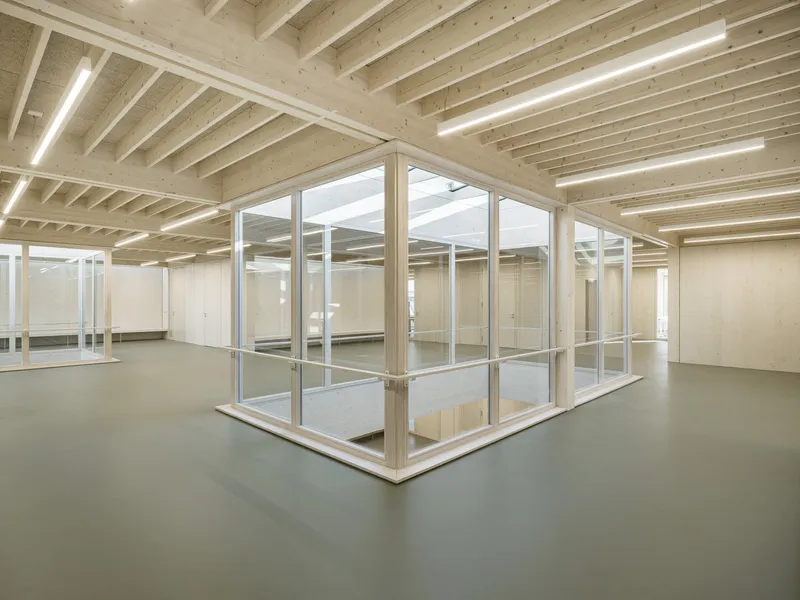
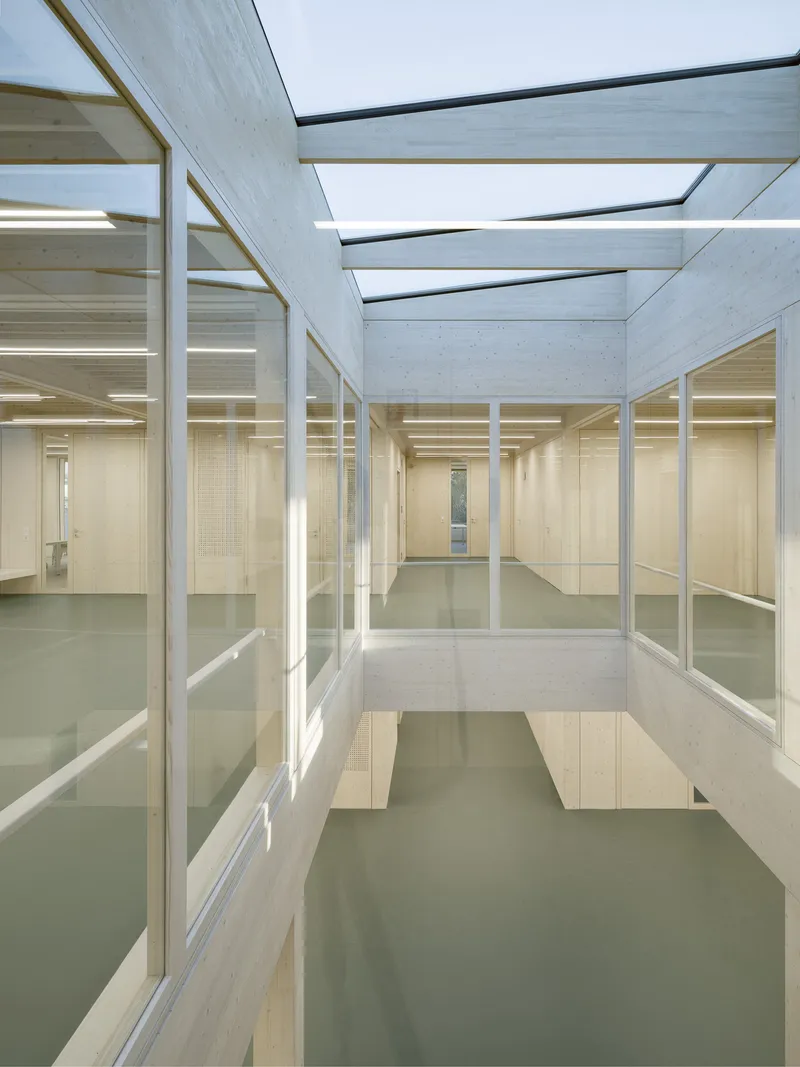
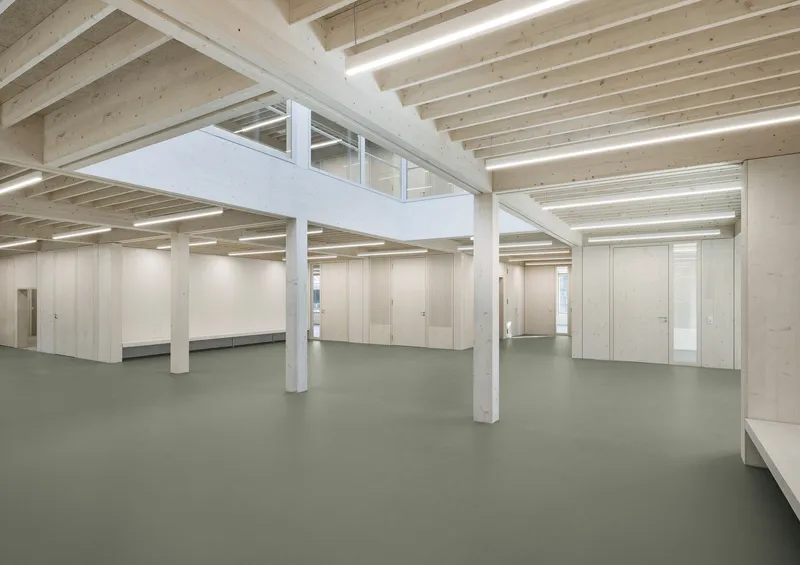
The open teaching concept that drove the brief demanded spaces that could be separated, merged, and reconfigured. Glass-walled enclosures beneath the exposed joists allow visual continuity even when acoustic separation is required. Glazed circulation corridors with skylights connect plywood-lined rooms, and mezzanine platforms with glass balustrades overlook the workspaces below, creating a vertical layering of activity that keeps the building feeling populated and alive from almost any vantage point.
The perforated white panel doors and resin flooring mark thresholds without interrupting sightlines. It is a building that trusts transparency over compartmentalization, which is a meaningful choice for a facility whose purpose is to assess potential and foster growth. The architecture makes the institutional program feel accessible rather than bureaucratic.
Plans and Drawings
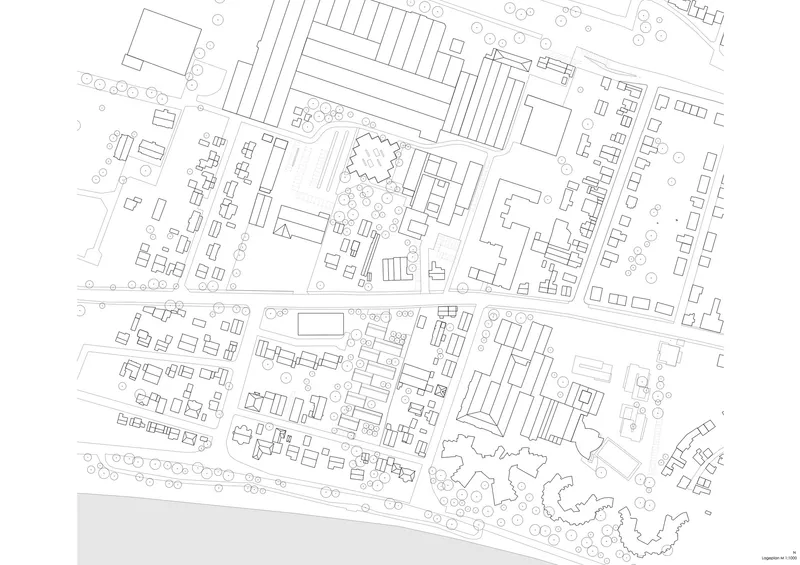
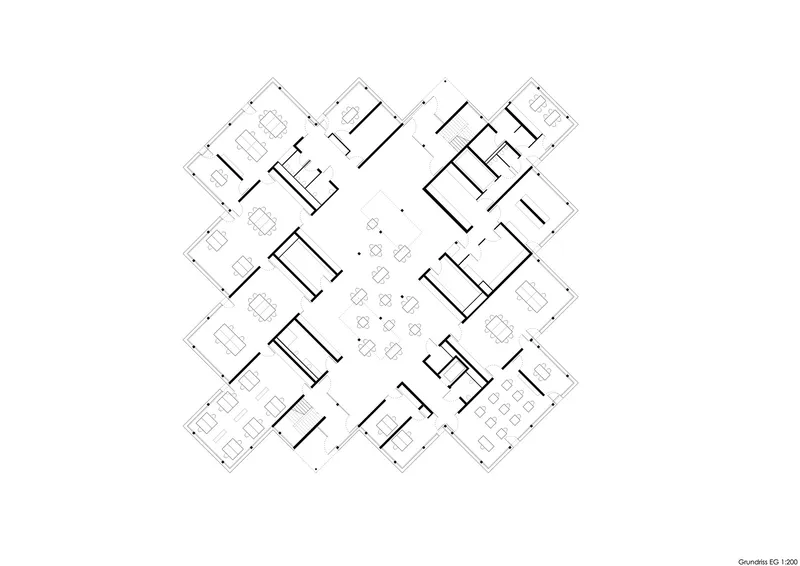
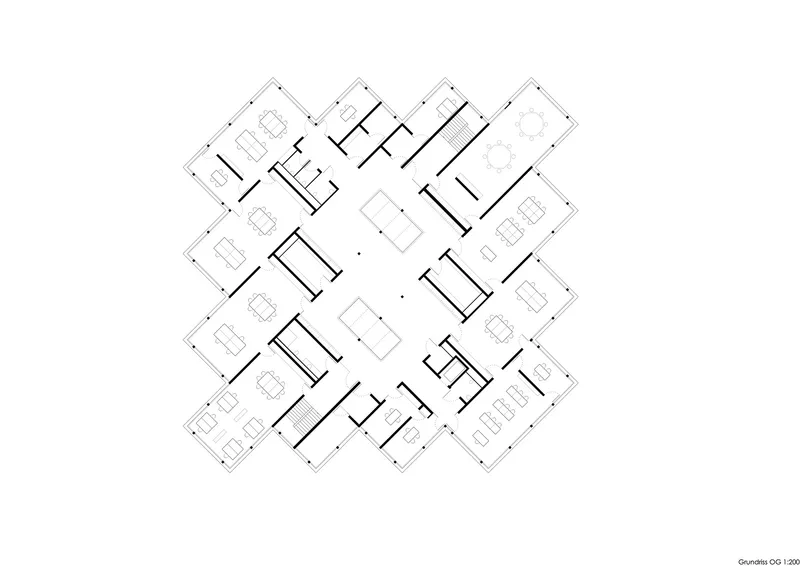
The site plan reveals just how committed the rotation is: the building's footprint sits at a clear 45-degree angle to every surrounding structure, carving out triangular residual spaces that become landscaped setbacks. The floor plans show four protruding wings arranged around the central communal core, with the upper floor repeating the logic but varying the program. Furniture layouts indicated on the drawings confirm the flexible subdivision strategy: dining tables, workstations, and meeting clusters populate the same structural grid without requiring partition walls.
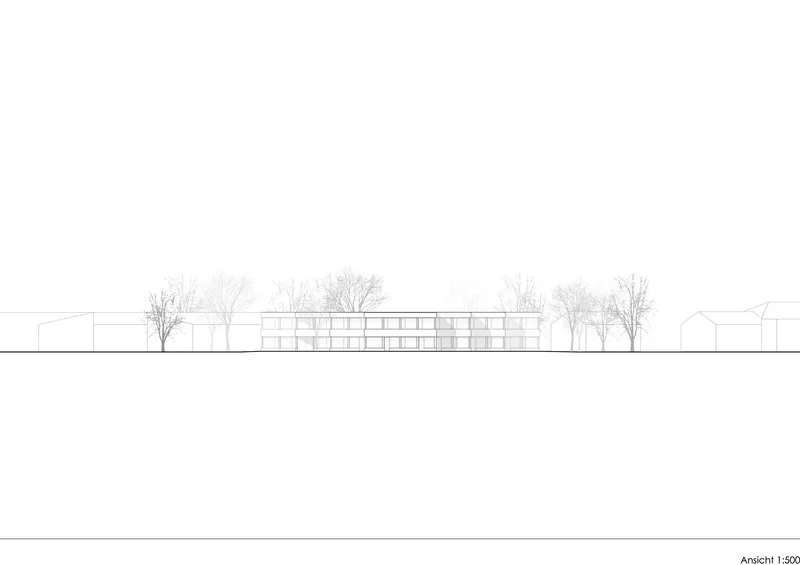
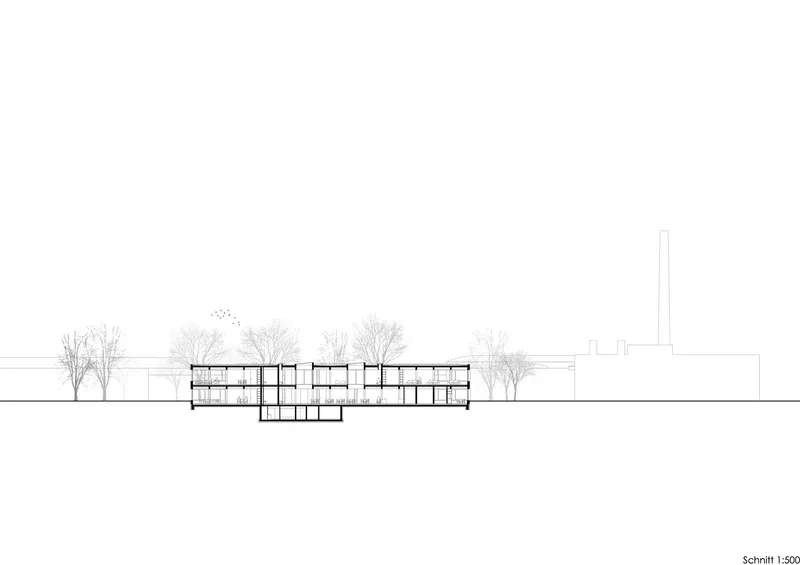
The elevation drawing confirms the building's deliberate horizontality. Flanked by bare deciduous trees, the low facade defers to the campus context rather than asserting itself. The section is where the two-story atrium strategy becomes clearest: the chimney stack and double-height voids show how the architects used the building's modest height to create spatial events that feel far more generous than two stories would normally allow.
Why This Project Matters
The Assessment and Support Centre demonstrates that institutional timber construction does not have to look like a Scandinavian pavilion or a wellness retreat. Waechter + Waechter Architekten used the material systemically, letting the post-and-beam logic generate the plan, the facade, the ceiling acoustics, and the furniture in one coherent move. The 45-degree rotation is not a formal gesture for its own sake; it solves the real problem of placing a large building on a tight, three-sided campus without creating dead backs or service elevations. Every face of the building engages its surroundings.
More importantly, the project proves that modular prefabricated timber construction can deliver genuine spatial richness. The double-height atria, the mezzanine overlooks, and the grove-like column rhythm all emerge from the structural system rather than being imposed on top of it. For a building whose mission is to help people discover their capabilities, that kind of clarity is not just efficient. It is generous.
Assessment and Support Centre by Waechter + Waechter Architekten, led by Prof. Felix Waechter and Sibylle Waechter. Neuwied, Germany. 3,153 m². Completed 2018. Photography by Thilo Ross Fotografie.
About the Studio
Share Your Own Work on uni.xyz
If projects like this are the kind of work you want to make, uni.xyz is a place to publish your own, find collaborators, and enter design competitions.


Popular Articles
Popular articles from the community


The Amber Palace Opera: A Geological Fiction Surfaces on Tallinn's Baltic Waterfront
Pierre Brillard reimagines a Baltic legend as a public landscape, opera house, and waterfront promenade rooted in Tallinn's coastal identity.

Manzana Morphosis: Stretching Barcelona's Grid into a Living Landscape for 2050
A radical reworking of the Eixample manzana turns density into a tool for generous public space, vertical ecology, and environmental performance.

Opera by the Sea Estonia: Three Shells Dissolving Architecture into Tallinn's Coastline
A winning opera house proposal replaces monumental form with interconnected shells that blur the boundary between building, park and Baltic Sea.

Cloaked Colonization: A Mobile Underwater Habitat That Moves Like a Fish
Micah Abaya's shortlisted EHC Pacific entry reimagines ocean settlement as a dispersed network of self-sustaining architectural organisms.

Similar Reads
You might also enjoy these articles

Bao Huynh Watercolor Atelier: A Serene Art Retreat in Hội An
Bao Huynh Watercolor Atelier in Hội An blends multifunctional art spaces, sustainable design, local materials, and family-friendly living in a serene environment.

Atelier Macri Concept Store Interior Design by CASE-REAL
Atelier Macri store features a "ko" counter, walnut wood details, cork displays, blending retail, gallery, and seamless customer experiences.

Manuel Vargas Izquierdo Stadium and High-Performance Sports Center: Architectural Excellence in Jalpa de Méndez
The Manuel Vargas Izquierdo Stadium blends sustainable design, inclusive sports facilities, and cultural-inspired architecture, revitalizing Jalpa de Méndez’s public spaces.

KAKR Buluh Awar Hall: Revitalizing Community and Ecology Through Bamboo Architecture
Community built bamboo hall revitalizes Buluh Awar village, empowering youth, restoring ecology, celebrating vernacular craftsmanship through sustainable architecture and culture.


Comments (0)
Please login or sign up to add comments
No comments yet. Be the first to comment!