
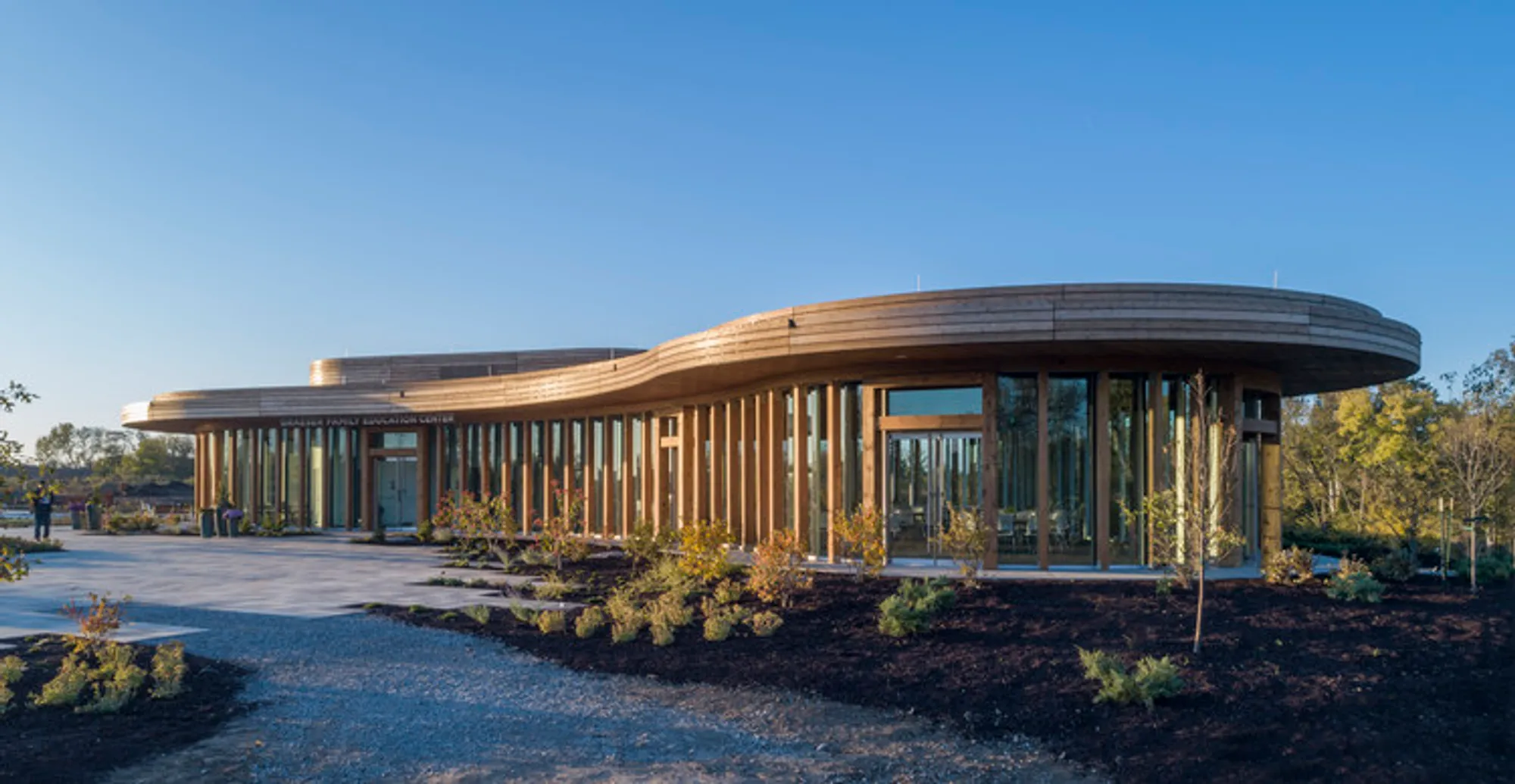
Waterfront Botanical Gardens By Perkins&Will | Louisville, United States
Waterfront Botanical Gardens transforms a former landfill into a sustainable public landscape, featuring an organic education center that promotes conservation, wellness, and community engagement.


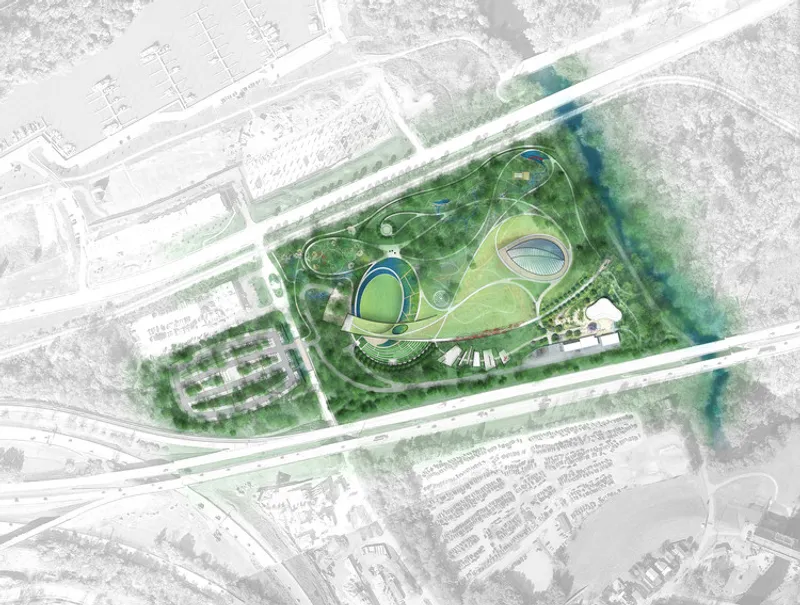
The Waterfront Botanical Gardens in Louisville, designed by Perkins&Will, is a landmark project that redefines ecological restoration, community engagement, and sustainable architecture. Completed in 2019, the project transforms a once-forgotten former landfill site into 23.5 acres of vibrant, publicly accessible green space, establishing Louisville’s first botanical garden and a new model for resilient urban landscapes.
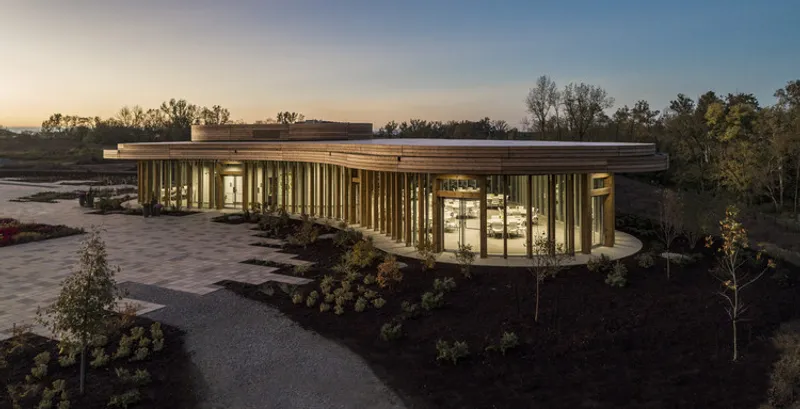
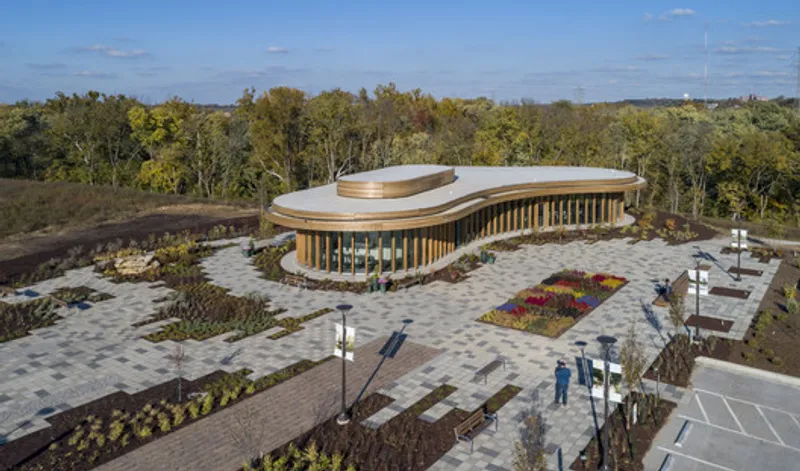
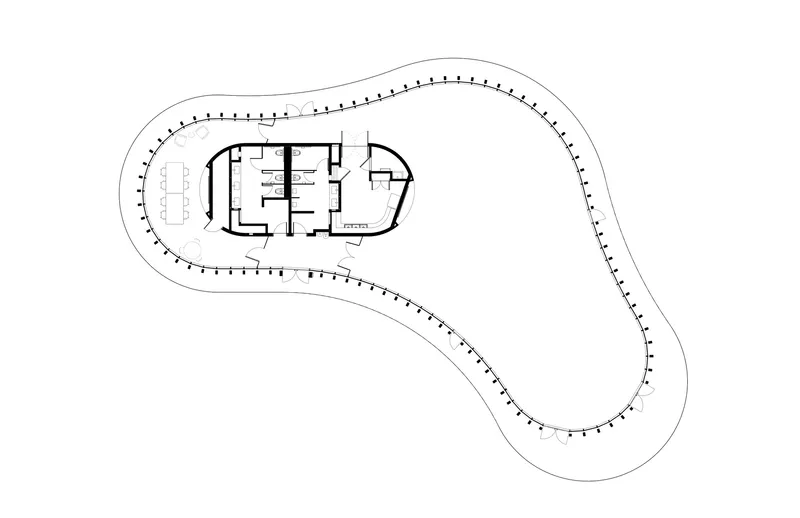
At the heart of the gardens lies the Graeser Family Education Center, a sculptural, organically shaped building that anchors Phase One of the master plan. Spanning approximately 5,000 square feet, the education center serves as a hub for learning, events, and community programs, while seamlessly blending into the surrounding gardens, trails, and courtyards. The project demonstrates how architecture can heal damaged land, foster environmental awareness, and create meaningful civic spaces.
Architecture Inspired by Nature
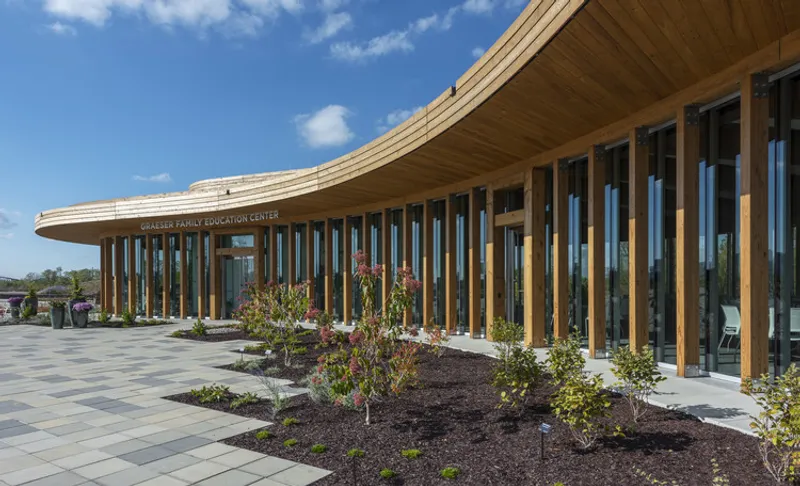
The form of the Graeser Family Education Center is intentionally organic and fluid, echoing natural growth patterns and reinforcing its role as a gateway to the botanical gardens. The building is composed of three distinct yet interconnected zones:
- A meeting and event room for gatherings and rentals
- An enclosed core housing essential services
- A flexible education space designed to accommodate programs for both adults and children
This adaptable layout allows the center to support a wide range of uses, from workshops and lectures to community celebrations and private events.
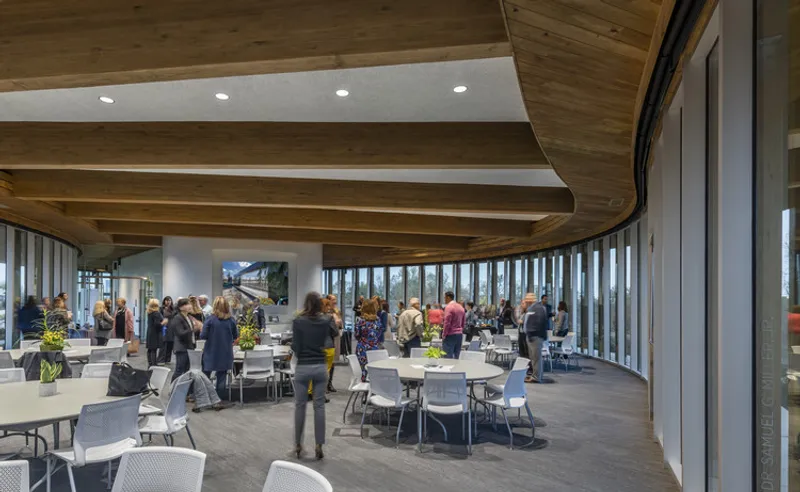
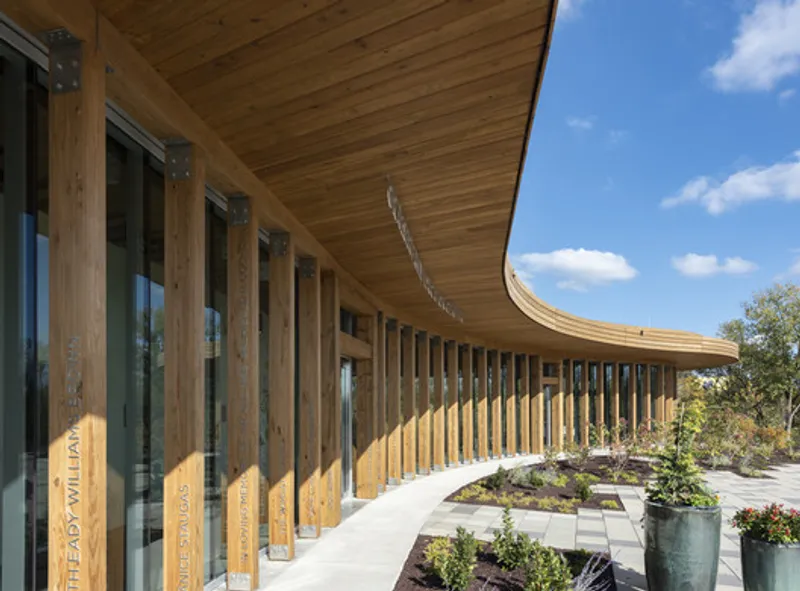
One of the project’s most striking architectural features is its long-span wooden structure, supported by a continuous ribbon-like ring beam. This beam rests on 99 slender micro-columns positioned around the perimeter, creating a sense of lightness and transparency while framing views of the gardens. Each column also functions as a donor recognition element, symbolizing the collective effort behind the garden’s creation and playing a vital role in building community momentum during the project’s initial phase.
Sustainability and Wellness at the Core
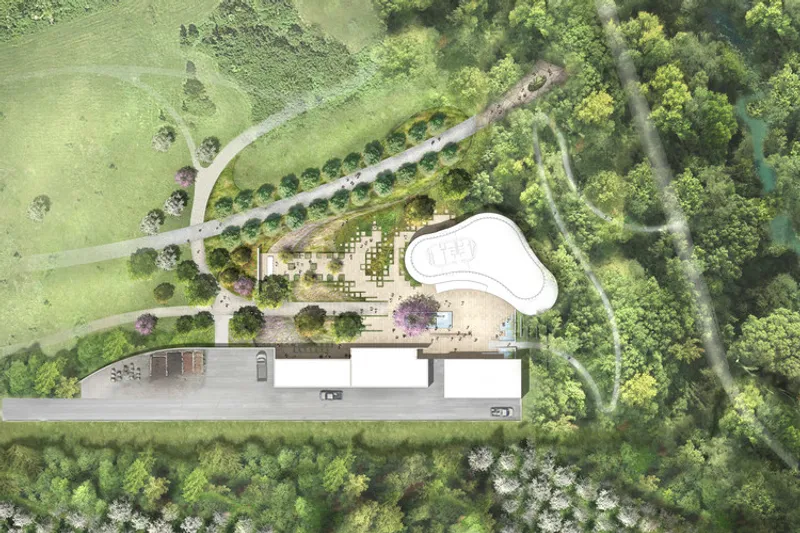
Sustainability is deeply embedded in both the architecture and landscape design. The education center is geothermally heated, significantly reducing energy consumption, and is designed to maximize natural daylight, enhancing occupant comfort and wellness. From entry to exit, visitors are immersed in an environment that actively demonstrates principles of conservation, sustainability, and ecological stewardship.
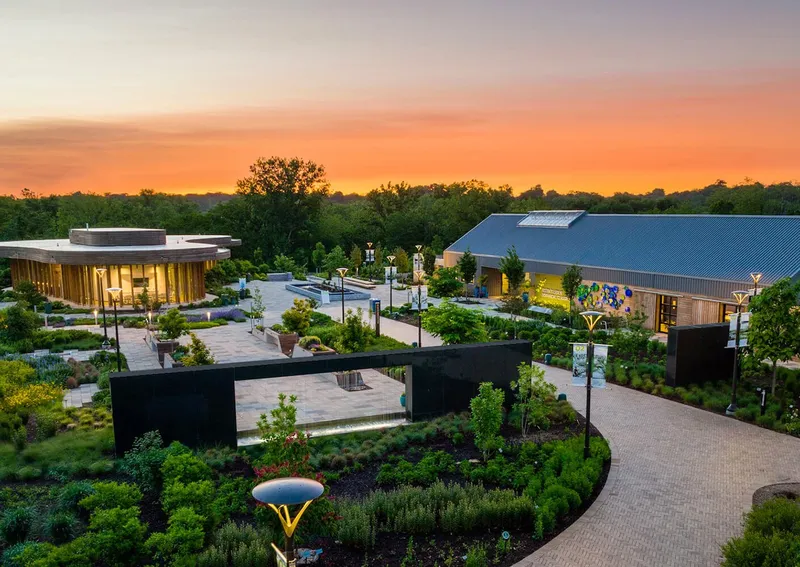
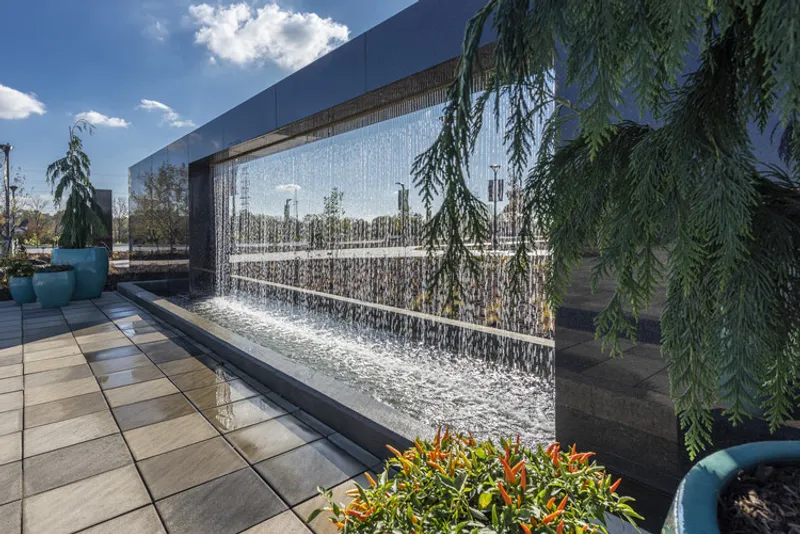
The surrounding landscape features a dedicated sustainability garden with edible plants, native species, and nectar-producing vegetation that supports pollinators. An on-site stormwater treatment and collection system manages runoff responsibly, reinforcing the project’s commitment to environmental performance and long-term resilience. As the newly planted landscape matures, the gardens continue to evolve, with seasonal blooms enriching the visitor experience year after year.
A Catalyst for Community and Conservation
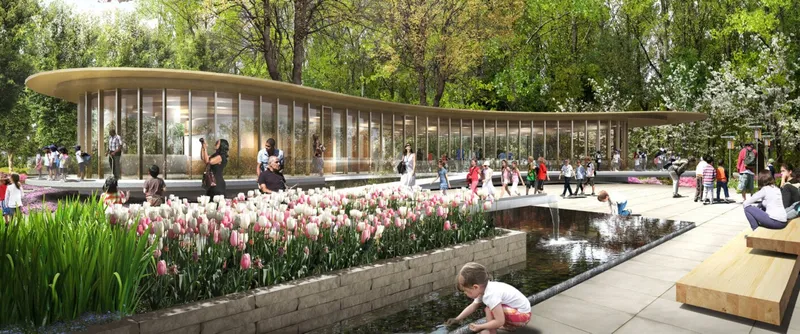
More than an architectural landmark, the Waterfront Botanical Gardens is a social and educational catalyst. The project reconnects residents with a previously inaccessible site, offering trails, gardens, and gathering spaces that promote health, wellness, and environmental literacy. Through hands-on programming, public events, and educational initiatives, the gardens inspire visitors of all ages to engage with nature and understand the importance of sustainable practices.
As Kasey Maier, President of the Waterfront Botanical Gardens, notes, the organic design of the first building has energized both the community and donors, setting a strong foundation for future phases. With its thoughtful integration of architecture, landscape, and sustainability, the Waterfront Botanical Gardens stands as a world-class example of adaptive reuse, regenerative design, and community-focused architecture.
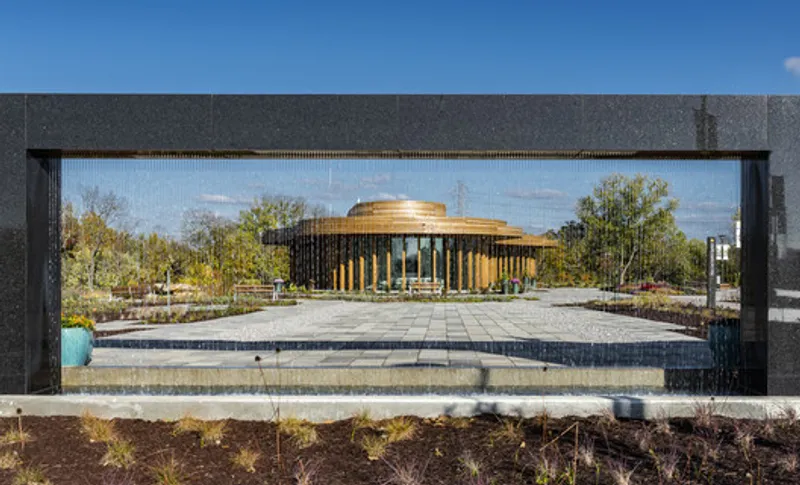
All the photographs are works of James Steinkamp Photography



Popular Articles
Popular articles from the community


The Musturak Paradise: Senior Living Architecture for a Connected Future in Temara, Morocco
The Musturak Paradise reimagines senior living architecture in Temara via private homes, social spaces, culture, community, and shared care.

Hill & Cross Opera: Sculptural Opera House Architecture Shaped by Tallinn’s Landscape and Identity
Hill & Cross Opera reimagines opera house architecture in Tallinn through its sculptural hill, civic plaza, glass wave and a luminous cross.

The Ocean Hive: Sustainable Architecture for a Self-Sufficient Civilization at Sea
The Ocean Hive imagines sustainable architecture at sea, where modular habitats, algae, wave power and ocean waste sustain a growing colony.

Lunar Spiral: Space Architecture Shaped by the Mathematics of the Universe
Lunar Spiral reimagines space architecture through Fibonacci geometry, lunar regolith, levitating habitats, and self-sustaining Moon living.


Similar Reads
You might also enjoy these articles


Hodi-Mandai Geram
Project Function: Preservation and revitalization of the Intangible heritage and socio-spatial identity of the Hodi by Housing, Cultural Memory Center, Sacred Grove, landscape, local tourism economy


Olio Towers: A Mid-Rise for Performers That Fuses Housing, Rehearsal, and Stage
Located blocks from Houston's Theater District, this modular tower stacks living units around a central performance atrium.

Oasis: Modular Green Housing Carved into Dhaka's Urban Fabric
A shortlisted Plugin Housing entry reclaims unauthorized settlements in Dhaka with stepped concrete volumes, green roofs, and ventilation-driven design.

Black Hole: A Floating Megastructure for the Post-Physical Era
Emiliano Mazzarotto envisions a spherical, self-scaling arena where e-sports, digital hotels, and holographic stadiums replace traditional public space.


Explore Landscape Gardening Competitions
Discover active competitions in this discipline



Challenge to design a portable theatre


Challenge to design a portable music platform


Challenge to design an open learning module for the elderly


Challenge to reimagine the Iron Throne
Comments (0)
Please login or sign up to add comments
No comments yet. Be the first to comment!