

Wayfinding as Brand: How Digital-Native Identity Systems Change Spatial Signage
How digital-native brands are transforming wayfinding from functional signage into cohesive systems of identity, navigation, and experience.

For decades, wayfinding was largely understood as a practical design discipline. Signs helped people locate entrances, navigate buildings, identify departments, and move efficiently through physical environments. Success was measured by clarity and functionality.
Today, that definition is expanding.
As more brands begin their lives online rather than in physical spaces, wayfinding systems are becoming extensions of brand identity. A directional sign, a digital directory, or a floor graphic now carries many of the same responsibilities as a logo, website, or social media presence. Together, they shape how people understand and experience a brand.
This shift is particularly visible among digital-native companies. Many contemporary brands establish recognition through websites, apps, e-commerce platforms, and online campaigns long before customers encounter them in a physical environment. When those brands eventually appear in stores, exhibitions, offices, or public spaces, audiences expect the experience to feel familiar.
The result is a growing convergence between branding, user experience design, information architecture, and environmental graphics.
From Navigation to Experience
The most effective wayfinding systems no longer focus solely on answering the question, “Where am I?”
They also communicate, “Who are we?”
Typography, color systems, iconography, materials, and information hierarchy all contribute to this experience. The same design principles that guide a website interface increasingly influence how people move through physical environments.
For senior graphic designer Danting Li based in San Francisco, this relationship between navigation and experience extends beyond traditional signage. With over ten years of experience across branding, UI/UX, web design, motion graphics, and visual communication, she approaches many projects through a systems-based perspective. Rather than viewing design as a collection of isolated deliverables, she focuses on how users move through information and experiences.
This mindset was shaped in part through her work as a graphic designer at ZAM Network, where she contributed to branded campaigns for major gaming companies including Tencent, PUBG Mobile, LPL, and Alchemy Stars. These projects involved far more than visual aesthetics. They required creating cohesive experiences across promotional materials, digital platforms, and branded communications. The challenge was often similar to wayfinding: helping audiences understand where they were, what information mattered most, and what action should come next.
Whether people are navigating a game ecosystem, a website, or a physical environment, the underlying design challenge remains remarkably similar.
Designing Systems Rather Than Individual Touchpoints
One of the biggest shifts in contemporary design is the move from object-based thinking to systems thinking.
A logo alone no longer defines a brand. Neither does a sign.
Instead, successful brands build interconnected systems that function consistently across multiple platforms and environments.
This approach is evident in Danting Li's work as Senior Graphic Designer and Co-Founder of SparksGlo. Across branding, CMS websites, e-commerce platforms, and marketing campaigns, she leads projects from concept development and visual strategy to final implementation. The goal is not simply to create attractive graphics but to establish coherent systems that users can easily understand and navigate.
In many ways, wayfinding operates according to the same principle. A sign is only effective when it functions as part of a larger system. Individual elements matter less than the relationships between them.
When Websites Become Wayfinding Systems
The relationship between digital navigation and physical navigation becomes especially clear in e-commerce.
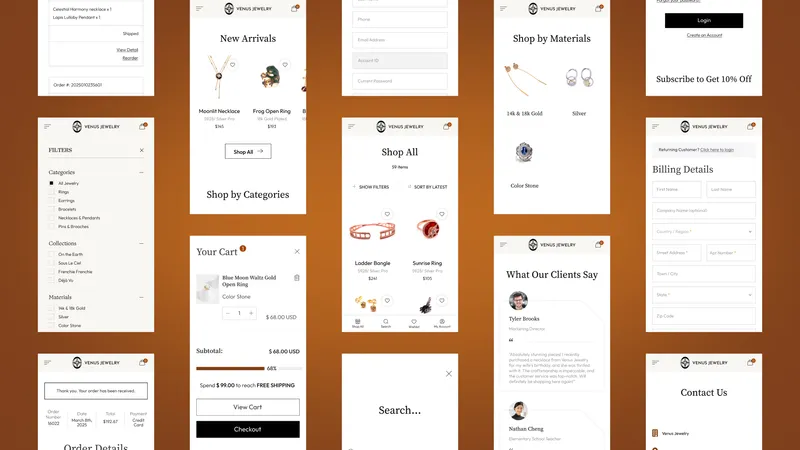
Danting Li's Venus Jewelry E-commerce Website Design provides an example of how digital experiences increasingly resemble wayfinding systems. Developed for a California-based jewelry brand, the WordPress platform serves both B2C customers and B2B clients through wholesale registration and access features. The site organizes collections, product information, customization options, account functions, and checkout into a structured customer journey.
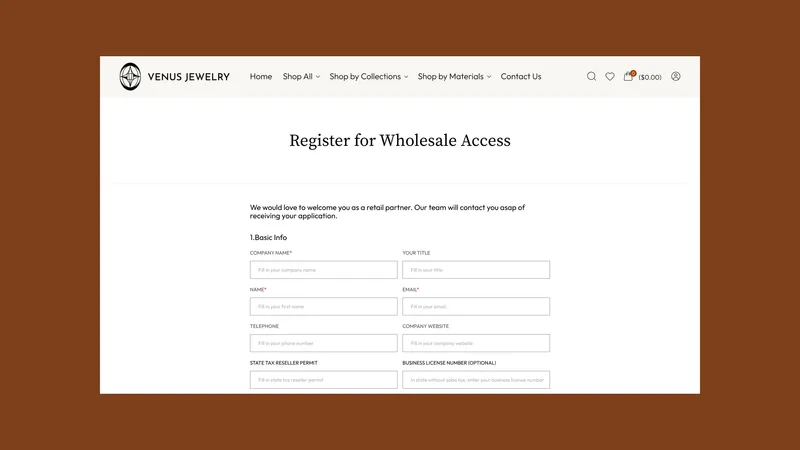
Visitors move through product categories, collections, product details, account systems, and checkout processes using a visual hierarchy designed to reduce friction and improve understanding. High-resolution imagery, typography, color, and page structures work together to guide decision-making throughout the experience.
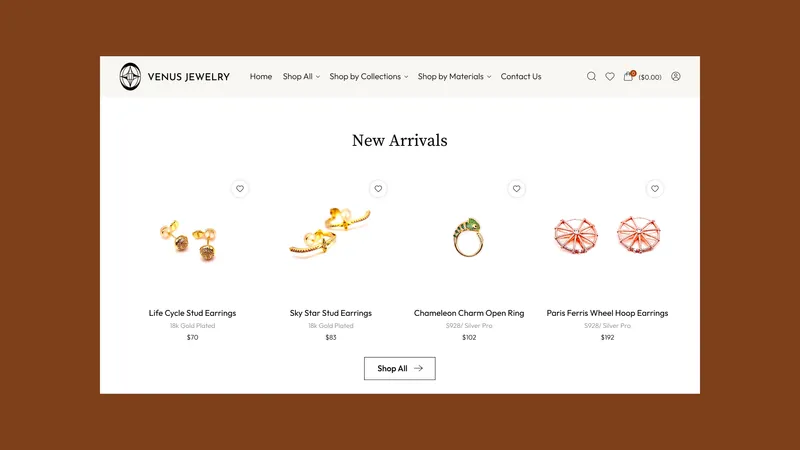
Although the project exists entirely online, its design logic closely mirrors contemporary wayfinding. Users are constantly making choices, interpreting information, and navigating a structured environment.
The Venus Jewelry E-commerce Website Design received recognition from numerous international design competitions, including the German Design Award, IDA Design Awards, Indigo Design Award, French Design Awards, The Communicator Awards, Vega Digital Awards, Hermes Creative Awards, American Good Design Award, AVA Digital Awards, C2A Creative Communication Award, DNA Paris Design Awards, Shop! Design Awards, London Design Awards, MUSE Creative Awards, NY Product Design Awards, and GRANDS PRIX DU DESIGN.
These recognitions reflect the growing importance of information architecture and user experience as essential parts of contemporary brand design. As digital-native brands continue expanding into physical environments, the distinction between website navigation and spatial navigation becomes increasingly blurred.
Information Visibility and Trust
Wayfinding is fundamentally about communication.
People rely on visual systems to understand where they are, what options are available, and how they should proceed.
This responsibility extends beyond navigation. It also influences trust.
One question designers increasingly face is not simply what information should be shown, but how information is revealed, emphasized, or concealed.
This concern forms the foundation of Danting Li's visual campaign Conditional Privacy.
Using 3D visual communication, the project explores the illusion of transparency within contemporary data systems. Inspired by real-world concerns surrounding data ownership, privacy policies, and information sharing, the work depicts two human figures made entirely of glass standing before what appears to be an ordinary mirror beneath the statement, “We value your privacy.”
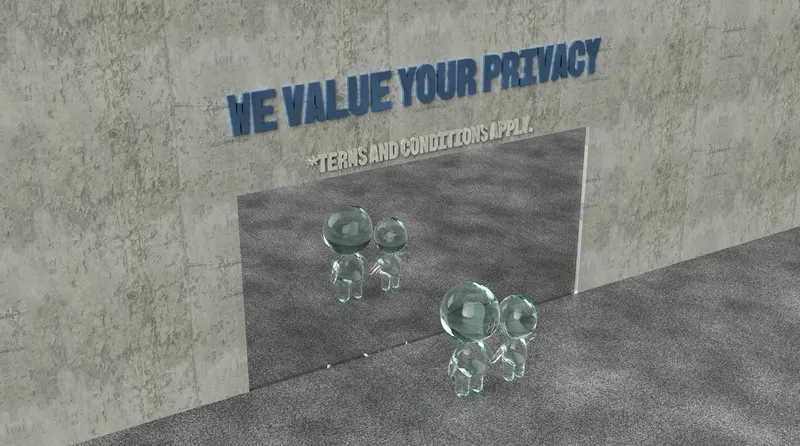
From their perspective, everything seems secure.
From behind the wall, however, the mirror functions as a one-way surface through which their actions remain fully visible. A small disclaimer beneath the reassuring statement, “terms and conditions apply,” becomes an important part of the visual narrative. Information that initially appears insignificant suddenly changes the meaning of the entire scene.
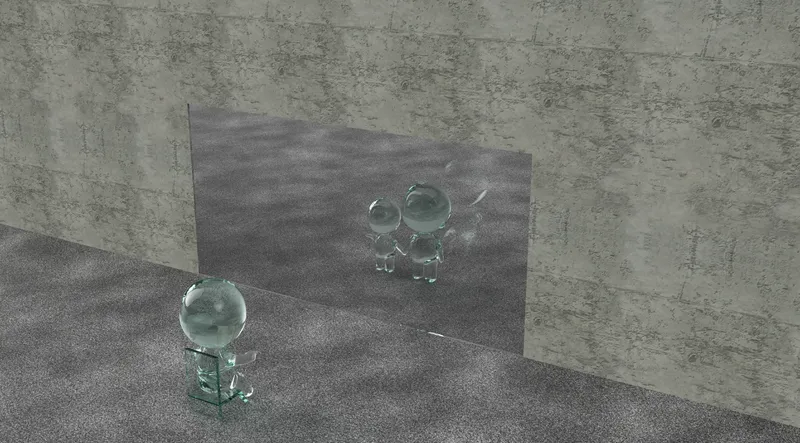
The project received recognition from the AVA Digital Awards, the 2026 London Design Awards, and the 2026 Hermes Creative Awards, where it received an Honorable Mention.
Although the work addresses digital privacy rather than environmental graphics, it highlights a principle that is highly relevant to wayfinding design: visibility shapes trust.
People make decisions based on the information presented to them. Whether navigating a website, a retail environment, an airport, or a digital platform, users depend on visual systems to communicate honestly and clearly.
Cultural Storytelling as Navigation
Another emerging role of wayfinding is cultural interpretation.
Increasingly, brands use visual systems to communicate heritage, identity, and cultural values. Navigation becomes a form of storytelling.
This idea can be seen in Danting Li's award-winning SparksGlo Horse Sugar Script Blind Box project.
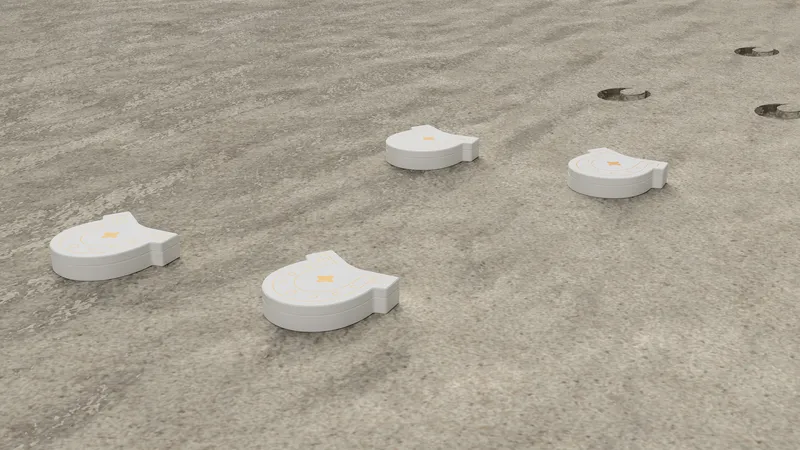
Created for the 2026 Year of the Horse, the packaging design reinterprets traditional Chinese sugar painting, a nationally recognized intangible cultural heritage, through a contemporary visual language. Each blind box contains one of eleven variations of the Chinese character for “horse,” represented through different historical scripts including cursive, running, clerical, regular, seal, Wei stele, bamboo slip, oracle bone, bronze, Nüshu, and nine-fold seal script.
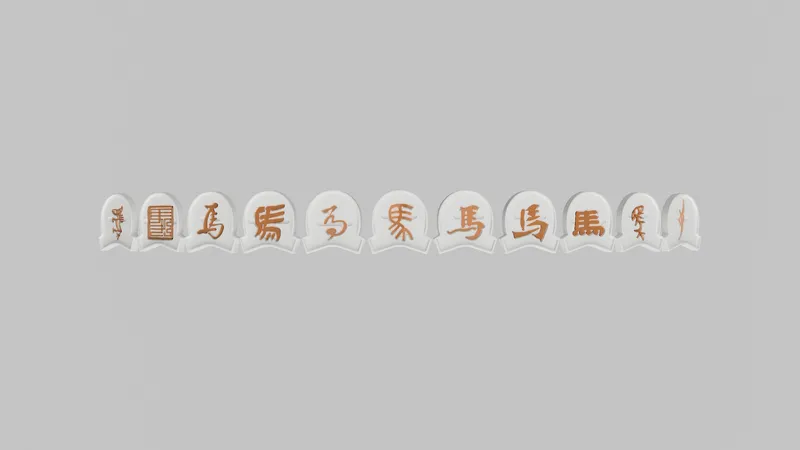
The hoof-shaped golden boxes are designed to resemble glazed tiles from the roofs of ancient Chinese palaces when stacked. A custom inner tray holds each sugar painting in place, while a dedicated slot allows it to be removed easily. The blind-box format adds another layer of interaction by keeping the specific historical script hidden until the package is opened.

While the project is technically a packaging design, its underlying structure resembles a cultural navigation system. Users are guided through layers of history, language, calligraphy, and traditional craftsmanship. The visual language helps audiences encounter relationships between different scripts and cultural references that might otherwise remain inaccessible.
Like effective wayfinding, the design transforms complex information into an experience that feels intuitive and engaging.
The project has received international recognition from the French Design Award, American Good Design Award, Indigo Design Award, London Design Awards, Hermes Creative Awards, dotCOMM Awards, Future Art & Design Award UK, London International Creative Competition 2025 Official Selection, MUSE Creative Awards, NY Product Design Awards, and GRANDS PRIX DU DESIGN.
The project demonstrates how a visual system can do more than identify an object. It can help people navigate cultural meaning.
Editorial Design as a Form of Wayfinding
Wayfinding is not limited to physical spaces.
Readers also navigate information.
As the founder, curator, editor, art director, and designer of YOSN Art Series, Danting Li applies similar principles to editorial publishing.
YOSN Art Series, Vol. 1: AI, Data, Illusion brings together artworks, essays, reflections, and interviews addressing artificial intelligence, data privacy, digital identity, and public trust. The publication connects artists and ideas from different cultural and geographic backgrounds while organizing them around broader social and technological questions.
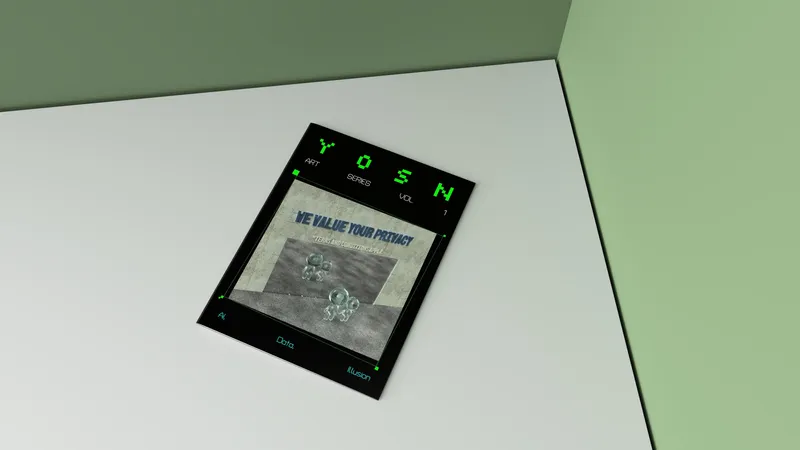
Rather than presenting artworks as isolated pieces, the issue is structured as a guided thematic journey. Visual projects and written content work together to help readers move through increasingly complex ideas.
In this context, editorial design becomes another form of wayfinding.
The designer is not guiding people through a building but through information.
The first volume of YOSN Art Series also received an Honorable Mention from the 2026 dotCOMM Awards. As a globally distributed e-magazine series, YOSN continues to explore the relationship between art, design, culture, and emerging technology.
This perspective reflects a broader shift occurring across contemporary design disciplines. Whether working with websites, publications, packaging, exhibitions, or environments, designers increasingly function as architects of information systems.
From Digital Identity to Physical Space
The connection between these projects becomes clearer when looking beyond their individual formats.
A jewelry website, a privacy campaign, a cultural packaging system, and an art publication may appear unrelated at first. Yet they all require the designer to organize information, establish visual hierarchy, create recognizable systems, and guide audiences through an experience.
That is also what effective wayfinding does.
Danting Li's practice moves between graphic design, branding, UI/UX, typography, motion graphics, photography, front-end coding, and 3D visual communication. This multidisciplinary background allows her to approach identity as something that can move across different formats rather than remain fixed within a single medium.
For digital-native brands, this flexibility is increasingly important.
A brand may begin as a website or app, expand into e-commerce, appear at an event, open a physical location, publish editorial content, and eventually develop a broader spatial experience. Each new touchpoint creates another opportunity to reinforce or weaken the identity.
Wayfinding becomes one of the places where these identities become tangible.
A Future of Hybrid Experiences
As digital and physical experiences continue to merge, the role of wayfinding will likely expand even further.
Future systems may combine environmental graphics, mobile interfaces, augmented reality, dynamic displays, and personalized navigation tools. The boundaries between branding, UX design, publishing, and environmental design will continue to become less distinct.
Danting Li's work as a design judge provides another perspective on this changing landscape. She is a Certified Judge at the Orpetron Web Design Awards, where she has evaluated more than 380 website design submissions from multiple countries, focusing on creativity, usability, execution quality, and conceptual clarity.
Her 2026 and 2027 judging roles also include the 2026 The Global Undergraduate Awards, the 30th Annual 2026 WebAward competition, the 21st Annual 2026 Globee Awards for Technology, the 2026 11th annual Stevie Awards for Great Employers, the 2026 w3 Awards, the 2026 22nd Annual Davey Awards, the 12th Annual German Stevie Awards 2026, the 2026 23rd Annual International Business Awards, the 2026 23rd Annual Stevie Awards for Women in Business, and the CES Innovation Awards 2027 Program.
Evaluating work across these international programs has given Li an opportunity to examine a wide range of approaches to websites, digital experiences, branding, technology, and communication design. Across these different categories, one observation remains relevant: the strongest projects are rarely defined by individual artifacts alone. Their success often comes from coherent systems that help people understand and navigate an experience.
Wayfinding, therefore, is no longer simply about signs.
It is about creating clarity.
It is about shaping trust.
It is about giving people a sense of orientation within increasingly complex environments.
And increasingly, it is about expressing brand identity across every point of interaction, whether that interaction happens on a screen, within a publication, through a package, or in a physical space.
As digital-native brands continue to move into the real world, the future of wayfinding may depend less on designing better signs and more on designing better systems.
The sign is only one part of the journey.
The brand is the environment.
::

Popular Articles
Popular articles from the community


Extended Shell: Retrofitting Kolkata's Balconies as Living Urban Thresholds
A modular retrofit system recovers the social and environmental intelligence of Kolkata's historic verandas for contemporary Park Street residents.
Opera by the Sea Estonia: Three Shells Dissolving Architecture into Tallinn's Coastline
A winning opera house proposal replaces monumental form with interconnected shells that blur the boundary between building, park and Baltic Sea.

Opera on the Sea: Driftwood Logic Shapes a Timber Opera House on Estonia's Coast
Trevor Orgill's opera house translates the entangled drift of floating timber into a civic building where wood, water, and music converge.

The Amber Palace Opera: A Geological Fiction Surfaces on Tallinn's Baltic Waterfront
Pierre Brillard reimagines a Baltic legend as a public landscape, opera house, and waterfront promenade rooted in Tallinn's coastal identity.

Similar Reads
You might also enjoy these articles

Day and Night Park: A Time-Based Urban Newsstand in Beijing
A temporary urban newsstand in Beijing blending travel, light, and reading through poetic colors, compact form, and community-focused design.

Modernist Patio Renovation in El Masnou, Barcelona by Oliver Segura Arquitectura + Cebrià Arquitectura
Modernist patio renovation blending tradition and innovation with a movable pool, leveled floors, and Catalan materials in El Masnou.

Alto Residencial Coop: Cooperative Housing Development in Santiago de Compostela by Carbajo Barrios Arquitectos
A linear cooperative housing complex blending white volumes and perforated metal façades, enhancing community living, natural light, privacy, and urban integration.
Vil Genis School by BPA ARCHITECTURE – Massy, France
Vil Genis School in Massy, France, features sustainable design, south-facing classrooms, community integration, accessible spaces, and modern educational architecture.

Explore Visual Design Competitions
Discover active competitions in this discipline


Design a brochure to showcase the effects of the technosphere

Challenge to illustrate ‘A tale of Two Cities’

Deconstructivism - Illustration Design Challenge

Challenge to illustrate a Contemporary Castle
Comments (0)
Please login or sign up to add comments
No comments yet. Be the first to comment!