
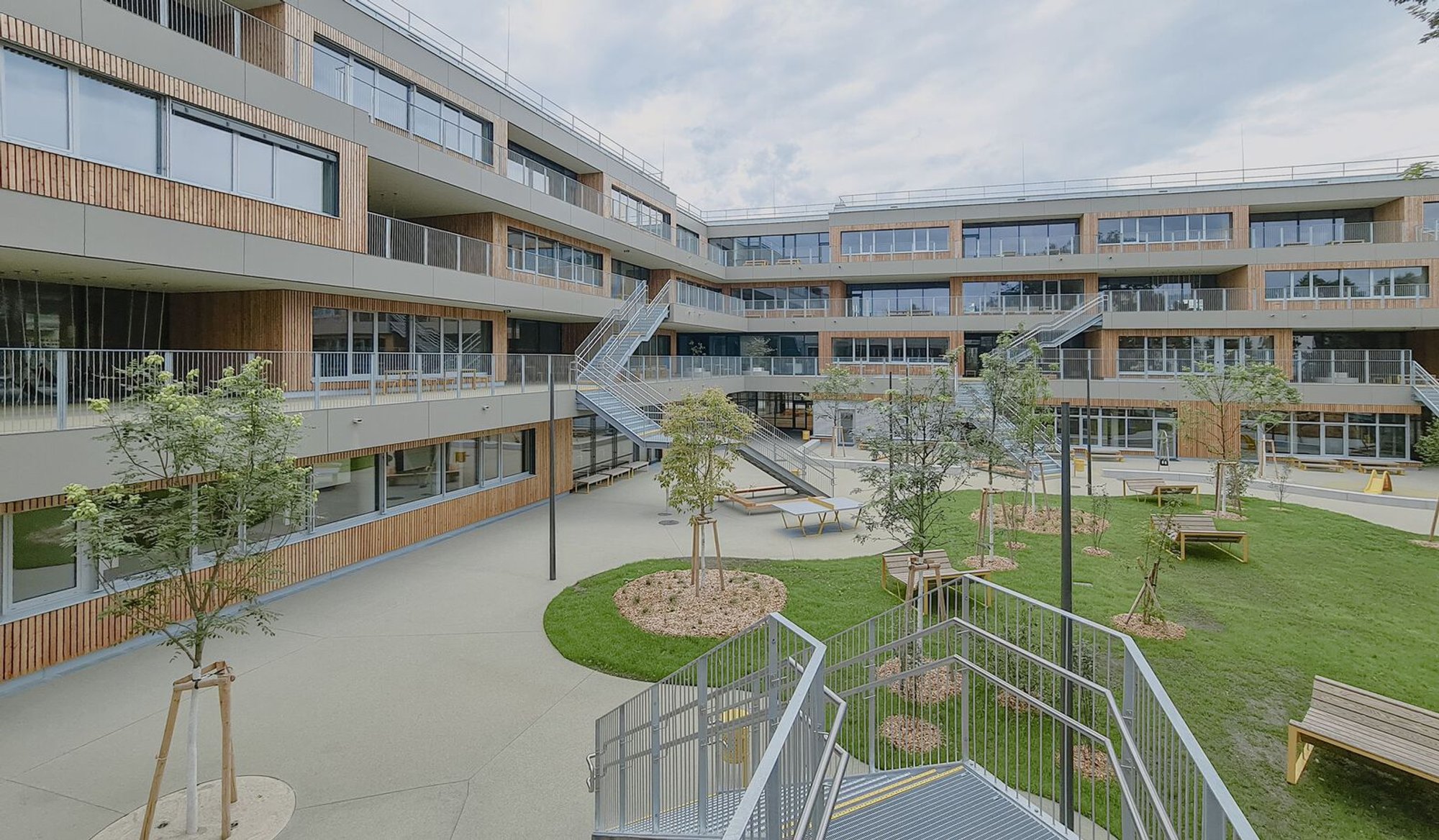
Willi Resetarits Educational Facility: A Sustainable, Multi-Layered Learning Campus in Vienna
A sustainable Vienna campus integrating schools and youth facilities with green façades, flexible spaces, renewable energy systems, and biophilic design for holistic learning.

The Willi Resetarits Educational Facility by Kronaus Mitterer Architekten ZT GmbH redefines the future of educational architecture in Vienna’s Floridsdorf district. Completed in 2024 and spanning 15,000 m², the new campus brings together kindergarten, elementary school, high school, music school, and a youth center under one cohesive architectural vision. Named after the renowned Viennese artist Willi Resetarits, the project represents a cultural and social investment that elevates learning environments through sustainability, flexibility, and biophilic design.
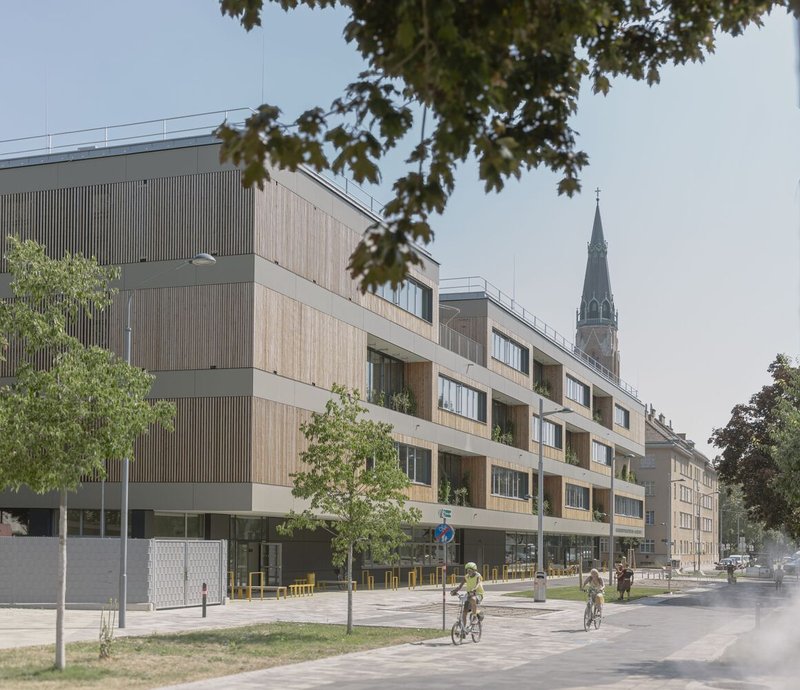
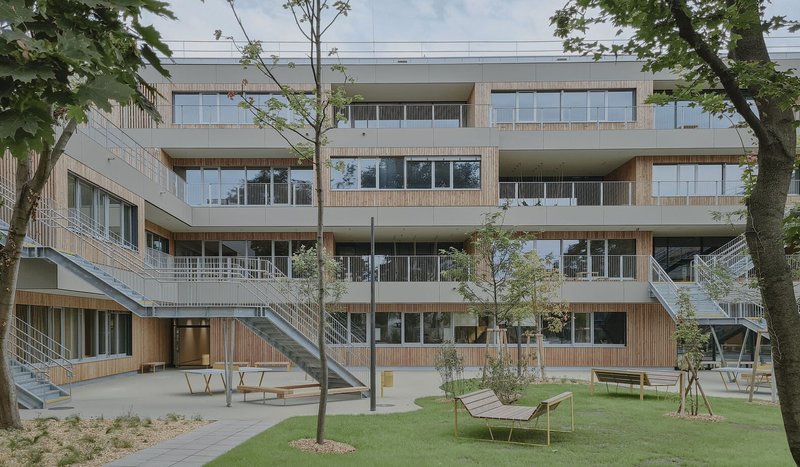
The architecture embraces a checkerboard spatial strategy, interlacing educational blocks with generous voids and open areas. This pattern creates a rhythm of built and unbuilt space that floods the interiors with natural light and strengthens visual connections across the campus. The interplay of wood and exposed concrete enhances warmth and tactile quality while reinforcing durability. Alternating façade volumes, shaped through protrusions and recesses, carve out a distinctive identity that anchors the building within its urban context.
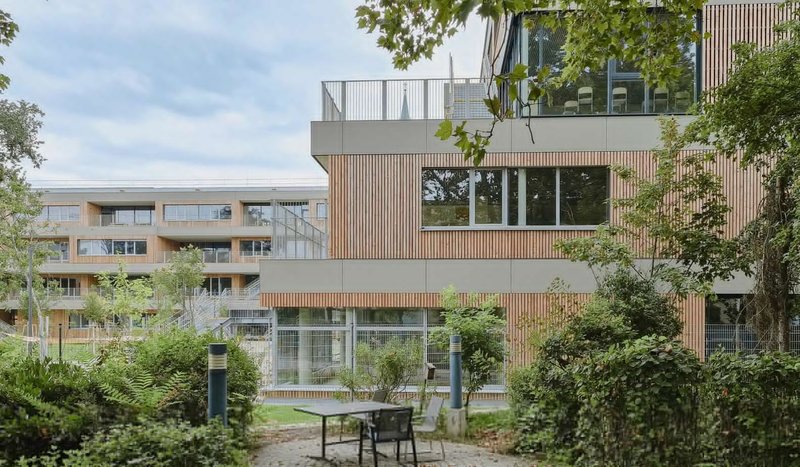
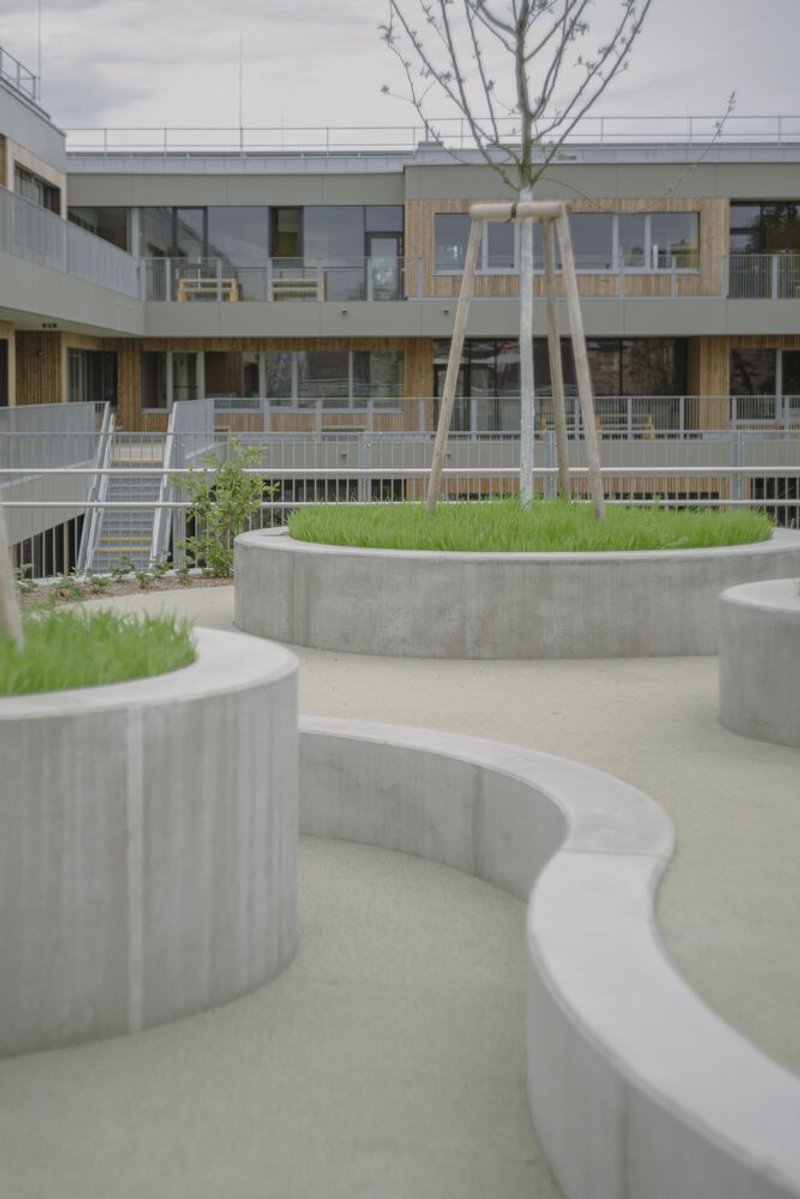
A key part of the architectural approach is the fluid integration between indoors and outdoors. Landscaped courtyards, wide play zones, and open-air learning terraces create a seamless gradient of spatial experiences. The upper levels feature green terraces that function as breakout zones, offering students space for relaxation, outdoor classes, and informal gathering. Vertical green façades contribute to a healthier microclimate while actively supporting Vienna’s Urban Heat Island strategy, demonstrating how architecture can directly influence environmental resilience.
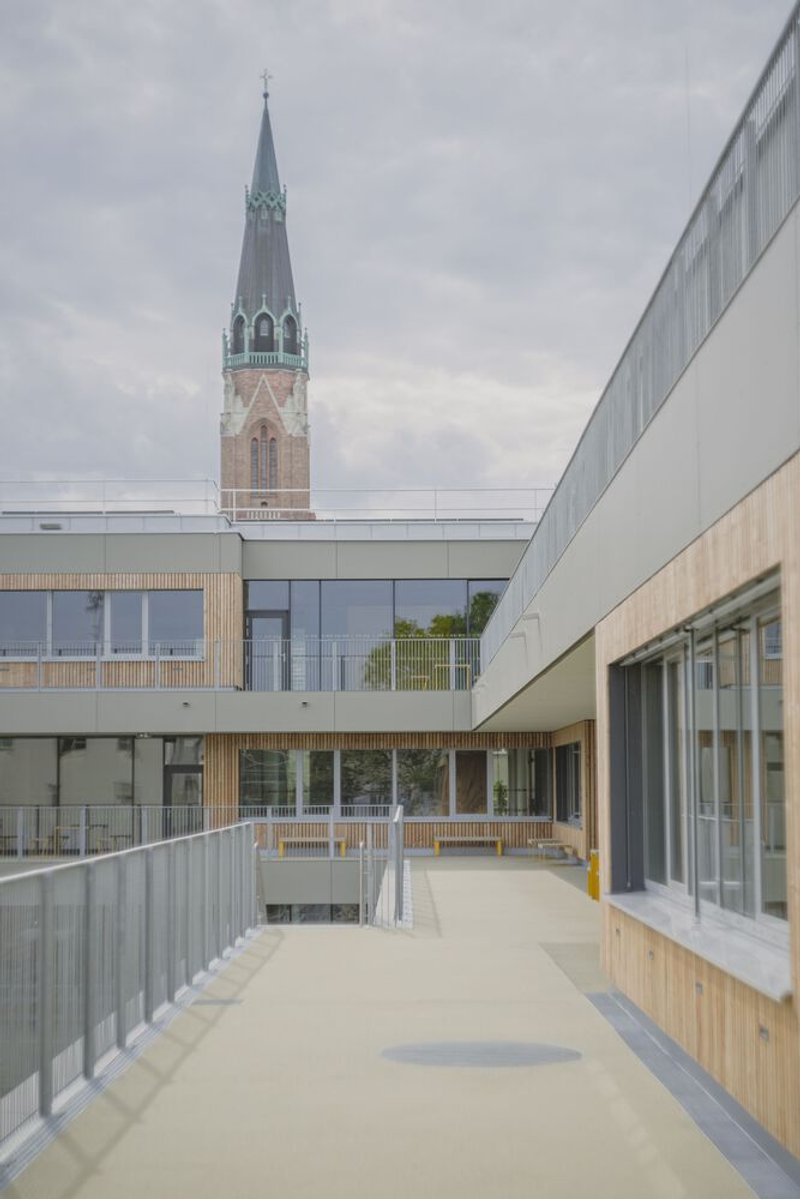
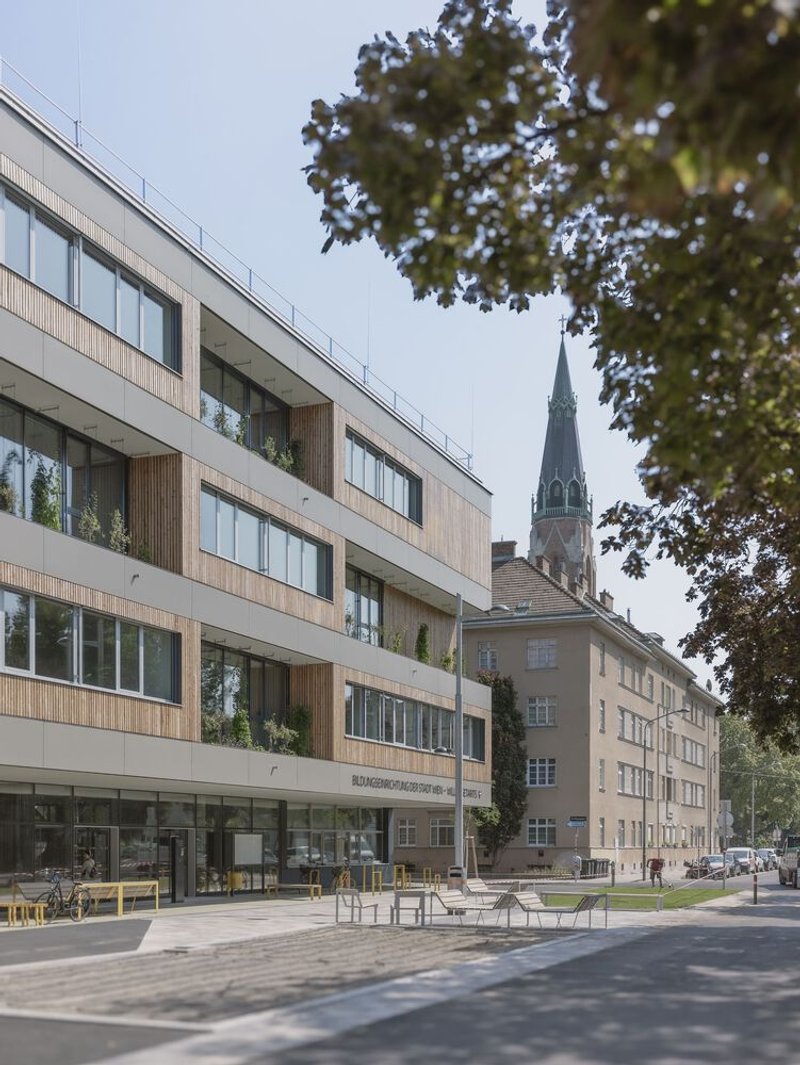
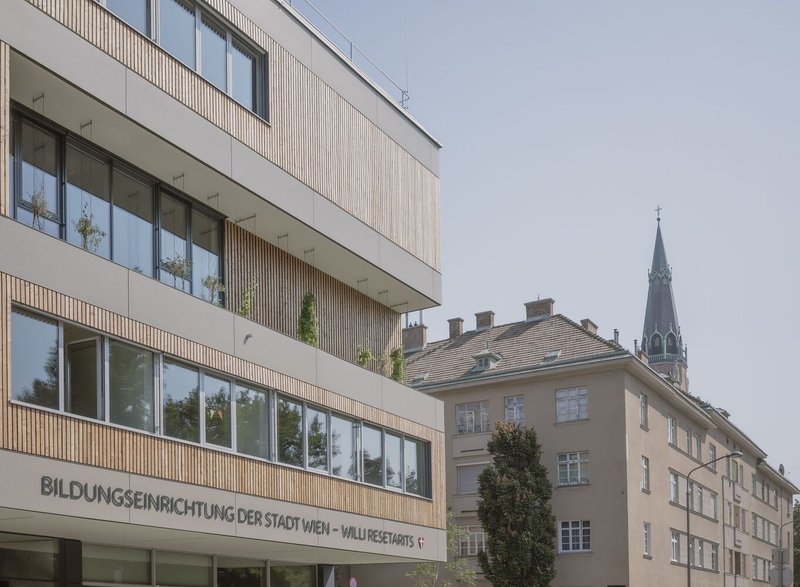
Sustainability is embedded at every level of the project. A large photovoltaic system supplies renewable energy, significantly reducing operational emissions. Geothermal energy systems, coupled with the thermal activation of structural components, ensure efficient heating and cooling across the building. Rainwater management is integrated intelligently, enhancing resource efficiency and supporting the landscape design. Ecological responsibility extends to biodiversity, with façade-integrated nesting boxes for swifts, jackdaws, and bats, reinforcing the campus as a habitat for native species.
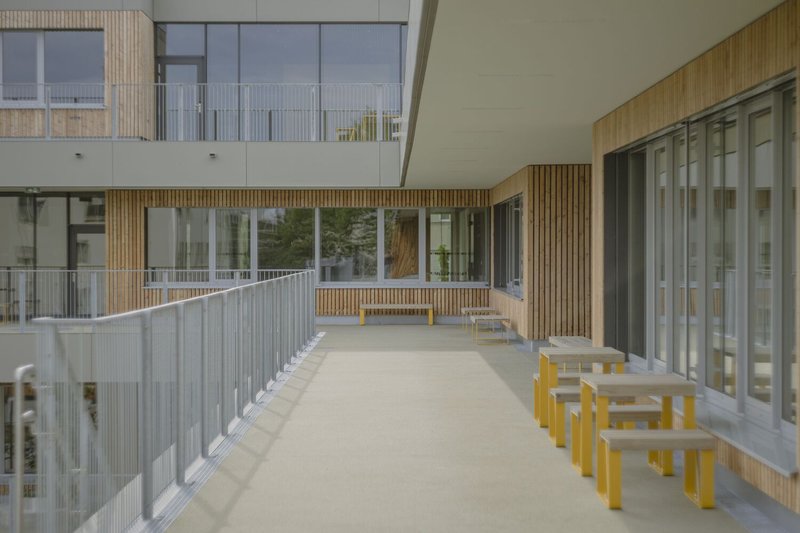
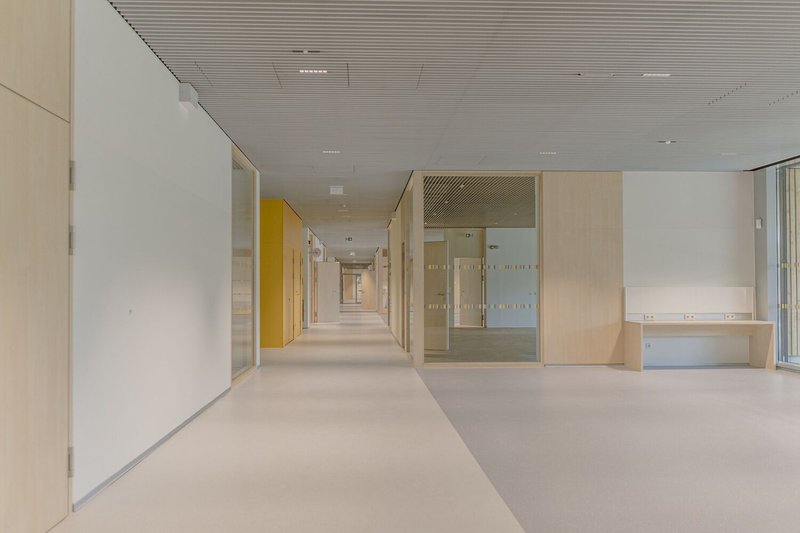
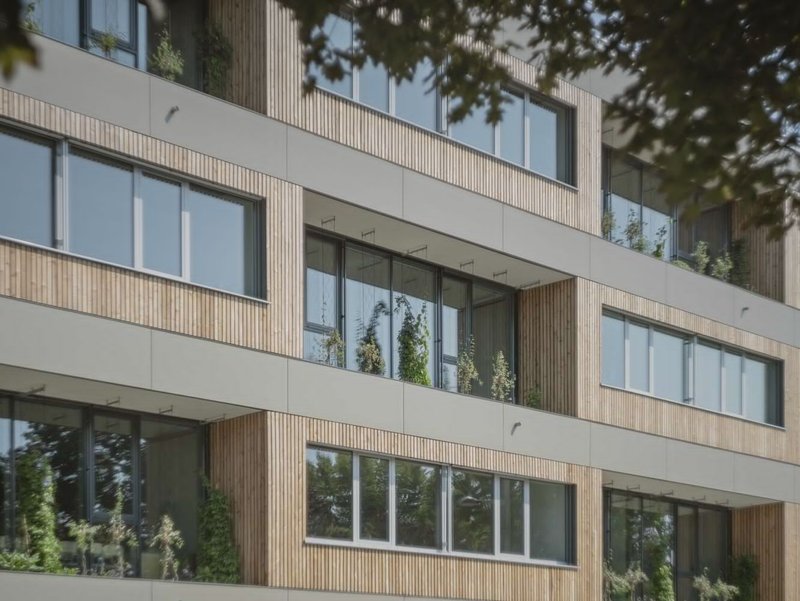
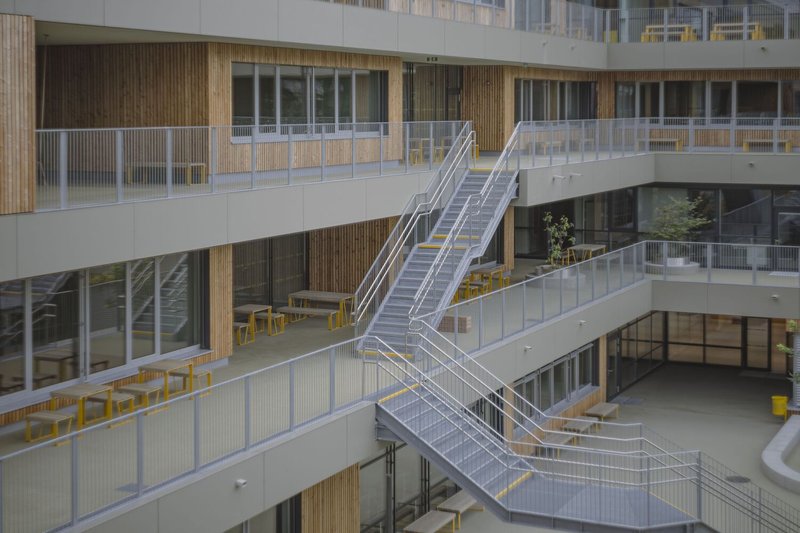
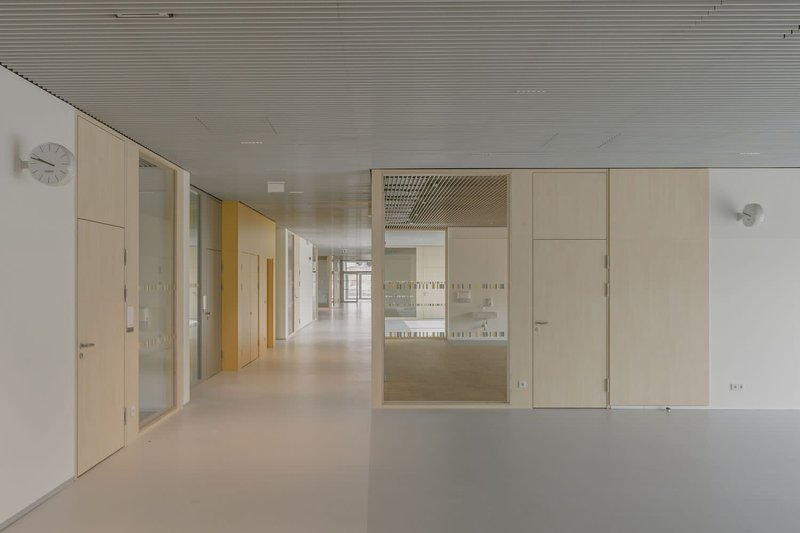
Inside, movement is choreographed through bright stairwells, open learning zones, and circulation spaces that encourage exploration and interaction. Acoustic comfort, high indoor air quality, and sustainable materials: produced by manufacturers such as FMG, Ecophon, Laudescher Linea, Knauf, and Schüco: shape an environment that supports concentration, creativity, and social well-being. Each programmatic element, from the youth center to the music school, is designed to operate independently yet remain visually connected, forming a cohesive educational ecosystem.
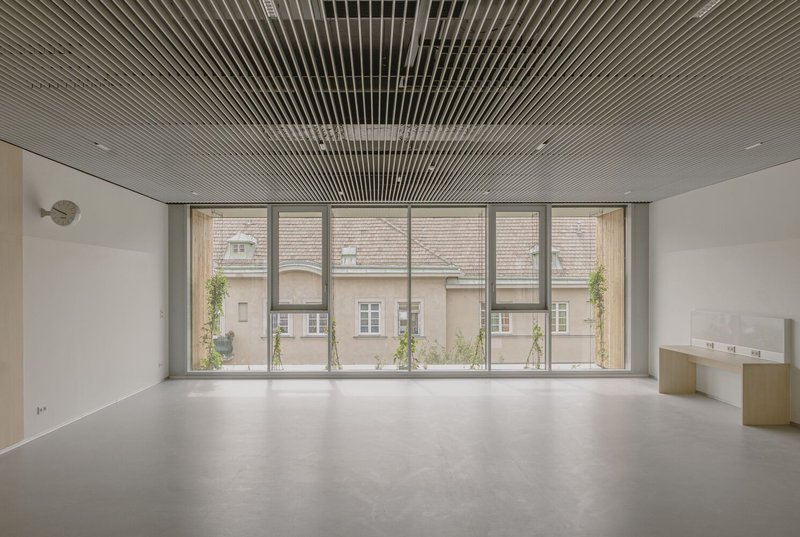
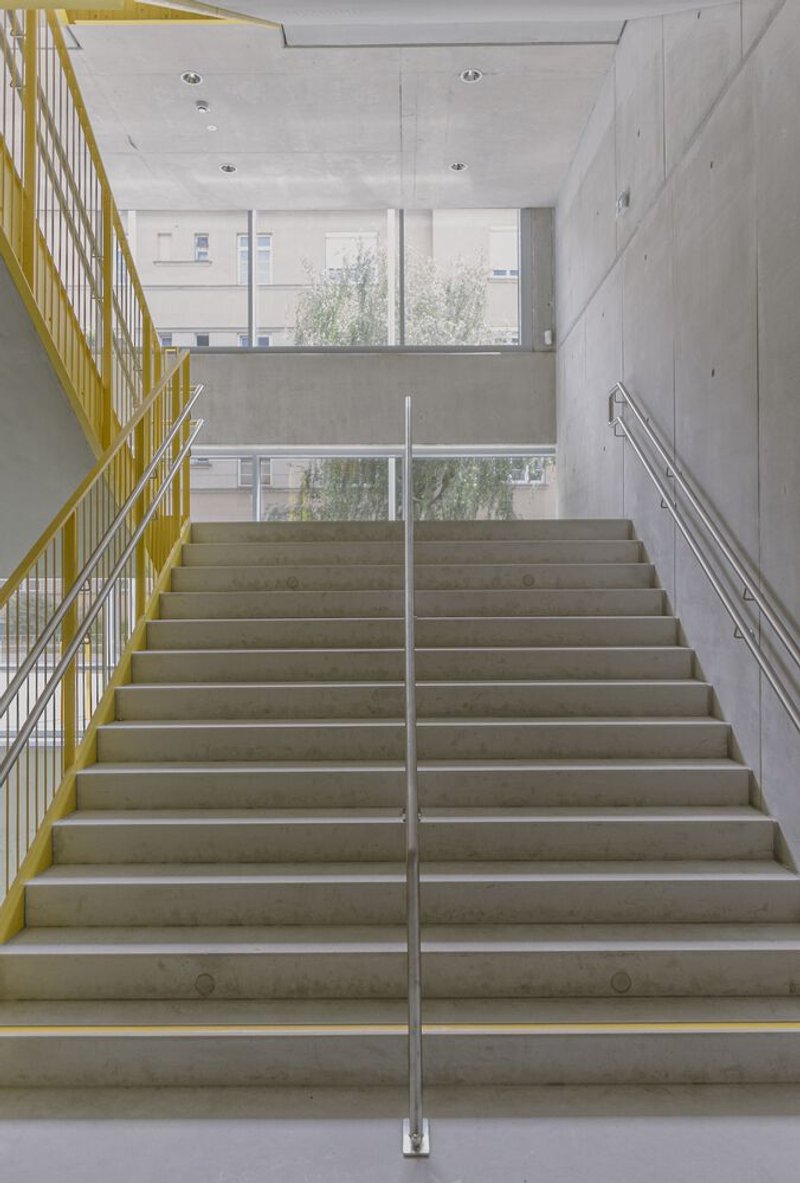
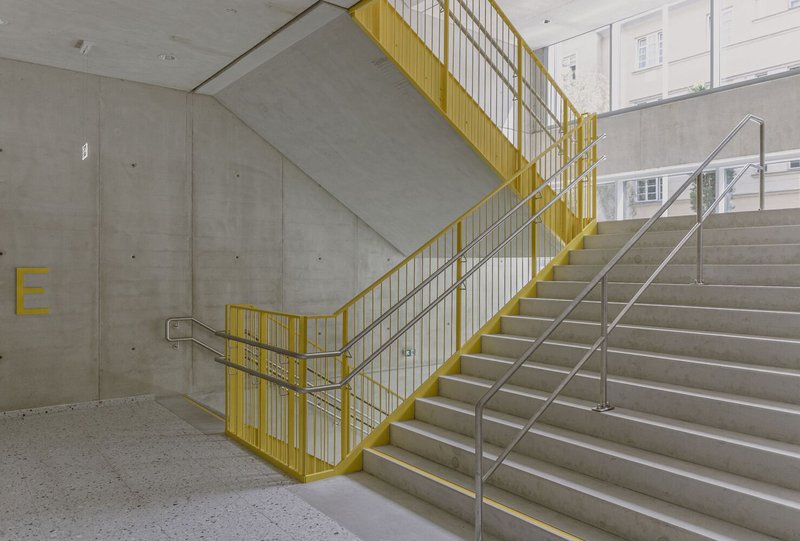
All photographs are works of Kronaus Mitterer Architekten, Ninoslav Ilic




Popular Articles
Popular articles from the community

Kerry Kounnapis Packs 800 Daily Coffees into a 43-Square-Metre Melbourne Laneway Bar
Palace Coffee channels Pellegrini's and European standing bars through oxide-red steel and spotted gum timber in a Ridgway Place sliver.

Milan Crossover: Sustainable Architecture for a New Fashion Culture in Milan
Milan Crossover transforms fashion culture through sustainable architecture, linking material libraries, remake studios, and public runways.
Reincarnation Weaves a Three-Story Retreat into the Green Landscape of Rural Bangladesh
Ara Manor in Narsingdi dissolves the line between domestic architecture and its lush surroundings through screens, courtyards, and planted rooftops.
Inside a Timeless Mumbai Residence by Aether Studio
Aether Studio's 2,250 sq ft apartment in Malad, Mumbai uses marble, brass, boucle, and disciplined restraint to build a quiet retreat from the city.


Similar Reads
You might also enjoy these articles

Olio Towers: A Mid-Rise for Performers That Fuses Housing, Rehearsal, and Stage
Located blocks from Houston's Theater District, this modular tower stacks living units around a central performance atrium.

Oasis: Modular Green Housing Carved into Dhaka's Urban Fabric
A shortlisted Plugin Housing entry reclaims unauthorized settlements in Dhaka with stepped concrete volumes, green roofs, and ventilation-driven design.

Black Hole: A Floating Megastructure for the Post-Physical Era
Emiliano Mazzarotto envisions a spherical, self-scaling arena where e-sports, digital hotels, and holographic stadiums replace traditional public space.
Compact & Sustainable Living in Piraeus: A Four-Level Family Home Built Around Light and Air
A narrow townhouse in one of Greece's densest port cities uses a central atrium and passive strategies to house three generations under one roof.


Explore Educational Building Competitions
Discover active competitions in this discipline




The International Standard for Design Portfolios


The Global Benchmark for Architecture Dissertation Awards


The Global Benchmark for Graduation Excellence


Challenge to design public laboratory
Comments (0)
Please login or sign up to add comments
No comments yet. Be the first to comment!