
Wing Sculpture Art: Parametric Design That Freezes a Bird's Ascent in Physical Form
A shortlisted entry in the BeeGraphy Design Awards translates biomimetic principles and digital fabrication into a layered sculpture of flight.


A bird lifting off is one of the most universally understood images of aspiration. Wing Sculpture Art takes that fraction of a second, the moment where compact energy becomes expansive motion, and locks it into a parametric form you can hold in your hands. The result is a slender, feather-layered object that reads simultaneously as trophy, interior sculpture, and architectural prototype.
Designed by Pranav Raghavan, the piece was shortlisted in the BeeGraphy Design Awards. The competition foregrounds computational and parametric design tools, making it a fitting stage for a sculpture that relies on modular geometry and rhythmic repetition to produce an emotionally charged form. From an elliptical base through a vertical axis to an unfurling crown of feather-like elements, every transition in scale is deliberate: compact at the root, expansive at the tip, mirroring the biomechanics of an actual wing.
From Sketch to Sculpted Arc
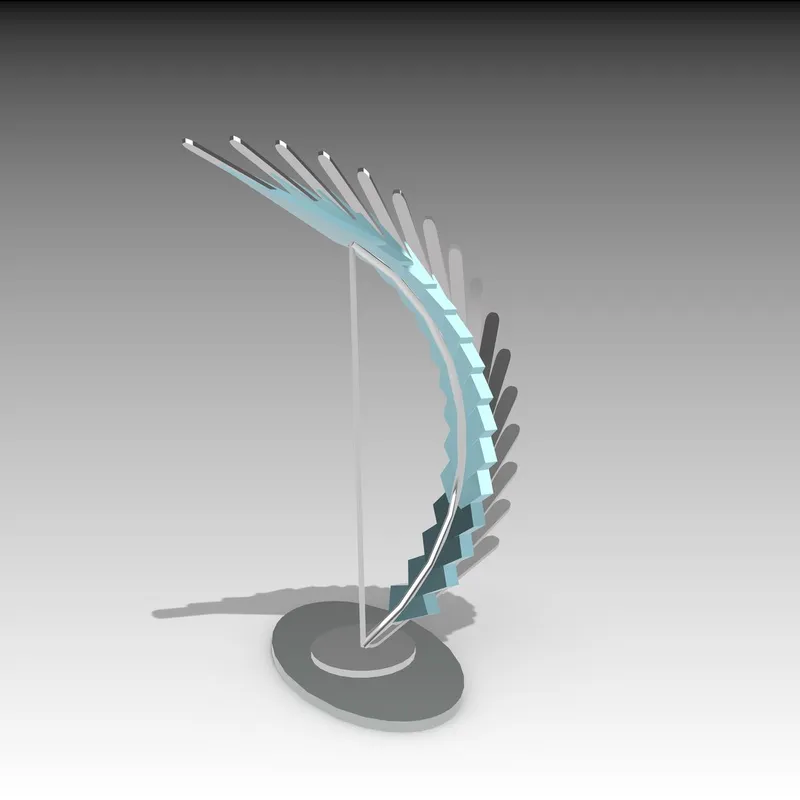
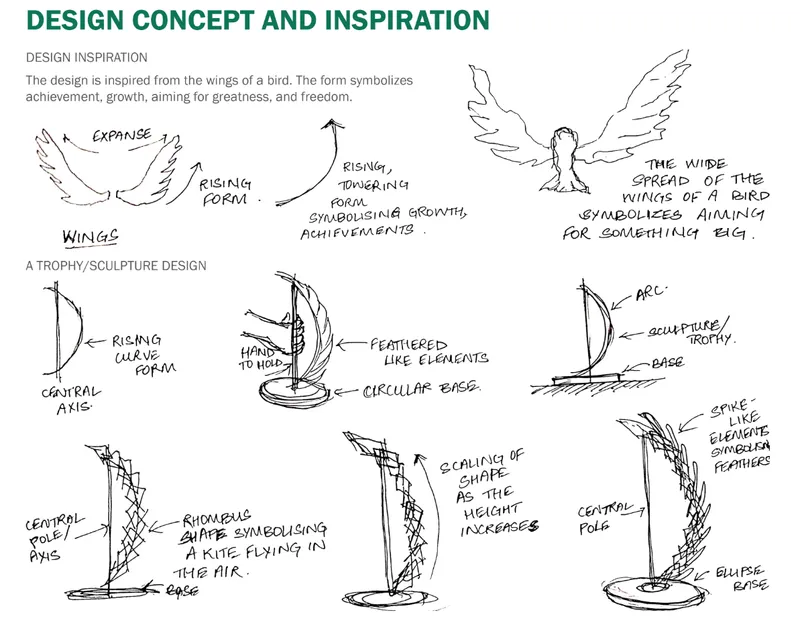
The three-dimensional rendering reveals how each layered element functions like a scaled feather, carefully arranged along the vertical axis to capture aerodynamic grace without literal mimicry. Light catches the gaps between layers, producing a pattern of shadow and illumination that shifts as the viewer moves around the piece. The conceptual sketches alongside it trace the evolution of the idea: early annotations map out proportional relationships between the base, the spine, and the expanding tip, showing how Raghavan moved from organic observation to parametric logic.
What matters here is the method. Rather than sculpting freehand, the designer used parametric modeling to generate the rhythmic spacing and curvature of each "feather." The modular geometry ensures that the form is reproducible at different scales and in different materials, from resin prototypes to metal installations, without losing the rising momentum that gives the sculpture its character.
Measured Elegance: Plan, Side, and Front
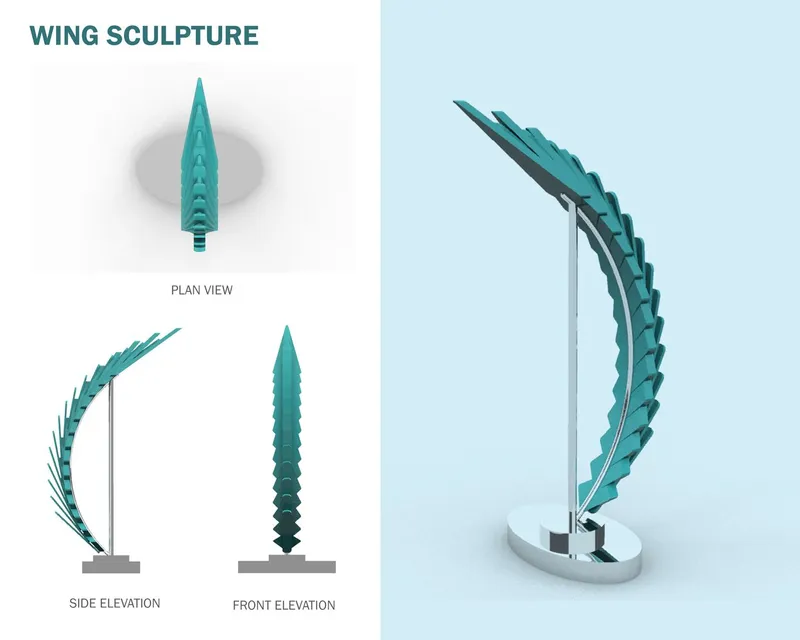
The elevation drawings strip the sculpture back to its orthographic essentials. Seen in plan, the elliptical base is compact enough to sit on a desk or shelf. The side view exposes the sculpture's real trick: the transition from a tight, grounded cluster of elements at the bottom to an open, almost weightless spread at the top. Front and side profiles together confirm that the piece reads as dynamic from every angle, not just from a single heroic viewpoint. This omni-directional presence is a direct consequence of parametric generation, where geometry is controlled by rules rather than a single sketch plane.
A Sculpture That Lives on a Desk, Not Just a Pedestal
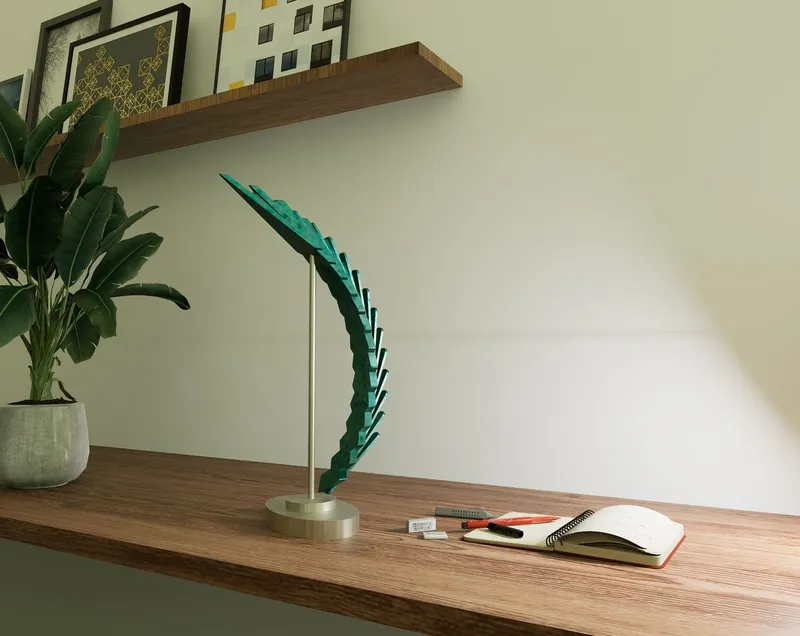
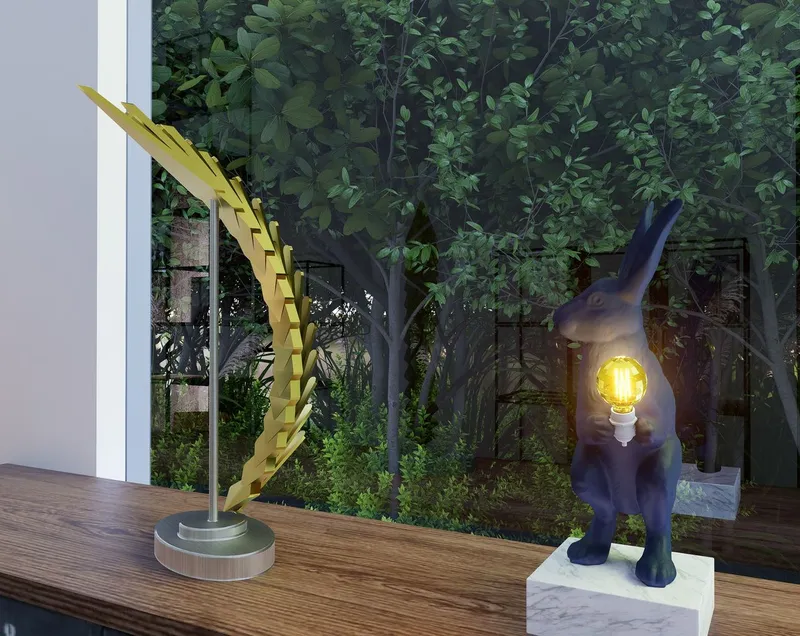
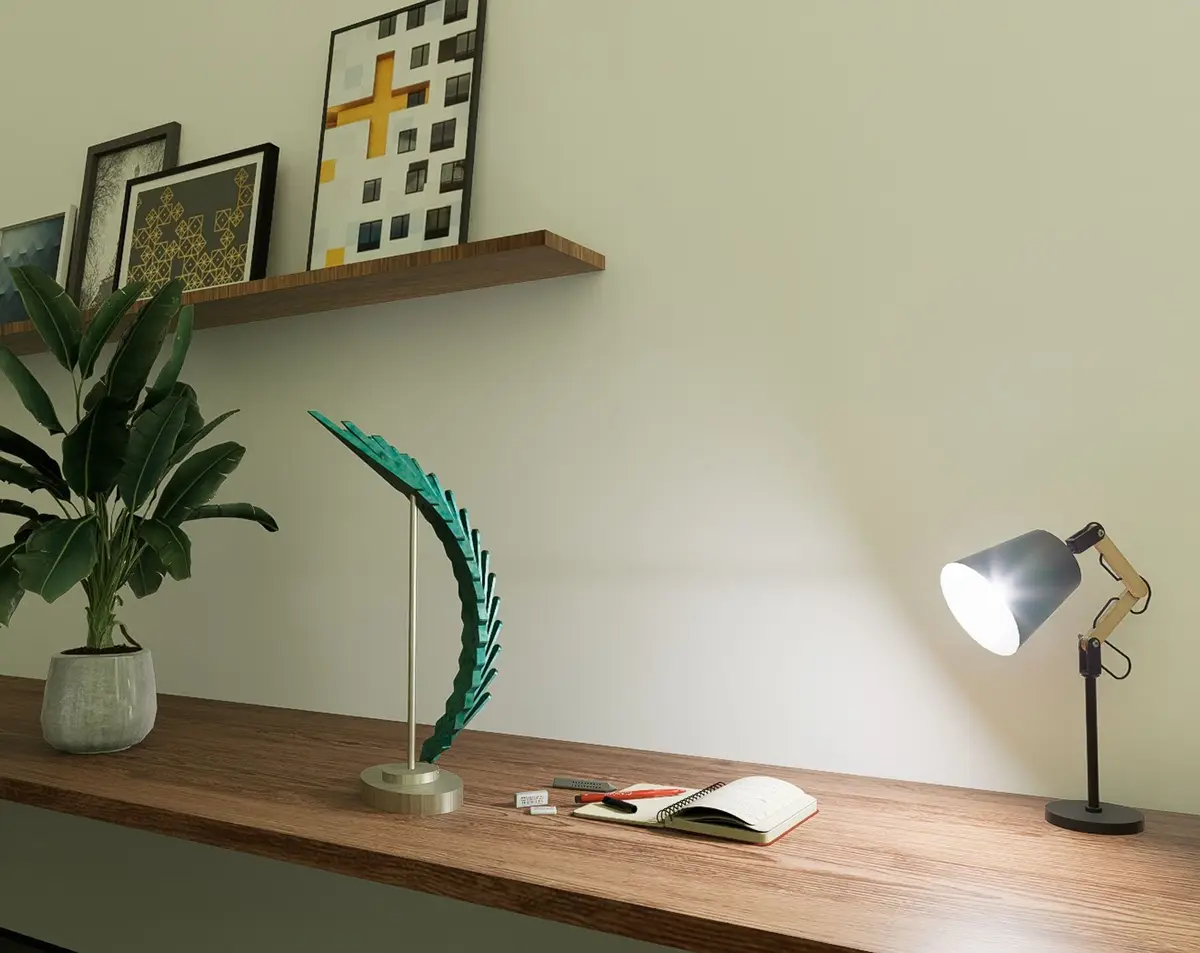
Context shots place the sculpture in two contrasting environments, and both work. On a wooden desk beside an open notebook and a potted plant, the teal-finished version holds its own among everyday objects without dominating them. Its slender form and minimal base let it slip into a domestic or office scene as naturally as a lamp or a vase. Outdoors on a timber deck at dusk, a yellow variant catches the fading light against garden foliage, proving that the interplay of shadow and layered surface is just as effective in natural light as under controlled gallery conditions.
These placements are not incidental. Raghavan's design brief explicitly considers the sculpture as interior decor, trophy, or small-scale architectural installation. The ability to shift material, from 3D-printed resin to composite or metal, means the same parametric file can produce objects suited to radically different settings. The form adapts; the narrative of upward momentum stays constant.
Shelf Presence and Spatial Dialogue
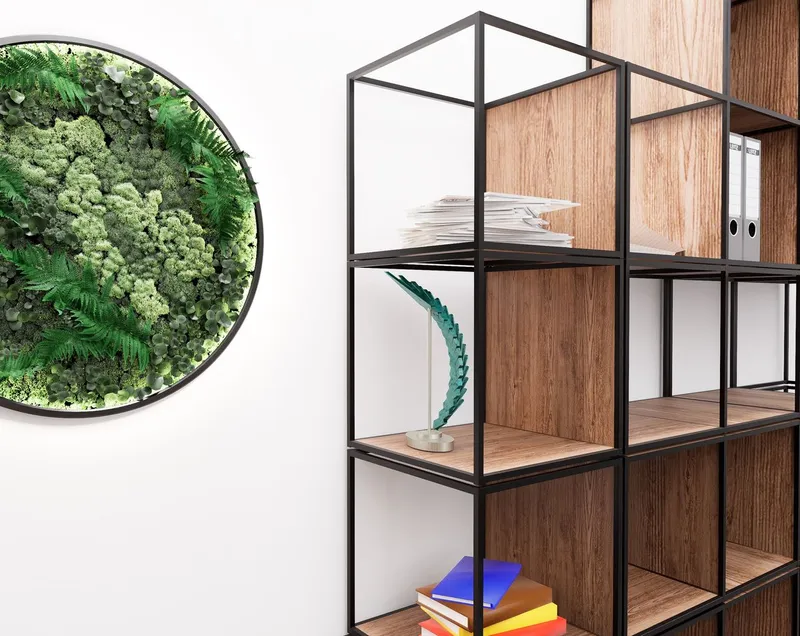
Placed on a black steel shelving unit beside a circular planter, the teal sculpture enters a tighter spatial conversation. The gridded geometry of the shelf contrasts sharply with the organic curvature of the wing form, setting up a dialogue between industrial minimalism and biomimetic fluidity. The circular planter echoes the elliptical base, while the vertical lines of the shelf frame the sculpture's upward arc. In a curated art space or a design gallery, this kind of juxtaposition is exactly what draws the eye and holds attention.
Why This Project Matters
Wing Sculpture Art sits at a productive intersection of computational design, digital fabrication, and symbolic storytelling. It demonstrates that parametric tools are not limited to building facades and pavilion structures; they can generate intimate, emotionally resonant objects that carry meaning well beyond their physical dimensions. The fact that this single form can function as a desk ornament, a trophy, or an installation prototype speaks to the scalability embedded in its parametric DNA.
For Raghavan, the project is a clear statement that architecture as art does not require a building. A rising arc, a set of carefully calibrated feather-like layers, and a precise understanding of how light interacts with layered surfaces are enough to tell a story of growth, resilience, and ambition. In a competition landscape that often rewards spectacle, this quiet, disciplined piece reminds us that restraint and symbolic clarity can be just as compelling.
View the Full Project
About the Designers
Designer: Pranav Raghavan
Enter a Design Competition on uni.xyz
uni.xyz runs architecture and design competitions year-round that reward proposals with spatial conviction and real site intelligence.
Project credits: Wing Sculpture Art by Pranav Raghavan BeeGraphy Design Awards (uni.xyz).


Popular Articles
Popular articles from the community


Aquadapt: An Underwater Habitat That Rewrites Its Rooms by the Hour
Curved modules ring the seabed while one shell shifts from breakfast room to cinema, farm and football pitch as residents' needs change.


David Ortega Stacks a Two-Story Mexico City Penthouse Around a Steel Stair and a Pergola-Shaded Roof Terrace
In Colonia Roma, a 300 m² penthouse uses oak joinery, a planted steel stair and a slatted roof pergola to make a new-build apartment feel like a house.

Singing Woman: An Opera House That Performs Before the Curtain Rises
Ovidiu Cristian Pavel's conceptual opera house translates Estonia's choral identity into a sculpted waterfront landmark facing the Baltic Sea.

Manzana Morphosis: Stretching Barcelona's Grid into a Living Landscape for 2050
A radical reworking of the Eixample manzana turns density into a tool for generous public space, vertical ecology, and environmental performance.

Similar Reads
You might also enjoy these articles
Aquadapt: An Underwater Habitat That Rewrites Its Rooms by the Hour
Curved modules ring the seabed while one shell shifts from breakfast room to cinema, farm and football pitch as residents' needs change.

Play: Fragments of Their World: Remembered Architecture Rebuilt as a Modular Playground for Refugee Camps
Tom Gardner abstracts domes, arches and towers from the homelands of displaced families into a kit of child-scaled play parts for camp settlements.
REBIRTH: A Circular Settlement Where Afghan Widows and Their Children Rebuild Life Together
A shortlisted Resile entry turns the circle into a protective ring of timber and brick, gathering homes, classrooms and gardens around a shared landscape.
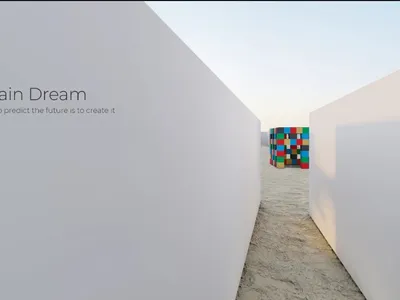
The Main Dream: A Recycled Plastic Kit That Lets Refugee Children Build Their Own Playground
Thirty-centimetre interlocking cubes that connect on three axes turn play into construction, letting children author the spaces they occupy.

Explore Sculpture Competitions
Discover active competitions in this discipline

Challenge to design luxury tourism on rails

VR headsets Storefront design competition

Competition to design a workstation for architects

Designing a staircase for a client
Comments (0)
Please login or sign up to add comments
No comments yet. Be the first to comment!