

Wuhan Qianzishan Waste-to-Energy Power Plant: Redefining Industrial Architecture Through Machine Aesthetics
This article explores how Wuhan's waste-to-energy plant redefines industrial architecture through transparency, aesthetics, and public engagement.


Introduction: A New Vision for Waste-to-Energy Architecture
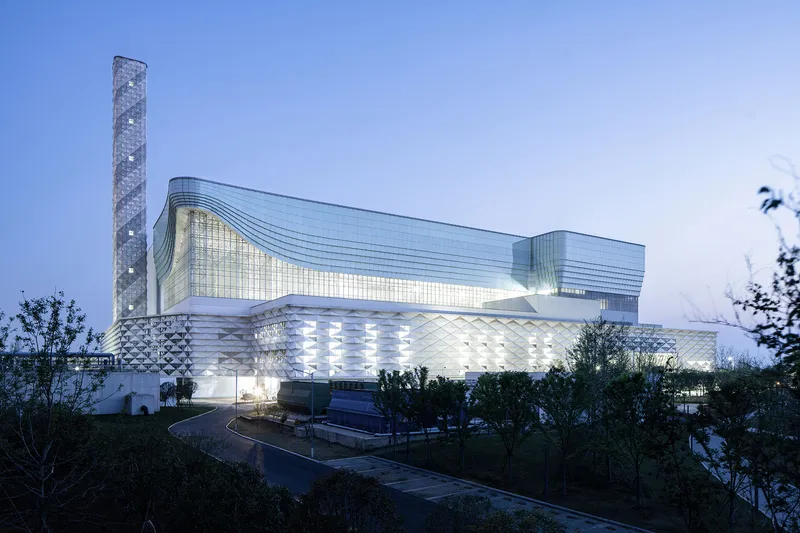
The Wuhan Qianzishan Waste-to-Energy Power Plant by United Units Architects (UUA) represents a paradigm shift in industrial architecture. Located in the hilly terrain of southwest Wuhan, this facility not only processes waste into energy but also transforms public perception of what industrial buildings can be. Designed with the intent to integrate aesthetics, transparency, and social engagement, the plant stands as a bold statement in waste-to-energy architecture, where machinery is no longer hidden but celebrated.
Contextual Background: Beyond Utility in Industrial Design
Historically, waste-to-energy plants have been designed purely as functional structures—engineer-driven and disconnected from the public realm. In these traditional models, industrial processes were isolated from everyday life. UUA challenged this norm by proposing a collaborative model that merges architectural innovation with industrial engineering. This created an interactive dialogue between function and form, allowing the architecture to express transparency and foster public trust. The design team led by Yongzheng Li and Qizhi Li envisioned a spatial strategy from the inside out, placing as much emphasis on visitor experience and visual impact as on technical efficiency.
Design Philosophy: Industrial Machines as Public Art
“Perspective defines our interpretation—whether machinery is perceived as tools or art hinges on a shift in mindset,” says lead architect Yongzheng Li. The core concept revolves around machine aesthetics, where machinery is not seen as a necessary evil but as an embodiment of human intelligence. In this context, machines become sculptural elements within a ceremonial space.
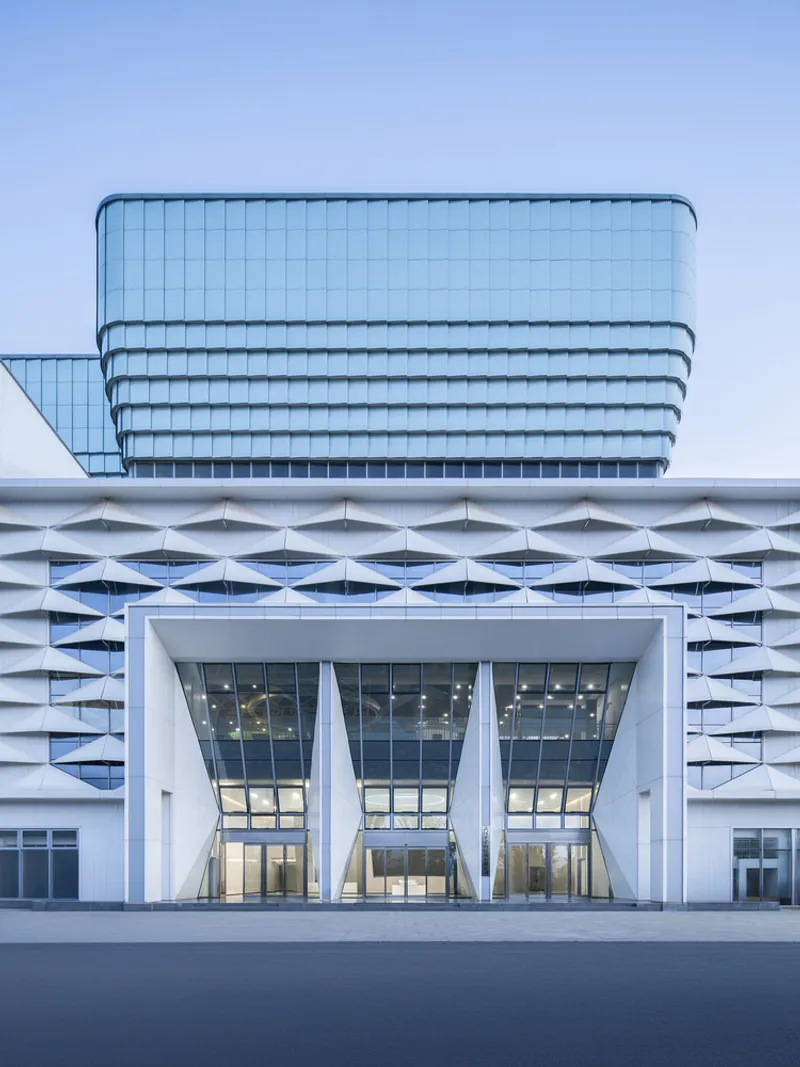
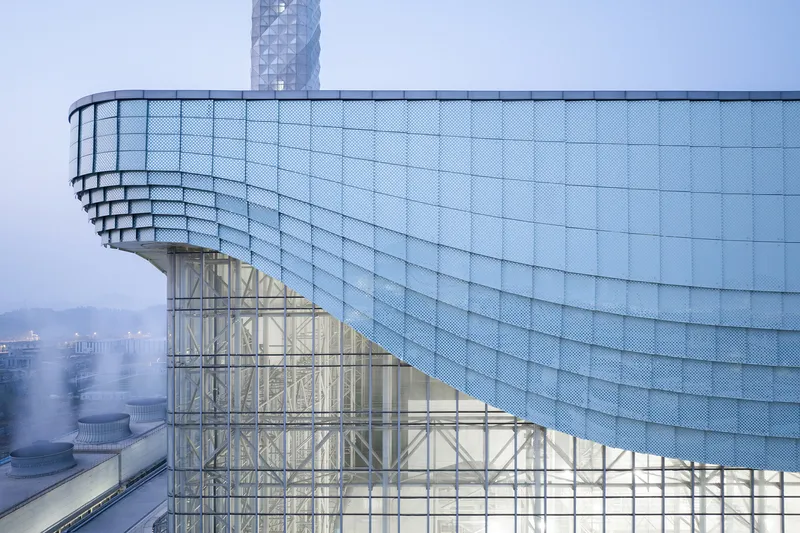
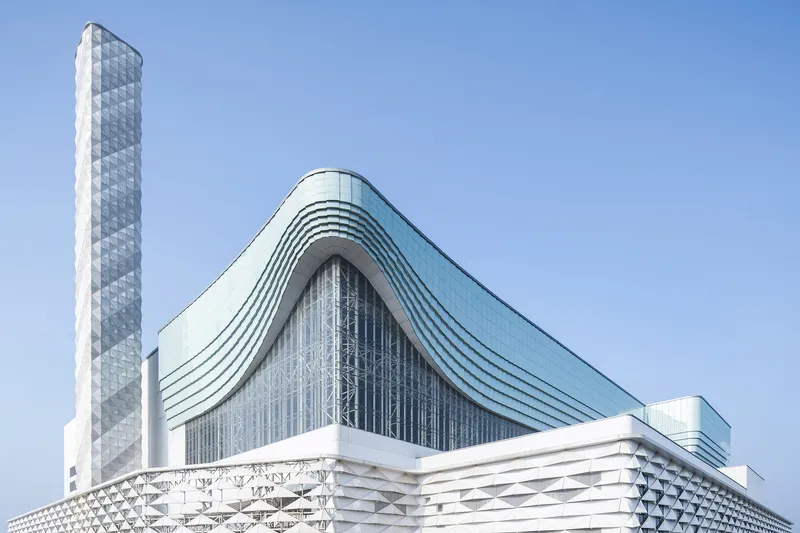
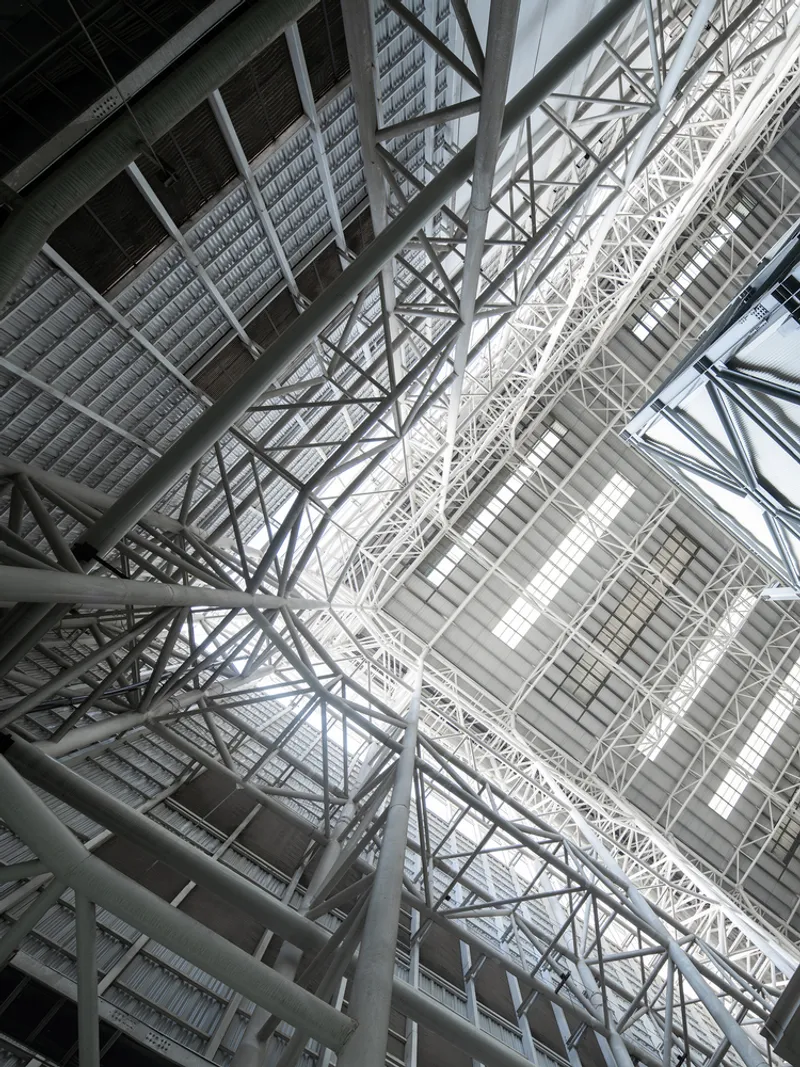
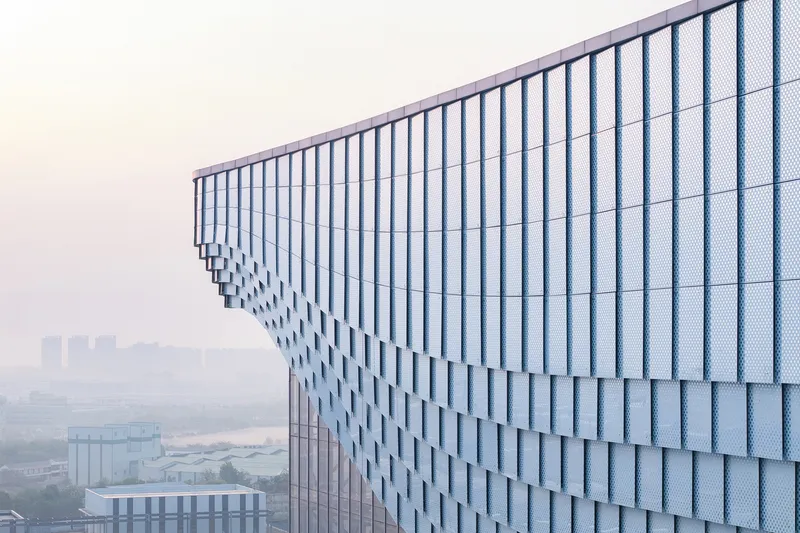
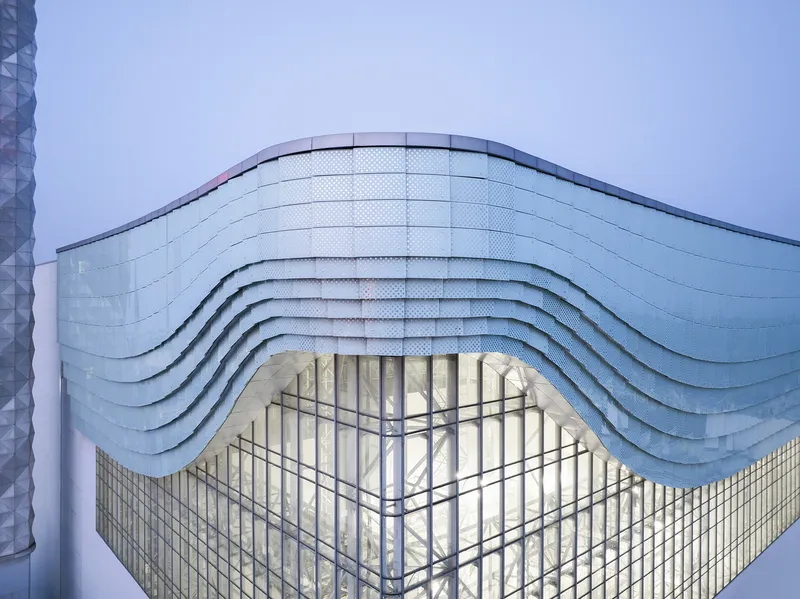
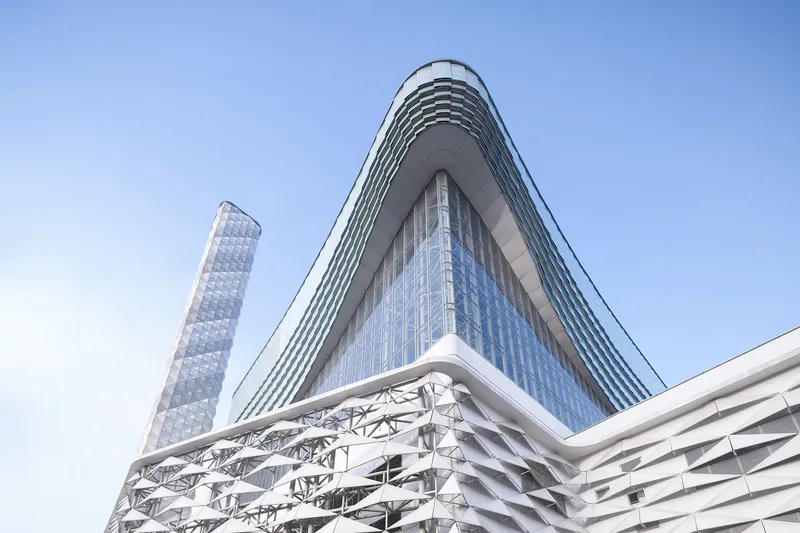
The architecture dramatizes this concept by metaphorically lifting a ‘curtain’ to reveal the machines within. The upper facade is shaped like a suspended drape, capturing the suspense of an art unveiling. Through expansive glass walls, the public can witness the inner workings of the plant—an intentional transparency that positions machinery as dignified exhibits in a technological sanctuary.
Technical Realization: Translating Concept into Form
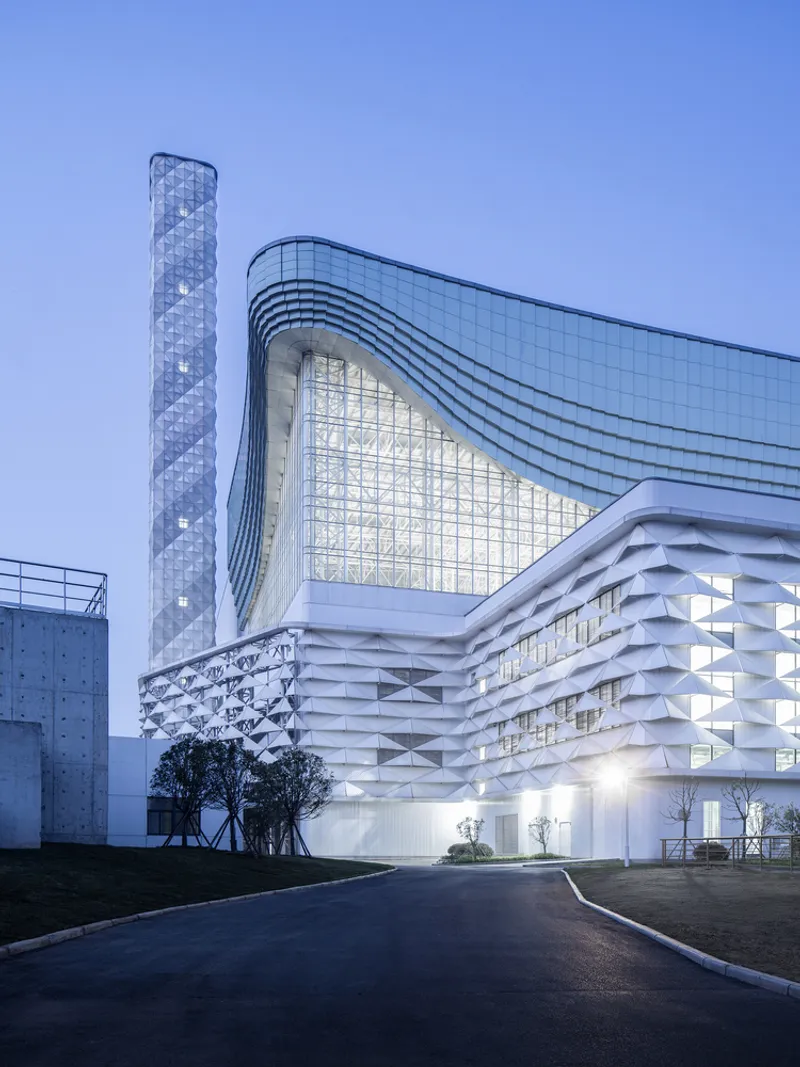
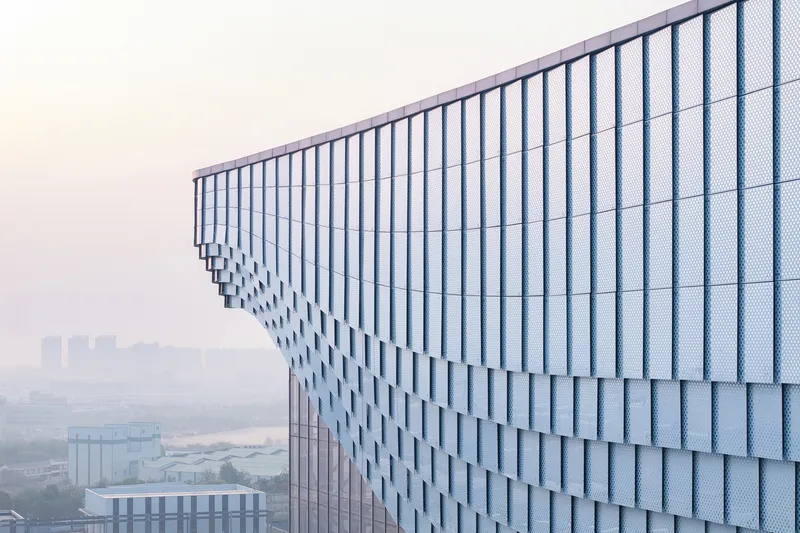
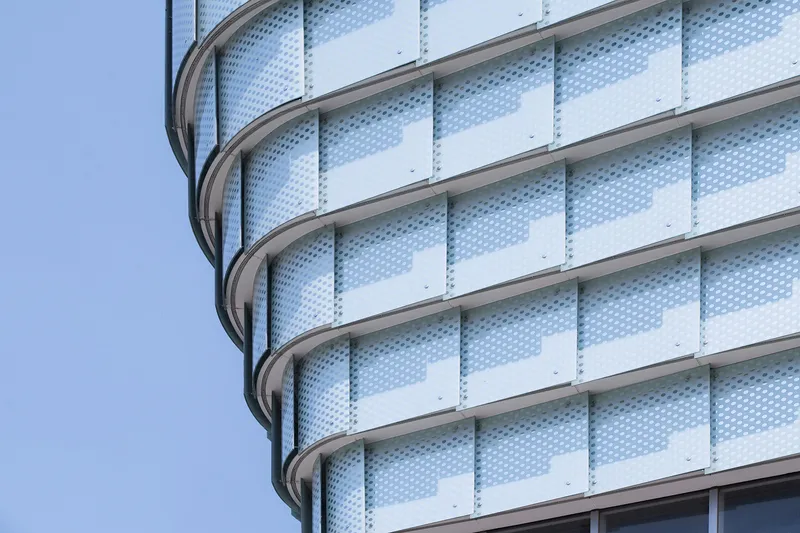
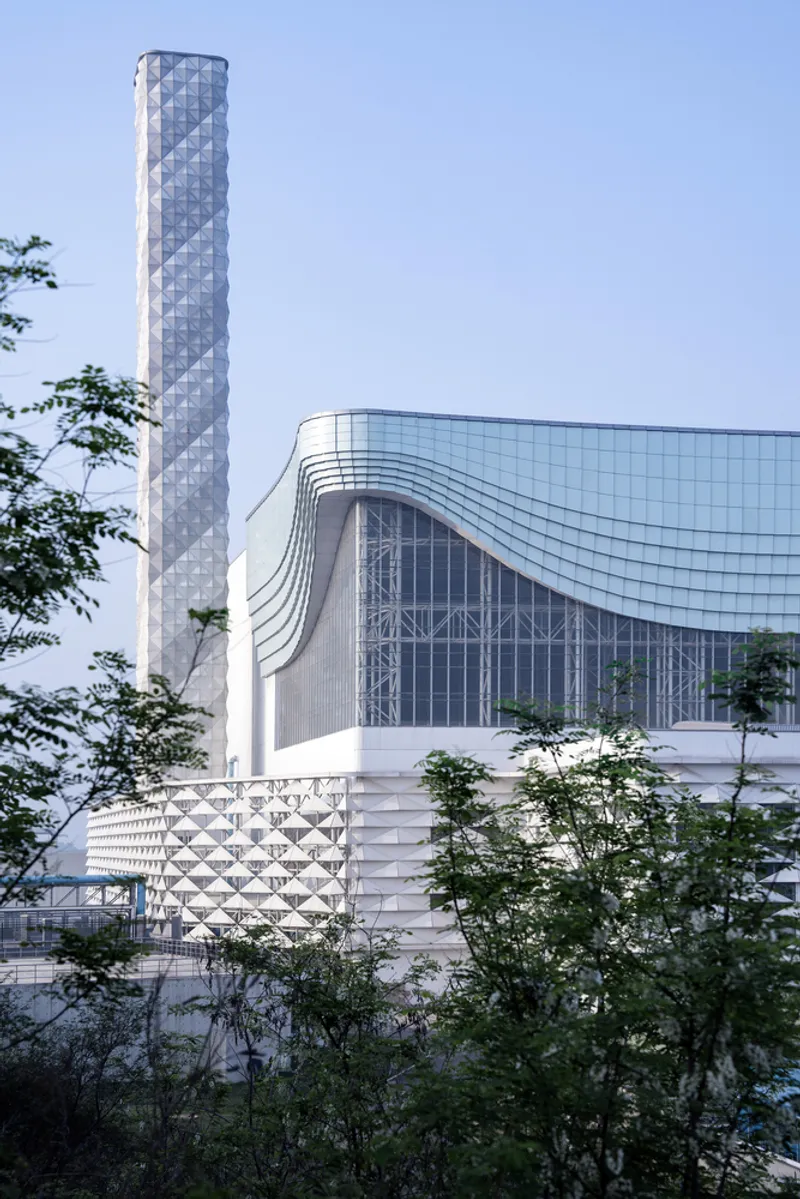
The most striking feature is the cascading glass facade designed to resemble a flowing fabric. This effect is achieved through six stepped layers of fixed glazing, composed of pale green fritted glass panels with dot-matrix mirror coatings. These overlapping, scale-like panels produce a dynamic play of reflections that respond to their surroundings, delivering an experience akin to screen-printed texture and psychedelic light interplay.

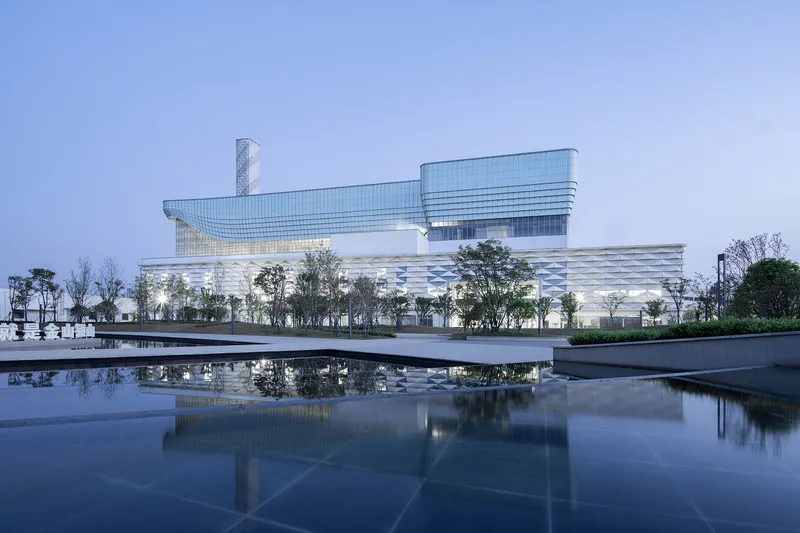
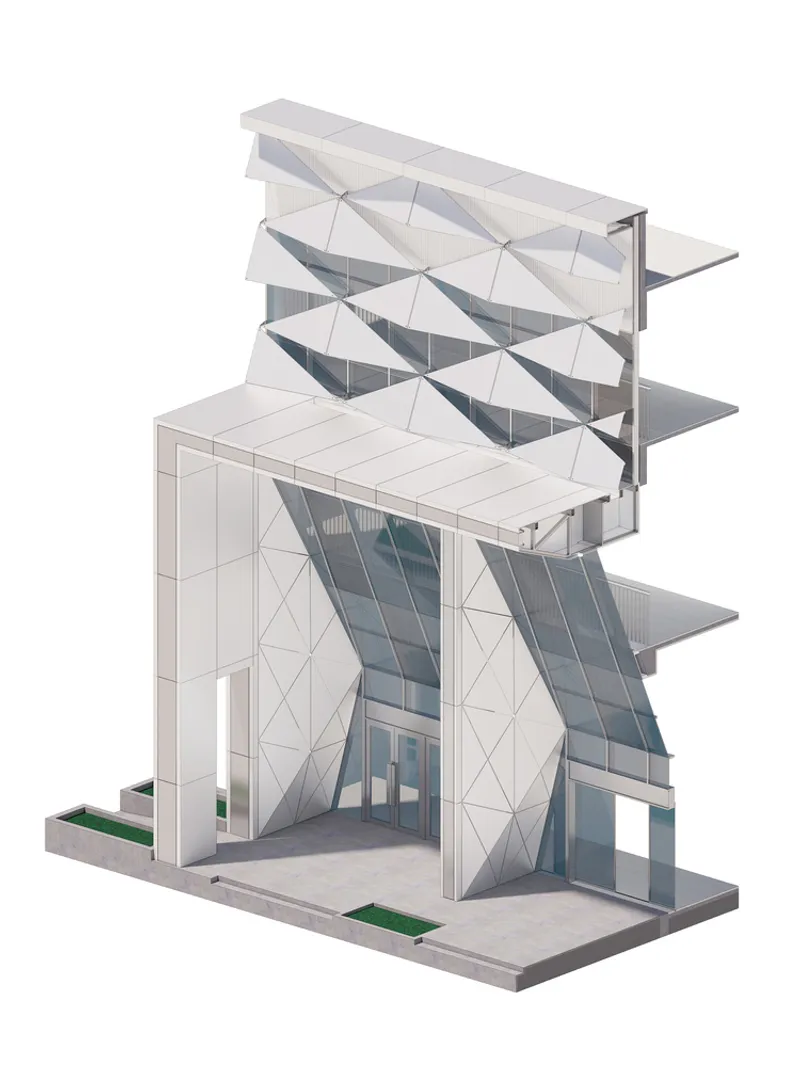
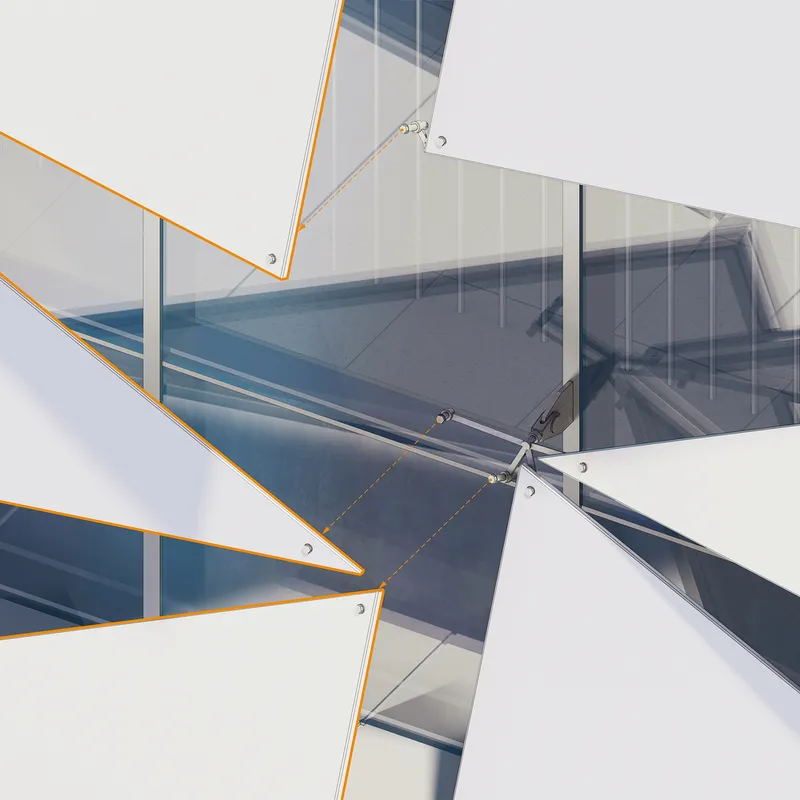
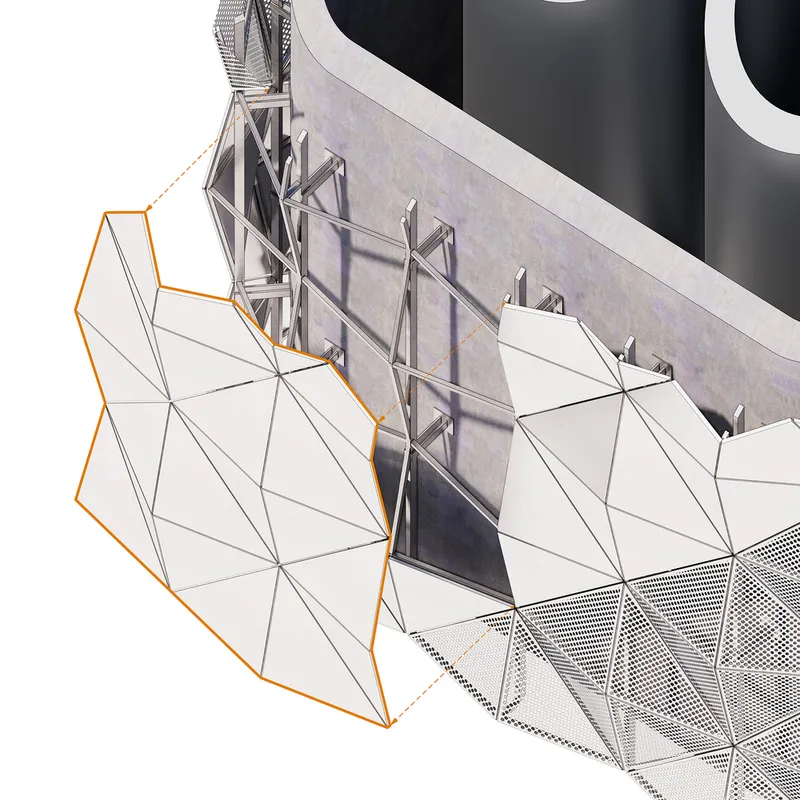
The podium structure employs a sophisticated double-skin facade system. The inner curtain wall offers climate control and structural functionality, while the outer aluminum cladding provides ventilation and fire safety. The design incorporates folded triangular plates that create rhythmic surface textures echoing textile materials, enhancing both aesthetic depth and practical performance.
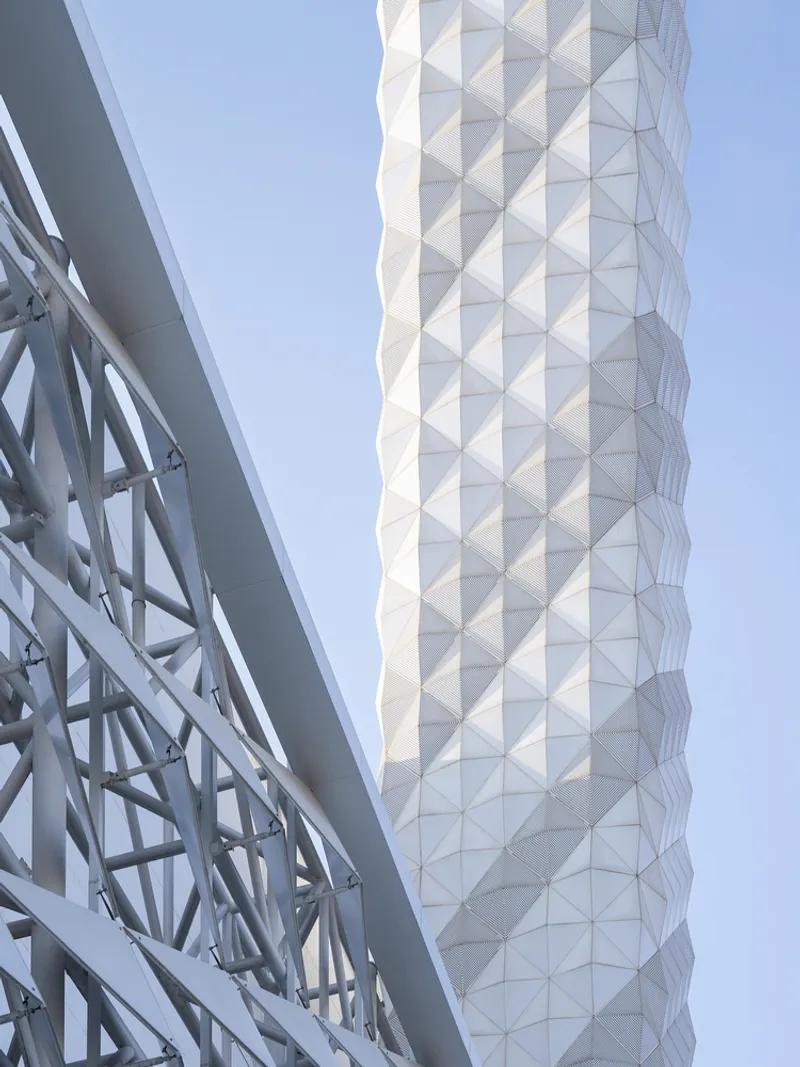
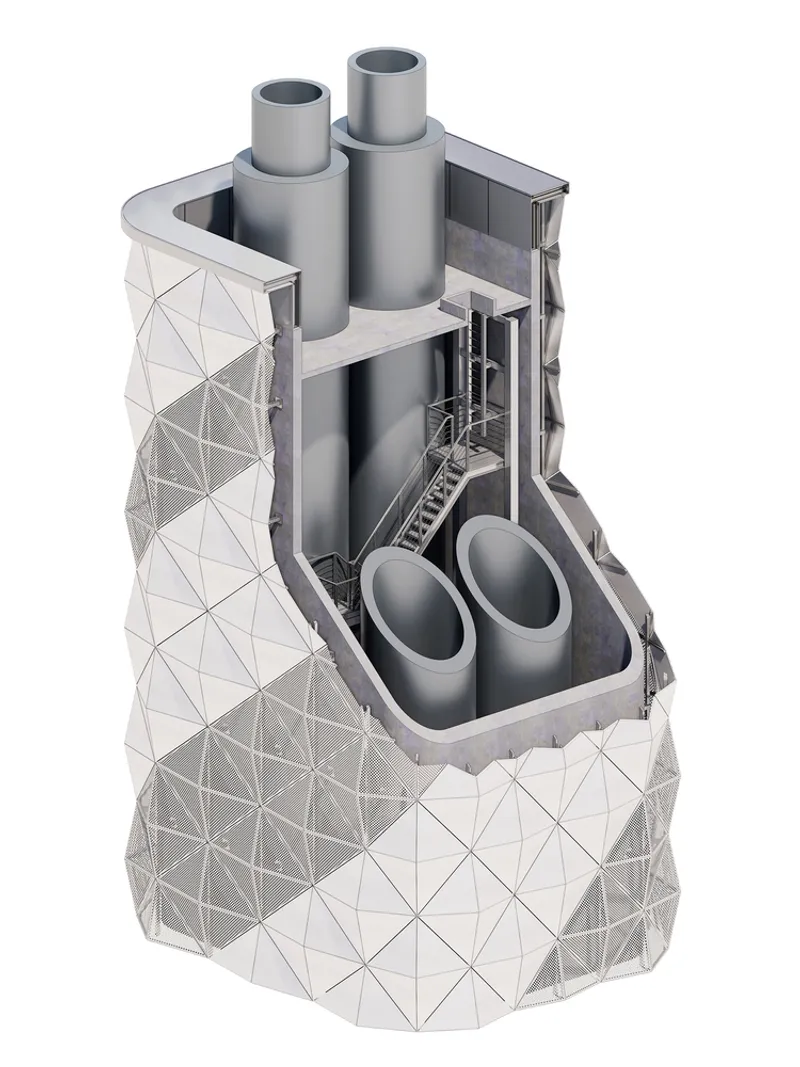
At 110 meters high, the site’s chimney serves as a visual and symbolic climax. Clad in aluminum panels shaped into quadrangular pyramids with precision perforations, the structure forms spiraling vertical lines that evoke monumental reverence, reinforcing the narrative of machines as sacred modern-day relics.
From Quarry to Circular Economy Hub
Prior to construction in 2019, the site was a scarred and ecologically degraded quarry. Over five years, it has been transformed into the largest circular economy industrial park in Central China. This transformation demonstrates the potential of waste-to-energy architecture to catalyze environmental regeneration and economic revitalization.
The plant stands not just as an energy facility but as a cultural landmark. It opens its operations to the public, demystifying waste treatment while embedding beauty into industrial performance. It reflects a broader architectural mission—shifting from structures that merely serve production to those that beautify life.
Elevating Waste-to-Energy Architecture to Public Infrastructure
The Wuhan Qianzishan Waste-to-Energy Power Plant is more than a utility—it is a powerful example of how thoughtful design can reshape public attitudes toward industrial architecture. Through transparency, material innovation, and artistic narrative, UUA elevates the building into an accessible and expressive form of waste-to-energy architecture, where function meets emotion, and industry becomes culture.
All Photographs are works of Archi-Translator




Popular Articles
Popular articles from the community


Play: Fragments of Their World
Familiar architecture becomes modular playground design, creating safe spaces where displaced children can learn, connect, imagine and play.

Co-life: Sustainable Architecture for Age-Friendly Community Living
Co-life reimagines sustainable architecture for seniors through courtyards, rammed earth, shared gardens, and spaces designed for belonging.

Riyadh For All: Intergenerational Urban Design for Active Aging in Rabat
Riyadh For All reimagines urban design in Rabat with intergenerational co-living, adaptive courtyards, and Moroccan cultural exchange today.

The Ocean Hive: Sustainable Architecture for a Self-Sufficient Civilization at Sea
The Ocean Hive imagines sustainable architecture at sea, where modular habitats, algae, wave power and ocean waste sustain a growing colony.

Similar Reads
You might also enjoy these articles


Bamboo Housing Challenge 2026: Design Affordable, Sustainable Homes Using Bamboo
An international design competition by Bamboo U and IBUKU inviting architects and designers to reimagine affordable housing using bamboo — with the winning design built full-scale in Bali.

Computational Design & Education: Beegraphy Design Awards Introduces 7th Category (Featuring Jiyun's Innovative Approach)
Dive into Beegraphy’s 7th Design Awards category, where computational design meets education to create immersive, interactive learning tools, inspired by Jiyun’s work.
From Parametric Lighting to Urban Furniture: Join the 2nd Workshop in Beegraphy’s Computational Design Series
Dive into Cutting-Edge Design Techniques and Practical Applications with Industry Experts

Last Call: Unleash Your Architectural Genius in SHAK's Kindergarten Design Competition
Urgent call for architects to join SHAK's kindergarten design competition before the looming deadline

Explore Waste Management Competitions
Discover active competitions in this discipline



Challenge to reimagine the Iron Throne


Photograph architecture without architects


Illustrate the lost glory of Angkor Wat - Render Challenge


Design challenge to reuse E-waste
Comments (0)
Please login or sign up to add comments
No comments yet. Be the first to comment!