
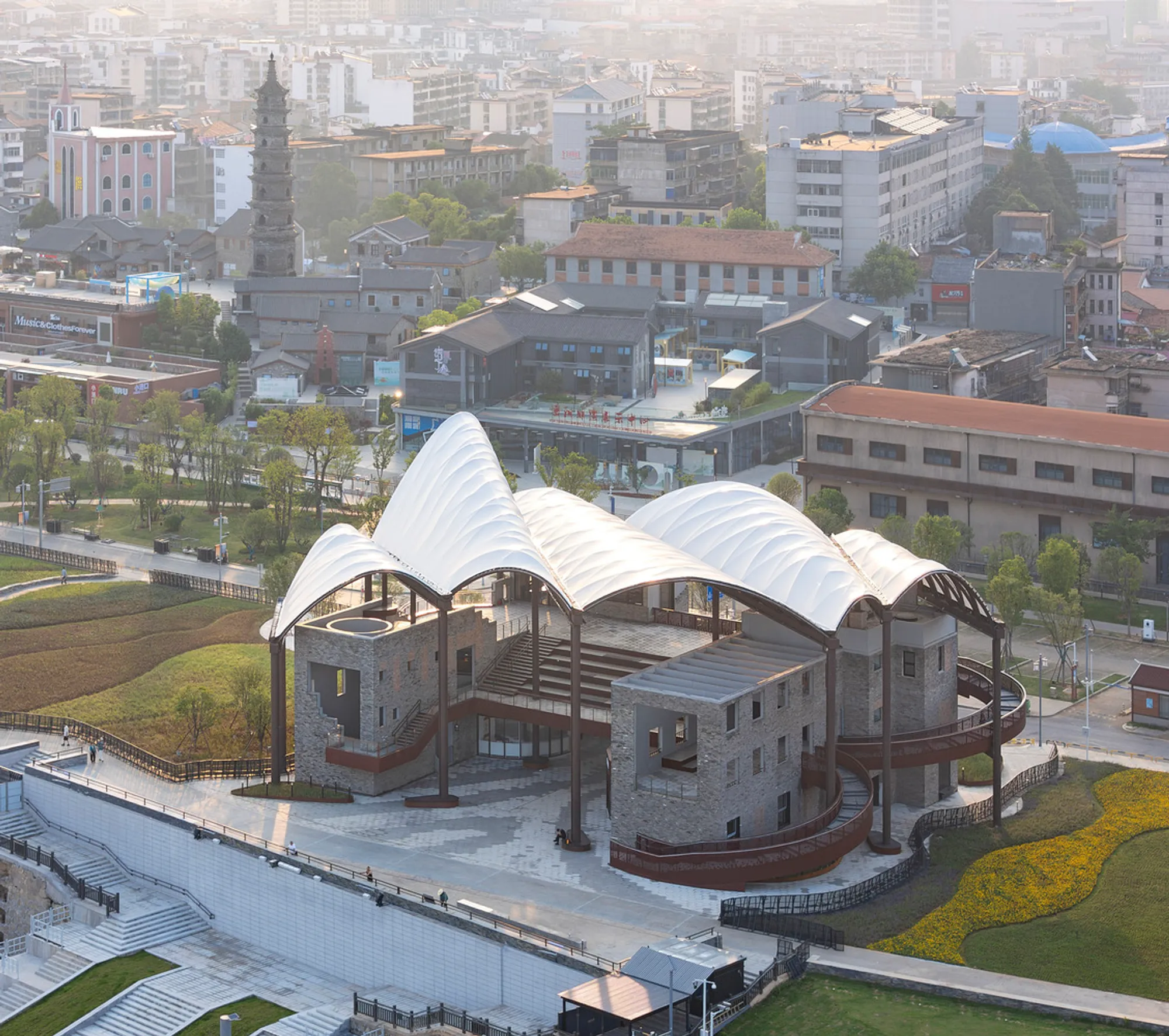
Yueyang Hualinggang Pier Tourist Center by WANG HUI of URBANUS
Yueyang Hualinggang Pier Tourist Center revitalizes Dongting Lake’s waterfront, blending industrial heritage, Cishi Pagoda views, modern design, and immersive public spaces.


A Modern Waterfront Landmark Embracing Industrial Heritage
The Yueyang Hualinggang Pier Tourist Center, designed by Wang Hui of URBANUS, sits within the Yueyang Port Industrial Heritage Park, a site that preserves iconic relics of the industrial era, including gantry cranes, tower cranes, railway tracks, and warehouse structures. Since its opening in 2018, the park has become a vital public space at the heart of Yueyang, connecting historical districts to the emerging modern cityscape. Yet, until recently, the waterfront lacked essential service facilities for tourism. The Tourism Development Conference provided a policy-based opportunity to address this gap, enabling the creation of a tourist center that complements both the industrial heritage and the natural beauty of Dongting Lake.
Reimagining the Dock: Connecting History and Nature
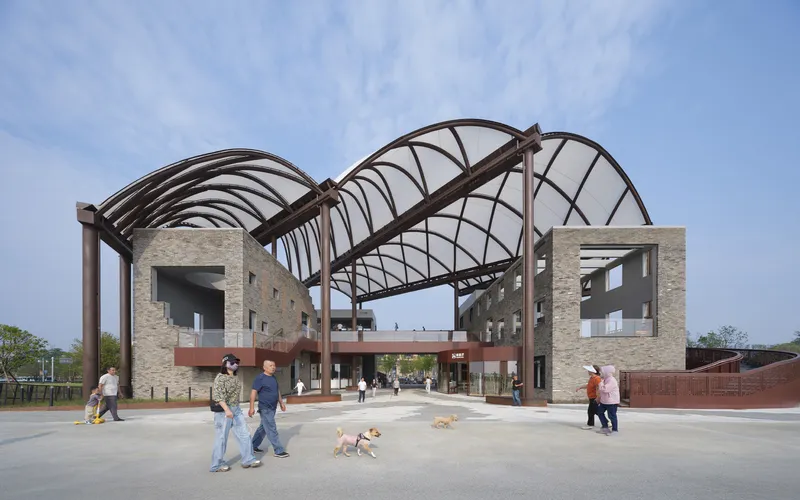
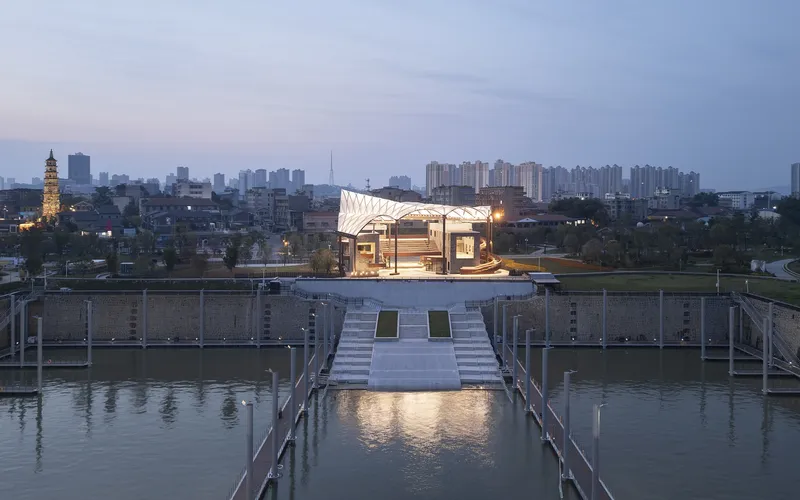
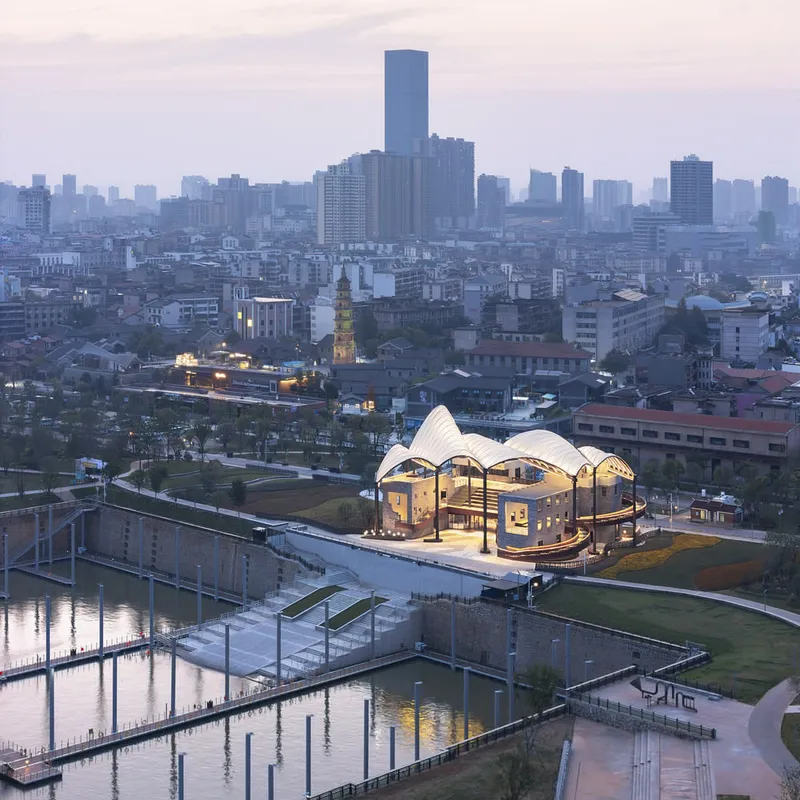
The dock is central to the design concept. Yueyang Tower, Dongting Lake, and Junshan Island form a “golden tourism triangle,” where cultural landmarks and natural scenery converge. The dock facilitates a water journey from Yueyang Tower to Junshan Island, offering visitors a dynamic experience of the region’s heritage. The transformation of the old cargo dock into a fully equipped passenger and yacht pier includes floating bridges, 22 small yacht berths, and 15 medium-sized berths. Even before the launch of water transport, this setup evokes the romantic idea of a voyage across Dongting Lake.
Preserving Industrial Heritage: Adaptive Reuse of Existing Buildings
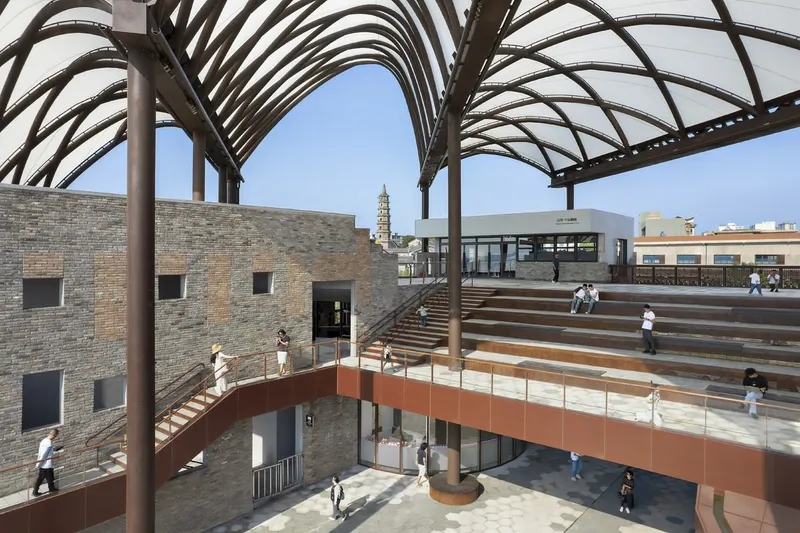
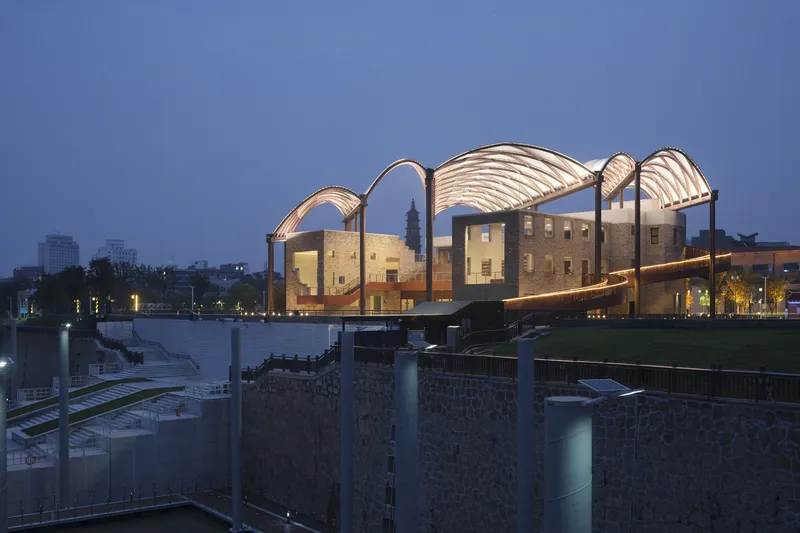
Two parallel office buildings near the lake were preserved during the demolition phase and serve as the backbone of the tourist center. Their east side connects to Yueyang South Road, forming a seamless circulation loop for both land and water visitors. To the northeast, the 39-meter Cishi Pagoda, a Song Dynasty navigation lighthouse, anchors the waterfront and sets a historically significant backdrop. By carefully situating the renovation within the permissible building zone, the design establishes a meaningful dialogue between the contemporary tourist center and the ancient pagoda.
Architectural Design: Canopy, Public Spaces, and Scenic Integration
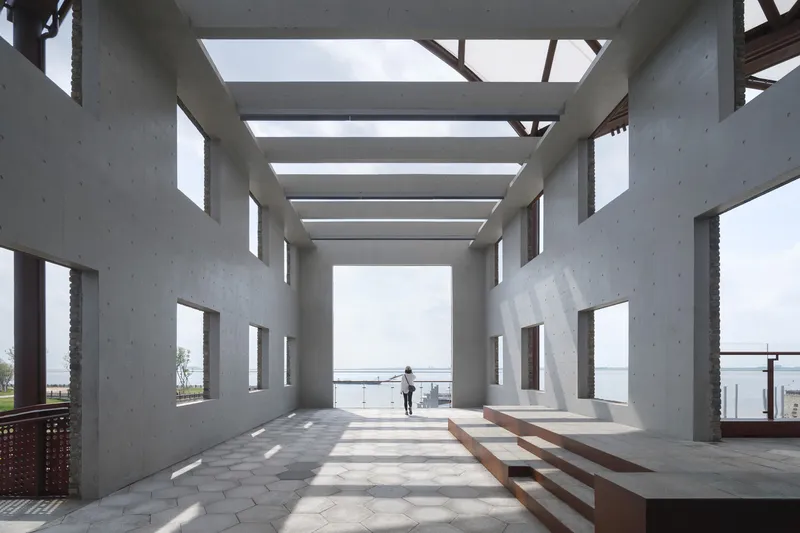
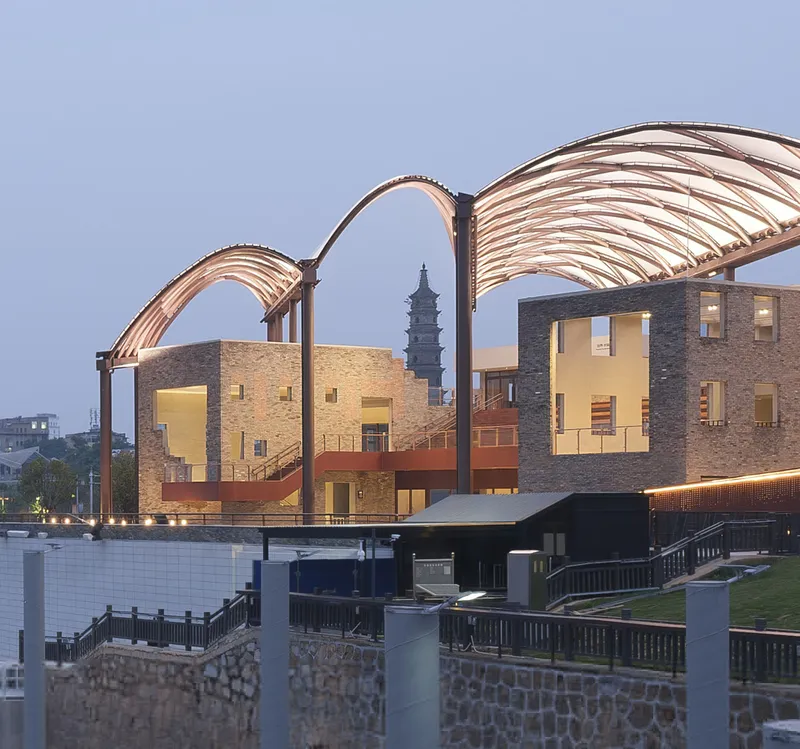
The ground floor accommodates essential visitor functions such as ticketing, waiting areas, and restrooms, while a wide staircase connects to the upper floors. These upper levels serve as public terraces where visitors can enjoy Dongting Lake’s sunrise and sunset. To enhance visual identity from the lake, a sail-like tensile membrane canopy tops the buildings, inspired by an observation platform nearby. The canopy, designed as continuous barrel vaults, creates a small “settlement” appearance while framing the Cishi Pagoda, merging historical reverence with contemporary design.
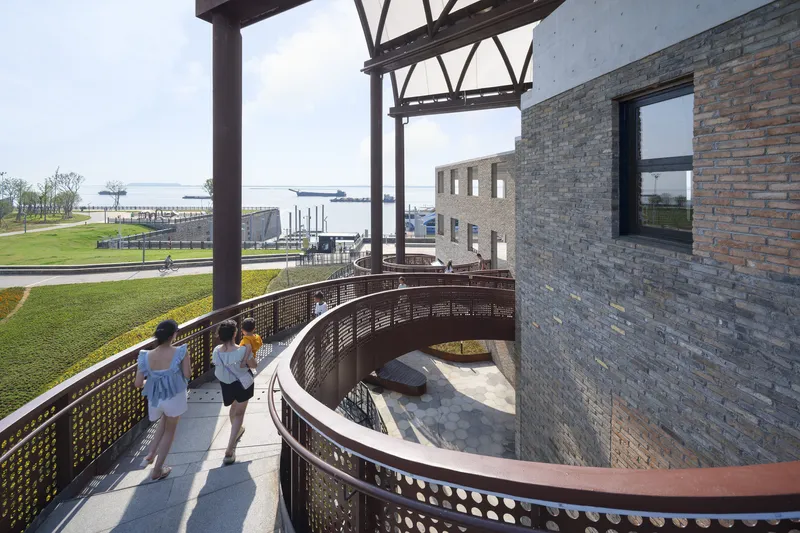
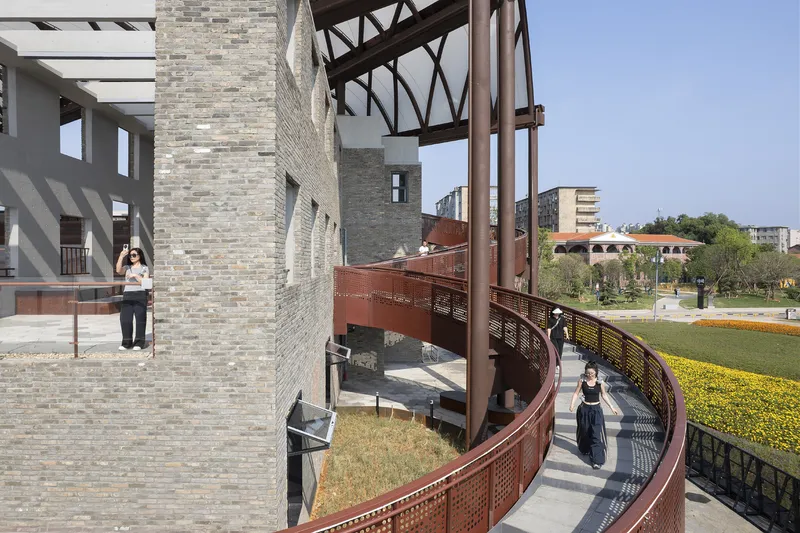
Public circulation is further emphasized through sculptural fire stairs, semi-circular exterior staircases, and strategically designed resting platforms that create intimate social spaces overlooking the lake. This approach transforms ordinary transit paths into immersive experiences, blending industrial heritage aesthetics with modern architectural expression.
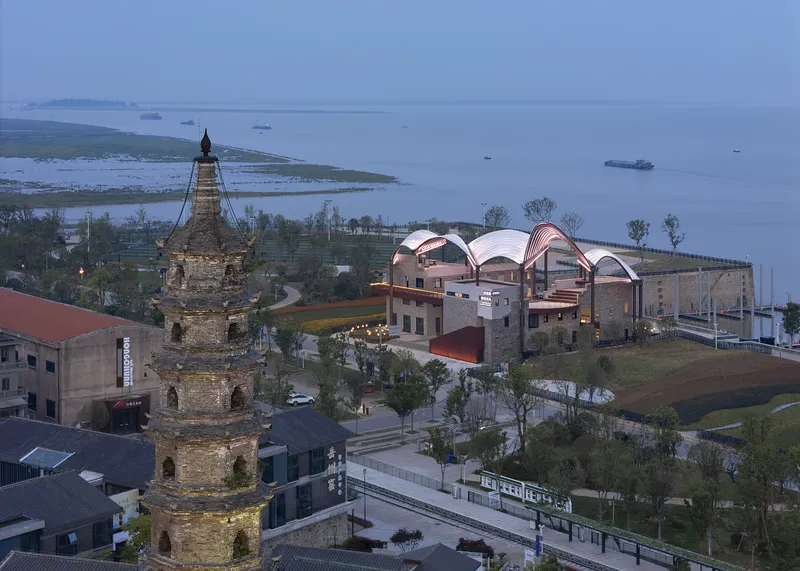
Materiality and Industrial Aesthetic
The use of steel staircases, tensile membranes, and reinforced concrete walls recalls the industrial origins of the site while introducing modern architectural language. Weathered brick walls remain as tactile reminders of the past. The design successfully bridges historical preservation and contemporary functionality, creating opportunities for exhibitions, events, and cultural activities while filling the service gap in the industrial heritage park.
Cultural Significance and Urban Impact
Beyond its functional role, the Yueyang Hualinggang Pier Tourist Center serves as a cultural installation. By integrating the Cishi Pagoda into the spatial narrative, the design provides visitors with a deeper understanding of Yueyang’s history while celebrating the city’s modern trajectory. This site-specific renovation has revitalized the southern waterfront of the industrial heritage park, enhancing the city’s identity, promoting tourism, and fostering a sense of local pride.
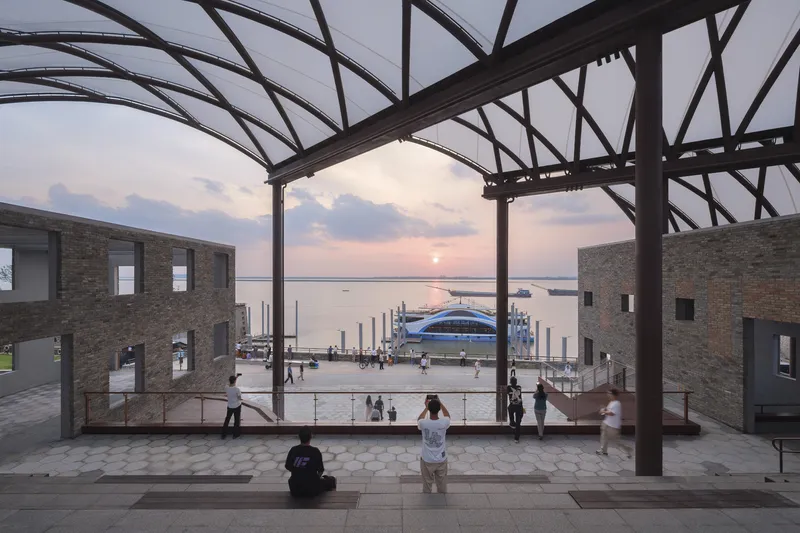
All photographs are works of TAL




Popular Articles
Popular articles from the community


Play: Fragments of Their World
Familiar architecture becomes modular playground design, creating safe spaces where displaced children can learn, connect, imagine and play.

Co-Life: Senior Housing Design That Reconnects Older Adults With the City
Co-Life reimagines senior housing design through healing gardens, shared streets, workshops, and a sustainable community across generations.

Riyadh For All: Intergenerational Urban Design for Active Aging in Rabat
Riyadh For All reimagines urban design in Rabat with intergenerational co-living, adaptive courtyards, and Moroccan cultural exchange today.

The Musturak Paradise: Senior Living Architecture for a Connected Future in Temara, Morocco
The Musturak Paradise reimagines senior living architecture in Temara via private homes, social spaces, culture, community, and shared care.


Similar Reads
You might also enjoy these articles


Hodi-Mandai Geram
Project Function: Preservation and revitalization of the Intangible heritage and socio-spatial identity of the Hodi by Housing, Cultural Memory Center, Sacred Grove, landscape, local tourism economy


Olio Towers: A Mid-Rise for Performers That Fuses Housing, Rehearsal, and Stage
Located blocks from Houston's Theater District, this modular tower stacks living units around a central performance atrium.

Oasis: Modular Green Housing Carved into Dhaka's Urban Fabric
A shortlisted Plugin Housing entry reclaims unauthorized settlements in Dhaka with stepped concrete volumes, green roofs, and ventilation-driven design.

Black Hole: A Floating Megastructure for the Post-Physical Era
Emiliano Mazzarotto envisions a spherical, self-scaling arena where e-sports, digital hotels, and holographic stadiums replace traditional public space.


Explore Cultural Architecture Competitions
Discover active competitions in this discipline



Challenge to reimagine the Iron Throne


Photograph architecture without architects


Illustrate the lost glory of Angkor Wat - Render Challenge


Bring back Drive In's
Comments (0)
Please login or sign up to add comments
No comments yet. Be the first to comment!