

Zhuxi Wonderland: Reimagining Traditional Chinese Gardens by Doarchi Architects
Zhuxi Wonderland by Doarchi Architects reinterprets traditional Yangzhou gardens, integrating courtyards, pavilions, and tea houses in modern cultural design.


Located on the northern bank of the ancient canal in Yangzhou, China, Zhuxi Wonderland by Doarchi Architects spans 5,671 m² and was completed in 2022. This culturally significant site, known historically as "Zhuxi Jiajing," dates back to the Spring and Autumn period, with subsequent transformations during the Sui and Tang dynasties. Originally hosting the Shangxing Palace and later Kamigata Chanzhi Temple, the area evolved into a public park, forming the foundation for this contemporary reinterpretation of traditional garden architecture.

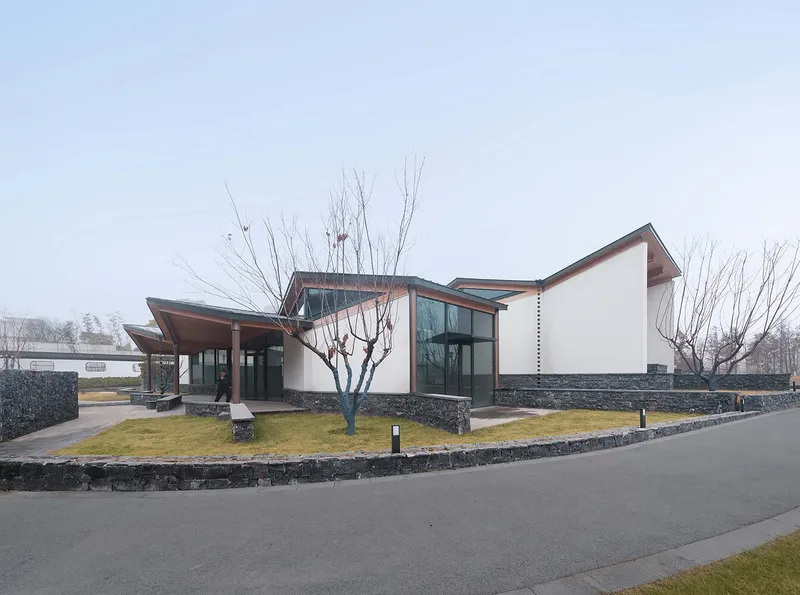
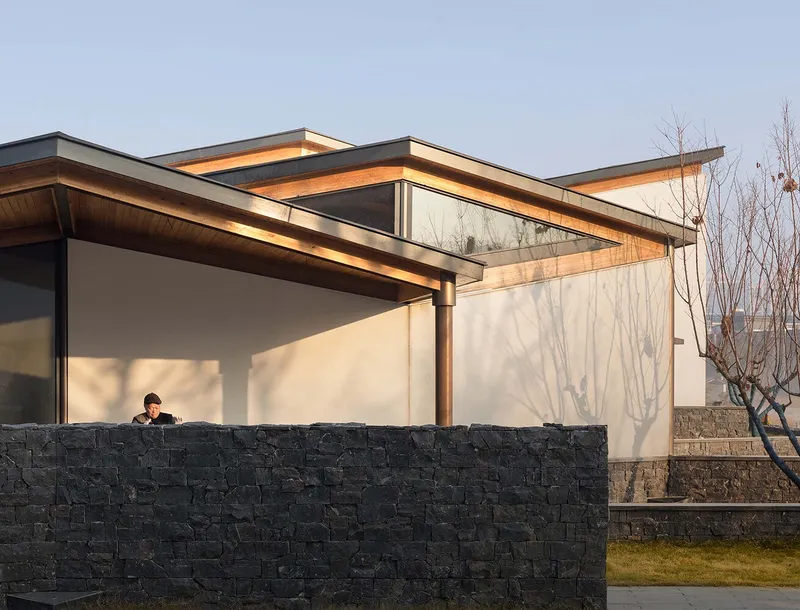


Planning: The Iteration of a Historical Garden
The master plan reimagines the original park using the landscape technique of ‘four, three, two, one’, organizing spaces for visual depth and dynamic interaction. Open areas are divided into four sections, with a central mound creating vertical interest. Water features are segmented into three zones, enhancing the feeling of spaciousness. Five new buildings: a courtyard, pavilion, hall, house, and garden, are strategically scattered to provide public amenities. Additional features, including a bamboo pavilion, stone pavilion, and scenic points, integrate seamlessly with the existing eight classical views, preserving the garden’s historic essence while inviting modern engagement.

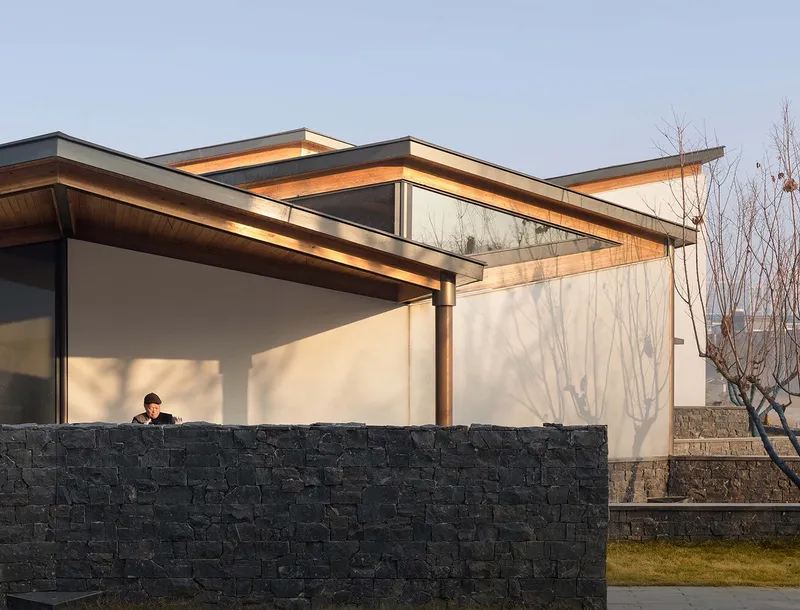
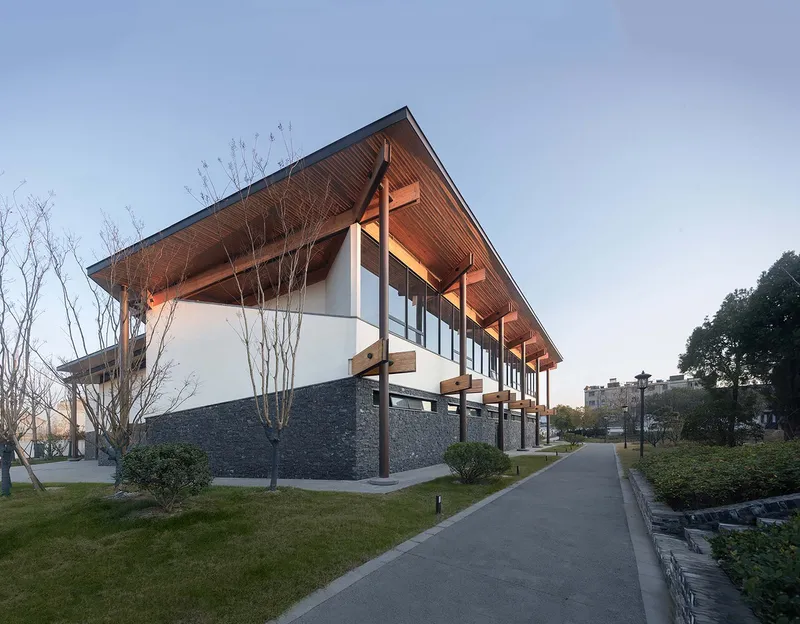
Architecture: A Modern Response to Tradition
The project reinterprets traditional architectural vocabulary through five spatial archetypes corresponding to the courtyard, pavilion, hall, house, and garden. Each structure uniquely engages with the park’s natural landscape while reflecting historical forms in a contemporary context.
- The Courtyard: Situated at the park’s southern end, the courtyard modernizes traditional spatial arrangements. Corridors act as interactive screens, offering dynamic, pictorial experiences reminiscent of classical human activity scenes.
- The Gymnasium: A large corner structure reconfigures the traditional beam-and-column system, echoing ancient temple-like halls. Its modular foundation-column-beam design allows adaptability for diverse functions, demonstrating structural and spatial versatility.
- Dining Room: Inspired by the multi-story courtyard, the restaurant explores the interplay between interior and exterior spaces using hexagonal unit plans, creating a harmonious balance between individual and collective experiences.
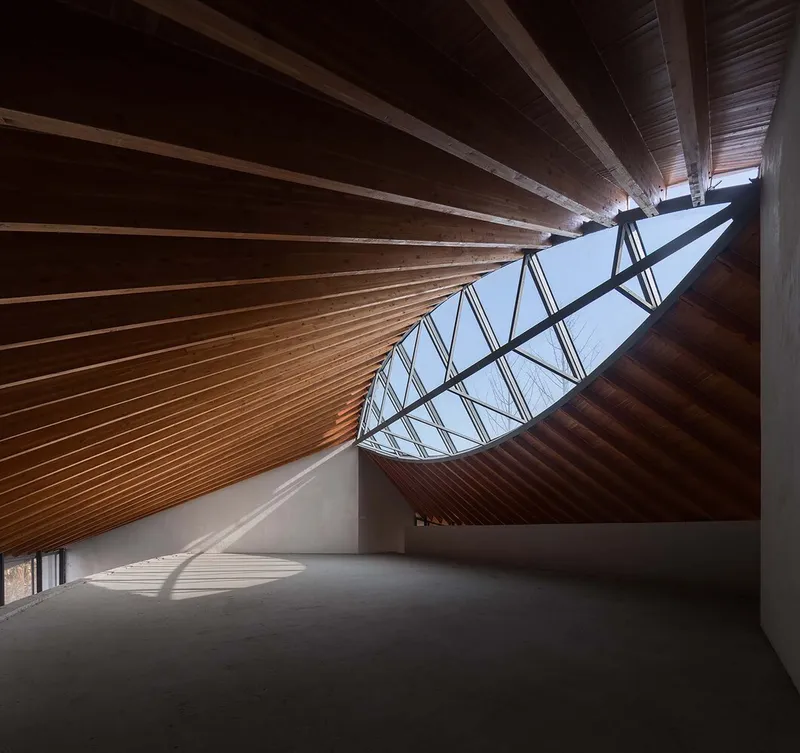
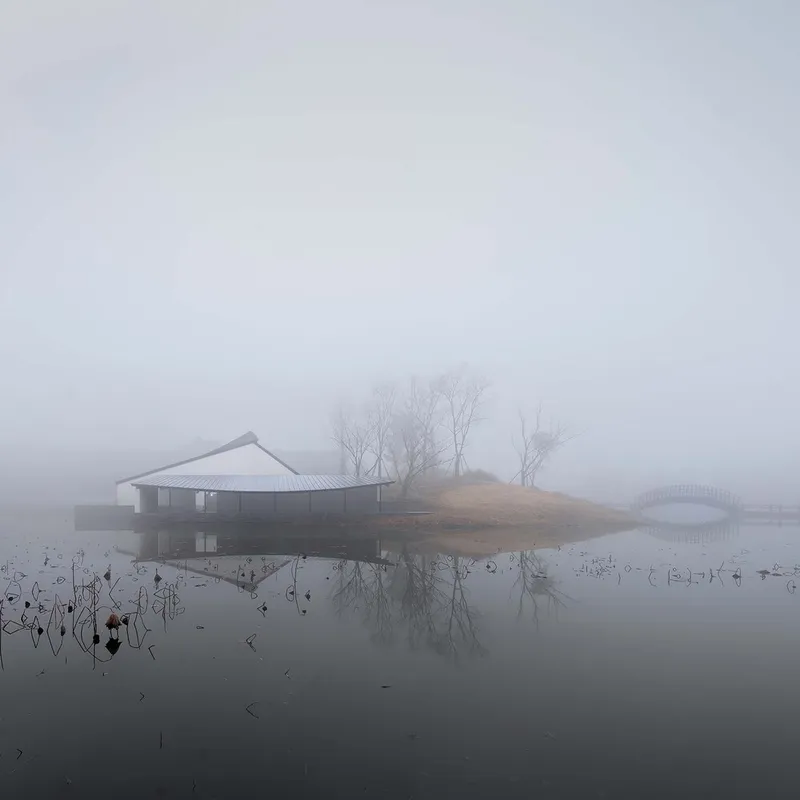
- The Tea House: Located on the northern lake island, this structure rethinks the relationship between architecture, nature, and human presence. Its partitioned interior contrasts views of water and mountains, with skylights following the sun’s path to mark the passage of time and seasonal changes.
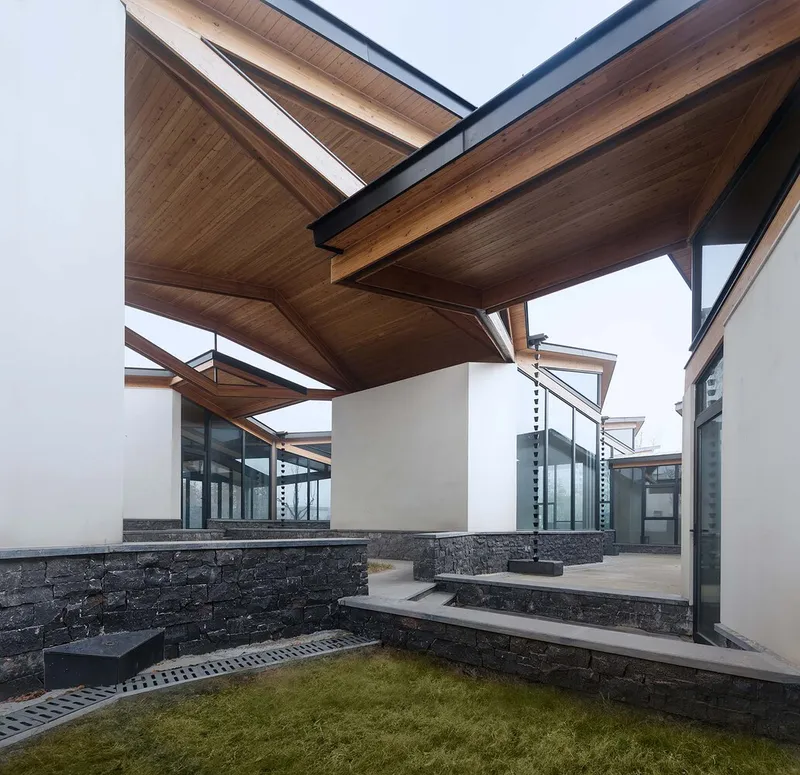
- Visitor Centre: Positioned near the park’s northern entrance, it incorporates a single-road, multi-entry courtyard design, mediating the transition from the urban environment to the serene parkscape. Meandering corridors and overlapping roofs foster a three-dimensional experience of the landscape.
Construction: Reconstructing Traditional Architectural Language
Doarchi Architects dismantled and reinterpreted traditional architectural elements across five domains: courtyard prototypes, monolithic beam-column systems, courtyard clusters, house archetypes, and multi-entry courtyards. This approach forms a new architectural vocabulary that bridges historical Chinese traditions with contemporary design, encouraging reflection on cultural heritage and modern spatial experiences.


All photographs are works of
Shan Liang




Popular Articles
Popular articles from the community


Co-Life: Senior Housing Design That Reconnects Older Adults With the City
Co-Life reimagines senior housing design through healing gardens, shared streets, workshops, and a sustainable community across generations.

Conexión: Biophilic Design Reimagines High-Rise Living in Hong Kong
Conexión reimagines high-rise living in Hong Kong through biophilic design, green facades, shared spaces, daylight, water and nature within.

Co-life: Sustainable Architecture for Age-Friendly Community Living
Co-life reimagines sustainable architecture for seniors through courtyards, rammed earth, shared gardens, and spaces designed for belonging.

The Earth Pod: 3D Printed Homes for Resilient Refugee Communities
The Earth Pod reimagines refugee housing through 3D printed homes made from clay, combining resilience, self-sufficiency, and rapid shelter.


Similar Reads
You might also enjoy these articles

Bamboo Housing Challenge 2026: Design Affordable, Sustainable Homes Using Bamboo
An international design competition by Bamboo U and IBUKU inviting architects and designers to reimagine affordable housing using bamboo — with the winning design built full-scale in Bali.

Computational Design & Education: Beegraphy Design Awards Introduces 7th Category (Featuring Jiyun's Innovative Approach)
Dive into Beegraphy’s 7th Design Awards category, where computational design meets education to create immersive, interactive learning tools, inspired by Jiyun’s work.

From Parametric Lighting to Urban Furniture: Join the 2nd Workshop in Beegraphy’s Computational Design Series
Dive into Cutting-Edge Design Techniques and Practical Applications with Industry Experts

Last Call: Unleash Your Architectural Genius in SHAK's Kindergarten Design Competition
Urgent call for architects to join SHAK's kindergarten design competition before the looming deadline


Explore Architecture Competitions
Discover active competitions in this discipline



Challenge to reimagine the Iron Throne


Photograph architecture without architects


Illustrate the lost glory of Angkor Wat - Render Challenge


Bring back Drive In's
Comments (0)
Please login or sign up to add comments
No comments yet. Be the first to comment!