

Architecture Competitions
An architecture competition is a process in which a client, a city or an institution invites designers to submit proposals for a building, a place or an idea, and a jury chooses among them. Competitions have produced some of the most debated buildings in history, from the dome of Florence Cathedral to the Sydney Opera House, and they remain one of the main ways young architects test ideas in public.
What is an architecture competition?
At its simplest, a competition replaces the direct appointment of an architect with a contest of designs. The organiser writes a brief, sets the rules and deliverables, and appoints a jury. Entrants answer the same brief, and the jury compares the answers. The Wikipedia overview of architectural design competitions describes several ways to sort them: open or invited, project or ideas, single-stage or multi-stage, anonymous or named, one-time or recurring, plus a separate family of student competitions.
The two most useful distinctions are the first two. An open competition lets almost anyone enter, while an invited or pre-qualified competition limits entry to a shortlist, and in many cases pays those teams a stipend. A project competition looks for a scheme the client intends to build. An ideas competition exists to generate new thinking, sometimes deliberately provocative, and may never lead to a commission. Many student competitions are ideas competitions: they set a real site and a demanding programme, but the reward is recognition rather than a contract.
A competition is not the same thing as an award. An award judges finished buildings; a competition judges proposals before anything exists. That is why competition boards matter so much, and why a competition entry often doubles as portfolio material (see architectural portfolio). Many entries are also exercises in concept architecture, where the argument counts as much as the plan.
"The Centre Georges Pompidou in Paris (1971-1977), designed in partnership with Renzo Piano, revolutionized museums, transforming what had once been elite monuments into popular places of social and cultural exchange, woven into the heart of the city."
Pritzker Architecture Prize jury citation for Richard Rogers (2007)
A short history of architecture competitions
Design contests are far older than the profession's modern rules. On 19 August 1418 the wool merchants' guild of Florence, the Arte della Lana, announced a competition for the dome of the city's cathedral. According to the history of Florence Cathedral, the two main rivals were the goldsmiths Lorenzo Ghiberti and Filippo Brunelleschi; Brunelleschi won and received the commission, and later had to win a second contest for the lantern on top.

In the nineteenth century competitions became a regulated part of practice. The Royal Institute of British Architects drafted its first rules for competitions in 1839, and German regulations followed in 1867. In 1922 the Chicago Tribune invited architects from around the world to design its new headquarters, offering a 50,000 dollar first prize. The Tribune Tower received more than 260 entries. The neo-Gothic design of John Mead Howells and Raymond Hood won, but the second-placed scheme by Eliel Saarinen proved more influential, and the losing entries by Walter Gropius, Adolf Loos and others are still studied as a record of what might have been.

The post-war period produced the most famous case of all. In January 1957 four assessors, including Eero Saarinen, judged the entries for a national opera house at Bennelong Point. The Sydney Opera House's own account records that Jørn Utzon's scheme, entry number 218, was one of more than 200 entries from 28 countries, and that he had entered partly to exercise his ideas. The jury knew what it was choosing.
"Because of its very originality, it is clearly a controversial design. We are however, absolutely convinced of its merits."
Paris supplied two more landmarks. The Centre Pompidou design by Richard Rogers, Renzo Piano and Gianfranco Franchini was chosen from 681 entries by a jury of Oscar Niemeyer, Jean Prouvé and Philip Johnson, in the first French competition open to international architects. A decade later Bernard Tschumi won the 1982 to 1983 competition for the Parc de la Villette, a park organised as points, lines and surfaces.
Key principles of architecture competitions
Anonymity and an independent jury
The modern international framework is the UNESCO Standard Regulations for International Competitions in Architecture and Town Planning, adopted in 1956 and revised in 1978. The International Union of Architects (UIA) says these rules rest on transparency, equal treatment and non-discrimination, and guarantee professional evaluation under anonymity. Anonymity means the jury judges the drawings, not the reputation of whoever made them. It also gives newcomers a fair hearing: the Sydney Opera House's own history calls its winner an unknown 38-year-old from Denmark.
Clear rules from a trusted organiser
The UIA publishes a competition guide for organisers and endorses a handful of international competitions each year. In the UK, RIBA Competitions says it has supported the principle of architectural competitions since 1871 and that the competitions it manages follow best practice principles, without allegiance to a particular design team. For an entrant, the practical lesson is to read the rules as carefully as the brief: deliverables, sheet sizes and anonymity requirements are not optional.
Reading the brief and the site
Every strong entry begins with what the brief and the site demand. The proposals for The Oasis Cultural Center competition, set in a hot desert climate, show how a site condition can become the whole concept.
"In designing the cultural centre, several factors had to be taken into account in such an unusual location. One of them was, for example, hot climate conditions."
Kristína Hanesová, project statement for Oasis Towers, The Oasis Cultural Center competition
Her answer was to use traditional wind tower technologies. PURA by Szymon Król, a winning entry in the Pura competition for a viewing deck with a watchtower, makes the same move visible on its first board.

One idea, told in sequence
A jury may look at hundreds of boards in a day. Entries that survive the first round usually carry one clear idea and show how it was developed, step by step, so the logic can be read in seconds.

Ideas competitions as a testing ground
Because ideas competitions do not promise a building, they reward risk. Students use them to try a structure, a material or a programme that a studio brief would not allow, and to see how an unfamiliar jury responds.
Architecture competitions on uni.xyz
uni.xyz hosts architecture and design competitions, and entries are published as projects that anyone can study. The topic gathers entries across very different briefs, from cultural centres to bus stops and Mars habitats, which makes it a useful library of how teams answer a brief.
The most liked project in this topic is M'awee by Hamid kaboli, Ali Moradi, mahsa yazdani and Siamak Zandi, described as a concept design for a cultural centre in Morocco titled "A Place To Return". It received an Institutional Excellence Award in The Oasis Cultural Center competition. One of its boards shows hydroceramic panels used for evaporative cooling, which ties the form back to the desert brief.
The same competition produced I N T E R L U D E by Juan Gaitán Brieva, an Editor's Choice. The team describes a cultural centre that collects and promotes local traditions with almost no environmental impact, and compares it to a musical interlude: a break from routine.

TRANSPORT GRID by Katerina Rangelova, an Editor's Choice in the Better Bus Stop competition, proposes a modular bus stop in light, see-through materials that the team says reads more like an art installation than street furniture. Its boards set the grid against a city map so the system can be read at both scales.

Kawa Kawa Garden, the forest kindergarten by Misak Terzibasiyan, Danai Dafnouli and Aleksandra Klawikowska, an Editor's Choice in the Supergarten competition, argues that learning and playing outside builds creativity and lets children treat risk as part of play. Its master plan threads small units between the trees.

Other entries show the range of briefs. O.N.I.S.-M.- The movable habitat by Ankit Jain and prityaanshi agarwal, an Honorable Mention in the Mobitecture competition, is a transforming structure for off-the-grid living. "Neo-Land" Mars Residence Design by XiangYi Chen, JINGXUAN WAN, Minghe Lan and Yining Liu, an Editor's Choice in the Martian Hub competition, plans a residential base for a 40-person colony within 4,000 m², with a proposed migration date of 2100. Competition entries are also read closely in uni.xyz journals: Post Estonia, by Alvin Huang and Byron Cai, which received an Honorable Mention in the Opera by the Sea competition, is unpacked as a field of glacial boulders on Tallinn's waterfront. Opera entries have their own collection under opera house.
Challenges and future directions
The oldest criticism of open competitions is about labour. Many teams produce detailed work, often unpaid, for one commission or none. Invited and multi-stage competitions answer this partly by limiting entry and paying shortlisted teams a stipend or honorarium. Winning also guarantees less than it seems: the client can veto the result, budgets change, and the 2002 World Trade Center site competition is often cited as a case where only the basic elements of the winning design reached the finished project.
Sydney shows both sides. The geology of Bennelong Point had not been surveyed accurately when the competition guidelines were written, and the work on foundations was not in the budget. A brilliant scheme chosen from drawings still has to survive engineering, cost and politics.
Fairness depends on rules that are written down and enforced: anonymity, a jury with professional members, clear deliverables and published results. These are exactly the points the UIA and RIBA frameworks address. For students, the most realistic future is a mix of ideas competitions that reward risk and well-run project competitions that pay for serious work.
Architecture competitions for students and designers
The UIA lists "educational value" as a criterion when it advises on student competitions, and that is the right way to choose one. Pick briefs that push a skill you lack: a structure, a climate, a building type. Read the brief twice, list every required drawing, and design the boards before the building is finished, because the board is the only thing the jury will see.

Good thesis angles include the history of a single competition, the role of juries, or an ideas brief rewritten for your own city. Browse current briefs on the uni.xyz competitions page, study entries in cultural centre design, and turn your best entries into portfolio pages. The journal Top tips to follow when trying to win an architecture competition by Sadik Ekinci collects practical advice from an entrant's point of view.
Frequently asked questions
What is the difference between an open and an invited competition?
An open competition has few or no limits on who may enter. An invited, limited or pre-qualified competition restricts entry to selected teams, and often pays them a stipend or honorarium to help cover their costs.
What is an ideas competition?
An ideas competition is held to generate new thinking rather than to choose a building to construct. It may use a real site and programme, but the result is usually recognition, publication and discussion rather than a commission.
Why are competition entries anonymous?
Anonymity lets the jury judge the proposal, not the name behind it. The UNESCO Standard Regulations, which the UIA supervises, guarantee professional evaluation under anonymity.
Does winning a competition mean the building will be built?
No. In a project competition the client usually intends to build, but it can veto the winner, and budgets or requirements can change. Ideas competitions do not promise construction at all.
Which famous buildings came from competitions?
The dome of Florence Cathedral, Tribune Tower in Chicago, the Sydney Opera House, the Centre Pompidou and the Parc de la Villette all came from design competitions.
References and further reading
- Architectural design competition, Wikipedia
- Florence Cathedral, Wikipedia
- Tribune Tower, Wikipedia
- Jørn Utzon, Sydney Opera House
- Centre Pompidou, Wikipedia
- Parc de la Villette, Wikipedia
- International Competitions, International Union of Architects
- RIBA Competitions, Royal Institute of British Architects
- Jury citation, Richard Rogers, The Pritzker Architecture Prize


Popular projects
View all 13 projects


Latest journals
View all 20 journals
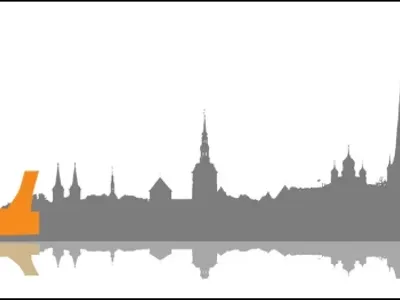
Above the Baltic: A Lighthouse Reimagined as Tallinn's Waterfront Opera House
Three brick volumes and a tilted glass tower turn a new opera house into both cultural institution and maritime beacon on Tallinn's coastline.
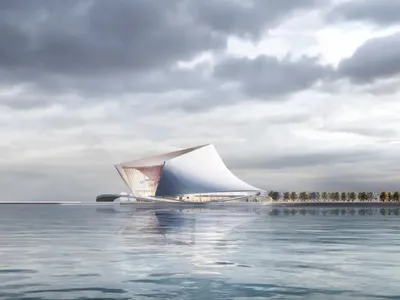
Opera by the Sea: Two Hyperbolic Paraboloids Frame Tallinn's Baltic Waterfront
A dual-faced opera house interprets Tallinn's historic towers toward the city and opens panoramic glazing toward the Baltic horizon.
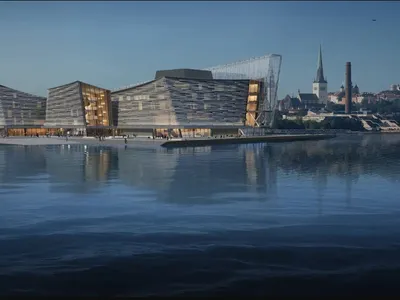
Post Estonia: An Opera House Conceived as a Field of Glacial Boulders on Tallinn's Waterfront
Alvin Huang and Byron Cai fragment the opera house into an archipelago of geological masses that rethink civic monumentality along the Baltic Sea.
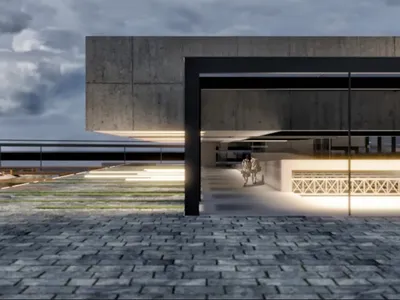
TOP-OF-ART'sy: An Opera Complex That Becomes Tallinn's Waterfront Public Ground
A shortlisted entry for Opera by the Sea distributes cultural programming across linear volumes, bridges, and a newly created island on Tallinn's shore.


