



Genetic Museum
Museums designed to explore genetic heritage, identity, and evolutionary narratives through architecture.
Genetic museums present architecture as a medium for understanding human origins, ancestry, and biological identity. These spaces translate scientific and cultural information about genetics into physical environments that visitors navigate and experience.
The community explores how museums can memorialize vanished communities, spiral around natural and cultural cores, stack historical narratives vertically, and carve into landscapes to reveal ecological and genetic relationships between people and place.
Top contributors


Popular projects
View all 1 project

Latest journals
View all 12 journals

HYP-ARCH Wraps a Spiral Museum Around the Memory of a Vanished Zhengzhou Village
A 3,100 m² museum in Zhengzhou's Jinshui District preserves the story of Liuzhuang, an urban village that once sheltered 300,000 migrant workers.
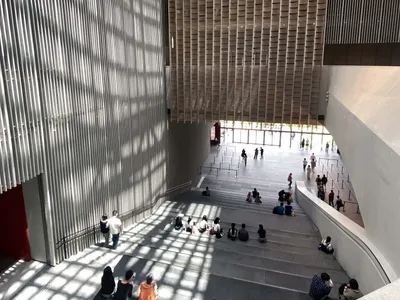
Rocco Design Architects Stack the Forbidden City Vertically on Hong Kong's Waterfront
A 30,000-square-meter museum in West Kowloon translates Beijing's courtyard sequence into a tower of three rotating atria facing harbor and sea.
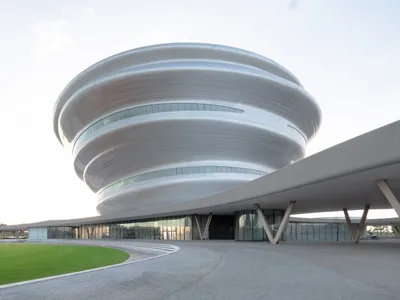
MAD Architects Spirals a Science Museum Around Three Cores on the Edge of a Hainan Wetland
A biomorphic tower of 843 FRP panels rises six stories above reflecting pools in Haikou's Free-Trade Port district, turning science education inside out.

CSADI Carves a Jade Blade into the Qinling Mountains for China's First Ecology Museum
A 43,788 square meter terraced museum in Shangluo draws its form from a Xia Dynasty artifact and steps down toward the valley below.


