
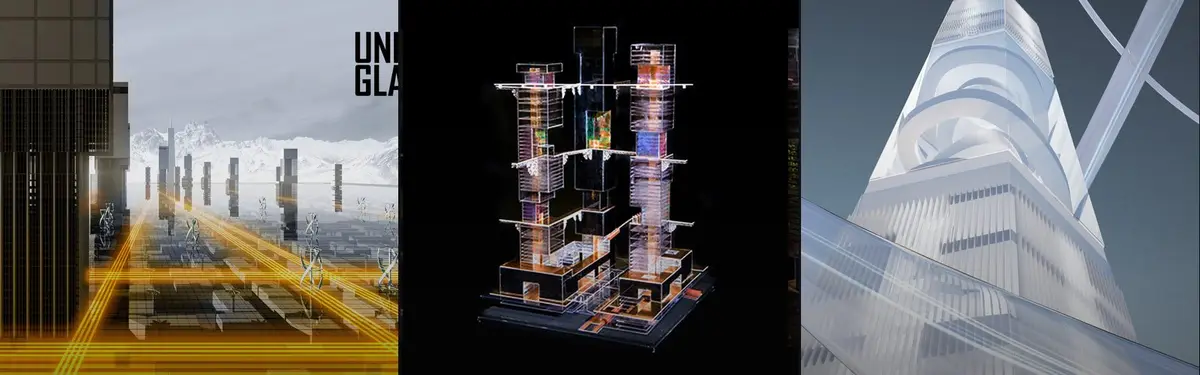


Linear City
Urban planning concepts exploring linear, modular, and adaptive city structures that respond to contemporary needs.
Linear City refers to urban planning models organized along a linear axis rather than traditional concentric patterns. This approach offers alternatives for organizing infrastructure, housing, and civic functions while maintaining connectivity and accessibility across extended territories.
The community explores modular and instant city systems that can be customized and adapted to specific contexts, sustainable renewal strategies for existing urban centers, and how linear organizational principles can integrate transit hubs, civic spaces, and residential areas into cohesive urban environments.


Popular projects
View all 14 projects


Latest journals
View all 29 journals
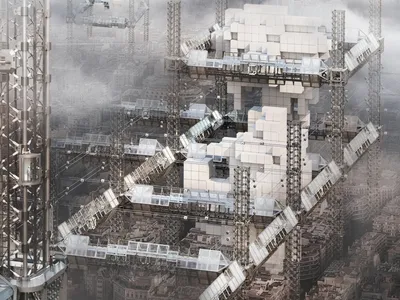
Customized Instant City Module Operating System: A Second, Movable City Above Barcelona's Eixample
A post-metabolist plan for Barcelona's Eixample inserts a mobile lattice of modules into the air, rooftops and courtyards rather than razing the grid.

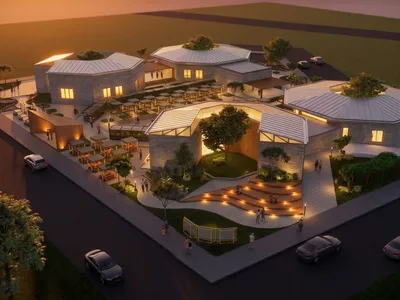
CIVIC HEARTH
Designing Social Infrastructure for India's Industrial Landscapes


Superimpose Architecture Splits a Hangzhou Transit Hub into Valley and Cloud
A 72,000-square-meter mixed-use TOD complex near Alibaba's campus pairs human-scaled green terraces with serene tower volumes.
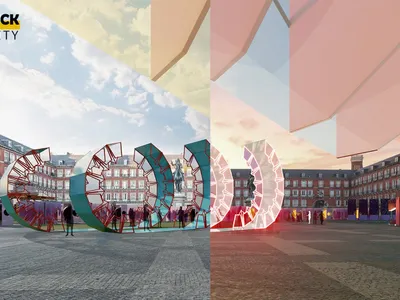
Instant City: Archigram's Roaming Metropolis Rebuilt as a Fleet of Unfolding Cultural Modules
A fleet of autonomous modules unfolds from compact transport forms into stages, markets and cinemas, turning plazas into temporary cultural venues.


