
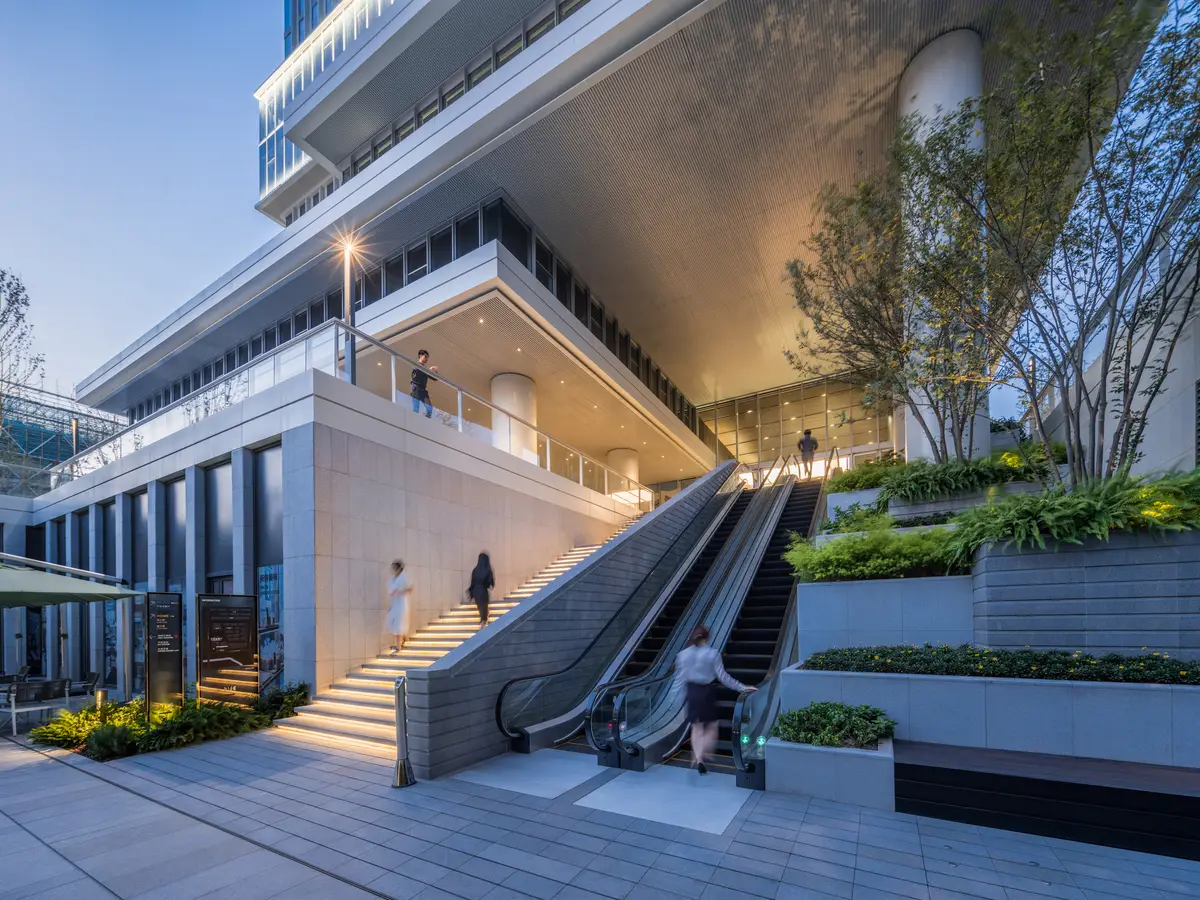
Superimpose Architecture Splits a Hangzhou Transit Hub into Valley and Cloud
A 72,000-square-meter mixed-use TOD complex near Alibaba's campus pairs human-scaled green terraces with serene tower volumes.


Transit-oriented development tends to produce architecture that treats arrival as a logistical problem. You funnel commuters from the platform to the street, stack commercial square meters on top, and move on. Sky City TOD in Hangzhou's Yuhang District, completed in 2022 by Superimpose Architecture, takes the opposite approach: arrival here is a spatial event, organized around a landscape that pulls daylight, green, and water down into the podium levels where subway riders first surface.
The design concept is legible in two registers. The lower levels, which the architects call "The Valley," are terraced, planted, and scaled to the pedestrian. The upper levels, dubbed "The Cloud," retreat into a calmer rhythm of vertical aluminum fins. Between them, a glass box splits the tower massing, carving out two special tenant floors that can serve as showrooms or open-plan event spaces. It is a simple organizational idea, but executed with enough material conviction to hold 72,000 square meters together without feeling like a single slab extruded from a transit diagram.
The Valley: Ground-Level Landscape as Infrastructure
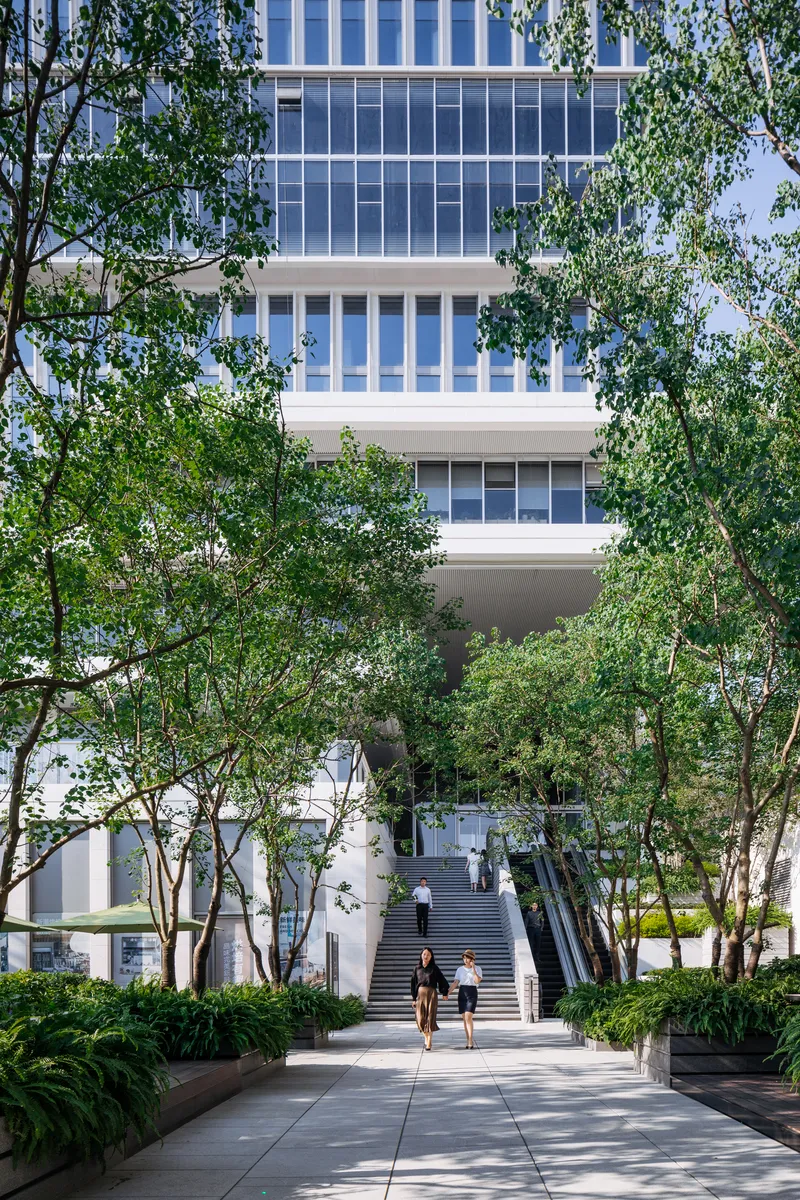
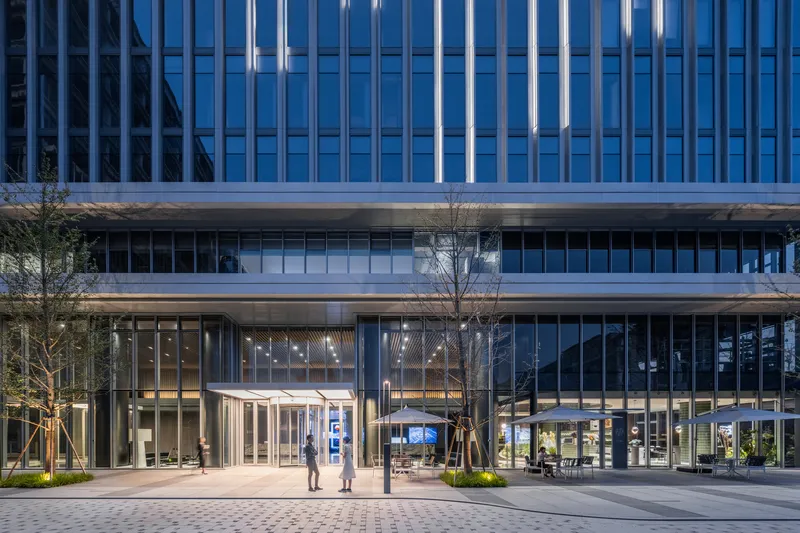
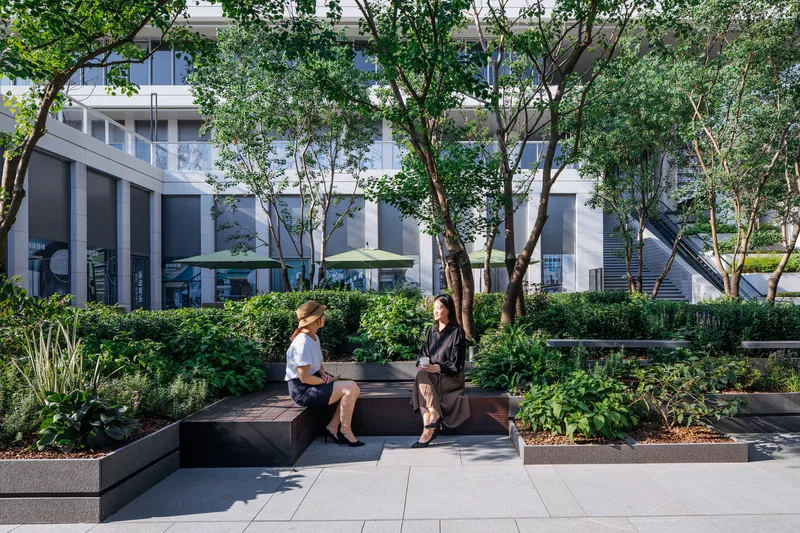
Where most mixed-use podiums present a continuous retail frontage, Sky City opens up. Paved walkways thread through planted beds and young trees, creating a ground plane that feels more like a park with buildings in it than a commercial plinth. The integration of a government-owned green belt into the design was not incidental; it became the organizing principle for pedestrian circulation between the subway station and the offices above.
Voids cut into the landscape pull natural light into basement levels, turning what would normally be dead service floors into habitable space. It is a straightforward passive strategy, but one that most developers skip because it sacrifices leasable area at grade. That Vanke Hangzhou and the Hangzhou Subway Group agreed to it says something about the project's ambitions beyond square-meter yield.
Ascending Through Terraces

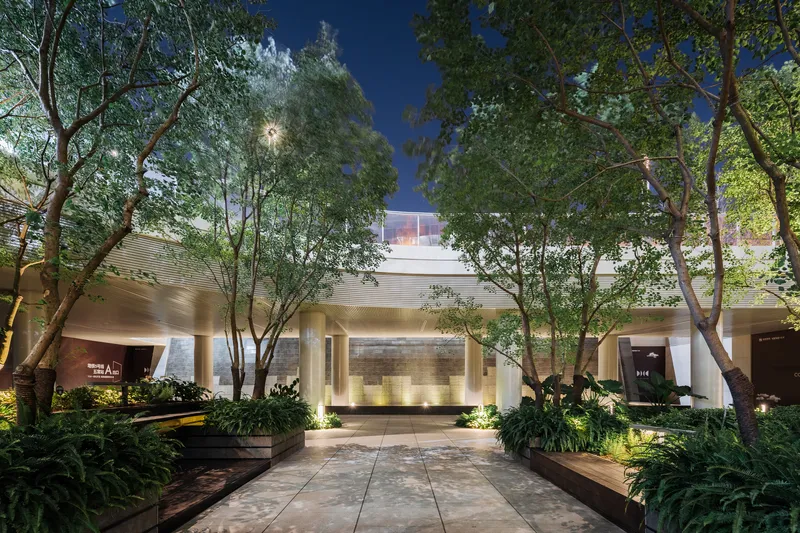
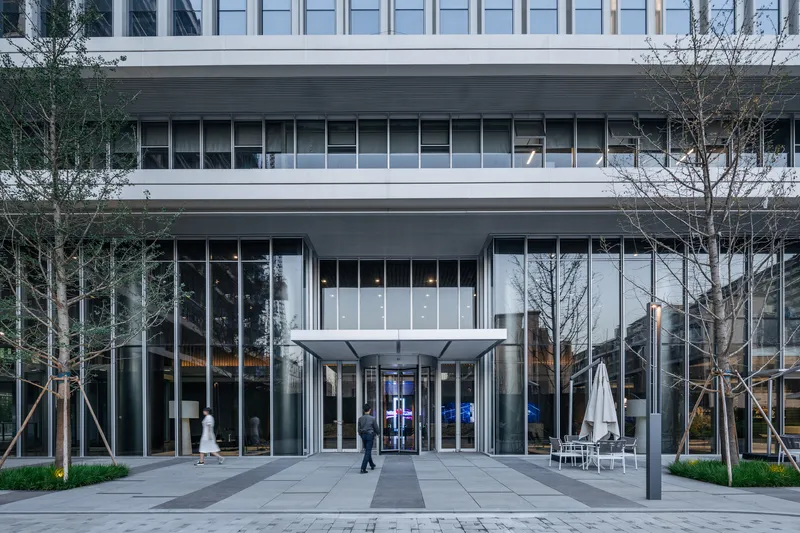
The transition from subway to street to office is choreographed through outdoor stairs, escalators, and planted terraces that shift level by level. Shifting slabs provide canopies for the levels below while generating terraces for the levels above, so every horizontal surface does double duty. At twilight, the terraces come alive with uplighting beneath established trees, giving the complex an evening presence that reads as landscape rather than signage.
Entry pavilions with stone walls and glass enclosures mark thresholds without imposing gates. The effect is welcoming rather than monumental, a quality that serves a development located in Hangzhou's tech corridor, steps from the campuses of Alibaba and Tencent, where workers expect permeability over ceremony.
The Cloud: Tower Massing and Facade Logic


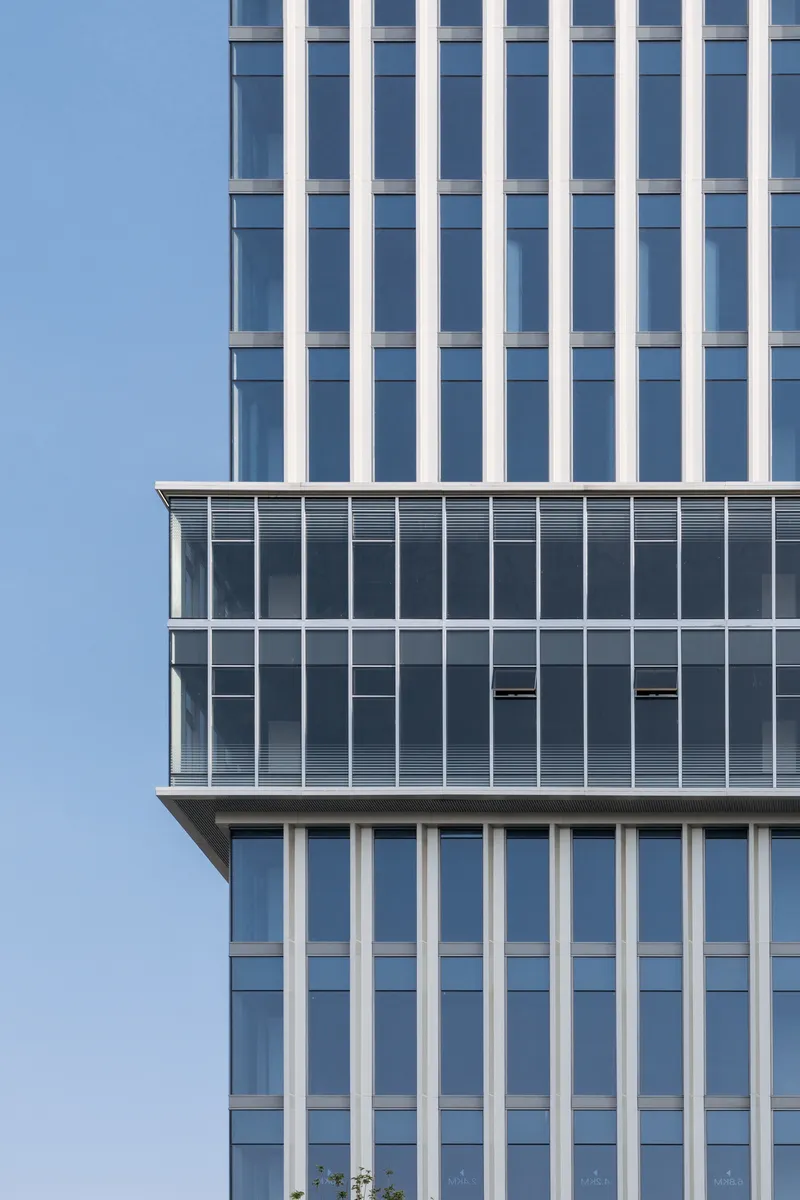
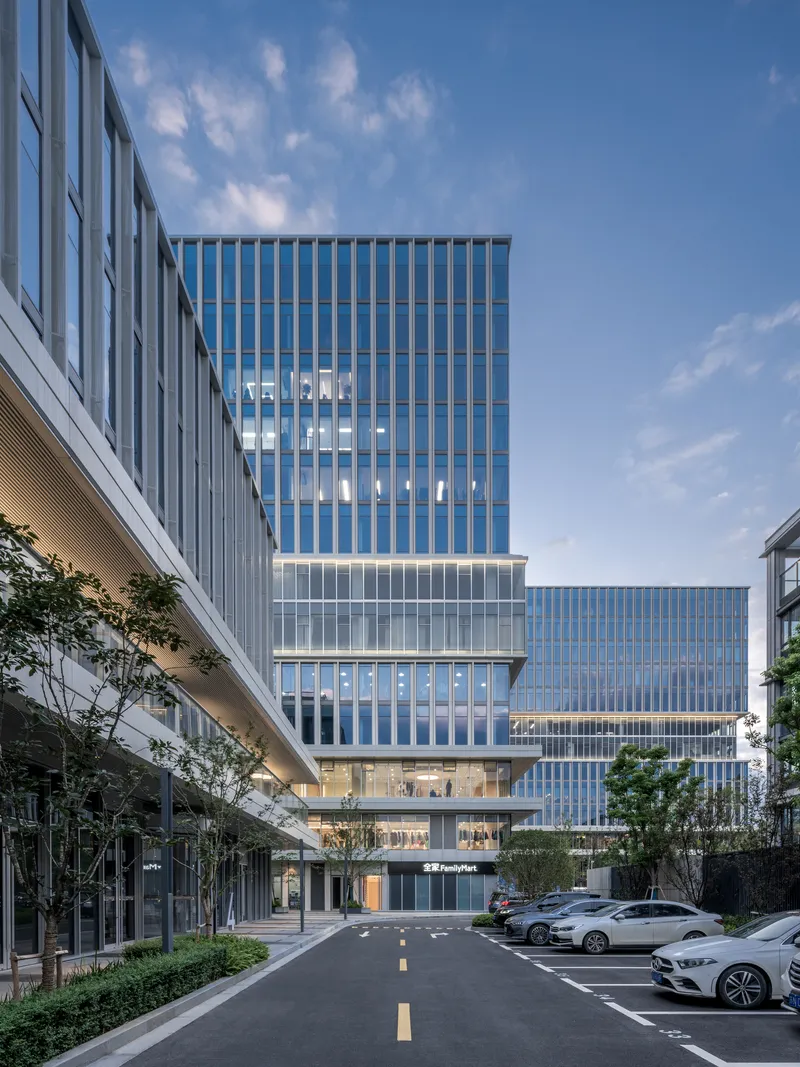
Above the Valley, the two office towers adopt a deliberately restrained facade language. Vertical aluminum fins, both perforated and solid, march in tight repetition across the upper volumes. The perforated panels conceal operable ventilation openings, allowing the facade to breathe without punching visible holes in its surface. It is a clean resolution: the building looks serene from the street while performing real environmental work.
The most dramatic moment occurs where the tower mass is split by a cantilevered glass box. Flanked above and below by the louver screens, this interruption reads as a geological fault line, a sectional break that reveals the interior life of the building. These two special floors offer flexible tenant space, whether for corporate showrooms or open-plan work environments, and they give the skyline silhouette an identifiable notch.
Facade Layering and Material Palette
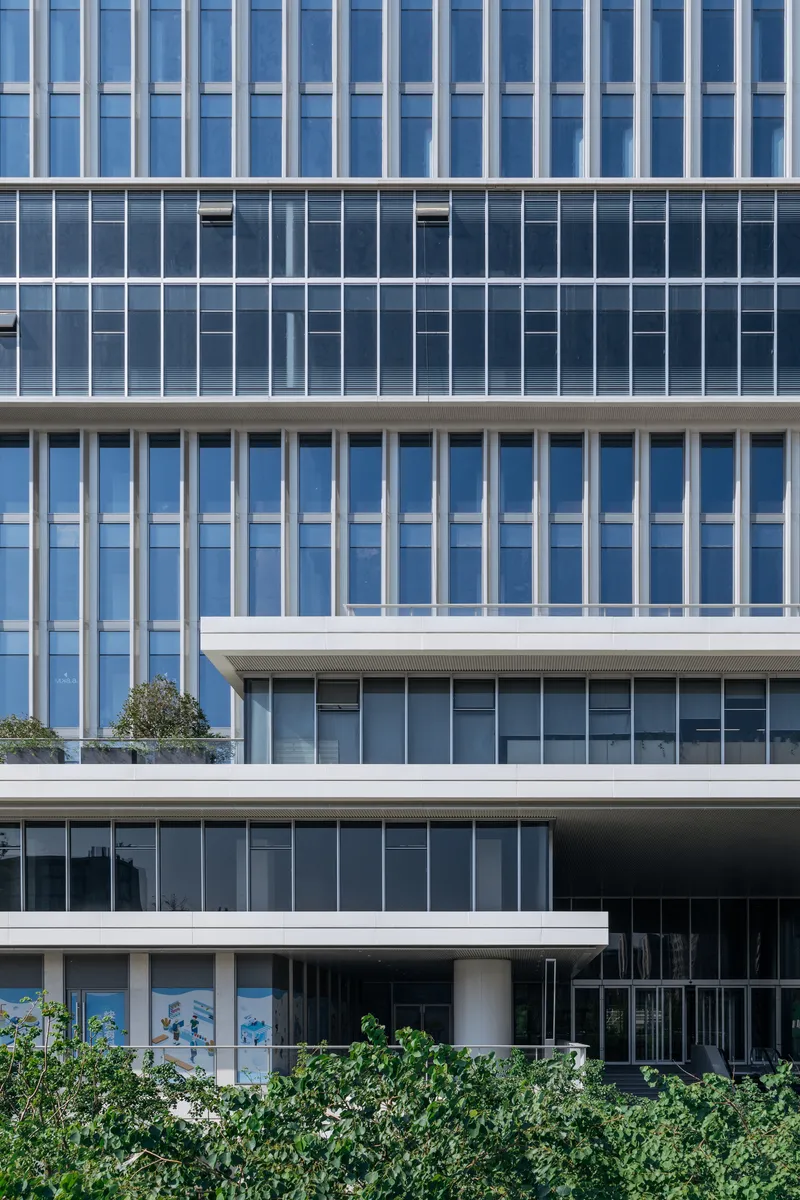

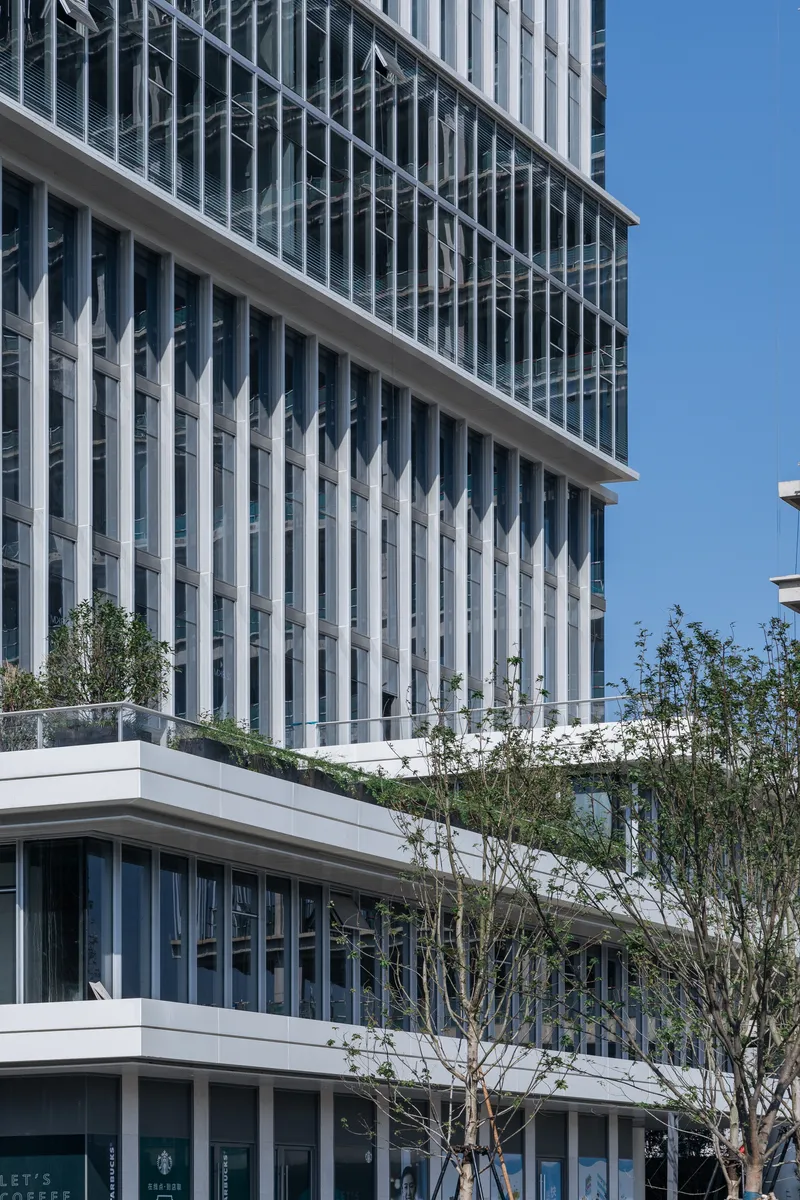
The facade is not one system but several, stacked and interlocked. Lower bands use horizontal glass and concrete fenestration that relates to the podium's human scale. Upper bands switch to vertical aluminum fins that elongate the towers visually. Between these registers, the glass-box insertion provides a moment of total transparency. The material palette stays narrow: aluminum, glass, concrete. No cladding gymnastics, no gratuitous color. The discipline pays off in coherence across a building that spans very different programmatic zones.
Interior Character
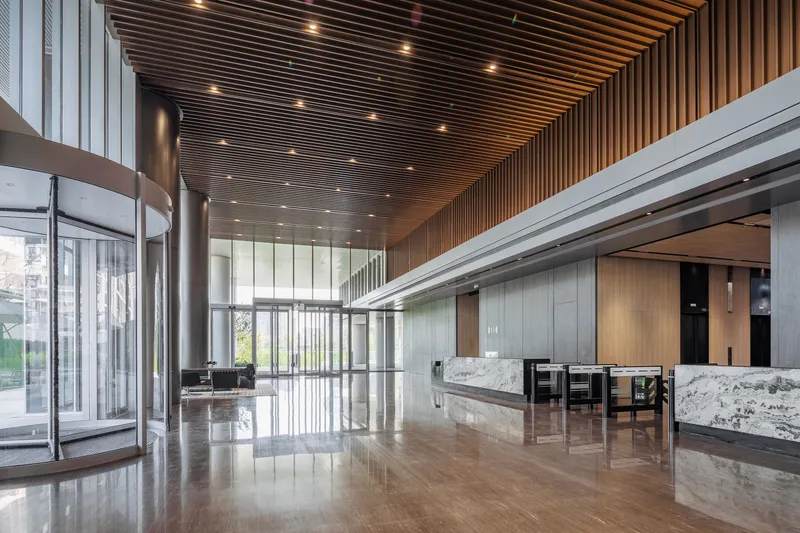
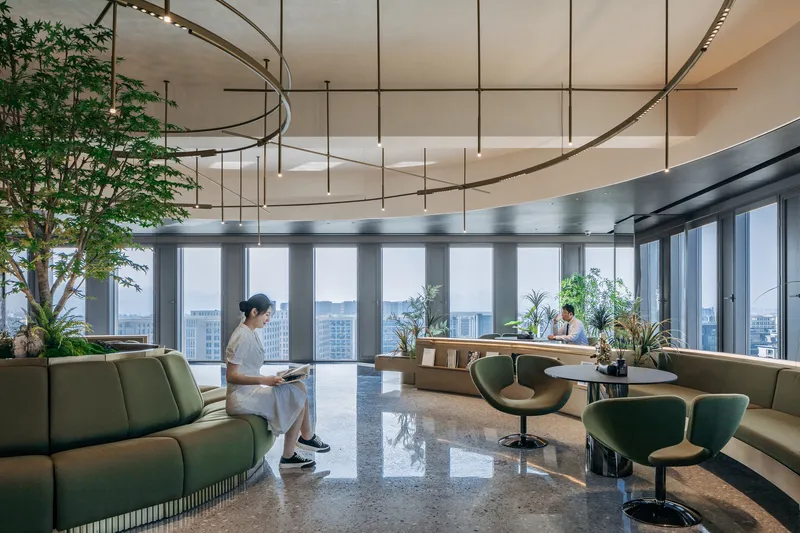

Inside, the lobbies and common areas sustain the exterior's material restraint. Timber slat ceilings warm the main lobby, set against polished stone floors and white marble reception desks. A lounge area with terrazzo flooring and suspended circular fixtures reads as a co-working space rather than a corporate foyer. These are not afterthought interiors; they carry forward the idea that a transit-connected building should feel inviting from the moment you step off the escalator.
Covered walkways with ribbed ceilings and pixelated tile walls extend the architectural language into circulation zones that would typically be left raw. It is a small detail, but it signals that the architects were thinking about the full pedestrian experience, not just the leasable area behind the glass doors.
Courtyards and Canopy
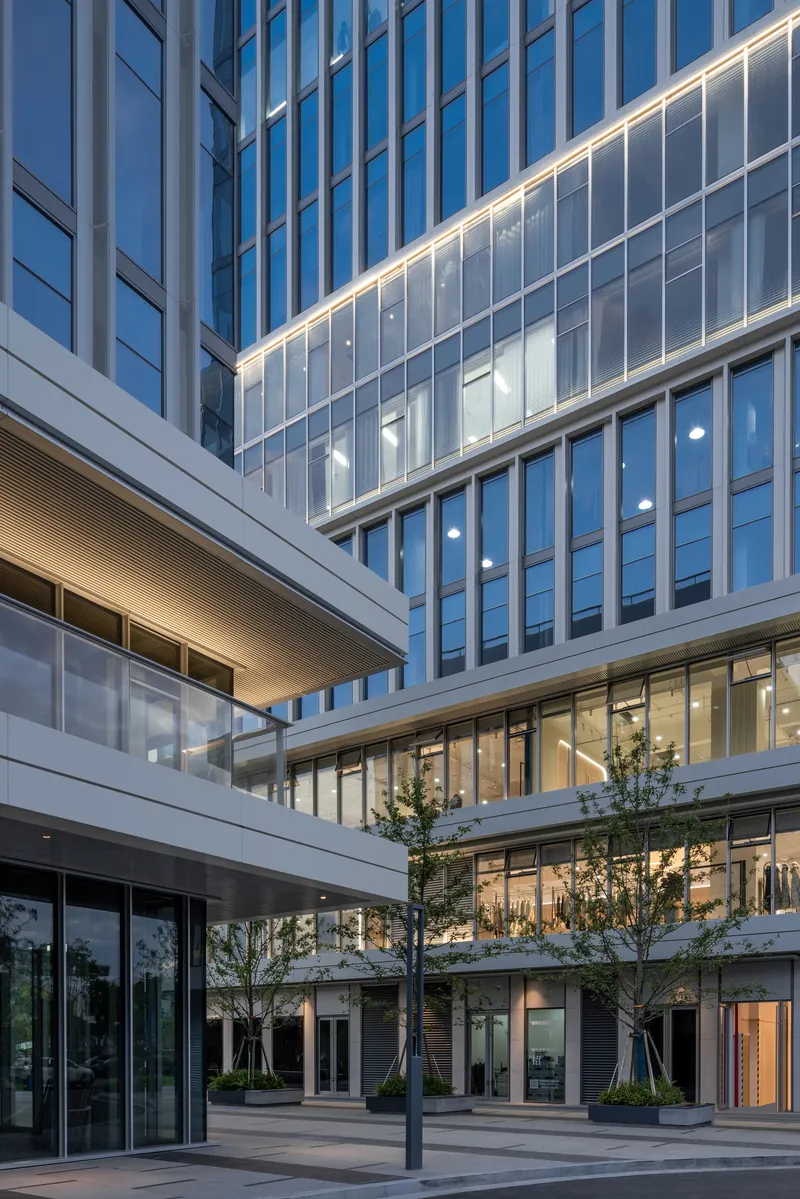
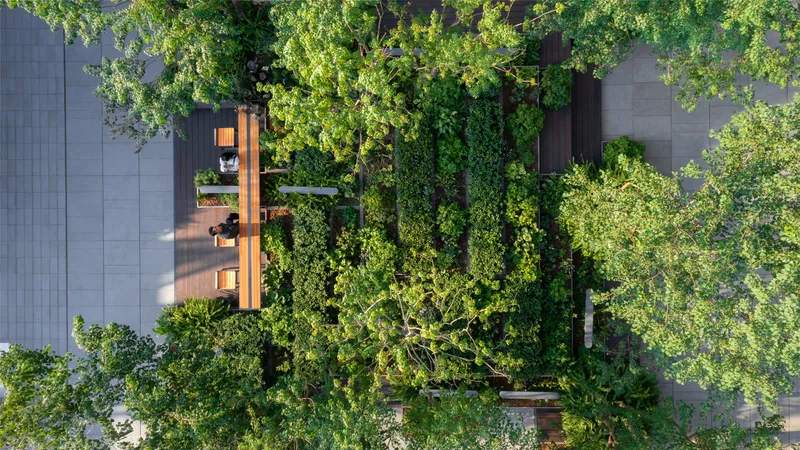
An interior courtyard framed by glass curtain walls and white metal panels creates a sheltered outdoor room at the heart of the complex. Overhead drone views reveal a timber pavilion structure nested within dense tree canopy, suggesting that the landscape plan was designed for maturity, not just for opening-day photography. The trees are young now, but the spatial framework is generous enough that the courtyard will improve over time.
Aerial Context: Yuhang District and the Uni-City Masterplan
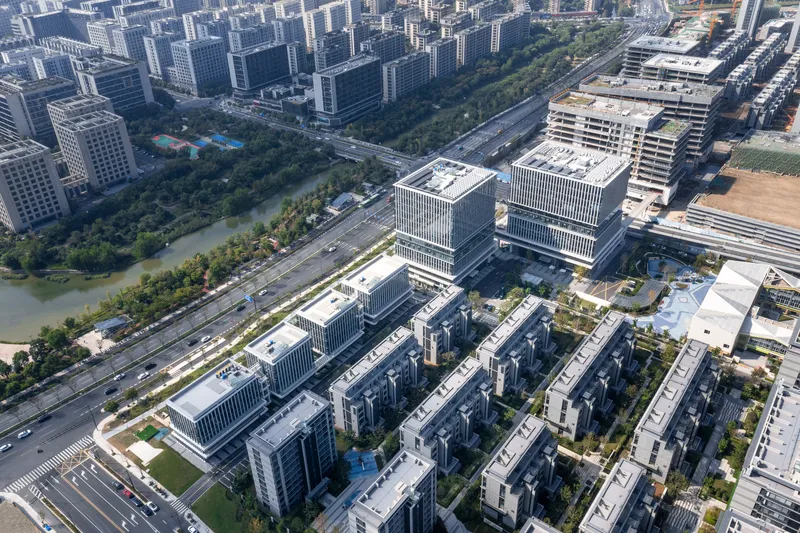
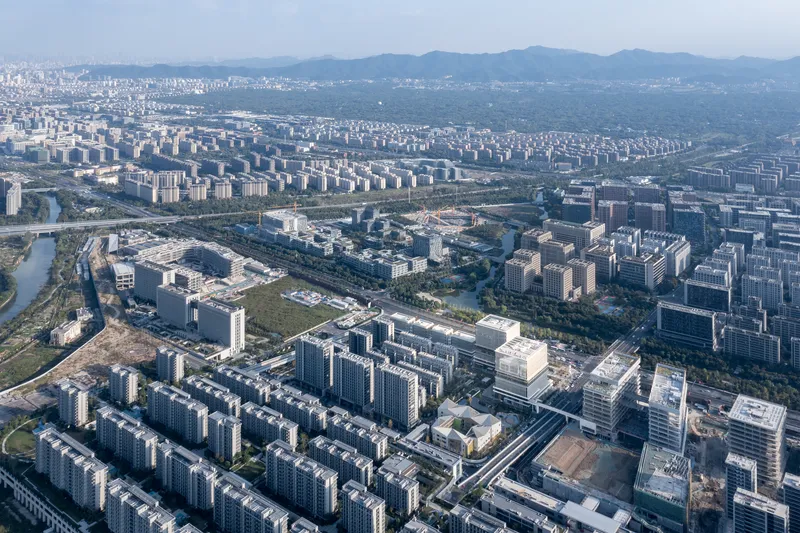
Pulled back to aerial scale, Sky City sits within SOM's one-square-kilometer Uni-City masterplan, a 155,000-square-meter district that includes residential blocks, tree-lined boulevards, and a river edge. The striped facade towers are immediately legible against the surrounding residential grain. Superimpose's contribution occupies a strategic position: it is the transit gateway to the entire district, the first thing residents and workers encounter when they surface from the subway.
The LEED V4.1 Platinum precertification for communities at the plan-and-design stage is worth noting, not because certifications alone prove sustainability, but because it indicates that the passive strategies embedded in the design, from perforated ventilation fins to daylight voids, were part of a coordinated environmental framework rather than individual gestures.
Plans and Drawings
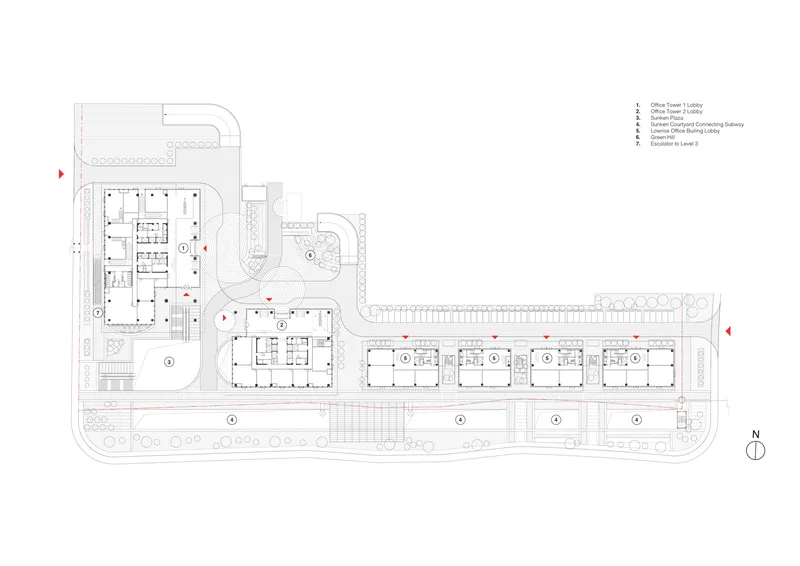
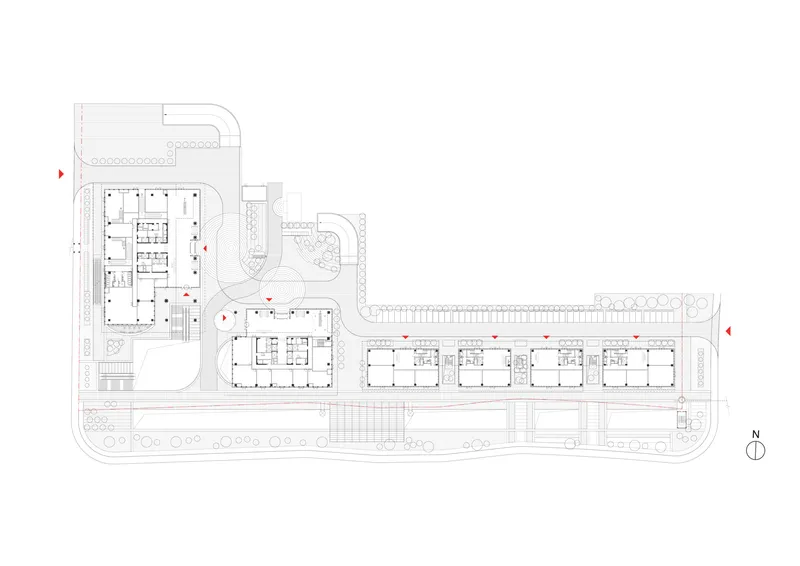
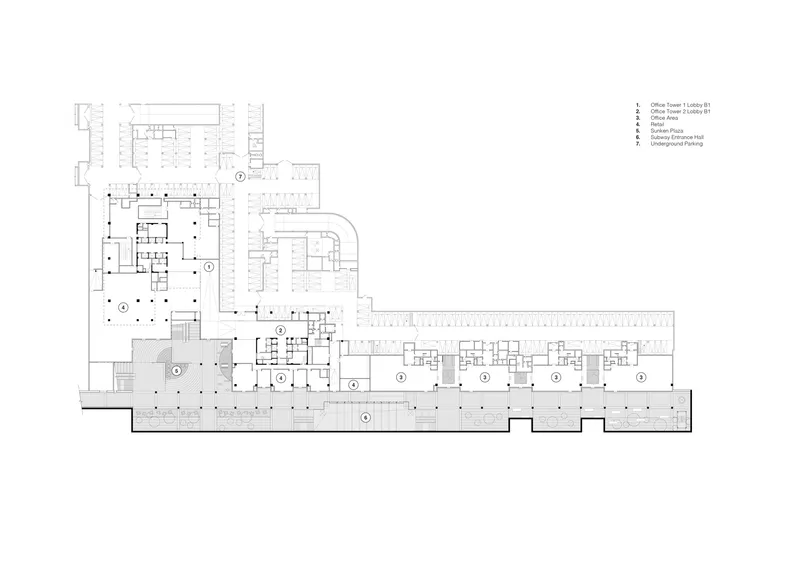
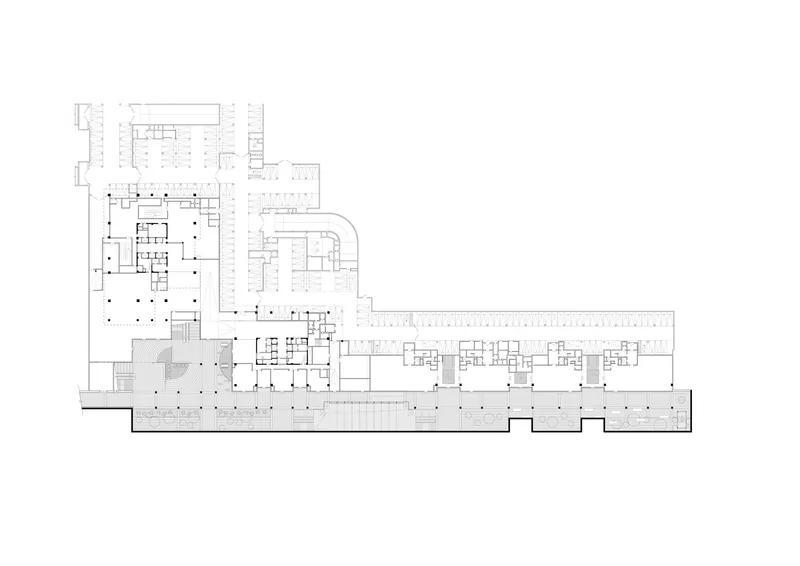
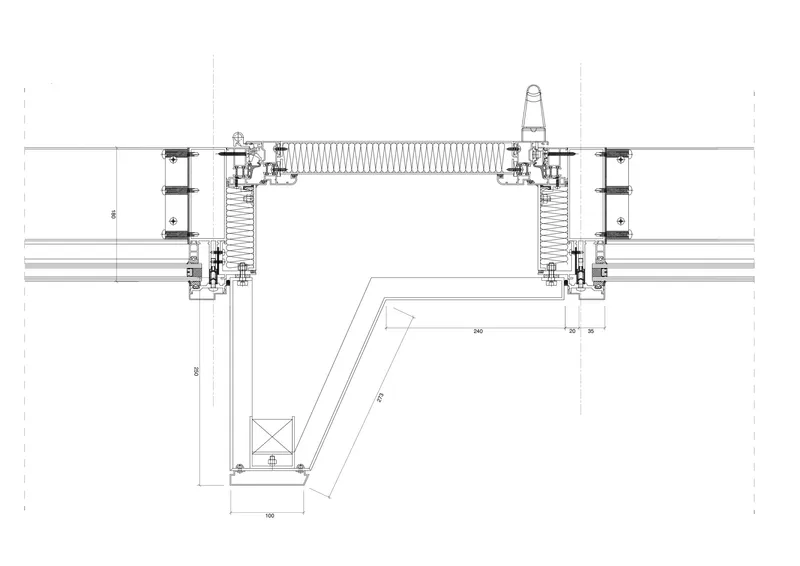
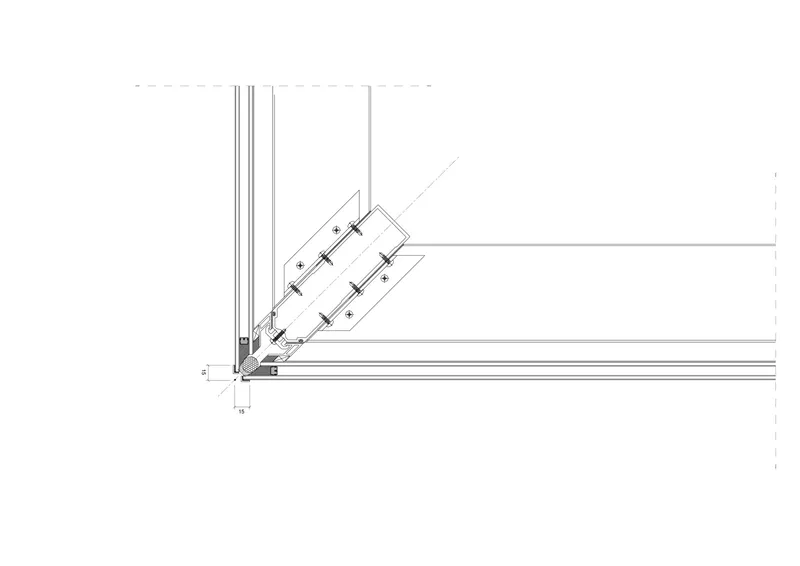
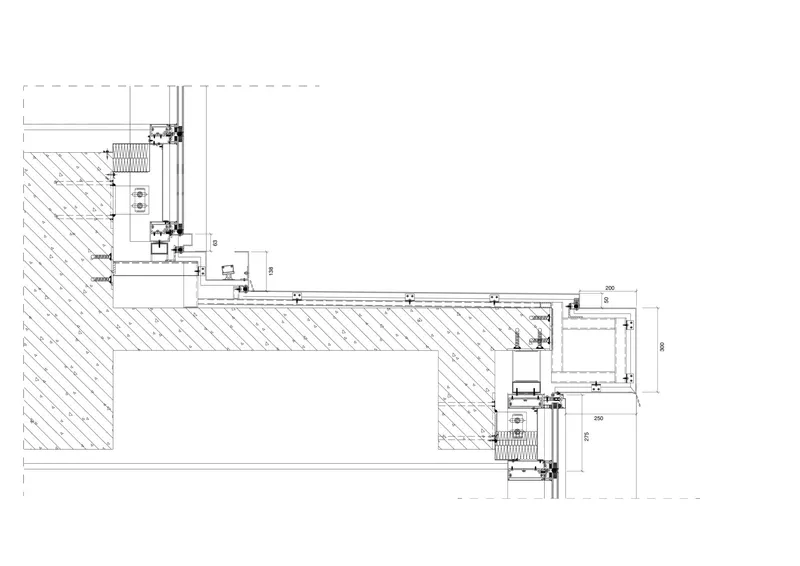
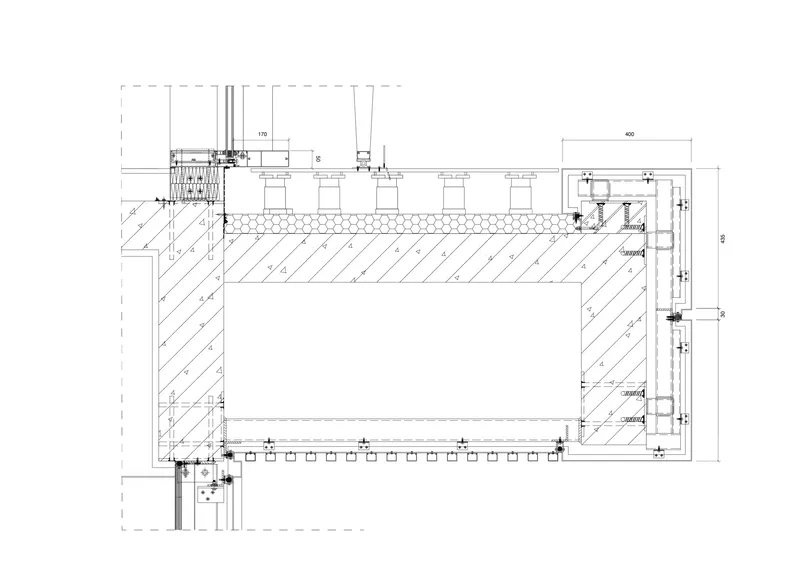
The site plan reveals how the tower and linear bar buildings organize around landscape and circulation paths, with the green belt woven through rather than pushed to the perimeter. Ground and upper floor plans show the tower lobby transitioning into an elongated bar with repeating room modules, an efficient layout that keeps cores compact and daylight access high. The detail sections of skylight assemblies, bracket connections, and window-to-slab junctions demonstrate a level of facade engineering that matches the project's visual ambition. Angled bracket connections and insulated roof hatch assemblies point to a team that worked through the details, not just the renders.
Why This Project Matters
TOD projects in Chinese tech corridors are built at enormous speed, and most of them look like it. Sky City TOD stands out not for formal novelty but for the seriousness with which it treats the ground plane. The Valley-and-Cloud concept is, at its core, a sectional argument: give the public realm the landscape richness it needs at the bottom, and let the commercial program recede into disciplined repetition above. That argument is made convincingly here, in part because the facade systems, the landscape strategy, and the interior detailing all reinforce the same idea.
For architects working on transit-adjacent mixed-use, Sky City offers a replicable lesson. You do not have to treat the subway exit as a service door. You can make the threshold between transit and city the most generous space in the entire project. Superimpose Architecture, working with clients willing to sacrifice some ground-floor leasable area for daylight voids and green belts, has produced a complex that will age well precisely because it was designed for the pedestrian first and the investor second.
Sky City TOD, designed by Superimpose Architecture. Located in Yuhang District, Hangzhou, China. 72,000 m². Completed 2022. Photography by CreatAR Images.
About the Studio
Share Your Own Work on uni.xyz
If projects like this are the kind of work you want to make, uni.xyz is a place to publish your own, find collaborators, and enter design competitions.


Popular Articles
Popular articles from the community


Cube Design Draws an Ecological Corridor Between Two Shenzhen Hills with the Nankai Building
Beside Shenzhen's container docks, the Nankai Building pairs stacked balconies with a climbing green screen to connect two hillsides across its height.

LT2A and OPEN Architectes Thread a Brick and Glass High School Through a Wooded Belgian Campus
In Braine-l'Alleud, a 3,000 m² wing for Collège Cardinal Mercier pairs pale brick with a glazed colonnade, deferring to a small chapel and a dense wood.

David Macias Steps a Doorless Stone and Plaster House Down a Tropical Colombian Hillside
In the humid hills of Colombia, Threshold House replaces the front door with an open void and terraces its 850 m² down the slope instead of fighting it.

longwave studio Reorganizes a 112 m² Tainan Apartment Around the Daily Routines of a Family and Two Cats
In Tainan, Taiwan, birch plywood, rust-red furniture and a freestanding plaster wall link arrival, storage, work and family life in one apartment.

Similar Reads
You might also enjoy these articles


LAVA Architecten Gives Vocational Education a Sawtooth-Roofed Face on a Mechelen School Campus
In Mechelen, Belgium, a 2,053 m² STEM school on a 6×6 m grid turns workshops and classrooms into rooms that can be rearranged as teaching changes.

KEMA Studio Turns a Derelict Marvila Attic into a 60 m² Lighthouse Apartment Above Lisbon
In Lisbon's Marvila district, a rebuilt roof, four skylights and two plywood volumes turn an unlivable attic into a bright home facing the Tagus.

Pixel Gardens: One Repeated Module Stacked Into a Terraced Social Housing Tower for Famagusta
Salem Bader's shortlisted housing tower builds a vertical neighbourhood from one repeated module, offsetting units to carve terraces, light and air.

Bao Huynh Watercolor Atelier: A Serene Art Retreat in Hội An
Bao Huynh Watercolor Atelier in Hội An blends multifunctional art spaces, sustainable design, local materials, and family-friendly living in a serene environment.

Explore Connecting City Competitions
Discover active competitions in this discipline

Challenge to reimagine the Iron Throne

Photograph architecture without architects

Illustrate the lost glory of Angkor Wat - Render Challenge

Design challenge to reuse E-waste
Comments (0)
Please login or sign up to add comments
No comments yet. Be the first to comment!