

BHA Studio Wraps a 2,000-Student Campus in Terracotta Screens and Double-Layered Roofs in Central Vietnam
iSchool Quang Tri in Đông Hà uses perforated brick lattices and rainwater harvesting to keep 17,000 square meters cool and green.


Designing a school for 2,000 students across kindergarten, primary, secondary, and high school levels is a logistical problem before it is an architectural one. Where do you put 800 kids at lunch? How do you separate a five-year-old's world from a teenager's without turning the campus into a maze? BHA Studio, led by Nguyen Xuan Minh, answered those questions with a campus that stretches across 17,000 square meters of built area on a 50,000-square-meter site in Đông Hà, the capital of Vietnam's Quảng Trị Province. The result, completed in 2018, is a long, low building that treats climate as its primary design driver and terracotta as its signature material.
What makes iSchool Quang Tri worth studying is its refusal to treat environmental strategy as a bolt-on feature. The double-layered roof and wall system, the 600-cubic-meter rainwater cistern, the 536 large trees, and the orientation of every classroom wing toward the southeast are not additions to a finished plan. They are the plan. The school won a silver prize at the 2018 National Architecture Award and a green architecture prize in the Asia region the same year, and the recognition is deserved: this is climate-responsive design at institutional scale, built with steel, concrete, brick, and a clear understanding of what central Vietnam's heat and monsoons demand.
A Facade Language Built from Perforated Brick
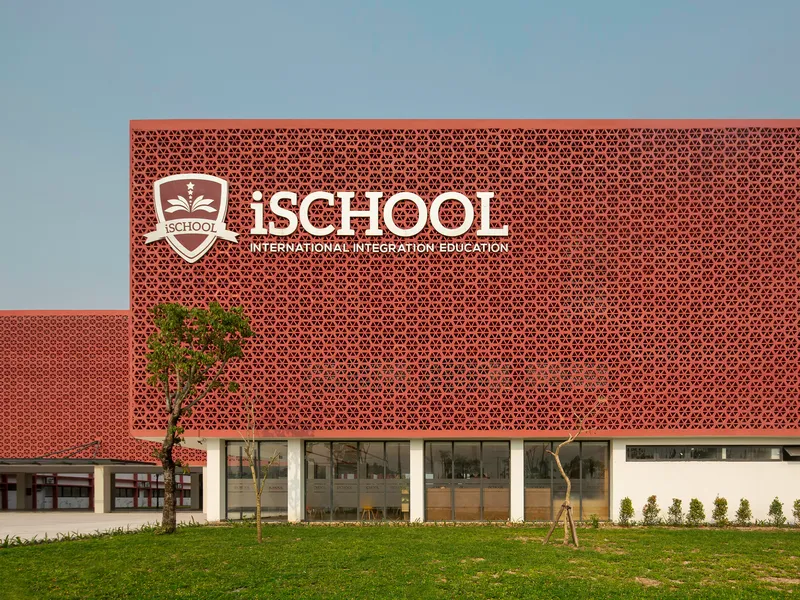
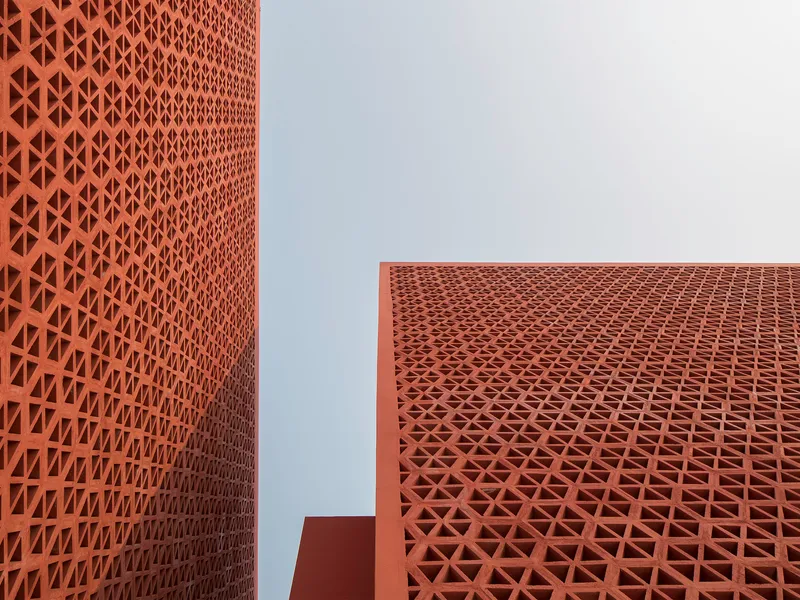

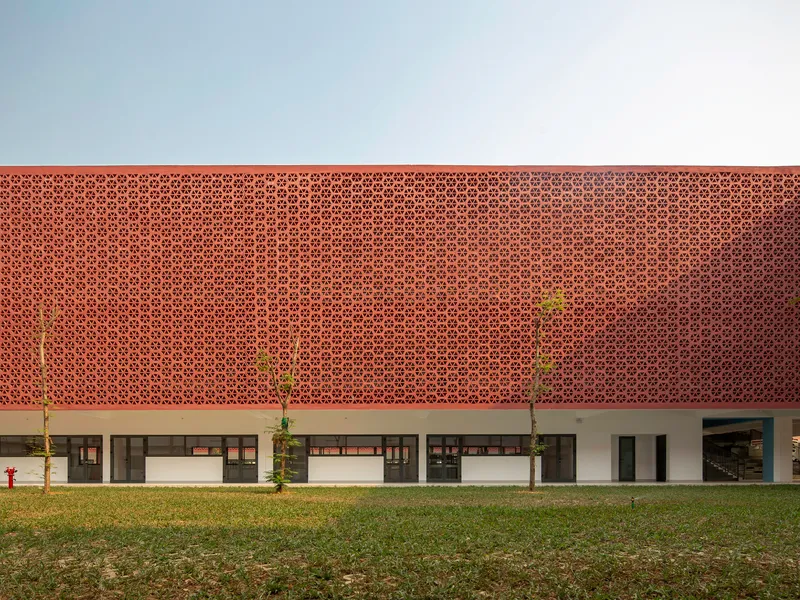
The most immediately visible move is the terracotta screen wall. Geometric lattice panels, assembled from locally sourced brick, wrap classroom blocks and corridor edges in triangular and diamond patterns that filter sunlight without blocking it. These screens do more than one job. They shade interior corridors, reduce solar gain on west-facing walls, and give the campus a coherent visual identity that reads clearly from across the playing fields. The lattice is dense enough to create real shade but open enough to let breeze through, a balance that is harder to achieve than it looks.
Up close, the brickwork is crisp and regular. The angled panels at corners create a sense of depth and movement, especially when the light shifts through the day, casting dappled patterns onto polished corridor floors. It is an old technique, common across Southeast Asia, but BHA Studio deploys it at a scale and with a geometric precision that feels contemporary without reaching for novelty.
Corridors as Climate Machines
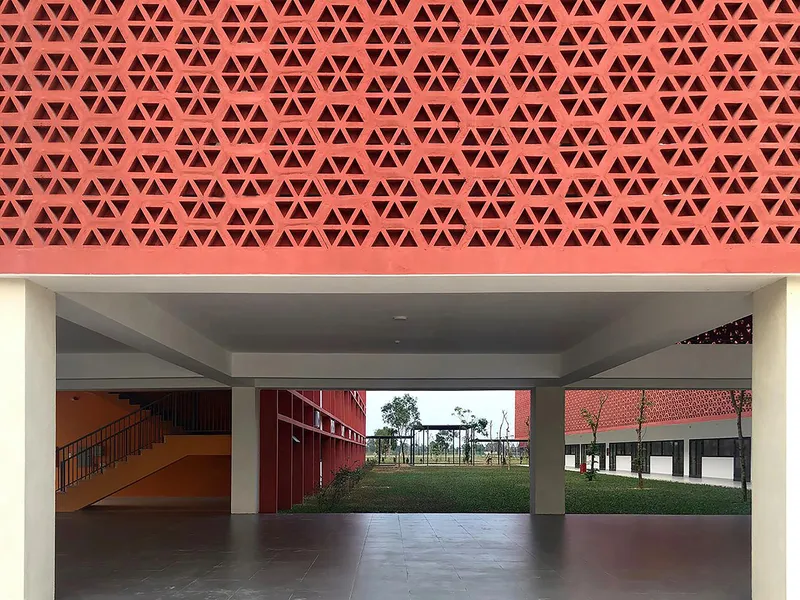
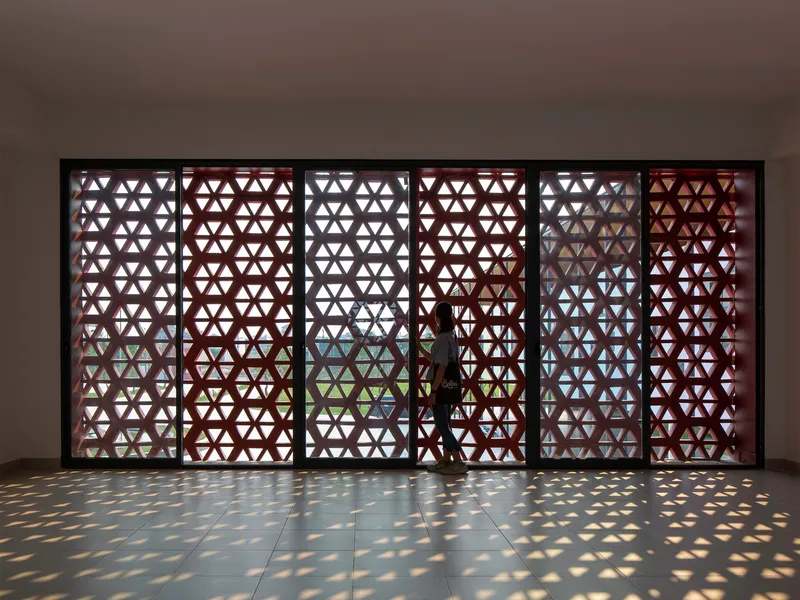
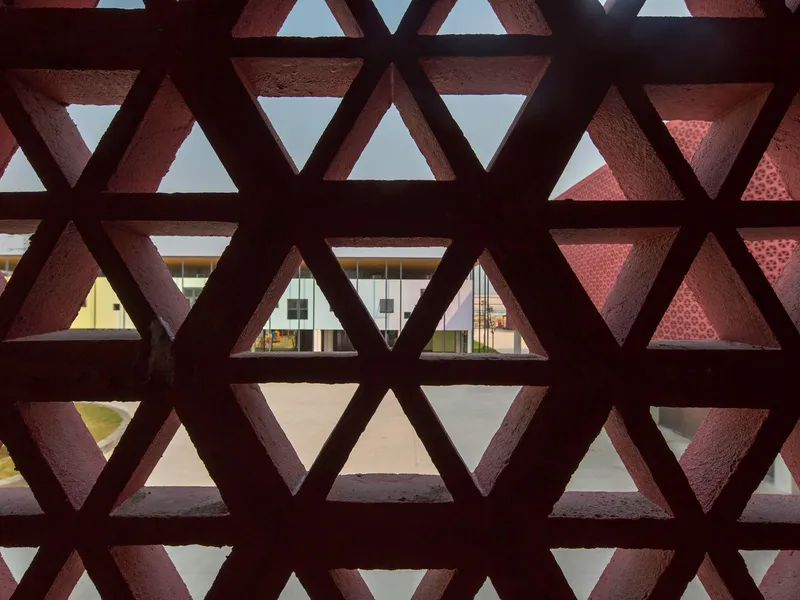
The corridors are not neutral circulation space. They are positioned on the western side of the classroom wings, acting as thermal buffers against the afternoon sun. The terracotta screens overhead and alongside turn these passages into shaded, ventilated zones that stay significantly cooler than the exterior. Walk through them and you see the lattice doing its work: triangular patterned walls throw dappled sunlight onto the floor, and the views through the screens frame courtyard greenery and opposing facades in controlled fragments.
This is a strategy that respects how children actually use a school. Between classes, they move through these corridors dozens of times a day. Making that transition between inside and outside comfortable, rather than punishing, is a design decision with real consequences for how the building feels in use.
Color, Scale, and the Street Edge
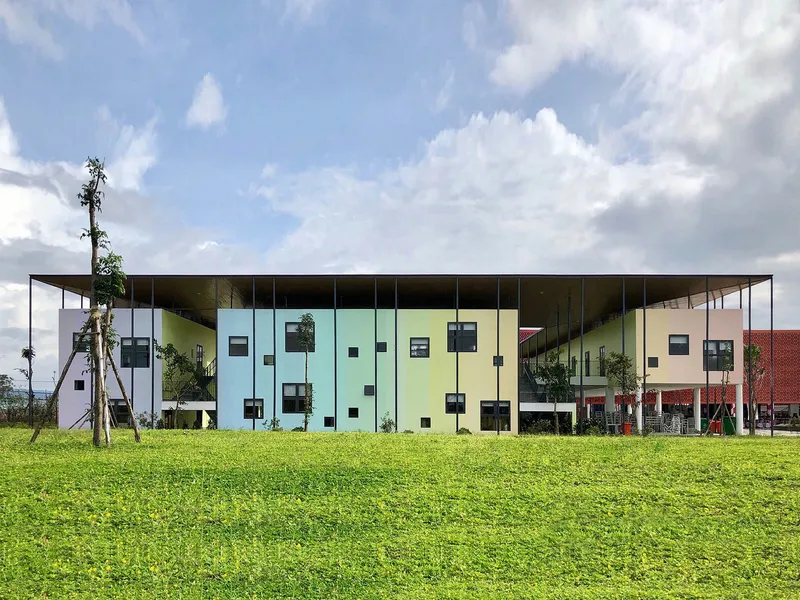
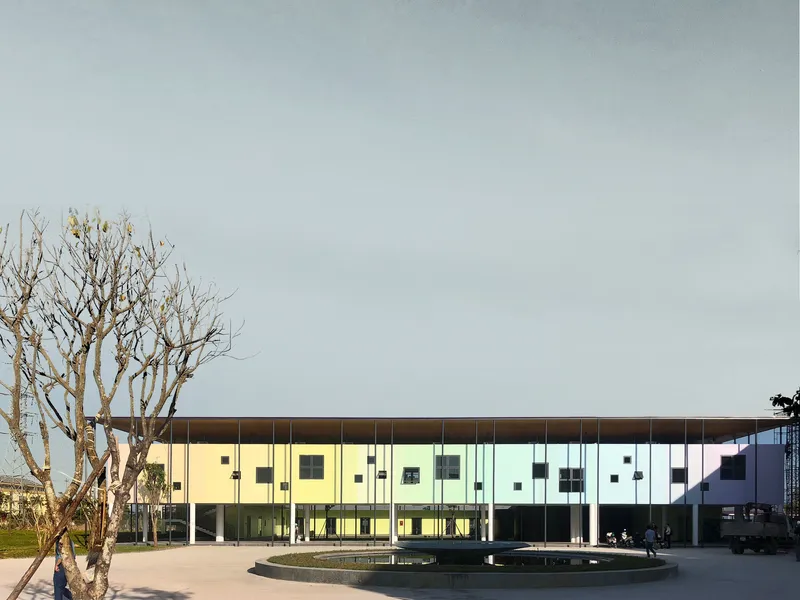
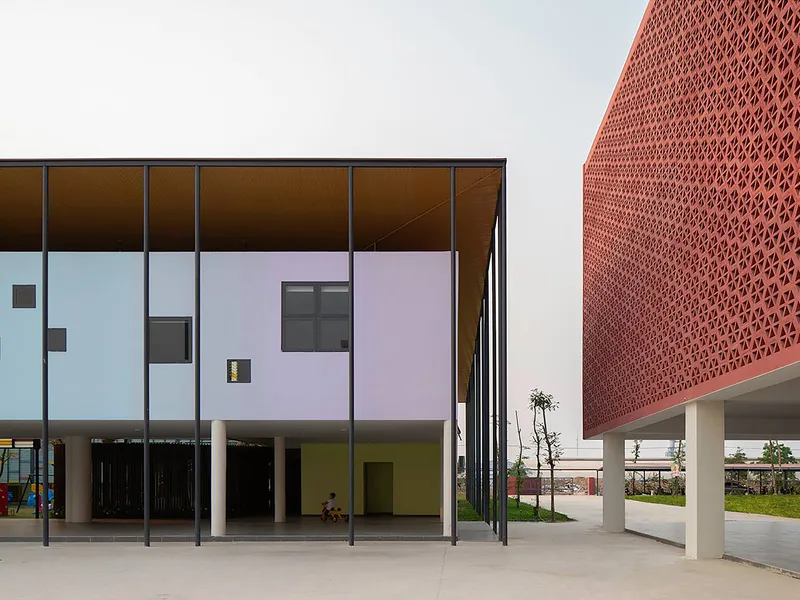
The entrance on Hung Vuong Street, the main road of Đông Hà city, presents a long, horizontal facade with pastel-colored panels, scattered square windows, and a cantilevered overhang that stretches out to shade the ground level. The color palette, soft yellows and pinks against white, signals that this is a school without resorting to cartoonish graphics. It is calm and deliberate, and the rhythm of the window openings gives the facade a visual grain that prevents the long elevation from feeling monotonous.
The circular fountain at the entrance and the bare tree beside it anchor the arrival sequence. From the corner, you can see how the glazed colonnade transitions into the perforated terracotta volume, two material languages meeting at a seam that the architects handle cleanly.
Courtyards, Canopies, and Play
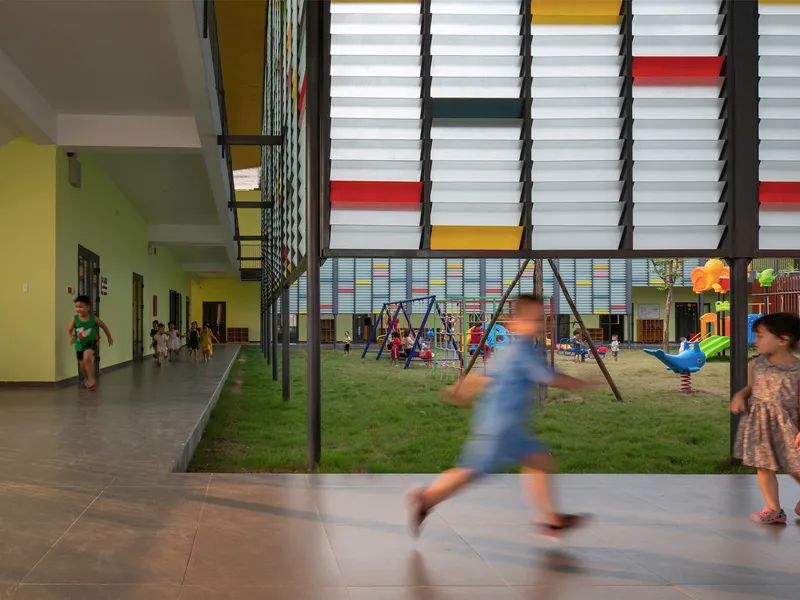
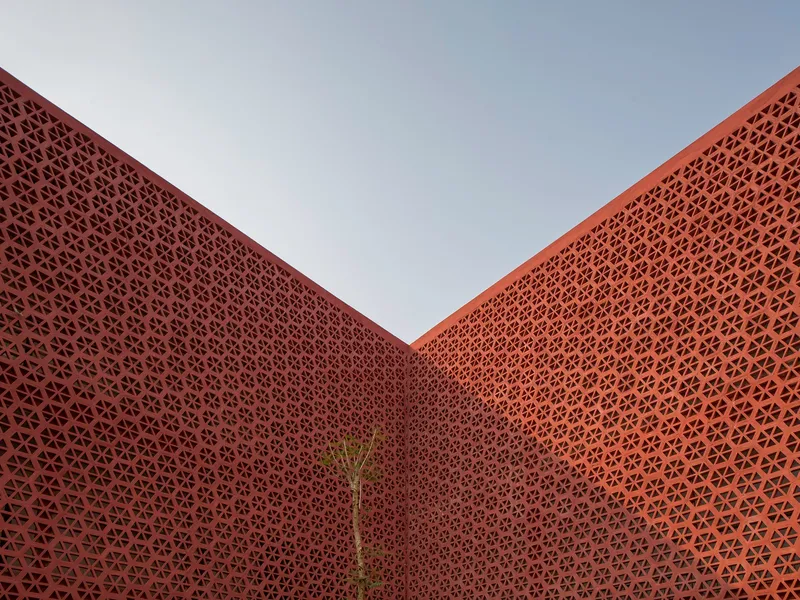
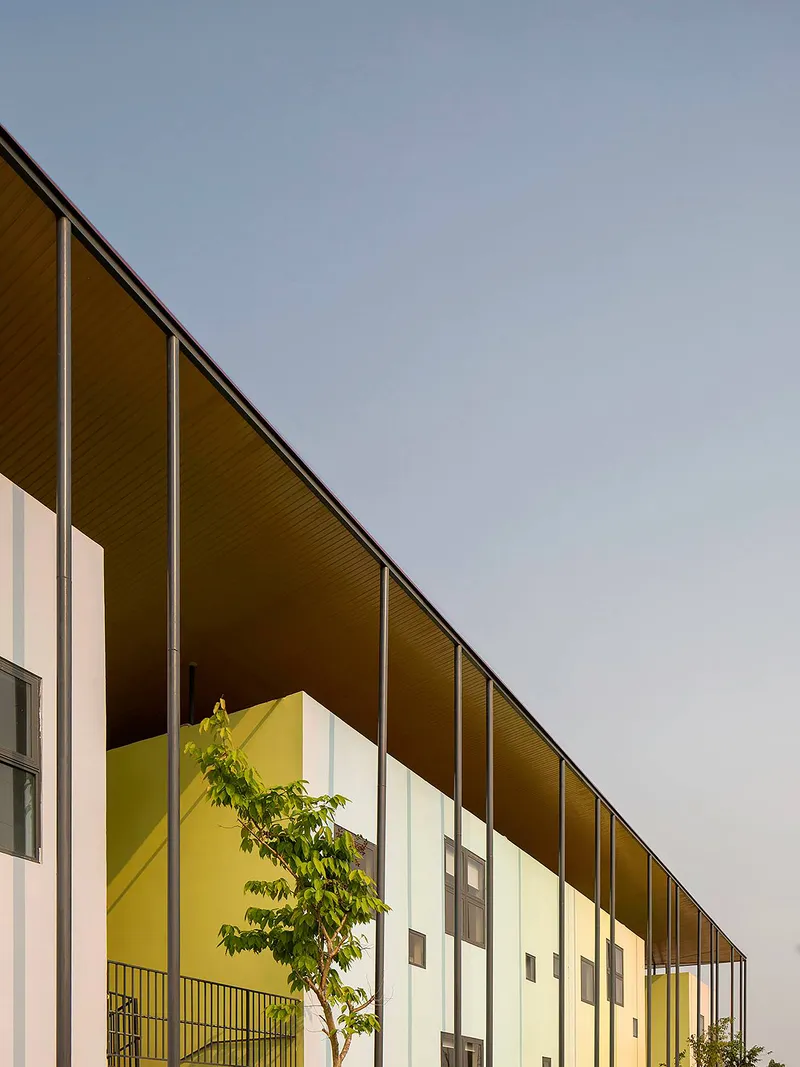
The interior courtyards are where the campus comes alive. Covered zones with playground equipment sit between classroom corridors, giving younger students protected outdoor space where they can run without baking in direct sun. The converging perforated screen walls frame these courtyards and filter light down into them, creating spaces that feel enclosed but not claustrophobic. A small tree at one corner reinforces the sense that these are cultivated, cared-for outdoor rooms rather than leftover voids.
At dusk, the sloped roof with its warm wood soffit extends over white volumes and planted courtyards, and the building takes on a quieter, more domestic quality. The overhang is deep enough to be functional, protecting walls from monsoon rain and keeping classrooms dry even when windows are open for ventilation.
The Double-Layered Envelope and Water Strategy
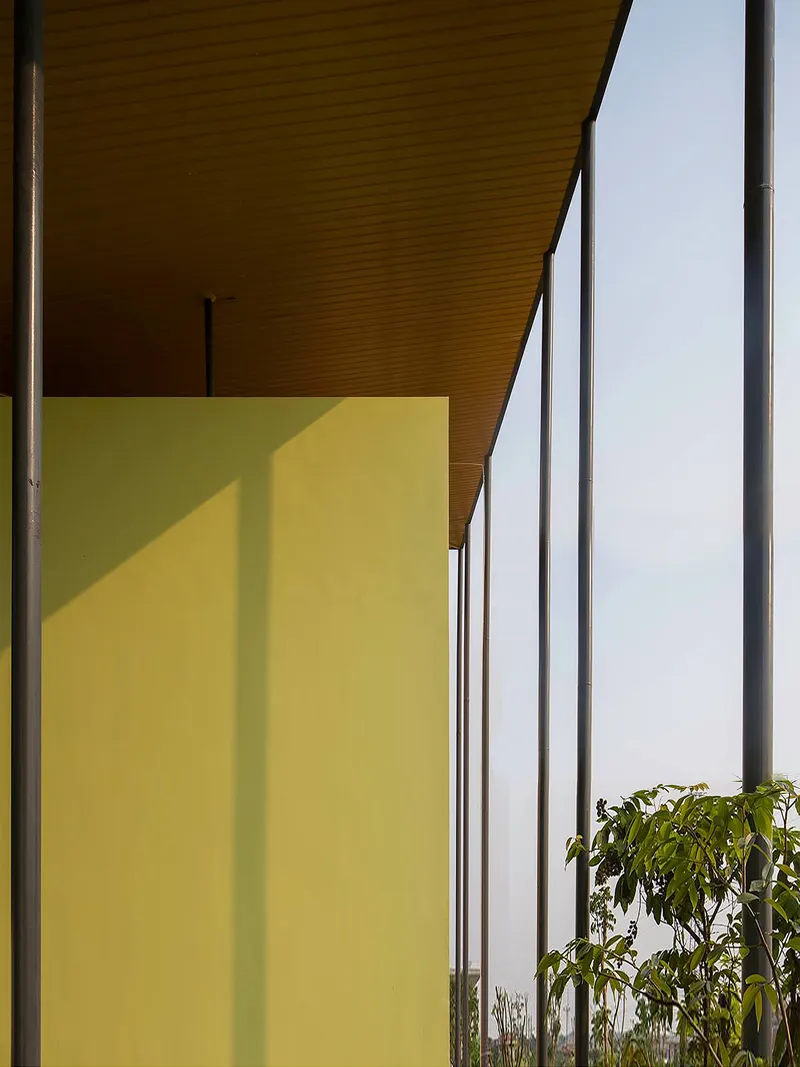
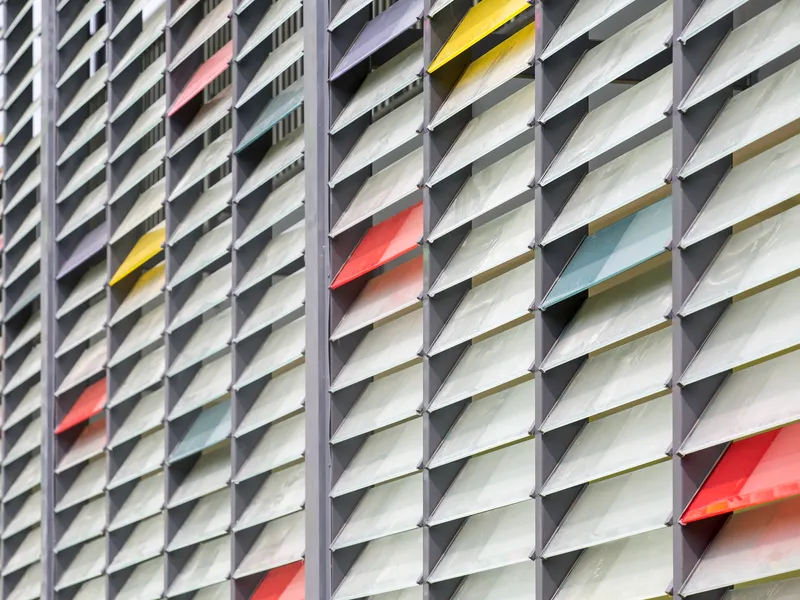
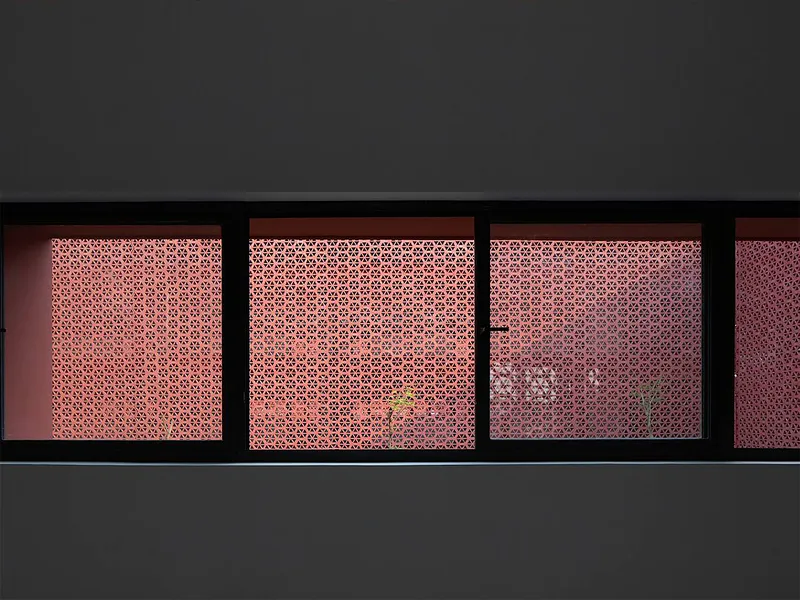
The double-layered roof and wall system is the project's most significant technical move. The outer layer absorbs solar radiation and deflects rain; the inner layer defines the conditioned interior. The air gap between them allows heat to dissipate before it reaches occupied spaces, reducing cooling loads without relying entirely on mechanical systems. The angled metal louver facade with white fins and scattered yellow and orange blades is part of this strategy, controlling solar ingress while adding a secondary layer of visual texture.
Rainwater collected from the roof feeds a 600-cubic-meter cistern buried beneath the campus. That stored water irrigates 29,000 square meters of grass and 536 large trees through an automatic watering system. Solar hot water panels and energy-saving lighting round out the sustainability measures. None of this is radical on its own, but the integration, every system connected to the next, from roof to cistern to landscape, gives the project coherence.
Landscape as Infrastructure
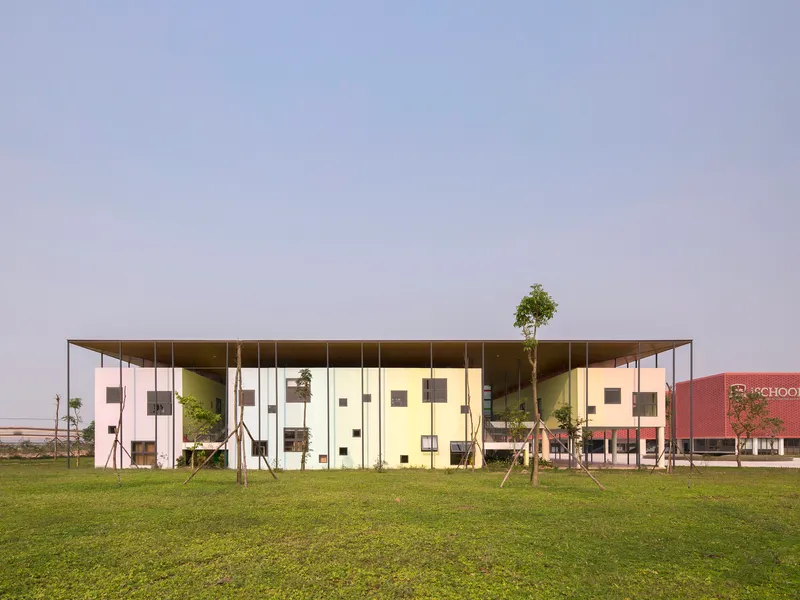
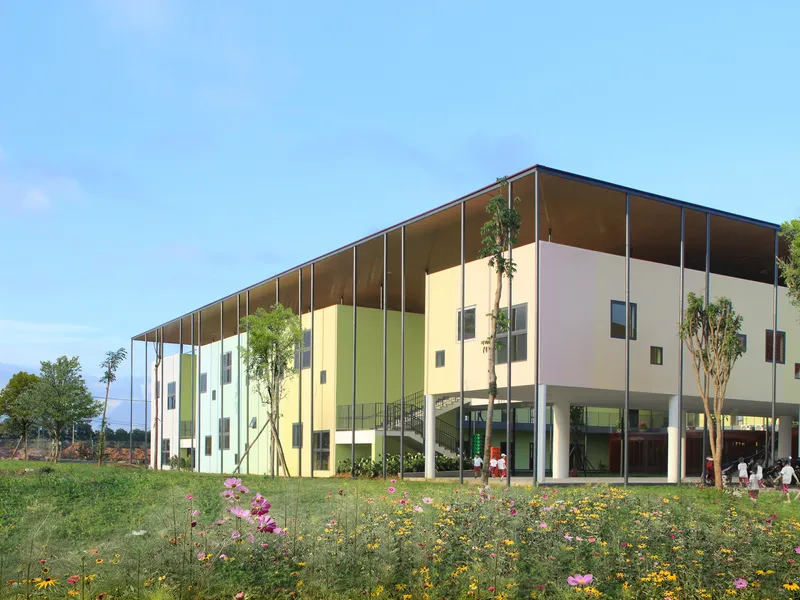
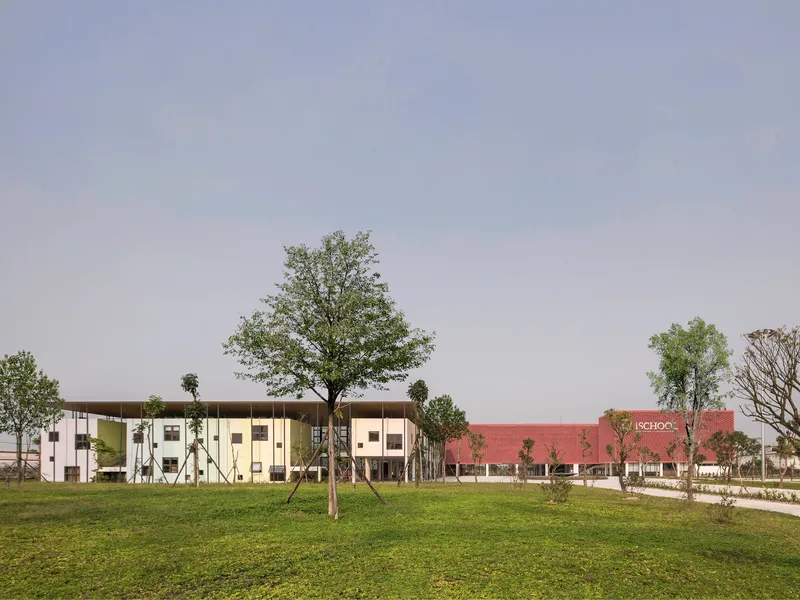
The 536 trees and nearly three hectares of grass are not decorative. They are selected for suitability to Quảng Trị's soil conditions, which means they are intended to survive and grow without excessive maintenance. The wildflowers in the foreground of the side elevation, the young saplings on the lawn, the grassy fields stretching out to the playing areas: all of this reads as a campus that will mature over the next decade, getting cooler, shadier, and more comfortable as the planting fills in.
The long facade with its thin roof overhang sheltering glass and panel volumes across a lawn establishes the building's relationship with its landscape. The architecture sits low and opens outward, treating the green space as an extension of the educational environment rather than a boundary around it.
Design Process: Models and Diagrams
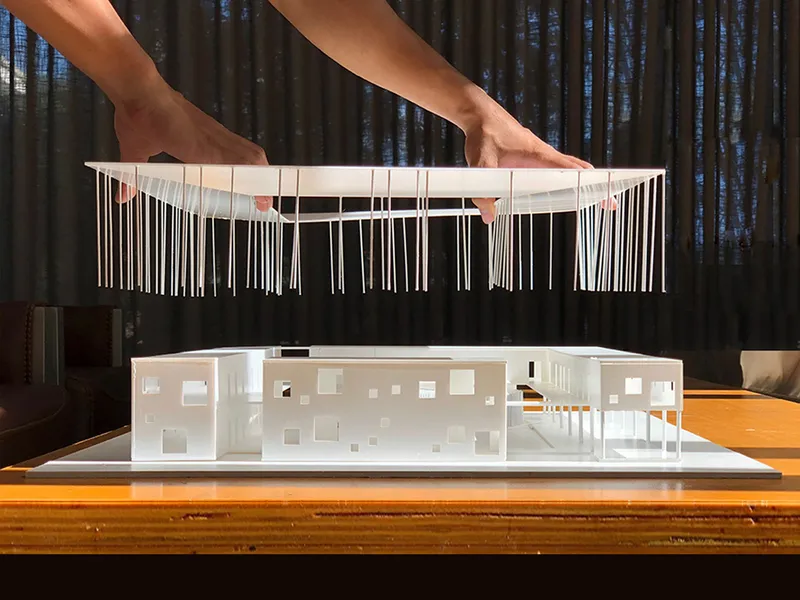
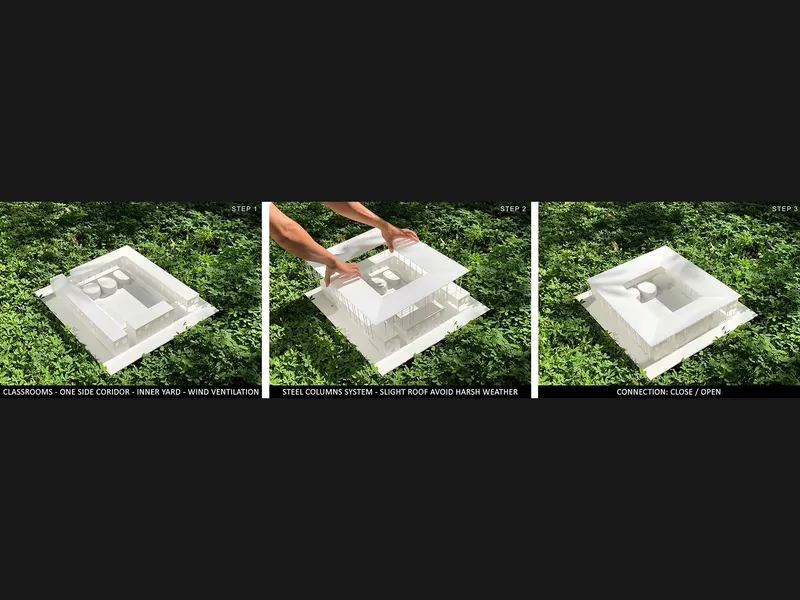
The physical models reveal how BHA Studio thought about the roof as a sliding, lifting element. A string-suspended roof structure hovers over white interior volumes, showing the conceptual separation between shelter and enclosure. The three-step diagram demonstrates the ventilation system: the roof lifts, air circulates through greenery and the gap between layers, and heat escapes upward. It is a legible, convincing representation of a passive cooling strategy that drives the building's form.
Plans and Drawings
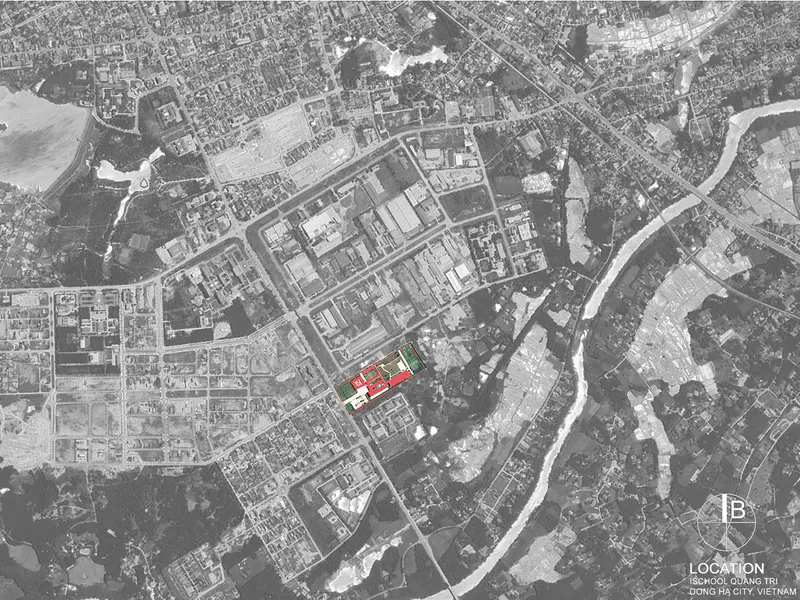

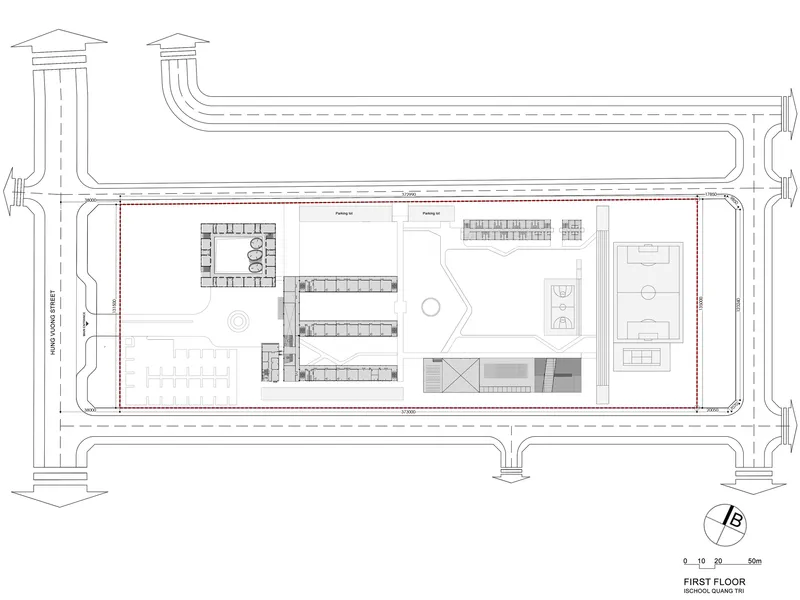
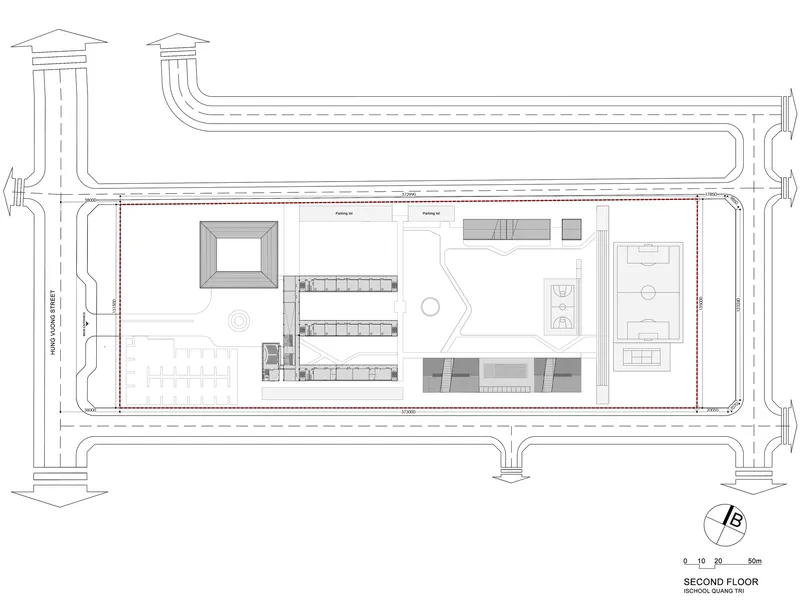
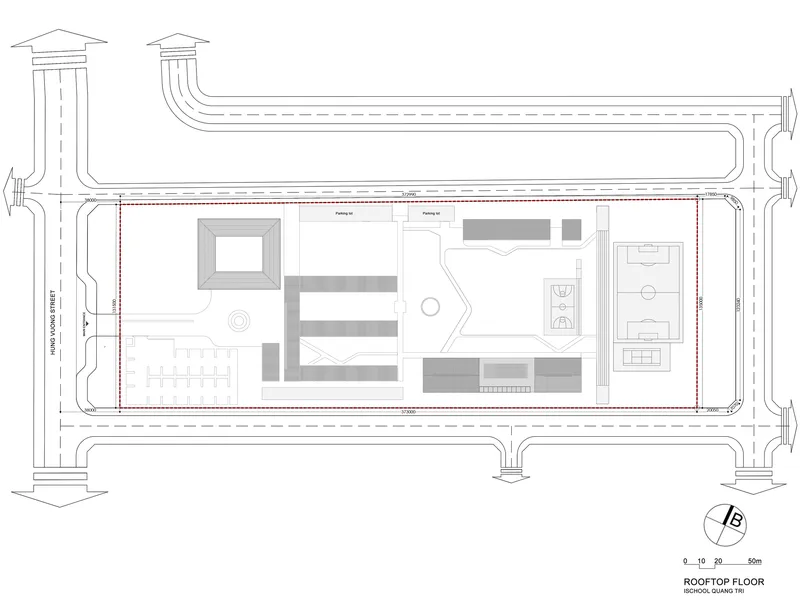
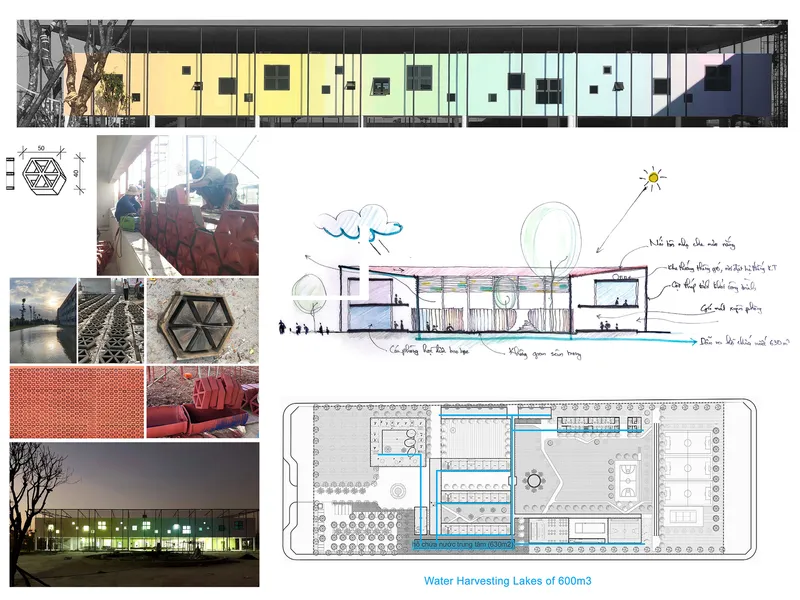
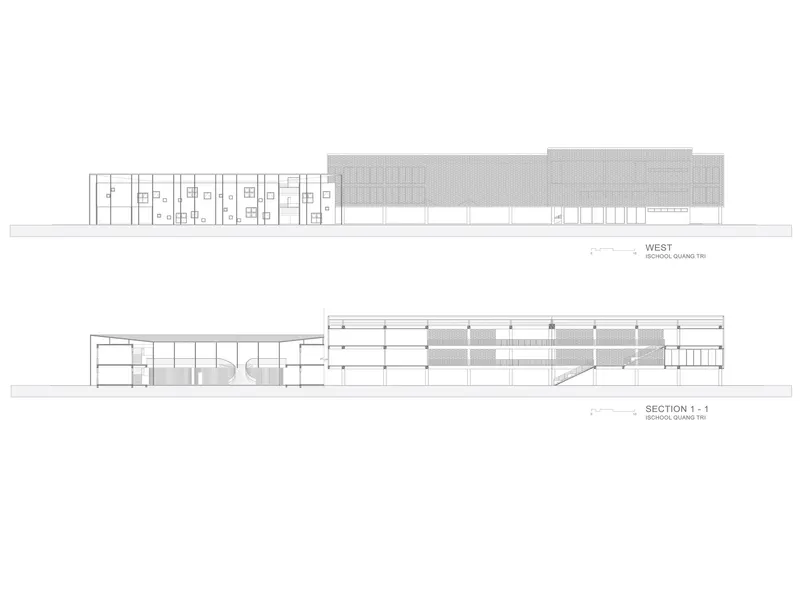
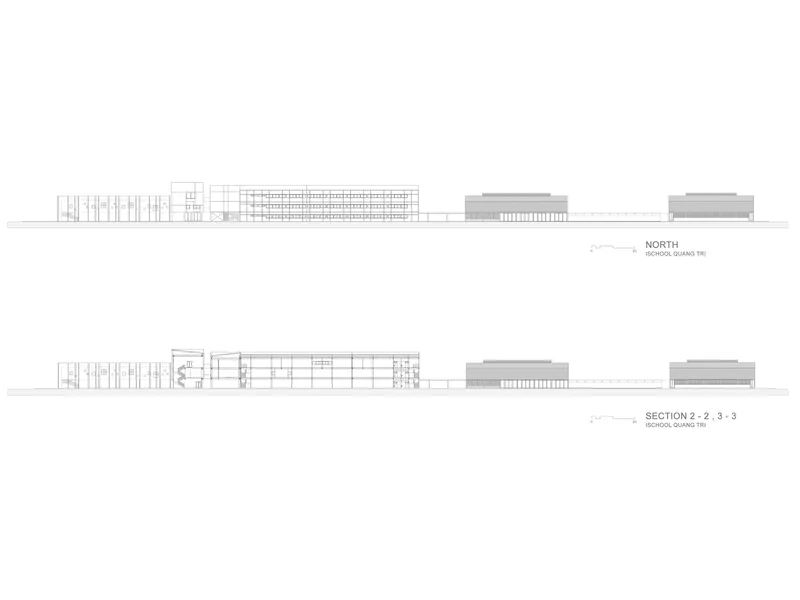
The aerial site plan situates the campus within Đông Hà's dense urban fabric, and the ground floor plan reveals how the parking area, interior courtyard, and basketball court are organized to keep vehicles away from children. The upper floor plans show the logic: linear classroom wings flanking a central courtyard void, with rooftop terraces above. The west elevation and longitudinal section illustrate the sloping roof over the main hall, while the north elevation and transverse sections display the separation between the classroom block and sports facilities. The presentation board with its section drawing, material samples, and construction photographs documents how the project moved from concept to reality.
Why This Project Matters
Schools in tropical climates face a fundamental tension: they need to be open to air and light, but they also need to protect students from heat, rain, and glare. iSchool Quang Tri resolves that tension through layering. Every element, from the perforated terracotta screens to the double-layered roof to the rainwater cistern feeding the landscape, works as part of a continuous environmental system. The architecture does not fight the climate; it negotiates with it.
For a school serving 2,000 students from age five to eighteen, that kind of coherence matters. The building will be used hard, every day, for decades. Its passive strategies reduce operating costs and energy consumption. Its landscape will improve with time. Its terracotta screens will age gracefully. BHA Studio has delivered a campus that takes its obligations to both its students and its climate seriously, and the result is a building that earns its awards.
iSchool Quang Tri, designed by BHA Studio (lead architect: Nguyen Xuan Minh), Đông Hà, Vietnam. 17,000 m². Completed 2018. Photography by Hoang Le.
About the Studio
Share Your Own Work on uni.xyz
If projects like this are the kind of work you want to make, uni.xyz is a place to publish your own, find collaborators, and enter design competitions.


Popular Articles
Popular articles from the community


FCC Arquitectura Expands a Portuguese Granite House with a Board-Marked Concrete Wing
In Portugal, JV House pairs a cleaned-up whitewashed and granite dwelling with a timber-shuttered concrete extension, courtyards and a garden pool.


Singing Woman: An Opera House That Performs Before the Curtain Rises
Ovidiu Cristian Pavel's conceptual opera house translates Estonia's choral identity into a sculpted waterfront landmark facing the Baltic Sea.

Manzana Morphosis: Stretching Barcelona's Grid into a Living Landscape for 2050
A radical reworking of the Eixample manzana turns density into a tool for generous public space, vertical ecology, and environmental performance.

Aquadapt: An Underwater Habitat That Rewrites Its Rooms by the Hour
Curved modules ring the seabed while one shell shifts from breakfast room to cinema, farm and football pitch as residents' needs change.

Similar Reads
You might also enjoy these articles

LAVA Architecten Gives Vocational Education a Sawtooth-Roofed Face on a Mechelen School Campus
In Mechelen, Belgium, a 2,053 m² STEM school on a 6×6 m grid turns workshops and classrooms into rooms that can be rearranged as teaching changes.

KEMA Studio Turns a Derelict Marvila Attic into a 60 m² Lighthouse Apartment Above Lisbon
In Lisbon's Marvila district, a rebuilt roof, four skylights and two plywood volumes turn an unlivable attic into a bright home facing the Tagus.

Pixel Gardens: One Repeated Module Stacked Into a Terraced Social Housing Tower for Famagusta
Salem Bader's shortlisted housing tower builds a vertical neighbourhood from one repeated module, offsetting units to carve terraces, light and air.

Bao Huynh Watercolor Atelier: A Serene Art Retreat in Hội An
Bao Huynh Watercolor Atelier in Hội An blends multifunctional art spaces, sustainable design, local materials, and family-friendly living in a serene environment.

Explore Architecture Competitions
Discover active competitions in this discipline

Challenge to reimagine the Iron Throne

Photograph architecture without architects

Illustrate the lost glory of Angkor Wat - Render Challenge

Design challenge to reuse E-waste
Comments (0)
Please login or sign up to add comments
No comments yet. Be the first to comment!