
Living Museum
Museums designed as dynamic spaces that integrate architecture, landscape, and cultural memory into living environments.
Living museums represent a shift from static exhibition spaces toward architectural interventions that engage with their surroundings and communities. These projects treat museums as active participants in urban and natural landscapes, where building form and site context become inseparable from the experience of cultural content.
The community explores museums anchored to specific places and histories, from spiral structures that memorialize vanished villages to vertical reinterpretations of iconic landmarks, and organic forms that spiral through wetland ecosystems. Projects demonstrate how museum architecture can simultaneously preserve cultural narratives, respond to topography, and create new relationships between visitors, collections, and landscape.


Latest journals
View all 17 journals
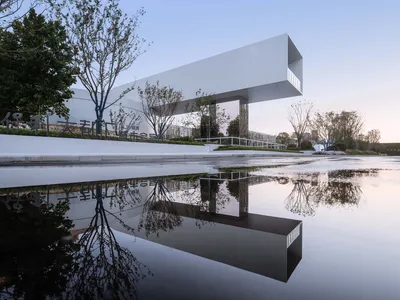
HYP-ARCH Wraps a Spiral Museum Around the Memory of a Vanished Zhengzhou Village
A 3,100 m² museum in Zhengzhou's Jinshui District preserves the story of Liuzhuang, an urban village that once sheltered 300,000 migrant workers.
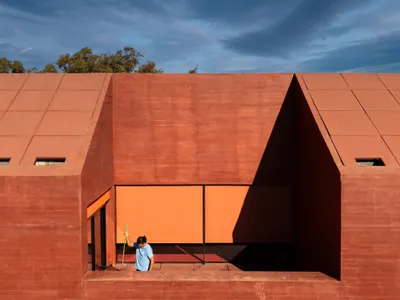
Spaceworkers Anchors a Red Concrete Museum to the Algarve Cliffs at Vila do Bispo
A pair of repurposed granaries and a new pigmented-concrete volume form a cultural anchor in southern Portugal's windswept coastal town.
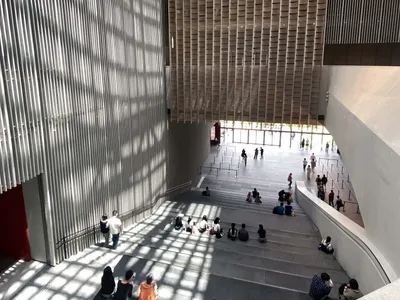
Rocco Design Architects Stack the Forbidden City Vertically on Hong Kong's Waterfront
A 30,000-square-meter museum in West Kowloon translates Beijing's courtyard sequence into a tower of three rotating atria facing harbor and sea.
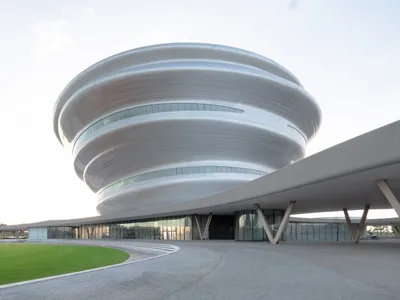
MAD Architects Spirals a Science Museum Around Three Cores on the Edge of a Hainan Wetland
A biomorphic tower of 843 FRP panels rises six stories above reflecting pools in Haikou's Free-Trade Port district, turning science education inside out.


