
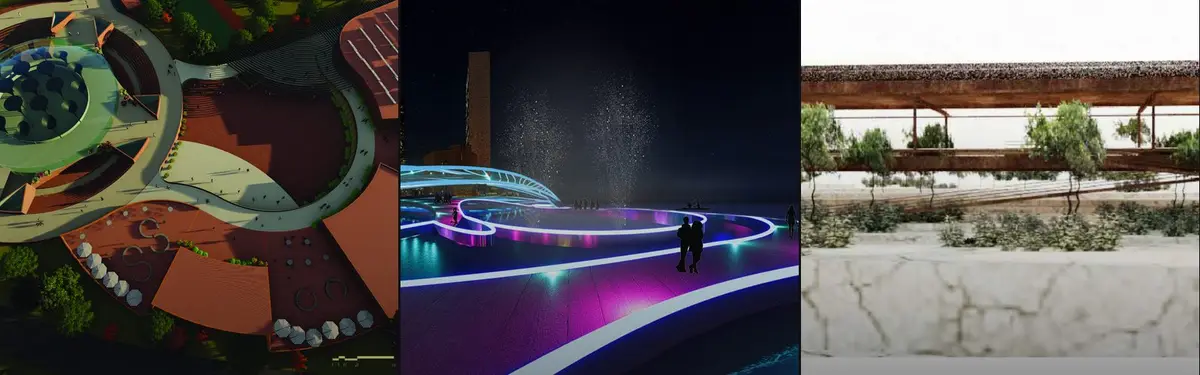


Moving Walkway
Architectural and urban design approaches to pedestrian movement, circulation systems, and connective spaces.
Moving walkways encompass the design of pathways, bridges, and transitional spaces that facilitate human movement through urban and built environments. These systems range from functional circulation routes to experiential journeys that shape how people navigate and perceive their surroundings.
The community explores pedestrian-oriented infrastructure, heritage-informed connectivity, adaptive reuse of transit spaces, and the intersection of movement with memory, locality, and urban transformation. Projects demonstrate how circulation design can serve broader goals of community healing, environmental integration, and meaningful place-making.


Popular projects
View all 15 projects


Latest journals
View all 8 journals
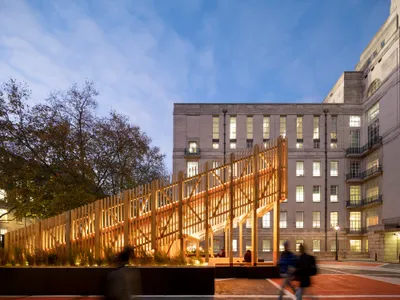
BDP Transforms a Barren London Car Park into a Glowing Timber Staircase to Nowhere and Everywhere
A demountable orange pavilion reclaims a windswept Senate House forecourt as a gathering place for University of London students.

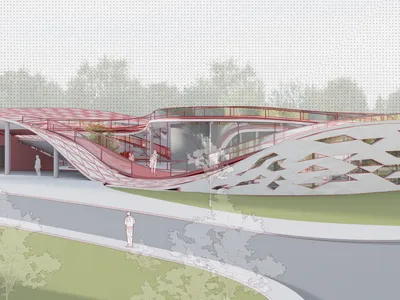
MOTION
This project explores well being through movement. A continuous loop guides users through shifting spatial conditions, connecting public and introspective spaces. By integrating the urban ground and elevating parts of the path, movement becomes a tool for mental clarity and spatial experience.


Transitional Linkage: An Elevated Pedestrian Spine That Formalizes a City's Most Dangerous Shortcut
Zillur Rahman turns an informal crossing over rail and highway into a raised civic spine that ties six transport modes together at a single shared level.

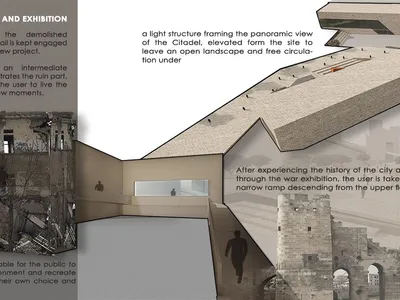
Walkway to Memory: Heritage Architecture as Healing in War-Torn Aleppo
A multilevel museum pathway beside the Aleppo Citadel transforms ruins of the Serail complex into a civic journey through loss and renewal.


