
Walkway to Memory: Heritage Architecture as Healing in War-Torn Aleppo
A multilevel museum pathway beside the Aleppo Citadel transforms ruins of the Serail complex into a civic journey through loss and renewal.


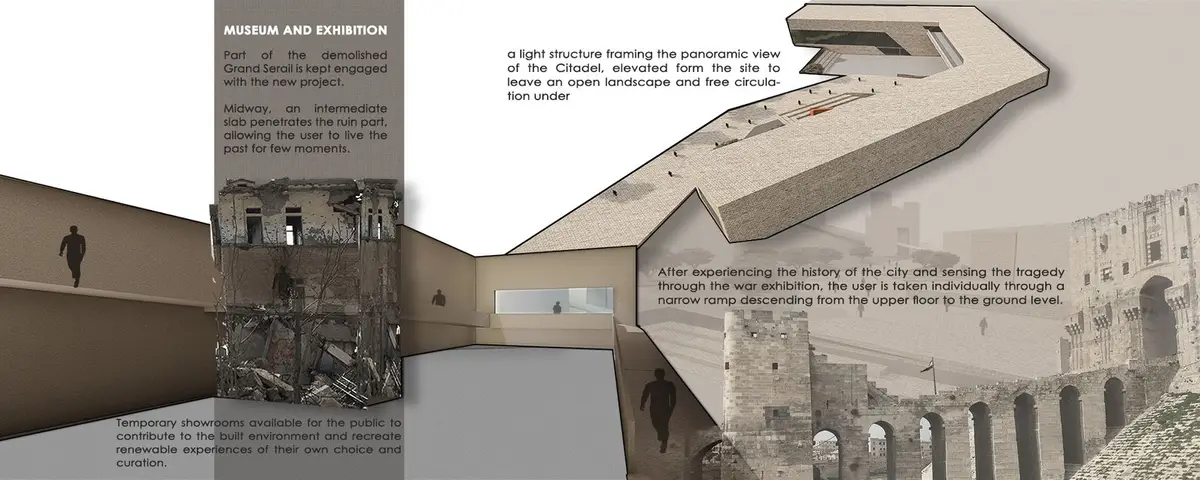
What happens when the ruin itself becomes the exhibit? At the edge of the Aleppo Citadel, one of the oldest fortified structures on Earth, a fragment of the destroyed Serail complex still stands. Walkway to Memory refuses to clear it away. Instead, it builds around and toward it, turning a devastated administrative quarter into a sequenced architectural journey that forces visitors to walk through spatial analogues of grief, reflection, and tentative hope. The ruin is not backdrop; it is the destination, the emotional center of gravity around which every corridor, platform, and framed view orients itself.
Designed by Zsolt Vasáros DLA, Baidaa Elfrieh, and Sarah Tawalbeh, the project won the People's Choice Award in the Memory competition on uni.xyz. It proposes a multilevel museum and public complex on the site where the Serail once served as a center of civic life in Aleppo. By overlaying three historical conditions onto a single site plan, the design reads the Citadel as an anchor of continuity, the pre-war Serail as a record of cultural life, and the post-war landscape as a territory of fragmentation. The architecture positions itself precisely on the threshold between these states.
Three Versions of One Site
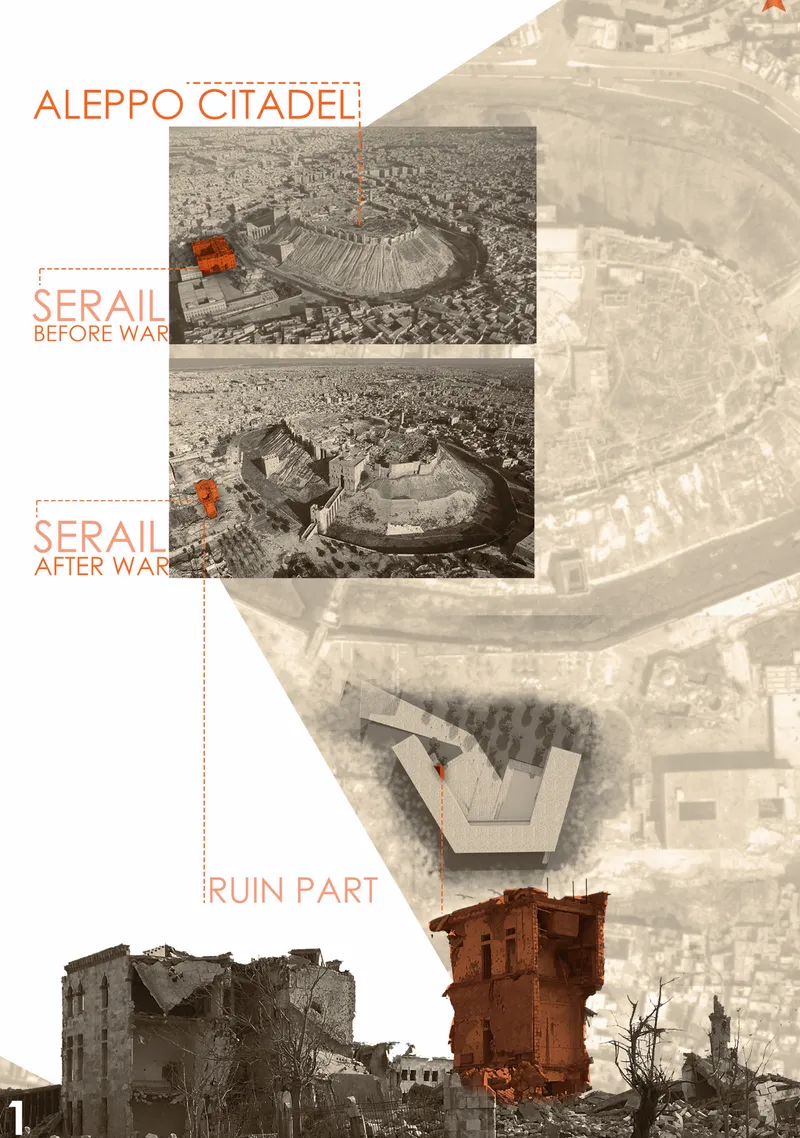
The composite diagram lays bare the project's conceptual premise: aerial photographs of the Citadel before and after the war sit beside close-ups of damaged masonry towers, collapsing the distance between memory and present reality into a single graphic frame. The juxtaposition is deliberate and unflinching. Rather than romanticizing heritage, the designers document its destruction with forensic clarity, establishing the factual ground from which every design decision follows.
Siting the intervention adjacent to the Citadel means the project operates under the constant symbolic weight of that monument. The preserved Serail fragment functions as what the designers call the project's beating heart: an untouched remnant that confronts visitors with the blunt truth of conflict before integrating that truth into a new spatial narrative. The architecture does not attempt to restore what was lost. It mediates between what remains and what might be possible.
Four Levels, Four Layers of Engagement

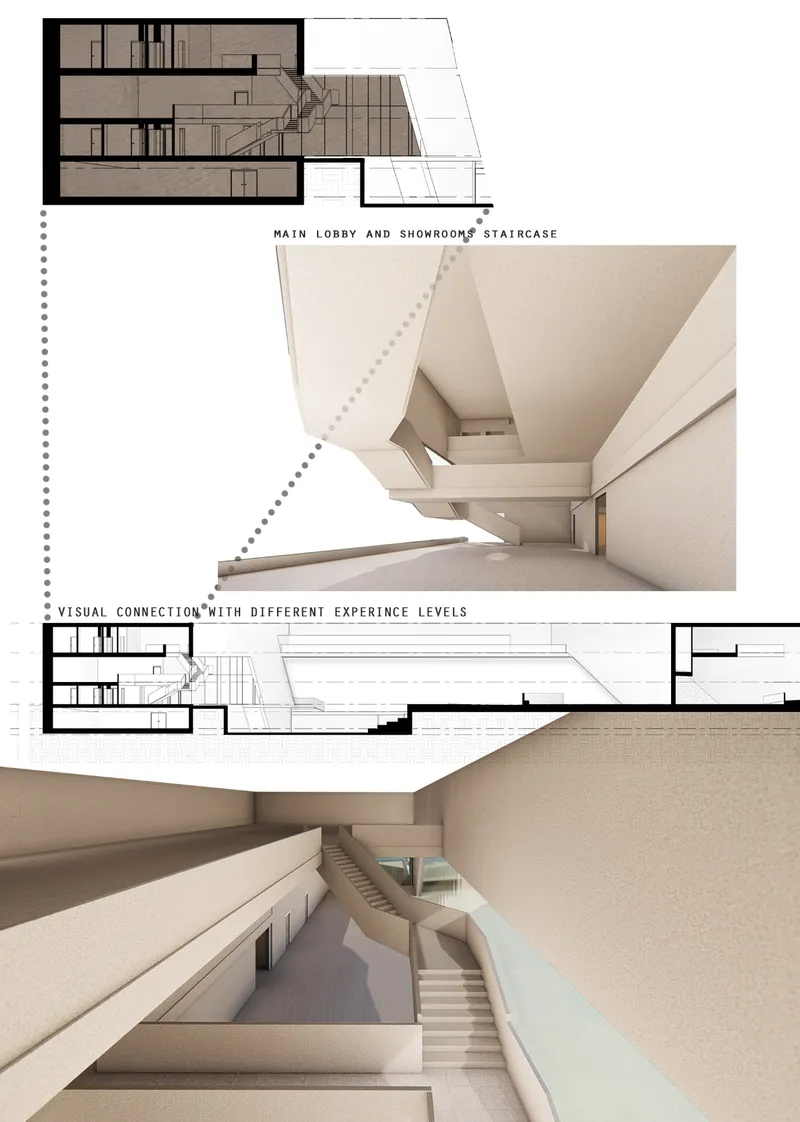
The exploded axonometric reveals a program distributed across four distinct levels, each calibrated to a different register of experience. The upper level houses the war exhibition and memory walkway, a linear sequence that culminates in an elevated café facing the Citadel. Below that, an intermediate level provides flexible gallery space for temporary exhibitions, ensuring the site remains culturally active and responsive to Aleppo's evolving identity. The ground level serves as the public heart: lobby, showrooms, amphitheater café, gift shop, and gathering areas arranged to function as an accessible civic hub. A basement level handles storage, workshops, and back-of-house operations, kept visually unobtrusive but essential to long-term sustainability.
The section drawings and interior renderings clarify how these levels interact vertically. Cascading stairs create visual overlaps between floors, so visitors moving through one level catch glimpses of others. The designers describe these moments as memories appearing and disappearing. Changing heights, sloping floors, and framed openings produce a spatial rhythm that mirrors the nonlinear quality of recollection itself. The section, in this reading, becomes a storytelling instrument, choreographing transitions between loss, reflection, and the possibility of renewal.
The Tapered Corridor: Walking Toward the Ruin
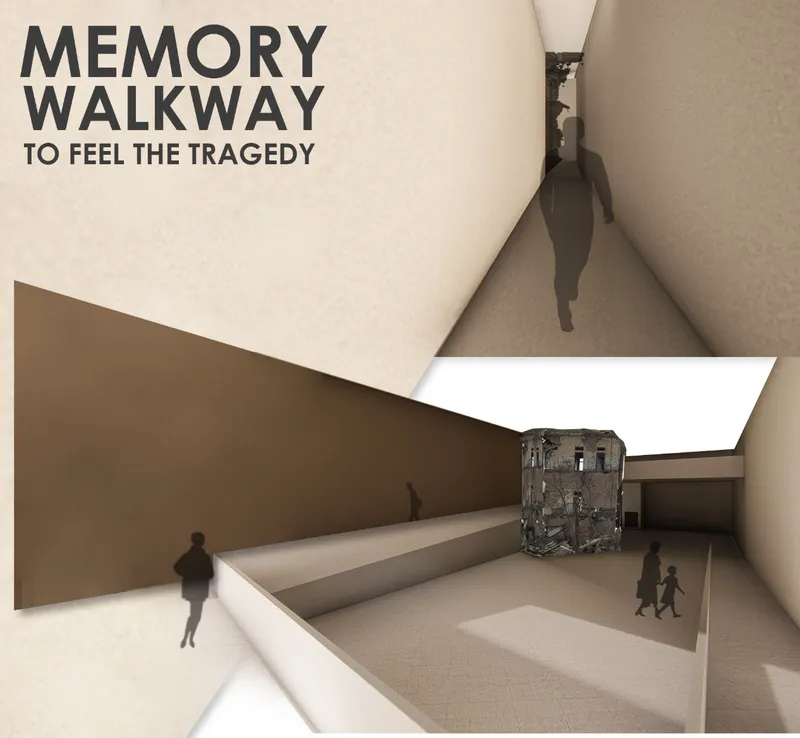
The most powerful image in the set shows what the designers call the core emotional journey. A tapered corridor narrows as it extends toward a preserved masonry fragment, its angled ceiling compressing the space and focusing attention on the ruin ahead. Silhouetted figures move toward it in various states of pause and approach. The geometry is precise: the corridor does not simply lead to the ruin, it physically channels the body toward confrontation with it. Light enters from above and behind the fragment, giving the damaged stone an almost luminous presence against the corridor's darker surfaces.
The spatial strategy here is one of emotional calibration through proportion. As the ceiling lowers and walls close in, the visitor's field of vision contracts to a single focal point. The ruin is no longer an artifact in a display case; it is the terminus of a bodily experience. The designers use architecture to produce the sensation of approaching something irreversible, and then asking the visitor to stand in its presence.
Ruin as Gallery Object, Gallery as Ruin
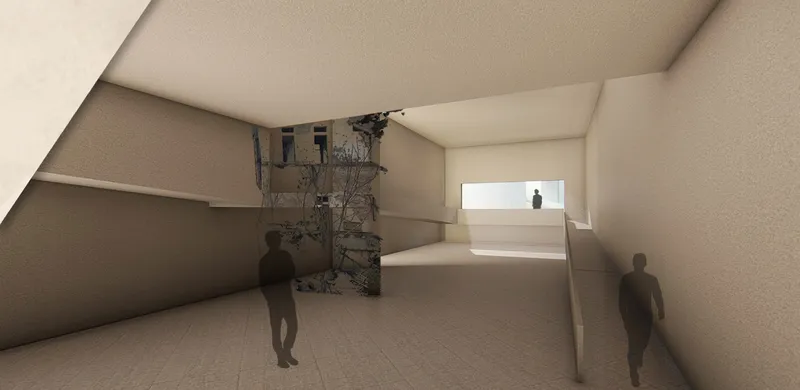
Inside the gallery spaces, the relationship between new construction and preserved ruin becomes more nuanced. Stepped platforms descend toward a ruin fragment that sits at the center of the room, bathed in light from angular skylights above. Visitors occupy multiple elevations simultaneously, observing the fragment and each other from different vantage points. The architectural language is restrained: concrete surfaces, sharp edges, and controlled natural light, all subordinated to the stone remnant they frame.
The effect blurs the line between exhibition design and archaeological site. The ruin is not placed behind glass or elevated on a plinth. It occupies the same floor plane as the visitors, sharing their space rather than performing as a curated object. The skylights slice light across its surface in a way that changes throughout the day, ensuring the fragment never reads as static. It ages, shifts, and participates in the architecture around it. The building, in turn, defers to it.
A Public Threshold Between Citadel and City
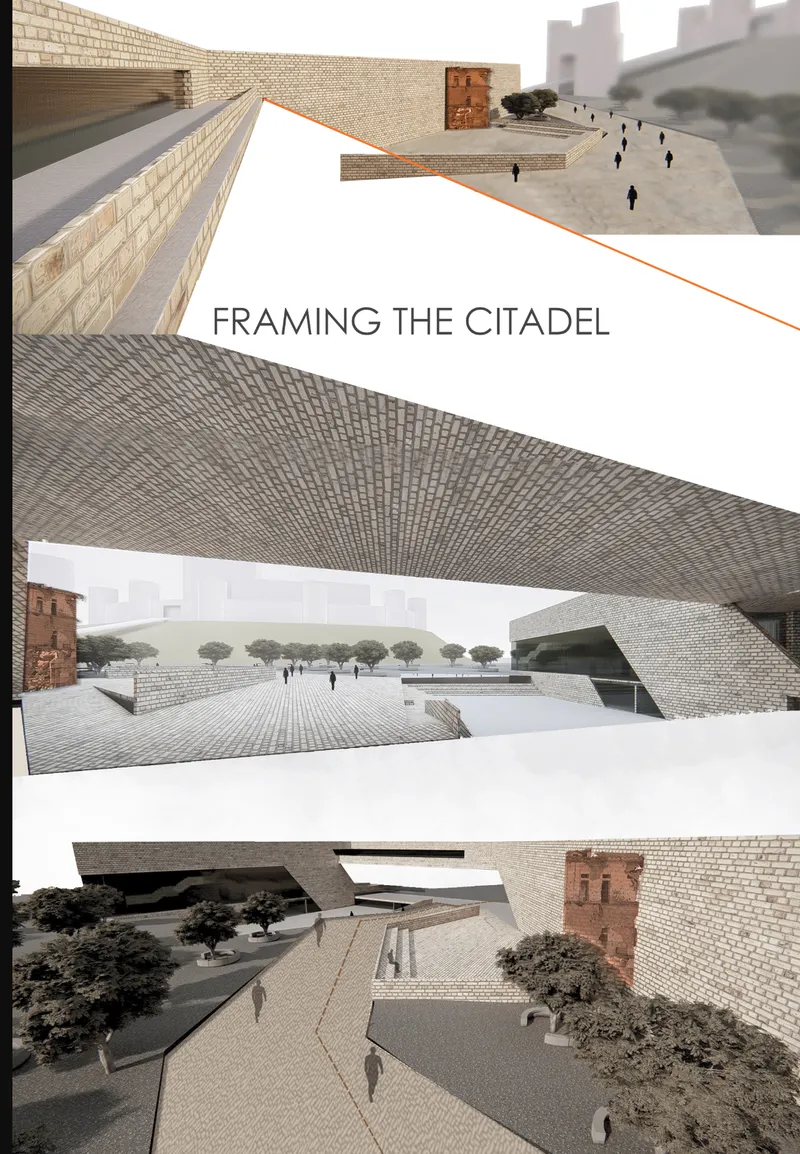
The three exterior renderings show how the complex meets the city at ground level. A paved plaza extends beneath a cantilevered roof, its horizontal reach defining a sheltered public zone between the new building and the surrounding urban fabric. Masonry walls anchor the composition visually, connecting the new intervention to the material language of Aleppo's historic core. Pedestrians move through under hazy skies, their casual presence transforming the site from memorial into everyday civic space.
The cantilevered roof is critical. It creates a transitional zone that is neither fully interior nor fully exterior, inviting passage without requiring commitment. Residents can cross the plaza, sit in the amphitheater café, or simply use the space as a shortcut through the neighborhood. The ground level program, with its lobby, showrooms, and gathering areas, reinforces this openness. The building wants to be occupied routinely, not only on occasions of solemn remembrance. Heritage, in this formulation, is not preserved under glass but woven into the daily rhythms of a recovering city.
Why This Project Matters
Post-conflict architecture faces a recurring dilemma: how to honor what was destroyed without freezing a city in its trauma. Walkway to Memory navigates this tension by treating the preserved Serail fragment not as a memorial endpoint but as a generative center around which new public life can form. The multilevel program ensures that remembrance coexists with flexible exhibition space, daily commerce, and civic gathering. The building does not ask visitors to choose between mourning and moving forward; it insists that both happen in the same corridors, on the same platforms, under the same angular skylights.
The strength of the proposal lies in its spatial specificity. Vasáros, Elfrieh, and Tawalbeh do not rely on symbolic gestures alone. They use section, proportion, and material restraint to control how a body moves through the experience of loss and recovery. The tapered corridor, the stepped gallery, the cantilevered plaza: each operates at a precise emotional register, calibrated to produce encounters that abstract language cannot replicate. For a competition titled Memory, that commitment to spatial experience over rhetoric is exactly the right move.
View the Full Project
About the Designers
Designers: Zsolt Vasáros DLA, Baidaa Elfrieh, Sarah Tawalbeh
Enter a Design Competition on uni.xyz
uni.xyz runs architecture and design competitions year-round that reward proposals with spatial conviction and real site intelligence.
Project credits: Walkway to Memory by Zsolt Vasáros DLA, Baidaa Elfrieh, Sarah Tawalbeh Memory (uni.xyz).


Popular Articles
Popular articles from the community


Opera on the Sea: Driftwood Logic Shapes a Timber Opera House on Estonia's Coast
Trevor Orgill's opera house translates the entangled drift of floating timber into a civic building where wood, water, and music converge.
Manzana Morphosis: Stretching Barcelona's Grid into a Living Landscape for 2050
A radical reworking of the Eixample manzana turns density into a tool for generous public space, vertical ecology, and environmental performance.


David Ortega Stacks a Two-Story Mexico City Penthouse Around a Steel Stair and a Pergola-Shaded Roof Terrace
In Colonia Roma, a 300 m² penthouse uses oak joinery, a planted steel stair and a slatted roof pergola to make a new-build apartment feel like a house.

graciastudio Turns a Viewless Tijuana Lot Inward Around a Courtyard of Concrete, Timber and Trees
In Tijuana, Jorge Gracia's GA2 House stacks a timber-clad private floor over exposed concrete and replaces a missing view with a planted interior patio.

Similar Reads
You might also enjoy these articles

Aquadapt: An Underwater Habitat That Rewrites Its Rooms by the Hour
Curved modules ring the seabed while one shell shifts from breakfast room to cinema, farm and football pitch as residents' needs change.

Play: Fragments of Their World: Remembered Architecture Rebuilt as a Modular Playground for Refugee Camps
Tom Gardner abstracts domes, arches and towers from the homelands of displaced families into a kit of child-scaled play parts for camp settlements.
REBIRTH: A Circular Settlement Where Afghan Widows and Their Children Rebuild Life Together
A shortlisted Resile entry turns the circle into a protective ring of timber and brick, gathering homes, classrooms and gardens around a shared landscape.
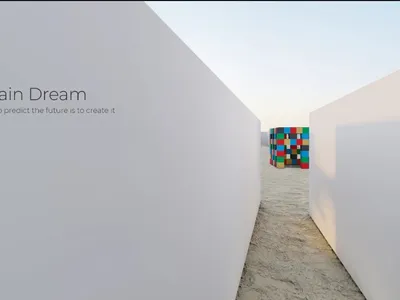
The Main Dream: A Recycled Plastic Kit That Lets Refugee Children Build Their Own Playground
Thirty-centimetre interlocking cubes that connect on three axes turn play into construction, letting children author the spaces they occupy.


Comments (0)
Please login or sign up to add comments
No comments yet. Be the first to comment!