
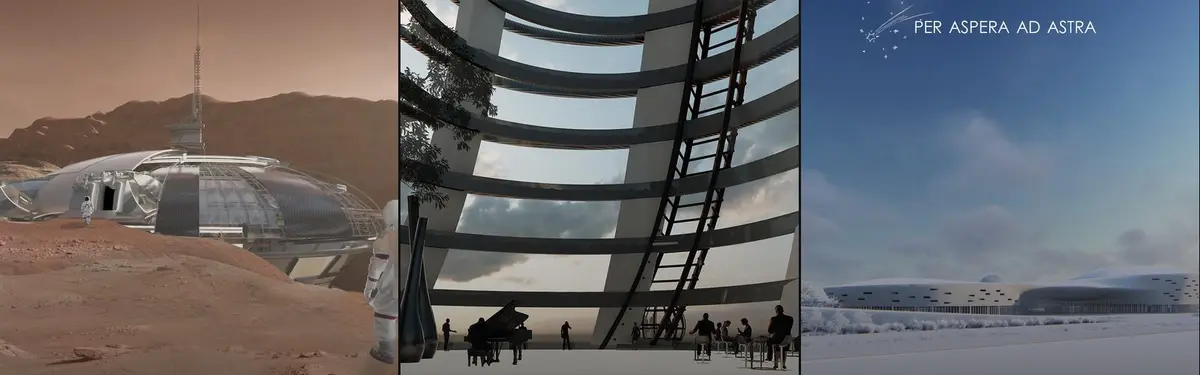


Orbital Architecture
Architecture and design concepts for structures in space, on celestial bodies, and facilities exploring cosmic themes.
Orbital architecture encompasses the design of habitable structures beyond Earth, including space stations, lunar facilities, and asteroid-based constructions. This emerging field combines engineering, sustainability, and speculative design to imagine how humans might live and work in space.
The community explores self-expanding orbital stations built from asteroid material, space architecture for civilizations beyond Earth, lunar facilities using geometric principles, and ground-based observatories and planetariums that engage visitors with celestial exploration and cosmic experience.


Popular projects
View all 57 projects





Latest journals
View all 19 journals

STELLAR-1: A Dandelion-Inspired Orbital Refuge Built for Humanity's Eventual Return to Earth
A space elevator and porous lattice shells turn an orbital colony into infrastructure that safeguards people, seeds and knowledge until Earth heals.


ORIGYN GAIA: A Self-Expanding Orbital Station Built from Asteroid Material
Adam Hoehne, Jack Hooper, and Ricardo Miguel propose a modular space habitat that grows itself using in-situ resource utilization.

Moon Trip Centre: Circular Geometry as a Gateway to Cosmic Experience
A shortlisted competition entry translates orbital mechanics into radial architecture, turning visitors into active participants in space exploration.

Orionis Planetarium and Observatory by Snøhetta: A Celestial Landmark in Douai, France
Orionis Planetarium by Snøhetta blends elliptical architecture, sustainable design, and immersive astronomy experiences in a biodiverse, landscaped setting.


